2 Sep 2013 | Belarus, News
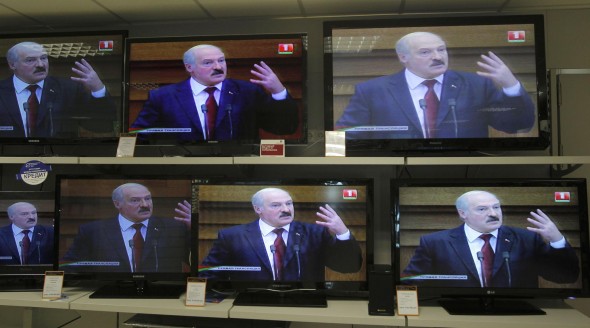 For the first time since the 2010 presidential election Belarusian independent journalists can catch their breath. In March the criminal case against Andrzej Poczobut, a journalist accused of libel against the president, was dropped. ARCHE magazine, which was close to being shut down was finally re-registered by the Ministry of Information in May. OSCE Representative for Freedom of the Media Dunja Mijatovic was allowed to enter the country in June, and authorities even met with her. Following her visit charges against Anton Suriapin for posting pictures of the famous Teddy Bear pictures, were dropped. Award-winning journalist Iryna Khalip has reached the end of her two-year sentence.
On the other hand, we should not be deceived by these positive developments. Negotiations with Mijatović did not prevent Belarusian authorities from seizing a whole print run of Nash Dom newspaper, accusing journalist Alena Sciapanava of cooperation with foreign media without a relevant accreditation, or detaining a number of reporters covering a street action by opposition activist in July.
So, is there a thaw for Belarusian media? Can further changes be expected?
One step forward after two steps back
Belarus is ranked 157th in Reporters Without Borders’ 2013 World Press Freedom Index, rising 11 places compared with their 2011/2012 rating. But this only means the country has restored the situation to where it had been before the severe clampdown on free media and civil society in December 2010. Independent journalists and online activists still run risks.
“The authorities have made a small step forward after they made two huge leaps back. The situation improved a little if we compare it with the one we had after the 2010 presidential election. But on a systemic level neither media-related legislation, nor its implementation have changed,” says Andrei Bastunets, a media lawyer and a vice chairman of the Belarusian Association of Journalists (BAJ).
The positive developments are welcome – but history suggests they are not irreversible. In 2008-2009 similar period of “liberalisation” was marked with two big conferences in Minsk co-organised by the Belarusian authorities with the office of OSCE Representative for Freedom of the Media. There, the decision was made to return two national independent newspapers, Narodnaya Volia and Nasha Niva, to the wide reaching state run systems of press distribution. But the ‘good times’ turned into a renewed period of repression after 2010.
Sviatlana Kalinkina, chief editor of Narodnaya Volia, says life is easier for the publication now than it was five years ago when it had to be printed in Russia and was not allowed to be sold at newsstands or via subscription catalogues in Belarus.
“The approach of the authorities is to make the situation worse, then to return it to where it was and thus claim there have been improvements and ‘democratisation’. But in fact even after we were allowed to be printed and distributed in Belarus we were not able to come back to where we used to be. Narodnaya Volia used to be a daily, now we publish our newspaper twice a week and cannot get a permission to be printed even three times a week. Printing houses and distribution networks keep telling us it is impossible, although it is obvious these are just lame excuses. These problems are clearly orchestrated by the authorities,” says Sviatlana Kalinkina.
It is difficult for a journalist of an independent newspaper to receive a comment from state officials; they are afraid to talk to non-state press.
According to Yanina Melnikava, the editor of the online publication Mediakritika.by, the situation inevitably affects the quality of work of Belarusian journalists.
“One the one hand it makes a journalist’s work really hard. But working in the conditions of an ‘information war’ leads to a ‘barricade mind-set’ that can be used to justify mistakes and lack of professionalism,” says the editor.
Screws to be tighten again before elections
Sviatlana Kalinkina of Narodnaya Volia does not think conditions for her newspaper will significantly improve in the nearest future, because the next presidential election is scheduled for 2015.
“Political campaigns are not the best time for journalists in Belarus. People are getting more interested in independent news which makes authorities start to panic, resulting in more oppression,” Sviatlana Kalinkina says.
So why would the government allow some minor improvements of the situation? The answer is simple – just to have some “room for manoeuvre” when the screws are to be tightened again.
“The closer elections are, the more we are likely to feel freedom and democratic change is possible. But this is just an illusion. The reality is different. The authorities see election campaigns as a threat to their power and they are ready to protect their power whatever it takes,” says Yanina Melnikava.
Not ready for the first step
During her press conference in Minsk on 5 June, Dunja Mijatović said time had come for serious change in the freedom of expression situation in Belarus. She called on journalists to “work with the authorities and bother them in order to let the government of the country know about the importance of laws for development, not for oppression of the media.”
“But the real change requires a totally different relationship between the authorities and the media. Such change of an attitude should take place on an ideological level, as well as on economic and legal levels”, Yanina Melnikava admits, adding that she sees no signs of such changes at the moment.
Andre Bastunets suggests there should be a road map the authorities can keep to in order to liberalise the media field. The first step would be ceasing of economic discrimination of independent media: all non-state newspapers should be allowed back on to state-run distribution systems, restrictions of circulations and advertising in them should be lifted.
“About half of independent newspapers face problems like these now. And there is no need to change the law to solve the problem – on the contrary, we just need to implement the law,” says BAJ vice chairman.
The second step would be to ensure access to information for all journalists. The restriction to work without a special accreditation for reporters of foreign media should be lifted. The third one is to stop differentiating between state and non-state media at all.
“I am sure there should be no state-owned media in a democratic country except for bulletins with legal acts adopted by state bodies. All media should be private or public,” says Andrei Bastunets.
However, the authorities of the country show no signs they are ready event to make that first step, which means the current not-so-bad situation is always under threat of a set-back.
29 Aug 2013 | News
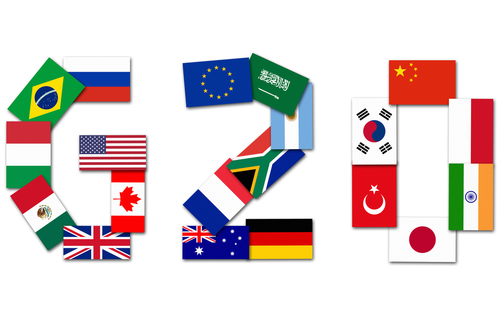 As global power starts to shift both South and East, and the G20 overshadows the G8, will freedom of speech and broader human rights still receive support around the summit tables?
While the BRICS – Brazil Russia, India, China, and South Africa – range from active democracies to repressive authoritarian states, none are keen to take lectures from western countries on free speech.
And whistleblower Edward Snowden’s still unfolding NSA and GCHQ revelations are surely weakening the US and UK’s credibility in promoting rights internationally. Mass surveillance of digital communications undermines free speech online: monitored conversation is not free, as anyone from Iran or China can attest.
Nor are the democratic BRICS yet taking any international lead on free speech and other rights.
If free speech is to be actively defended in the multipolar order, both the emerging democratic powers and the older western powers must stand up, however imperfectly, for rights, at the UN, the G20 or in bilateral dialogues, and not let economic interest, security priorities, and diplomatic convenience hold sway.
Some European diplomats confidently see the EU, US and Japan as the prime defenders of free speech, while Brazil, India and South Africa are “swing” states to bring on side against China and Russia. But from digital to media freedom to transparency and corruption, the picture is more blurred.
The Snowden revelations risk seriously weakening the US’s credibility in pushing for digital freedom and an open internet against a joint Russia-China quest for top down global internet control. The geopolitics of internet governance were exposed at an international telecommunications summit in Dubai last December – Russia and China pulling almost 90 countries including Brazil and South Africa behind them in a test vote. India wobbled before joining the US, EU and Japan.
But efforts to get democratic BRICs to support an open internet may now falter. ‘Do as we say, not as we do’ is never the most convincing of arguments.
Digital freedom may retreat further if the NSA scandal prompts a more rapid fragmentation of the internet as some fear. While Iran and China already seek to segment their national internets, if the EU and others respond with moves to insulate their networks more from the US then fragmentation may gather speed.
Yet direct censorship of the internet – imposing blocks and filters – is much more common in authoritarian regimes – with China and its great firewall targeting free speech extensively in ways not seen in the multipolar democracies.
But there are some troubling trends. Both the UK and India criminalise ‘grossly offensive’ comment on social media – with arrests for Facebook posts and tweets in both countries . And Brazil and India often top the lists in Google’s regular transparency reports on takedown requests for online content.
On press freedom, the picture for western democracies is fairly positive: they are ahead of the democratic BRICS who are, unsurprisingly ahead of Russia then China. But it’s a varied picture – Germany and the US are substantially ahead of the UK and France, with South Africa coming in just ahead of Japan according to Reporters without Borders press freedom index – and then Brazil and India trail behind. And such indicators cannot reflect the granular reality of Obama’s prosecution of media sources, or the UK debate on statutory press regulation.
At the international level, western countries are often seen as readier to challenge individual countries’ human rights records, than India, Brazil and South Africa. Yet Brazil and India voted with the US criticising Sri Lanka’s record earlier this year while Japan abstained. And the EU and US can hesitate too in the face of economic interests not least in dealings with China.
Transparency and corruption is where western countries do best. The US, Japan, Germany, France and the UK all score fairly high up on Transparency International’s annual ranking, while Brazil and South Africa languish in the middle, India is behind China, and Russia scores even below China (and India) too. But the US and UK’s transparency record will surely be reassessed given Snowden’s leaks.
With this mixed record of the democratic powers, will we hear less about free speech and human rights in the multipolar, digital world? At least, with whatever flaws and double standards, the majority of the G20 are democracies with robust debates on free speech at home. But the revelations of mass digital surveillance now cast a long shadow.
Perhaps one more positive outcome of the US’s stumbling over mass surveillance will be if it gives India, Brazil and South Africa the confidence to speak out strongly on the international stage including holding western players more to account on free speech. If so the multipolar democracies would then have more, not less, credibility in pointing the finger at authoritarian regimes.
Read more about the multipolar challenge to free expression in the current issue of Index on Censorship magazine
27 Aug 2013 | Index Reports, Mexico, News
(Photo illustration: Shutterstock)
Mexico was transformed in 2000, when the National Action Party, PAN, was elected to power, ending a 70 year control by the Institutionally Revolutionary Party, PRI.
During the PRI years, self censorship was rampant in the country, as the government imposed a heavy handed control of the national media. PAN candidates ruled for the next 12 years, from 2000 to 2012. But the PRI returned to power last December, due to electorate fatigue with former President Felipe Calderon’s war on drugs.
The country has faced increasing challenges from organized crime gangs that were targeted during the Calderon government and it has had serious impacts on press freedoms in the Mexican provinces, where most media recoiled from reporting on organized crime-related violence.
In the move to control organized crime groups, the Mexican government has increased its surveillance capacity. It has also engaged in human rights violations, which according to international organizations, such as Human Rights Watch, have only exacerbated the security situation.
There is little media regulation and zero artistic censorship. But in the name of protecting the state from organized crime, the government has introduced various edicts and laws that could affect the rights of citizens.
In March 2012, the Mexican Congress approved new legislation that gave police more access to online information. Also between 2011 and 2012, the Secretariat of National Defense, which controls the Mexican Armed Forces, purchased advanced domestic surveillance equipment. The new equipment includes mobile phone and online communications software that can be openly used to monitor Mexican citizens.
In 2012, the government of the State of Veracruz introduced a public nuisance law that sends to jail any social media member who uses Twitter or Facebook to warn fellow citizens about violence. The law was set in place because two Twitter users warned state residents of shootouts that turned out to be false alarms, but had the city of Veracruz traumatized by the alleged reports. The problem remains that bloggers, and social media users have become alternative sources of information because the traditional media in at least half of the territory of Mexico are afraid of reporting on drug related violence.
Drug traffickers also retaliated against social media users. They killed at least two bloggers in the northern state of Taumalipas and also two Twitter users, whose bodies were never identified and were found hanging from a bridge overpass. Two websites that made a name for themselves by running stories and reports on drug trafficking activities around the country were forced to shut down because of direct attacks.
Twitter, Facebook and YouTube have been extremely useful sources of information in Mexico. Abuses of authority against indigenous people or by children of the powerful and well-connected have been exposed in videos that turn viral in the web and have helped to right wrongs that would have gone unnoticed otherwise.
Several laws have been passed that are supposed to help people affected by the war on drugs. There is a General Victims law that was approved by Congress by which is still not implemented. Similarly, Congress approved a federal protection mechanism for human rights defenders and journalists, but the law has been criticized by freedom of the press organizations, as having few resources and focus.
Mexico declared federal defamation laws illegal in 2007, however, about a dozen states still have those on the books. At the federal level, a person can still sue an author for moral damage. At least two critical book writers, who have written books accusing government officials of corruption, have been hit with lawsuits in the last two years.
Media ownership remains potent in Mexico. Several dozen national newspapers are published daily, and many more digital news outlets have opened in the last two years.
What was not opened until June 2013 was broadcast media. Only two news outlets were for long able to transmit television signals nationally through open television channels. They were Televisa and Television Azteca, which are owned by two of Mexico’s wealthiest citizens. However, with a new Telecommunications law that was approved by Congress in June 2013, Mexico will be able to have two more open signal channels. Another wealthy Mexican, Carlos Slim, who owns an internet-based television network called Uno Noticias will probably benefit from the new law. The new legislation will also promote the installation of a broadband Internet network nationwide.
There are 41 million Mexicans who use the internet, according to the Mexican Association of Internet. The states with the highest number of internet users are in Mexico City, State of Mexico and State of Jalisco. The average daily use of the web ranges from four hours to nine minutes. More than 90 percent of all Mexicans using the internet also use social media.
Artistic Freedom
Artists have enjoyed unprecedented freedom to be creative in Mexico. The only problem lies with the commercial theatre network, which tends to not keep Mexican made movies long enough in exhibition. One movie that is critical of the legal system in Mexico City and the tradition by local police of grabbing innocent people and accusing them of murder and other crimes, Presumed Guilty, has faced serious challenges because of what appears to be an alleged concerted campaign by a Mexico City legal group that has stopped the film from showing in the country because of multiple lawsuits brought on by people who are shown on the film, and who never signed an agreement to appear in the movie.
This article was originally published on 27 Aug, 2013 at indexoncensorship.org
23 Aug 2013 | Campaigns
Index on censorship has called upon the G20 countries to put free speech on the agenda when they meet in Saint Petersburg, Russia for a summit on 5-6 September.
Index on Censorship Campaigns and Policy Director Marek Marczynski said:
“The G20 should not solely be about advancing economic development but also about advancing the human rights of citizens within the G20 and beyond. Following recent revelations about mass surveillance by the US, the UK and other countries, it is more important than ever that they clearly express their commitment to freedom of speech, the freedom of the media and individuals’ rights to privacy. The G20 should be on the forefront of protecting those rights and freedoms in their own countries and globally.”
Files leaked by whistleblower Edward Snowden have revealed the extent of surveillance by the NSA in the US and GCHQ in the UK. It is time for the G20 leaders to be transparent about the activities they carry out in the name of national security and consider the impact that they have on their citizens. Any measures to restrict freedom of speech, privacy and other human rights in the name of the fight against terrorism should be within the permissible legal limits. They can only be justified if they are necessary in a democratic society.
In the lead up to the summit, Index has been publishing articles exploring the free expression records of some of the G20 nations. The ongoing series can be found here.
