26 Apr 2013 | Uncategorized
Governments around the world are ramping up their takedown requests, the latest data from Google’s Transparency Report revealed yesterday. 56 countries issued a record 2,285 requests to remove 24,179 pieces of content from the company’s products and platforms in the second half of 2012. This update comes three months after Google reported record high government requests for user data in the same period.
Brazil topped the list of offenders. The country’s courts and government agencies issued 697 content removal requests, more than double the number issued by the second-placed United States. Half of Brazil’s requests were to remove content that allegedly defamed or offended political candidates. Google removed content in some of these cases but is appealing others on the grounds that Brazil’s constitution protects free speech.
The countries in which courts requested the most individual items be removed were Turkey (8,751 items), the US (3,624) and Brazil (1,654). Requests from Turkey cited content that infringed copyrights or allegedly violated local laws that prohibit criticising the Mustafa Kemal Atatürk, the founder of the modern Turkish state. US requests mainly cited defamation and trademark infringements.
According to Google’s newly compiled data, the most common reasons countries cite for removal requests since 2010 have been privacy and security, defamation, copyright, religious offence, electoral law, government criticism and adult content.
India’s government agencies issued 2,529 non-court takedown requests, far more than any other country. Most of these were issued in line with local laws on public order and ethnic offence amidst political unrest in India’s northeastern states.
Russia issued only six requests for Google to remove content in the first half of 2012. That number jumped to 114 in the second half of the year, 107 of which directly cited Russia’s new internet blacklist law. The law, which went into effect in late October, requires ISPs to block websites that contain “harmful” information including child pornography, “extremist materials” and information on suicide or drug use.
Countries with the worst digital freedom records like China and Iran requested few or no takedowns. Google services are limited or blocked and the internet already heavily restricted in these countries, meaning other measures are often taken to block access to online content.
In a troubling sign of internationally overlapping censorship, 20 countries requested that Google address the “Innocence of Muslims” video on YouTube, which the company owns. Australia, Egypt and the US merely asked Google to review the video’s compliance with its own community guidelines, but the rest requested it be locally blocked. Google complied with eight of these requests in accordance with local laws. It also preemptively blocked access to the video in Libya and Egypt “due to difficult circumstances”.
While government requests for content removal might be on the rise, Google’s compliance with these requests has fallen consistently from 76 percent in 2010 to 45 percent today.
Google’s transparency report has been a useful benchmark for the global state of online free expression since it first launched in 2010. Yesterday’s update comes one month after Microsoft issued its first report of this kind. Dropbox, LinkedIn and Twitter all share similar statistics.
27 Mar 2013 | Brazil, Digital Freedom, Uncategorized
Brazil’s constitution protects free speech, but antiquated local laws often threaten this fundamental right in digital spaces.
The latest statistics from Google’s Transparency Report show that Brazil issues the third most court orders for content removal behind the US and Germany. Recent cases, including the arrest of a Google executive for refusing to take down a video from YouTube, highlight the growing need for reform.
The Marco Civil da Internet, a draft bill that’s been in the works for several years, aims to guarantee greater freedom of expression, net neutrality, and the protection of private user data online in Brazil. I recently spoke with Alessandro Molon, a congressman from Brazil’s centre-left Workers’ Party and the bill’s rapporteur, about what many are calling the first Internet Bill of Rights.

The Marco Civil draft bill will be Brazil’s first Internet Bill of Rights — but its progress has slowed significantly
The idea of a Brazilian regulatory framework for internet civil rights first emerged in 2007 when civil society began urging lawmakers to stop prioritising cybercrime over civil rights online. The Ministry of Justice, NGOs and academics joined forces in 2009 to launch the Marco Civil draft bill initiative as a piece of crowdsourced collaborative legislation. Thousands of people have since participated in public consultations online to help shape the bill’s direction.
The word “marco” in Portuguese means framework. “Marco Civil is about the rights of people online, but it should also be seen as a framework for the legislative process,” Molon says. “I think the way it was drafted has shown Brazilian lawmakers that civil society input can create stronger legislation. It’s a medicine to heal the distance between representatives and those they represent, which is a big problem in our democracies today.”
In addition to specific provisions around net neutrality and privacy, Marco Civil addresses basic internet access as fundamental for the advancement of freedom of expression and other civil rights. Only 40 per cent of Brazilians use the internet, meaning more than 100 million still lack access in the country.
Molon sees Marco Civil as an important step in guaranteeing a free, open, democratic and decentralised internet. He also see its collaborative genesis as a legislative model that should be replicated in countries around the world.
Bringing everyone to the table is certainly democratic, but it can also be slow. After nearly coming to vote four times in the Chamber of Deputies, Brazil’s lower house, the bill has been pulled from the docket each time for a variety of reasons including lack of quorum, consent and support.
Marco Civil has also been slowed by private companies interested in strengthening copyright laws and those with business models dependent on user data lobbying for amendments. These efforts mirror the corporate influence that nearly pushed SOPA and PIPA into law in the US and that are stalling the EU’s proposed new data protection regulations.
Voting on Marco Civil was most recently postponed in November after two amendments introduced troubling provisions around net neutrality and copyright infringement. Without adequate safe harbour provisions, which protect internet companies from being held liable for their users’ actions, companies often restrict more content than legally required to stay safely within the confines of the law, thus chilling free speech.
The same day the bill was recently derailed, Brazil approved two cybercrime bills.
“That was a civil society defeat,” Molon said. “We wanted Marco Civil to be the first Brazilian law about the internet. Unfortunately, it’s easier to decide what should be seen as a crime than to guarantee the rights of citizens, but that has to change.”
The new cybercrime laws revise Brazil’s Penal Code, criminalising the use and distribution of security circumvention software in some cases. The controversial Azeredo bill, which Molon says “almost criminalised everything on the internet”, was watered down through legislative changes and presidential vetoes, making it less threatening to freedom of expression than originally intended.
Another blow for Marco Civil came in December when Brazil joined Russia and China in signing on to new regulations at the World Conference on International Telecommunications (WCIT) in Dubai. Opponents of the new regulations worry provisions around spam and security will be used to restrict internet access and freedom of expression online when they come into effect in 2015.
Molon was opposed to the new regulations and says he worked hard to pass Marco Civil before the Dubai summit so that Brazil would have a clear position at the conference. “I regret that we didn’t have this in Dubai. It shows how urgent passing March Civil will be, giving Brazil a much more pioneering position in internet legislation and regulation in the world.”
Molon suggests that global conversation around Marco Civil is helping the country achieve a leading role in internet governance and free expression even though the bill is not yet law. “Because of the kind of legislation we are discussing on the internet, Brazil is occupying a more important role in the world nowadays. This shows our aspirations, which must be confirmed by turning the bill into law.”
Molon is optimistic Marco Civil will finally come to vote in the Chamber of Deputies before July and be approved into law by the end of 2013. If the bill is to guarantee online freedom of expression,which is its most central aim, then recent amendments around net neutrality and intermediary liability must be revised. Backlash to such revisions are likely to stretch the bill through another year of deliberations if Marco Civil is to become the first Internet Bill of Rights and a positive legislative model for other countries.
Brian Pellot is digital policy adviser at Index
26 Mar 2013 | Volume 42.01 Spring 2013

In our increasingly digital times, freedom of expression may look like one of the positive beneficiaries of our ever more interconnected world. Countries like China or Iran build firewalls and employ small armies of censors and snoopers in determined attempts to keep their bit of the internet controlled and uncritical of their ruling elites. But with social media, blogs, citizen journalism, and ever greater amounts of news on a diverse and expanding range of sites, information is shared across borders and goes around censors with greater ease than ever before.
Yet online and off, free speech still needs defending from those in power who would like to control information, limit criticism or snoop widely across people and populations. And it would be a mistake to think the free speech attackers are only the obvious bad guys like China, Iran or North Korea.
While Putin’s Russia jails members of Pussy Riot, passes new laws to block websites and journalists continue to face risks of violent attack, it is Turkey, in 2013, that has more journalists in jail than even Iran or China. In 2004, the European Union assessed Turkey as democratic enough to be a candidate for EU membership. Today, Turkey’s government puts pressure on media companies and editors to rein in critical journalists and self-censorship is rife.
Meanwhile, in the UK, a fully paid-up member of the democracy club, the government and opposition argue over whether Parliament should regulate the print media (“statutory underpinning”, to use the jargon introduced by the Leveson Report into the phone-hacking scandal). On 18 March, the UK’s three main political parties agreed on a new press regulation system whereby an independent regulator would be set up by royal charter. And in this debate over media standards and regulation, the most basic principle, that politicians should not in any way control the press (given their interests in positive, uncritical press coverage), has been too easily abandoned by many. Yet the press faces big questions: what has happened to its standards, how can individuals fairly complain? Similar debates are under way in India, with corruption and the phenomenon of ‘“paid news” among concerns there. Falling standards provide easy targets for those who would control press freedom for other reasons.
Plenty of governments of all shades are showing themselves only too ready to compromise on civil liberties in the face of the large amounts of easily accessible data our digital world produces. Shining a light on requests for information — as Google and Twitter do in their respective transparency reports — is one vital part of the campaigns and democraticdebate needed if the internet is not to become a partially censored, and highly monitored, world.
Google’s recent update of its figures for requests for user data by law enforcement agencies shows the US way ahead of other countries — accounting for over a third of requests with 8,438 demands, with India coming in at 2,431 and the UK, Germany and France not so far behind India.
Both India and the UK have also used too widely drawn laws that criminalise “grossly offensive” comments, leading to the arrest and prosecution of individuals for innocuous social media comments. Public outcry and ensuing debate in both countries is one sign that people will stand up for free speech. But such laws must change.
A new digital revolution is coming, as millions more people move online via their mobiles. As smart phone prices fall, and take-up expands, the opportunities for free expression and accessto information across borders are set to grow. But unless we are all vigilant, whether we face democratic or authoritarian regimes, in demanding our right to that free expression, our digital world risks being a partially censored, monitored and fragmented one. This is the global free speech challenge of our times.
20 Mar 2013 | News
[vc_row][vc_column][vc_column_text]
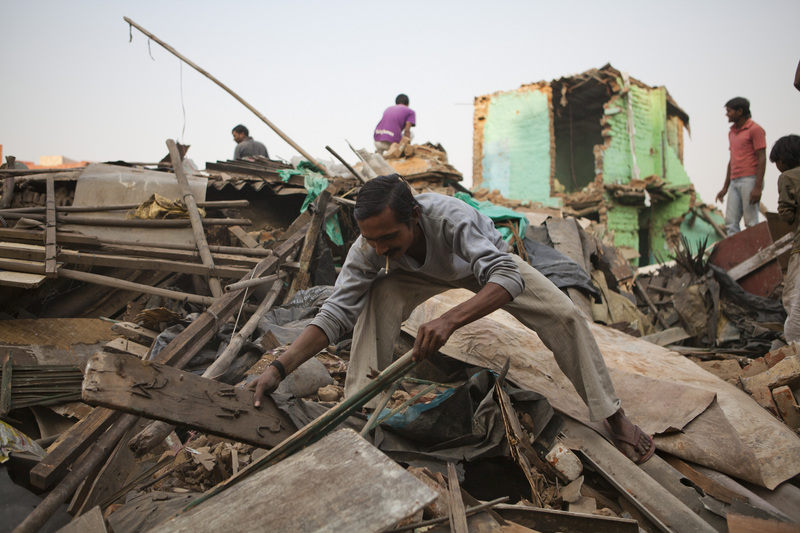
Forced evictions of India’s marginalised Dalit community in Delhi have been carried out by the country’s government
All over the world today, both in developing and developed states, liberal democracies and less free societies, there are groups who struggle to gain full access to freedom of expression for a wide range of reasons including poverty, discrimination and cultural pressures. While attention is often, rightly, focused on the damaging impact discrimination or poverty can have on people’s lives, the impact such problems have on free expression is less rarely addressed.
We are not talking about the classic examples of challenges to freedom of expression where repressive regimes attempt to block, limit and inhibit across a population as a whole. Rather we are looking at cases where in both more and less free societies particular groups face greater barriers to free expression than the wider population. Such groups can often be denied an equal voice, and active and meaningful participation in political processes and wider society. Poverty, discrimination, legal barriers, cultural restrictions, religious customs and other barriers can directly or indirectly block the voices of the already marginalised. How much do these barriers and lack of access to freedom of expression matter? A lot – as the examples below tell us.
Why is access to freedom of expression important? Freedom of expression is a fundamental human right. It also underpins most other rights and allows them to flourish. The right to speak your mind freely on important issues in society, access information and hold the powers that be to account, plays a vital role in the healthy development process of any society.
The lack of access to freedom of expression is a problem that particularly affects the already marginalised – that is, minorities facing discrimination both in developed and developing countries, from LGBT people in African countries, to disabled people in Western Europe. While the scale of their struggles varies greatly, the principle is the same: within the context of their society, these groups face greater barriers to freedom of expression than the majority. If they are unable to communicate their ideas, views, worries and needs effectively, means they are often excluded from meaningful participation in society, and from the opportunity to better their own circumstances. In other words, discrimination is one of the core elements of unequal access to freedom of expression.
Access to free expression is also vital both to support the development process and as a development goal in its own right. The connection was perhaps most famously put forward by Amartya Sen in his widely cited book — Development as Freedom — where he argued that expansion of freedom is both the primary end and the principal means of development
It is striking to note the way in which cultural and religious customs are sometimes used to clamp down on various minorities’ rights to expression and assembly in many countries around the world. Human Rights Watch’s latest world report states that “traditional values are often deployed as an excuse to undermine human rights.” One example of this is the caste system still in place in countries including India, Nepal and Pakistan. This is culturally-based discrimination on a major, systematic scale. A significant proportion of the Dalits, (lower-caste people, or “untouchables”) are barred from participation in public life and have a limited say in policies that directly affect them. In May 2008, the Dalit community in the Nesda village in the state of Gujarat attempted to stage a protest after being excluded from the government’s development funds allocation, by refusing to fulfil their historic “caste duty” of disposing of dead animals. The dominant caste in the region promptly blocked the protest through a ‘social boycott’, forbidding any social or economic interaction between Dalits and non-Dalits. This is only one example of Dalit’s being barred from having a say in development matters directly relating to them. When they attempted to stage a peaceful protest, they were only further marginalised, and their weak economic, social and political position further cemented. It’s a vicious cycle.
Article continues below
[/vc_column_text][/vc_column][/vc_row][vc_row][vc_column][vc_custom_heading text=”Stay up to date on free speech” font_container=”tag:p|font_size:28|text_align:left” use_theme_fonts=”yes”][vc_separator color=”black”][/vc_column][/vc_row][vc_row][vc_column width=”1/2″][vc_column_text]Index on Censorship is a nonprofit that defends people’s freedom to express themselves without fear of harm or persecution. We fight censorship around the world.
To find out more about Index on Censorship and our work protecting free expression, join our mailing list to receive our weekly newsletter, monthly events email and periodic updates about our projects and campaigns. See a sample of what you can expect here.
Index on Censorship will not share, sell or transfer your personal information with third parties. You may may unsubscribe at any time. To learn more about how we process your personal information, read our privacy policy.
You will receive an email asking you to confirm your subscription to the weekly newsletter, monthly events roundup and periodic updates about our projects and campaigns.[/vc_column_text][/vc_column][vc_column width=”1/2″][gravityform id=”20″ title=”false” description=”false” ajax=”false”][/vc_column][/vc_row][vc_row][vc_column][vc_separator color=”black”][/vc_column][/vc_row][vc_row][vc_column][vc_column_text]Another major area where discrimination has a knock-on effect on freedom of expression, is with regards to LGBT (lesbian, gay, bisexual, transgender) people across the globe. They are discriminated against for traditional, especially religious, reasons, with countries like Malaysia and Jamaica claiming that homosexuality is simply “not in our culture” when clamping down on LGBT civil rights. The right to express one’s sexuality is an aspect of the right to freedom of expression both in itself (as an expression of identity) but also because in countries where LGBT rights are not respected, the cultural expression of such rights is often also a political act. Cultural events organised by the LGBT community, such as pride parades, find themselves banned from exercising their right to freedom of assembly and expression, which happened last October in Serbia and Moldova. LGBT-themed art is also often times censored. One example reported by Index took place in Uganda, where a play about a gay man was banned, and its British producer, David Cecil, jailed and later deported. Countries also adopt laws that ban or circumscribe the discussion of homosexualty. In Russia, the Duma recently voted in favor of a draft law to ban “homosexual propaganda”. The amendment, passed by an overwhelming majority, prohibits the “propaganda of homosexuality” (in a practical sense, the discussion of homosexually) to protect children. The bill would in effect seriously curtail the right to freedom of expression of LGBT people.
Full access to freedom of expression is difficult to achieve in the absence of universal education and literacy. Around the world, illiteracy and inadequate (or non-existent) education hits the poorest hardest – both because education is often private, and because in poor countries where it is provided by the state, the standard of education can be low. Women and girls in the developing world are the groups most affected by illiteracy. There are a number of factors contributing to this, including higher levels of poverty among women, with culture and tradition also playing a significant part. There are still a number of societies around the world where it simply is not accepted that girls should receive education at all, and certainly not higher education. While the gender gap in education has been decreasing over time, in 2009, there were still around 35 million girls out of primary education, compared to 31 million boys. Lack of education is still the single biggest contributing factor to high and persistent levels of illiteracy — making it the most basic barrier to freedom of expression. It stops people from effectively participating in society, as it hinders them from being able to read, write and share written information, and thus fully engage with a range of issues or debates. Women make up the majority (64 per cent) of the nearly 800 million illiterate people in the world today. UNHCHR resolution 2003/42 identified this as a contributing factor to constraints on women’s rights to freedom of expression.
As well as the impact of poverty, discrimination and religious and cultural factors, governments and local authorities often put in place more formal mechanisms which result in significant restrictions on access to freedom of expression for minority groups. This can come in the form of restrictions on minority languages, such as Kurdish in Turkey, or barriers to political participation, such as the Bosnian constitutional ban on Jews and Roma running for high office.
Refugees are one of the hardest hit groups of people in terms of facing significant and basic restrictions on freedom of expression. A report by the UN High Commissioner for Refugees on the political rights of refugees stated that they, “…like other aliens, are entitled to the same freedom of expression, association and assembly as citizens.” However, a 2005 report investigating the state of Italian immigration detention centres showed that those detained in Italy were given few opportunities for communication with the outside world. Similarly, allegations of arbitrary deprivation of liberty in Greek detention centres are to be examined by independent experts selected by the UN Human Rights Council later this year. These are only a few examples of fundamental barriers on refugees’ access to fully express themselves. This, of course, cannot be separated from the wider discrimination as outlined above. Refugees constitute a group which often face prejudice and racism. Research from Cardiff University has for instance shown that they do not have the platform to counter the overwhelmingly negative way in which they are portrayed in the UK media. Refugees have universal rights like all other people around the world — states must recognise this and must act to tackle discrimination in all forms.
The barriers to free expression discussed here show why exercising our right to free expression is not as simple as living in a democratic society that broadly respects rights. Barriers that block or inhibit access to freedom of expression exist all over the world, in various forms and to varying degrees. Through being denied a voice, these groups are being denied a fundamental right, are facing barriers to their active participation in society, and, in many cases, are facing additional limits on their ability and opportunity to play a part in improving their own lives. Tackling the barriers from poverty to discrimination to laws that limit access to freedom of expression is vital.[/vc_column_text][/vc_column][/vc_row][vc_row][vc_column][vc_basic_grid post_type=”post” max_items=”12″ style=”load-more” items_per_page=”4″ element_width=”6″ grid_id=”vc_gid:1538131110552-4a302ad6-3f7c-10″ taxonomies=”346, 571, 986″][/vc_column][/vc_row]
