11 Jul 2017 | Azerbaijan, Azerbaijan Statements, Campaigns, Campaigns -- Featured, Statements
President of France, Mr. Emmanuel Macron
L’Élysée
55 Rue du Faubourg Saint-Honoré
75008 Paris, France
Ministry of Europe and Foreign Affairs of France
37, Quai d’Orsay
75351 Paris, France
Embassy of France to Azerbaijan
9, rue Rassoul Rza
AZ 1000, Baku, Azerbaijan
Subject: Support for political prisoners in Azerbaijan
11 July 2017
Dear President Macron,
We are writing to you on behalf of the undersigned organisations to draw your attention to the repressive free speech situation in Azerbaijan and to request your support to ensure the release of those imprisoned on politically motivated grounds in this country. In particular, we urge you to use your administration’s influence and leverage to help ensure the implementation of the ruling issued by the European Court of Human Rights (ECtHR) on the case of political opposition activist Ilgar Mammadov. He remains in prison, although the Court concluded that he was detained in retaliation for his criticism of the government. The persistent non-execution of the ruling in his case by the Azerbaijani authorities is undermining the credibility of the human rights protection regime established by the Council of Europe and sets a dangerous precedent for all those wrongfully prosecuted in Azerbaijan who turn to the Court in search of justice.
In view of France’s role as a leading European state and host country for the ECtHR and other Council of Europe bodies, as well as its well-developed cooperation with Azerbaijan in trade and other areas, your engagement on this issue would be particularly important. We welcome the moral, value-based and human rights oriented leadership that you have embraced for your presidency and are confident that you will vigorously pursue human rights in relations with Azerbaijan’s government on the basis of the common standards set out in the European Convention on Human Rights.
In the last few years, Azerbaijan’s government has carried out a relentless crackdown on alternative voices in the country. Legislation seriously restricting the operation of NGOs has been enforced, independent media subjected to pressure, the political opposition has been marginalised and human rights defenders, journalists and political opposition activists have been arrested, convicted and imprisoned on politically motivated charges.
While some of those imprisoned on such grounds have been released as a result of international pressure, new arrests continue to take place. For example, well-known blogger Mehman Huseynov was arrested and sentenced to two years in prison on defamation charges in March this year after speaking out about police ill-treatment. Journalist Aziz Orujov and opposition member Gozel Bayramli were arrested on other spurious charges in May, while in the same month journalist Afgan Mukhtarli was abducted in Georgia only to resurface in Azerbaijani custody. Many government critics imprisoned in previous years also remain behind bars, including Ilgar Mammadov.
Ilgar Mammadov, who chaired the political opposition REAL party and served as director of the Council of Europe School of Political Studies in Azerbaijan, was detained in February 2013 after monitoring and reporting on street protests in the town of Ismayilli, which resulted in clashes with the police. He was groundlessly accused of instigating these clashes and sentenced to seven years in prison on trumped-up charges of organising mass riots and using violence against police. In a judgment issued in May 2014, the ECtHR found that Ilgar Mammadov’s arrest and detention violated his rights to liberty and security, judicial review of his detention and to be presumed innocent under the European Convention on Human Rights. The court also found that Azerbaijan’s government had imposed restrictions on his rights for purposes other than those permitted, in violation of its obligations under the Convention. The court concluded that Mammadov was detained on political rather than legal grounds for the purpose of punishing and silencing him for his criticism of the government.
It has now been more than three years since the ECtHR adopted its judgement in this case, but the Azerbaijani authorities have consistently failed to implement it, although Azerbaijan is legally bound to comply with ECtHR rulings as a party to the European Convention on Human Rights. The Azerbaijani authorities have ignored repeated calls by other Council of Europe bodies, including its Committee of Ministers – which supervises the implementation of court rulings, its Secretary General and its Human Rights Commissioner to execute the judgment on Mammadov’s case. In November 2016, Azerbaijan’s Supreme Court rejected an appeal submitted by Mammadov on the basis of the ECtHR ruling and upheld his seven- year prison sentence. As a result, he continues to be unlawfully imprisoned.
To date the case of Ilgar Mammadov is the only one where the relevant authorities have failed to implement an ECtHR ruling that has found that the detention of an individual violates the right to liberty and security under the European Convention on Human Rights. As emphasized in a joint statement issued by 44 members of the Civic Solidarity Platform and the Sport for Rights Coalition in May 2017, the non-implementation of the ECtHR’s judgment on this case has developed into a test of the legitimacy of the Council of Europe as the guardian of human rights and the rule of law in the region. Thus, this case is no longer only about the unlawful deprivation of liberty of Ilgar Mammadov. On the contrary, it has become a case that risks weakening the effectiveness of the entire human rights protection regime established by the Council of Europe, as well as eroding confidence in this regime among people in Azerbaijan and other member states who turn to the ECtHR when their rights are being trampled upon by their governments.
We urge you to do all in your power to help prevent this dangerous outcome and to ensure the implementation of the ECtHR judgment in the case of Ilgar Mammadov, as well as the release of him and others arbitrarily detained on politically motivated grounds in Azerbaijan. To this end, we urge you in particular to:
- Support the civil society appeal to the Committee of Ministers of the Council of Europe to refer the case of Ilgar Mammadov back to the ECtHR on the grounds of non-execution of the judgment under article 46.4 of the European Convention on Human Rights, which sets out a mechanism in cases where parties to the convention refuse to abide by a final
- Issue a public statement on the importance of the execution of ECtHR judgments in view of the integrity and credibility of the human rights protection regime established by the Council of Europe, giving particular attention to the failure by the Azerbaijani authorities to date to implement the ruling on the case of Ilgar Mammadov and the wider implications of
- Prominently raise the case of Ilgar Mammadov and others who have been deprived of their liberty in retaliation for their exercise of fundamental freedoms in Azerbaijan, including Mehman Huseynov, Aziz Orujov, Gozel Bayramli and Afgan Mukhtarli in relations with the Azerbaijani authorities and use all available means of leverage to press for their
- Invite representatives of Azerbaijani civil society to a meeting to demonstrate support with them and to discuss the challenges they face and ways in which your administration can help address these challenges and promote improved respect for the standards protecting fundamental freedoms set out in the European Convention on Human
We thank you for your consideration of the issues raised in this letter and would be happy to provide additional information should you so request.
Sincerely,
- Association UMDPL (Ukraine)
- Bir Duino (Kyrgyzstan)
- Canadian Journalist for Free Expression (Canada)
- Center for Civil Liberties (Ukraine)
- Center for Participation and Development (Georgia)
- Centre for the Development of Democracy and Human Rights (Russia)
- Crude Accountability (USA)
- Eastern Partnership Civil Society Forum
- Fair Trails (UK)
- Freedom Files (Poland/Russia)
- Freedom Now (USA)
- German-Russian Exchange (DRA – Germany)
- Helsinki Committee for Human Rights (Serbia)
- Helsinki Foundation for Human Rights (Poland)
- Human Rights Matter (Germany)
- Human Rights Watch (USA)
- Index on Censorship (UK)
- International Partnership for Human Rights (Belgium)
- Kazakhstan International Bureau for Human Rights and the Rule (Kazakhstan)
- Legal Policy Research Center (Kazakhstan)
- Legal Transformation Center (Belarus)
- Libereco – Partnership for Human Rights (Germany/Switzerland)
- Moscow Helsinki Group (Russia)
- Norwegian Helsinki Committee (Norway)
- PEN America (USA)
- People in Need (Czech Republic)
- Public Association “Dignity” (Kazakhstan)
- Public Verdict Foundation (Russia)
- Regional Center for Strategic Studies (Azerbaijan)
- The Barys Zvozskau Belarusian Human Rights House (Belarus)
- The Kosova Rehabilitation Centre for Torture Victims (Kosovo)
- Truth Hounds (Ukraine)
- World Organisation against Torture (OMCT)
Human rights defenders from Azerbaijan who have signed the letter:
- Akif Gurbanov, Institute for Democratic Initiatives
- Alasgar Mammadli, lawyer
- Anar Mammadli, Election Monitoring and Democracy Training Center
- Annagi Hajibayli, Azerbaijan Lawyers Association
- Asabali Mustafayev, lawyer
- Bashir Suleymanli, Civil Rights Institute
- Intiqam Aliyev, Legal Education Society
- Khadija Ismayilova, human rights defender, investigative journalist
- Latafat Malikova, Regional Human Rights and Education Public Union
- Rasul Jafarov, Human Rights Club
- Samir Kazimli, human rights defender
- Xalid Bagirov, human rights defender, lawyer
- Zohrab Ismayıl, Public Association for Assistance to Free Economy
8 Jun 2017 | Azerbaijan, Digital Freedom, Europe and Central Asia, France, Mapping Media Freedom, News, Russia, Spain
[vc_row][vc_column][vc_column_text]

Over the last seven days, violence, intimidation, harassment and assault have been used to stop journalists from doing their job in the countries covered by Index on Censorship’s project Mapping Media Freedom.
Project manager Hannah Machlin explained why incidents in Azerbaijan and Ukraine are particularly alarming. She called the Azerbaijani incident “the most serious violation to press freedom in the past few days and it shows the situation in the region continues to be disturbing”.
The violation, which took place in late May, was against exiled Azerbaijani journalist Afgan Mukhtarli, who was abducted and allegedly tortured before being taken across the border and put in pre-trial detention in Azerbaijan.
“This shows that Georgia can’t be considered a safe haven for opposition journalists and activists as well as reiterates the continued crackdown on press freedom in Azerbaijan,” Machlin said. The incident has been reported to the Council of Europe’s platform on the protection of journalism to enable that organisation to pursue discussions with the country’s representatives. Index on Censorship joined other press freedom organisations to request the Georgian government take action on the incident.
Machlin said the situation in Ukraine “indicates a complex issue in a war-torn area”. She said the “the report shows that there’s still renewed violent intimidation tactics perpetrated by the separatists against Ukrainian public broadcasters in Donbas”. She explains this is interesting because it shows that the separatists are targeting channels of free information set up by Kyiv and that Ukraine is even trying to install public broadcasters in the eastern region controlled by self-proclaimed authorities because the country “is trying to put a press presence back in there”.
29 May 2017 – Azerbaijani journalist Afgan Mukhtarli was on his way home but never made it.
Mukhtarli was reportedly kidnapped from his neighbourhood after being forced into a car with his hands tied together. He was also beaten with a broken nose and bruises all over his head and face.
He then was transported back to Azerbaijan without a passport.
Mukhtarli was charged for illegally crossing the border, smuggling and resisting law enforcement and was also accused of being in possession of 10,000 EUR during the police search at the border.
One day later on 30 May, he was sentenced to three months in pretrial detention.
Mukihtarli’s wife and child in still in Tbilsi where they fled after escaping Azerbaijan in 2015 when Mukhtarli was threatened over his investigative reporting on corruption in the Azerbaijan.
26 May 2017 – Do TeBe, a new TV channel, endured a smashing of their front door by two unidentified assailants.
Police came to the channel, located in Donetsk oblast and are now investigating the incident.
Do TeBe’s deputy director Ilya Suzdalyev said “We are in the front line region, even what looks like hooliganism must be thoroughly investigated and perpetrators should be punished. Especially when it is, in fact, an attack on the public broadcaster, which was just created in Ukraine.”
Do TeBe TV channel is a regional branch of the National Public Broadcasting Company of Ukraine.
31 May 2017 – Outside the parliament building where the 2017 presidential inauguration took place journalists were assaulted by supporters of the new president.
Lidija Valtner, a journalist for daily Danas, was filming and interviewing an anti-government protester when she was assaulted by a group of supporters. Not only did they shove her around and try to take her mobile phone, but they also assaulted the protester she was interviewing.
Another journalist on the scene was reporting for Radio Belgrade when she was pushed and her equipment thrown to the ground.
Journalists for Balkan Investigative Reporting Network (BIRN) and Vice Serbia were also harassed with violence from the crowd whilst they were taking photos of the clashes. The police asked for their IDs after they witnessed a few men ripping a protest banner.
The assailants are still on the loose.
31 May 2017 – An unknown person called the editor-in-chief of the local news website Kurier.Sreda.Berdsk and threatened her and the editorial staff. Galina Komornikova’s outlet is located in the Novosibirsk region in Berdsk.
On the call, the individual said that “the Syrian theme is not one for journalists”.
The call may have been in response to a story published by the outlet the day before about the secret funeral of a Berdsk resident and Russian military officer. Yevgeni Tretyakov, who was killed in Syria on 15 May, may have belonged to private Russian military troops as he was not an official Russian army contractor.
The outlet then commented on the article saying “An unknown individual called us and promised to ‘come and handle us on behalf of law enforcement agencies’ following the article.”
Para-military private troops are not a new concept. Both Russian and international civil investigative groups and media outlets have been reporting evidence for these groups in the Syrian conflict.
A comment was also left by user “The Animal” stating “Actually, data on military casualties is classified, therefore, I would not be surprised if special people came to visit you to shake a bit, you and your sources.”
29 May 2017 – After elimination while being interviewed, tennis player Maxime Hamou tried to kiss channel Eurosport journalist Maly Thomas several times.
It was at the Rolland Garros tournament where Hamou grabbed Thomas and tired kiss her on the neck and cheek.[/vc_column_text][/vc_column][/vc_row][vc_row][vc_column][vc_column_text]
Mapping Media Freedom
Click on the bubbles to view reports or double-click to zoom in on specific regions. The full site can be accessed at https://mappingmediafreedom.org/[/vc_column_text][/vc_column][/vc_row]
15 May 2017 | Campaigns -- Featured, Denmark, Digital Freedom, Statements
[vc_row][vc_column][vc_column_text]We the undersigned respectfully urge the Danish Parliament to vote in favour of bill L 170 repealing the blasphemy ban in section 140 of the Danish criminal code, punishing “Any person who, in public, ridicules or insults the dogmas or worship of any lawfully existing religious community”.
Denmark is recognised as a global leader when it comes to the protection of human rights and freedom of expression. However, Denmark’s blasphemy ban is manifestly inconsistent with the Danish tradition for frank and open debate and puts Denmark in the same category as illiberal states where blasphemy laws are being used to silence dissent and persecute minorities. The recent decision to charge a man – who had burned the Quran – for violating section 140 for the first time since 1971, demonstrates that the blasphemy ban is not merely of symbolic value. It represents a significant retrograde step in the protection of freedom of expression in Denmark.
The Danish blasphemy ban is incompatible with both freedom of expression and equality before the law. There is no compelling reason why the feelings of religious believers should receive special protection against offence. In a vibrant and pluralistic democracy, all issues must be open to even harsh and scathing debate, criticism and satire. While the burning of holy books may be grossly offensive to religious believers it is nonetheless a peaceful form of symbolic expression that must be protected by free speech.
Numerous Danes have offended the religious feelings of both Christians and Muslims without being charged under section 140. This includes a film detailing the supposed erotic life of Jesus Christ, the burning of the Bible on national TV and the publication of cartoons depicting the prophet Muhammed. The Cartoon affair landed Denmark in a storm of controversy and years of ongoing terrorist threats against journalists, editors and cartoonists. When terror struck in February 2015 the venue was a public debate on blasphemy and free speech.
In this environment, Denmark must maintain that in a liberal democracy, laws protect those who offend from threats, not those who threaten from being offended.
Retaining the blasphemy ban is also incompatible with Denmark’s human rights obligations. In April 2017 Council of Europe Secretary General Thorbjørn Jagtland emphasised that “blasphemy should not be deemed a criminal offence as the freedom of conscience forms part of freedom of expression”. This position is shared by the UN’s Human Rights Committee and the EU Guidelines on freedom of expression and religion.
Since 2014, The Netherlands, Norway, Iceland and Malta have all abolished blasphemy bans. By going against this trend Denmark will undermine the crucial European and international efforts to repeal blasphemy bans globally.
This has real consequences for human beings, religious and secular, around the globe. In countries like Pakistan, Mauretania, Iran, Indonesia and Russia blasphemy bans are being used against minorities as well as political and religious dissenters. Denmark’s blasphemy ban can be used to legitimise such laws. In 2016 the UN Special Rapporteur on Freedom of Religion or Belief pointed out that “During a conference held in Jeddah (Saudi Arabia) [in 2015], the Danish blasphemy provision was cited by one presenter as an example allegedly indicating an emerging international customary law on “combating defamation of religions”.
Blasphemy laws often serve to legitimise violence and terror. In Pakistan, Nigeria and Bangladesh free-thinkers, political activists, members of religious minorities and atheists have been killed by extremists. In a world where freedom of expression is in retreat and extremism on the rise, democracies like Denmark must forcefully demonstrate that inclusive, pluralistic and tolerant societies are built on the right to think, believe and speak freely. By voting to repeal the blasphemy ban Denmark will send a clear signal that it stands in solidarity with the victims and not the enforcers of blasphemy laws.
Jacob Mchangama, Executive director, Justitia
Steven Pinker, Professor Harvard University
Ahmedur Rashid Chowdhury, Exiled editor of Shuddhashar, 2016 winner International Writer of Courage Award
Pascal Bruckner, Author
Ayaan Hirsi Ali, Human Rights Activist Founder of AHA Foundation,
Dr. Elham Manea, academic and human rights advocate (Switzerland)
Sultana Kamal, Chairperson, Centre for Social Activism Bangladesh
Deeyah Khan, CEO @Fuuse & founder @sister_hood_mag.
Fatou Sow, Women Living Under Muslim Laws
Elisabeth Dabinter, Author
William Nygaard, Publisher
Flemming Rose, Author and journalist
Jodie Ginsberg, CEO, Index on Censorship
Kenan Malik, Author of From Fatwa to Jihad
Thomas Hughes, Executive Director Article 19
Suzanne Nossel, executive director of PEN America
Pragna Patel – Director of Southall Black Sisters
Leena Krohn, Finnish writer
Jeanne Favret-Saada, Honorary Professor of Anthropology, Ecole Pratique des Hautes Etudes,
Maryam Namazie, Spokesperson, Council of Ex-Muslims of Britain
Fariborz Pooya, Host of Bread and Roses TV
Frederik Stjernfelt, Professor, University of Aalborg in Copenhagen
Marieme Helie Lucas, Secularism Is A Women’s Issue
Michael De Dora, Director of Government Affairs, Center for Inquiry
Robyn Blumner, President & CEO, Center for Inquiry
Nina Sankari, Kazimierz Lyszczynski Foundation (Poland).
Sonja Biserko, Founder and president of the Helsinki Committee for Human Rights in Serbia
James Lindsay, Author
Malhar Mali, Publisher and editor, Areo Magazine
Julie Lenarz – Executive Director, Human Security Centre, London
Terry Sanderson President, National Secular Society
Greg Lukianoff, CEO and President, FIRE
Thomas Cushman, Professor Wellesley College
Nadine Strossen, John Marshall Harlan II Professor of Law, New York Law School
Simon Cottee, the Freedom Project, Wellesley College
Paul Cliteur, professor of Jurisprudence at Leiden University
Lino Veljak, University of Zagreb, Croatia
Lalia Ducos, Women’s Initiative for Citizenship and Universals Rights , WICUR
Lepa Mladjenovic, LC, Belgrade
Elsa Antonioni, Casa per non subire violenza, Bologna
Bobana Macanovic, Autonomos Women’s Center, Director, Belgrade
Harsh Kapoor, Editor, South Asia Citzens Web
Mehdi Mozaffari, Professor Em., Aarhus University, Denmark
Øystein Rian, Historian, Professor Emeritus University of Oslo
Kjetil Jakobsen, Professor Nord University
Scott Griffen, Director of Press Freedom Programmes International Press Institute (IPI)
Henryk Broder, Journalist
David Rand, President, Libres penseurs athées — Atheist Freethinkers
Tom Herrenberg, Lecturer University of Leiden
Simone Castagno, Coordinamento Liguria Rainbow
Laura Caille, Secretary General Libres
Mariannes Andy Heintz, writer
Bernice Dubois, Conseil Européen des Fédérations WIZO
Ivan Hare, QC[/vc_column_text][/vc_column][/vc_row][vc_row][vc_column][vc_basic_grid post_type=”post” max_items=”12″ style=”load-more” items_per_page=”4″ element_width=”6″ grid_id=”vc_gid:1495443304735-e4b217b9-25e4-0″ taxonomies=”88, 53″][/vc_column][/vc_row]
18 Apr 2017 | Awards, Digital Freedom, News
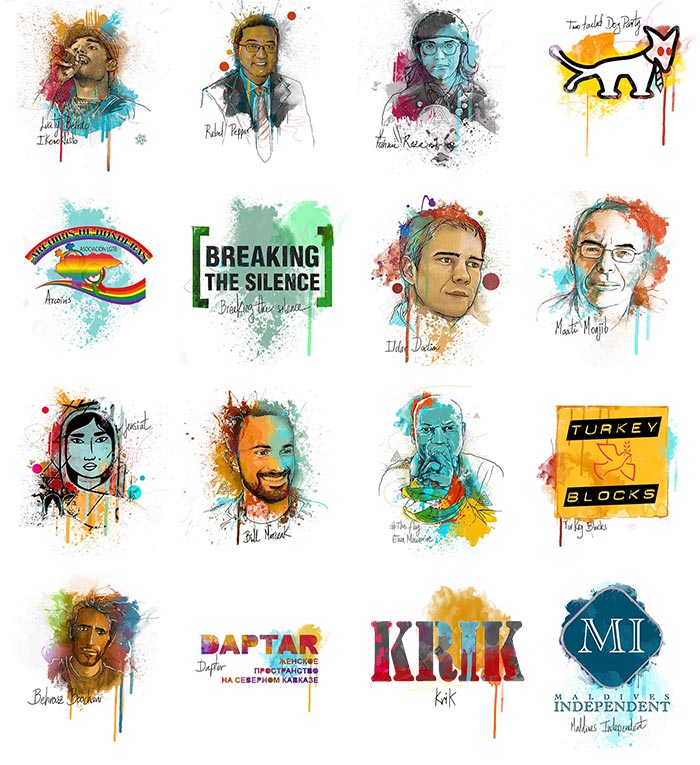
Each year, the Index on Censorship Freedom of Expression Awards gala honours courageous champions who fight for free speech around the world.
Drawn from more than 400 crowdsourced nominations, this year’s nominees include artists, journalists, campaigners and digital activists tackling censorship and fighting for freedom of expression. Many of the 16 shortlisted are regularly targeted by authorities or by criminal and extremist groups for their work: some face regular death threats, others criminal prosecution.
The gala takes place Wednesday 19 April at the Unicorn Theatre in London and will be hosted by comedian, actor and writer Katy Brand. If you aren’t lucky enough to be attending, you can catch the night’s events by tuning into coverage and a live Periscope stream @IndexCensorship beginning at 7:30PM BST.
We will be live tweeting throughout the evening on @IndexCensorship. Get involved in the conversation using the hashtag #IndexAwards2017.
Index on Censorship Freedom of Expression Awards nominees 2017
Arts
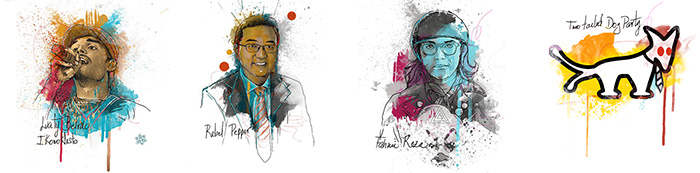
Luaty Beirão, Angola
Rapper Luaty Beirão, also known as Ikonoklasta, has been instrumental in showing the world the hidden face of Angolan President José Eduardo dos Santos’s rule. For his activism Beirão has been beaten up, had drugs planted on him and, in June 2015, was arrested alongside 14 other people planning to attend a meeting to discuss a book on non-violent resistance. Since being released in 2016, Beirão has been undeterred attempting to stage concerts that the authorities have refused to license and publishing a book about his captivity entitled “I Was Freer Then”, claiming “I would rather be in jail than in a state of fake freedom where I have to self-censor”.
Rebel Pepper, China
Wang Liming, better known under the pseudonym Rebel Pepper, is one of China’s most notorious political cartoonists. For satirising Chinese Premier Xi Jinping and lampooning the ruling Communist Party, Rebel Pepper has been repeatedly persecuted. In 2014, he was forced to remain in Japan, where he was on holiday, after serious threats against him were posted on government-sanctioned forums. The Chinese state has since disconnected him from his fan base by repeatedly deleting his social media accounts, he alleges his conversations with friends and family are under state surveillance, and self-imposed exile has made him isolated, bringing significant financial struggles. Nonetheless, Rebel Pepper keeps drawing, ferociously criticising the Chinese regime.
Fahmi Reza, Malaysia
On 30 January 2016, Malaysian graphic designer Fahmi Reza posted an image online of Prime Minister Najib Razak in evil clown make-up. From T-shirts to protest placards, and graffiti on streets to a sizeable public sticker campaign, the image and its accompanying anti-sedition law slogan #KitaSemuaPenghasut (“we are all seditious”) rapidly evolved into a powerful symbol of resistance against a government seen as increasingly corrupt and authoritarian. Despite the authorities’ attempts to silence Reza, who was banned from travel and has since been detained and charged on two separate counts under Malaysia’s Communications and Multimedia Act, he has refused to back down.
Two-tailed Dog Party, Hungary
A group of satirists and pranksters who parody political discourse in Hungary with artistic stunts and creative campaigns, the Two-tailed Dog Party have become a vital alternative voice following the rise of the national conservative government led by Viktor Orban. When Orban introduced a national consultation on immigration and terrorism in 2015, and plastered cities with anti-immigrant billboards, the party launched their own mock questionnaires and a popular satirical billboard campaign denouncing the government’s fear-mongering tactics. Relentlessly attempting to reinvigorate public debate and draw attention to under-covered or taboo topics, the party’s efforts include recently painting broken pavement to draw attention to a lack of public funding.
Campaigning
 Arcoiris, Honduras
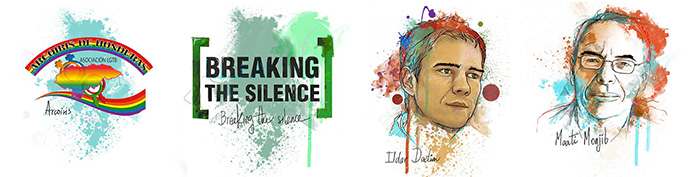
Established in 2003, LGBT organisation Arcoiris, meaning ‘rainbow’, works on all levels of Honduran society to advance LGBT rights. Honduras has seen an explosion in levels of homophobic violence since a military coup in 2009. Working against this tide, Arcoiris provide support to LGBT victims of violence, run awareness initiatives, promote HIV prevention programmes and directly lobby the Honduran government and police force. From public marches to alternative awards ceremonies, their tactics are diverse and often inventive. Between June 2015 and March 2016, six members of Arcoiris were killed for this work. Many others have faced intimidation, harassment and physical attacks. Some have had to leave the country because of threats they were receiving.
Breaking the Silence, Israel
Breaking the Silence, an Israeli organisation consisting of ex-Israeli military conscripts, aims to collect and share testimonies about the realities of military operations in the Occupied Territories. Since 2004, the group has collected over 1,000 (mainly anonymous) statements from Israelis who have served their military duty in the West Bank and Gaza. For publishing these frank accounts the organisation has repeatedly come under fire from the Israeli government. In 2016 the pressure on the organisation became particularly pointed and personal, with state-sponsored legal challenges, denunciations from the Israeli cabinet, physical attacks on staff members and damages to property. Led by Israeli politicians including the prime minister, and defence minister, there have been persistent attempts to force the organisation to identify a soldier whose anonymous testimony was part of a publication raising suspicions of war crimes in Gaza. Losing the case would set a precedent that would make it almost impossible for Breaking the Silence to operate in the future. The government has also recently enacted a law that would bar the organisation’s widely acclaimed high school education programme.
Ildar Dadin, Russia
A Russian opposition and LGBT rights activist, Ildar Dadin was the first, and remains the only, person to be convicted under a notorious 2014 public assembly law. Aimed at punishing anyone who breaks strict rules on protest, the law was enacted to silence dissent after a wave of demonstrations following Putin’s last election victory. Dadin’s crime was to stage a series of one-man pickets, often standing silently with a billboard, attempting to duck the cynical law and push for free expression. For his solo enterprise, Dadin was arrested and sentenced to three years imprisonment in December 2015. In November 2016, website Meduza published a letter smuggled from Dadin to his wife, exposing torture he claimed he was suffering alongside fellow prisoners. The letter, a brave move for a serving prisoner, was widely reported. A government investigation was prompted, and Dadin was transferred – against his will – to an undisclosed new location. A wave of public protest led to Dadin’s new location in a Siberian prison colony being revealed in January 2017. In February 2017, Russia’s constitutional and Supreme Courts suddenly quashed Dadin’s conviction, ruling he should be released and afforded opportunity for rehabilitation.
Maati Monjib, Morocco
A well-known academic who teaches African studies and political history at the University of Rabat since returning from exile, Maati Monjib co-founded Freedom Now, a coalition of Moroccan human rights defenders who seek to promote the rights of Moroccan activists and journalists in a country ranked 131 out of 180 on the Reporters Without Borders Press Freedom Index. His work campaigning for press freedom – including teaching investigative journalism workshops and using of a smartphone app called Story Maker designed to support citizen journalism – has made him a target for the authorities who insist that this work is the exclusive domain of state police. For his persistent efforts, Monjib is currently on trial for “undermining state security” and “receiving foreign funds.”
Digital Activism
 Jensiat, Iran
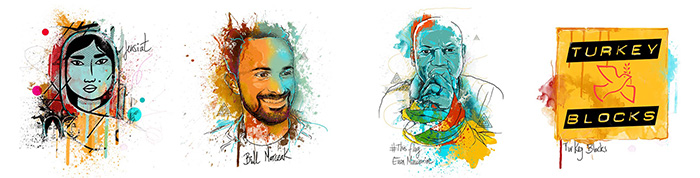
Despite growing public knowledge of global digital surveillance capabilities and practices, it has often proved hard to attract mainstream public interest in the issue. This continues to be the case in Iran where even with widespread VPN usage, there is little real awareness of digital security threats. With public sexual health awareness equally low, the three people behind Jensiat, an online graphic novel, saw an an opportunity to marry these challenges. Dealing with issues linked to sexuality and cyber security in a way that any Iranian can easily relate to, the webcomic also offers direct access to verified digital security resources. Launched in March 2016, Jensiat has had around 1.2 million unique readers and was rapidly censored by the Iranian government.
Bill Marczak, United States
A schoolboy resident of Bahrain and PhD candidate in computer science at the University of California, Berkeley, Bill Marczak co-founded Bahrain Watch in 2013. Seeking to promote effective, accountable and transparent governance, Bahrain Watch works by launching investigations and running campaigns in direct response to social media posts coming from activists on the front line. In this context, Marczak’s personal research has proved highly effective, often identifying new surveillance technologies and targeting new types of information controls that governments are employing to exert control online, both in Bahrain and across the region. In 2016 Marczak investigated several government attempts to track dissidents and journalists, notably identifying a previously unknown weakness in iPhones that had global ramifications.
#ThisFlag and Evan Mawarire, Zimbabwe
In May 2016, Baptist pastor Evan Mawarire unwittingly began the most important protest movement in Zimbabwe’s recent history when he posted a video of himself draped in the Zimbabwean flag, expressing his frustration at the state of the nation. A subsequent series of YouTube videos and the hashtag Mawarire used, #ThisFlag, went viral, sparking protests and a boycott called by Mawarire, which he estimates was attended by over eight million people. A scale of public protest previously inconceivable, the impact was so strong that private possession of Zimbabwe’s national flag has since been banned. The pastor temporarily left the country following death threats and was arrested in early February as he returned to his homeland.
Turkey Blocks, Turkey
In a country marked by increasing authoritarianism, a strident crackdown on press and social media as well as numerous human rights violations, Turkish-British technologist Alp Toker brought together a small team to investigate internet restrictions. Using Raspberry Pi technology they built an open source tool able to reliably monitor and report both internet shut downs and power blackouts in real time. Using their tool, Turkey Blocks have since broken news of 14 mass-censorship incidents during several politically significant events in 2016. The tool has proved so successful that it has begun to be implemented elsewhere globally.
Journalism
Behrouz Boochani, Manus Island, Papua New Guinea/Australia
Iranian Kurdish journalist Behrouz Boochani fled the city of Ilam in Iran in May 2013 after the police raided the Kurdish cultural heritage magazine he had co-founded, arresting 11 of his colleagues. He travelled to Australia by boat, intending to claim asylum, but less than a month after arriving he was forcibly relocated to a “refugee processing centre” in Papua New Guinea that had been newly opened. Imprisoned alongside nearly 1000 men who have been ordered to claim asylum in Papua New Guinea or return home, Boochani has been passionately documenting their life in detention ever since. Publicly advertised by the Australian Government as a refugee deterrent, life in the detention centre is harsh. For the first 2 years, Boochani wrote under a pseudonym. Until 2016 he circumvented a ban on mobile phones by trading personal items including his shoes with local residents. And while outside journalists are barred, Boochani has refused to be silent, writing numerous stories via Whatsapp and even shooting a feature film with his phone.
Daptar, Dagestan, Russia
In a Russian republic marked by a clash between the rule of law, the weight of traditions, and the growing influence of Islamic fundamentalism, Daptar, a website run by journalists Zakir Magomedov and Svetlana Anokhina, writes about issues affecting women, which are little reported on by other local media. Meaning “diary”, Daptar seeks to promote debate and in 2016 they ran a landmark story about female genital mutilation in Dagestan, which broke the silence surrounding that practice and began a regional and national conversation about FGM. The small team of journalists, working alongside a volunteer lawyer and psychologist, also tries to provide help to the women they are in touch with.
KRIK, Serbia
Crime and Corruption Reporting Network (KRIK) is a new independent investigative website which was founded by a team of young Serbian journalists intent on exposing organised crime and extortion in their country which is ranked as having widespread corruption by Transparency International. In their first year they have published several high-impact investigations, including forcing Serbia’s prime minister to admit that senior officials had been behind nocturnal demolitions in a Belgrade neighbourhood and revealing meetings between drug barons, the ministry of police and the minister of foreign affairs. KRIK have repeatedly come under attack online and offline for their work –threatened and allegedly under surveillance by state officials, defamed in the pages of local tabloids, and suffering abuse including numerous death threats on social media.
Maldives Independent, Maldives
Website Maldives Independent, which provides news in English, is one of the few remaining independent media outlets in a country that ranks 112 out of 180 countries on the Reporters Without Borders Press Freedom Index. In August 2016 the Maldives passed a law criminalising defamation and empowering the state to impose heavy fines and shut down media outlets for “defamatory” content. In September, Maldives Independent’s office was violently attacked and later raided by the police, after the release of an Al Jazeera documentary exposing government corruption that contained interviews with editor Zaheena Rasheed, who had to flee for her safety. Despite the pressure, the outlet continues to hold the government to account.
