4 Mar 2014 | Africa, News, Uganda
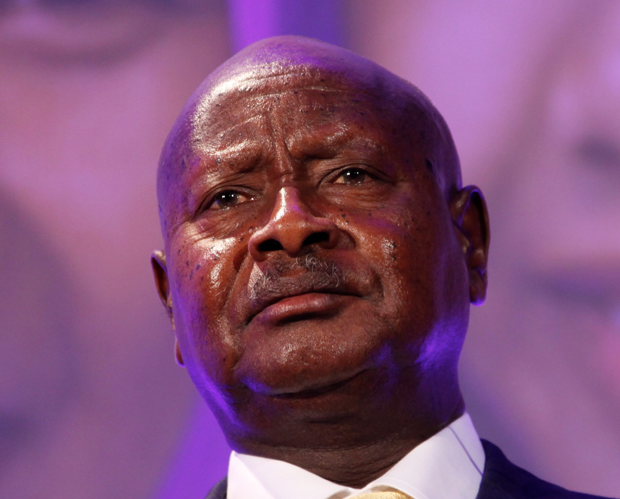
Ugandan president Yoweri Museveni (Photo: Wikipedia)
President Yoweri Museveni signed Uganda’s Anti-Homosexuality bill into law on 24 February, and the fallout has already started. The World Bank has cancelled a $90 million loan to the country, European Union countries are threatening to withdraw aid, and the United States is reviewing its cooperation with Uganda. President Museveni has hit back, saying Uganda would raise its own money to fund its development projects. The US, which was the first voice its discontent, was told off: “Our relationship with the US was not based on homosexuality.” David Bahati, the MP who introduced the bill, said in an interview that the west is imposing social imperialism on Uganda, a thing they are not ready to accept.
“I will work with the Russians,” Museveni said.
So the president feels that even without the west, Uganda has development partners that it can still rely on. Considering he was not supportive of the so-called Bahati bill in its initial stages, Museveni’s last-minute change of heart is baffling.
The law stipulates that punishment for homosexuals will be a life jail sentence, while those who “attempt” to engage in homosexual acts face seven years in prison. The law also targets journalists and others seen to participate in “production, procuring, marketing, broadcasting, disseminating, publishing of pornographic materials for purposes of promoting homosexuality”. It even attempts to reach beyond the country’s borders, implong that Uganda will have to ask countries where gay Ugandans live to extradite them so that they can face the law.
Public opinion goes both ways. Many are happy that the president is standing firm against “the west” and the perceived scheme of promoting homosexuality in Uganda and Africa at large. Others claim that the president signed this law to achieve cheap popularity with the 2016 elections around the corner. It is also claimed that President Museveni is just playing his usual political games. When the anti-homosexuality bill was passed by parliament early this year, one of the president’s legal brains, Fox Odoi, publicly stated that if the president ever assents to this law, he would challenge it in court.
Odoi has now teamed up with Ugandan journalist Andrew Mwenda to take the case to the constitutional court. It is alleged that this was Museveni’s game plan: sign the law, annoy the west and appease the locals, and then have his henchmen challenge this law in court and make sure it remains there forever. In this case, the west will soften their stance towards Museveni, and the locals will be told to be patient and leave the legal process to take its course. In that case, he will have killed two birds with one stone, and would go for the 2016 elections with both the west and the locals in his pockets.
Civil society has also been critical, not because the anti-homosexuality law is unnecessary per se, but they have questioned whether homosexuality is the biggest problem Uganda faces today, and warrants such urgency. With high youth unemployment, squalid conditions in health facilities and theft of public funds in government institutions, they believe priorities should lie somewhere else other than “fixing” homosexuality.
“The timing for the assenting to this law by the president is meant to divert the country’s attention from the discussion on the deployment of Ugandan forces in South Sudan and our mandate there. This law is very diversionary, and it is unfortunate that Ugandans have swallowed the president’s bait,” said Godber Tumushabe, a renowned civil society activist.
Opposition leader Kizza Besigye has criticised the new law, saying that homosexuality was not “foreign” and that the issue was being used to divert attention from domestic problems. “Homosexuality is as Ugandan as any other behaviour, it has nothing to do with the foreigners,” said Besigye. He accused the government of having “ulterior motives” and using the issue to divert attention from other issues, including Uganda’s military backing of neighbouring South Sudan’s government against rebel forces.
Sweden’s Finance Minister Anders Borg, who visited the country a day after the signing of the law, said it “presents an economic risk for Uganda”.
But Besigye accused them of double standards, saying that their cutting of aid over gay rights alone was “misguided”:
”They should have cut aid a long time ago because of more fundamental rights, our rights have been violated with impunity and they kept silent,” he said.
This article was posted on March 4, 2014 at indexoncensorship.org
13 Feb 2014 | Belarus, News
Join Index at a presentation of a new policy paper on media freedom in Belarus on 19 February, 2014, 15.00 at the Office for Democratic Belarus in Brussels.
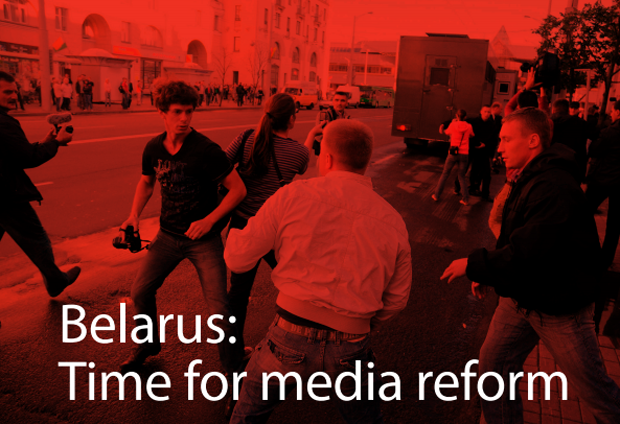
This article is the fourth of a series based on the Index on Censorship report Belarus: Time for media reform.
One of the greatest chills on the freedom of expression in Belarus is the disappearance, murder, suspicious suicide and impunity against media workers that has demonstrated the very real physical risks that those who practice independent journalism in Belarus face. Since the beginning of Alexander Lukashenko’s presidency, a number of journalists have been murdered or died in suspicious circumstances to considerable international condemnation. Journalists today inside Belarus still face physical violence and threats. A number of high profile journalists have fled the country to protect their personal safety.
No progress has been made on investigations of the deaths of the journalists Dzmitry Zavadski (disappeared on 7 July 2000), Veranika Charkasava (brutally murdered on 20 October 2004), Vasil Hrodnikau (found dead on 18 October 2005), Aleh Biabenin (found dead on 3 September 2010). The public still has no clear answers over the circumstances of their deaths, nor have any of the perpetrators of these crimes been brought to justice. Zavadski’s body has never been found and instigators of his murder has never been identified and tried; Charkasava’s murderer has never been found and the investigation into the case was suspended; details of Hrodnikau’s and Biabenin’s cases have led their family and colleagues to question official results of the investigations. The European Parliament has called for a full investigation into Biabenin’s death.
“As long as even one journalist is prosecuted or intimidated for critical speech, the whole media community feels threatened and the chilling effect remains,” said the OSCE Representative on Freedom of the Media, Dunja Mijatović, during her official visit to Minsk in June 2013. Unfortunately, physical violence against journalists and preventing them from conducting of their professional duties have become one of the major concerns over the past several years in Belarus.
Detentions of journalists
The constitution of Belarus grants any citizen the right to gather and impart information. Moreover, Article 34 of the Law “On Mass Media” provides for the right of a journalist to be present “in the area of armed conflicts or emergencies, mass actions, in places of other socially important events and transmit information from there.”
Despite of these legal provisions, the arbitrary detention of journalists and the interference into their professional activities continues unabated, especially during street actions by civil society and the opposition. For instance, at least 24 journalists were detained and at least 21 were attacked and injured by the riot police on 19 December 2010 in Minsk while they covered a major rally by the opposition in Independence Square that protested against the results of the presidential election.
Monitoring by the Belarusian Association of Journalists noted at least 265 cases of the detention of journalists in Belarus in 2011-2013.
In 2011 there were 160 of such cases, and at least seven instances of use of physical violence by the police against journalists. The most significant number of detentions happened during the summer of 2011, during peaceful street actions organised by the Revolution Through Social Networks movement. At least 103 instances of detentions of journalists across the country were noted. The arrests were brutal; the police prevented reporters from filming the rallies, in some cases by using excessive force and damaging journalists’ professional equipment. At least 22 journalists who were detained while covering the actions were summoned to courts for alleged “participation in unsanctioned actions”, 13 of them served actual administrative arrests, and the rest were sentenced to fines.
In 2012, 60 cases of detention of journalists, distributors of non-state press and social media activists were noted. In most cases the detentions lasted for 2-3 hours, but in several cases they led to fines and detention for up to 15 days. At least 13 journalists received official warnings of prosecutors’ offices in 2012; most of them were warned for cooperation with foreign media without accreditation. At least four journalists were summoned for interrogation by the KGB.
In 2013 45 instances of journalists’ detentions have been noted as of November. Four of them led to administrative arrests of 3 to 12 days each. Prosecutors’ offices issues at least eight official warnings to journalists for their activities.
Leaders of the Belarusian Association of Journalists, Zhanna Litvina and Andrei Bastunets, met the head of Minsk city police Aliaksandr Barsukou on 23 October 2013 to discuss the issue of the police interference in journalists’ professional activities. During the meeting Barsukou noted the number of detentions of journalists decreased in comparison with 2011-2012. Just a week after the meeting, seven journalists were detained by the police in Minsk while covering the Mourning Marathon, an event to commemorate victims of Stalin’s repressions.
Travel restrictions
Several journalists and media experts were banned for travelling abroad by the authorities of the country in 2012. It became a new form of pressure on independent media community.
Zhanna Litvina, the chairperson of the Belarusian Association of Journalists, Andrei Dynko, the editor of Nasha Niva newspaper, and Mihas Yanchuk, a representative of Belsat TV channel, were denied the right to leave the country. Litvina was not allowed out at the Minsk National Airport; Dynko and Yanchuk were forced to leave trains on the borders with Lithuania and Poland respectively by Belarusian border guards. No legal grounds for such restrictions were provided; the ban was lifted only in September after appeals of the persons affected to courts. Officers of the department of citizenship and migration explained the situation as a software glitch. It is noteworthy that the alleged bug disproportionately affected independent journalists, opposition leaders and civil society activists.
Restrictions of activities of foreign correspondents
The authorities use different methods to restrict the distribution of information about Belarus’ internal situation abroad. Reporters for Belsat TV channel and Radio Racyja, a media operator based in Poland that broadcasts in the Belarusian language, have both been refused official accreditation to operate within Belarus. European broadcasters have also been affected. In March 2012 camera crews of SVT (Sweden) and TV3 (Estonia) television channels were detained in Minsk, despite both having being officially accredited in Belarus.
Several foreign journalists faced obstacles during the September 2012 parliamentary elections. Three hundred fifty foreign reporters were officially accredited to cover the elections, but four journalists from Germany and Sweden were denied entry visas. Two more Swedish journalists, Erik Von Platen and Gustaff Andresson, had to spend 16 hours at the Minsk International Airport before their accreditation was confirmed and their visas were issued. It is unclear what criteria the authorities apply to issue visas for foreign correspondents.
On the same day, 21 September 2012, Amos Roberts, Australian SBS TV journalist, was searched at the customs of the Minsk airport as he was trying to leave Belarus after a week of legitimate work in the country. His professional equipment was confiscated; the procedures of a search and confiscation were not followed. The journalist was allowed to leave the country the following day, but his equipment was not returned to him until one year later, in October 2013.
Physical safety of journalists and impunity remain serious problems that have a chilling effect of media freedom in Belarus. The most acute issue is police interference with journalistic activities and arbitrary detentions of reporters that cover mass street actions. At least 265 cases of the detention of journalists in Belarus in 2011-2013 are noted. The police chiefs are reluctant to recognise and address the problem, despite constant calls from Belarusian and international organisations.
Physical violence against journalists: Recommendations
The practice of arbitrary detention of journalists, including those that cover street actions, should be immediately stopped.
All cases of interference of the police and other state officials into legitimate journalistic activity should be investigated, and those responsible should be brought to account.
Part 1 Belarus: Europe’s most hostile media environment | Part 2 Belarus: A distorted media market strangles independent voices | Part 3 Belarus: Legal frameworks and regulations stifle new competitors | Part 4 Belarus: Violence and intimidation of journalists unchecked | Part 5 Belarus must reform its approach to media freedom
A full report in PDF is available here
This article was published on 13 February 2014 at indexoncensorship.org
28 Jan 2014 | News, Politics and Society, Religion and Culture, Tunisia
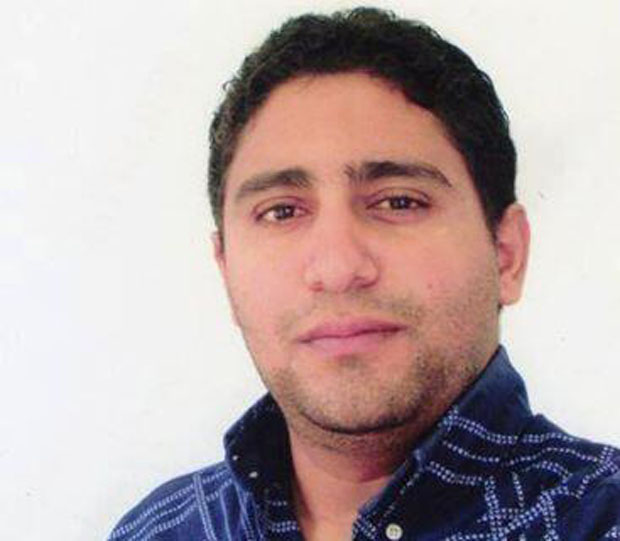
The imprisonment of Jabeur Mejri over the publication of prophet Muhammad cartoons on his Facebook page is set to come to an end soon, reports Tunisian local media.
Mohamed Attia, vice-president of the Tunisian League for Human Rights (LTDH) told privately-owned radio station Shems FM that Mejri will soon be released, and that he will travel to Sweden where he has allegedly obtained political asylum. The announcement comes after civil society groups visited Mejri in prison on 21 January.
The initiative was led by the International Federation for Human Rights (FIDH) and included representatives from the LTDH, the Tunisian Forum for Socio Economic Rights (FTDES) and Mejri’s support committee.
Mejri has been in prison for nearly two years for posting cartoons of the Prophet Muhammad on his Facebook page. He was sentenced to a seven-and-a-half year jail term for “publishing material liable to cause harm to public order or good morals”, “insulting others through public communication networks” and “assaulting public morals”.
His friend Ghazi Beji, who received the same sentence in absentia after fleeing the country, obtained political asylum in France last year.
“I cannot enjoy my freedom in Tunisia. So, I have to leave my country,” Jabeur told Henda Chennaoui, a member of his support committee, during last week’s visit.
But in order to leave the country, Mejri must first obtain a presidential pardon. Despite Tunisian president Moncef Marzouki promising this on a number of occasions, he has so far not kept his pledge.
Meanwhile, Tunisia’s National Constituent Assembly (NCA) overwhelmingly approved a new constitution on Sunday. Though the charter enshrines freedom of expression, provisions that restrict free speech over religious issues have raised concerns.
Article 6, on freedoms of belief, conscience and religious practice, tasks the State with “protecting sanctities”. The article was expanded in early January to ban “Takfir” (apostasy accusations), at the request of opposition representatives in the NCA. The same article was further amended last week to prohibit the “undermining of sanctities”.
“The state sponsors religion, guarantees freedom of belief and conscience and religious practices, protects sanctities, and ensures the neutrality of mosques and places of worship away from partisan instrumentalisation. The state commits to spreading values of moderation and tolerance, and to protect the sacred and prevent its undermining. [The state] also commits to ban and fight accusations of apostasy (“takfir”) hate speech and incitement violence,” it states.
“Article 6 remains the shame of this constitution: a clear and definite restriction of free speech,” Amira Yahyaoui, president of human rights NGO Albawsala, tweeted on 23 January.
“There are several vague points that open the door to the return of censorship, especially with the establishment of the protection of the Sacred [notion],” Lotfi Azouz, director of the Tunis bureau of Amnesty International said at a press conference on Saturday. Free speech provisions in the constitution are “chained up by principles that could harm this freedom”. He further added that article 6 “establishes censorship in the name of protecting the sacred”.
13 Jan 2014 | Europe and Central Asia, European Union, Politics and Society
This article is part of a series based on our report, Time to Step Up: The EU and freedom of expression
Collectively, the European Union of 28 member states has an important role to play in the promotion of freedom of expression in the world. Firstly, as the world’s largest economic trading block with 500 million people that accounts for about a quarter of total global economic output, it still has significant economic power. Secondly, it is one of the world’s largest “values block” with a collective commitment to the Universal Declaration of Human Rights, the International Covenant on Civil and Political Rights and perhaps more significantly, the European Convention on Human Rights. The Convention is still one of the leading supranational human rights treaties, with the possibility of enforcement and redress. Finally, Europe accounts for two of the five seats on the UN Security Council (Britain and France), so has a crucial place in the global security framework. The EU itself has limited foreign policy and security powers (although these powers have been enhanced in recent years), leaving significant importance to the foreign policies of the member states. Where the EU acts with a common approach it has leverage to help promote and defend freedom of expression globally.
How the European Union supports freedom of expression abroad
The European Union has a number of instruments and institutions at its disposal to promote freedom of expression in the wider world, including its place as an observer at international fora, its bilateral and regional agreements, the European External Action Service (EEAS) and geographic policies and instruments including the European Neighbourhood Policy (ENP) and the European Neighbouring and Partnership Instrument (ENPI). The EU places human rights in its trade and aid agreements with third party countries and has over 30 stand-alone human rights dialogues. The EU also provides financial support for freedom of expression through the European Development Fund (EDF), the Development Co-operation Instrument (DCI), the European Instrument for democracy and human rights (EIDHR) and the European Endowment for Democracy (EED). The EU now also has a Special Representative for Human Rights. Since 1999, the EU has published an annual report on human rights and democracy in the world. The latest report, adopted in June 2012, contains a special section on freedom of expression, including freedom of expression and “new media”. It recalls the EU’s commitment to “fight for the respect of freedom of expression and to guarantee that pluralism of the media is respected” and emphasises the EU’s support to free expression on the internet.
The European Union has two mechanisms to financially support freedom of expression globally: the European Instrument for democracy and human rights (EIDHR) and the European Endowment for Democracy (EED). The latter was specially created after the Arab Spring in order to resolve specific criticism of the EIDHR: that it didn’t support political parties, non-registered NGOs and trade unions and could not react quickly to events on the ground. The EED is funded by, but is autonomous from, the European Commission, with support from member states and Switzerland. The aims of the EED, to provide rapid and flexible funding for pro-democratic activists in authoritarian states and democratic transitions, is potentially a “paradigm shift” according to experts that will have to overcome a number of challenges, in particular a hesitation towards funding political parties and the most active and confrontational of human rights activists. The EU also engages with the UN on human rights issues at the Human Rights Council (HRC) and in the 3rd Committee of the General Assembly. The EU, as an observer along with its member states, is one of the more active defenders of freedom of expression in the HRC. Promoting and protecting freedom of expression was one of the EU’s priorities for the 67th Session of the UN General Assembly (September 2012-2013). The European Union was also instrumental in the adoption of a resolution on the “Safety of Journalists” (drafted by Austria) in September 2012. The European Union is most effective at the HRC where there is a clear consensus among member states within the Union . Where there is not, for instance on the issue of blasphemy laws, the Union has been less effective at promoting freedom of expression.
The EU and its neighbourhood
The EU has had mixed success in promoting freedom of expression in its near neighbourhood. Enlargement has clearly been one of the European Union’s most effective foreign policy tools. Enlargement has had a substantial impact both on the candidate countries’ transition to democracy and respect for human rights. With enlargement slowing, the leverage the EU has on its neighbourhood is under pressure. Alongside enlargement, the EU engages with a number of foreign policy strategies in its neighbourhood, including the Eastern Partnership and the partnership for democracy and shared prosperity with the southern Mediterranean. This section will look at the effectiveness of these policies and where the EU can have influence.
The EU and freedom of expression in its eastern neighbourhood
Europe’s eastern neighbourhood is home to some of the least free places for freedom of expression. The collapse of the former Soviet Union and the enlargement of the European Union has significantly improved human rights in eastern Europe. There is a marked difference between the leverage the European Union has on countries where enlargement is a real prospect and the wider eastern neighbourhood, where it is not, in particular for Russia and Central Asia. In these countries, the EU’s influence is more marginal. Enlargement has clearly had a substantial impact both on the candidate countries’ transition to democracy and their respect for human rights because since the Treaty of Amsterdam, respect for human rights has been a condition of accession to the EU. In 1997, the Copenhagen criteria were outlined in priorities that became “accession partnerships” adopted by the EU and which mapped out the criteria for admission to the EU. They related in particular, to freedom of expression issues that needed to be rectified. With the enlargement process slowing since the “big bang” in 2004, and countries such as Ukraine and Moldova having no realistic prospect of membership regardless of their human rights record, the influence of the EU is waning in the wider eastern neighbourhood.
After enlargement, the Eastern Partnership is the primary foreign policy tool of the European Union in this region. Launched in 2009, the initiative derives from the EU’s Neighbourhood Policy (ENP), which is specific about the importance of democracy, the rule of law and respect for human rights. In this region, the partnership covers Armenia, Azerbaijan, Belarus, Georgia, Moldova and Ukraine. Freedom of expression has been raised consistently during human rights dialogues with these six states and in the accompanying Civil Society Forum. The Civil Society Forum has also been useful in helping to coordinate the EU’s efforts in supporting civil society in this region. Although it has never been the main aim of the Eastern Partnership to promote freedom of expression, it has had variable success in promoting this right with concrete but limited achievements in Belarus, the Ukraine, Georgia and Moldova; with a more ineffectual role being seen in Azerbaijan.
In recent years, since the increased input of the EEAS in the ENP, the policy has become more markedly political, with a greater emphasis on democratisation and human rights including freedom of expression after a slow start. In particular, freedom of expression was raised as a focus for the ENP after its review in 2010-2011. This is a welcome development, in marked contrast to the technical reports of previous years. This also echoes the increased political pressure from member states that have been more public in their condemnation of human rights violations, in particular regarding Belarus. Belarus is one Eastern Partnership country where the EU has exerted a limited amount of influence. The EU enhanced its pressure on the country after the post-presidential election clampdown beginning in December 2010, employing targeted sanctions and increasing support to civil society. This has arguably helped secure the release of some of the political prisoners the regime detained. Yet the lack of a strong sense of strategy and unity within the Union has hampered this new pressure to deliver more concrete results. Likewise, the EU’s position on Ukraine has been set back by internal divisions, even though the EU’s negotiations on the Association Agreement included specific reference to freedom of expression.
In Azerbaijan, the EU’s strategic oil and gas interests have blunted criticism of the country’s poor freedom of expression record. Azerbaijan holds over 89 political prisoners, significantly more than in Belarus, yet the EU’s institutions, individual member states and European politicians have failed to be vocal about these detentions, or other freedom of expression violations. In the EU’s wider neighbourhood outside the Eastern Partnership, the EU has taken a less strategic approach and accordingly has been less successful in either raising freedom of expression violations or helping to prevent them.
The European Union’s relationship with Russia has not been coherent on freedom of expression violations. While the institutions of the EU have criticised specific freedom of expression violations, such as the Pussy Riot sentencing, they were slow to criticise more sustained attacks on free speech such as the clampdown on civil society and the inspections of NGOs using the new Foreign Agents Law. The progress report of EU-Russia Dialogue for Modernisation fails to mention any specific freedom of expression violations in Russia. The EU has also limited its financial involvement in supporting freedom of expression in Russia, unlike in other post-Soviet states. The EU is not united on this criticism: individual European Union member states such as Sweden and the UK are more sustained in their criticisms of Russia’s free speech violations, whereas other member states such as Germany tend to be less critical. It is argued that Russia’s powerful economic interests have facilitated a significant lobbying operation including former politicians that works to reduce criticism of Russia’s freedom of expression violations.
In this region, the European Union’s protection of freedom of expression is weakest in Central Asia. While the EU has human rights dialogues with Kazakhstan, Kyrgyzstan, Tajikistan, Turkmenistan and Uzbekistan, it has not acted strategically to protect freedom of expression in these countries. The EU dramatically reduced its leverage in Uzbekistan in 2009 by relaxing arms sanctions with little in return from the Uzbek authorities, who continue to fail to abide by international human rights standards. Arbitrary arrests, beatings and torture at the hands of the security services, as well as unfair trials of the regime’s critics are all commonplace. The European Parliament’s special rapporteur report of November 2012, took a tough stance on human rights in Kazakhstan, making partnership conditional on respect for Article 10 rights. But, this was undermined by High Representative Baroness Ashton’s visit to the country in November 2012, where she failed to raise human rights violations at all.
This lack of willingness to broach freedom of expression issues continued during Baroness Ashton’s first official visit to four of the five Central Asian republics: Kyrgyzstan, Uzbekistan, Tajikistan and Kazakhstan. In Kyrgyzstan she additionally attended an EU-Central Asia ministerial meeting, where the Turkmen government (one of the top five most restrictive countries in the world for freedom of expression) was represented. Baroness Ashton’s lack of vocal support for human rights was condemned by local NGOs and international watchdogs.