20 Aug 2014 | Digital Freedom, News, Turkey Statements
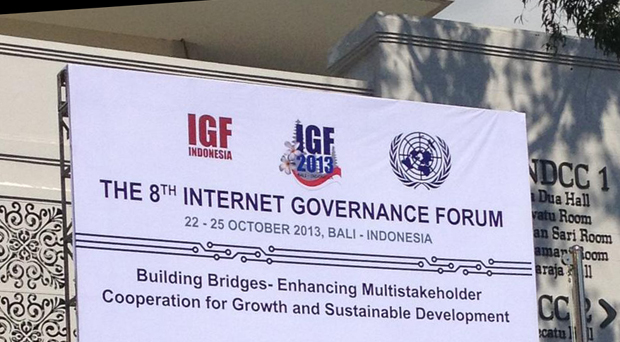
IGF 2013 was in Indonesia. This time Turkey plays host.
This year’s Internet Governance Forum (IGF) — a high-profile, United Nations-mandated annual conference on issues surrounding governance of the internet — is taking place in Istanbul, Turkey. But Yaman Akdeniz and Kerem Altiparmak, two renowned Turkish internet rights advocates, are boycotting it. Here they explain why.
Between May 2007 and July 2014 Turkey blocked access to approximately 48,000 websites subject to its controversial Internet Law No 5651. Although the law is ostensibly aimed to protect children from harmful content, from the very beginning it has been used to prevent adults’ access to information. In February amendments made to the legislation extended blocking provisions to include URL-based blocking of internet content. The same amendments compelled all internet service providers (ISPs) to be part of an association for access providers to centrally enforce blocking orders within four hours of receipt. It also introduced one-to-two-year data retention requirements for hosting companies and all ISPs. Furthermore, subject to new provisions, ISPs are required to take all necessary measures to block alternative access means such as proxy websites and other circumvention services including, possibly, VPN services. The amended version of the law also shields staff from the Presidency of Telecommunications and Communication (TIB) from prosecution if they commit crimes in their work for the telecoms authority.
In March access to both Twitter and YouTube was blocked arbitrarily and unlawfully by the TIB. With both blocking orders the government aimed to prevent the circulation of graft allegations ahead of local elections to be held on 30 March. During the blocking period, the authorities also ordered major ISPs to hijack Google and OpenDNS’s DNS servers, tampering with the DNS system to surveil communications, as well as to prevent users from circumventing blocking orders. Turkey’s constitutional court stated that the blocking of Twitter by TIB constituted a grave intervention on the freedom of expression of all Twitter users. Furthermore, in a 14-2 majority judgment, the court decided that the YouTube ban infringed on freedom of expression protected by the constitution.
However, despite these strong rulings, Twitter decided to implement its country withheld content policy for Turkey and started to block access to certain Turkish accounts and individual tweets. It was reported in June that Twitter complied with 44 out of 51 court decisions since they visited Ankara on 14 April, and the US-based social media platform continues to aid and assist Turkish authorities in censoring political content.
Facebook has also banned the pages of a number of alternative news sources, including Yüksekova Haber (Yuksekova News), Ötekilerin Postası (The Others’ Post), Yeni Özgür Politika (New Free Policy), Kürdi Müzik (Kurdish Music), and other groups related to Kurdish movements. The site has also been criticised for removing several pages related to the Peace and Democracy Party (BDP). Regardless of the above-mentioned constitutional court decisions, access to popular platforms such as Scribd, Last.fm, Metacafe, and Soundcloud is currently blocked from Turkey. Access to WordPress, DailyMotion, Vimeo and Google+ has in the past year been blocked temporarily by court or administrative orders. A number of alternative news websites that report on Kurdish issues, including Firat News, Azadiya Welat, Dengemed and Keditor, remain indefinitely blocked. In total it is estimated that 200 websites are banned indefinitely for their pro-Kurdish or left wing content.
Over the past year, many people have received suspended sentences and fines for their social media activity, usually on charges related to terrorism, blasphemy, or criticism of the state and its officials. In the crackdown following the Gezi Park protests of June 2013, dozens of people were detained over their social media posts. Criminal investigations and prosecutions were initiated subject to Articles 214 and 217 of the Turkish criminal code concerning incitement to commit a crime and disobey the law, as well as miscellaneous provisions of Law No 2911, on demonstrations and public meetings. In September 2013, pianist and composer Fazil Say was given a suspended sentence of 10 months and court supervision for insulting religious values in a series of tweets. Such criminal investigations and prosecutions have a chilling effect on all social media platform users.
In addition to widespread blocking of websites and content as well as criminal investigations and prosecutions to silence political speech, the Turkish authorities are also building surveillance infrastructure, which includes the deployment of deep packet inspection systems to monitor all forms of communications unlawfully.
Therefore, we have decided to boycott IGF 2014 hosted by Ministry of Transport, Maritime and Communications and coordinated by the Information and Technologies Authority. We also confirm that we will not be taking part in the IGF.
Yaman Akdeniz & Kerem Altiparmak
This edited version of the statement has been republished with permission from the authors. You can find the original and fully referenced statement here.
15 Aug 2014 | Europe and Central Asia, News, Turkey
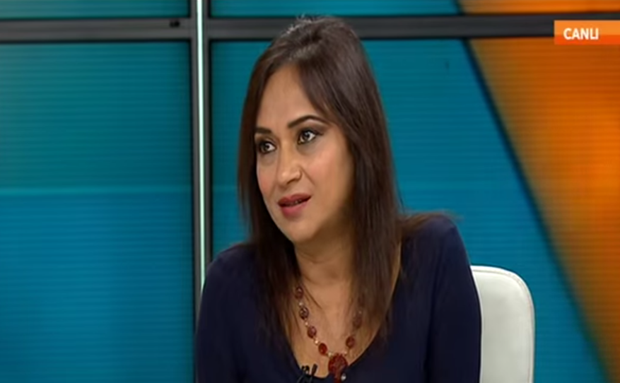
Amberin Zaman during a TV appearance (Image: serm canker/YouTube)
“A militant in the guise of a journalist, a shameless woman.” “Know your place.” “[Y]ou insult at a society of 99 percent Muslims.”
The comments from Recep Tayyip Erdogan — Turkey’s newly elected president and outgoing prime minister — were heard across the world. While he did not mention a name, it was the clear the woman in question was Amberin Zaman, a journalist for The Economist and Taraf. Erdogan’s tirade came during a campaign rally last Thursday in the city of Malatya, ahead of Sunday’s presidential vote. Zaman had expressed opinions critical of Erdogan during a TV discussion the night before.
Erdogan continued during a rally in Ankara on Saturday, calling her a “despicable woman” and saying she had insulted Islam. She has also been targeted online by Erdogan supporters, in what the Organisation for Security and Cooperation in Europe (OSCE) has labelled a “widespread smear campaign“.
“The pro-Erdogan camp emboldened by his very public insults against me continue to mob lynch me via the social media,” Zaman told Index on Censorship. “My Twitter feed is flooded with threats and profanities. Being called an enemy of Islam in a Muslim country, when radical groups like IS have Turkish members who are active Twitter users, puts me at physical risk and hobbles my work.”
She says she was unable conduct interviews on the streets on election day, “for fear of being recognised and attacked”.
This is not the first time Zaman has been targeted for speaking out against Turkish authorities. She was fired last year from Haberturk over articles critical of the government, and she was also one of the journalists reportedly wiretapped with the approval of Erdogan. As she said at a recent Index event on digital freedom, she is attacked online daily by pro-government trolls.
But Zaman is not the only member of the Turkish media under threat. According to recent figures there are 40 journalists behind bars in the country, making it one of the world’s worst jailers of press. Since 1992, 14 journalists have been murdered with impunity. Turkey stands at 154th out of 180 countries in the latest Reporters Without Borders Press Freedom Index, and its ranking has deteriorating over the past years.
In addition to Zaman’s case, there have been a number of other attacks on press freedom just over the past few days, as reported by the Index media mapping tool among others. Enis Berberoglu, editor-in-chief of Hurriyet, resigned on 8 August. The paper has denied that it was as a result of political pressure. However, in his attacks on Zaman during the Malatya rally, Erdogan specifically mentioned the owners of the TV channel she was on, Dogan Holding. Hurriyet is also owned by Dogan.
“The consensus is that he was pushed out but his departure coincided with the elections so it didn’t get the attention it deserved. But it is a further sign that media bosses will continue to cave in to power. It’s a tragic comment on the state of the Turkish media,” says Zaman.
The same day as Berberoglu’s resignation, investigative journalist Mehmet Baransu was beaten by police. The day after he was detained for tweeting about the incident, and about the Istanbul public prosecutor. There have also been reports that the Cihan news agency was restricted from covering the presidential election, with police ordered to keep journalists out of polling sites across the country.
The election also put the spotlight on issues surrounding biased media coverage in favour of Erdogan; something that was highlighted by observers after the vote. Zaman says it is difficult to measure the impact of the poor state of media freedom on the election and its outcome — Erdogan won comfortably after one round. But it was not, she says, “a level playing field”.
“Erdogan has indirect control over a broad swathe of media outlets, most crucially of television. So the opposition candidates received scant coverage, and the little they got in pro-government was more of a smear campaign to which they were unable to effectively respond. Intimidation of the media and of media bosses has created an environment of self-censorship where journalists fear losing their jobs,” she explains.
“Even the mildest criticism is no longer tolerated. It’s stifling.”
Despite the attacks from Erdogan and his supporters, Zaman says she is “very heartened by the thousands of messages of support I have received, including from pious Muslims”.
The Women’s Equality Monitoring Group, whose membership includes female journalists, academics and writers has called on Erdogan to apologise.
“Making a female journalist a target by calling her shameless for simply performing her job was the last link in a chain of sexist stances,” they said. “This attack was also an attempt to silence the few remaining critical voices in the media, which has been silenced with bribery, censorship and self-censorship.” The Economist have stated that they “stand firmly” by Zaman.
“I am not alone,” she said.
But as Erdogan has indicated intention to expand the powers of the presidency, Zaman is not optimistic about the future.
“Should he continue to run the government as he announced he would it is horrible news for journalists. Things can only get worse not better.”
This article was posted on August 15, 2014 at indexoncensorship.org
7 Aug 2014 | News, Politics and Society, Religion and Culture
First, the inevitable throat clearing and hand wringing. The most recent conflict between Israel and Hamas has been beyond horrendous. As I type, the ceasefire is holding. Over 1,800 Palestinians have lost their lives, more than 300 of them children. Dozens of Israelis, mostly young conscript soldiers, are also dead. There is an enormous imbalance, in firepower and in defensive capability. Better men than I have gone mad attempting to imagine a way to stop this happening again. Even that statement, I realise, reads like a cop out, but a particular sense of despair looms over this latest manifestation of a war that is only ever dormant at best.
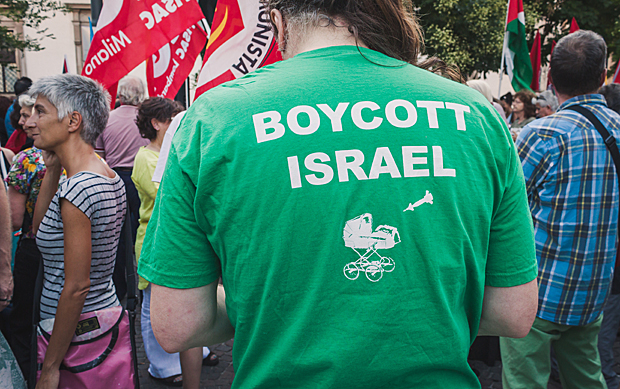
Some clearly feel that the horror has gone too far. Author Hari Kunzru, for example, has decided to join calls for a cultural boycott of Israel. Writing on his Facebook wall, Kunzru cited an op-ed in the Jerusalem Post which suggested the “dismantling” of Gaza and the “relocation” of its non-humanitarian population. Kunzru also cited “”the targeting of schools and hospitals, the picture of a child my son’s age being dug out of rubble that reduced me to helpless tears, the total disregard of the Netanyahu government for international laws and norms…” as signs that Israel was a country that had “lost its moral compass”.
This is notable not because Hari is a well-known figure in the arts world – there are enough of those willing to sign up to any cause that comes along, and more than enough already willing to tell us exactly what they think about Israel/Palestine, or Cuba, or any other issue to which sections of the left are drawn to, like particularly verbose moths to the flames of revolution, or, worse, the great unspecified “resistance”.
No, this is notable exactly because Hari Kunzru is not one of those people. Hari is thoughtful and unshowy. And Hari has actually put in real work for free speech. I recall, in 2012, scrabbling to find a local sympathetic lawyer who would represent Hari when he faced serious risk of prosecution for reading from the Satanic Verses at the Jaipur Literary Festival, in solidarity with Salman Rushdie. He has made himself available for organisations such as Index and English PEN well beyond the call of duty. So when someone such as Hari Kunzru identifies with a cultural boycott, it means we have to take the question seriously.
The concept of boycotts, and particularly cultural and academic boycotts, have for a long time been problematic for people engaged in the promotion of free expression. Most criticisms of censorship are based on a fundamental assumption that communication of ideas is, in and of itself, a good thing. Some vague belief abounds based loosely on the Hegelian triad of thesis, antithesis, synthesis.
This can sometimes sound naive, but it does lead to useful perspectives on any argument: 1) that there are entirely sincere, well-meaning people, who may hold views completely anathema to your own, and 2) following from that, in formulating any position on proscription of certain attitudes or beliefs, or people, one must imagine being on the wrong end of the argument – a kind of categorical imperative crossed with the “golden rule”, that can end up making the certainty of others unsettling.
Boycotters often carry that absolutism and conviction that brooks no argument: a simple righteousness anchored in the belief that their view of the world is so self-evidently correct that anyone who is unconvinced by them is either deviant or deficient.
Then there is always the question of who benefits from boycotts? And who is hurt? The traditional, free expression view on cultural boycotts is that they punish precisely the people who are most outward looking and also most likely to seek change in their own countries. Is it fair to punish the artists for the actions of the government, as we have seen with the cancellation of Israeli show The City at the Edinburgh Festival following protests by the Scottish Palestine Solidarity Campaign? Or to request that the UK Jewish Film Festival should ditch Israeli government funding before it can use a venue, as Kliburn’s Tricycle Theatre has, in the name, it says, of attempting to depoliticise the event?
It is argued that theatre companies, dance troupes etc are legitimate targets for boycott if they benefit from state funding, but in truth, there is hardly a theatre company in the civilised world that does not take funding from government agencies: indeed, most western liberals see state agency funding of arts as a sign, even a crucial part, of a healthy democracy, and it is rare that state-funded companies engage in Red-Army Choir style propaganda tours – though Venezuela’s Orquesta Sinfónica Simón Bolívar, decked out in baseball jackets in the colours of the national flag, can sometimes feel a little too Potemkin for comfort.
Writing on the subject (£) of anti-Israel boycotts back in 2012, Irish Times literary editor Fintan O’Toole drafted these five rules for artists and writers invited to perform in countries with dubious records:
1) Don’t take money, directly or indirectly, from governments that systematically abuse human rights, or from oligarchs who benefit from those abuses.
2) Give a significant part of your fee to human-rights defenders or oppressed artists in the relevant country.
3) Don’t accept any restrictions on your own freedom of expression when you’re in that country.
4) Don’t perform to audiences forcibly segregated on lines of race, gender or ethnicity.
5) Don’t let yourself be used for propaganda purposes.
This was very much the approach used by Sweden’s Loreen during and after the Eurovision Song Contest hosted by Azerbaijan in 2012. The singer made efforts to meet opposition figures and voice their concerns in press conferences and TV interviews, and was widely praised for it.
In fact, O’Toole’s rules are not a million miles from the boycott pledge signed by Hari Kunzru, which states: “We support the Palestinian struggle for freedom, justice and equality. In response to the call from Palestinian artists and cultural workers for a cultural boycott of Israel, we pledge to accept neither professional invitations to Israel, nor funding from any institution linked to its government until it complies with international law and universal principles of human rights.”, though there is a crucial difference in that the boycott statement punishes both state and non-state entities, thus preventing signatories from accepting invitations from, say, a hypothetical human rights group.
And this is the problem I will continue to have with boycotts against nations, particularly nations’ cultural endeavours. They seem too blunt, too broad and flawed. Even the much-cited cultural boycott against South African apartheid went awry, with the bizarre irony of Paul Simon being criticised for technically breaking the boycott by travelling to the country to work with Ladysmith Black Mambazo, the black acapella singing group that was far from a friend of the regime.
But the problem is that for many seeking to register their disgust at the actions of foreign governments, boycott seems the only option. Perhaps it’s time for those of us uncomfortable with the idea of shutting down free speech to figure out new avenues of expression.
This column was posted on August 7, 2014 at indexoncensorship.org
6 Aug 2014 | Azerbaijan Statements, News, Statements
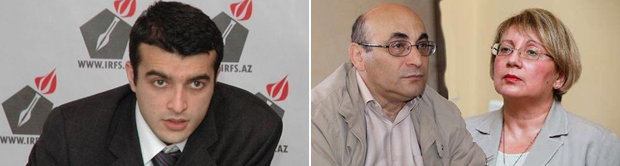
Rasul Jafarov, Arif Yunus and Leyla Yunus (Photos: Rasul Jafarov (© IRFS), Arif and Leyla Yunus (© HRHN))
60 NGOs from 13 Human Rights Houses call upon the Azerbaijani authorities, in their joint letter to President Ilham Aliyev, to immediately and unconditionally release Leyla Yunus, Arif Yunus and Rasul Jafarov, and lift all charges held against them. The NGOs also repeat their previous call to release Anar Mammadli and Bashir Suleymanli, and join calls for the release of Hasan Huseynli.
On 28 April 2014 Leyla Yunus, Director of the Institute for Peace and Democrac, and her husband historian Arif Yunus, were prevented from leaving the country at Baku’s airport. Leyla Yunus and her husband Arif Yunus were arrested on 30 July 2014. On that day, Leyla Yunus was sentenced to 3-months pre-trial detention, whilst her husband was placed under police guard and not allowed to leave Baku. The charges brought against Leyla Yunus are those of state treason (article 274 of the Criminal Code of the Republic of Azerbaijan), large-scale fraud (article 178.3.2), forgery (article 320), tax evasion (article 213), and illegal business (article 192). Arif Yunus was arrested on 5 August 2014 and also sentenced to 3-months pre-trial detention.
The NGOs state in their joint letter to President Aliyev of 5 August 2014 that they are in particular concerned about Leyla Yunus’ health whilst in detention. She suffers from diabetes and needs appropriate medication, as well as arrangements to eat at certain times, necessary to control the illness. We worry that the conditions in detention will have a detrimental effect on her health condition, as it appears that she is to date not provided with adequate health care.
In July 2014, the bank accounts of, amongst others, human rights defender Rasul Jafarov were frozen as part of a broader investigation into numerous NGO’s. On 25 July he was refused to leave the country. Rasul Jafarov was arrested on 2 August 2014, and sentenced to 3 months pre-trial detention on charges of tax evasion (article 213 of the Criminal Code of the Republic of Azerbaijan), illegal business (article 192) and abuse of authority (article 308.2).
On 14 July 2014, Hasan Huseynli, was sentenced to 6 years in prison. He was convicted on charges of armed hooliganism and unlawfully carrying a cold weapon.
The right to freedom of association is at the heart of the charges held against these human rights defenders. In essence they are deprived of their right to work in the defence of human rights. While registration of NGOs and grants to NGOs has become mandatory in Azerbaijan, authorities continue deny registration. Independent NGOs face continuous investigations and human rights defenders are being banned from travelling abroad, depending on their willingness to find agreements with the government, including agreements on their professional activities and their public statements.
Restrictions to laws affecting the right to freedom of association have been widely criticised since October 2011. Such legislation de facto criminalises human rights defenders in Azerbaijan, not for their wrong doing, but rather for the fact that working for an NGO, which does not have the blessing of the government, has become difficult in Azerbaijan. United Nations experts stated ahead of the Presidential elections that they “observed since 2011 a worrying trend of legislation which has narrowed considerably the space in which civil society and defenders operate in Azerbaijan.” The order given to the Human Rights House Azerbaijan in March 2011 to cease all its activities is a consequence of such policies.
The NGOs call upon the Azerbaijani authorities, in their joint letter to President Ilham Aliyev of 5 August 2014, to immediately and unconditionally release Leyla Yunus, Arif Yunus, Rasul Jafarov, and lift all charges held against them. The NGOs see this pre-trial detention of Leyla Yunus, Arif Yunus and Rasul Jafarov as a way to silence them. The NGOs also repeat their previous call to release Anar Mammadli and Bashir Suleymanli, and join calls for the release of Hasan Huseynli.
The NGOs further call upon the Azerbaijani authorities to take appropriate measures to put an end to the attacks, detention and harassment of human rights defenders, journalists and activists, and to take steps in order to foster a safe environment for them, in line with Azerbaijan’s international obligations and commitments, especially as the chair of the Committee of Ministers of the Council of Europe.
Signed by:
Human Rights House Azerbaijan (on behalf of the following NGOs):
- Association for the Protection of Women’s Rights
- Azerbaijan Lawyers Association
- Institute for Reporters’ Safety and Freedom
- Legal Education Society
- Media Rights Institute
- Society for Humanitarian Research
- Women Association for Rational Development
Barys Zvozskau Belarusian Human Rights House in exile, Vilnius (on behalf of the following NGOs):
- Belarusian Association of Journalists
- Belarusian Helsinki Committee
- City Public Association “Centar Supolnaść”
- Human Rights Centre “Viasna”
Human Rights House Belgrade (on behalf of the following NGOs):
- Belgrade Centre for Human Rights
Human Rights House Kiev (on behalf of the following NGOs):
- Association of Ukrainian Human Rights Monitors on Law-Enforcement
- Human Rights Information Centre
- Center for Civil Liberties
- Ukrainian Helsinki Human Rights Union
- Ukrainian Legal Aid Foundation
Human Rights House London (on behalf of the following NGOs):
- Article 19
- Index on Censorship
Human Rights House Sarajevo (on behalf of the following NGOs):
- Helsinki Committee for Human Rights in Bosnia and Herzegovina
Human Rights House Tbilisi (on behalf of the following NGOs):
- Article 42 of the Constitution
- Georgian Centre for Psychosocial and Medical Rehabilitation of Torture Victims
- Human Rights Centre
Human Rights House Oslo (on behalf of the following NGOs):
- Human Rights House Foundation
- Norwegian Burma Committee
- Norwegian Helsinki Committee
Human Rights House Voronezh (on behalf of the following NGOs):
- Charitable Foundation
- Civic Initiatives Development Centre
- Confederation of Free Labor
- For Ecological and Social Justice
- Free University
- Golos
- Interregional Trade Union of Literary Men
- Lawyers for labor rights
- Memorial
- Ms. Olga Gnezdilova
- Soldiers Mothers of Russia
- Voronezh Journalist Club
- Voronezh-Chernozemie
- Youth Human Rights Movement
Human Rights House Yerevan (on behalf of the following NGOs):
- Helsinki Citizens’ Assembly-Vanadzor
- Helsinki Association for Human Rights
- Journalists’ Club “Asparez”
- Public Information and Need of Knowledge NGO
- Shahkhatun
- Women’s Resource Center
Human Rights House Zagreb (on behalf of the following NGOs):
- APEO/UPIM Association for Promotion of Equal Opportunities for People with Disabilities
- B.a.B.e.
- CMS – Centre for Peace Studies
- Documenta – Centre for Dealing with the Past
- GOLJP – Civic Committee for Human Rights
- Svitanje – Association for Protection and Promotion of Mental Health
The Rafto House in Bergen, Norway (on behalf of the following NGOs):
The House of the Helsinki Foundation For Human Rights, Poland (on behalf of the following NGOs):
- Helsinki Foundation for Human Rights
Election Monitoring and Democracy Studies Center, Azerbaijan
Foundation “Multiethnic Resource Center for Civic Education Development”, Georgia
People in Need, Czech Republic
Public Movement Multinational, Georgia
Public Association for Assistance to Free Economy, Azerbaijan
Public Union of Democracy and Human Rights Resource Centre, Azerbaijan
This statement was originally posted on Aug 5, 2014 at http://humanrightshouse.org/Articles/20321.html