International Women’s Day is a day to remember violence against women, the education gap, the wage gap, online harassment, everyday sexism, the intersection between sexism and other -isms, and a whole host of other issues to make us realise we’ve still got a long way to go. A day to demand continued progress, and a day to pledge to work to achieve it.
But it is also a day to celebrate. To appreciate the fantastic achievements that are made every day, everywhere, by women from all walks of life. It’s a day to be grateful to the women who dedicate their lives to fighting on the front lines to protect rights vital to us all. We want to shine the spotlight on women who have stood up for freedom of expression when it’s not the easy or popular thing to do, against fierce opposition and often at great personal risk. The following eight women have done just that. We know there are many, many more. Tell us about your female free speech hero in the comments or tweet us @IndexCensorship.
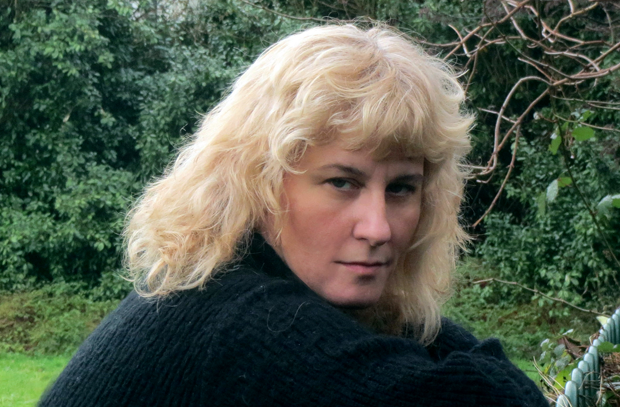
Meltem Arikan — Turkey
Meltem Arikan
Arikan is a writer who has long used her work to challenge patriarchal structures in society. He latest play “Mi Minor” was staged in Istanbul from December 2012 to April 2013, and told the story of a pianist who used social media to challenge the regime. Only a few months after, the Gezi Park protests broke out in Turkey. What started as an environmental demonstration quickly turned into a platform for the public to express their general dissatisfaction with the authorities — and social media played a huge role. Arikan was one of many to join in the Gezi Park movement, and has written a powerful personal account of her experiences. But a prominent name in Turkey, she was accused of being an organiser behind the protests, and faced a torrent of online abuse from government supporters. She was forced to flee, now living in exile in the UK.
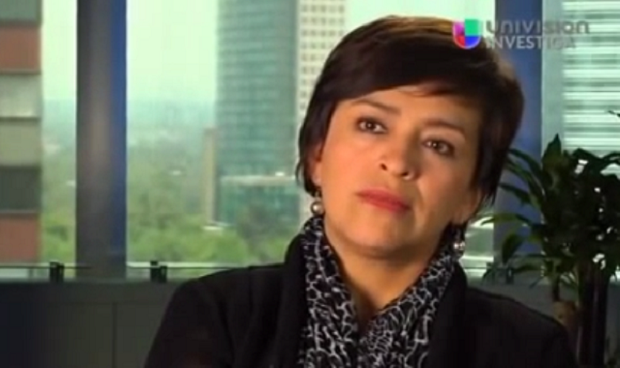
Hernández is a Mexican journalist known for her investigative reporting on the links between the country’s notorious drug cartels, government officials and the police. Following the publication of her book Los Señores del Narco (Narcoland), she received so many death threats that she was assigned round-the-clock protection. She can tell of opening the door to her home only to find a decapitated animal in front of her. Before Christmas, armed men arrived in her neighbourhood, disabled the security cameras and went to several houses looking for her. She was not at home, but one of her bodyguards was attacked and it was made clear that the visit — from people first identifying themselves as members of the police, then as Zetas — was because of her writing.
Many of these murders of my colleagues have been hidden away, surrounded by silence – they received a threat, and told no one; no one knew what was happening…We have to make these threats public. We have to challenge the authorities to protect our press by making every threat public – so they have no excuse.
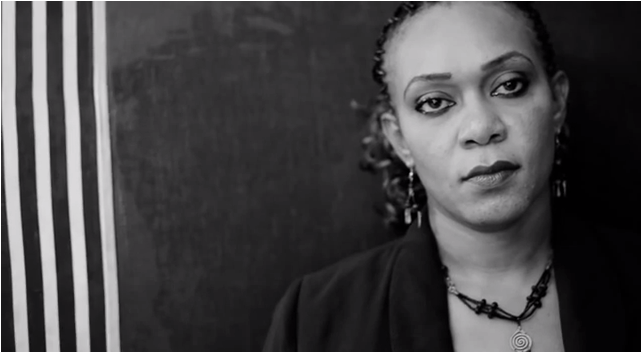
Amira Osman — Sudan
Amira Osman (Image: YouTube)
Amira Osman, a Sudanese engineer and women’s rights activist was last year arrested under the country’s draconian public order act, for refusing to pull up her headscarf. She was tried for “indecent conduct” under Article 152 of the Sudanese penal code, an offence potentially punishable by flogging. Osman used her case raise awareness around the problems of the public order law. She recorded a powerful video, calling on people to join her at the courthouse, and “put the Public Order Law on trial”. Her legal team has challenged the constitutionality of the law, and the trial as been postponed for the time being.
This case is not my own, it is a cause of all the Sudanese people who are being humiliated in their country, and their sisters, mothers, daughters, and colleagues are being flogged.
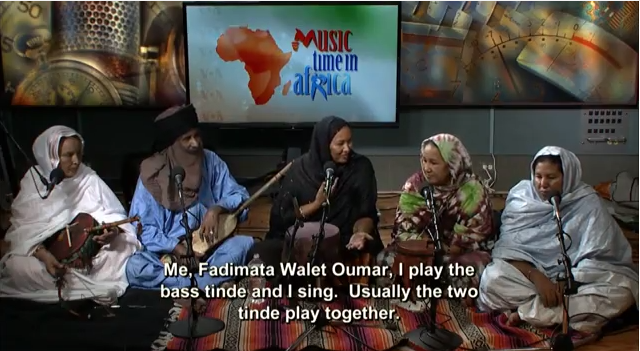
Fadiamata Walet Oumar — Mali
Fadiamata Walet Oumar with her band Tartit (Image: YouTube)
Fadiamata Walet Oumar is a Tuareg musician from Mali. She is the lead singer and founder of Tartit, the most famous band in the world performing traditional Tuareg music. The group work to preserve a culture threatened by the conflict and instability in northern Mali. Ansar Dine, an islamists rebel group, has imposed one of the most extreme interpretations of sharia law in the areas they control, including a music ban. Oumar believes this is because news and information is being disseminated through music. She fled to a refugee camp in Burkina Faso, where she has continued performing — taking care to hide her identity, so family in Mali would not be targeted over it. She also works with an organisation promoting women’s rights.
Music plays an important role in the life of Tuareg women. Our music gives women liberty…Freedom of expression is the most important thing in the world, and music is a part of freedom. If we don’t have freedom of expression, how can you genuinely have music?
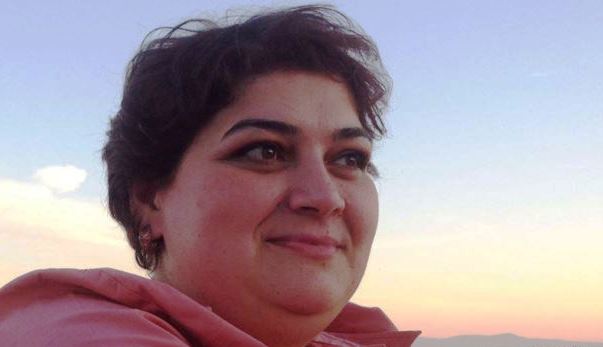
Khadija Ismayilova — Azerbaijan
Khadija Ismayilova
Ismayilova is an award-winning Azerbaijani journalist, working with Radio Free Europe/Radio Liberty. She is know for her investigative reporting on corruption connected to the country’s president Ilham Aliyev. Azerbaijan has a notoriously poor record on human rights, including press freedom, and Ismayilova has been repeatedly targeted over her work. She was blackmailed with images of an intimate nature of her and her boyfriend, with the message to stop “behaving improperly”. This February, she was taken in for questioning by the general prosecutor several times, accused of handing over state secrets because she had met with visitors from the US Senate. In light of this, she posted a powerful message on her Facebook profile, pleading for international support in the event of he arrest.
WHEN MY CASE IS CONCERNED, if you can, please support by standing for freedom of speech and freedom of privacy in this country as loudly as possible. Otherwise, I rather prefer you not to act at all.
Jillian York — US
Jillian York (Image: Jillian C. York/Twitter)
Jillian York is a writer and activist, and Director of Freedom of Expression at the Electronic Frontier Foundation (EFF). She is a passionate advocate of freedom of expression in the digital age, and has spoken and written extensively on the topic. She is also a fierce critic of the mass surveillance undertaken by the NSA and other governments and government agencies. The EFF was one of the early organisers of The Day We Fight Back, a recent world-wide online campaign calling for new laws to curtail mass surveillance.
Dissent is an essential element to a free society and mass surveillance without due process — whether undertaken by the government of Bahrain, Russia, the US, or anywhere in between — threatens to stifle and smother that dissent, leaving in its wake a populace cowed by fear.
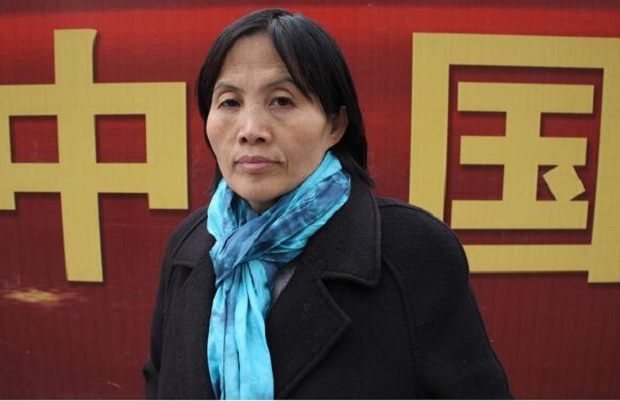
Cao Shunli — China
Cao Shunli (Image: Pablo M. Díez/Twitter)
Shunli is an human rights activist who has long campaigned for the right to increased citizens input into China’s Universal Periodic Review — the UN review of a country’s human rights record — and other human rights reports. Among other things, she took part in a two-month sit-in outside the Foreign Ministry. She has been targeted by authorities on a number of occasions over her activism, including being sent to a labour camp on at least two occasions. In September, she went missing after authorities stopped her from attending a human rights conference in Geneva. Only in October was she formally arrested, and charged for “picking quarrels and promoting troubles”. She has been detained ever since. The latest news is that she is seriously ill, and being denied medical treatment.
The SHRAP [State Human Rights Action Plan, released in 2012] hasn’t reached the UN standard to include vulnerable groups. The SHRAP also has avoided sensitive issue of human rights in China. It is actually to support the suppression of petitions, and to encourage corruption.
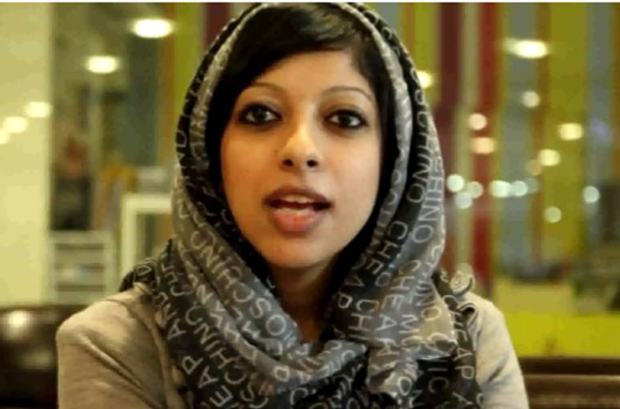
Zainab Al Khawaja — Bahrain
Zainab Al Khawaja
Al Khawaja is a Bahraini human rights activist, who is one of the leading figures in the Gulf kingdom’s ongoing pro-democracy movement. She has brought international attention to human rights abuses and repression by the ruling royal family, among other things, through her Twitter account. She has also taken part in a number of protests, once being shot at close range with tear gas. Al Khawaja has been detained several times over the last few years, over “crimes” like allegedly tearing up a photo of King Hamad bin Isa Al Khalifa. She had been in jail for nearly a year when she was released in February, but she still faces trials over charges like “insulting a police officer”. She is the daughter of prominent human rights defender Abdulhadi Al Khawaja, who is currently serving a life sentence.
Being a political prisoner in Bahrain, I try to find a way to fight from within the fortress of the enemy, as Mandela describes it. Not long after I was placed in a cell with fourteen people—two of whom are convicted murderers—I was handed the orange prison uniform. I knew I could not wear the uniform without having to swallow a little of my dignity. Refusing to wear the convicts’ clothes because I have not committed a crime, that was my small version of civil disobedience.
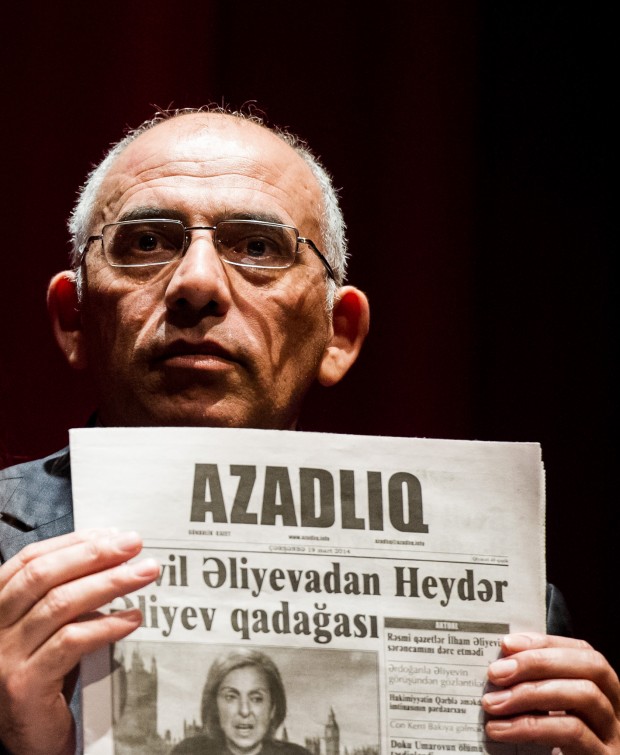
Rahim Haciyev, deputy editor-in-chief of Azerbaijani newspaper Azadliq (Photo: Alex Brenner for Index on Censorship)
One of the few remaining independent media outlets in Azerbaijan, the newspaper Azadliq has continued to report on government corruption and cronyism in spite of an increasing financial squeeze enforced by the authorities.
The country likes to present itself as a modern democracy, but it is widely recognised as an authoritarian regime where opposition is often brutally cracked down on and critical voices silenced. In this environment, Azadliq works to hold the ruling Aliyev family, and the rest of the powerful elite in the country to account. The latest attacks on the paper came hot on the heels of the country’s 2013 presidential election, where Ilham Aliyev was reelected in a vote labelled flawed by the OSCE.
The paper has been been the target of defamation suits that have resulted in £52,000 in fines. Courts found Azadliq guilty of “damaging” the business reputation of Kabira Mamedova, director of the Baku-based Bina shopping centre, and Taghi Ahmadov, CEO of the Baku Metro, after the paper published articles critical of their activities.
The paper’s bank accounts have been frozen since 25 October, and Gasid, the state-owned press distribution company, has not been transferring payments that reflect the paper’s sales; according to Azadliq’s latest calculations, Gasid now owes about £44,000.
Azadliq’s journalists also face continuous threats. On 4 October 2013, Azadliq reporter Ramin Deko was part of a group of journalists assaulted by a pro-government mob while covering an opposition rally in the central Azerbaijan town of Sabirabad. He also alleges he was abducted and beaten up on 3 and 4 April 2011 by law enforcement bodies. While he was illegally detained, he said he was told to stop writing critical articles and to change his workplace to a pro-government newspaper.
Despite this, Azadliq refuses to back down, and continues to cover the activities of the Azerbaijan corrupt elite. “We play a significant role in providing people with alternative information. Our staff are underpaid, overworked, and yet are fully committed to their work”, said deputy editor-in-chief and acting editor Rahim Haciyev.
Haciyev, who joined the paper in 2001, talked to Andrei Aliaksandrau about why his work at Azadliq is so important.
Index: Your publication faces constant pressure from the authorities. Have you ever thought of leaving for a safer job?
Haciyev: No, this is my work, and it is not only a job, it is my form of expression. The fight for free speech is sacred for me. This is the way of opposing lawlessness and tyranny, and working for Azadliq provides me with a possibility to continue this fight for what I believe in.
Index: What is the wider media landscape in Azerbaijan? And how does this fit into the wider political and social situation?
Haciyev: Repressive steps taken by the government of the country have led to significant restrictions of media freedom. Today there is a real threat of independent press in Azerbaijan totally disappearing. The country lives under a strict authoritarian rule. Activists of political opposition, civil society organisations and independent journalists face constant pressure. There are more than a hundred political prisoners behind bars in Azerbaijan, including journalists.
Index: What is your view on the Snowden/Greenwald revelations about mass surveillance?
Haciyev: Our newspaper covered the story. I think a government should keep its secrets – but it is the role of the press to inform the public and share the information they gather. And any kind of pressure exerted on the media is nothing but a violation of the freedom of expression.
Index: Technologies have changed the media market globally. Do you think newspapers are still relevant?
Haciyev: I am sure printed newspapers will keep their relevance for a long time. Despite the development of the internet, we can still see great demand for newspapers among the audience. For us,our website is getting more and more popular, and the circulation of the printed newspaper is going down – but it is not because people are losing their interest in the printed publication, merely because of all the restrictions and pressure our authorities put on us.
Music Freedom Day is a global collaboration to raise awareness of the challenges many musicians face around the world in creating their music. In 2013, 19 musicians were killed, seven abducted and 18 spent time in jail for using their right to free speech to express themselves through music, according to the human rights organisation Freemuse.
Mali is one such country where musicians have faced persecution and censorship for their work.
Documentary filmmaker Johanna Schwartz wrote for Index on Censorship magazine on the censorship and persecution that musicians in Mali have faced from Islamists, with musician Fadiamata Walet Oumar.
In the article they highlighted how music was being driven out of the country, with even those with musical ringtones on their mobile phones facing crackdowns. Many musicians fled Mali during the worst excesses of persecution, as the article charts. Schwartz is an award-winning documentary maker, and she is giving Index readers an exclusive preview of her documentary They Will Have To Kill Us First.
Collectively, the European Union of 28 member states has an important role to play in the promotion of freedom of expression in the world. Firstly, as the world’s largest economic trading block with 500 million people that accounts for about a quarter of total global economic output, it still has significant economic power. Secondly, it is one of the world’s largest “values block” with a collective commitment to the Universal Declaration of Human Rights, the International Covenant on Civil and Political Rights and perhaps more significantly, the European Convention on Human Rights. The Convention is still one of the leading supranational human rights treaties, with the possibility of enforcement and redress. Finally, Europe accounts for two of the five seats on the UN Security Council (Britain and France), so has a crucial place in the global security framework. The EU itself has limited foreign policy and security powers (although these powers have been enhanced in recent years), leaving significant importance to the foreign policies of the member states. Where the EU acts with a common approach it has leverage to help promote and defend freedom of expression globally.
How the European Union supports freedom of expression abroad
The European Union has a number of instruments and institutions at its disposal to promote freedom of expression in the wider world, including its place as an observer at international fora, its bilateral and regional agreements, the European External Action Service (EEAS) and geographic policies and instruments including the European Neighbourhood Policy (ENP) and the European Neighbouring and Partnership Instrument (ENPI). The EU places human rights in its trade and aid agreements with third party countries and has over 30 stand-alone human rights dialogues. The EU also provides financial support for freedom of expression through the European Development Fund (EDF), the Development Co-operation Instrument (DCI), the European Instrument for democracy and human rights (EIDHR) and the European Endowment for Democracy (EED). The EU now also has a Special Representative for Human Rights. Since 1999, the EU has published an annual report on human rights and democracy in the world. The latest report, adopted in June 2012, contains a special section on freedom of expression, including freedom of expression and “new media”. It recalls the EU’s commitment to “fight for the respect of freedom of expression and to guarantee that pluralism of the media is respected” and emphasises the EU’s support to free expression on the internet.
The European Union has two mechanisms to financially support freedom of expression globally: the European Instrument for democracy and human rights (EIDHR) and the European Endowment for Democracy (EED). The latter was specially created after the Arab Spring in order to resolve specific criticism of the EIDHR: that it didn’t support political parties, non-registered NGOs and trade unions and could not react quickly to events on the ground. The EED is funded by, but is autonomous from, the European Commission, with support from member states and Switzerland. The aims of the EED, to provide rapid and flexible funding for pro-democratic activists in authoritarian states and democratic transitions, is potentially a “paradigm shift” according to experts that will have to overcome a number of challenges, in particular a hesitation towards funding political parties and the most active and confrontational of human rights activists. The EU also engages with the UN on human rights issues at the Human Rights Council (HRC) and in the 3rd Committee of the General Assembly. The EU, as an observer along with its member states, is one of the more active defenders of freedom of expression in the HRC. Promoting and protecting freedom of expression was one of the EU’s priorities for the 67th Session of the UN General Assembly (September 2012-2013). The European Union was also instrumental in the adoption of a resolution on the “Safety of Journalists” (drafted by Austria) in September 2012. The European Union is most effective at the HRC where there is a clear consensus among member states within the Union . Where there is not, for instance on the issue of blasphemy laws, the Union has been less effective at promoting freedom of expression.
The EU and its neighbourhood
The EU has had mixed success in promoting freedom of expression in its near neighbourhood. Enlargement has clearly been one of the European Union’s most effective foreign policy tools. Enlargement has had a substantial impact both on the candidate countries’ transition to democracy and respect for human rights. With enlargement slowing, the leverage the EU has on its neighbourhood is under pressure. Alongside enlargement, the EU engages with a number of foreign policy strategies in its neighbourhood, including the Eastern Partnership and the partnership for democracy and shared prosperity with the southern Mediterranean. This section will look at the effectiveness of these policies and where the EU can have influence.
The EU and freedom of expression in its eastern neighbourhood
Europe’s eastern neighbourhood is home to some of the least free places for freedom of expression. The collapse of the former Soviet Union and the enlargement of the European Union has significantly improved human rights in eastern Europe. There is a marked difference between the leverage the European Union has on countries where enlargement is a real prospect and the wider eastern neighbourhood, where it is not, in particular for Russia and Central Asia. In these countries, the EU’s influence is more marginal. Enlargement has clearly had a substantial impact both on the candidate countries’ transition to democracy and their respect for human rights because since the Treaty of Amsterdam, respect for human rights has been a condition of accession to the EU. In 1997, the Copenhagen criteria were outlined in priorities that became “accession partnerships” adopted by the EU and which mapped out the criteria for admission to the EU. They related in particular, to freedom of expression issues that needed to be rectified. With the enlargement process slowing since the “big bang” in 2004, and countries such as Ukraine and Moldova having no realistic prospect of membership regardless of their human rights record, the influence of the EU is waning in the wider eastern neighbourhood.
After enlargement, the Eastern Partnership is the primary foreign policy tool of the European Union in this region. Launched in 2009, the initiative derives from the EU’s Neighbourhood Policy (ENP), which is specific about the importance of democracy, the rule of law and respect for human rights. In this region, the partnership covers Armenia, Azerbaijan, Belarus, Georgia, Moldova and Ukraine. Freedom of expression has been raised consistently during human rights dialogues with these six states and in the accompanying Civil Society Forum. The Civil Society Forum has also been useful in helping to coordinate the EU’s efforts in supporting civil society in this region. Although it has never been the main aim of the Eastern Partnership to promote freedom of expression, it has had variable success in promoting this right with concrete but limited achievements in Belarus, the Ukraine, Georgia and Moldova; with a more ineffectual role being seen in Azerbaijan.
In recent years, since the increased input of the EEAS in the ENP, the policy has become more markedly political, with a greater emphasis on democratisation and human rights including freedom of expression after a slow start. In particular, freedom of expression was raised as a focus for the ENP after its review in 2010-2011. This is a welcome development, in marked contrast to the technical reports of previous years. This also echoes the increased political pressure from member states that have been more public in their condemnation of human rights violations, in particular regarding Belarus. Belarus is one Eastern Partnership country where the EU has exerted a limited amount of influence. The EU enhanced its pressure on the country after the post-presidential election clampdown beginning in December 2010, employing targeted sanctions and increasing support to civil society. This has arguably helped secure the release of some of the political prisoners the regime detained. Yet the lack of a strong sense of strategy and unity within the Union has hampered this new pressure to deliver more concrete results. Likewise, the EU’s position on Ukraine has been set back by internal divisions, even though the EU’s negotiations on the Association Agreement included specific reference to freedom of expression.
In Azerbaijan, the EU’s strategic oil and gas interests have blunted criticism of the country’s poor freedom of expression record. Azerbaijan holds over 89 political prisoners, significantly more than in Belarus, yet the EU’s institutions, individual member states and European politicians have failed to be vocal about these detentions, or other freedom of expression violations. In the EU’s wider neighbourhood outside the Eastern Partnership, the EU has taken a less strategic approach and accordingly has been less successful in either raising freedom of expression violations or helping to prevent them.
The European Union’s relationship with Russia has not been coherent on freedom of expression violations. While the institutions of the EU have criticised specific freedom of expression violations, such as the Pussy Riot sentencing, they were slow to criticise more sustained attacks on free speech such as the clampdown on civil society and the inspections of NGOs using the new Foreign Agents Law. The progress report of EU-Russia Dialogue for Modernisation fails to mention any specific freedom of expression violations in Russia. The EU has also limited its financial involvement in supporting freedom of expression in Russia, unlike in other post-Soviet states. The EU is not united on this criticism: individual European Union member states such as Sweden and the UK are more sustained in their criticisms of Russia’s free speech violations, whereas other member states such as Germany tend to be less critical. It is argued that Russia’s powerful economic interests have facilitated a significant lobbying operation including former politicians that works to reduce criticism of Russia’s freedom of expression violations.
In this region, the European Union’s protection of freedom of expression is weakest in Central Asia. While the EU has human rights dialogues with Kazakhstan, Kyrgyzstan, Tajikistan, Turkmenistan and Uzbekistan, it has not acted strategically to protect freedom of expression in these countries. The EU dramatically reduced its leverage in Uzbekistan in 2009 by relaxing arms sanctions with little in return from the Uzbek authorities, who continue to fail to abide by international human rights standards. Arbitrary arrests, beatings and torture at the hands of the security services, as well as unfair trials of the regime’s critics are all commonplace. The European Parliament’s special rapporteur report of November 2012, took a tough stance on human rights in Kazakhstan, making partnership conditional on respect for Article 10 rights. But, this was undermined by High Representative Baroness Ashton’s visit to the country in November 2012, where she failed to raise human rights violations at all.
This lack of willingness to broach freedom of expression issues continued during Baroness Ashton’s first official visit to four of the five Central Asian republics: Kyrgyzstan, Uzbekistan, Tajikistan and Kazakhstan. In Kyrgyzstan she additionally attended an EU-Central Asia ministerial meeting, where the Turkmen government (one of the top five most restrictive countries in the world for freedom of expression) was represented. Baroness Ashton’s lack of vocal support for human rights was condemned by local NGOs and international watchdogs.