4 Apr 2016 | Azerbaijan, Azerbaijan News, Latvia, Mapping Media Freedom, mobile, Netherlands, News, Poland, Russia
(Photo illustration: Shutterstock)
Each week, Index on Censorship’s Mapping Media Freedom project verifies threats, violations and limitations faced by the media throughout the European Union and neighbouring countries. Here are reports from between 25 March and 1 April that give us cause for concern.
Russian journalist found dead in St Petersburg
A prominent journalist, Dmitry Tsilikin, was found stabbed to death in his apartment in St Petersburg on 31 March. Tsilikin was a well-known art critic and worked for outlets such as Vogue and Elle.
The last time Tsilikin contacted his friends or relatives was on 25 March when he came back from an assignment in Riga. When relatives found his body, his mobile phone and computer were missing. Police have opened a criminal case and an investigation.
Netherlands: Journalist imprisoned by war crimes tribunal
French journalist and former employee of the International Criminal Tribunal for the Former Yugoslavia Florence Hartmann was held in solitary confinement at the UN Detention Unit from 24-29 March. The journalist was waiting to hear the verdict at the trial of war criminal general Radovan Karadzic when she was detained by UN police outside The Hague.
Hartmann was held under suicide watch conditions, with her cell lights on 24 hours a day. She reported being able to watch Ratko Mladic – the accused Bosnian Serb military leader – exercising in the prison yard from her cell window.
Azerbaijan: Writer banned from leaving the country and accused of hooliganism
Azerbaijani writer Akram Aylisli was banned from leaving the country and detained at the airport outside Baku on 30 March. Orkhan Mansurzadeh, a representative for the Ministry of Internal Affairs, claimed Aylisli caused a scuffle at the airport while going through customs. Aylisli, who was on his way to Venice for a book festival, was then informed that he was subject to a travel ban.
After spending 12 hours in police custody he was accused of hooliganism.
In a statement to Index on Censorship, he said: “Absurdly and illogically, this alleged incident of punching a border guard happened well after the plane departed and was later used by the border service as an explanation for denying the border crossing before the plane had left!”
Poland: 117 journalists lose jobs at public broadcasters
Since December 2015, 117 public sector journalists have lost their jobs in Poland. Eighty journalists were dismissed, had their contracts invalidated or were forced to transfer onto less significant post in different programmes or departments. Many others resigned or left “in mutual agreement”.
Positions were affected across multiple programmes on national channels TVP1, TVP2, TVP Info, TVP Kultura, and Polskie Radio; 15 journalists have left the TV channel’s major news show Wiadomosci.
On 30 December 2015, newly implemented legislation gave a government minister exclusive powers to appoint and dismiss all members of the supervisory and management Boards of TVP and PR.
Latvia: Russia-based website taken down by government agency
The Latvian language website for the Russia-based Sputniknews.lv was taken down by Latvia’s national internet domain registry, the Network Information Center on 29 March. The NIC, which controls .lv domains, cited EU sanctions against Dmitry Kiselyov, the head of Sputnik’s parent company, Rossiya Segodnya, as to why the site was taken down.
An article on sputniknews.com highlights that “Latvia is the latest among Baltic nations to ban the work of or deport journalists based in Russia”.
31 Mar 2016 | Azerbaijan, Azerbaijan News, Events, mobile
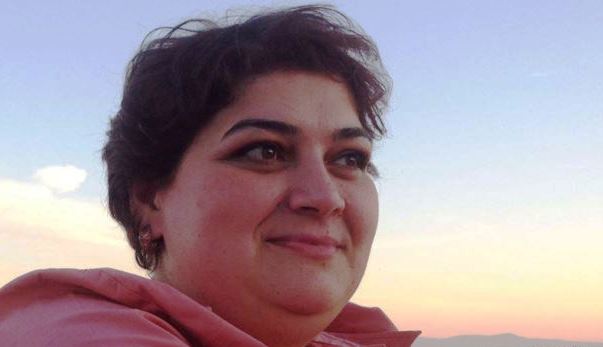
Khadija Ismayilova
Recently-released Azerbaijani journalist Khadija Ismayilova was due to mark her 40th birthday in prison on Friday 27 May 2016, but she was released two days prior during her appeal. However, several charges against her remain.
Arrested in December 2014, Khadija was serving a seven-and-a-half year prison sentence in Azerbaijan on politically motivated charges of tax evasion, illegal entrepreneurship and abuse of power.
The real reason for Ismayilova’s imprisonment, however, was her investigative journalism. For many years, Ismayilova has been one of very few journalists in Azerbaijan willing to explore risky topics like human rights abuses and corruption among Azerbaijan’s ruling elite. Her reporting shed light on many truths the Azerbaijani authorities would prefer to keep hidden, and she is paying a high price for her courageous work.
To mark Ismayilova’s birthday, call for all charges against her to be quashed and for the immediate release of all political prisoners in Azerbaijan, the Sport for Rights campaign is collaborating with other networks to coordinate a series of parallel protests in cities around the world. The campaign is aiming for the symbolic number of 40 protests but will need your help.
If you are concerned by Ismayilova’s case and want to take a stand for human rights in Azerbaijan, please consider organising a peaceful protest in your city. The action can be large or small, traditional or creative, in any legally permissible spot you choose. Please get in touch through the event page or email [email protected] to discuss details. Sport for Rights will share details on the various actions by city closer to the date.
When: Friday 27 May 2016
Where: Global. Click here for updates
Get involved: If you are interested in organising a vigil, email [email protected]
24 Mar 2016 | Magazine, mobile, Volume 45.01 Spring 2016
[vc_row][vc_column][vc_custom_heading text=”This year brings the 400th anniversary of William Shakespeare’s death and Index on Censorship is marking it with a special issue of our award-winning magazine, looking at how his plays have been used around the world to sneak past censors or take on the authorities – often without them realising.”][vc_row_inner][vc_column_inner width=”1/2″][vc_column_text]
Our special report explores how different countries use different plays to tackle difficult themes. Hungarian author György Spiró writes about how Richard III was used to taunt eastern European dictators during the 1980s. Dame Janet Suzman remembers how staging Othello with a black lead during apartheid in South Africa caused people to walk out of the theatre.
[/vc_column_text][/vc_column_inner][vc_column_inner width=”1/2″][vc_single_image image=”74261″ img_size=”full”][/vc_column_inner][/vc_row_inner][vc_column_text]
Kaya Genç tells of a 1981 production of A Midsummer’s Night Dream in Turkey that landed most of the cast in jail. And Brazilian director Roberto Alvim recounts his recent staging of Julius Caesar, which was inspired by the country’s current political tumult. The issue also includes contributions from Simon Callow, Tom Holland, Preti Taneja and Kathleen E McLuskie. Plus we explore Shakespeare’s ability to provoke and protest in India, Zimbabwe and the USA. Currently Shakespeare is very much in favour in China and our contributing editor Jemimah Steinfeld explores why.
Shakespeare aside, we have Hollywood screenwriter John McNamara on why his film on blacklisted screenwriter Dalton Trumbo nearly didn’t make it to the big screen. There are interviews with US academic Steven Salaita and Syrian playwright Liwaa Yazji. We look at how one man from New Zealand has been hacking North Korea for years. And we explore Index’s archives on Argentina’s dictatorship, 40 years after the coup, with interviews from former prisoners and descendants of the disappeared.
The issue also includes new fiction from Akram Aylisli, one of Azerbaijan’s leading, and persecuted, writers. Plus lyrics from Egyptian musician Ramy Essam, famed for his performances in the Tahrir Square revolution, and Basque protest singer Fermin Muguruza. And there are illustrations and cartoons by Martin Rowson, Ben Jennings, Eva Bee and Brian John Spencer.
Order your copy here, or take out a digital subscription via Exact Editions (just £18 for the year, with a free trial). Copies are also available in excellent bookshops including at the BFI and Serpentine Gallery (London), News from Nowhere (Liverpool), Home (Manchester) and on Amazon. Each magazine sale helps Index on Censorship fight for free expression worldwide.
[/vc_column_text][/vc_column][/vc_row][vc_row][vc_column][vc_custom_heading text=”SPECIAL REPORT: STAGING SHAKESPEREAN DISSENT” css=”.vc_custom_1483446641352{margin-right: 0px !important;margin-left: 0px !important;border-bottom-width: 1px !important;padding-top: 15px !important;padding-bottom: 15px !important;border-bottom-color: #455560 !important;border-bottom-style: solid !important;}”][vc_column_text]
Plays that protest, provoke and slip by the censors
Rising star – Jemimah Steinfeld on how China has embraced Shakespeare, with performances spanning from brash pro-government productions to a Tibetan Hamlet
When the show doesn’t go on – Jan Fox reports on why school and community theatre productions in the US are under increasing pressure to curb “controversial” themes
The Bard meets Bollywood – Suhrith Pathasarathy looks at how India’s films use Shakespeare to tackle controversy
Lifting the curtain on Zimbabwe – While Shakespeare’s tales of power play and ageing rulers get the go-ahead, local playwrights struggle to be heard, says playwright Elizabeth Zaza Muchemwa
Lend me your ears – Claire Rigby interviews leading Brazilian director Roberto Alvim about tackling his country’s current political turmoil through Julius Caesar
The play’s the thing – Kathleen E McLuskie on how the Bard kept out of trouble with the censors of his day, despite some close calls
Morals made to measure – Tom Holland suggests that Measure for Measure could be reworked for our times
Stripsearch – Martin Rowson’s cartoon on how the history plays would be staged in the Pious People’s Hereditary Democractic Republic of Kryxygistan
The writer of our discontent – György Spiró remembers when a Hungarian staging of Richard III became a way to take on eastern Europe’s dictators
Star-crossed actors – Preti Taneja visits a dual production of Romeo and Juliet staged by theatres in Kosovo and Serbia
When the Dream upset the regime – Kaya Genç on the enduring legacy of a subversive 1981 performance of A Midsummer Night’s Dream in Turkey
Say no moor – Dame Janet Suzman tells Natasha Joseph why South Africa’s apartheid-era censors wouldn’t dare touch Othello
[/vc_column_text][/vc_column][/vc_row][vc_row][vc_column][vc_custom_heading text=”IN FOCUS” css=”.vc_custom_1481731813613{margin-right: 0px !important;margin-left: 0px !important;border-bottom-width: 1px !important;padding-top: 15px !important;padding-bottom: 15px !important;border-bottom-color: #455560 !important;border-bottom-style: solid !important;}”][vc_column_text]
Theatre of war – Charlotte Bailey interviews Syrian playwright Liwaa Yazji
Beyond belief – Ryan McChrystal looks at whether Ireland’s new government will finally phase out the country’s blasphemy law
Exposing history’s faultlines – Vicky Baker explores the Index archives for stories of Argentina’s dictatorship 40 years on, and talks to those who were affected
Rainbow warriors – Duncan Tucker reports on the attacks and killings of LGBT activists in Honduras
Hack job – Sybil Jones interviews Frank Feinstein, who monitors the North Korean propaganda machine
“They worried I’m dangerous. I’m absolutely harmless” – Nan Levinson speaks to US academic Steven Salaita who lost his job after posting controversial tweets
Tools and tricks for truthseekers – Alastair Reid and Peter Sands on why people need to learn verification techniques to combat hoaxes and misinformation on social media
Your television is watching you – Jason DaPonte explains how information stored by internet-connected home devices could be used against us
Tackling Trumbo – Hollywood screenwriter John McNamara on how his story about blacklisted writer Dalton Trumbo almost didn’t make it to screens
[/vc_column_text][/vc_column][/vc_row][vc_row][vc_column][vc_custom_heading text=”CULTURE” css=”.vc_custom_1481731777861{margin-right: 0px !important;margin-left: 0px !important;border-bottom-width: 1px !important;padding-top: 15px !important;padding-bottom: 15px !important;border-bottom-color: #455560 !important;border-bottom-style: solid !important;}”][vc_column_text]
Know your enemy – John Angliss introduces his translation of a new short story by one of Azerbaijan’s leading, persecuted writers, Akram Aylisli
Borderless bard – Josie Timms interviews poet Edin Suljic who fled war in Yugoslavia and found inspiration in Shakespeare
Singing for Tahrir – Musician Ramy Essam who roused crowds during the Egyptian revolution shares his lyrics and future plans
Notes of discord – Rachael Jolley speaks to the Basque singer Fermin Muguruza about having his concerts banned in Madrid
[/vc_column_text][/vc_column][/vc_row][vc_row][vc_column][vc_custom_heading text=”COLUMNS” css=”.vc_custom_1481732124093{margin-right: 0px !important;margin-left: 0px !important;border-bottom-width: 1px !important;padding-top: 15px !important;padding-bottom: 15px !important;border-bottom-color: #455560 !important;border-bottom-style: solid !important;}”][vc_column_text]
Global view – Index on Censorship CEO Jodie Ginsberg debunks the argument that powerful voices should be silenced to promote the free speech of others
Index around the world – Josie Timms runs through the latest news on Index on Censorship’s global work, including a Magna Carta-inspired youth project
[/vc_column_text][/vc_column][/vc_row][vc_row][vc_column][vc_custom_heading text=”END NOTE” css=”.vc_custom_1481880278935{margin-right: 0px !important;margin-left: 0px !important;border-bottom-width: 1px !important;padding-top: 15px !important;padding-bottom: 15px !important;border-bottom-color: #455560 !important;border-bottom-style: solid !important;}”][vc_column_text]
T-shirted turmoil – Vicky Baker looks at the power of the slogan T-shirt and how one can land you in trouble with the law
[/vc_column_text][/vc_column][/vc_row][vc_row][vc_column][vc_custom_heading text=”SUBSCRIBE” css=”.vc_custom_1481736449684{margin-right: 0px !important;margin-left: 0px !important;border-bottom-width: 1px !important;padding-bottom: 15px !important;border-bottom-color: #455560 !important;border-bottom-style: solid !important;}”][vc_column_text]Index on Censorship magazine was started in 1972 and remains the only global magazine dedicated to free expression. Past contributors include Samuel Beckett, Gabriel García Marquéz, Nadine Gordimer, Arthur Miller, Salman Rushdie, Margaret Atwood, and many more.[/vc_column_text][vc_row_inner][vc_column_inner width=”1/2″][vc_single_image image=”76572″ img_size=”full”][/vc_column_inner][vc_column_inner width=”1/2″][vc_column_text]In print or online. Order a print edition here or take out a digital subscription via Exact Editions.
Copies are also available at the BFI, the Serpentine Gallery, MagCulture, (London), News from Nowhere (Liverpool), Home (Manchester), Calton Books (Glasgow) and on Amazon. Each magazine sale helps Index on Censorship continue its fight for free expression worldwide.
 SUBSCRIBE NOW[/vc_column_text][/vc_column_inner][/vc_row_inner][/vc_column][/vc_row]
9 Feb 2016 | About Index, Awards, Events, mobile, Press Releases
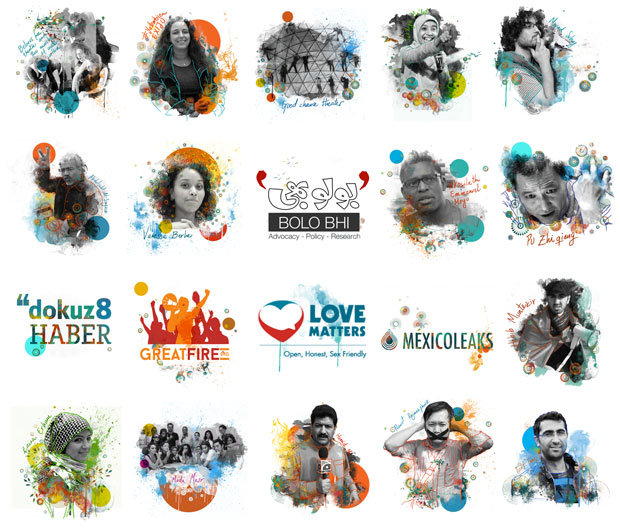
An Aleppo-based journalist training women to report on the crisis in war-torn Syria, an Indonesian comic who jokes about Islamic extremism and a 19-year-old campaigner against repression in Eritrea are among those shortlisted for the 2016 Index on Censorship Freedom of Expression Awards.
Drawn from more than 400 crowdsourced nominations, the Index awards shortlist celebrates artists, writers, journalists and campaigners tackling censorship and fighting for freedom of expression. Many of the 20 shortlisted nominees are regularly targeted by authorities or by criminal and extremist groups for their work: some face regular death threats, others criminal prosecution.
Judges for this year’s awards are Nobel Prize-winning author Wole Soyinka, pianist James Rhodes, tech entrepreneur Bindi Karia, Colombian journalist Maria Teresa Ronderos, human rights lawyer Kirsty Brimelow QC and Bahraini campaigner Nabeel Rajab.
“Censorship is not something that happens ‘somewhere else’,” said Jodie Ginsberg, CEO of Index on Censorship. “It occurs on a daily basis in every country, in every part of the world. The shortlist honours those who are among the bravest and most creative in tackling such threats.”
Awards are offered in four categories: journalism; arts; campaigning; and digital activism.
Nominees include Good Chance Theatre who work in the infamous “Jungle” refugee camp in Calais, France; imprisoned Bahraini academic and blogger Dr Abduljalil Al-Singace, who has continued to protest in prison despite being subjected to torture and abuse for daring to speak out on human rights abuses in his country; GreatFire, an anonymous group that battles China’s severe web censorship; and Pravit Rojanaphruk, a veteran reporter who was arrested, interrogated and forced out of his job for criticising Thailand’s military government.
Other nominees include Zaina Erhaim, who returned to her native Syria to report on the conflict and train women to tell unreported stories; Sakdiyah Ma’ruf, a female Muslim stand-up comedian from Indonesia; and campaigner Nkosilathi Emmanuel Moyo, a Zimbabwean who fights corruption in his country, currently in hiding after sending Robert Mugabe a prison uniform for his 92nd birthday this month.
Winners, who will be announced at a gala ceremony in London on 13 April, become Index on Censorship Freedom of Expression Awards Fellows and are given support for their work.
“How do you fight for free expression beyond a moment? How do you keep it alive? You must remember how stressful it is for people on the ground. This fellowship, following us for a year, it is a good idea,” said Rafael Marques de Morais, Freedom of Expression Award winner for Journalism in 2015.
Notes for editors:
- Index on Censorship is a UK-based non-profit organisation that publishes work by censored writers and artists and campaigns against censorship worldwide.
- More detail about each of the nominees is included below.
- The winners will be announced at a ceremony at The Unicorn Theatre, London, on 13 April.
For more information, or to arrange interviews with any of those shortlisted, please contact: David Heinemann on 0207 260 2660. More biographical information and photos of the nominees are available at awards.indexoncensorship.org
Index on Censorship Freedom of Expression Awards nominees 2016
Arts
Belarus Free Theatre and The Ministry of Counterculture (UK/Belarus)
Ten-year-old Belarus Free Theatre has been using their creative and subversive art to protest the dictatorial rule of Aleksandr Lukashenko for a decade
Tania Bruguera (Cuba)
American-Cuban artist Tania Bruguera, who uses art to campaign for greater openness in Cuban society, was arrested after attempting to stage her play #YoTambienExijo at a festival in Havana. It is now a global movement
Good Chance Theatre (UK)
Good Chance works in the infamous Jungle refugee camp in Calais, France, to provide a space for refugees to express themselves
Sakdiyah Ma’ruf (Indonesia)
Sakdiyah Ma’ruf is a female Muslim stand-up comedian from Indonesia who challenges Islamic fundamentalism and advocates for women’s rights
Murad Subay (Yemen)
Artist Murad Subay uses his country’s streets as a canvas to protest Yemen’s war, institutionalised corruption and forced “disappearings”
Campaigning
Abduljalil Al-Singace (Bahrain)
Dr. Abduljalil Al- Singace is an imprisoned Bahraini human rights activist, academic and blogger who has not let prison stop him from calling attention to his country’s human rights practices
Vanessa Berhe (US)
University student Vanessa Berhe is fighting for the release of her uncle, Eritrean journalist Seyoum Tsehaye, and for freedom of expression in Eritrea, one of the world’s worst most censored countries
Bolo Bhi (Pakistan)
A women-lead digital rights campaigning group who have orchestrated an impressive effort to turn back the Pakistani government’s draconian attempt to censor the internet
Nkosilathi Emmanuel Moyo (Zimbabwe)
Prolific author and activist Nkosilathi Emmanuel Moyo campaigned against political corruption and worked with young people to foster human rights
Pu Zhiqiang (China)
A human rights lawyer who represented Ai Weiwei, Pu Zhiqiang has been targeted by China’s authorities for his unwavering support of free speech
Digital Advocacy
Dokuz8 Haber and Gökhan Biçici (Turkey)
Journalist Gökhan Biçici launched citizen news agency Dokuz8Haber to foster uncensored information and strengthen Turkish democracy, circumventing intense press censorship
GreatFire (China)
GreatFire campaigns for transparency of Chinese censorship by providing numerous effective circumvention tools to the “Great Firewall”
Love Matters (international)
An international platform dedicated to opening up conversation about sexual health in countries where such subjects are censored or taboo
Mexicoleaks (Mexico)
An anonymous news-sharing platform seeking to bring more transparency to Mexico’s society by uncovering corruption
Hebib Muntezir (Azerbaijan)
An exiled Azerbaijani activist and blogger, who works with Meydan TV, mobilising social media to get uncensored news to a surprising number of his fellow citizens
Journalism
Zaina Erhaim (Syria)
One of the few female journalists still reporting from Syria, Zaina Erhaim of Aleppo works to train women to tell the story of the war-ravaged country
Mada Masr (Egypt)
Mada Masr is an independent news cooperative launched to offer an alternative narrative to government-controlled media
Hamid Mir (Pakistan)
Hamid Mir, a television journalist whose 30-year-career has been punctuated by threats, physical assaults, abductions and assassination attempts for taking on unchallenged powers in Pakistan
Pravit Rojanaphruk (Thailand)
Pravit Rojanaphruk is a veteran reporter who was arrested, interrogated and forced to resign for speaking out against Thailand’s lèse majesté law and military government
Ferit Tunç (Turkey)
Ferit Tunç is a Kurdish journalist who set up an independent newspaper in eastern Turkey and used inventive methods including publishing recipes with hidden messages to challenge censorship of his reporting on corruption
