In a letter to Azerbaijani President Ilham Aliyev, independent lawyers, barristers or attorneys-at-law, expressed concern over the sentencing of their colleague, human rights lawyer Intigam Aliyev: “We call upon you, Mr President, to immediately and unconditionally release Intigam Aliyev and rehabilitate his civil and political rights.”
After six months in detention on spurious charges Intigam Aliyev was sentenced to seven and a half years in prison.
“We identify with Intigam Aliyev”, the lawyers wrote, “because we believe everybody should have a right to a fair trial, just as he does. Yet, Intigam Aliyev’s trial was marred by procedural irregularities and violations of the right to a public hearing and the right to access the files and documents of the case.” In addition, Intigam Aliyev’s attorney managed to prove that he was not guilty of implementing projects without registration, which he was charged with.
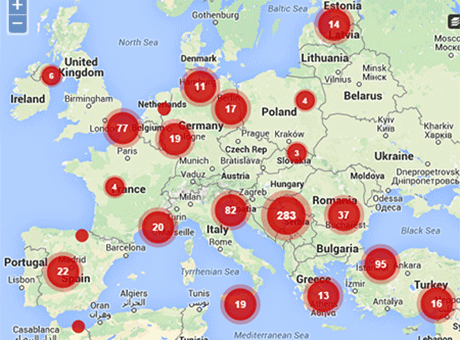
All 95 lawyers expressed their sympathy for Intigam Aliyev, as a unique lawyer. Not only is he a teacher for a generation of young Azerbaijanis, but he is also an expert of the European legal system, one of the first Azerbaijani lawyers to utilize the European Court of Human Rights and the regional tutor in the Human Rights Education for Legal Professionals (HELP) programme of the Council of Europe.
In the letter the lawyers furter identified with Intigam Aliyev: “For all of us, being a lawyer is a unique privilege. We identify with Intigam Aliyev because in Azerbaijan, any of us could be arrested simply for doing the same work as he did.”
The lawyers included colleagues of Intigam Aliyev, from various Eastern European countries, from within the Human Rights House Network project International Law in Advocacy, of which he is the national expert in Azerbaijan. The signing lawyers also included lawyers invested in human rights, from the United States and Canada, Egypt or Iran, as well as western European countries.
Florian Irminger, head of advocacy at the Human Rights House Foundation, underlines the importance of supporting human rights defenders in Azerbaijan: “The imprisonment of Intigam Aliyev is part of a systematic crackdown on human rights in the country. Arbitrary detention has been used to silence critical voices in Azerbaijan for years, whilst at the same time they exhibit a modern state through major international events. This letter and attention from around 100 lawyers from three continents witness that the outside world are not fooled by the promotion.”
In their letter, the lawyers highlight that the detention conditions of Intigam Aliyev have an impact on his already poor health:
“He suffers from severe chronic headaches in addition to nerve pain and has reportedly been denied of appropriate health care to date.” In their letter, the lawyers urge the Azerbaijani authorities to respect “basic humanitarian principles” and ensure that Intigam Aliyev is receiving “complete and necessary treatment for all medical concerns.”
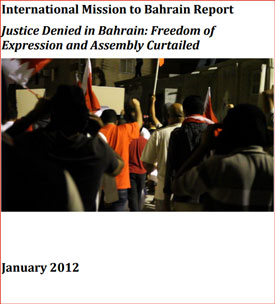
Bahrain’s government has used its international profile to relentlessly clampdown on human rights and democracy campaigners in the country.
Prominent human rights campaigners have been subjected to detention and ongoing judicial harassment for expressing opinions. Other activists have been forced into exile or stripped of their Bahraini citizenship.
Justice Denied in Bahrain: Freedom of Expression and Assembly Curtailed
Following the fall of authoritarian regimes in Tunisia and Egypt, hundreds of thousands of Bahraini protesters took to the streets of Manama, the capital city, on 14 February 2011, to peacefully call for democratic reform. Officials were quick to crack down on protests, and the access of the international media was limited almost immediately after the start of the protests.
Unlike other citizens demonstrating across the Arab World in 2011, the protests in Bahrain received very little coverage, particularly considering the disproportionate number of people jailed and killed in the tiny country of 1.2 million people. Furthermore, the messages of the protesters – calling for reform, equal rights and opportunities and greater democracy – have largely been distorted by both the government and the international community which have instead focused on sectarian interpretations and regional geopolitical issues.
On World Press Freedom Day, 116 days after the attack at the office of the satirical newspaper Charlie Hebdo that left 11 dead and 12 wounded, we, the undersigned, reaffirm our commitment to defending the right to freedom of expression, even when that right is being used to express views that we and others may find difficult, or even offensive.
The Charlie Hebdo attack – a horrific reminder of the violence many journalists around the world face daily in the course of their work – provoked a series of worrying reactions across the globe.
In January, the office of the German daily Hamburger Morgenpost was firebombed following the paper’s publishing of several Charlie Hebdo images. In Turkey, journalists reported receiving death threats following their re-publishing of images taken from Charlie Hebdo. In February, a gunman apparently inspired by the attack in Paris, opened fire at a free expression event in Copenhagen; his target was a controversial Swedish cartoonist who had depicted the prophet Muhammad in his drawings.
A Turkish court blocked web pages that had carried images of Charlie Hebdo’s front cover; Russia’s communications watchdog warned six media outlets that publishing religious-themed cartoons “could be viewed as a violation of the laws on mass media and extremism”; Egypt’s president Abdel Fatah al-Sisi empowered the prime minister to ban any foreign publication deemed offensive to religion; the editor of the Kenyan newspaper The Star was summoned by the government’s media council, asked to explain his “unprofessional conduct” in publishing images of Charlie Hebdo, and his newspaper had to issue a public apology; Senegal banned Charlie Hebdo and other publications that re-printed its images; in India, Mumbai police used laws covering threats to public order and offensive content to block access to websites carrying Charlie Hebdo images. This list is far from exhaustive.
Perhaps the most long-reaching threats to freedom of expression have come from governments ostensibly motivated by security concerns. Following the attack on Charlie Hebdo, 11 interior ministers from European Union countries, including France, Britain and Germany, issued a statement in which they called on internet service providers to identify and remove online content “that aims to incite hatred and terror”. In the UK, despite the already gross intrusion of the British intelligence services into private data, Prime Minister David Cameron suggested that the country should go a step further and ban internet services that did not give the government the ability to monitor all encrypted chats and calls.
This kind of governmental response is chilling because a particularly insidious threat to our right to free expression is self-censorship. In order to fully exercise the right to freedom of expression, individuals must be able to communicate without fear of intrusion by the state. Under international law, the right to freedom of expression also protects speech that some may find shocking, offensive or disturbing. Importantly, the right to freedom of expression means that those who feel offended also have the right to challenge others through free debate and open discussion, or through peaceful protest.
On World Press Freedom Day, we, the undersigned, call on all governments to:
• Uphold their international obligations to protect the rights of freedom of expression and information for all, especially journalists, writers, artists and human rights defenders to publish, write and speak freely;
• Promote a safe and enabling environment for those who exercise their right to freedom of expression, especially for journalists, artists and human rights defenders to perform their work without interference;
• Combat impunity for threats and violations aimed at journalists and others threatened for exercising their right to freedom of expression and ensure impartial, speedy, thorough, independent and effective investigations that bring masterminds behind attacks on journalists to justice, and ensure victims and their families have speedy access to appropriate remedies;
• Repeal legislation which restricts the right to legitimate freedom of expression, especially such as vague and overbroad national security, sedition, blasphemy and criminal defamation laws and other legislation used to imprison, harass and silence journalists and others exercising free expression;
• Promote voluntary self-regulation mechanisms, completely independent of governments, for print media;
• Ensure that the respect of human rights is at the heart of communication surveillance policy. Laws and legal standards governing communication surveillance must therefore be updated, strengthened and brought under legislative and judicial control. Any interference can only be justified if it is clearly defined by law, pursues a legitimate aim and is strictly necessary to the aim pursued.
PEN International
Adil Soz – International Foundation for Protection of Freedom of Speech
Africa Freedom of Information Centre
Albanian Media Institute
Article19
Association of European Journalists
Bahrain Center for Human Rights
Belarusian PEN
Brazilian Association for Investigative Journalism
Cambodian Center for Human Rights
Canadian Journalists for Free Expression
Center for Media Freedom and Responsibility
Centre for Independent Journalism – Malaysia
Danish PEN
Derechos Digitales
Egyptian Organization for Human Rights
English PEN
Ethical Journalism Initiative
Finnish PEN
Foro de Periodismo Argentino
Fundamedios – Andean Foundation for Media Observation and Study
Globe International Center
Guardian News Media Limited
Icelandic PEN
Index on Censorship
Institute for the Studies on Free Flow of Information
International Federation of Journalists
International Press Institute
International Publishers Association
Malawi PEN
Media, Entertainment and Arts Alliance
Media Institute of Southern Africa
Media Rights Agenda
Media Watch
Mexico PEN
Norwegian PEN
Observatorio Latinoamericano para la Libertad de Expresión – OLA
Pacific Islands News Association
PEN Afrikaans
PEN American Center
PEN Catalan
PEN Lithuania
PEN Quebec
Russian PEN
San Miguel Allende PEN
PEN South Africa
Southeast Asian Press Alliance
Swedish PEN
Turkish PEN
Wales PEN Cymru
West African Journalists Association
World Press Freedom Committee
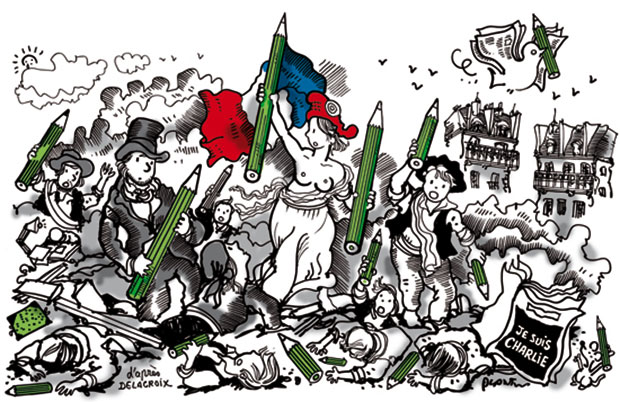
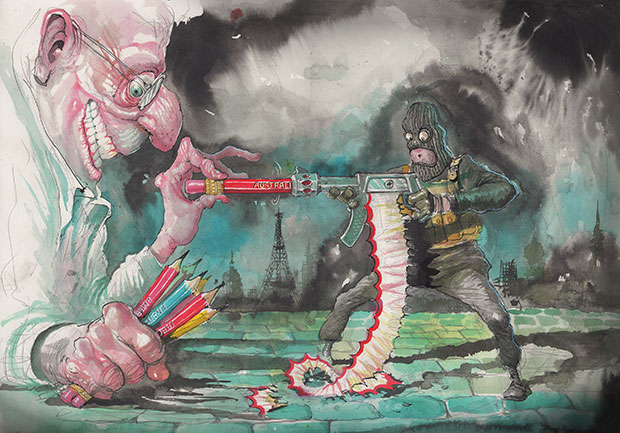
The attacks on French satirical magazine Charlie Hebdo in January threw a global spotlight on the challenges faced by cartoonists worldwide. Index has since its earliest days reported on the persecution of satirists. As part of our work in celebrating as well as defending free expression, Index has this year asked cartoonists to reflect on the past year for free expression in their own way.
South America
Xavier Bonilla (Bonil)
Ecuador
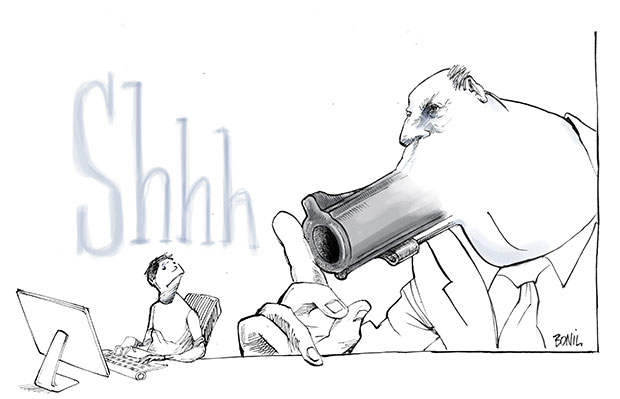
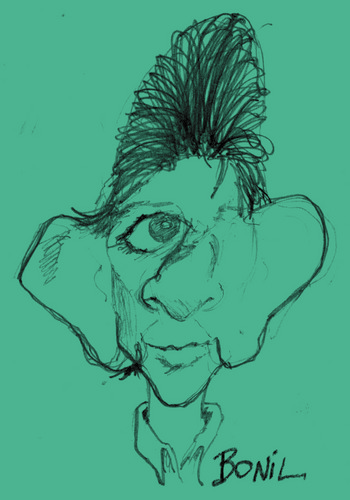
Bonil has been criticising Ecuador’s political leaders in his cartoons for 30 years. Regularly denounced, threatened and fined, Bonil has earned the title “the pursued cartoonist”. @bonilcaricatura
North America
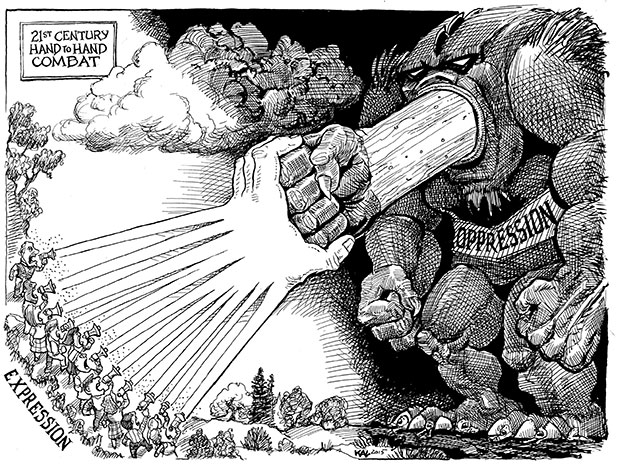
Kevin Kallaugher (Kal)
United States
US artist Kal spent 10 years drawing cartoons in London before returning home, where he continues to work. He has won numerous awards and his cartoons have been featured in more than 100 publications around the globe. @kaltoons | web
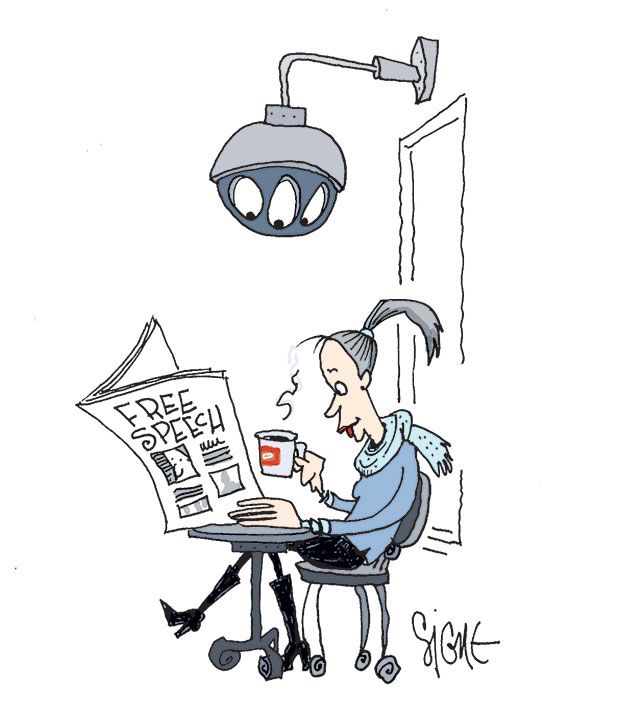
Signe Wilkinson (Signe)
United States
In 1992, Signe became the first woman to win the Pulitzer Prize for Editorial Cartooning, and she has since won several other awards for her work. She comments on topical political issues and is best known for her daily cartoons in The Philadelphia Daily News. @SigneWilk | Facebook
Europe
Jean Plantureux (Plantu)
France
Plantu, the chief cartoonist for France’s Le Monde, is co-founder of Cartooning for Peace. Since the Charlie Hebdo attacks, Plantu has had a constant security detail but says he intends to continue to draw. @plantu | web
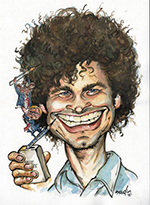
Martin Rowson
United Kingdom
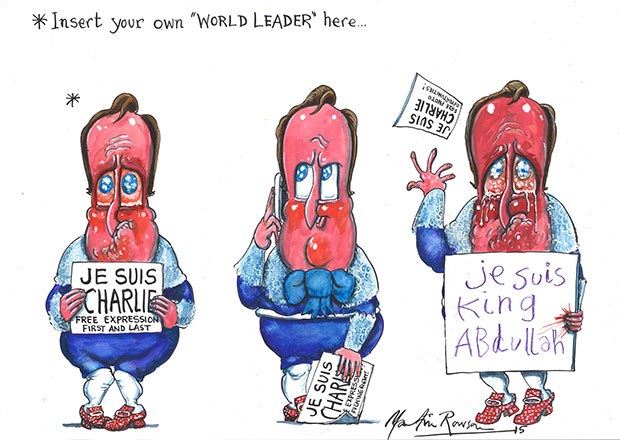
Political satirist Martin Rowson contributes cartoons to The Guardian and the Daily Mirror as well as Index on Censorship magazine. His work has earned him several awards, as well as an official appointment as Cartoonist Laureate of London in 2001. @MartinRowson
Middle East
Ali Farzat
Syria
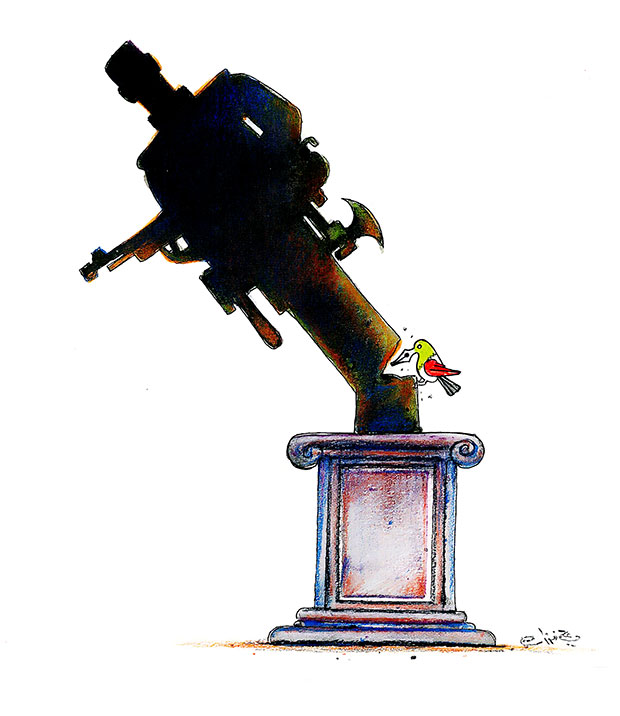
Former Index arts award winner Ali Farzat came to global attention in 2011, when he was pulled from his car and beaten by Syrian security forces who broke both his hands. Farzat recently worked for Kuwaiti Newspaper Al-Watan, which has been closed by authorities after criticising the government.
Doaa El Adl
Egypt
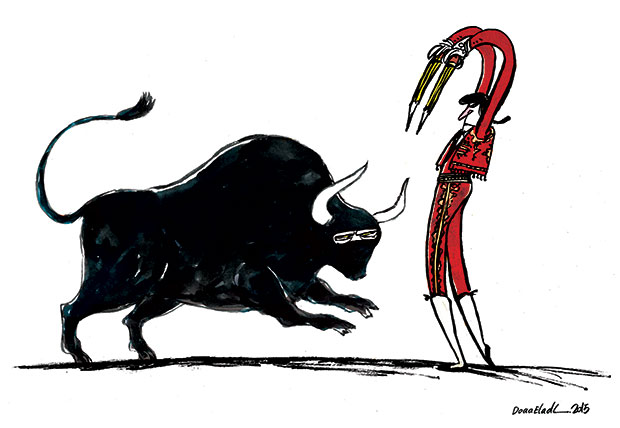
Doaa El Adl has been an award-winning cartoonist for prominent Egyptian newspaper Al Masry Al Youm since 2008. She has faced threats and charges of blasphemy for her illustrations. @doaaeladl
Asia
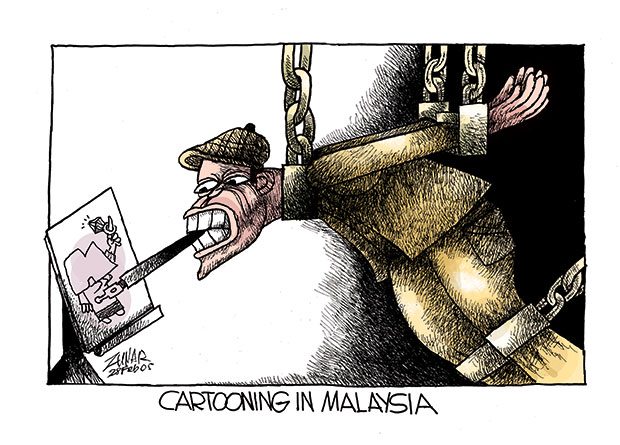
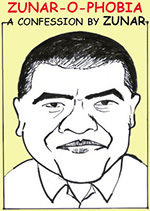
Zulkiflee Anwar Haque (Zunar)
Malaysia
“Why pinch when you can punch?!” says Zunar, believing the best way to make a political impact is to criticise his country’s powerful leaders as harshly as possible. The Malaysian government has banned much of Zunar’s work and repeatedly subjected him to raids, arrest and detainment. Zunar continues undeterred, despite two arrests in 2015 already. @zunarkartunis | web
Australia
David Rowe
Australia
Award-winning cartoonist David Rowe has worked as an editorial artist for the Australian Financial Review for 22 years. Rowe’s bright and colorful watercolors are famously merciless. He is a three-time winner of the Stanley Award for Australia’s Cartoonist of the Year. @roweafr
Africa
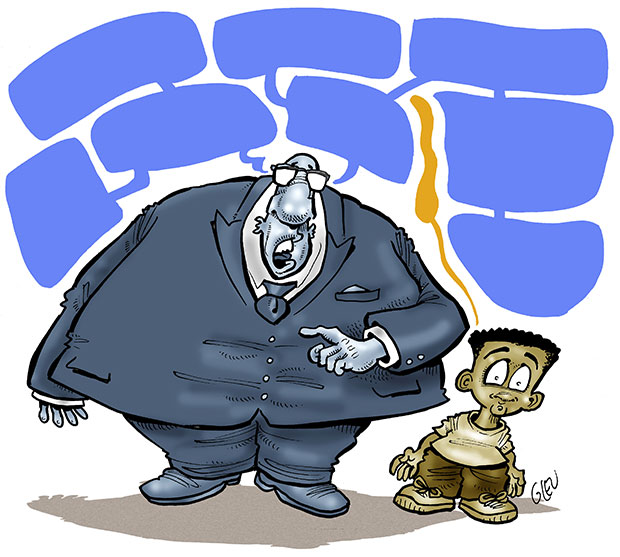
Damien Glez (Glez)
Burkina Faso
Glez’s cartoons regularly appear in publications spanning three continents, including Le Journal du Jeudi, for which he is the delegated director of publication, and the satirical Le Marabout, which he co-created. He writes his own comic strip called Divine Comedy. @DamienGlez | web