19 Jun 2014 | Azerbaijan Statements, Campaigns, Digital Freedom, Digital Freedom Statements
The following is a transcript of a joint oral statement, led by ARTICLE 19 and supported by several IFEX members, that was read aloud today, 19 June 2014, at the 26th UN Human Rights Council session in Geneva:
Thank you Mr. President,
Two years ago this Council affirmed by consensus that “the same rights that people have offline must also be protected online, in particular freedom of expression”.
In 2014, the outcome document of Net-Mundial in Brazil recognised the vital role of the internet to achieve the full realisation of sustainable development goals. 31 UN Special Rapporteurs recently affirmed that guaranteeing the free-flow of information online ensures transparency and participation in decision-making, enhancing accountability and the effectiveness of development outcomes.
Development and social inclusion relies on the internet remaining a global resource, managed in the public interest as a democratic, free and pluralistic platform. States must promote and facilitate universal, equitable, affordable and high-quality Internet access for all people on the basis of human rights and net-neutrality, including during times of unrest.
The blocking of communications, such as the shutdown of social media in Malaysia, Turkey, and Venezuela is a violation of freedom of expression and must be condemned. Dissent online must be protected. We deplore the detention of Sombat Boonngamanong in Thailand, who faces up to 14 years imprisonment for using social media to urge peaceful resistance to the recent military coup in the form of a three-finger salute.
One year after the Snowden revelations, this Council must recognise that trust in the internet is conditional on respect for the rights to freedom of expression and privacy online, regardless of users’ nationality or location. Any mass (or dragnet) surveillance, which comprises collection, processing and interception of all forms of communication, is inherently disproportionate and a violation of fundamental human rights.
The targeted interception and collection of personal data must be conducted in accordance with international human rights law, as set out in the necessary and proportionate principles. Critical and intermediate infrastructure must not be tampered with for this end, nor should any system, protocol or standard be weakened to facilitate interception or decryption of data.
ARTICLE 19 urges the Human Rights Council to take action to comprehensively address these challenges.
Thank you.
Signed,
ActiveWatch – Media Monitoring Agency
Africa Freedom of Information Centre
Albanian Media Institute
Arabic Network for Human Rights Information
ARTICLE 19
Association of Caribbean Media Workers
Bahrain Center for Human Rights
Cairo Institute for Human Rights Studies
Cambodian Center for Human Rights
Canadian Journalists for Free Expression
Center for Independent Journalism – Romania
Center for Media Freedom and Responsibility
Egyptian Organization for Human Rights
Foro de Periodismo Argentino
Foundation for Press Freedom – FLIP
Freedom Forum
Human Rights Watch
Index on Censorship
Institute for the Studies on Free Flow of Information
International Press Institute
Maharat Foundation
Media, Entertainment and Arts Alliance
Media Institute of Southern Africa
Media Rights Agenda
National Union of Somali Journalists
Norwegian PEN
Pacific Islands News Association
Pakistan Press Foundation
PEN Canada
Privacy International
Reporters Without Borders
Southeast Asian Press Alliance
South East European Network for Professionalization of Media
West African Journalists Association
World Association of Community Radio Broadcasters – AMARC
Access
Alternative Informatics
Asian Forum for Human Rights and Development (FORUM-ASIA)
Association for Progressive Communications (APC)
Bangladesh Internet Governance Forum
Bangladesh NGOs Network for Radio and Communications (BNNRC)
Barys Zvozskau Belarusian Human Rights House
Big Brother Watch
Bir Duino (Kyrgyzstan)
Bits of Freedom
Bolo Bhi Pakistan
Bytes For All
Center for e-parliament Research
Centre for Internet & Society
Center for National and International Studies, Azerbaijan
Center for the Development of Democracy and Human Rights, Russia
Chaos Computer Club
CIVICUS: World Alliance for Citizen Participation
Digital Rights Foundation, Pakistan
Electronic Privacy Information Center
English Pen
European Centre for Not-for-Profit Law (ECNL)
Helsinki Citizens’ Assembly – Vanadzor
Human Rights Monitoring Institute, Lithuania
International Centre for Not-for-Profit Law (ICNL)
International Federation for Human Rights (FIDH)
Kazakhstan International Bureau for Human Rights and Rule of Law
Kenya Human Rights Commission
Liberty
OpenMedia.org
Open Net Korea
Open Rights Group
Panos Institute West Africa
Samuelson-Glushko Canadian Internet Policy & Public Interest Clinic (CIPPIC)
Simon Davies, publisher of “Privacy Surgeon”
Thai Netizen Network
Zimbabwe Human Rights Forum
6 Jun 2014 | Azerbaijan News, Digital Freedom, News

(Image: Bplanet/Shutterstock)
Croatia’s new criminal code has introduced “humiliation” as an offence — and it is already being put to use. Slavica Lukić, a journalist with newspaper Jutarnji list is likely to end up in court for writing that the Dean of the Faculty of Law in Osijek accepted a bribe. As Index reported earlier this week, via its censorship mapping tool mediafreedom.ushahidi.com: “For the court, it is of little importance that the information is correct – it is enough for the principal to state that he felt humbled by the publication of the news.”
These kinds of laws exist across the world, especially under the guise of protecting against insult. The problem, however, is that such laws often exist for the benefit of leaders and politicians. And even when they are more general, they can be very easily manipulated by those in positions of power to shut down and punish criticism. Below are some recent cases where just this has happened.
Tajikistan
On 4 June this year, security forces in Tajikistan detained a 30-year-old man on charges of “insulting” the country’s president. According to local press, he was arrested after posting “slanderous” images and texts on Facebook.
Iran
Eight people were jailed in Iran in May, on charges including blasphemy and insulting the country’s supreme leader Ayatollah Ali Khamenei on Facebook. They also were variously found guilty of propaganda against the ruling system and spreading lies.
India
Also in May this year, Goa man Devu Chodankar was investigated by police for posting criticism of new Indian Prime Minister Narendra Modi on Facebook. The incident was reported the police someone close to Modi’s Bharatiya Janata Party (BJP), under several different pieces of legislation. One makes it s “a punishable offence to send messages that are offensive, false or created for the purpose of causing annoyance or inconvenience”.
Swaziland
Human rights lawyer Thulani Maseko and journalist and editor Bheki Makhubu were arrested in March this year, and face charges of “scandalising the judiciary” and “contempt of court”. The charges are based on two articles, written by Maseko and Makhubu and published in the independent magazine the Nation, which strongly criticised Swaziland’s Chief Justice Michael Ramodibedi, levels of corruption and the lack of impartiality in the country’s judicial system.
Venezuela
In February this year, Venezuelan opposition leader Leopoldo Lopez was arrested on charges of inciting violence in the country’s ongoing anti-government protests. Human Rights Watch Americas Director Jose Miguel Vivanco said at the time that the government of President Nicholas Maduro had made no valid case against Lopez and merely justified his imprisonment through “insults and conspiracy theories.”
Zimbabwe
Student Honest Makasi was in November 2013 charged with insulting President Robert Mugabe. He allegedly called the president “a dog” and accused him of “failing to do what he promised during campaigns” and lying to the people. He appeared in court around the same time the country’s constitutional court criticised continued use of insult laws. And Makasi is not the only one to find himself in this position — since 2010, over 70 Zimbabweans have been charged for “undermining” the authority of the president.
Egypt
In March 2013, Egypt’s public prosecutor, appointed by former President Mohamed Morsi, issued an arrest warrant for famous TV host and comedian Bassem Youssef, among others. The charges included “insulting Islam” and “belittling” the later ousted Morsi. The country’s regime might have changed since this incident, but Egyptian authorities’ chilling effect on free expression remains — Youssef recently announced the end of his wildly popular satire show.
Azerbaijan
A recent defamation law imposes hefty fines and prison sentences for anyone convicted of online slander or insults in Azerbaijan. In August 2013, a court prosecuted a former bank employee who had criticised the bank on Facebook. He was found guilty of libel and sentenced to 1-year public work, with 20% of his monthly salary also withheld.
Malawi
In July 2013, a man was convicted and ordered to pay a fine or face nine month in prison, for calling Malawi’s President Joyce Banda “stupid” and a “failure”. Angry that his request for a new passport was denied by the department of immigration, Japhet Chirwa “blamed the government’s bureaucratic red tape on the ‘stupidity and failure’ of President Banda”. He was arrested shortly after.
Poland
While the penalties were softened somewhat in a 2009 amendment to the criminal code, libel remains a criminal offence in Poland. In September 2012, the creator of Antykomor.pl, a website satirising President Bronisław Komorowski, was “sentenced to 15 months of restricted liberty and 600 hours of community service for defaming the president”.
This article was published on June 6, 2014 at indexoncensorship.org
2 Jun 2014 | Digital Freedom, News, Young Writers / Artists Programme

(Image: Shutterstock)
Unlike any previous time in the history of the world, there is a generation growing up today with unprecedented knowledge and power at their immediate and constant disposal. Their voices cannot be silenced, they can communicate with each other instantaneously from anywhere in the world. They are children of the internet, and they are politically and socially empowered in ways that are not yet clearly understood. Increasingly defining their identities online as much as offline, net-powered Millenials are collectively reshaping social norms — defining the legacy their generation will leave society. The internet is a product of, and a critical factor in, this legacy.
For example, the internet is a key medium for personal expression. Deliberately open-access and open-source architectures that transcend national boundaries means that the online world is a place where its users become increasingly accustomed to possessing both a platform and a voice regardless of their status in society. Even where it is dangerous to criticise politicians, or to practice a faith, or to be homosexual, the internet provides shelter in anonymity and the chance to meet like-minded people. In this way, the children of the internet have access to support, advice and assistance, but also to allies. Even the most isolated human can now take action with the power of a collaborative collective rather than as a lone individual, and they do so with an attitude that has become acclimatised to unfettered freedom of speech.
For the internet generation, this translates to their political actions online and often erupts into their offline behaviour, too. Online petitions gain infinitely more traction than their pen-and-paper twins, and the more anarchic side of the internet takes no prisoners in parodying public figures, as evinced recently with the numerous revisions of the recent “beer and bingo” tax cut advertisements produced by the ruling coalition. More controversially, Wikileaks infamously released hundreds of thousands of classified government communiqués, and “hacktivist” groups such as Anonymous make their presence felt with powerful retaliations against firms and governments that they perceive to have suppressed internet freedom. Even high-security sites such as the US Copyright Office and Paypal have been targeted — civil disobedience that is symptomatic of the new, sharing internet generation that is paradoxically mindful of personal privacy and disparaging of public opacity.
For the strongest demonstration of the way this attitude and power translates, look no further than the violent reaction of a primarily young body of protesters during the Arab Spring and in Ukraine. The internet was the conduit through which popular campaigns against ruling regimes transformed into widespread civil disobedience and a full-blown political movement. Empowered with access to forms of political commentary comparatively free of governmental intervention and the ability of every protester to act as a professional journalist by virtue of a camera phone and a Twitter account, the children of the internet communicated, mobilised and acted to cast away governments from Tunisia to Yemen; Egypt twice over. They made their voices heard: not at the ballot box as previous generations might have, but in the streets of Cairo and Sana’a and the virtual spaces of Facebook and Blackberry Messenger. Small wonder then, that governments targeted and blocked social networking sites to quell dissent. In many countries the internet was shut down altogether.
Yet, the internet persevered — as John Gilmore, co-founder of the Electronic Frontier Foundation noted: “The internet treats censorship as a malfunction and routes around it”. Despite the long running tussle between the users of the internet and governments who seek to regulate it, it remains untameable. In each instance, almost immediately after internet usage has been restricted, information has circulated about circumventing government regulations — even total shutdowns have been dodged through external satellite connections.
Powered overwhelmingly by the young, the internet is changing the way our societies are structured. Its effects upon our civilisation are poorly understood, particularly among young people who have never known a world without the internet. Ultimately, however, it has done more for individual freedom than any other development in the last half-century. It grants any person a voice with mere access to a keyboard and a broadband connection. It holds governments to account in new and innovative ways, and most crucially, it is an irreversible development. An entire generation defines itself, subconsciously, through the internet; previous such advancements came only through the invention of the printing press, radio and television. One thing is for certain — as broadband usage approaches saturation in many developed countries, we are all children of the internet now.
This article was originally posted on 2 June, 2014 at indexoncensorship.org
6 May 2014 | Egypt, News, Politics and Society
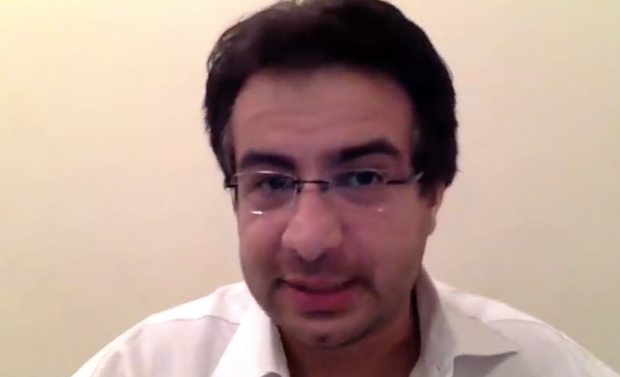
The shocking news of the death of democracy advocate and widely acclaimed Egyptian blogger, Bassem Sabry on April 29, hit me like a lightning bolt.
My short friendship with Bassem dates back to the early days of the January 25 uprising a little over three years ago when, without knowing me personally, Bassem had telephoned to congratulate me on quitting my job at Egypt’s state-run Nile TV in protest at the station’s biased coverage of the protests in Tahrir Square. Although we only met a couple of times after that conversation, I have since considered Bassem “a friend” mainly because of our shared aspirations for a better Egypt.
I learned of Bassem’s death from the flood of Twitter tributes to him from his friends, associates and fellow revolutionaries posted a couple of hours after he had passed away in what his family members describe as a “tragic accident.” Like many of his friends, I had hoped the Twitter eulogies were a sick joke. Unfortunately, they weren’t.
Bassem’s death was confirmed shortly afterward by news reports that said he had fallen to his death from a 10th floor balcony of his apartment after he reportedly “went into a diabetic coma”.
In an outpouring of love and grief, many of Bassem’s comrades in the struggle for a free and democratic Egypt — and some admirers who had never met him but who knew Bassem from his honest and insightful writings and commentaries on Egyptian politics, post-revolution — wrote moving eulogies to him on Twitter .
“Only the good die young but a great loss for those who still have hope for a better Egypt,” prominent human rights lawyer Ragia Omran said via her Twitter account.
“I never knew him but I knew his work. I saw the impact he had and his determination to make things better,” wrote Jeremy Walker, a journalist who has worked for the BBC World Service.
In other online tributes to Bassem, he was fittingly described as “an inspiration”, “a voice of reason”, “a true patriot” and “a champion of civil rights.” Highly respected for his reasoned analysis of regional politics for several international and local media outlets (including Al Monitor, Foreign Policy, the Huffington Post and the independent Egyptian daily Al Masry El Youm), Bassem’s ability to rise above the deeply divided political fray has earned him respect from across the political spectrum.
“I call on the youth of the revolution to pray for a companion and a noble person whom we lost,” exiled Nobel Peace Prize winner Mohamed ElBaradei said on Wednesday via his Twitter account. Bassem had briefly worked as a strategist for Al Dostour Party — the political party founded by ElBaradei after the January 2011 uprising. That however, did not stop him from criticizing the liberal politician’s “one foot inside, one foot outside” attitude vis-à-vis Egyptian politics, which Bassem deemed “frustrating to his supporters”.
Nader Bakkar, the spokesperson for the ultra-conservative Salafi Al Nour Party also expressed his condolences following Bassem’s death, describing him as “a moral person who loved his country”.
Bassem has also been hailed by analysts as a “voice of moderation and conciliation” — a title he deservingly earned for his repeated pleas for unity in the bitterly divided country. In an article published by Ahram Online on June 18, 2013 — just two weeks before Islamist President Mohamed Morsi was toppled by military-backed protests — Bassem had expressed his anxiety and frustration at the discord and deepening polarisation in Egypt. He wrote:
“It is utterly frustrating, disheartening and troubling to see where we are after more than two years of a revolution that was meant to end injustice, political exclusion and repression and hopefully unify most of the country around the dream of rebuilding a strong and vibrant nation. Instead, much of that injustice, exclusion and repression still exists. What’s worse, we’re more divided than ever as a people, and more exclusionary, while the voices of reconciliation and bridge-building are finding themselves more and more unpopular.”
In the same article, Bassem also expressed fear that the deep divisions in Egypt would lead to more blood-letting and violence in the months ahead.
“The fact that we are likely to see some violence and casualties on all sides fills me with dread,” he wrote, noting that clashes between Morsi supporters and opponents had already erupted in Fayoum and Menoufiya. Bassem’s fears were not unfounded: the country has since slipped into a spiral of violence and counter-violence with security forces using lethal force to disperse “anti-coup” protests and militants retaliating with attacks on military and security installations.
Meanwhile, an Arabic essay written by Bassem in October 2012 — around his 30th birthday — and which was published in the independent Al Masry El Youm, reflects his admirable traits of tolerance and compassion while demonstrating his strong urge to embrace all of humanity. In the essay titled Eleutheria, Bassem shared with readers the lessons that life had taught him. Many of those who have read the piece were amazed by the foresight and wisdom of someone so young. The essay was later translated into English and posted on his blog site, becoming one of the most read articles in 2012.
“I have met Hindus, Buddhists, Christians, the non-religious, the still-searching, and others. And I have met those of all skin colours. And I have found them to all be like myself. We became friends, and I became wealthier in spirit as a human being. And I learned that mankind was one, that coexistence was possible, that we must ostracise the hate-mongers amongst us. We can achieve with the pen and the word much more than what we can achieve with guns and loud angry rhetoric – and achieve that more rapidly ”
Unlike many Egyptian journalists who practice self-censorship in the current repressive climate of fear since the coup, Bassem had refused to be intimidated and had managed to remain neutral and objective throughout. He refused to take sides in the ongoing conflict between the military and the Muslim Brotherhood, designated as a terrorist organization in December. A few weeks ago when asked by a fellow journalist whose side he was on, he replied: “Nobody’s, I simply support my country.”
Close friends and secular activists describe him as “an optimist to a fault”. In recent months however, Bassem’s optimism had waned and he became increasingly frustrated with the political turmoil, violence and above all, with the military-backed government’s repressive policies. In a tribute to Bassem published in the independent news portal Mada Masr on Thursday, his friend H. A. Hellyer, a non-resident Associate Fellow at the Royal United Services Institute for Defence and Security Studies in London and the Brookings Institution wrote: “Bassem at heart was a great optimist. However, and he was very reserved about this fact, he was deeply and terribly pained by the experience of particularly the last year. The pain he felt, as he saw Egyptian turn on Egyptian, troubled him tremendously. He lived to see the revolution that so many Egyptians of his generation wanted to be a part of — but he was also profoundly wounded to see the failure of Egyptians to live up to that revolution.”
Bassem himself had expressed his dismay at the turn of events in Egypt, post-revolution, blaming the messy transition on the lack of vision of the country’s political elite. In an article published by Ahram Online in June 2013, he lamented that “the political elites, on every side of the spectrum, have profoundly failed the nation in varying ways down the road through an astonishing alternation (or even, at times, a blend) of lack of vision, displays of ineptitude, an improper balance of idealism and pragmatism, inability to know when to lead the street and their political biases and when to defy them for a greater good if necessary, and more.”
I last met Bassem for dinner at a restaurant overlooking the Nile River in the affluent neighbourhood of Zamalek one week before his death. That evening, he did not drink and left his food untouched. I also noticed that he had lost his infectious vigour and enthusiasm; it was clear he had been weighed down by the news of daily killings and detentions of both secular activists and Muslim Brotherhood supporters, the targeting of journalists by security forces and the recent mass death sentences handed down to Morsi loyalists. We talked about the ongoing events and about the presidential elections scheduled for the end of this month. Bassem told me that he had joined leftist politician Hamdeen Sabahy’s presidential campaign. I was not surprised. After all, most young revolutionaries do not want to see Egypt return to oppressive military rule and Sabahy is the sole candidate contesting the presidential elections against Field Marshal Abdel Fattah El Sisi. Despite joining protests demanding the downfall of the Muslim Brotherhood regime in July 2013, many of them are waking up to the realization that their uprising has paved the way for the return of the old police state that existed under Hosni Mubarak. The jailing of prominent secular activists, the return of media censorship and the recent outlawing of the April 6 group — the movement that helped ignite the January 2011 mass protests — are all signs that the revolution has once again been stolen and that this is the counter-revolution, lament the young activists.
In a message posted on his Twitter account on March 24, 2013 Bassem had quizzed: “Why is it that all the good people die in this country?” He had posed the question in the wake of violent demonstrations against the Muslim Brotherhood and clashes between secular activists and Brotherhood supporters outside the Islamist group’s Cairo Headquarters. Earlier that same day, Morsi had warned he would take “necessary measures” against any politicians and Mubarak loyalists shown to be involved in the violence and rioting.
At the time, Bassem was probably unaware that his question was a premonition of his own death. It is a question that many of his young activist friends are echoing today.
“Why is it that all the good people die in this country?” Rest in Peace, Bassem. You will be sorely missed.
This article was posted on May 6, 2014 at indexoncensorship.org
