13 Nov 2018 | Campaigns -- Featured, Statements
Dear Mark Zuckerberg:
What do the Philadelphia Museum of Art, a Danish member of parliament, and a news anchor from the Philippines have in common? They have all been subject to a misapplication of Facebook’s Community Standards. But unlike the average user, each of these individuals and entities received media attention, were able to reach Facebook staff and, in some cases, receive an apology and have their content restored. For most users, content that Facebook removes is rarely restored and some users may be banned from the platform even in the event of an error.
When Facebook first came onto our screens, users who violated its rules and had their content removed or their account deactivated were sent a message telling them that the decision was final and could not be appealed. It was only in 2011, after years of advocacy from human rights organizations, that your company added a mechanism to appeal account deactivations, and only in 2018 that Facebook initiated a process for remedying wrongful takedowns of certain types of content. Those appeals are available for posts removed for nudity, sexual activity, hate speech or graphic violence.
This is a positive development, but it doesn’t go far enough.
Today, we the undersigned civil society organizations, call on Facebook to provide a mechanism for all of its users to appeal content restrictions, and, in every case, to have the appealed decision re-reviewed by a human moderator.
Facebook’s stated mission is to give people the power to build community and bring the world closer together. With more than two billion users and a wide variety of features, Facebook is the world’s premier communications platform. We know that you recognize the responsibility you have to prevent abuse and keep users safe. As you know, social media companies, including Facebook, have a responsibility to respect human rights, and international and regional human rights bodies have a number of specific recommendations for improvement, notably concerning the right to remedy.
Facebook remains far behind its competitors when it comes to affording its users due process. 1 We know from years of research and documentation that human content moderators, as well as machine learning algorithms, are prone to error, and that even low error rates can result in millions of silenced users when operating at massive scale. Yet Facebook users are only able to appeal content decisions in a limited set of circumstances, and it is impossible for users to know how pervasive erroneous content takedowns are without increased transparency on Facebook’s part. 2
While we acknowledge that Facebook can and does shape its Community Standards according to its values, the company nevertheless has a responsibility to respect its users’ expression to the best of its ability. Furthermore, civil society groups around the globe have criticized the way that Facebook’s Community Standards exhibit bias and are unevenly applied across different languages and cultural contexts. Offering a remedy mechanism, as well as more transparency, will go a long way toward supporting user expression.
Earlier this year, a group of advocates and academics put forward the Santa Clara Principles on Transparency and Accountability in Content Moderation, which recommend a set of minimum standards for transparency and meaningful appeal. This set of recommendations is consistent with the work of the UN Special Rapporteur on the promotion of the right to freedom of expression and opinion David Kaye, who recently called for a “framework for the moderation of user- generated online content that puts human rights at the very center.” It is also consistent with the UN Guiding Principles on Business and Human Rights, which articulate the human rights responsibilities of companies.
Specifically, we ask Facebook to incorporate the Santa Clara Principles into their content moderation policies and practices and to provide:
Notice: Clearly explain to users why their content has been restricted.
- Notifications should include the specific clause from the Community Standards that the content was found to violate.
- Notice should be sufficiently detailed to allow the user to identify the specific content that was restricted and should include information about how the content was detected, evaluated, and removed.
- Individuals must have clear information about how to appeal the decision.
Appeals: Provide users with a chance to appeal content moderation decisions.
- Appeals mechanisms should be easily accessible and easy to use.
- Appeals should be subject to review by a person or panel of persons that was not involved in the initial decision.
- Users must have the right to propose new evidence or material to be considered in the review.
- Appeals should result in a prompt determination and reply to the user.
- Any exceptions to the principle of universal appeals should be clearly disclosed and compatible with international human rights principles.
- Facebook should collaborate with other stakeholders to develop new independent self-regulatory mechanisms for social media that will provide greater accountability3
Numbers: Issue regular transparency reports on Community Standards enforcement.
- Present complete data describing the categories of user content that are restricted (text, photo or video; violence, nudity, copyright violations, etc), as well as the number of pieces of content that were restricted or removed in each category.
- Incorporate data on how many content moderation actions were initiated by a user flag, a trusted flagger program, or by proactive Community Standards enforcement (such as through the use of a machine learning algorithm).
- Include data on the number of decisions that were effectively appealed or otherwise found to have been made in error.
- Include data reflecting whether the company performs any proactive audits of its unappealed moderation decisions, as well as the error rates the company found.
Article 19, Electronic Frontier Foundation, Center for Democracy and Technology, and Ranking Digital Rights
Fundación Ciudadano Inteligente
7amleh – Arab Center for Social Media Advancement
Access Now
ACLU Foundation of Northern California
Adil Soz – International Foundation for Protection of Freedom of Speech
Africa Freedom of Information Centre (AFIC)
Albanian Media Institute
American Civil Liberties Union
Americans for Democracy & Human Rights in Bahrain (ADHRB)
Arab Digital Expression Foundation
Artículo 12
Asociación Mundial de Radios Comunitarias América Latina y el Caribe (AMARC ALC)
Association for Progressive Communications
Brennan Center for Justice at NYU School of Law
Bytes for All (B4A)
CAIR San Francisco Bay Area
CALAM
Cartoonists Rights Network International (CRNI)
Cedar Rapids, Iowa Collaborators
Center for Independent Journalism – Romania
Center for Media Studies & Peace Building (CEMESP)
Child Rights International Network (CRIN)
Committee to Protect Journalists (CPJ)
Digital Rights Foundation
EFF Austin
El Instituto Panameño de Derecho y Nuevas Tecnologías (IPANDETEC)
Electronic Frontier Finland
Elektronisk Forpost Norge
Foro de Periodismo Argentino
Foundation for Press Freedom – FLIP
Freedom Forum
Fundación Acceso
Fundación Ciudadano Inteligente
Fundación Datos Protegidos
Fundación Internet Bolivia.org
Fundación Vía Libre
Fundamedios – Andean Foundation for Media Observation and Study
Garoa Hacker Club
Gulf Center for Human Rights
HERMES Center for Transparency and Digital Human Rights
Hiperderecho
Homo Digitalis
Human Rights Watch
Idec – Brazilian Institute of Consumer Defense
Independent Journalism Center (IJC)
Index on Censorship
Initiative for Freedom of Expression – Turkey
Instituto Nupef
International Press Centre (IPC)
Internet without borders
La Asociación para una Ciudadanía Participativa ACI Participa
MARCH
May First/People Link
Media Institute of Southern Africa (MISA)
Media Rights Agenda (MRA)
Mediacentar Sarajevo
New America’s Open Technology Institute
NYC Privacy
Open MIC (Open Media and Information Companies Initiative)
OpenMedia
Pacific Islands News Association (PINA)
Panoptykon Foundation
PEN America
PEN Canada
Peninsula Peace and Justice Center
Portland TA3M
Privacy Watch
Raging Grannies
ReThink LinkNYC
Rhode Island Rights
SFLC.in
SHARE Foundation
SMEX
South East Europe Media Organisation
Southeast Asian Press Alliance (SEAPA)
SumOfUs
Syrian Archive
Syrian Center for Media and Freedom of Expression (SCM)
t4tech
Techactivist.org
The Association for Freedom of Thought and Expression
Viet Tan
Vigilance for Democracy and the Civic State
Visualizing Impact
Witness
14 Aug 2018 | Artistic Freedom, News, United Kingdom
[vc_row][vc_column][vc_column_text]
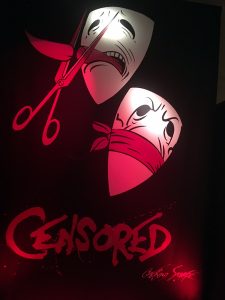
Censored by George Scarfe
Marking the 50th anniversary of the end of 300 years of theatre censorship, the Victoria and Albert Museum’s exhibition explores how restrictions on expression have changed.
The Theatres Act 1968 swept away the office of the Lord Chamberlain, which had the final say on what could appear on British stages.
“The 1968 Theatres Act was one of several landmark pieces of legislation in the 1960s, including the end of capital punishment, the legalisation of abortion, the introduction of pill, and the decriminalisation of homosexuality (for consenting males over the age of 21),” Harriet Reed, assistant curator at the V&A said.
Plays that had the potential to create immoral or anti-government feelings were banned by the Lord Chamberlain’s office or ordered to be edited. The exhibition includes original manuscripts with notes on what needs to be changed and letters from Lord Chamberlain explaining why the edits are required.
In the exhibition there are several pieces including a manuscript about the play Saved by Edward Bond. The play tells the story of a group of young people living in poverty and includes a scene in which a baby is stoned to death.
“When the Royal Court Theatre submitted the play to the censor, over 50 amendments were requested. Bond refused to cut two key scenes, stating ‘it was either the censor or me – and it was going to be the censor’. As a result, the play was banned,” Reed said.
Before the act was passed, playwrights got around the law by staging banned plays in “members clubs” which meant they could not be persecuted since it was private venue.
“The continued success of this strategy and the reluctance to prosecute made a mockery of the Lord Chamberlain’s powers and reflected the increasingly relaxed attitudes of the public towards ‘shocking’ material.
“The first night after the Act was introduced, the rock musical Hair opened on Shaftesbury Avenue in the West End. It featured drugs, anti-war messages and brief nudity, ushering in a new age of British theatre,” Reed said.
The exhibition changes from showcasing plays that were censored by the state to art, plays, movies, and music that are censored by society as a whole.
“It could be argued that a mixture of government intervention, funding/subsidy withdrawals, local authority and police intervention, self-censorship, and public protest now regulates what is seen on our stages,” she said.
Behzti, a play, and Exhibit B, a performance piece, were cancelled after protests by the public. The creators of both pieces were advised by the police to cancel their plays for health and safety reasons related to protests over the content.
Similarly, Homegrown, a play about radicalisation created by Muslims was shut down by the National Youth Theatre. The play was later published and a public reading was held.
On video, people involved in the UK arts industry such as Lyn Gardner, a theatre critic and Ian Christie, a film historian comment on what they believe to be censorship today. They cite art institutions that refuse to exhibit controversial material for fear of losing funding or facing public uproar. Julia Farrington, associate arts producer at Index on Censorship and one of the participants, calls this the “censorship of omission.”
The exhibition is capped by a piece by George Scarfe. The piece, the last work that attendees see, is a painting of two white masks on black cloth. The first one which is slightly higher and to the right of the second has it red tongue sticking out with the tip severed by a red scissors. The second one has a red cloth tied around it mouth. The word Censored is written in red and all caps below the two masks.
The painting is bold and the image of the tongue being cut off by scissors creates a “visceral” feeling. It depicts the two types of censorship that people now face– either talk and be violently censored or self-censor and never be heard.
“Many people would say that we are freer to express ourselves than ever before – with the boom of social media, we are able to communicate our thoughts and opinions on an unprecedented scale. This can also, however, invite more stringent and aggressive censorship from either the platform provider or under fear of criticism from other users,” Reed said.[/vc_column_text][/vc_column][/vc_row][vc_row][vc_column width=”1/4″][vc_column_text]
[/vc_column_text][/vc_column][vc_column width=”3/4″][vc_column_text]
Index encourages an environment in which artists and arts organisations can challenge the status quo, speak out on sensitive issues and tackle taboos.
Index currently runs workshops in the UK, publishes case studies about artistic censorship, and has produced guidance for artists on laws related to artistic freedom in England and Wales.
Learn more about our work defending artistic freedom.[/vc_column_text][/vc_column][/vc_row][vc_row][vc_column][vc_basic_grid post_type=”post” max_items=”12″ style=”load-more” items_per_page=”4″ element_width=”6″ grid_id=”vc_gid:1534246236330-00e1ebeb-95f3-4″ taxonomies=”15469″][/vc_column][/vc_row]
25 Jan 2018 | News, Volume 46.04 Winter 2017
[vc_row full_width=”stretch_row_content_no_spaces” full_height=”yes” css_animation=”fadeIn” css=”.vc_custom_1516891729158{background: #ffffff url(https://www.indexoncensorship.org/wp-content/uploads/2018/01/6MD4OKVXIG5JX3NEIA2M_prvw_63818-1024x683ss-1.jpg?id=97759) !important;}”][vc_column width=”1/6″][/vc_column][vc_column width=”2/3″][vc_custom_heading text=”After Gothenburg and Frankfurt book fairs faced tension over who was allowed to attend, we asked four leading thinkers, Peter Englund, Ola Larsmo, Jean-Paul Marthoz, Tobias Voss, to debate the issue” font_container=”tag:h2|text_align:left|color:%23000000″][/vc_column][vc_column width=”1/6″][/vc_column][/vc_row][vc_row][vc_column][vc_column_text]
WORDS APART
In the first of a series of pieces on where the line is drawn on freedom of speech at book fairs, DOMINIC HINDE interviews PETER ENGLUND, a former member of the Swedish Academy’s Nobel committee
Peter Englund is a familiar face around the world, even if many outside Sweden would struggle to place him straight away. For seven years, the award-winning author and former permanent secretary to the Swedish Academy was a fixture on TV screens, emerging each autumn to announce the winner of the Nobel Prize in Literature.The Nobel committee has attracted criticism for some of its choices over the years, but Englund, who retired from the post in 2015, said its decisions were never politically charged, and that the Swedish tradition of open dialogue had always been a core principle.
“When I was permanent secretary I used to say that you could never win the Nobel Prize because of your political view, but that it was quite possible to win in spite of your political attitude. The Swedish Academy is also extremely conscious of the extraordinary importance of freedom of expression, not least because it is a basic requirement if writers and researchers are going to be able to work properly.”
Englund is a long-time supporter of free speech causes around the world and, in his own work, has written extensively about totalitarianism in Europe under both communist and fascist regimes. He recently joined the debate closer to home on the competing demands of freedom of speech and growing right-wing movements in Sweden.
The past decade has seen the emergence of far-right populism in the traditionally liberal and open Nordic state. The Sweden Democrats party – who grew from the fringe white power movement in the 1990s – have made significant inroads in parliament and an alternative far-right media has blossomed. More extreme neo-Nazi groups have ridden on the coat tails of the Sweden Democrats and asserted their right to protest in the name of free speech, claiming Sweden is a country in decline, where the mainstream media ignores crime and immigration issues. Englund and some of his fellow writers have increasingly found themselves dubbed an elite of “cultural Marxists” by far- right activists. There is even a Swedish word – åsiktskorridor – which specifically refers to the narrow corridor of opinion extremists assert is allowed by the political establishment.
“I think it is important that we quite simply refuse to recognise this description of the situation. It is an important part of the populist right’s tactics to whip up ‘culture wars’ over more-or-less fictional symbolic questions, and you have to avoid letting yourself get dragged in,” said Englund.
Confronted with the openly anti-democratic and xenophobic politics which is emerging, many on the Swedish left and centre-right have begun to grapple with how Sweden, which has the oldest press freedom laws in the world, can reconcile its commitment to free speech and diversity with such views. In September 2017, the debate came to a head when Nya Tider (New Times), a populist right-wing newspaper, which has been accused of publishing fake news, was booked to appear at the annual Gothenburg Book Fair.
The fair is Sweden’s biggest cultural and journalistic event, but several well-known journalists and writers who would usually be there chose to stay away in protest at Nya Tider’s attendance. Some argued that Sweden’s tradition of a free press meant even the far-right were entitled to have their opinions heard, but Englund and others decided not to take part.
“I chose not to participate because it meant that I would have to appear on the same stage – broadly speaking – as these right-wing extremists, homophobes, conspiracy theorists, anti-Semites, Holocaust deniers and Putin supporters, and that would have helped to normalise their views,” argued Englund.
He believes that freedom of expression does not mean automatically welcoming extremists to all platforms, and that the Swedish commitment to an open society does not entail encouraging participation by extremist voices.
“Another important tactic for the populist right is to make themselves mainstream, and that is not something I want to contribute to” he explained. “For me [The Gothenburg controversy] was not a question of freedom of expression. That freedom remains intact. Nobody has tried to stop their paper being printed or attacked their journalists. On top of that, freedom of expression does not mean that you can be allowed to say anything at all, and does not mean that you have an absolute right to take part in any kind of forum.”
Events in Gothenburg reflected a wider disagreement in Swedish society about how best to counter populist politics and where the line between freedom of expression and extremism sits. Englund acknowledges that opponents of the far-right have not always got this right. The country goes to the polls in less than a year and the Sweden Democrats have ambitions to play a role in government, meaning the question may soon become more pressing than ever.
“In Sweden there have been attempts to deal with the far-right question through a combination of shutting them out and through triangulation,” he said. “Shutting them out means refusing to co-operate with them. Triangulation is not about accepting their description of the situation, or their proposed methods for dealing with it, but about understanding that among their voters there is a frustration, and even a fear, which does somehow need to be addressed, and which you can neither ignore nor tweet to death with smart sarcastic posts.
“History is fairly instructive on this. A necessary step for those sorts of movements to come to power – and this happened in both Italy and Germany – was that already established power structures had to invite them in, operating under the serious misconception that they could then be tamed. Those countries that were able to avoid fascism in the 1930s did it not least by showing resistance instead.”
That means being prepared to challenge those from all sides who threaten democratic principles, he believes.“We should, of course, be wary of the threat from the extreme right – the past tells us that – in the same way we have to keep an eye out for what is happening on the extreme left. I believe in democracy in Europe, but to avoid it meeting the same fate as the Weimar Republic, it has to be belligerent.”
Dominic Hinde is a journalist
[/vc_column_text][/vc_column][/vc_row][vc_row][vc_column width=”1/4″][vc_icon icon_fontawesome=”fa fa-quote-left” color=”custom” align=”right” custom_color=”#dd3333″][/vc_column][vc_column width=”3/4″][vc_custom_heading text=”The Swedish Academy is also extremely conscious of the extraordinary importance of freedom of expression” google_fonts=”font_family:Libre%20Baskerville%3Aregular%2Citalic%2C700|font_style:400%20italic%3A400%3Aitalic”][/vc_column][/vc_row][vc_row][vc_column][vc_column_text]
WHY I ATTENDED GOTHENBURG
Award-winning Swedish author OLA LARSMO explains why he went to the Gothenburg Book Fair
One of the important freedom of expression debates in Sweden has been running for about a year now and concerns the annual Gothenburg Book Fair. When it was announced that the extreme right-wing publication Nya Tider was allowed to rent a space at the 2017 Fair, some 200 Swedish writers wrote in a joint statement that they would not attend. This sparked a heated debate. What about defending the rights of people to spread deplorable or even dangerous opinions? What happens if you don’t?
I decided to attend the fair – along with other writers who stated that they would not be run out of the place by extremists. But I have great respect for those who chose not to. We are all trying to defend society against what must be considered a rising tide of fascism. But how to do that, and at the same time defend freedom of speech?
On 7 April 2017, a man hijacked a truck in central Stockholm and drove down a pedestrian street, targeting everyone in his way. Five people were killed. The suspect later said he was acting as a supporter of Isis. The response from ordinary people was massive. Beside the mountain of flowers in central Stockholm, it was obvious that everybody was determined to counteract the intimidation of terror by going on with life as normally as they could, because the trust between ordinary citizens is what makes an open society possible.
This was very much at the back of my mind when I decided to go to the fair. We also managed to organise a number of seminars and events that addressed the threat hate speech poses to freedom of speech. It felt like an opportunity to point to the elephant in the middle of the room.
Nya Tider is not “banned” – in fact they receive a tax- financed grant of about $358,167 – the same as other papers with the same circulation. The question was whether the fair had an obligation to open its space to a paper associated with the extreme right. Since the fair is a private enterprise, many felt that they were within their rights to choose their exhibitors freely.
During the last few years, Swedish writers, journalists and politicians have been facing a rising wave of death threats and hate speech. Solid research shows that these threats emanate mostly from right-wing extremists and, to a lesser degree, from radical Islamists.
They target publicists with the purpose of driving them to self-censorship.
So how, then, should society deal with these threats with- out lowering the ceiling for freedom of speech? That this threat is real became obvious as a demonstration of several hundred neo-Nazis tried to reach the fair on the Saturday, but were stopped by the Gothenburg police. The attendance that day shrank to half the ordinary numbers.Writers are a specific target for these extremists, and the 200 writers stated openly that they did not want to share the floor with a paper associated with that political agenda.Personally I feel that those of us committed to defending freedom of speech have to use all powers to counter the double threat we are now facing: that of intimidation through hate speech and, on the other hand, stronger legislation that threatens to smother what it is supposed to defend. We can’t close our eyes to either.
Ola Larsmo is a long-time president of Swedish PEN
[/vc_column_text][vc_row_inner][vc_column_inner width=”1/4″][/vc_column_inner][vc_column_inner width=”3/4″][/vc_column_inner][/vc_row_inner][vc_column_text]
MAKING IT FAIR
No serious book fair could exclude or censor a legal publication, argues Frankfurt’s vice president of international affairs TOBIAS VOSS
The Frankfurt Book Fair is a commercial enterprise. Yet the “commodity” we trade in is a very distinctive one: books convey ideas and, among other things, ideas significantly shapes social discourse, whether aesthetic, moral or political in nature. In this respect, it is necessary to regularly question the limiting of “critical” or “problematic” content. All book fairs thrive on the diversity of content presented by participants. In this regard, book fairs that strive to meet this objective are, therefore, a demonstration of the diversity of opinion and discourse. No serious international book fair that aims to represent the market and diversity of opinion is in a position to exclude or censor market players.
This approach – tolerating at times extremely problematic positions – must then also apply to titles that are perceived as an affront, as offensive or downright repugnant, by segments of the public.
The only exception for such a ban or exclusion is existing legislation. Only if a title is forbidden by law in Germany, then we feel it is right to ban this title or even the actual fair participant, from the exhibition.
Our book fair respects the separation of powers as an essential organisational principle for guaranteeing democratic freedoms, the associated institutions and the decisions and measures established under it. Whenever existing laws are violated at Frankfurt, we, as the organiser, will take action against this infringement through the department of public prosecution and the police.
A functioning democracy must tolerate dissent (as it has, after all, done successfully in Germany for decades), and must accept that the freedom of expression also applies to segments of the public that question – and at times even wish to do away with – the established legal order. The fair does not see it as its duty to establish its own political, moral or aesthetic criteria for permitting or forbidding things.
In keeping with its principles, the Frankfurt is committed to freedom of expression, freedom of publication, dialogue as a means of fair communication and respect for the democratic separation of powers and the decisions and measures that have been established to ensure it. The fair demonstrates this position in a wide variety of ways – through international involvement, by supporting the “Cities of Refuge” project and by curating well over 200 discussion events at our event and at book fairs abroad.
Tobias Voss is vice president, international affairs, of the Frankfurt Book Fair
[/vc_column_text][vc_row_inner][vc_column_inner][vc_column_text]
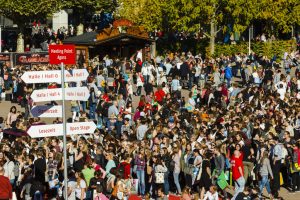
Crowds gather outside the Frankfurt Book Fair, the world’s largest book trade-fair, Marc Jacquemin/Frankfurt Book Fair
[/vc_column_text][/vc_column_inner][/vc_row_inner][vc_row_inner][vc_column_inner width=”1/4″][/vc_column_inner][vc_column_inner width=”3/4″][/vc_column_inner][/vc_row_inner][vc_column_text]
TALK THE TALK
Banning organisations with which you disagree means you don’t have the chance to argue your case, says JEAN-PAUL MARTHOZ
The recent Gothenburg and Frankfurt book fairs have again been riven with controversies around the presence of far-right publishers. From a progressive perspective, banning the far-right seems the appropriate thing to do. The rationale is clear: the barbarians are at the gates and no one has ever said that democracies should offer their foes the rope with which to hang them.
From a liberal point of view, however, things are not so easy. Liberal democracies are, by definition, committed to providing space to ideas that radically question their most essential values – and even threaten their very existence.
There should be freedom for the enemies of freedom. As long as far-right publishers are not legally banned, and don’t exhibit books that clearly flout the law, there are few arguments against them which would pass Voltaire’s test on freedom of expression.
While the far-right has been associated with the most thuggish forms of censorship, its leaders have been effective in denouncing the progressives’ “fear of the truth”. Free speech for me, but not for thee?
By principle, liberals should not concede one of their most iconic values to the far- right, even if the latter has opportunistically hijacked free speech in order to provide a veneer of respectability to hate speech.
Banning can be seen as a confession of weakness or an admission that liberal arguments are not convincing enough to be – nor capable of being – expressed in a way which might distract potential far-right sympathisers from extremist organisations.
In fact, any attempt to get the far-right out of the public arena only reinforces one of its core recruiting arguments: “patriots” are victims of a conspiracy in a “rigged system” run by a cosmopolitan and hypocritical liberal establishment.
Responding to the far-right is all the more crucial today, since it has the capacity to get around its exclusion and reach a wide audience through the internet and social networks. The only way to reduce its influence is to produce counter-arguments and alter- native discourse and disseminate them widely beyond the converted.
Banning an organisation, or censoring its ideas, too often exempts it from the rigorous and imaginative thinking which is the only effective way to push back and win the battle of ideas.
Jean-Paul Marthoz is a Belgian journalist and essayist. He is the author of The Media and Terrorism (2017, Unesco)
[/vc_column_text][/vc_column][/vc_row][vc_row][vc_column][vc_custom_heading text=”From the Archives”][vc_row_inner][vc_column_inner width=”1/3″][vc_single_image image=”93959″ img_size=”full” alignment=”center” onclick=”custom_link” link=”http://journals.sagepub.com/doi/pdf/10.1080/03064228408533808″][vc_custom_heading text=”Book fair detention” font_container=”tag:p|font_size:24|text_align:left” link=”url:http%3A%2F%2Fjournals.sagepub.com%2Fdoi%2Fpdf%2F10.1080%2F03064228408533808|||”][vc_column_text]December 1984
An excerpt from Mindblast, a book by Dambudzo Marechera, which was due to be launched at the Second Zimbabwe Book Fair.
[/vc_column_text][/vc_column_inner][vc_column_inner width=”1/3″][vc_single_image image=”94784″ img_size=”213×289″ alignment=”center” onclick=”custom_link” link=”http://journals.sagepub.com/doi/pdf/10.1080/03064227508532452″][vc_custom_heading text=”Sweden: Limits of press freedom” font_container=”tag:p|font_size:24|text_align:left” link=”url:http%3A%2F%2Fjournals.sagepub.com%2Fdoi%2Fpdf%2F10.1080%2F03064227508532452|||”][vc_column_text]September 1975
Blaine Stothard reports on the Swedish Watergate and potential limits on press freedom.
[/vc_column_text][/vc_column_inner][vc_column_inner width=”1/3″][vc_single_image image=”90797″ img_size=”213×289″ alignment=”center” onclick=”custom_link” link=”http://journals.sagepub.com/doi/pdf/10.1080/03064229808536482″][vc_custom_heading text=”White noise: separatist rock” font_container=”tag:p|font_size:24|text_align:left” link=”url:http%3A%2F%2Fjournals.sagepub.com%2Fdoi%2Fpdf%2F10.1080%2F03064229808536482|||”][vc_column_text]November 1998
Neo-Nazi groups are recruiting throughout the developed world; leading the drive are their high energy, punk-derived anthems of hate. [/vc_column_text][/vc_column_inner][/vc_row_inner][vc_separator][/vc_column][/vc_row][vc_row content_placement=”top”][vc_column width=”1/3″][vc_custom_heading text=”What price protest?” font_container=”tag:p|font_size:24|text_align:left” link=”url:https%3A%2F%2Fwww.indexoncensorship.org%2F2017%2F12%2Fwhat-price-protest%2F|||”][vc_column_text]In homage to the 50th anniversary of 1968, the year the world took to the streets, the winter 2017 issue of Index on Censorship magazine looks at all aspects related to protest.
With: Micah White, Ariel Dorfman, Robert McCrum[/vc_column_text][/vc_column][vc_column width=”1/3″][vc_single_image image=”96747″ img_size=”medium” alignment=”center” onclick=”custom_link” link=”https://www.indexoncensorship.org/2017/12/what-price-protest/”][/vc_column][vc_column width=”1/3″ css=”.vc_custom_1481888488328{padding-bottom: 50px !important;}”][vc_custom_heading text=”Subscribe” font_container=”tag:p|font_size:24|text_align:left” link=”url:https%3A%2F%2Fwww.indexoncensorship.org%2Fsubscribe%2F|||”][vc_column_text]In print, online. In your mailbox, on your iPad.
Subscription options from £18 or just £1.49 in the App Store for a digital issue.
Every subscriber helps support Index on Censorship’s projects around the world.
 SUBSCRIBE NOW[/vc_column_text][/vc_column][/vc_row]
20 Dec 2017 | Artistic Freedom, News, Risks, Rights and Reputations
[vc_row][vc_column][vc_column_text]
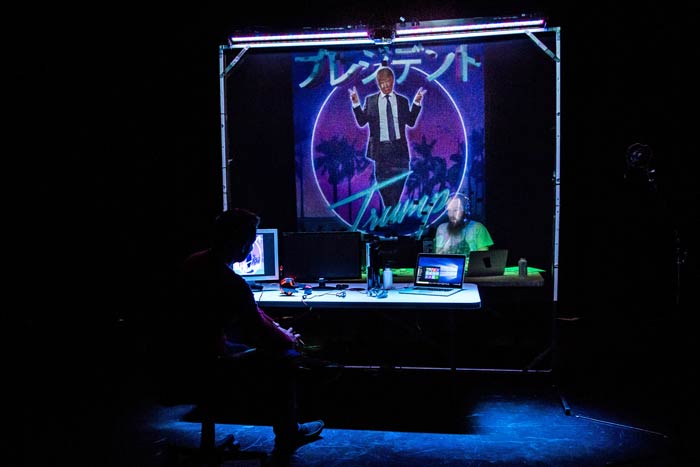
Playwright Javaad Alipoor told The Guardian that “the response to radicalism is to shut down debate for young people”. His play The Believers Are But Brothers will be performed at the Bush Theatre beginning 24 January 2018.
It’s easy to dismiss the importance of arts in a democracy; its social value is disregarded when it is seen as the province of the rich and privileged. Yet when we look to more authoritarian regimes across the globe Index is reminded constantly of the importance of the role of arts as a voice of dissent and the extraordinary amount of time that repressive states spend suppressing it. If the spoken or written word, if performance or image did not have power, then dictators wouldn’t spend so much time actively silencing and persecuting artists.
But let’s not just look to repressive regimes when we want to talk about censorship. Artists are often the canaries in the mine, a leading barometer of freedom in any country, with the ability to powerfully capture uncomfortable truths. The consequences are different here in the UK, we don’t imprison artists or worse, but ensuring the creation of work by artists who are by law, free to speak, means creating the environment in which risks can be taken.
Yet, in the UK in 2017, when arts have a critically, crucially important role to express and process the diverse and often divergent opinion and experience that coexist in our society, we have created a risk-averse culture. A raft of social, legal and political pressures threaten to limit the space available for expression. New legislation, lack of clarity around policing roles and responsibilities, fear of media backlash or social media storm, loss of funding, means that arts organisations are not always confident about taking the kinds of risks they would like – or indeed need – to make the best art. If only a few groups feel able to explore the most difficult subjects or give voice to underrepresented communities, then, when something goes wrong, it gets harder for the entire arts community to address sensitive issues.
In 2010, when I started in this work, freedom of expression was not a priority for the arts sector; it was assumed safe and left to fend for itself. This never works, as Michael Scammell, the first editor of Index reminds us: “Freedom of expression is not self-perpetuating…”.
When we asked a conference of theatre directors at the time which was more important: audience development or freedom of expression, 100% said the former. Audience development, as I understand it, is about bringing in new audiences, reaching out to find fresh creative voices and breaking the homogenous mould of arts audiences. Yet the call for inclusivity and equality of access has tended to be resolved around a desire to please and a fear of offending, leading to a loss of appetite for the unpopular expression and risk-taking, as identified in Index’s 2013 conference Taking the Offensive and numerous case studies as part of Index’s Art and the Law guides. And still the arts remain obstinately homogenous.
Playwright, director Javaad Alipoor said in a recent interview with Index: “There is a whole discourse about risk [in the theatre industry] that we need to shift. We take risks all the time, but the way we are willing to do it is mega-racialised. Some people are a risk and some people aren’t a risk. I overheard some relatively sensible liberal people describing the appointment of Kwame Kwei-Armah [ newly appointed director of the Young Vic] as a bold move. I thought – it’s a good move. Here is an internationally successful guy, running an internationally successful theatre.”
Look at the two 2015 plays about radicalisation: Homegrown, commissioned by the National Youth Theatre (NYT) written and directed by Nadia Latif and Omar El Khairy, was cancelled; Another World – Losing our Children to Islamic State – by Gillian Slovo and developed by Nicolas Kent, commissioned by the National Theatre, was produced. Whatever else might have happened at NYT, the fact remains that Latif and El Khairy, two creatives from a Muslim background, and the 115 young people they were working with, were not allowed to speak, while two establishment figures were free to express their view of the same issue. This illustrates Alipoor’s point perfectly.
Add to this the role of the police in cancelling work, going all the way back to Gurpreet Kaur Bhatti’s play Behzti in Birmingham in 2004; more recently the removal of ISIS Threaten Sylvania on the advice of the police in 2015; the policing of the Boycott the Human Zoo picket that led to the cancellation of the Barbican production of Exhibit B in London; the banning of music performances by police in Leicester and Bristol at the behest of local Islamic leaders. All point to the uneasy relations between state, the arts sector and artistic expression about issues of race and religion. A policing pattern has emerged, in which it is easier to remove what is deemed to be provocative and so dispel or prevent protest, than manage the situation and allow the artwork to go ahead. The arts sector has been caught out each time.
This pattern of policing interferes with the fundamental right to freedom of expression, something Index has taken up with National Police Lead on Public Order. Index is now working with a Senior Police Trainer to develop better support for the arts sector. His team will contribute to our training programme next year, which will also feature an introduction to our guidance on the legal and rights framework for artists and arts organisations – see below.
We are living in a society and at a time, when the lived experience of hundreds of thousands of people is becoming unspeakable. Although it doesn’t appear to be the case that Prevent officers are checking out what is going on in our theatres and galleries, the impact of Prevent as a force for pervasive self-censorship across Muslim communities is massive and one of the main free speech issues of the day. This will of course influence what makes its way into our arts venues. Add to that other invasive state surveillance powers, the rolling back of human rights generally, the arts has an ever more important role to play to tackle these issues, to ask the most important questions, to challenge growing authoritarian tendencies; playing safe is not an option.
The sector plays a vital role in providing space for open debate, but as Svetlana Mintcheva, an international arts and censorship experts writes: “That role is threatened if those institutions fail to take on real controversies around difficult and emotionally charged subject matter because some of that subject matter may be offensive or even traumatic. Unless they are prepared to welcome genuine conflict and disagreement, cultural institutions will operate as echo chambers under the pall of a fearful consensus, rather than leaders in a vibrant and agonistic public sphere.”
These are some of the issues that we are grappling with in our training: Rights, Risks & Reputations – Challenging a Risk Averse Culture, aiming to give arts leaders the information they need to take difficult, risky decisions more confidently. They will complement the efforts that many organisations are making, and have been making for decades in some cases, to diversify, by reinforcing the importance of risk and controversy in achieving these aims. To this end, we will be taking a close look at the social importance of risk and controversy and the steps needed to reinforce appetite and capacity for risk-taking; how the powerful complementarity of the rights to freedom of expression and equality gives a useful framework for this work. Looking at issues that could lead to self-censorship – fear of causing offence and/or protest and confusion around new counter-terrorism legislation, we will dig into Index’s legal guides for arts on three legally protected areas of society: Counter-Terrorism, Race and Religion and Public Order; Public Order police trainers will present their perspective on how and when to work with the police around artwork that might generate protest in the public space; and there will be a module on ethical fundraising.
The second part of the Michael Scammells statement quoted above is “freedom of expression...has to be actively maintained by the vigilance of those that care about it”. Freedom of expression is an active stance full of challenges, just like equality – both need to be enacted, not left on the shelf in a policy document. Freedom of expression where everyone agrees is not worth the paper it is written on; it will always include the right to shock, insult and offend. And, coupled with equality, it changes whose stories, imagination, revelations and visions shock, insult and offend even as they inspire, inform and transform.[/vc_column_text][/vc_column][/vc_row]
