31 Dec 2013 | News, Politics and Society
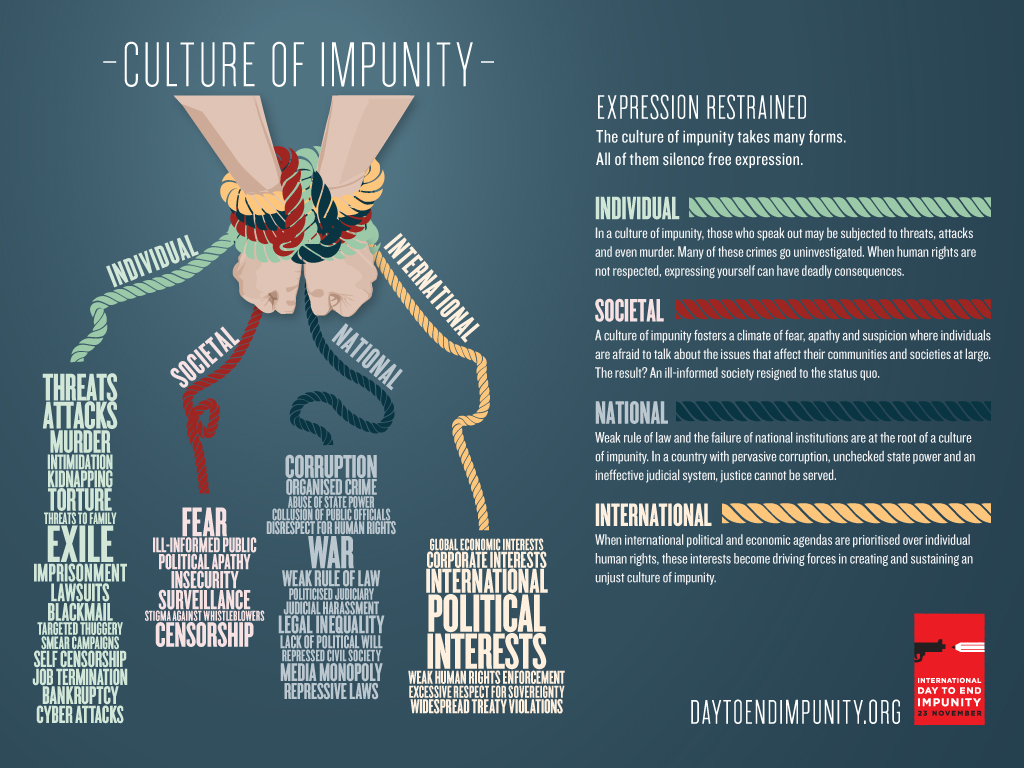
Journalists are known for uncovering the truth. What is less known is how these journalists gather these facts, often risking their jobs, and sometimes their lives, to discover information others are attempting to keep hidden from the world.
The Taksim Gezi Park Protest
The Gezi Park protest in Turkey made international news when, in May 2013, a sit-in at the park protesting plans to develop the area sparked violent clashes with police. What didn’t grab the attention of media workers worldwide was that at least 59 of their fellow journalists were fired or forced to quit over their reporting of the events.
The Turkish press have been long-time sufferers of the need to self-censor in an environment where the press is ultimately run by a handful of wealthy individuals. The Gezi Park protests saw a surge in the controlling influence of the Turkish media as 22 journalists were fired and a further 37 forced to quit due to their determination to cover the clashes for a national and international audience, as was their duty as journalists.
Turkey came in at 154th in the Reporters Without Borders Freedom of the Press Index 2013, a drop of six places from 2012.
Journalists imprisoned
2013 was the first year a detailed survey was carried out by Reporters Without Borders which looked into how many journalists had been imprisoned for their work; the result was shocking. One hundred and seventy eight journalists were spending time in jail for their actions, along with 14 media assistants. Perhaps more worrying was the statistic that 166 netizens had been imprisoned, those who actively supply the world with content often without being paid whilst gaining access to places that many ‘official’ journalists are banned from.
China handed out the most prison sentences during 2013 with 30 media personal serving time behind bars. Closely behind was Eritrea with 28 journalists imprisoned, Turkey with 27, and Iran and Syria handing out 20 sentences each.
Press freedom in Afghanistan
Murder, injuries, threats, beatings, closure of media organisations, and the dismissal for liking a Facebook post have all accounted towards the 62 cases of violence against the media and journalists working in Afghanistan over the past eight months. The Afghanistan Journalists Center, which collected the data from January to August 2013, has claimed that government officials and security forces, the Taliban, and illegal armed groups are behind the majority of attacks.
Of particular concern is the growing threat to female journalists who have been forced to quit their jobs after threats to their families.
According to the Afghanistan Media Law; every person has the right to freedom of thought and speech, which includes the right to seek, obtain and disseminate information and views within the limit of law without any interference, restriction and threat by the government or officials- a law Afghanistan does not appear to be upholding.
Exiled journalists
Some journalists are taking a risk every day that they go to work. They may not be killed for their reporting but that does not stop them facing imprisonment, violence, and harassment. Between June 2008 and May 2013 the CPJ found that 456 journalists were forced into exile as a means of protecting their families and themselves due to their determination to uncover the truth.
The top countries from which journalists fled included Somalia, Ethiopia and Sri Lanka with Iran topping the table having forced a total of 82 journalists into exile. Although a majority of these journalists claim sanctuary in countries like Sweden, the U.S and Kenya, only 7% of those exiled since 2008 have been able to return home.
Impunity
Murder is a crime for which those involved should be punished. Yet in the case of the killing of journalists nine out of 10 killers go free. Put another way, in only five percent of cases for the murder of a journalist does the defendant receive a sentence of full justice. The most likely reason to kill a journalist is to silence them from speaking the truth to others.
IFEX, global freedom of expression network behind the International Day to End Impunity campaign said: “When someone acts with impunity, it means that their actions have no consequences. Intimidation, threats, attacks and murders go unpunished. In the past 10 years, more than 500 journalists have been killed. Murder is the ultimate form of censorship, and media are undoubtedly on the frontlines of free expression.”
13 Dec 2013 | Europe and Central Asia, News, Russia
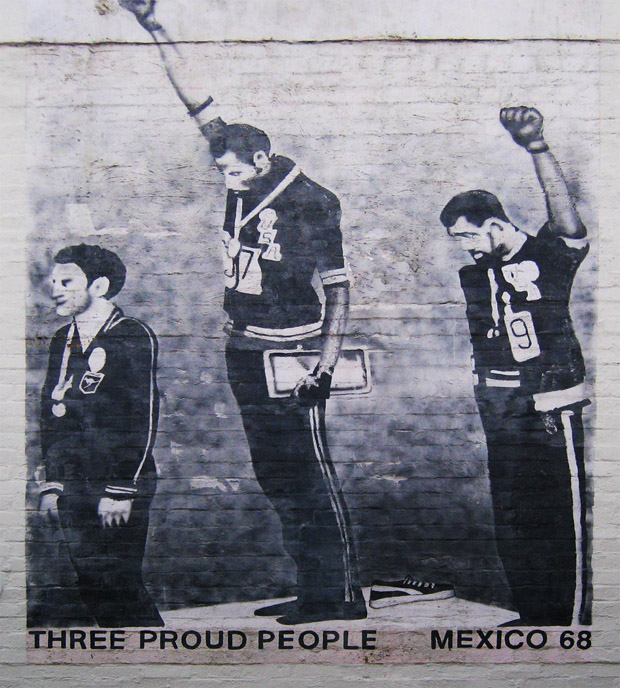
Grafitti of Tommie Smith, John Carlos and Peter Norman showing solidarity for the civil rights movement at the Mexico City Olympics in 1968 (Image: Newtown graffiti/Wikimedia Commons)
Athletes preparing to head off to Sochi Winter Olympics in February, have been reminded that they are barred from making political statements during the games.
”We will give the background of the Rule 50, explaining the interpretation of the Rule 50 to make the athletes aware and to assure them that the athletes will be protected,” said IOC President Thomas Bach in an interview earlier this week. Rule 50 stipulates that ”No kind of demonstration or political, religious or racial propaganda is permitted in any Olympic sites, venues or other areas.” Failure to comply could, at worst, mean expulsion for the athlete in question.
Political expression is certainly a hot topic at Sochi 2014. The games continue to be marred by widespread, international criticism of Russia’s human — and particularly LGBT– rights record. The outrage has especially been directed at the country’s recently implemented, draconian anti-gay law. Put place to “protect children”, it bans “gay propaganda”. This vague terminology could technically include anything from a ten meter rainbow flag to a tiny rainbow pin, and there have already been arrests under the new legislation.
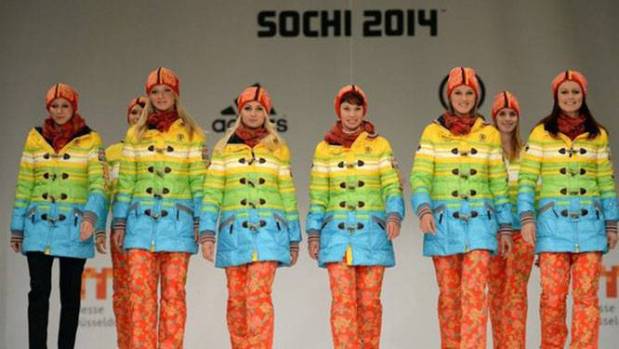
The confusion continued as the world wondered how this might impact LGBT athletes and spectators, or those wishing to show solidarity with them. Russian authorities have for instance warned of possible fines for visitors displaying “gay propaganda”. Could this put the Germans, with their colourful official gear, in the firing line? (Disclaimer: team Germany has denied that the outfits were designed as a protest.)
On the other hand, Russian president Vladimir Putin has promised there will be no discrimination at the Olympics, and IOC Chief Jaques Rogge, has said they “have received strong written reassurances from Russia that everyone will be welcome in Sochi regardless of their sexual orientation.”
On top of this, the IOC also recently announced that there will be designated “protest zones” in Sochi, for “people who want to express their opinion or want to demonstrate for or against something,” according to Bach. Where these would be located, or exactly how they would work, was not explained.
But while the legal situation in Russia adds another level of uncertainty and confusion regarding free, political expression for athletes, rule 50 has banned it for years. And for years, athletes have taken a stand anyway.
By far the most famous example came during the 1968 Olympics in Mexico City — American sprinters Tommie Smith and John Carlos, on the podium, black gloved fists raised in solidarity with the ongoing American civil rights movement. The third man on the podium, Australian Peter Norman, showed his support by wearing a badge for the Olympic Project for Human Rights. All three men faced criticism at the time, but the image today stands out as one of the most iconic and powerful pieces of Olympic history.
However, the history of Olympians and political protest goes further back than that. An early example is the refusal of American shotputter Ralph Rose to dip the flag to King Edward VII at the 1908 games in London. It us unknown exactly why he did it, but one theory is that it was an act of solidarity for Irish athletes who had to compete under the British flag, as Rose and others on his team were of Irish descent.
The Cold War years unsurprisingly proved to be a popular time for athletes to put their political views across. When China withdrew from the 1960 Olympics in protest at Taiwan, then recognised by the west as the legitimate China, taking part. The IOC then asked Taiwan not to march under the name ‘Republic of China’. While considering boycotting the games, the Taiwanese delegation instead decided to march into the opening ceremony with a sign reading “under protest”.
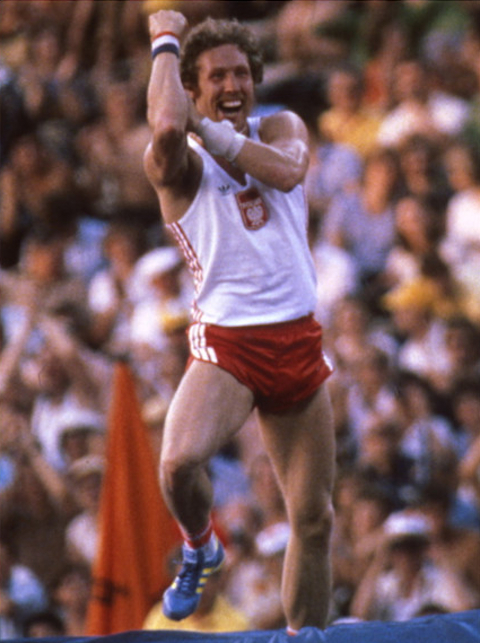
The same year as the Smith and Carlos protest, a Czechoslovakian gymnast kept her face down during the Soviet national anthem, in protest at the brutal crackdown of the Prague Spring earlier that year. And that was not the only act of defiance against the Soviet Union. During the controversial 1980 Moscow Olympics, boycotted by a number of countries over the USSR invasion of Afghanistan, the athletes competing also took a stand. The likes of China, Puerto Rico, Denmark, France and the UK marched under the Olympic flag in the opening ceremony, and raised it in the medal ceremonies. After winning gold, and beating a Soviet opponent, Polish high jumper Wladyslaw Kozakieicz also made a now famous, symbolic protest gesture towards the Soviet crowd.
But there are also more recent examples. At Athens 2004, Iranian flyweight judo champion Arash Miresmaeili reportedly ate his way out of his weight category the day before he was set to fight Israeli Ehud Vaks. “Although I have trained for months and was in good shape, I refused to fight my Israeli opponent to sympathise with the suffering of the people of Palestine” he said. A member of the South Korean football team which beat Japan to win bronze at the 2012 London Olympics, celebrated with a flag carrying a slogan supporting South Korean sovereignty over territory Japan also claims.
When the debate on political expression comes up, the argument of “where do we draw the line” often follows. If the IOC is to allow messages of solidarity with Russia’s LGBT population, should they allow, say, a Serbian athlete speak out against Kosovan independence? Or any number of similar, controversial political issues? Is it not easier to simply have a blanket band, and leave it at that?
The problem with this is, as much as the IOC and many other would like it, the Olympics, with all their inherent symbolism, simply cannot be divorced from wider society or politics. The examples above show this. With regards to Sochi in particular, the issue is pretty straightforward — gay are human rights. Some have argued we should boycott a Olympics in a country that doesn’t respect the Universal Declaration on Human Rights, or indeed the Olympic Charter. This is not happening, so the very least we can is use the Olympics to shine a light on gay rights in Russia. At its core, the Olympics are about the athletes — they are the most visible and important people there. It remains to be seen whether any of them will take a stand for gay rights, outside cordoned-off protest areas, in the slopes and on the rink, where the spotlight shines the brightest. And if they do, they should have our full support.
This article was posted on 13 Dec 2013 at indexoncensorship.org
2 Dec 2013 | About Index, Campaigns, Statements
Dear Rt Hon Keith Vaz MP,
Index on Censorship is writing to you ahead of Guardian editor Alan Rusbridger’s appearance before the Home Affairs Select Committee’s hearing on counter terrorism.
We believe that the Guardian’s publication of details of GCHQ’s digital surveillance techniques has been very much in the public interest.
Mass data retention and monitoring is a hugely important issue. As more and more of our lives are lived online, it is only right that British people should know how and why the security services gather and monitor digital information. We should be able to debate whether the security services are acting legitimately, legally and proportionately, or are going beyond what is suitable and proper in any democratic, rights-based society. The Guardian’s revelations should be the beginning of a public debate on how this work is done, and with what oversights.
We are concerned that rather than a debate being opened up, the focus has instead been on criticising the Guardian’s work, with even the Prime Minister threatening to take action against the newspaper if it did not take social responsibility. Index on Censorship maintains that the Guardian has shown great social responsibility in investigating, reporting and publishing the details of this story, having maintained open communication with security services and the DA Notice committee.
The Guardian has also lived up to the responsibility of a free press to reveal facts and issues of interest to the public. A British newspaper should be able to report on these issues without fear of retribution. But comments made by politicians and the security services made have led many round the world to question Britain’s commitment to press freedom. For example, the New-York based Committee to Protect Journalists rightly pointed out that: Governments around the world look to the UK as a model for media policies, but in this case, Cameron seems to be taking a page from the book of less enlightened governments that invoke ‘social responsibility’ to ward off valid criticism.
Finally, Index on Censorship is troubled by the use of counter-terror measures to detain David Miranda, the partner of former Guardian journalist Glenn Greenwald. We believe the use of terror legislation to obtain journalistic materials, without court oversight, is a threat to free expression and to anyone involved in journalism. As part of a coalition of newspapers, journalists organisations and campaigners which submitted an intervention to the judicial review of Mr Miranda’s detention at Heathrow airport, we are concerned that using Schedule 7 of the Terrorism Act 2000 against people engaged in journalistic activities runs a real risk of conflating journalism–particularly journalism investigating the intelligence services–with terrorism.
Yours sincerely
Kirsty Hughes, Chief Executive
Index on Censorship
21 Nov 2013 | Digital Freedom, India
CONTENTS
Introduction and Recommendations | 1. Online censorship | 2. Criminalisation of online speech | 3. Surveillance, privacy and government’s access to individuals’ online data | 4. Access: obstacles and opportunities | 5. India’s role in global internet debates | Conclusion
Full report in PDF
(5) INDIA’S ROLE IN GLOBAL INTERNET DEBATES
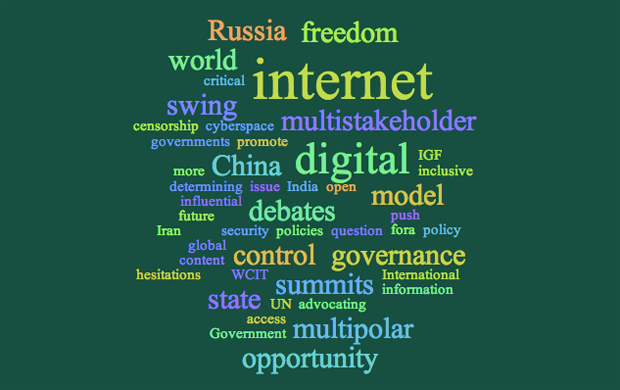
International summits and fora over the next two years will be critical in determining the internet’s future. The open and inclusive multistakeholder model of internet governance has been called into question, with some governments – namely China, Iran and Russia – advocating for more control. As an influential state in our increasingly digital and multipolar world, India has the opportunity to push policies that promote digital freedom. Yet, India is still very much a swing state in these internet governance debates.
After initial scepticism, India has now joined the European Union (EU) and the US in resisting the call for a top-down government-led approach for global internet governance. At the World Conference on International Telecommunication in Dubai in December 2012, India was one of the few countries to side with EU member states and the US in supporting the current multistakeholder status quo. This was the result of a debate in India, in which the key battle line was whether internet freedom constituted a daunting threat to security that required top-down national control or not.
India’s hesitation increased after the 2008 Mumbai attacks when Jaider Singh, Secretary of the Department of Information Technology, described the internet as “both a vehicle and a target of criminal minds”.[49] Concerns over security and spam led India to advocate for more national control over internet governance, through the creation of a United Nations committee.[50] Earlier in 2011 at the Internet Governance Forum in Nairobi, India, along with South Africa and Brazil – two other crucial swing states in the internet governance debate – proposed a similar initiative.
While such top-down control has long been advocated by the likes of China and Iran – countries with a poor domestic track record on digital freedom – it is a direct threat to internet openness and the exercise of human rights online by placing too much control of the process in the hands of national governments. The EU and US tried to address India’s concerns diplomatically by agreeing to a working group.
It is positive that India is now willing to play an important role in defending the multistakeholder model of internet governance against calls for more top-down state regulation. Yet, it is clear that with a sixth of the world’s population, it is not just important for India’s government to defend internet freedom globally, but also ensure that its domestic record stands up to scrutiny and is a model for the rest of the world to adopt. Currently, this is not the case.
India is not only setting internet policies for its 10 percent of users today, but for its 1 billion citizens yet to come online. The decisions it makes, both domestically and on the international stage, are likely to set powerful precedents for regional neighbours, and other emerging democratic powers.
CONTENTS
Introduction and Recommendations | 1. Online censorship | 2. Criminalisation of online speech | 3. Surveillance, privacy and government’s access to individuals’ online data | 4. Access: obstacles and opportunities | 5. India’s role in global internet debates | Conclusion
This report was originally posted on 21 Nov 2013 at indexoncensorship.org
[49] Jaider Singh, speaking at the third annual Internet Governance Forum in Hyderabad, India, in 2008 with the theme ‘Internet for All.’ Internet Governance Forum, ‘Internet Governance Forum Concludes Hyderabad Meeting’ (6 December 2008), http://www.elon.edu/docs/e-web/predictions/IGF 08 Daily Highlights Dec 6.pdf accessed on 10 September 2013.
[50] In 2011, India proposed a United Nations Committee for Internet-Related Policies (CIPR) be established to develop and oversee internet policies that would affect the world’s users. Techdirt, ‘India Want UN Body To Run The Internet: Would That Be Such A Bad Thing?’ (2 November 2011), http://www.techdirt.com/articles/20111102/04561716601/india-wants-un-body-to-run-internet-would-that-be-such-bad-thing.shtml accessed on 2 September 2013.