1 Mar 2022 | News, Russia, Statements, Ukraine
The undersigned journalists’ and civil society organisations, which are partner organisations of the Council of Europe’s Platform to Promote the Protection of Journalism and Safety of Journalists, utterly condemn the threats to the lives and safety of journalists resulting from the Russian Federation’s illegal invasion of Ukraine and call for the protection of Ukrainian and international reporters covering the war.
The free flow of independent and accurate news and information is essential in conflict situations. Our organisations call for urgent and practical international assistance and support for the brave journalists in Ukraine seeking to provide the Ukrainian people and the global public with a timely and realistic picture of developments, as well as foreign journalists risking their lives for reporting in and about Ukraine. Their work helps keep people safe and ensures that the international community can understand the full consequences of this invasion and its appalling impact on human lives.
The immediate physical safety of journalists on the ground – Ukrainian and foreign – is our primary concern amid the incessant escalation of hostilities. We emphasise that journalists are considered civilians under international humanitarian law and are not legitimate targets. The U.N. Security Council in 2015 adopted – by unanimous vote – Resolution 2222 affirming that states must respect and protect journalists as civilians. Resolution 2222 also confirms that media equipment and installations constitute civilian objects and shall not be the object of attack or reprisals.
The same resolution requires states to respect the professional independence and rights of journalists. The Council of Europe Platform partners condemn all efforts to restrict independent coverage of the Russian invasion and the ensuing hostilities, in particular within the Russian Federation itself. Journalists in Russia covering anti-war demonstrations have faced harassment and arbitrary detention. Russia’s media regulator continues to threaten independent media, block their websites, and force the removal of articles for deviating from the official state line on the war. This is a completely unacceptable violation of the Russian public’s right to independent information. We also condemn the continued and widespread crackdown on independent media in Belarus, where 32 journalists and media actors remain behind bars, according to the Belarusian Association of Journalists.
The Council of Europe Platform, the first ever Europe-wide monitoring and reporting mechanism aimed at countering all forms of attacks on journalists’ physical safety and protections in law, has grown into an important means of holding European states to account for serious violations. This role has now become all the more necessary, and we are committed to documenting all attacks on journalists and other efforts to restrict journalists’ ability to report on the war. The Platform partners have regularly expressed concern that the Russian Federation has declined to reply to alerts or engage with the work of the Platform.
This unprecedented attack requires a united effort to protect the rights and safety of journalists working in Ukraine. Urgent humanitarian assistance for journalists working in Ukraine is needed to ensure that they can continue doing their job safely and securely. This includes financial support to independent media outlets as well as appropriate safety equipment and other forms of practical support. We call on Council of Europe member states to make available emergency financial support that can be distributed to journalists, journalists’ organisations and media outlets in Ukraine. At the same time, we ask all concerned governments as well as international NGOs to do everything they can to support journalists who will be forced to flee the country and set up reporting bases abroad.
Signatories:
Index on Censorship
ARTICLE 19
Association of European Journalists
Committee to Protect Journalists
European Centre for Press and Media Freedom (ECPMF)
Free Press Unlimited
European Federation of Journalists (EFJ)
International Federation of Journalists (IFJ)
International Press Institute (IPI)
Justice for Journalists Foundation
PEN International
Reporters without Borders (RSF)
Rory Peck Trust (RPT)
3 Feb 2021 | News, Statements, United Kingdom
[vc_row][vc_column][vc_column_text]
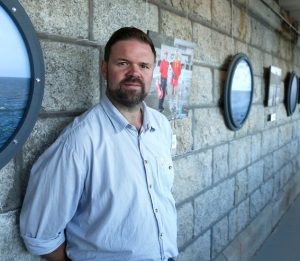
Photographer Andy Aitchison
Index on Censorship is extremely concerned at the arrest of freelance photographer Andy Aitchison, who was arrested at his home last Thursday after covering a demonstration at a former military barracks in Kent earlier the same day. The barracks is being used to house asylum seekers in allegedly substandard conditions.
“What is happening at Napier Barracks is an issue of significant public interest,” said Jessica Ní Mhainín, senior policy research and advocacy officer at Index on Censorship. “We have every right to know what is going on there and we need journalists and photographers like Aitchison to be free to document and report on it. But instead of enabling journalists to report in the public interest, the authorities are actively preventing them from doing so.”
Five police officers went to Aitchison’s home to arrest him on suspicion of criminal damage. They seized his memory card and mobile phone, and took him to the police station even after he had shown them his National Union of Journalists membership card. They took his fingerprints and DNA, and detained him for almost seven hours before releasing him on bail until 22 February.
“This is a blatant and appalling press freedom violation, which has already – due to the terms of his bail – resulted in Aitchison being unable to cover the fire that broke out at the same barracks on Friday afternoon,” said Ní Mhainín. “We call for Aitchison’s immediate and unconditional de-arrest, and for his equipment – which should have never been seized in the first place – to be immediately returned to him”.
“Serious questions need to be asked about how this could have happened and why it is taking so long for remediation. Has the UK forgotten that it has committed to leading the Media Freedom Coalition? This is what censorship looks like – not media freedom,” Ní Mhainín said.
Index on Censorship has filed a Council of Europe alert.[/vc_column_text][/vc_column][/vc_row]
8 Sep 2020 | News, Statements
[vc_row][vc_column][vc_column_text]Index on Censorship has filed an alert to the Council of Europe about a defamation action that is being taken against the Dublin Inquirer, its co-founder Sam Tranum and reporter Laoise Neylon. The Council of Europe has formally notified Ireland of the legal action.
The alert is the first media freedom alert on Ireland since the Council of Europe’s alert platform was launched in 2015. The platform catalogues threats to media freedom in the Council of Europe’s 47 member states.
On the back of the alert, Index on Censorship and seven other media freedom organisations have also written to justice minister, Helen McEntee, and foreign affairs minister, Simon Coveney, to express their concerns over the lawsuit.
“We believe that this legal action is a Strategic Lawsuit against Public Participation (Slapp), intended to intimidate and silence an independent media outlet that is reporting in the public interest,” they wrote.
“The aim of a Slapp is not to succeed in court, but to drain their targets of money, time, and energy in an effort to discourage them from reporting further on a particular person or issue,” the letter explains.
The organisations urge the government to pursue reform of Irish defamation law and to support the creation of anti-Slapps legislation at EU level. “We call on you to get behind such measures in order to bring about concrete protections – including an anti-Slapps directive – for freedom of expression, access to information, and ultimately our democracies.”
Click here to read our report on the rise of Slapps.
Read below the letter to McEntee and Coveney in full:
8 September 2020
Dear Minister Helen McEntee TD, Minister for Justice
Dear Minister Simon Coveney TD, Minister for Foreign Affairs and Trade
Cc: Permanent Representation of Ireland to the EU
Index on Censorship, alongside the undersigned press freedom organisations, are writing to raise our concern about legal action that is being taken against the independent news outlet, the Dublin Inquirer, its co-founder Sam Tranum, and its reporter Laoise Neylon.
As outlined in the media freedom alert that was issued by the Council of Europe today, the Dublin Inquirer is facing a defamation lawsuit for an article it published on its website on 26 August, which reported on an eviction that had taken place in Glasnevin the previous week. Tranum, Neylon, and the Dublin Inquirer, were served with summons on 31 August.
We believe that this legal action is a Strategic Lawsuit against Public Participation (SLAPP), intended to intimidate and silence an independent media outlet that is reporting in the public interest. The aim of a SLAPP is not to succeed in court, but to drain their targets of money, time, and energy in an effort to discourage them from reporting further on a particular person or issue.
The SLAPP that the Dublin Inquirer is facing is just one example of a phenomenon that has become widespread in Europe in recent years: at the time of her death in 2017, Maltese journalist Daphne Caruana Galizia had 47 vexatious lawsuits filed against her. This year, the Council of Europe Platform for the Protection of Journalism and Safety of Journalists has recorded SLAPPs in Belgium, Malta, France, Bulgaria, Poland, and Romania – and we have reason to believe that these are just the tip of the iceberg.
The lengthy process and extremely high costs associated with defending a defamation case means that Ireland’s draconian defamation laws are an ideal tool with which to threaten and intimidate. Because of the arduousness of exhausting domestic measures, the European Court of Human Rights provides little practical protection to Irish journalists and media outlets. This means that small media outlets, like the Dublin Inquirer, could face closure when targeted with such legal threats and actions.
We therefore urge you, not only to pursue the long overdue reform of Irish defamation law, but to support the creation of robust anti-SLAPPs legislation at EU level. The European Commission has committed to considering suitable anti-SLAPP measures as part of its upcoming European Democracy Action Plan. We call on you to get behind such measures in order to bring about concrete protections – including an anti-SLAPPs directive – for freedom of expression, access to information, and ultimately our democracies.
Thank you in advance for your consideration of our concerns. We look forward to your response and would be glad to schedule a meeting to discuss in more detail.
Kind regards,
Index on Censorship
European Centre for Press and Media Freedom (ECPMF)
The Daphne Caruana Galizia Foundation
Irish Council for Civil Liberties (ICCL)
Free Press Unlimited (FPU)
Article 19
Reporters Without Borders (RSF)
Committee to Protect Journalists (CPJ)[/vc_column_text][/vc_column][/vc_row]
18 Sep 2019 | Campaigns -- Featured, Media Freedom, Statements
[vc_row][vc_column][vc_column_text]To: Marija Pejčinović Burić
Secretary-General
Council of Europe
Dear Secretary-General,
On behalf of the undersigned organisations, we warmly congratulate you on your appointment as the new Secretary-General of the Council of Europe. We are motivated by our experience and understanding of the worsening of the environment for journalists and free expression across Europe to ask you to make sure that your commitment to democracy, the rule of law and human rights will be reflected in enhanced efforts for the effective protection of freedom of expression, press freedom and the safety of journalists, backed up by robust measures and strong and consistent statements and actions by yourself as Secretary-General.
Media freedom and media pluralism must be given a clear and consistent priority across the Council of Europe area, as they enable the public to make informed choices about their government and society, and are thus prerequisites for the full enjoyment of all other rights.
Renewed and determined efforts to achieve Member States’ compliance with the Council of Europe’s conventions, recommendations and other texts, as well as the case-law of the European Court of Human Rights (ECtHR) are vital in these times of rising threats against journalists and press freedom throughout Europe. The environment for media freedom has worsened significantly, as was documented in the Annual Report published by the partner organisations of the Council of Europe Platform for the Protection of Journalism and Safety of Journalists. We see extremely worrying developments in Azerbaijan, Poland, Hungary, Italy, Turkey, Russia and elsewhere.
Regarding the Platform for the Protection of Journalism and Safety of Journalists, we urge you to provide all necessary means and support available to ensure that Member States respond concretely to alerts, intensify the dialogue and follow-up moves to provide redress, and to do everything possible to gain the active cooperation of those Member States which have failed to reply to alerts that highlight shortcomings or abuses on the part of state authorities. We ask you to establish a monthly exchange at the level of the Committee of Ministers to allow for a meaningful discussion on the progress of Member States in dealing with the alerts and persistent and serious threats to media freedom and the safety of journalists and other media actors.
In view of the well-documented increase in attacks on the media and backsliding in some states’ fulfilment of their commitments, we request you to prioritise actions and policies to implement Recommendation CM/Rec(2016)4 of the Committee of Ministers on the protection of journalism and safety of journalists and other media actors – including specific measures to comply with Council of Europe standards on Protection; Prevention of attacks; and Prosecution of crimes against journalists.
We hope that the concerns and recommendations outlined in the Platform partners’ latest report will be given priority by the Secretariat under your leadership, and through the projects and activities foreseen in the bi-annual Council of Europe programme and budget. To address these concerns, we request you to make available the resources and support needed to give it greater visibility, recognition and impact – both internally and externally to the Council of Europe.
We are convinced that strong and concerted political action from Member States and the Council of Europe is now essential. We request your energetic support against the ongoing impunity for attacks including murders of journalists within Europe, and against widespread attempts to adopt severely restrictive legislation on media regulation, defamation, anti-terrorism that are increasingly used to criminalise journalists.
Anti-media rhetoric is creating a toxic atmosphere for journalists amongst the general public and must be countered. The spread of online disinformation intensifies this effect. We welcome the recent PACE resolution on the rule of law in Malta, which points to the urgent need for effective actions against the politicisation of state institutions, media capture by political forces, and a climate of impunity related to attacks against members of the media.
We call on you to provide your full political support, and necessary resources, to ensure the successful implementation of Recommendation CM/Rec(2016)4, as is specified in the 2018 Steering Committee on Media and Information Society (CDMSI) strategy 2018. It is especially important to us that robust and frank debate on the subject of implementation (including securing firm commitments to national action plans) takes place at the Conference of Ministers responsible for media and information society in Cyprus in May 2020, with the full participation of civil society to pave the way for meaningful actions to reverse the recent negative trends.
We call on you to use your influence on Member States to reform their domestic laws and practices so that they comply with their obligations under the European Convention on Human Rights and CM Recommendation (2016)4, and do everything in your power to improve the safety of journalists through the establishment of effective safeguards.
We thank Thorbjørn Jagland for his efforts in the past years and we are happy to continue to support the Council of Europe with our research and our international networks.
We request a meeting with you soon to discuss these matters in person and to share our knowledge and experience with you as you begin your term of office.
We look forward to your positive response.
Yours sincerely,
Lutz Kinkel, Managing Director, European Centre for Press and Media Freedom (ECPMF)
Sarah Clarke, Head of Europe and Central Asia, ARTICLE 19
William Horsley, Special Representative for Media Freedom, Association of European Journalists (AEJ)
Gulnoza Said, Europe and Central Asia program coordinator, Committee to Protect Journalists (CPJ)
Daniel Gorman, Director, English PEN
Ricardo Gutiérrez, General Secretary, European Federation of Journalists (EFJ)
Leon Willems, Director of Policy and Programmes, Free Press Unlimited (FPU)
Ralf Nestmeyer, Vice-President, German PEN
Bertrand Pecquerie, CEO, Global Editors Network (GEN)
Annie Game, Executive Director, IFEX
Joy Hyvarinen, Head of Advocacy, Index on Censorship
Anthony Bellanger, General Secretary, International Federation of Journalists (IFJ)
Ravi R. Prasad, Director of Advocacy, International Press Institute (IPI)
Ides Debruyne, Managing Director, Journalismfund.eu vzw
Hege Newth, Secretary General, Norwegian PEN
Chiara Sighele, Programme Director, Osservatorio Balcani Caucaso Transeuropa (OBCT/CCI)
Alberto Spampinato, Director, Ossigeno per l’informazione
Aaliya Ahmed, International Programmes Director, PEN International
Christophe Deloire, Secretary General, Reporters without Borders (RSF)
Oliver Vujovic, Secretary General, South East Europe Media Organisation (SEEMO)
Clothilde Redfern, Director, The Rory Peck Trust
Andrew Heslop, Director, World Association of News Publishers (WAN-IFRA)[/vc_column_text][vc_basic_grid post_type=”post” max_items=”4″ element_width=”6″ grid_id=”vc_gid:1568796322393-650d0cd0-526d-5″ taxonomies=”6534″][/vc_column][/vc_row]
