28 Feb 2018 | Europe and Central Asia, Mapping Media Freedom, Media Freedom, media freedom featured, News, Turkey, Turkey Uncensored
[vc_row][vc_column][vc_column_text]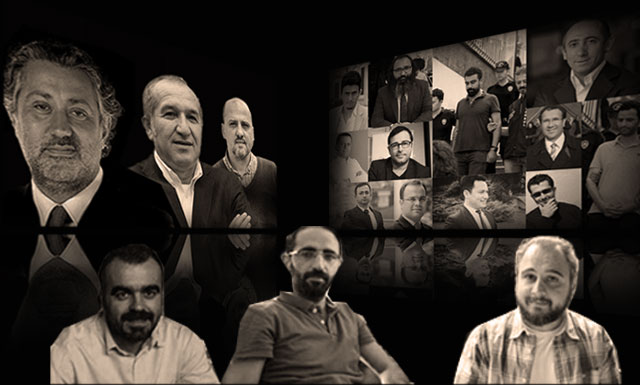
Recent developments in Turkey, once seen as a role model for the Muslim world, have shown that concepts such as the rule of law and right to free speech are no longer welcome by the Erdogan government.
With 156 journalists behind bars as of 26 February 2018 and the closing down of more than 150 media outlets by virtue of the state’s of emergency decrees, Turkey is the global leader in suppressing the media. The irony is that Erdogan was once a victim of an earlier oppressive regime in the late 1990s, having been dismissed as mayor of Istanbul, banned from political office and put in prison for three months for inciting religious hatred after he recited part of a poem by the Turkish nationalist Ziya Gokalp at a political rally.
The destruction of the rule of law in Turkey has been in the making since the anti-government Gezi Park protests and corruption probes of 2013. However, the government has made its intentions on the right to free speech crystal clear in the aftermath of the 15 July 2016 coup attempt. Many journalists and writers have been imprisoned over accusations as absurd as spreading subliminal messages to promote the coup.
Some of them — like Die Welt journalist Deniz Yucel — have languished in detention without charge for a year. Yucel was used as a bargaining chip against Germany and was only freed after chancellor Angela Merkel put pressure on the Turkish government. Immediately after he was let out of detention he published a video message in which he said: “I still don’t know why I was arrested and why I have been released.”
Ahmet Sik, another well-known journalist, was imprisoned because of his thorough investigations into the dark sides of the coup attempt. Can Dundar was arrested for publishing about Turkish intelligence’s illegal arms transfers to Syria. He was kept in prison for several months and eventually released on a constitutional court decision in February 2016. He fled the country and currently lives in Germany. Veteran journalists Sahin Alpay and Mehmet Altan, on the other hand, were not so lucky. They had been granted freedom by the constitutional court but a local court refused to implement their release. Recently, the Altan brothers, Mehmet and Ahmed, and another senior journalist, Nazli Ilicak, have been brutally sentenced to aggravated life prison sentences. Examples of the obscene unlawful imprisonment of journalists can go on and on.
The heart of the issue is that Turkish journalists do excellent work. They go to extraordinary efforts to make sure the public is informed about corruption, illegal arms transfers, extrajudicial killings of Kurds and minorities, shady affairs of the ruling party with the judiciary and unanswered questions about the coup attempt. The government doesn’t want to see these issues make headlines, and for defying it many journalists have sacrificed their freedom.
Behind the thin veneer of Turley’s judicial system is the political machine manufacturing countless crimes. After 500 days pretrial detention, Ahmet Turan Alkan, an intellectual and a respected writer, pointed that out by telling a judge: “Your honour, I know you can’t release me because if you decide to do so you will be jailed.”
Turkey’s journalists are faced with a unique problem: if they continue to lay bare the truth for all to see they risk exile or prison. In a normal country, journalists performing at the height of their abilities would be encouraged or rewarded, perhaps not by their governments but by the society as a whole. But not so in Turkey, where the government mouthpieces and politically-aligned media outlets spout the latest propaganda to manipulate Turks. Unfortunately, the majority of people actually believe that most of the arrested journalists are criminals or terror supporters.
This collective hostility to freedom of expression makes Turkey one of the biggest violators of press freedom in the 42 European-area countries Index on Censorship’s Mapping Media Freedom project monitors; one of the lowest ranking countries in Reporters Without Borders’ World Press Freedom Index; and deemed “not free” by Freedom House’s evaluation.
It’s not just journalists. Academics, rights defenders, philanthropists and lawyers also face punishment for carrying out their professional responsibilities on behalf of the public. Disclosing the unlawful practices of those in power is all it takes for an individual to find themselves on the wrong side of the bars. As with Alpay and Altan, a court had ordered Taner Kilic, the chairman of Amnesty Turkey, to be released from detention, but the prosecutor put him back in prison. Kilic and his colleagues are being targeted in retribution for Amnesty International’s work to make the world aware of the inhumane conditions in Turkey’s post-coup attempt era.
The government’s intolerance toward dissenting voices can also be seen in its treatment of university professors, students and others who signed an Academics for Peace petition, which called for an end to violence in the Kurdish region of the country. Hundreds of distinguished academics have found themselves summoned to courtrooms. For taking a stand about the ongoing tragedy in Kurdish cities, the majority of these academics are dehumanised and defamed. They have not only become enemies of the state but enemies of all Turks.
Yes, the government has terrorised ordinary people with the narrative of the “world against great Turkey” and urged them to stand against outspoken figures who are the “spies, traitors and enemies”.
What do the EU and other international organisations do? Mostly expressing their “concern” in different formats such as “great”, “deep” or “serious”. Even the European Court of the Human Rights has not issued a single verdict against Turkey’s post-coup purge which has seen the country become the world’s largest jailer of journalists.
On the same day the Altan brothers were sentenced to spend the rest of their lives in prison, Tjorbon Jaglan, the secretary general of the Council of Europe was on a two-day visit in Turkey. He didn’t utter a single word about their situation. What else could better fit the definition of the “banality of evil” conceptualised by Hannah Arendt?[/vc_column_text][/vc_column][/vc_row][vc_row][vc_column][vc_basic_grid post_type=”post” max_items=”4″ element_width=”6″ grid_id=”vc_gid:1519832159496-f7b69135-ce98-10″ taxonomies=”8607″][/vc_column][/vc_row]
12 Feb 2018 | Global Journalist, Media Freedom, News, Turkey, Turkey Uncensored
[vc_row][vc_column][vc_column_text]This article is part of Index on Censorship partner Global Journalist’s Project Exile series, which has published interviews with exiled journalists from around the world.[/vc_column_text][vc_single_image image=”97954″ img_size=”full” add_caption=”yes” alignment=”center”][vc_column_text]In hindsight, there were many clues that President Recep Tayyip Erdogan’s government was making preparations to eliminate Turkey’s independent media even before it launched a massive crackdown in July 2016. But perhaps the biggest tip-off was the March 2016 police raid and seizure of Zaman, Turkey’s largest daily newspaper.
At the time, Abdullah Bozkurt was bureau chief in the capital Ankara for the paper’s English-language edition, Today’s Zaman. On March 4 of that year, Bozkurt found himself struggling to put out the newspaper’s final edition – even as he watched on live television as police in riot gear fired tear gas and water cannons on protesters and stormed Zaman’s headquarters 220 miles (350 km) to the west in Istanbul.
Shortly before court-appointed trustees seized control of the newspaper’s computer system, Bozkurt wrote the headline for the last cover of Today’s Zaman. “Shameful Day for Free Press in Turkey,” it read. “Zaman Media Group Seized.”
Zaman had been in Erdogan’s crosshairs for some time for its sympathies with the Gülen movement, an opposition group affiliated with a U.S.-based Islamic cleric that Erdogan has branded a “terrorist” organization. It had particularly angered the government for its aggressive coverage of a 2013 corruption investigation that led to the arrests of three sons of ministers in then-prime minister Erdogan’s government, Bozkurt says.
“Initially, they started calling in public rallies [for people] not to purchase our newspaper,” says Bozkurt, in an interview with Global Journalist. “Amazingly, at the time our circulation went up because we were one of the few media outlets in Turkey that were still covering the corruption investigation…later they started putting pressure on advertisers. That didn’t work out either because our circulation was quite high.”
After Zaman’s closure, Bozkurt briefly opened his own news agency. A few weeks later, on July 15, 2016, a faction of the military attempted to overthrow Erdogan. The coup was put down in a matter of hours. But in its aftermath, Erdogan unleashed a nationwide purge.
Over 100,000 government workers were fired and 47,000 people were jailed on suspicion of terrorism, according to a tally by Human Rights Watch. An additional 150 journalists and media workers were also jailed, giving Turkey the highest number of jailed journalists in the world. Many others fled the country.
Bozkurt was among those who chose to flee rather than face arrest. Ten days after the failed coup, he left for Sweden. The day after he left, the offices of his fledgling news agency were raided by police. Police later searched the home of Bozkurt’s 79-year-old mother and detained her for a day. Bozkurt’s wife and three children later followed him.
In Sweden, Bozkurt received threats via social media and a Wild West-style ‘wanted photo’ of him was published by pro-Erdogan newspapers and the state-run news agency. The government has brought anti-state charges against 30 of his former Zaman colleagues, seeking as much as three life sentences in jail.
Bozkurt, 47, now writes regular columns for the news site Turkishminute.com and works at the Stockholm Center for Freedom, a rights group focused on Turkey. He spoke with Global Journalist’s Denitsa Tsekova about his last weeks in Turkey and his exile. Below, an edited version of their interview:
Bozkurt: I was based in the capital, Ankara, but our newspaper’s headquarters was in Istanbul. The storming of our newspaper happened in Istanbul, we were watching on TV. We were on the phone talking to our colleagues in Istanbul, trying to find what’s going on, what we can do. The police were coming into our Istanbul’s newsrooms, ransacking the place, and shutting the internet service. It was up to me and my colleagues in the Ankara office to write the stories. We were actually printing the last edition of Zaman from Ankara. I was the one who drew the headline in the English edition and we managed to get out the last free edition. In the Turkish edition, we managed to finish and print the first one, but the second and the third edition couldn’t make it to the printing place. It was interrupted by the police and the government caretakers who took over the company.
GJ: There were protests after the closure of Zaman. What happened?
Bozkurt: It was on the day when the takeover judgment by the court was publicized. We didn’t call our readers to come and protest.
We knew it might be very dangerous because the government uses very harsh measures often rubber bullets, pepper spray and pressurized water against peaceful protesters. We didn’t want to put them on the risk.
Around 400 people showed up and they were beaten and targeted brutally by the police who stormed the building.
GJ: What was the last article you wrote for Today’s Zaman?
Bozkurt: It was about prisons. When I wrote that article I didn’t know the government was taking over the company, it was written a day before.
I talked to many people in the government and some from the European Committee for the Prevention of Torture. Something was very, very off because the government planned to build a lot of prisons in Turkey under the disguise of a modernization plan.
However, when you look at the numbers, it didn’t really match. We didn’t need that many new prisons in Turkey, but the government was making a projection that the prison population would increase.
When the European officials asked the justice ministry on what basis were they making this projection, they did not have a response.
In hindsight, I could understand it was because they were preparing a new mass prosecution in Turkey and they needed more prisons to put these people away. Even the prisons we have now are not enough; people are living in very crowded cells. After the coup, the government even granted amnesty for some 40,000 convicted felons… just to make space for the political prisoners and journalists.
GJ: How did you decide to leave?
Bozkurt: I actually hung around for a while after the failed coup, because I thought eventually things will settle down, and I wasn’t planning to move out of Turkey at all.
[Ten days] after the coup, the government issued an arrest warrant against 42 journalists on a single day. I realized this is going to get worse, and I said it’s time for me to move out of Turkey.
It was a rash decision, I didn’t even know to which country I would go, so I had to go to Germany first and then to Sweden.
My mother was getting old, she has some health issues and I wanted to be there for her. But it wasn’t up to me. Sweden was a stopover for me, I wasn’t planning on staying permanently.
The day after I left Turkey, the police raided my office in Ankara, so it was the right decision. If I was there I would have been detained and dragged to jail.
GJ: Were you getting threats?
Bozkurt: I was getting threats all the time. If you are a critical and independent journalist, you will get them. That’s the price you pay for it. Sometimes you try to be vigilant, you try to be careful and you just ignore that kind of threats or pressure from the government or pro-government circles.
But after the massive crackdown after the coup attempt, I thought it’s no longer safe for me. I moved out alone, I didn’t even take my family, because I thought they will stay in Turkey and I can hang around abroad and then come back to Turkey. That was my plan.
After a while, the Turkish government started going after the family members of the journalists. Bülent Korucu was a chief editor of a national daily [Yarına Bakıs], which was also shut down by the government, and he was facing an arrest warrant. The police couldn’t find him and they arrested his wife, Hacer Korucu. She stayed in prison for a month on account of her husband. At that moment, I thought my family is no longer safe either, so I decided to extract them out of the country.
GJ: Was your family directly threatened?
Bozkurt: When I moved out of Turkey I kept writing about what’s going on in Turkey. I guess they felt uncomfortable with my writings.
It was part of the intimidation campaign to go after family members, including my mother. She is a 79-year-old, she lives alone but sometimes my sister helps her out. Police raided her home in my hometown of Bandirma in December 2016, searched the house and placed her in detention for a day. She was questioned about me.
Why does she deserve that? They want me to shut up, to be silent even though I feel safe abroad.
GJ: What will happen if you go back to Turkey?
Bozkurt: Of course I will get arrested. They even posted a “wanted” picture of me, and it was run in the pro-government dailies and in the state news agency. It’s like in the old Western movies: there is a picture of me and where I live. I have no prediction when I can go back to Turkey. [/vc_column_text][/vc_column][/vc_row][vc_row][vc_column width=”1/2″][vc_video link=”https://youtu.be/tOxGaGKy6fo”][/vc_column][vc_column width=”1/2″][vc_column_text]Index on Censorship partner Global Journalist is a website that features global press freedom and international news stories as well as a weekly radio program that airs on KBIA, mid-Missouri’s NPR affiliate, and partner stations in six other states. The website and radio show are produced jointly by professional staff and student journalists at the University of Missouri’s School of Journalism, the oldest school of journalism in the United States. [/vc_column_text][/vc_column][/vc_row][vc_row][vc_column][vc_custom_heading text=”Don’t lose your voice. Stay informed.” use_theme_fonts=”yes”][vc_separator color=”black”][vc_row_inner][vc_column_inner width=”1/2″][vc_column_text]Index on Censorship is a nonprofit that campaigns for and defends free expression worldwide. We publish work by censored writers and artists, promote debate, and monitor threats to free speech. We believe that everyone should be free to express themselves without fear of harm or persecution – no matter what their views.
Join our mailing list (or follow us on Twitter or Facebook) and we’ll send you our weekly newsletter about our activities defending free speech. We won’t share your personal information with anyone outside Index.[/vc_column_text][/vc_column_inner][vc_column_inner width=”1/2″][gravityform id=”20″ title=”false” description=”false” ajax=”false”][/vc_column_inner][/vc_row_inner][vc_separator color=”black”][/vc_column][/vc_row][vc_row][vc_column][vc_basic_grid post_type=”post” max_items=”6″ style=”load-more” items_per_page=”2″ element_width=”12″ grid_id=”vc_gid:1517591299623-14a913d2-eca2-3″ taxonomies=”22142″][/vc_column][/vc_row]
10 Nov 2017 | Europe and Central Asia, News, Turkey, Turkey Uncensored
[vc_row][vc_column][vc_column_text]
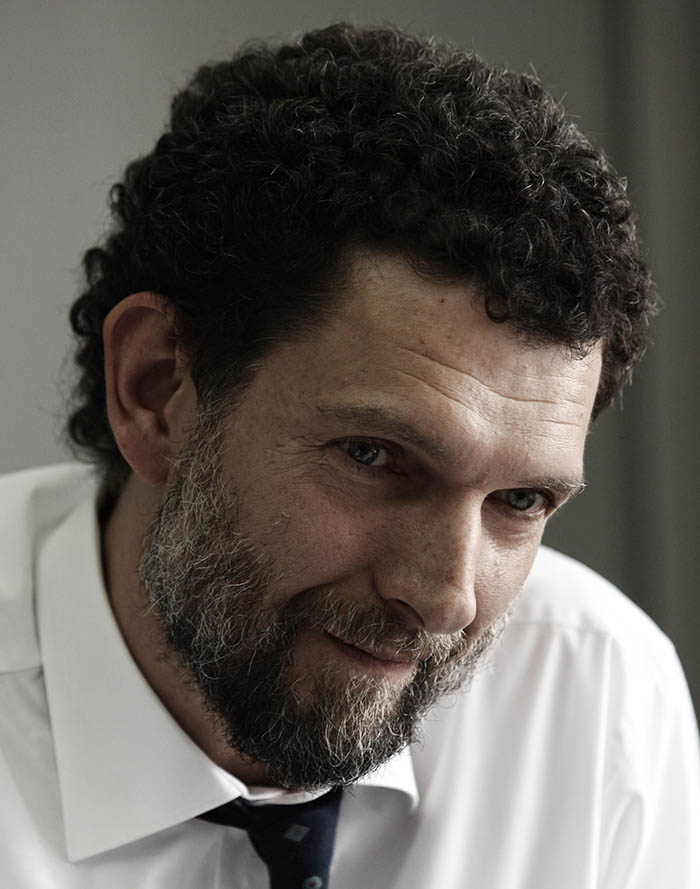
Osman Kavala. Credit: Anadolu Kültür
On 19 October, when police officers detained Osman Kavala, a left-wing Turkish human rights activist and businessman who funds a variety of cultural and civil society activities, I was set to catch a plane en route to Armenia to attend a conference. The news was extremely bothersome as I, having held a civil society job for two years, knew all too well what his detention entailed. As Andrew Finkel, an executive of the Independent Platform for Journalism (P24) commented, his detention and later arrest was “a chilling signal to those working in the civil society community”.
I never knew Kavala personally, but always respected him for allowing civil society organisations to use his centrally-located Cezayir Restaurant for events and gatherings, usually at a minimal charge. I tried not to think about what I understood to be a new low in Turkey’s recent descent into authoritarianism and had managed to completely forget about it by the time I had reached the beautiful mountain resort of Arghevan. Yet my fellow conference attendees were quick to remind me of what had happened at home earlier in the day. Several people greeted me saying they had heard the news; that they were extremely concerned about their friend Osman. “He has more friends in Armenia than he has in Turkey,” Armen Ohanyan, an Armenian writer, told me.
This, of course, owes to Kavala’s commitment to Turkish-Armenian reconciliation. He has been committed to improving the troubled relations between the two neighbours stemming from a number of factors, but mainly from Turkey’s unwillingness to recognise the Armenian Genocide. However, repairing ties was not the only area where Kavala worked. Anadolu Kültür, a foundation he established, has carried out many cultural projects including restoration of minority heritage. He has also been an active supporter of children’s, women’s and LGBT rights. The foundation was recently involved in a project for integrating Syrian refugees into Turkish society.
Dozens of articles from his friends followed his arrest and from them we learn that, unlike most of Turkey’s elite, this wealthy businessman not only talked about the most problematic affairs of his country but actively put time and effort into resolving them. He remained committed to pursuing that goal until it was too much for the government. Perhaps he was not a saint or some modern-day sage who devoted his life to others, but he was a good man; a “good citizen” as the son-in-law of a general, who was imprisoned in a past crackdown led by prosecutors who were part of the Fethullah Gülen network which today the Turkish government accuses of being behind the 2016 coup attempt, called him.
Ironically, Kavala was arrested two weeks after his detention by an Istanbul court on the basis of a prosecutor’s allegation that he was linked with the “parallel structure” FETÖ/PDY — or the Fethullahist Terrorist Organisation — the name Turkish authorities give to Gülen network.
The prosecution accuses Kavala of “attempting to overthrow the government” by supporting Turkey’s Gezi Park protests — massive peaceful anti-government demonstrations that took place in all provinces across the country four years ago. His arrest was not a surprise and president Erdogan called Kavala an “agent” and the “Soros of Turkey” in the few hours following his initial detention.
In a statement he made while in prison on 6 November 2017, Kavala said it was Erdogan’s statements that led to his arrest. “My arrest is part of the government’s attack on all opposition,” he told a visiting deputy.
The charges against him are bogus, as Sedat Ergin, the former editor-in-chief of the Hürriyet daily, explained at length in a column which was translated into English. On 9 November, prominent European diplomats and politicians, including Carl Bildt, Claus Offe and others, wrote to the Financial Times, of the ridiculousness of the charges against him.
Whether there will be an unexpected yet helpful twist in the course of his proceedings as was the case of the eight human rights defenders who were released conditionally have yet to be seen. However, his treatment so far clearly shows that darker times are ahead for civil society.
On 8 November the Checks and Balances Network (DDA), an umbrella network for more than 100 civil society organisations, made a timid statement denouncing reports labeling it as a supporter of foreign agents, following news stories in the pro-government media which stated that the National Endowment for Democracy (NED) funded network is an arm of the CIA. Other civil society organisations that are involved in non-political activities are also extremely concerned.
What makes Kavala’s arrest so pervasive is that it sends the message that the government has not been satisfied by the level of the crackdown it has already imposed on civil society. A total of 1,125 associations and 41 foundations were shut down under cabinet decrees since the declaration of the post-coup attempt state of emergency. Civil society leaders, who might have spoken out on Kavala’s arrest or not, now understand that Erdoğan may resort to Putin-like measures, banning civil society activities entirely and labelling its representatives as “foreign agents”.
That fear echoed in the initial remarks of Kavala’s academic and activist wife Ayşe Buğra, who said in a statement she made after her husband’s arrest: ““With the arrest ruling we have not only lost Osman Kavala’s freedom but at the same time our hopes in democracy, peace and the rule of law.”[/vc_column_text][/vc_column][/vc_row][vc_row][vc_column][vc_basic_grid post_type=”post” max_items=”4″ element_width=”6″ grid_id=”vc_gid:1510241893657-0016a8b6-b819-2″ taxonomies=”7355″][/vc_column][/vc_row]
30 Aug 2017 | Mapping Media Freedom, media freedom featured, News, Turkey
[vc_row][vc_column][vc_column_text]
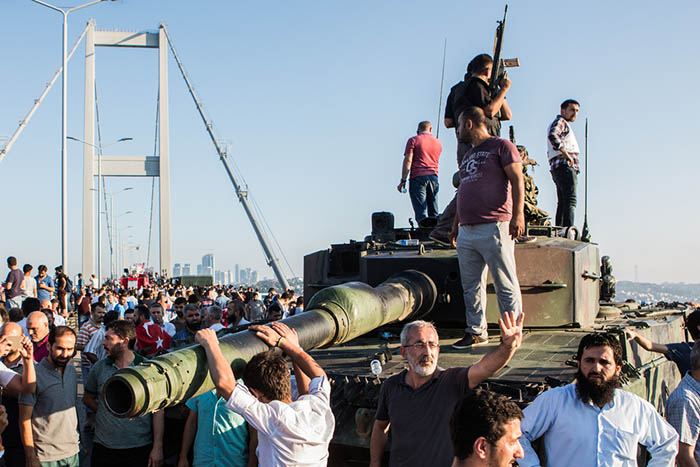
16 July: Violence following attempted military coup. Credit: deepspace / Shutterstock.com
In the year since the failed coup attempt on 15 July 2016, Turkey has cemented its position as the largest jailer of journalists in the world, with around 166 journalists in prison by the end of June 2017.
Many have been accused of being affiliated with terror organisations including the Kurdish PKK, the left-wing DHKP-C and the Gullenist Movement, the group accused of being behind last year’s coup attempt.
This is the case with the 18 writers, cartoonists and executives from the Cumhuriyet opposition newspaper, who went on trial on 24 July, accused of supporting in their coverage these very groups.
Seven of the defendants, including cartoonist Musa Kart, were released under judicial supervision. They must report to the authorities regularly in the lead-up to the next hearing on 11 September.
“The Turkish state’s reaction to the attempted coup on their democratic institutions led to an unparalleled level of attacks on press freedom,” said Hannah Machlin, project manager of Index on Censorship’s Mapping Media Freedom platform. “One year later, the media sphere has been carved out, with hundreds of journalist in jail, being forced to flee or have lost their jobs following the closure of outlets. This trial is clearly political and the state’s attempt to criminalise journalism.”
MMF has been closely monitoring the situation over the last year. Here are some of the more recent cases of journalists being accused of being connected with terrorism.
[/vc_column_text][/vc_column][/vc_row][vc_row][vc_column][vc_separator color=”black”][vc_custom_heading text=”Media freedom is under threat worldwide. Journalists are threatened, jailed and even killed simply for doing their job.” font_container=”tag:h3|text_align:left” use_theme_fonts=”yes” link=”url:https%3A%2F%2Fwww.indexoncensorship.org%2Fcampaigns%2Fpress-regulation%2F|||”][vc_row_inner][vc_column_inner width=”1/2″][vc_column_text]Index on Censorship monitors press freedom in Turkey and 41 other European area nations.
As of 30/8/2017, there were 521 verified incidents associated with Turkey in the Mapping Media Freedom database.[/vc_column_text][/vc_column_inner][vc_column_inner width=”1/2″][vc_column_text]Index on Censorship campaigns against laws that stifle journalists’ work. We also publish an award-winning magazine featuring work by and about censored journalists. Support our work today.[/vc_column_text][/vc_column_inner][/vc_row_inner][vc_separator color=”black”][/vc_column][/vc_row][vc_row][vc_column][vc_column_text]
On 12 July the Ankara Chief Prosecutor’s office issued detention warrants for 34 former employees of the state-owned Turkish Radio and Television network without providing their names. On 19 July eight former employees were imprisoned under charges of “belonging to a terrorist organisation”.
Media reports said that in Istanbul, warrants to detain 18 people who formerly worked for TRT were issued and that ten of these people were captured. One was released after being interrogated by the police.
The other nine, who were referred to court after their police interrogation, were: reporter Efnan Y, chief technician Faysal A, engineers Serkan C and Özgür Ş, chief technician Satı D, production assistants Şule R, Uğur Y, Tuba E and Yunus G.
Eight of these individuals were put under arrest while one was released under judicial control measures.
On 27 July, Erdoğan Alayumat, a reporter for the pro- Kurdish dihaber news agency, was arrested on terror charges.
Alayumat was detained on 13 July in Gaziantep together with fellow dihaber reporter Nuri Akman, while working on a news report. Later, they were transferred to Hatay province. The two were referred to a court on charges of “membership in a terrorist organisation.”
The court released Akman on judicial probation terms but ruled to arrest Alayumat.
Also on 27 July, the Evrensel columnist Yusuf Karataş was arrested as part of a Diyarbakır-focused operation into the Democratic Society Congress, a union of pro-Kurdish civil society organisations.
Karataş was arrested after visiting the Diyarbakır Police Station for a police interrogation regarding the investigation. He was then referred to a prosecutor, who asked the judges to arrest the journalist.
Karataş was asked questions relating to why he joined a protest of the Roboski massacre – where 34 Kurdish citizens were killed in a bombing by Turkish air force jets in 2011.
On 28 July, two employees of the pro-Kurdish daily Özgürlükçü Demokrasi, Serkan Erdoğan and Özkan Erdoğan, were arrested on charges of “membership in a terrorist organisation” and “conducting propaganda for a terrorist organisation”.
Özkan Erdoğan was initially detained for being in possession of a magazine deemed “illegal” by the Turkish authorities.
Serkan Erdoğan, a reporter for the dailu was detained in a home raid on the same night also in Mersin and later arrested by a Peace Judgeship on the same charges. Reports have said the two Özgürlükçü Demokrasi employees share an apartment, but they are no relation to each other in spite of the shared last name.
On 1 August French journalist Loup Bureau was arrested in Sirnak on charges of being a member of a terror organisation.
Bureau was first detained on 26 July at the Habur crossing, where he was crossing into Turkey from Iraq.
After five days in police custody, he was charged and taken to a prison in the town of Şırnak. A gag order was imposed on his case.
On 18 August Mehmet Sıddık Damar, formerly a reporter for the shuttered news agency DİHA, was arrested in Mardin’s Kızıltepe district over his social media posts.
Prior to his arrest, Damar visited the Kızıltepe Courthouse to testify in an investigation against him.
The court ruled for his arrest on charges of “propaganda on behalf of a terrorist organisation” based on several tweets and social media posts.
Damar was sent to Mardin Prison.[/vc_column_text][/vc_column][/vc_row][vc_row][vc_column][vc_basic_grid post_type=”post” max_items=”4″ element_width=”6″ grid_id=”vc_gid:1504104629275-dd1fbb43-7214-3″ taxonomies=”7355″][/vc_column][/vc_row]
