12 Sep 2017 | Volume 46.03 Autumn 2017, Volume 46.03 Autumn 2017 Extras
[vc_row][vc_column][vc_column_text][/vc_column_text][vc_column_text]
In the autumn 2017 issue of Index on Censorship, our special report looks at why the rebirth of radio is delivering more news and how that’s very good for freedom of expression.
The podcast includes interviews from several people featured in the magazine, who show how innovations in radio are allowing hard-to-reach populations to receive vital information. Ida Jooste from Internews talks about how radio helped curtail a cholera epidemic in the Central African Republic, Peter Kettler from Coffee Lifeline discusses radio in Rwanda and Joe Hynek talks about a station in a remote area of Iowa, USA.
Also in the podcast is an interview with Ghassan Ferghiani, a bookseller operating between the UK and Libya.
Print copies of the magazine are available on Amazon, or you can take out a digital subscription via Exact Editions. Copies are also available at the BFI, the Serpentine Gallery, MagCulture, (London), News from Nowhere (Liverpool), Home (Manchester) and on Amazon. Each magazine sale helps Index on Censorship continue its fight for free expression worldwide.
[/vc_column_text][/vc_column][/vc_row][vc_row content_placement=”top”][vc_column width=”1/3″][vc_custom_heading text=”Free to air” font_container=”tag:p|font_size:24|text_align:left” link=”url:%20https%3A%2F%2Fwww.indexoncensorship.org%2F2017%2F09%2Ffree-to-air%2F|||”][vc_column_text]Through a range of in-depth reporting, interviews and illustrations, the autumn 2017 issue of Index on Censorship magazine explores how radio has been reborn and is innovating ways to deliver news in war zones, developing countries and online
With: Ismail Einashe, Peter Bazalgette, Wana Udobang[/vc_column_text][/vc_column][vc_column width=”1/3″][vc_single_image image=”95458″ img_size=”medium” alignment=”center” onclick=”custom_link” link=”https://www.indexoncensorship.org/2017/09/free-to-air/”][/vc_column][vc_column width=”1/3″ css=”.vc_custom_1481888488328{padding-bottom: 50px !important;}”][vc_custom_heading text=”Subscribe” font_container=”tag:p|font_size:24|text_align:left” link=”url:https%3A%2F%2Fwww.indexoncensorship.org%2Fsubscribe%2F|||”][vc_column_text]
In print, online. In your mailbox, on your iPad.
Subscription options from £18 or just £1.49 in the App Store for a digital issue.
Every subscriber helps support Index on Censorship’s projects around the world.
 SUBSCRIBE NOW
[/vc_column_text][/vc_column][/vc_row]
12 Jul 2017 | News, Volume 45.02 Summer 2016 Extras

“We are very excited to hear about our APEX Award, which acknowledges the great design, and high standard of journalism here at Index on Censorship magazine,” Rachael Jolley, Index magazine’s editor, said. “There are enormous threats to freedom of expression across the world in 2017, and hopefully this award will help us bring knowledge of this to a wider audience.”
Index on Censorship magazine received a Grand Award as part of the 29th annual APEX Awards.
Judges noted that the Index magazine serves as a “vitally important and extremely relevant” resource in outlining threats to media freedoms globally.
“Dealing with such serious worldwide issues as covering war zones, protecting sources in an era of mass surveillance, life as a reporter in Syria and how journalists are dealing with accusations that they threaten national security, Index on Censorship’s 250th issue tackles these professionally and thoroughly,” judges added.
The awards are based on excellence in graphic design, editorial content and the success of the entry in achieving overall communications effectiveness and excellence. Out of 1,361 entries, 100 APEX Grand Awards were presented in 11 major categories.
6 Jul 2017 | Magazine, News, Student Reading Lists, Volume 46.02 Summer 2017 Extras
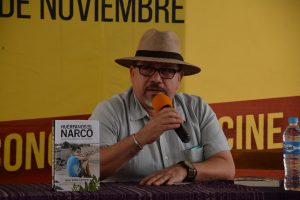
Mexican journalist Javier Valdez who was recently shot and killed. Credit: Gobierno Cholula/Flickr
For years, Index on Censorship has covered stories of violence against the media in Mexico. In the first six months of 2017, seven journalists have been killed, a terrifying statistic. To help those researching media freedom in Mexico, we have compiled a reading list of articles from the past five years. It includes details of threats, punishments and pressures faced by Mexican journalists. Students and academics whose universities subscribe to Sage Journals will find all these articles free to read.
Making a killing: A special Index investigation looking at why Mexico is an increasingly deadly place to be a journalist as reporters face threats from corrupt police to deadly drug gangs
Vol 46, Issue 3, 2017
Ahead of Mexico’s elections next year, in a special investigation for Index, Duncan Tucker looks at threats to journalists over the past decade.
Read the full article here
Parallel lives and unparalleled risks: The author discusses his time reporting from Mexico, how the death of one journalist particularly affected him and introduces an excerpt from his forthcoming novel
Vol 46, Issue 3, 2017
Mexico is one of the most dangerous countries to be a reporter today, but these dangers are not spread evenly between local and foreign reporters. Author Tim MacGabhann speaks to Jemimah Steinfeld about why this is the backdrop to his new book and introduces an extract from it
Read the full article here
Documenting the truth: Documentaries are all the rage in Mexico, providing a truthful alternative to an often biased media
Vol 47, Issue 3, 2018
Documentaries are growing in popularity in Mexico, and have more freedom to broadcast facts and challenge government lies.
Read the full article here
Between a rock and a hard place: Mexico’s journalists face threats from cartels, the government and even each other
Vol 46, Issue 1, 2017
Alberto Escorcia and Javier Valdez discuss the pressures on Mexican media from all sides: drug cartels, government agencies, and even from other media outlets. These two reporters explain the difficulties journalists face and note that often there is little police protection from cartels. Valdez, a globally known journalist, was shot and killed in May 2017.
Read the full article here
Shooting from the hip: A new mayor in a Mexican border city believes he will make it less dangerous for journalists
Vol 46, Issue 1, 2017
Does local Mexican government have the ability or will to protect journalists? In an interview with Armando Cabada Alvídrez, the mayor of the largest city in Chihuahua (on the border of the United States), and Gabriela Minjares, a co-founder of the Juárez Journalists’ Network, Index on Censorship explores government promises and speculation from journalists on Mexico’s imminent potential for improvement of journalist security.
Read the full article here
Shooting the messengers: Women investigating sex trafficking in Mexico
Vol 45, Issue 2, 2016
Mexican journalists investigating sex trafficking, prostitution or child pornography often encounter threats and pressure not to cover stories. Journalists Lydia Cacho, Sanjuana Martínez and Shaila Rosagel discuss the retaliation they faced for uncovering unsavoury relationships between sex crimes and government officials.
Read the full article here
Mexican airwaves: Interviews with radio journalists who were shut down after investigating presidental property deals
Vol 44, Issue 4, 2015
“The level of violence against Mexican journalists has been well documented, but comparatively little is known about the pressures that reporters and their bosses come under when dealing with the government.” Carmen Aristegui, one of Mexico’s most renowned journalists, lost her job and ability to report in Mexico after uncovering allegations of property fraud against President Peña Nieto.
Read the full article here
Mexican stand-off
Vol 44, Issue 2, 2015
Since the abduction of 43 missing students from Ayotzinapa training college, tensions between Mexico’s academic institutions and government have been at an all time high. In this article, Dr Rossana Reguillo Cruz discusses the case of the missing students, along with the threats she receives on a daily basis after discussing her support for investigations into their disappearance.
Read the full article here
Constitutionally challenged: Mexico’s struggle with state power
Vol 43, Issue 4, 2014
In addition to threats and cover-ups, Mexican journalists face increasing pressure from other directions. While much censorship occurs without regard to the law, this article explores how suppression of speech is becoming further integrated into Mexican society.
Read the full article here
On the ground: In Mexico City
Vol 42, Issue 2, 2013
The Mexican office of Article 19 (the right to freedom of expression), has documented 900 incidents of suppressed expression, aided 100 targeted journalists and received dozens of threats since 2006 (as this article went to press). Ricardo Gonzalez discusses the challenges and progress of the Article 19 office in the face of increasing crime against journalists, and his hope for justice.
Read the full article here
Murder In Mexico
Vol 41, Issue 2, 2012
The Olympic Games frequently draw attention to the social and political conditions of their host countries, stirring up protests from the people and censorship from the government. Brian Glanville, originally a sports reporter sent to cover the 1968 Olympics, recounts his experience of media manipulation and student massacres by the Mexican government during the games, explaining the immense importance of international media coverage when local governments cannot be held accountable.
Read the full article here