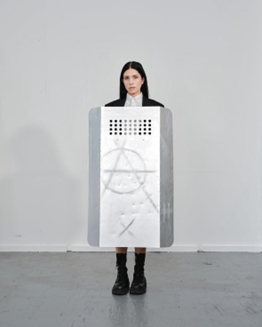
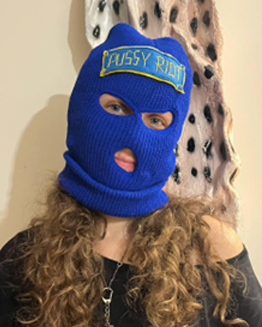
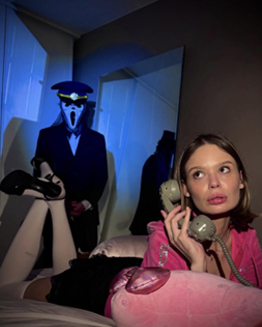
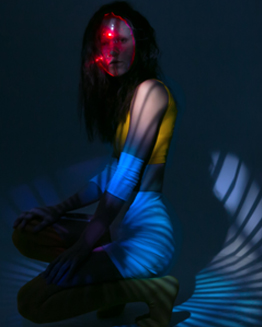
On 15 December, the Tverskoy District Court in Moscow approved the prosecution’s request to classify Pussy Riot as an “extremist organisation” and to ban its activities in Russia. The hearing took place behind closed doors.
Founded in 2011 by Nadezhda Tolokonnikova, Pussy Riot emerged as a feminist punk collective centred on direct action. Through bold, unsanctioned performances, the group rapidly drew international attention. Pussy Riot shot to global fame ahead of the 2012 presidential election after the group staged a so-called “punk prayer” in Moscow’s Cathedral of Christ the Saviour. Their song Virgin Mary, Drive Putin Away challenged the growing alliance between church and state.
Members of Pussy Riot were arrested afterwards and sentenced to prison terms. And the case triggered an unprecedented international outcry. Their prosecution quickly became emblematic of the Russian authorities’ readiness to criminalise artistic and political expression.
Despite sustained repression, Pussy Riot and its members have received worldwide recognition. In 2012, the group featured in TIME 100, Time magazine’s annual list of the world’s most influential people. That same year, Index on Censorship awarded Pussy Riot the Freedom of Expression Arts Award, acknowledging their determination to defend free expression in the face of imprisonment and state retaliation.
Designating Pussy Riot an “extremist organisation” marks a new and serious escalation. Any reference to the group, including the circulation of its music, symbols or archival materials, may now carry criminal penalties. Human rights defenders warn that such measures are intended not only to silence a single collective, but to eliminate the space for public dissent and critical artistic expression in Russia altogether.
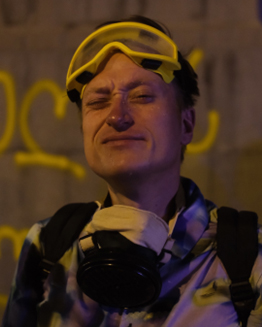
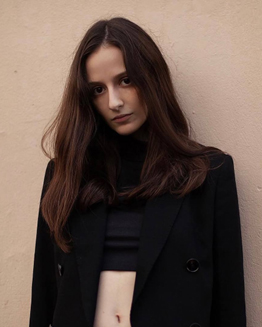
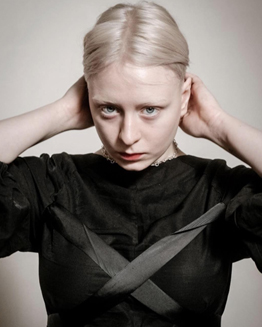
This is how Pussy Riot members reacted to the news, in their own words:
Nadya Tolokonnikova, creator of Pussy Riot
Pussy Riot has been declared an extremist organisation in Russia, with the aim of erasing the very existence of Pussy Riot from the consciousness of Russians.
A balaclava under your pillow, our song on your computer, or a like under our post – any of this can lead to a prison sentence. Pussy Riot have effectively become those-whose-name-must-not-be-spoken in Russia.
When we were put on trial for the punk prayer, we told the judge and the prosecutors that even if we were in a cage, we were still freer than they were. A decade and a half later, this is still true.
I can say what I think about Putin – that he is an aging sociopath, spreading his rot not only inside the country but across the entire world. If refusing to shove my tongue up my ass is extremism, so be it – I’ll be an extremist.
Masha Alyokhina
Russian courts, go to hell. I spent two years in a penal colony. My head was smashed with metal, I was beaten with whips, doused with green dye and with shit, my bank accounts were blocked, travel bans were imposed on me. I washed floors in buildings scheduled for demolition, spent almost a year and a half under electronic monitoring, and served six terms of 15 days in special detention centres.
You are trying to ban the name and the balaclavas in my country for exactly one reason: we did not shut up after leaving the country. And we will not shut up. At least, I don’t plan to.
Nika Nikulshina
Pussy Riot has been officially labelled an “extremist organisation.” Participation now carries a sentence of up to six years in prison. Well-fed men in uniform boots claim that our actions threaten state security, including the FIFA 2018 action – when we interrupted the World Cup final to remind people how this state imprisons, tortures, and kills others every single day. I believe extremism is not art and not protest.
Extremism is violence, the stripping away of human rights, and the destruction of civilian life for political goals. Drones and missiles flying into Ukrainian homes every day – that is extremism. Torture in prisons is extremism. A system built on constant, routine state violence – that is extremism.
Diana Burkot
The label of “extremist” for music, rainbow flags, and actions in colourful balaclavas – sorry, not sorry, but it’s obvious that it’s not us who are insane, it’s them. And that means I couldn’t care less about their so-called laws, government, and institutions. In 2025, I envy those who can afford the privilege of being apolitical, even though I fundamentally disagree with their position.
Laws are meant to protect people, not to terrorise them. Until this affects you personally, it can be hard to engage in daily activism – but when it does affect you personally, it may already be too late. I call for the creation of a responsible civil society by the majority of the planet’s population. Everything is actually quite simple – power exists as it does because of the principle of “divide and rule”: create wars to invent an external enemy, suppress people using every possible lever and other dirty – but as old as the world – tricks, so they have neither the time nor the strength to figure out what is really going on. Don’t let them do this to you.
Sasha Sofeev
The terrorists have labelled us extremists.
I can’t say that I’m particularly upset by a decision coming from people like that. For me, these are completely illegitimate institutions that do not represent my interests in any way.
Lucy Shtein
The more harshly the Russian authorities brand you today, the clearer it becomes that you are doing the right thing, it is a sign that we have chosen the correct path.
The real extremists and terrorists are plainly sitting in the Kremlin and other offices of power, but according to the state’s Orwellian newspeak, where everything is turned on its head, they are presented as heroes and patriots.
Taso Pletner
The feeling of a split existence has intensified. The space I physically occupy is here, but my identity and my memory are there, at home. Anxiety about not knowing how dangerous my new status may be for my family and loved ones has grown stronger.
My homeland has been taken from me. My home has been taken from me. And more and more often, I find myself thinking about what the word “never” actually means.
Free speech campaigners Index on Censorship will host a night of forbidden music on December 7 to raise money for censored artists.
This candlelit evening features songs that have been banned or censored, which will be performed live by award-winning Norwegian musician Moddi to celebrate the launch of his ‘Unsongs’ album — 12 tracks from global artists, including Kate Bush and Pussy Riot. The one-off event will be hosted in the restored Hoxton Hall, one of the East End’s hidden Victorian gems.
Moddi’s collection unfurls stories of censorship, persecution and repression, such as A Matter of Habit, a song inspired by interviews with Israeli soldiers and which was banned from army radio in 2012.
Also included in the set will be Moddi’s version of Punk Prayer, which gained international notoriety after Russian feminist punk band Pussy Riot staged a performance of the song at Moscow’s Cathedral of Christ the Saviour. The group said it was a protest against the Orthodox church’s support for Russia’s President Vladimir Putin. Three members of the group were sentenced to two years in prison for “hooliganism motivated by religious hatred”.
Earlier this month Moddi pulled Punk Prayer from his set at a festival in Finnmark, Norway’s northernmost county on the border with Russia, after Russia’s Consulate General in expressed concerns about the song being performed.
‘Forbidden Songs’ is a festive fundraiser in support of freedom of expression charity Index on Censorship, which champions musicians, artists and others around the world who are facing censorship and repression. All proceeds from the night will go to support Index’s Freedom of Expression Awards Fellowship supporting persecuted artists, journalists and campaigners.
Previous award winners include hip-hop artist Smockey, from Burkina Faso, whose studio has been repeatedly targeted for attack because of his involvement with a campaign for democratic reforms that ousted the country’s long-serving and dictatorial president.
Tickets for the event are £15 and include a free drink courtesy of Flying Dog Brewery.
For more information or to arrange an interview, please contact Helen Galliano [email protected]
Notes to Editors
What the critics say about Moddi:
“Making banned music dangerous once again.” The Independent
“An eye-opening lesson in the importance of music” Mojo
“A brave, thought-provoking, musically adventurous project” The Quietus
“Music still has the power to confront authority” The Guardian
Index on Censorship campaigns for and defends free expression worldwide. We publish work by censored writers and artists, promote debate, and monitor threats to free speech. We believe that everyone should be free to express themselves without fear of harm or persecution – no matter what their views. www.indexoncensorship.org
Moddi & Unsongs
Unsongs is a remarkable collection of songs that have, at one stage, been banned, censored or silenced. The attempts to suppress them were as mild as an airplay ban and as brutal as murder. With great sensitivity and imagination, Norwegian singer-songwriter Moddi has given them new life and created a moving and eye-opening album. Unsongs simultaneously celebrates the censored and exposes the censors.
Norwegian musician Moddi has collated an album of songs from around the world that had been banned, censored or silenced. Unsongs includes cover versions of songs from countries including China, Russia, Mexico and Vietnam, on topics such as drugs, war and religion. Index has put together a playlist of some of these songs to coincide with the release of the 250th issue of Index on Censorship magazine, which includes a feature by Moddi about the inspiration behind the album.
1. Izhar Ashdot – A Matter of Habit
Israeli singer Izhar Ashdot was preparing to sing A Matter of Habit on army radio station Galatz in 2012 when he received a message saying it wasn’t welcome. The station stating “We should avoid celebrating a song that demonises our soldiers.” The song describes the fear and confusion of Israeli soldiers, until “killing is a matter of habit”.
2. Pussy Riot – Punk Prayer
Punk Prayer became internationally known after Russian feminist punk band Pussy Riot staged a performance of the song at Moscow’s Cathedral of Christ the Saviour. The group said it was a protest against the Orthodox church’s support for Russia’s President Vladimir Putin. Three members of the group were sentenced to two years in prison for “hooliganism motivated by religious hatred”.
3. Kate Bush – Army Dreamers
Kate Bush’s 1980 hit Army Dreamers tells the story of a mother’s grief after her son is killed in battle, and reflects the brutality and emotional effects of military conflict. During the Gulf War the BBC were wary of playing songs with an anti-war sentiment and told to think carefully before playing them.
4. Victor Jara – Prayer for a Worker
Chilean folk singer Victor Jara was killed in the 1973 military coup that overthrew socialist president Salvador Allende. His songs followed a theme of peace and social justice. A Prayer for a Worker highlights the failed attempts of the Christian Democratic Party and the Socialist Party to reconcile before the coup.
5. Los Tucanes di Tijuana – My Three Animals
In their 1990s narco-corrido (drugs ballad) Mis Tres Animals, Mexican group Los Tucanes di Tijuana sing of drug-trafficking but disguise cocaine, marijuana and heroin with the names of animals: a parrot, a goat and a rooster. The song made it on to the radio thanks to this word play, but narco-corridos are often censored as they are blamed for encouraging drug use and trafficking.
6. Richard Burgess – Eli Geva
Eli Geva was an soldier who refused to lead his forces into Beirut during the 1982 Lebanon war. His act caused a great deal of controversy in Israel, and Geva became an icon for the peace movement. This ode to the Israeli commander was written by Richard Burgess and performed by Norwegian singer Birgitte Grimstad, but Grimstad was warned against singing the song during a tour in Israel. The above video is Moddi’s cover version.
7. Billie Holiday – Strange Fruit
Strange Fruit, originally recorded by Billie Holiday in 1939, was a protest against the brutality and racism in the United States, particularly the lynching of African Americans. Holiday approached both her record label and producer about recording the song but they turned it down, fearing a negative reaction. Instead a friend, Milt Gabler, helped her to record and distribute the song after her a cappella version of it bought him to tears.
Order your full-colour print copy of our journalism in danger magazine special here, or take out a digital subscription from anywhere in the world via Exact Editions (just £18* for the year). Each magazine sale helps Index on Censorship fight for free expression worldwide.
*Will be charged at local exchange rate outside the UK.
Magazines are also on sale in bookshops, including at the BFI and MagCulture in London, Home in Manchester, Carlton Books in Glasgow and News from Nowhere in Liverpool as well as on Amazon and iTunes. MagCulture will ship anywhere in the world.
Belarus Free Theatre have been using their creative and subversive art to protest the dictatorial rule of Aleksandr Lukashenko for over a decade.
Facing pressure from authorities since their inception, the theatre company nonetheless thrived underground, performing in apartments, basements and forests despite continued arrests and brutal interrogations. In 2011, while on tour, they were told they were unable to return home. Refusing to be silenced, the group set up headquarters in London and continued to direct projects in Belarus. In 2016 the group was shortlisted for Index on Censorship’s Freedom of Expression Arts Award.
Why is it important to mount Burning Doors at this time?
Koliada: Freedom of expression in that geopolitical knot where we come from and where more than 200 million people live under severe pressures of authoritarian and dictatorial regimes. If we do not talk and alert people living in western, democratic countries to our stories, their countries will be infiltrated in different forms, initially unnoticeably, by people manipulating the authorities who say it’s all in the name of the law.
Where did the idea come from?
Koliada: The idea behind Burning Doors is at the heart of Belarus Free Theatre. Close your eyes, just for a moment, and imagine that a theatre company based here in the UK could be prohibited to perform shows by Mark Ravenhill and Sarah Kane, and needs to perform underground. Even operating underground, the actors and managers could be arrested by MI5, riot police or the Met, and audience members threatened and told that they could lose their jobs and education.
(Our audience is a very young one and, of course, they are not scared of the secret services, so what would happen in those cases is that their parents would be threatened with professional retribution.)
I’ll continue and ask you to imagine that all of it has happened and continues to happen to a UK based-theatre company, one that is known and performs across the world, and yet can only exist because its founding members are exiled from their homeland and they now have political asylum in the UK. This has been our story for the past 11 years.
It’s in our blood to feel all the symptoms of dictatorship. Last year when we mounted Staging A Revolution: I’m with Banned which brought international attention to banned artists in Belarus, Ukraine (Ukrainian artists who spoke out against the Russian military invasion of Ukraine and are now prohibited in Russia), and Russia, it was the first time anyone had mounted an artistic solidarity event with Eastern Europe since the collapse of the Soviet Union.
Around the same time that the Festival took place, filmmaker Oleg Sentsov and contemporary artist Petr Pavlensky were arrested. Masha Alekhina, a member of Pussy Riot who served two years in jail, got in contact with us and suggested we work together. We knew we had to do it. We were intrigued by the artistic possibilities of working with a real witness talking about her own personal experiences and bringing her into our Minsk-based ensemble of actors, the most talented and bravest in the world. We wanted to connect Masha’s story to those of other persecuted contemporary actors and through a prism of their personal stories to speak openly about the hypocrisy of politicians and to inspire our audiences to reflect on the reality that we as human beings need to stand up together against repressive regimes. It’s important for us to reemphasise that we are not heroes, we are not victims, we are contemporary artists.
Does BFT think that building cross-border alliances with artists will have an impact on the threats to freedom of expression?
Koliada: Any cross-borders alliances of artists expands audiences. It transforms all of us into a movement. Why do dictators put contemporary artists into jails? Because they want to show with a single example that it’s dangerous to resist systems through the arts. They become scared when we stand up together against them. It’s very simple in thought and action but this is what makes them go into panic mode. Ai Wei Wei was under a house arrest when he created the visual icon for our campaign, Staging A Revolution: I’m with Banned. More than 600,000 people across the world saw it online, and people from more than 37 countries supported our campaign. This kind of collective action makes dictators feel sick and it’s then that they start to make the mistakes that lead to their collapse.
It’s unprecedented for us as a theatre company making work for more than eleven years under dictatorship to collaborate with a woman who served a two-year term in a Russian jail. Within days of announcing this collaboration to the media in the UK, it spread across the world. Even this level of coverage is terrifying to people like Putin or Lukashenko because it demonstrates the tidal wave of support for non-violent resistance by creating art. Art is more powerful than political rhetoric. When Mick Jagger, Tom Stoppard and Vaclav Havel made a video supporting the people of Belarus, we were arrested by the KGB. They knew that it was instigated and created by members of BFT. We understood then that the support of artists across the world was more terrifying to them than statements from politicians.
I think it’s time for all of us to make steps forward and to start to act together with artists, human rights defenders, politicians and journalists, because dictators are scared of a strong mutual position.
How has BFT’s mission evolved since being founded a decade ago?
Koliada: From the very beginning we were only interested in people. Human life is the most interesting subject matter for us. We started with our own personal taboos, then society’s taboos, then moved onto a global dimension. The only thing that is unchanging is our fundamental interest in people. When we perform in different continents across the world, people tell us that they find our work so powerful because they always find themselves within us. And likewise, we find ourselves in our audiences.
How else can people support BFT and Burning Doors?
Koliada: Information is the key. If people know what we do, why and how, we have the chance to continue to exist. People knowing of our existence and our work helps on many different levels including our financial sustainability. Last week, President Obama extended sanctions in Belarus stating that Belarus is “an unusual and extraordinary threat to the national security of the United States of America and its foreign affairs”. Yet at the same time, the EU is playing a badly orchestrated geopolitical rebranding game to try to convince people that “Belarus is normal”. It’s not. It has been a dictatorship in Europe for 22 years, political opponents have been murdered and their bodies never found. Those who perpetrated those crimes are still in power. Even this week, there is a trial underway against Eduard Palchis, who is a blogger and journalist. It seems that Belarus might have seized another political prisoner if human rights organisations across the world do not intervene.
And for BFT more specifically, this month we launched our first-ever Kickstarter campaign. We need to raise £20,000 in the month of June to bring our tireless, extraordinarily brave troupe of actors to the UK to work with them on our new work, Burning Doors. Every pound will help us get there. Please consider finding out more and supporting us today.