17 Mar 2014 | Volume 43.01 Spring 2014
[vc_row][vc_column][vc_custom_heading text=”In the Spring issue of the magazine, we include a special report, the war of words, on the use of propaganda and censorship during conflicts.”][vc_row_inner][vc_column_inner width=”1/2″][vc_column_text]
This theme seems particularly timely with the current situation in Crimea, where we are seeing classic propaganda techniques being rolled out to rally support for the vote to join Russia. Our special report of 15 articles and essays, starts with WWI where the current use of the term propaganda was invented and looks at poster campaigns, and propaganda journalism in the USA, but our writers, who include Lyse Doucet, David Aaronovitch, Rana Mitter, and serving army officer Ric Cole, also look at WWII, Iraq, Afghanistan and Syria.
[/vc_column_text][/vc_column_inner][vc_column_inner width=”1/2″][vc_single_image image=”80560″ img_size=”large”][/vc_column_inner][/vc_row_inner][vc_column_text]
Natasha Joseph interviews a journalist who worked in South Africa during apartheid, and what it was like to file stories from a newsroom knowing one of your colleagues was a spy; and Scottish journalist John MacLeod reports on a bombing cover-up in Clydebank, near Glasgow, where a huge swath of the town was flattened, and the rest of the country was left completely unaware because of wartime censorship. This Scottish story is still not that well known, even today. Something that illustrates the power of the cover-up during wartime, is the way details of the wartime flu epidemic was kept from millions of people all over the world.
In the other sections of the magazine, Irena Maryniak looks at the rise of racism and nationalism in Hungary; and Konstanty Gebert reports on hate crime and anti-semitism in Poland. The magazine includes two articles about censorship in science, one from Canada and one from the United States.
Also in this issue:
• Samizdat still going: underground newspapers in Belarus
• First extract in English of a controversial Turkish play
• Film fans go head to head on which decade has seen the strongest women’s voices on film. And don’t miss our competition to votes on the decade, and win tickets to a screening at Rich Mix cinema
• How do you feel about propaganda? Take our survey.
[/vc_column_text][/vc_column][/vc_row][vc_row][vc_column][vc_custom_heading text=”SUBSCRIBE” css=”.vc_custom_1481736449684{margin-right: 0px !important;margin-left: 0px !important;border-bottom-width: 1px !important;padding-bottom: 15px !important;border-bottom-color: #455560 !important;border-bottom-style: solid !important;}”][vc_column_text]Index on Censorship magazine was started in 1972 and remains the only global magazine dedicated to free expression. Past contributors include Samuel Beckett, Gabriel García Marquéz, Nadine Gordimer, Arthur Miller, Salman Rushdie, Margaret Atwood, and many more.[/vc_column_text][vc_row_inner][vc_column_inner width=”1/2″][vc_single_image image=”76572″ img_size=”full”][/vc_column_inner][vc_column_inner width=”1/2″][vc_column_text]In print or online. Order a print edition here or take out a digital subscription via Exact Editions.
Copies are also available at the BFI, the Serpentine Gallery, MagCulture, (London), News from Nowhere (Liverpool), Home (Manchester), Calton Books (Glasgow) and on Amazon. Each magazine sale helps Index on Censorship continue its fight for free expression worldwide.
 SUBSCRIBE NOW[/vc_column_text][/vc_column_inner][/vc_row_inner][/vc_column][/vc_row]
17 Mar 2014 | Awards, Digital Freedom, News
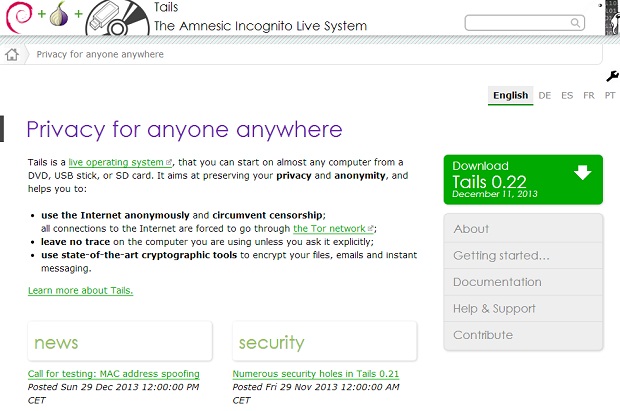
The Incognoto Amnesiac Live Operating System (TAILS) is an open-source encryption tool that can help protect the free online communication of journalists and sources in any country, regardless of official limits on free expression.
Tails was developed by a global network of individuals, working in international obscurity, united in their dedication to protecting the security of computer users. This is a vital service to journalists and activists working in the NSA era and closed societies, where authorities rely heavily on censorship and tracking of online activity to clamp down on dissent.
Tails is an operating system, much like Windows and Mac OS, and can be used by anyone, anywhere, without having to have substantial technical knowledge. A member of the anonymous group behind the creation of Tails spoke with Alice Kirkland about their nomination and why online security is not just a requirement for journalists and hackers.
Index: How does it feel to be nominated for the Index on Censorship digital activism award and why do you think Tails was nominated?
Tails: It is an honour to be on the list of nominees. Especially after all that happened this year! We find it interesting to see a free software project in such a list. I think Tails was nominated because we are the safest operating system available for online anonymity and digital activists. This was even acknowledged by the NSA itself.
Index: What is the importance of internet security and how has this changed over recent months?
Tails: The fact is that in our modern world our communications are inevitably more and more mediated by digital technologies. On the other hand, the characteristics of digital communications as well as the way the internet is built create a very interesting challenge: it is relatively easy to spy on people on the internet, but it is also relatively easy to defeat this spying by using the right techniques.
I don’t think that the nature or the role of internet security changed over the recent months. The recent Snowden revelations only confirm the assumptions on which our work is based. What really changed is the public awareness regarding those issues. It is now hard to deny that internet security has to do with politics and not only with technology.
Index: Do you think journalists should have access to different online security options than the general public?
Tails: I don’t think so. We all need efficient tools to protect our communications online whether you are a journalist, an activist, a hacker, or a layperson. Recent events, from the Snowden revelations to the Arab Spring, proved that the boundaries between those roles are actually being challenged by the way people use the internet.
Furthermore, from a more technical point of view, anonymity tools like Tor need a wide range of users in order to protect the anonymity of every one of them. Tor is being used equally by dissident bloggers, privacy concerned citizens, whistleblowers, businesses, victims of intimate partner abuse, and even military and law enforcement agencies.
Anonymity loves company.
Index: What was the thought process behind Tails and how has the software evolved over time?
Tails: The first version of Tails announced on our website dates back from June 23, 2009. Our vision was to create a toolbox for computer security that would be easy to use and hard to misuse. The challenge was to combine very good security by default while being accessible to a large public.
Since then, we released 34 versions of Tails and we have been really successful. In 2013, our approximate number of users was multiplied by 2.5. Today, someone is starting Tails every 10 seconds somewhere in the world.
Just to give an example, all connections to the internet are forced to go through the Tor network without having to configure anything. I think that we share the same target audience as the people who are using the Tor network.
The main function of tails is to hide the location of internet users.
Index: What other features does Tails have for its users?
Tails: For us online anonymity is only one of the major aspects of Tails:
– Online anonymity. All connections to the Internet are forced to go through Tor or I2P, which is the second anonymity network available in Tails.
– Amnesia. Tails runs from a DVD or USB stick and by default leaves no trace on the computer that you are using. This allows you to use Tails almost anywhere and also prevents you from leaving traces of sensitive data on computers.
– Cryptography toolbox. Tails provides a selection of state-of-the-art cryptographic tools to encrypt your files, emails and instant messaging, selected for their security features and ease of use.
Index: What role does freedom of expression have to play in the debate surrounding online privacy and where do you see the future of this?
Tails: Tools such as Tails or Tor relate to both online privacy (private communications), and freedom of expression (opinions expressed publicly). For example, Tails can be vital to both an activist writing a dissident blog, and a victim of intimate partner abuse communicating with her lawyer. In this case, the actual technology used to protect both freedom of expression and privacy on the internet is the same.
Still, the recent leaks proved that freedom of expression is a central mechanism in bringing those issues to the public debate and making clear they are political issues, and not merely technical issues.
Index: Online privacy and the NSA received a lot of media coverage over the past year. Would Tails have come about if it wasn’t for the likes of WikiLeaks & Edward Snowden?
Tails: As our record of releases proves, Tails existed before the NSA leaks, and even before the major WikiLeaks releases in 2010. I think that in this recent history, the tools and the way they are being used have a symbiotic relationship. Recent whistleblowers probably used online security tools such as Tor and Tails. In turn, the consequent media coverage and public interest provides us with a social context that is positive for the further development of our tools.
Nominees: Advocacy | Arts | Digital Activism | Journalism
Join us 20 March 2014 at the Barbican Centre for the Freedom of Expression Awards
This article was posted on March 17, 2014 at indexoncensorship.org
17 Mar 2014 | Egypt, Middle East and North Africa, News
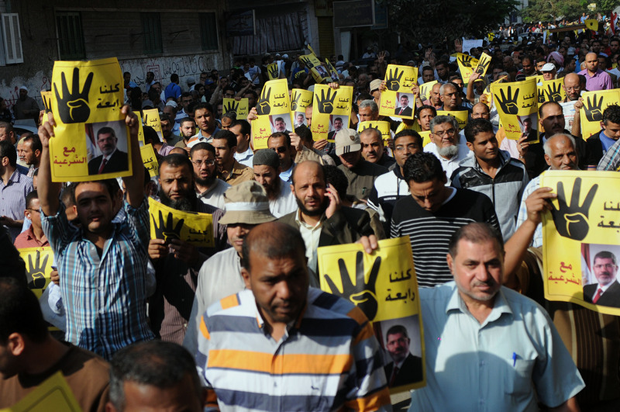
Supporters of the Muslim Brotherhood and Egypt’s ousted President Mohammed Morsi (Image: Nameer Galal/Demotix)
Amid deep polarisation and a widening crackdown on dissent in Egypt, the country’s military-backed authorities have now taken their conflict with the outlawed Muslim Brotherhood to a new front — houses of worship.
Egypt’s mosques have become the new battleground in the country’s political standoff, with the authorities recently introducing a set of measures to control religious discourse and silence pro-Muslim Brotherhood clerics they accuse of “mobilising anti-military protests and inciting violence”.
The latest measures include forbidding prayers in small mosques that are not under state control, and restricting sermons to graduates of Al Azhar University — Sunni Islam’s most prestigious institution. In recent months, no fewer than 55,000 imams lacking such credentials, have been dismissed from their jobs.
Ministry of Religious Endowments officials defend the move, insisting it is “necessary to stop lay preachers from exploiting the pulpits to advance their political interests”. For decades, the country’s mosques and universities have been fertile ground for enrolment of Muslim Brotherhood recruits and the spread of the Islamist group’s ideology. The Muslim Brotherhood , which rose to power following former president Hosni Mubarak’s ouster in February 2011, was designated a terrorist organisation by authorities in December.
In another controversial move tightening the state’s grip on mosques across the country, the Ministry of Religious Endowments has unified the theme of the weekly mosque sermons preceding Friday noon prayers. Previously, Egypt’s imams or preachers were free to choose the topic of their weekly sermons but it is now the ministry that decides what the imams should preach to the millions of worshippers attending Friday prayers.
Since the measure came into effect on 31 January, the ministry has announced a different theme each week on its official website, addressing topics that affect the daily lives of millions of Egyptians. In recent weeks, preachers have tackled a broad range of issues including developing squatter areas, environmental pollution and the role of youth in the society. The ministry has also been handing out guidelines to preachers at mosques under its control, warning that violators “will face dismissal and prosecution”.
Despite the warnings, some preachers remain defiant, refusing to comply with the instruction. They say they are the ones who should decide what to tell their followers.
“I will not be dictated by the state,” said Khalaf Massoud who preaches at the Montazah Mosque in the working class neighbourhood of Imbaba, adding that his duty is to “obey God” not “those in power”.
Other preachers have also denounced the measure as “a restrictive procedure that stifles free speech and religious freedoms”. But not all preachers are against the measure and some have even welcomed it, perceiving it as necessary for unifying the country and defusing current political tensions.
In an interview broadcast on CCTV on Friday, Imam Yasser Khattab who preaches in several mosques, said: ” The Muslim Brotherhood manipulated people and spread Islamist fundamentalism through their mosques. They incited hatred and divided the society in the last three years. There should be a stand.”
Since the toppling of Muslim Brotherhood President Mohamed Morsi by military-backed protests in July, clashes sparked by heated debate between Muslim Brotherhood supporters and opponents have frequently occurred in and around mosques after Friday noon prayers.
With a limited number of monitors to supervise the religious discourse, it is difficult for the ministry to keep track of rebel preachers refusing to abide by the new rule. Last week, four imams were summoned for interrogation at the ministry after they had allegedly called for anti-government protests during their sermons. The risk of criminal prosecution however, has failed to deter preachers like Massoud who vows to continue “to criticise any wrongdoings as people turn to me for religious guidance”.
The latest move by Egypt’s Ministry of Religious Endowments is part of the widening crackdown on Islamists and comes hot on the heels of other repressive measures taken by the authorities to curb dissent. Since the ouster of Islamist President Mohamed Morsi, the regime that replaced him has closed down TV channels and publications with links to the Muslim Brotherhood. It has also arrested and detained thousands of the group’s supporters while security forces have killed at least 1,400 Brotherhood loyalists. But with inadequate funding and insufficient manpower, it will be a daunting task for the ministry to exercise control over the country’s estimated 130,000 mosques — 10,000 of which are already independent of the state. Skeptics say it may be an impossible feat to undertake as the ministry’s resources are already stretched thin.
This article was posted on March 17, 2014 at indexoncensorship.org
17 Mar 2014 | News, Religion and Culture, Young Writers / Artists Programme
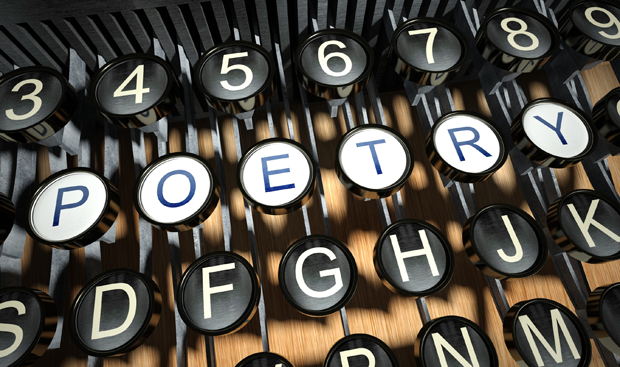
A few weeks ago, 13,000 writers swarmed Seattle for the annual Association of Writers and Writing Programs conference. In the seaport city known for its ideal reading (and writing) weather — and home to poet Maged Zaher — writers filled hotel rooms and bars. On official panels they debated the state of contemporary literature, and at offsite readings and parties, they celebrated the written word.
The song of the nightingale / Is not up for sale
Ziba Karbassi, Gravequake
On the other side of the hemisphere, Ziba Karbassi doesn’t need to attend a conference to know what contemporary literature looks like. Born in 1974 in Tabriz, Iran, this rising star of Persian poetry, who also writes in her first language of Azeri Turkish, has been living in exile in London since leaving her country in 1989. Karbassi has published eight books of poetry in Persian, and with Stephen Watts, she has translated much of her work into English.
Taken from an incident close to the author’s family in the 1980s, her poem “Death by Stoning” depicts a young pregnant woman taken to prison, tortured, and stoned to death:
I am not a scaffold to be toppled
not a felled tree to be sunk in the flood
I am only a bag of bones and skin
smashed about
The heavy consonants in the nouns and adjectives and the scattered form of the poem demonstrate the mother-to-be’s “anguished, loving, and crazed” state of mind. “Death by Stoning” shows how poetry can give us a view into worlds distant from — but not entirely unlike — our own. Poetry can also play a part in shaping our world.
After the US invasion of Iraq by the Bush administration in 2003, over 13,000 poets rallied in the global movement Poets Against the War. During Occupy Wall Street in the autumn of 2011, poets from around the world contributed to the People’s Library in Zuccotti Park to form a living, breathing, inclusive anthology of the moment. At Occupy Oakland’s Port Shutdown on 2 November, 2011, there was a strong poets’ contingent, and when protestors in Cairo marched on Tahrir Square in solidarity with Occupy Oakland, the meme “Don’t Afraid” from one protestor’s sign quickly became a poetic rallying cry for Oaklanders.
But for artists as for whistleblowers — especially those working against repression, colonialism, and the destruction of the environment by big business — exercising free speech, online or off, can still lead to worst-case scenarios of exile, as in Karbassi’s case, and execution, as friends, relatives, and fans of Arab-Iranian poet Hashem Shaabani can attest to.
What! Graveyard? Fear? Are you kidding? You’re kidding, right?
Gravequake
Karbassi, however, is not afraid of expressing herself, and poets continue to organise, as manifested at the Revolution and/or Poetry conference in the San Francisco Bay Area in October 2013.
Our poetry is not exactly our politics, and our politics are not necessarily our poetry, but the line between them is blurry and easily crossed. Poetry remains a relatively free space: there are plenty of freely accessible journals on the internet; house and salon-style readings are growing in and around urban centres; anyone could submit to the Occupy Wall Street anthology, and all submitted poems were accepted. The art form remains a hopeful space for full participation in cultural and everyday life, whether we gather at conferences or in the streets — or both.
This article was posted on March 17, 2014 at indexoncensorship.org
