5 Mar 2014 | Europe and Central Asia, News, United Kingdom
(Image: LEGOLAND Windsor Resort)
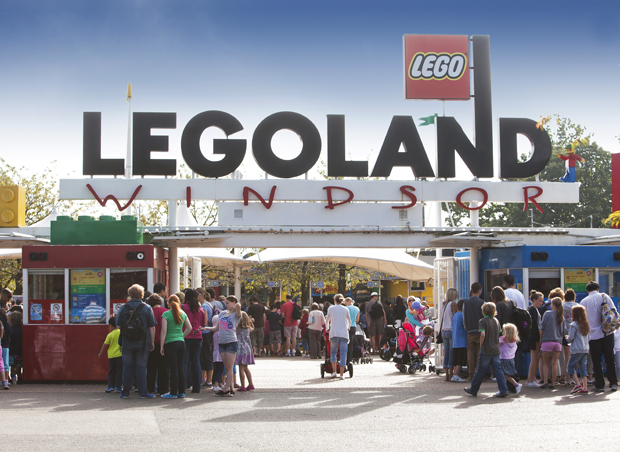
A day out for Muslim families at the childrens’ theme park Legoland in Windsor was cancelled last week after multiple threats were received from far-right groups. The Daily Mail was labelled “hateful” by Muslim organisations for its coverage of the episode.
According to press reports members from the English Defence League and a splinter group known as Casuals United had both threatened to protest at the day-out, which was organised by the Muslim Research and Development Foundation (MRDF), and had sent threatening letters to MRDF offices as well as staff at Legoland.
A spokesperson for MRDF told Index: “They terrorised staff at Legoland, staff at MRDF and aimed to terrorise children and families on the day of the event.” He added: “Several articles in the national press helped fuel further hatred and resentment.”
The event, which was due to go ahead on 9 March, was cancelled after Legoland and MRDF consulted with the local police. “The owners of Legoland made the decision to cancel the event in consultation with the MRDF”, a police spokesperson told Index
The police are known to be investigating several malicious messages sent by members of the EDL and Casuals United in the run-up to the cancellation. “Thames Valley Police can confirm it is investigating reports of offences committed under the Malicious Communications Act (1988),” said the spokesperson. They confirmed that the investigation related to several social media messages sent in the days leading up to the cancellation.
It is understood from sources at Legoland that the Anti-Fascist League, who had planned a counter-demonstration against the EDL and Casuals United, was also considered a threat to the peaceful day out.
Fierce criticism has been levelled at trustee and chairman of the MRDF, Haitham al-Haddad, an Islamist preacher, over allegations of being anti-Semitic, homophobic and in favour of female genital mutilation. Al-Haddad describes himself as a Muslim community leader and television presenter, of Palestinian origin. He sits on the boards of advisors for several Islamic organisations in the United Kingdom, including the Islamic Sharia Council. He is the chair and operations advisor, and a trustee, for the Muslim Research and Development Foundation. Al-Haddad, who is outspoken in his criticism of British foreign policy, has been banned from speaking at a number of British universities because of his alleged views.
The MRDF, based in East London, undertakes research and publishing programmes, corporate retreats and development programmes, organises conferences, seminars and lecture tours and analysis of news, information and media material.
Grassroots far-right group the English Defence League had planned to hold protests outside the theme park if the day went ahead. In a press release on their website, they described al-Hatham as a “known hate preacher,” who “thinks Jews and gays should be killed, Israel destroyed, unbelievers converted or killed, women beaten into house slaves…and Osama Bin Laden should be held in high esteem.”
A spokesperson from Legoland told Index: “This was about lots of families having a day out. The park is closed from November to March and we open for private events. This one had no alcohol and halal food available, alongside non-halal. Other than that it was a normal event.” The spokesperson also added: “Anyone was able to buy these tickets – it was not a Muslim-only day.”
Legoland said 9000 tickets were available but it was unclear how many had been sold at the time the event was cancelled. Their spokesperson also confirmed that MRDF had paid a fee to hire the park exclusively. MRDF was responsible for selling tickets to their own members.
In a separate statement released on their website, Legoland made clear that they believed the far-right groups should be blamed for the event cancellation: “Sadly it is our belief that deliberate misinformation fuelled by a small group with a clear agenda was designed expressly to achieve this outcome.” The statement added: “We are appalled at what has occurred, and at the fact that the real losers in this are the many families and children who were looking forward to an enjoyable day out at LEGOLAND.”
The Daily Mail has also been slammed in an open letter to their editor, Paul Dacre, over “hateful” coverage of the events leading up to the cancellation.
In a piece written by columnist Richard Littlejohn on Tuesday 18 February, titled “Jolly jihadi boys’ outing to Legoland”, Muslim groups say the paper “deployed hateful Muslim stereotypes” and “used slurs commonly found in racist and far-right websites.”
The article referenced a coach that would be “packed with explosives” and that might “blow up” after stopping in Parliament Square. At Legoland, guests would be “reminded that music and dancing are punishable by death”. Later, girls would be expected “to report to the Kingdom of the Pharaohs for full FGM inspection” while boys would “report to the Al-Aqsa recruiting tent outside the Land of the Vikings for onward transportation to Syria.”
The letter of complaint was published by the Muslim Council of Britain, and co-signed by more than twenty five other Muslim organisations.
This article was posted on March 5, 2014 at indexoncensorship.org
4 Mar 2014 | Events

(Illustration: Shutterstock)
Join Index on Censorship for a Google Hangout on how to protect yourself from mass surveillance, and what you can do to demand the right to privacy from your government.
On the panel, we have Jim Killock, Executive Director at Open Rights Group, Mike Rispoli, Communications Manager at Privacy International, and Mike Harris, Campaign Director for Don’t Spy On Us.
The event takes place on Friday 7 March at 4pm GMT. Follow the Hangout On Air here, and have your say on social media with the hashtag #DontSpyOnUS.
4 Mar 2014 | News, Religion and Culture, United Kingdom
(Image: AustralianMessi/YouTube)
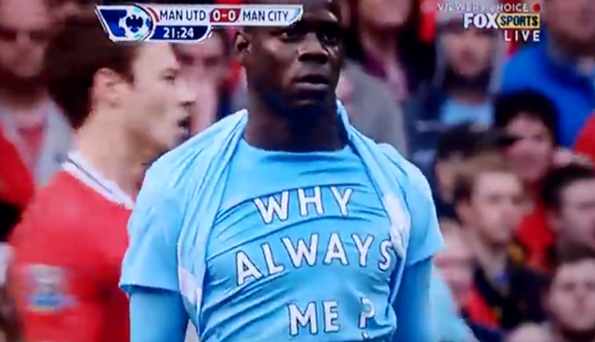
To footballers who have been thinking of doing your own version of “Why always me?” — now’s your time. Because in a few months, lifting up your kits to display a message on your undershirt will be banned. “From now on there can be no slogan or image whatsoever on undergarments even good-natured ones,” FIFA secretary general Jerome Valcke said after a meeting of the International FA Board.
IFAB — football’s law-making body — is made up of the four British football associations, who each have one vote, and FIFA, who has four. Any decision must be backed by 6 votes, so no rule-change can be made without FIFA’s approval. “The idea is to get some consistency. The simplest rule for the image of the game is to start from the basis that slogans will not be allowed,” said FA general secretary Alex Horne. Violators will face disciplinary action.
Now, I can only imagine your heartbreak over the trampled rights of millionaire footballers, but hear me out. Let’s put aside, for one moment, the notion that this rule-change was even needed. In the grand scheme of things, shirt messages are a fairly rare occurrence — truly controversial ones, even less so. It is not a problem (if we can even call it that) which is difficult to deal with on a case-by-case basis. A new blanket ban is, in my humble opinion, unnecessary.
Let’s even ignore that this represents another step towards stripping people in the public eye of personality or individuality, lest they should disappoint and alienate fans and sponsors by actually expressing an opinion. Footballers haven’t tended to use undershirt messages to wade into complex, geopolitical issues. Mainly they use the platform available to them to pay homage to friends, family and heroes or display inoffensive religious beliefs — like so many of the rest of us do (celebrities, they’re just like us!). And again, on the off-chance someone displays something truly unacceptable, deal with that on a case-by-case basis.
No, the issue at the heart of this, I believe, is the tireless pursuit of the FIFA’s and the IOC’s of this world to avoid anything resembling controversy. The tiniest chance of something unplanned happening to annoy Coca Cola and McDonald’s? Better put a stop to it now, just to be on the safe side! Then there is the argument of keeping sports and politics separate, which I can understand, to an extent. A blanket ban might seem like a nice and simple option. Jonathan Ford, chief executive of the Football Association of Wales, said as much, commenting after the IFAB decision that “it was easier for us to say it has no place in the game.”
As much as some might want to see the two kept apart, it simply isn’t going to happen. Sport is frequently used as a battleground of sorts in political conflicts — to suggest anything else is absurd. Sometimes athletes do take on a more overt role, but more often the mere participation (or non-participation) in a competition, or the result on the pitch, can carry a political message in itself.
The new rule will come into place in June, conveniently just in time for a World Cup that has turned into hugely politicised event. You’d forgive me for seeing this in the context of the Brazilian government’s many recent measures to suppress the large-scale anti-World Cup protests that hit their peak during last summer’s Confederation Cup, and have been ongoing ever since. These range from banning masks during protests, to banning “promoting ‘tumult’ within 5 km of a sporting event.” FIFA’s director of security recently spoke out in support of the Brazilian authorities.
Neymar, a star of the Brazilian national team, on the other hand, has expressed his support for the protests. What if, after scoring the hypothetical winning goal of a hypothetical World Cup final, he should lift his shirt to reveal another uncontroversial, yet powerful message of support? What then? Could it maybe have a galvanising effect on the people, turning the celebrations into the most powerful protest yet? Would this make it impossible for the world to ignore the legitimate grievances of the Brazilian people, and FIFA’s role in them?
No, we can’t have that. Let’s just ban the controversy before it happens. It’s easier that way.
This article was posted on March 4, 2014 at indexoncensorship.org
4 Mar 2014 | Americas, Awards, News, United States
Glenn Greenwald had previously blogged on surveillance and civil liberties for Salon and the Guardian, attracting thousands of followers with his dogged writing. Laura Poitras’s background is in documentary making, having made highly acclaimed films about Iraqis living during the US military occupation and The Oath, a film about Yemenis caught up in the War on Terror.
A lawyer by training, Greenwald built a strong reputation for detailed, forensic articles. According to the Guardian, an article by Greenwald about Poitras’s work and fears over targeting by the government was what convinced Edward Snowden to approach him with his cache of NSA files in late 2012.
Working with a range of outlets, from the Guardian to Brazil’s O Globo, Greenwald published a range of stories on the workings of the National Security Agency’s surveillance. Germany-based Poitras collaborated with Der Spiegel amongst others, generating huge debate in that country.
In August 2013, Greenwald’s partner David Miranda was detained at Heathrow Airport under terrorism legislation and had documents he had received from Poitras confiscated by UK authorities.
Interviewed by Esquire magazine, Greenwald explained why he felt it was important to uncover mass surveillance: “ultimately the reason privacy is so vital is it’s the realm in which we can do all the things that are valuable as human beings. It’s the place that uniquely enables us to explore limits, to test boundaries, to engage in novel and creative ways of thinking and being”
Nominees: Advocacy | Arts | Digital Activism | Journalism
Join us 20 March 2014 at the Barbican Centre for the Freedom of Expression Awards
This article was posted on March 4, 2014 at indexoncensorship.org

