27 Mar 2014 | Digital Freedom, News
Frank La Rue, UN Special Rapporteur on the promotion and protection of the right to freedom of opinion and expression, was interviewed by Index on Censorship’s CEO Kirsty Hughes, on his experience surrounding digital freedom while in office. Watch the Google Hangout below.
26 Mar 2014 | Campaigns
The decision by the UK government to pursue stiffer penalties for grossly offensive communications is a danger to the right to free speech.
Kirsty Hughes, CEO of Index on Censorship, said:
“Index is deeply concerned at the government’s apparent intention to deepen the criminal penalties for grossly offensive communications sent through the internet or social media. Just last year, the then Director of Public Prosecutions Keir Starmer put out a very sensible set of guidelines to limit the number of arrests for social media posts that may be offensive to some but did not constitute a criminal offence. Now we are going backwards. Offence is a subjective concept and if we want to live in a society without offence we will live in a society without free speech.”
Those who participate in cyber bullying and online stalking could face jail time of up to two years after the government showed support for tougher laws on the issue. Those who bombard recipients with explicit text messages also make the list. In fact, according to Justice Secretary Chris Grayling, who spoke with the Evening Standard, the new rules will target any offenders who make victims’ lives a misery by abusing or sexually harassing them online or via mobile devices.
The proposed laws, which would also give prosecutors more time to build their cases against trolls, is a result of Ealing’s MP Angie Bray, who rose the case in parliament of a 14-year old constituent who suffered an onslaught of ‘verbal rape’ via 2,000 text messages over an 18 month period.
26 Mar 2014 | Africa, News, Uganda
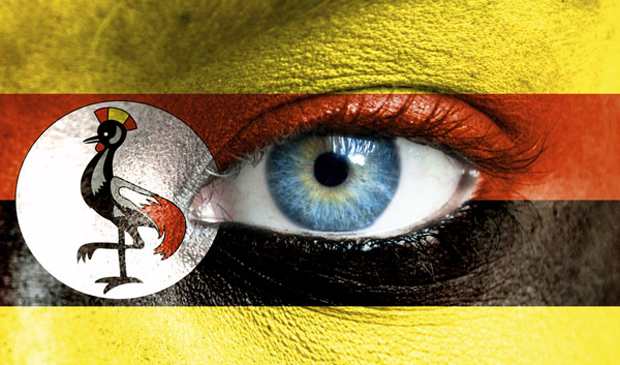
(Photo illustration: Shutterstock)
Under a new set of strict media regulations, all Ugandan broadcasting houses will be required make at least one hour a week fully available for government agents, ministries and other state entities to explain government programs and policies to the public. This will take place on a day chosen by the government, during prime time — defined as anytime between 6am and 10am, or 6pm and 10pm — when listenership and viewership is at its highest.
Authorities from relevant ministries will determine the topic to be discussed, and will also determine the content and questions to be asked by moderators. The government time be will strictly in the form of talk shows, and not just news items. The stations will be obliged to advertise the program three days in advance at their own cost.
The new rules also require radio stations to use live feeds from national broadcaster UBC to give live coverage to national events and the president’s state of the nation address, as well as his speeches on the budget, and Independence and Women’s day. Government officials will also be charged for neglect of duty if they fail to appear on radio or TV to defend government programs. Simon Mayende, the director for information at the Office of the Prime Minister, revealed that the guidelines will be reviewed every six months and that “depending on the circumstances we can relax on them or make them more stringent”.
Mayende presented these new guidelines to the members of the National Association of Broadcasters. “These are rules we have had enough consultations about and have been agreed upon between us and broadcasters and other stakeholders. We have had consultative meetings from across the country,” he said, adding that they don’t expect any of the country’s 250 radio stations or any of its TV stations to disregard the regulations.
Minister for Information Rosemary Namayanja labelled it a good deal because it will help radio and TV meet the Uganda Communications Commission (UCC) requirement to devote 70% of airtime to local content. UCC boss Godfrey Mutabazi said this is nothing new, as even international outlets like CNN and Sky News often find themselves required by the government to devote prime airtime to covering government and national interest stories.
However, civil society and other activists have criticised the move. Executive Director of African Centre for Media Excellence (ACME) Dr Peter Mwesige said that this is total abuse by the government: “Government already has its state media outlets which they have failed to manage optimally, and they are now invading private stations.”
This comes at a time when Minister for the Presidency Frank Tumwebaze, is drafting a Patriotism Bill that will make it mandatory for all Ugandans to love and defend their country. The new broadcasting guidelines are in line with the proposed bill.
This article was published on March 26, 2014 at indexoncensorship.org
26 Mar 2014 | India, News
Step back to 23 February. In Delhi, the caretaker of Siddharth Varadarajan’s house was roughed up by goons who left a chilling threat. “Ask your employer to hold his tongue on television,” they thundered. Professor Nandini Sundar, Varadarajan’s wife, wasn’t spared either. A threat was left for her, because she had taken a state government to court for its use of militia against its own citizens.
“Where we needed investigations, we made announcements,” lamented veteran Indian journalist P. Sainath. His stinging rebuke was against the mainstream media’s deafening silence in the face of one of the worst agrarian crisis India had faced, back in 2008. In light of this code of silence, the reasons for the incident of 23 February become clear. Compare the Indian media’s coverage of that incident with the blitzkrieg of apoplexy which greeted Aam Aadmi Party chief Arvind Kejriwal’s threat to jail journalists whom he considered to be corrupt (sold out to the Bharatiya Janata Party (BJP) – against whom he has launched an all-out war), and things fall into perspective. In case of the former, there were the usual noises and clichéd responses– condemning growing intolerance, bemoaning the rapidly shrinking space of freedom of expression, so on and so forth. The latter — Kejriwal’s threat — was greeted with a vehemence and unanimity rarely seen in the Indian media.
Both Varadarajan, former editor of The Hindu, one of India’s most respected newspapers, and Professor Sundar, sociologist, academician and civil liberties activist, have earned a considerable degree of notoriety and opprobrium, which only seem to be increasing of late. The choicest invectives are reserved for them, especially for Varadarajan. Anti-national, traitors, and shameless espousers of terrorism — the list goes on. The reason? They have been trenchant critics of the aforementioned “announcement”, as well as of proclamations of innocence by the government of Chhattisgarh state, and by the BJP’s prime ministerial candidate and his humongous band of acolytes.
Chhattisgarh, a state in central India, has been the hotbed of insurgency, the causes of which are too many and complex to be addressed here. However, the BJP-ruled government had a novel solution — raise a band of state-sponsored militia, arm them to the teeth, grant them carte blanche powers to kill, rape, maim, plunder, and unleash them on the insurgents. Sundar has been a vocal critic of such “atrocious” “counter-insurgency measures” and in 2011, acting upon her petition, India’s Supreme Court outlawed the government’s policy. The court did not mince words in its censure of a government killing its own citizens in cold blood. The government has not taken too kindly to such strictures — while continuing to subvert the court’s order, it has also accused Sundar of complicity with the insurgents.
Varadarajan stands accused of and vilified for more egregious lying. He has demonstrated the temerity to tirelessly challenge one of the most vociferous of “announcements” — that Narendra Modi has been granted a “clean chit”, meaning exoneration from a civil or criminal charge, over his role in the bloodcurdling pogrom against Muslims in Gujarat 2002. Modi’s piece de resistance of exculpatory evidence is the report of an investigation team which declared that he had no role to play in either instigating the riots, or as Chief Minister of Gujarat, directing the police and administration under his watch to go for the kill.
Varadarajan has, with staggering perseverance, been taking a sledgehammer to this impunity. Be it blowing holes in the official reason being touted, editing a collection of essays nailing the official lies, speaking about the manufacturing of “truth” and consent by a craven media, speaking up for a scrupulously researched book which exposes the investigation and “clean chit” as travesty, or adhering to his journalistic principles and refusing to kowtow to the “Modi wave” — he has left no stone unturned. And paid for it, too. In fact, one of the reasons for his resignation from as venerated a paper as The Hindu was his staunch refusal to act as a megaphone for Modi’s propaganda.
Dissent and accountability are anathema to Modi. Especially if they threaten to rip apart his assiduously crafted and forcefully propagated image of exemplary governance, and of course, his squeaky clean hands in so far as the 2002 pogrom was concerned. A 2003 documentary was banned by censors (led by a Gujarat BJP politician) because “it shows the government and police in a bad light”. Journalist Manoj Shinde had to pay with jail time on charges of sedition for mustering the audacity to criticise Modi’s handling of massive floods in 2006. And only three days ago, the police in Gujarat’s capital Ahmedabad ensured that a documentary challenging the “Modi-fied truth” did not get to be screened.
This article was published on 26 March 2014 at indexoncensorship.org
