15 Jan 2015 | Europe and Central Asia, France, News
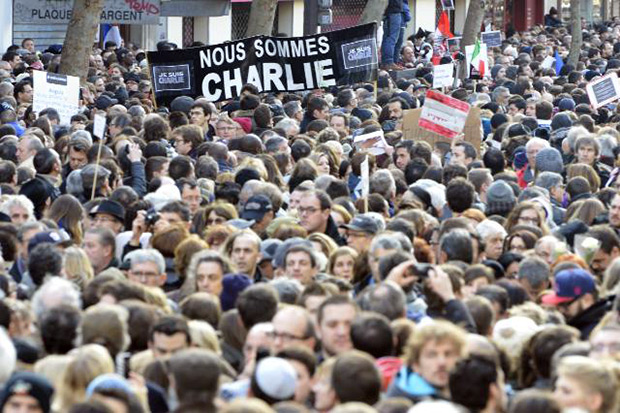
People marched in Paris to show their unity. Photo: European Council President / Flickr
There can be few more insulting coinages than the tedious phrase “moderate Muslim”. What does it mean? Who does it benefit? In the past week, since the atrocities in Paris, we have heard it often: “moderate” Muslims must condemn terrorism. Or, alternatively, the images of Mohammed printed by Charlie Hebdo (and others in solidarity) were alienating “moderate Muslims”: “free speech fundamentalists” must reach accommodation with “moderate Muslims”.
The suggested dichotomy — that one cannot believe in free speech and in Allah, is a dangerous one. More dangerous still is the underlying implication that the “moderate Muslim” is less of a believer than the Muslims who murder, supposedly in the name of God.
It is now eight days since a murderous gang set about killing cartoonists because they had blasphemed and Jews because they were Jews. The gang was composed of men who were Muslims (it is disingenuous, as British Culture Secretary Sajid Javid pointed out, to suggest that these people were not really motivated by Islam, unless you are willing to put yourself forward as the ultimate authority on what is and isn’t Islamic).
Since then, we have gone from revulsion at the acts of the killers to an obsessive focus on the actions of their victims (or at least their victims at Charlie Hebdo: there is relatively little discussion of the slain shoppers in the kosher supermarket).
The function of all this, unwittingly perhaps, is to reinforce a power dynamic. This is about “us” and what “we” did to “them”. “Us”, roughly, being liberal democracy: “them” being European Muslims who somehow, “we” have decided, are something outside.
Worse, we have decided that there is a continuum of “Muslim anger”, at the end of which is inevitable violence. This is to imagine a homogenous bloc of believers, and to ignore the sectarian and political struggles that exist within Islam. By ignoring these struggles, we in fact junk normal Muslims (enough of the “moderate”) in with those for whom the faith is a political project and even an imperial war with the intention of “restoring the Caliphate”.
Meanwhile, “we” have the comfort of decrying our own hypocrisy.
Crying “hypocrite” is enjoyable; indeed, it’s an essential part of how the British press, and British political and social advocacy, works. Beloved satirical institutions thrive on pointing out double standards.
But tempting though this tack is, it is not an argument in itself: yes, the French state is hypocritical on free speech, lauding Charlie while arresting racist comedian Dieudonné for a Facebook post, and announcing a “crackdown” on hate speech. Of course it is rich for world leaders to march for “free speech” when practically every single government you can think of has mechanisms for censoring its citizens in one way or another. But then what? Does that somehow mitigate the horror? Does that mean we shouldn’t stand for free speech? Does that mean, even, that censorship is OK because everyone does a little bit of it?
What is achieved by this is a focus back on our own ability to control things that seem beyond us. These attacks will stop, we imagine, when we find a way to avert them. The murderous ideology motivating these attacks was created by “us”, through, say, “our” support for the 80s jihad against the Soviet occupation in Afghanistan (as Christopher Hitchens pointed out in his 2001 article Against Rationalisation, it was the CIA that “first connected the unstoppable Stinger missile to the infallible Koran”).
But the fact our governments did some things in the past that have come back to haunt us is, again, not a reason for inactivity or passivity on our own parts now. Rather we must deal with what is in front of us, while hoping not to make mistakes that will come back to us.
It is a good and honourable thing that so many people’s instinct, when confronted with aggression, is conciliation. But loathe though my conciliatory soul is to admit it, there is nothing I can concede that will appease the ideology that led to the carnage in France. To quote Hitchens once more, what the murderers and their co-thinkers hate are the parts of liberal democracy that are worth defending: “its emancipated women, its scientific inquiry, its separation of religion from the state.”
None of these things are perfectly achieved in any society, but they should be clung to as aspirations, and defended when needs be. Moreover, they must be maintained as universal, emancipatory values. To portion them off, or worse, to present them as a weapon of one part of society against another — “free speech fundamentalists” versus “moderate Muslims”, is to give succour to those whose only perception of a universal ideal is universal subjugation.
This article was posted on 14 January 2015 at indexoncensorship.org
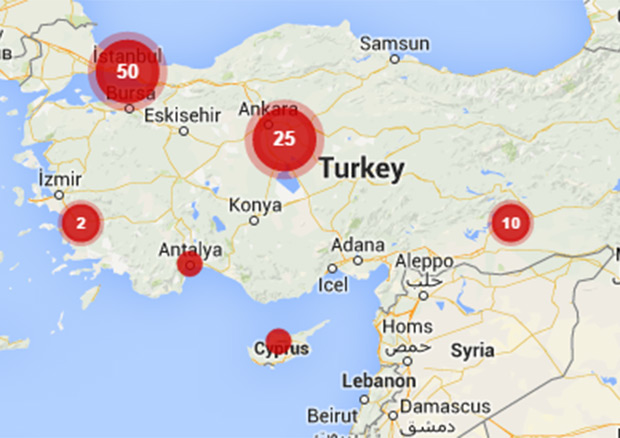
15 Jan 2015 | News, Turkey
Richard Howitt MEP is foreign affairs spokesperson for both the Labour Party and the Socialist and Democrat Group in the European Parliament and is a member of its joint parliamentary committee with the Turkish Parliament
As millions mourn the shooting of journalists in France, the European Parliament convening this week in Strasbourg today extended the fight for freedom of expression to legal threats, harassment and character assassination against free journalism in Turkey.
Indeed last weekend’s scenes reminded me of the hundreds of thousands who went on to the streets after the Turkish writer Hrant Dink was shot in 2007 and my deep regret that, despite the work of a foundation established by his widow, the situation in Turkey appears to have got worse not better in the intervening years.
A resolution voted for by MEPs was provoked by dawn police raids on newspapers and television stations in December that led to the arrest of 31 people, mainly journalists, on charges of terrorism – which carry some of the gravest sentences under the Turkish penal code.
Two of the leading journalists arrested openly admit sympathies for the US-based cleric Fethullah Gulen ,whose followers withdrew support from the country’s governing AKP party and whose so-called ‘movement’ does indeed deserve greater scrutiny.
Nevertheless reports suggest no evidence was presented of actual criminal intent against those arrested, with the crackdown fitting a pattern of legal harassment, smears and threats against those who provide political opposition to the government or who critically report on corruption allegations against it.
Our resolution also condemns the recent arrest of a Dutch journalist, demonstrating how foreign journalists are not exempt from attack.
Correspondents of The Economist, Der Spiegel and the New York Times in Turkey have all been threatened, with one CNN correspondent forced to flee the country after being accused of espionage.
Previous attempts to ban social media are also being revived in the country this week, in an apparent attempt to suppress reports Turkey’s intelligence organisation may have been implicated in the supply of arms to ISIS fighters in Syria.
As someone who is proud to call himself a friend of Turkey, and a keen proponent for the country’s accession to the EU, it is with a heavy heart I sign up to such criticisms.
However in negotiations I had to argue against opponents of the country seeking to use this latest incident to introduce wording that would have imposed immediate financial penalties against Turkey or put up new barriers in the membership negotiations.
I did so because politicians as well as journalists must not allow ourselves to be trapped in to self-censorship. On these arrests, it was our duty to speak out.
I am saddened explanations that the release of all but four of the journalists given to me and to my fellow MEPs by the Turkish representative in Strasbourg this week seemed wantonly to ignore the climate of fear and self-censorship which remains inflicted on the country’s press as a result.
It is the blatant denials that undermine trust and confidence with those of us who want to support reform efforts in the country, and which one very senior EU official told me had led to “desperation” in the telephone calls between Brussels and Ankara which followed the arrests.
Meanwhile, former prime minister Recep Tayyip Erdoğan, now elected as the country’s president, reacted characteristically by telling a news conference: “Nowhere in Europe or in other countries is there a media that is as free as the press in Turkey.”
The sober truth is that Turkey ranks 154 out of 180 in press freedom according to the Reporters Without Borders index last year.
The annual survey by the Committee to Protect Journalists, published only last month, showed Turkey amongst the top ten countries in the world for imprisoning journalists, ranking alongside Azerbaijan, Iran and China.
However, Erdogan’s protestations must be put in to a context where he also rebuffed European criticisms of the arrests saying the EU should “mind its own business”, and last week when he was prepared to partly attribute the Charlie Hebdo terrorist attack to “Western hypocrisy”.
Today’s European Parliament vote ascribes that hypocrisy instead to the government in Ankara.
I wonder whether the Turkish press will fairly report even this?
This article was posted on 15 January 2015 at indexoncensorship.org
15 Jan 2015 | Azerbaijan, Azerbaijan News, Europe and Central Asia, News
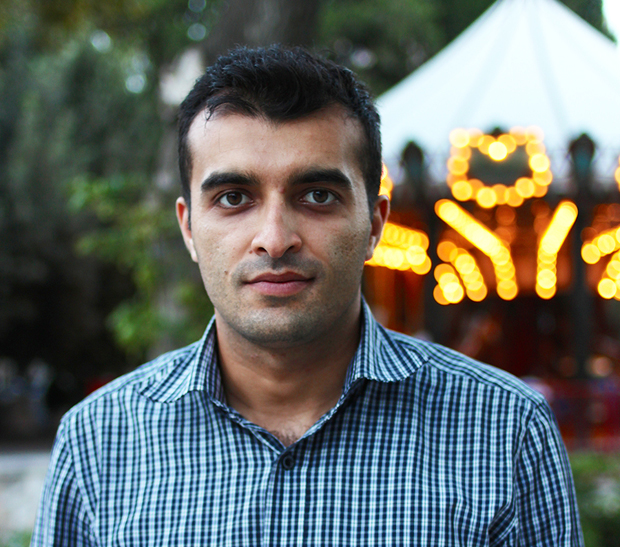
Rasul Jafarov in September 2013 (Photo: Melody Patry)
Locked in a double iron cage in a packed courtroom, Azerbaijani activist and regime critic Rasul Jafarov saw his trial open on Thursday.
Detained since 2 August, Jafarov stands accused of crimes including tax evasion, illegal entrepreneurship, abuse of office and forgery. The charges are widely believed to be trumped up and in connection to his human rights campaigning works. He could be sentenced to up to 12 years in prison.
Citing a lack of evidence of guilt, Jafarov’s lawyers requested the case be dropped, reported contact.az. They also asked, among other things, that he be allowed to sit with them. Both requests were denied.
The case against Jafarov is part of an ongoing onslaught against critical civil society by Azerbaijani authorities. Campaigners Leyla and Arif Yunus and lawyer Intigam Aliyev were all arrested around the same time as Jafarov, and remain in detention. Investigative journalist Khadija Ismayilova, who has reported on official corruption, was detained on 5 December 2014. Journalist Seymur Hazi, who has worked for Index journalism award winning Azadliq newspaper, is also in detention. There are currently more than 90 reported political prisoners in Azerbaijan.
In a recent development, authorities raided the Azerbaijan bureau of the US-funded Radio Free Europe/Radio Liberty.
Jafarov, 30, is chairman of the organisation Human Rights Club, and one of Azerbaijan’s most prominent human rights activists. When capital Baku hosted the Eurovision Song Contest in 2012, he organised the Sing for Democracy campaign to draw attention to rights abuses by President Ilham Aliyev’s government. Aliyev has been in power since 2003, succeeding his father Heydar. In 2013 he was re-elected for a third term, amid claims of voting fraud.
Jafarov was also planning on staging a Sport for Rights campaign when the inaugural European Olympics come to Baku this summer.
In August, he wrote an appeal to the international community from jail, saying that “the past 2-3 years everyone was asking half-joking, half-serious, when I was going to be arrested. It happened, and now I’m looking forward to your support!”
“As we focus on threats to free expression in countries like France in the wake of the attacks on Charlie Hebdo, it is vital that we remember the plight of the thousands of individuals worldwide facing daily harassment, threats of violence, and detention, for exercising their rights to free speak freely,” said Index CEO Jodie Ginsberg.
“Azerbaijan is one of the world’s worst countries for free speech. We call on the Azerbaijan government to release Rasul, and others detained for attempting to speak out about the country’s deplorable human rights record. We also urge other governments – who have professed so volubly in recent days their believe in the importance of free speech — to join our call for Rasul’s release.”
“The arrest of Rasul Jafarov, along with other main human rights defenders in Azerbaijan, such as Intigam Aliyev, Leyla Yunus, Anar Mammadli or journalist Khadija Ismayil, shows how the authorities handle critics: there is no space for dialogue in society but enough space for repression and imprisonment,” Florian Irminger, head of advocacy at the Human Rights House Foundation, said.
This article was posted on 15 January 2015 at indexoncensorship.org
15 Jan 2015 | Europe and Central Asia, France, News, Politics and Society, Religion and Culture, United Kingdom
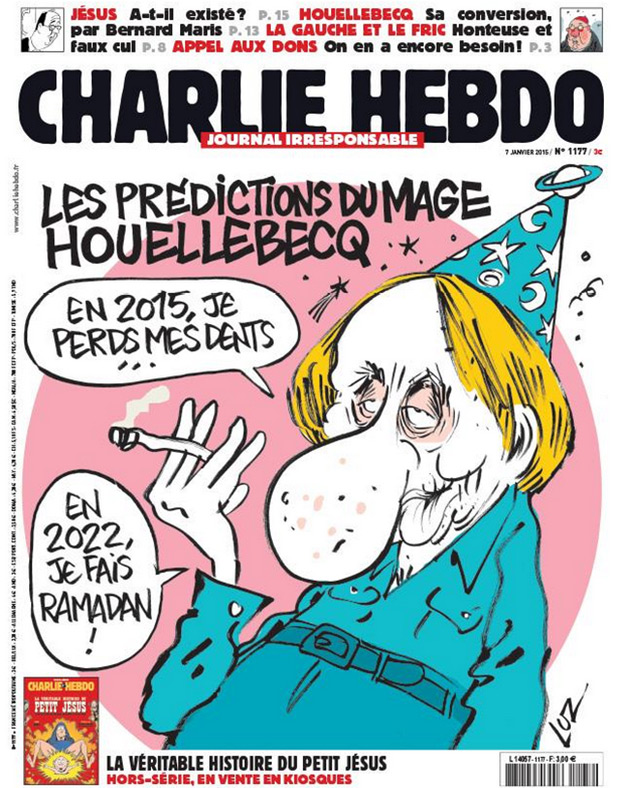
Rashid Razaq is a reporter for London Evening Standard and a playwright.
What is the solution to the Muslim Problem? Britain has tried multiculturalism; the French, a stricter enforcement of secularism. Neither has been an unequivocal success.
I’m afraid I don’t have the answer. I have only doubts and questions, whereas the terrorists have certainties and guns.
The only thing I can say with a fair amount of confidence is that the right not to be offended is a ridiculous thing. For there is no way to measure a subjective, emotional state other than to ask “Does this offend you?” in the same way you would ask “Are you tired?”, “Are you hungry?”, “Do you love me?”
One person’s silly cartoon is another person’s existential threat. Try as I might, I cannot get offended by a drawing. Maybe I’m a bad Muslim, maybe a true believer would be so mortally wounded by an image, any image, of the Prophet Mohammed that the only remedy is bloodshed. But I don’t think that’s the case. Much of the outrage is manufactured, stoked up by rabble-rousers for political purposes. Because that’s the brilliance of the right not to be offended (Irony — just to be crystal- clear): you can get offended on other people’s behalf, you can get offended about books you haven’t read, about things that may or may not exist.
Loath as I am to bring up scripture in a discussion about religion, the Islamic prohibition against making graven images of the Prophet Mohammed only really applies to Muslims. It stems from the same commandment not to worship false idols, intended to protect against idolatry.
As far as I’m aware neither Stephane Charbonnier nor any of his leading cartoonists at Charlie Hebdo was a practising Muslim. The two victims believed to be Muslims, copy-editor Mustapha Ourad and policeman Ahmed Merabet, appear to have been collateral damage rather than targets.
So, just to make the murders even more pointless, you have Muslims killing non-Muslims for not sufficiently respecting something which they don’t believe in. Irony? I’m not sure.
Not that there is any justification. It is a shabby excuse for a heinous act, convenient religious cover for something that is probably nothing more than a twisted marketing stunt for al Qaeda in Yemen, if initial accounts prove to be true. The killings were not carried out to “avenge” the Prophet’s honour. Their real intent was to remind the West: “We’re still here”.
Many lofty and true words will be written about the need to protect the freedom of expression. But the attack on Charlie Hebdo wasn’t an attack on freedom of expression. It was an attack on an easy target. A group of middle-aged, unarmed cartoonists were never going to be much of a match for battle-hardened jihadists brandishing Kalashnikovs.
Satire is scary for people who can’t live with doubt. Because satire is all about creating doubt, questioning the way things are done, challenging those in power, pushing for change. I don’t know if the killings say more about the power of satire or the weakness of the gunmen’s supposed faith.
The jihadists want us to accept their narrative, that they are brave holy warriors and not just some over-sensitive, bloodthirsty bullies. But I have my doubts. I think the terrorists continue to provoke fear because they’re afraid. Afraid that we’ll realise their brand of religion is a joke.
This article was originally posted at London Evening Standard on January 12, 2015. It is reposted here with permission.