6 Mar 2015 | Afghanistan, Asia and Pacific, mobile, News and features
Last year, authorities in the east of Afghanistan decided to shut down a cemetery. The problem was that this particular cemetery was not just a final resting place; it had taken on a second function as a marketplace where women in the city could meet and trade. With the closure, the financial lifeline the women had created for themselves, was cut. There were some protests, the story was covered in a local newspaper, and that was it.
Afghan media has experienced a significant growth spurt over the past years. In 2000, the country was home to 15 news outlets; in 2014 the figure was just shy of 1,000. Hidden within these numbers is another slowly expanding subcategory. Of around 12,000 working journalists in Afghanistan today, some 2,000–2,500 are women, up from an estimated 1,000 in 2006. The truly vital role these women play in Afghan society is too often overlooked.
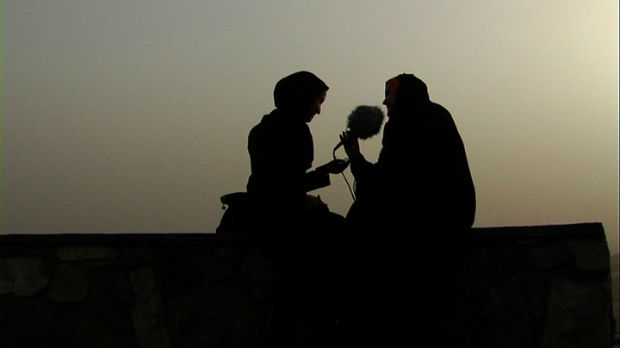
In a country where traditional cultural norms still hold significant sway, strict limitations on contact between the sexes continue to be enforced in many areas. As a result, there are spaces only female journalists have access to, grievances only female journalists can be told and important realities of women’s lives that only female journalists can report on. Where women media workers are few and far between, such stories — like in the case of the cemetery closure — go underreported, or are buried entirely.
“Covering and focusing on women’s issues is always my favourite, and when I produce programs and make reports on these issues, I really like it and think I’ve done something important,” Radio Sahar Station Manager Humaira Habib told Index. Radio Sahar is part of Parwana (butterfly), a network of radio stations dotted around Afghanistan, which focuses on stories that impact women and their rights and needs. And from the managerial to the executive level, they are all-female operations.
Habib says she made the decision to go into journalism in 2002, and was influenced by the plight of women under the Taliban. “I thought journalism was a good tool to reach to all the aims and goals, and to solve the problems and challenges of women. I think media plays a very important role in informing citizens,” she explained. “This was the reason I decided to study journalism.”
But while the long view seems to suggest the number of Habib’s female compatriots will continue to grow, serious challenges and setbacks remain the reality in the shorter term.
Part of the problem is that the same traditional norms that make female journalist’s contribution especially valuable, still present a significant barrier to many women joining the media industry. As reporter Zarghona Salihi told Radio Free Europe/Radio Liberty, journalism is widely viewed as “immoral work” that carries with it social stigma for women.
“Parents don’t permit their daughters to become journalists [in particular] because female journalists soon turn popular and that puts them in lots of troubles,” news radio host Haseena Ahmadi told Voice of America.
Another, more direct and overt challenge is the seemingly worsening security situation for media workers in general, and the particular threats faced by women. Since 2001, 49 journalists have been killed, and attacks went up 64 per cent from 2013 to 2014, according to a recent report from Human Rights Watch. What’s more, they face a multi-pronged assault — from the government and local authorities, as well as from war lords and the Taliban. Meanwhile, impunity for such crimes persists.
Women must deal with all this, and then some. “Female journalists face particularly formidable challenges. Social and cultural restrictions limit their mobility in urban as well as rural areas, and increase their vulnerability to threats and attacks, including sexual violence,” the Human Rights Watch report states. Since 2010, three female journalists have been killed, including 26-year old Palwasha Tokhi, stabbed to death outside her house in September last year. The Afghan Journalists Safety Committee says that “dozens have been intimidated to stop working”. In 2013, Shaffiqa Habibi, director of the Afghan Women Journalist Union, estimated that 300 professional female journalists had stopped working due to safety concerns.
“The big challenge that journalists face here is the security problem. That really hurts us,” agrees Habib. In 2004 she was threatened by authorities and told she could never again work as a journalist in the western province of Herat. But she fought back, and today continues to hold a senior role at a radio station in that province. As one young journalist told International Media Support: “I have been threatened by the Taliban, corrupt authorities, warlords and even the government. But none of these threats will ever stop me from what I do.”
The struggle, however, doesn’t end by challenging traditions and braving a volatile security situation. Female journalists in Afghanistan are also facing a problem familiar to women all over the world: they’re simply not getting the chances their male counterparts are. On this point, international media has failed Afghanistan’s women reporters. While Amie Ferris-Rotman was working as Reuters’ Afghanistan correspondent, she realised that none of the foreign news outlets hired Afghan female correspondents, in any capacity.
“I found this hypocritical,” she told Index. “We put out a plethora of stories on women’s rights and the awful hurdles Afghan women face, yet we did not take the extra step to hear their stories in a professional context.”
Pointing to the continued prevalence of separation between the genders, she argues that by not giving a platform to female Afghan journalists, we are missing the full story. The journalists, meanwhile, are denied good networks and professional opportunities to further their careers. To help rectify this situation, Ferris-Rotman has set up the Sahar Speaks programme, to offer training and mentoring by peers from around the world to Afghan female journalists, with the aim of helping them produce stories to be published by international outlets. As she has written about the project: “Imagine how rich and nuanced the other side of the Afghan story can be, if told by its own women, not by Afghan men or foreign reporters.”
Abdul Mujeeb Khalvatgar, the director of media freedom advocacy group Nai, which is behind the Parwana network, believes it to be very important that Afghanistan’s female reporter pool continues to grow. Certain topics, he explains, are still considered by some to be taboo for men to cover. He mentions literacy rates among women, violations against women and how women are treated both in rural and urban areas as examples of stories that “raised the need of having women journalists to report”.
Habib stresses the importance of increasing the number of female reporters outside the bigger cities, where many women’s issues that male journalists have limited access to, go uncovered. This is a “serious problem” she says, adding that “we need to train girls from those places to at least learn basic journalism to cooperate with local and national media”.
Despite the challenges, Khalvatgar, who has been nominated for an Index award for his media freedom campaigning in Afghanistan, is confident that there is enthusiasm among women to work in the sector. He points to his experience of visiting journalism schools and seeing a higher number of female than male students, as one indicator. “There are a lot of hopes and wishes among women to become journalists,” he says.
Afghanistan’s President Ashraf Ghani vowed during his 2014 election campaign to uphold freedom of expression and protect journalists against abuse. Whether he will stick to his promise down the line, so the enthusiasm Khalvatgar speaks about can truly be harnessed, remains to be seen. What is clear, is that without more women feeling encouraged and safe enough to join Habib and her colleagues in their work, important stories will continue to go untold.
This article was posted on March 6, 2015 at indexoncensorship.org
6 Mar 2015 | Awards, Germany, mobile
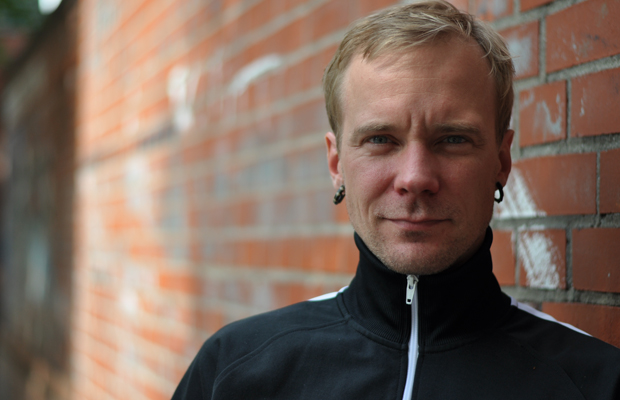
Fabian Wichmann from campaigning nominee ‘Rechts gegen Rechts’ and ZDK
Rechts gegen Rechts (Nazis against Nazis) is an initiative set up in 2014 in Wunsiedel, Germany, to peacefully counter an annual neo-Nazi march through the streets of the small town. It arranged for money to be donated to an anti-extremism charity for every metre that the marchers walked, so that the neo-Nazis were effectively marching against themselves.
The campaign was started by Zentrum Demokratische Kultur‘s Exit Germany project, which seeks to support extremists looking to exit the movement.
“For 15 years we have been fighting for funding to support Exit Germany’s programmes”, Fabian Wichmann of ZDK said. Wichmann cited funding as a key issue but also highlighted the difficulties of reintegrating former neo-Nazis.
Wunsiedel was the burial place of Hitler’s deputy Rudolf Hess, prompting far-right pilgrimages on every anniversary of Hess’s death since he committed suicide on 15 November 1987. Despite opposition from the townspeople, the marchers returned every year, even after Hess’s bones were exhumed and cremated on his family’s request.
Throughout Germany, far-right marches often lead to violent clashes with leftist groups – for example, 700 right- and left-wing extremists were arrested after a 2012 march in Hamburg. The government’s attempts to block far-right groups from marching – as happened in Wunsiedel in 2005 – have been criticised as being restrictive of free speech.
The Rechts gegen Rechts campaign organisers proposed a new approach, which was both non-violent and accommodating of the marchers’ rights to free expression. Using funds donated by local residents and businesses, it sponsored the neo-Nazi marchers €10 for every metre that they walked. The total sum of €10,000 – plus money raised during the march – was given to Exit Germany, a charity which rehabilitates neo-Nazi defectors.
The demonstrators were oblivious to the fundraiser until they began the march, in which they stepped across painted messages in the road which told them how much money they had raised so far. Motivational banners were also placed along the route. One played on the Hitler Youth motto, reading: “Swift as a greyhound, tough as leather, and generous as never before”.
In an imitation of conventional walkathons, a banana stall offered nutrition to the 300 marchers under a banner reading ‘Mein Mampf’ (‘my snack’). At the finish line, the far-right marchers were showered with confetti and given a certificate outlining where the money they inadvertently raised had been directed.
Exit Germany, who helped organise Rechts gegen Rechts, was founded to give help to people trying to leave extremist groups, but who worry about losing their support structure, or fear retaliatory action. Its innovative work in Wunsiedel aimed not only to raise funds, but also to raise awareness among the marchers themselves that defection was possible.
Umbrella organisation Zentrum Demokratische Kultur was founded in 1997 and works with radicalised individuals from two separate spheres: Islamic fundamentalism and Germany’s far right.
“It’s a big honour for us to know that we were on the Index shortlist. For 15 years we are fighting for dignity, for free speech for people”, Wichmann said.
This article was posted on March 6, 2015 at indexoncensorship.org
5 Mar 2015 | mobile, News and features, United Kingdom
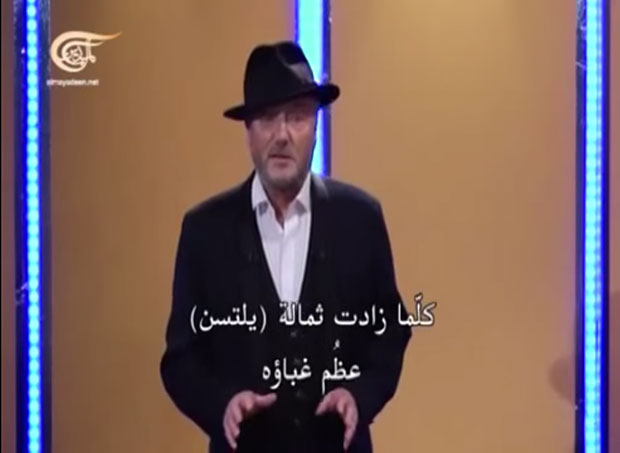
George Galloway’s lawyers have written to Twitter users who retweeted a Hadley Freeman tweet.
TV presenter George Galloway has taken to wearing a black fedora, indoors. I know this, because I have seen him doing so on at least one of his TV shows.
It’s a strange look, somewhere between a puffy Nathan Detroit, though combined with a black suit and white shirt, the hat also evokes Robert Mitchum’s chilling Harry Powell in Night of the Hunter.
Why has George Galloway started wearing a hat indoors? What has taken hold of him? What kind of person wears a hat indoors anyway? The only people who really get away with being pictured in hats, indoors and out, are National Hunt trainers and rabbis. And come to think of it, you rarely see a National Hunt trainer indoors. They’re usually outside, training horses, or watching horse races or being interviewed about how well (or sometimes poorly) their horse did in the race.
I can say with relative certainty that Galloway is not a National Hunt trainer. I am a bit more nervous about declaring whether or not he is a rabbi. Issues between George and some Jewish people being fraught of late, I would not like anyone to think that an assertion of Galloway’s non-rabbiness was a suggestion of anything else.
Galloway has been in the news after his solicitors issued letters demanding apologies from various people who tweeted and retweeted a comment by Guardian columnist Hadley Freeman, who had tweeted about Galloway having “said and done” things she believed “crossed the line” between being “anti-Israel” and “anti-Semitic”.
Galloway tweeted that he would sue. Freeman offered to delete the tweet (and subsequently did). But all in vain: Galloway had made his mind up, telling Freeman “too late”. He also warned others against retweeting Freeman’s original post. Subsequently it has emerged that Galloway’s lawyers are writing to Twitter users demanding not just an apology, but £5000+VAT by varying dates in March to cover the cost of sending the letter.
The solicitors firm, Chambers of Bradford, are not widely known as libel specialists. You would think, given the changes in libel laws in recent years, that one would make sure your lawyers knew what they were doing.
Chambers appear to be focused on immigration, serious crime and fraud and personal injury, among other topics. But above all, they are, according to their own website “calculated risk takers”, who are “not afraid to take on challenges that would daunt many others”.
They boast that their ethos “is to ensure that the ordinary person has access to good quality legal advice as public bodies, insurance companies & multi-national companies which has led us to take on many ‘David & Goliath’ legal struggles for justice”.
This does not seem to tie in with the pursuit of one Twitter user who received a letter from Chambers demanding money. That person, with only 70 followers on Twitter, told the Guardian: “I’m not a politician. I’m not remotely influential. I deleted it. I have been suffering terrible health problems [since receiving the letter]. I’m on antidepressants and suffering from chest pains.”
Chambers’ apparent risk-taking, would seem to have backfired rather spectacularly.
Private Eye magazine said it had “drawn the letter to the attention of the Solicitors Regulation Authority (SRA) which takes a dim view of this sort of ‘speculative invoicing’”.
Meanwhile, lawyers including David Allen Green, Mark Lewis and Mark Stephens, vastly experienced in free speech, libel and privacy, have been offering support to the recipients of the letters. Some lawyers are apparently working with the people behind the “SuedByGalloway” twitter account, which is giving anonymous advice.
Mark Lewis commented “Mr Galloway’s spokesman says that the letters weren’t shown to the client before they were sent. That is a matter of practise and the SRA must investigate”. (McKay has subsequently told Index on Censorship that Mr Galloway had seen the letters, and it was McKay who had not).*
There is a temptation to think what might happen if all these cases — since each tweet is a separate action — did come to court. As with all libel cases, a lot is down to semantics: what exactly does Freeman’s original tweet really mean? Does it mean what Galloway’s solicitors letters’ take it to mean?
And then there is the context of the Defamation Act 2013, which requires that a claimant show that a statement “has caused or is likely to cause serious harm to the reputation of the claimant”.
Moreover, there is the new defence of “honest opinion”, in which a defendant need not prove the absolute truth of the statement (on a topic such as this, how could one do that?) but that he or she sincerely held the view stated as an opinion, and that an honest person “could have held the opinion on the basis of any fact which existed at the time the statement complained of was published”.
It would be genuinely interesting to see if and how a court could draw a line between “staunch anti-Zionism” and anti-Semitism, but in the end, I’m not sure how much use it would be for anyone. Most hate-crime laws already come down to circumstance and perception, just as libel cases, and particularly those involving unprovable abstracts, can only really come down to people’s individual views.
This case is just a manifestation of the usual Galloway bluster. It’s entirely feasible that he was insulted by Freeman’s comment, but his pursuit of her and the people who retweeted her, even after apologies and deletions, is petty and thin-skinned. It is not the behaviour of a gentleman. But then, neither is wearing a hat indoors.
* This article was updated on March 5, 2015, to reflect that Ron McKay told Index on Censorship that Galloway had seen the solicitors’ letters before they were sent
This column was posted on March 5, 2015 at indexoncensorship.org
5 Mar 2015 | Awards, mobile, Russia
Soldiers’ Mothers of Russia is an NGO network dedicated to improving transparency and exposing human rights abuses in the Russian military. It aims to provide soldiers’ families with reliable information, which the notoriously secretive Russian military has kept private. It also provides legal advice for Russian soldiers and their families, and to conscientious objectors.
“The organisation operates from general principles of human rights and the rule of law. We are in favour of contract service for the Russian armed forces whereby men are recruited on the basis of their intellectual, physical and spiritual readiness. We speak out against forced conscription and believe a transition to a professional army would significantly improve human rights and relations between the military and civilians,” Ella Polyakova from Soldiers’ Mothers St. Petersburg branch told Index on Censorship via email.
The Soldiers’ Mothers groups were established in 1989, in the last days of the Soviet Union. One of their first responsibilities was to personally negotiate for political prisoners left behind by the Russian army in former socialist republics. The group also calls attention to brutal “dedovshchina” or hazing tactics used on junior soldiers, ranging from beatings and sexual abuse to torture and enslavement. Because the abuse is perpetrated by senior officers, it often cannot be officially reported, leading to distorted figures. For example, in 2010 the committee reported 2,000 deaths from hazing, while Russia’s Defence Ministry declared only 14.
Vladimir Putin has insistently denied that Russian forces have had any involvement with Ukraine’s civil war, in which pro-Russian separatists have been fighting government forces since April 2014. Officially, any Russian soldiers fighting in Ukraine are volunteering, not acting on behalf of the Kremlin – in December 2014 Putin described such men as answering “a call of the heart”.
The secrecy surrounding the disappearances of soldiers has mirrored past operations by the Russian military. During conflicts in Afghanistan and Chechnya in the 1980s and 1990s, the Russian army only landed planes carrying soldiers’ bodies at night, to cover up escalating casualty figures.
From August 2014, Soldiers’ Mothers members began revealing that their investigations had found that many wounded or killed Russian soldiers had been fighting in Ukraine. Head of the committee Valentina Melnikova announced that her research showed that between 10,000-15,000 Russian troops had been sent over the border in August. Her information was derived from mothers and wives of servicemen who were sent on military exercises close to the Ukraine border, and who subsequently stopped communicating with their families.
There has been a systematic silencing and smearing of committee members who have reported on Ukraine deaths. Lyudmila Bogatenkova, head of the Budennovsk branch of Soldiers’ Mothers, was arrested and charged with a four-year-old fraud conviction, after she announced that 11 Russian soldiers were killed fighting in Ukraine. After her release she had to be treated in hospital.
Polyakova demanded a government investigation after receiving information about 100 Russian soldiers allegedly killed and 300 wounded in Ukraine. Soon after, her branch was labelled a “foreign agent” by the government – even though the committee of Soldiers’ Mothers no longer receives foreign funding, one of the prerequisites of the classification. Her committee faces serious problems as a result, including being subjected to complex reporting requirements, and additional inspections and controls.
“To make matters worse, after the organisation was put on the register, a film crew from a state television channel burst into our offices and blackened us with dishonest coverage of our work,” Polyakova told Index. “Later that night, someone smashed the windows of our director Olga Alexeeva’s car. Human rights activists linked to Soldiers’ Mothers received many threats and insults by text message and email.”
But despite the pressures they face, they intend to continue their work, and also set up “a human rights information and analysis agency” to increase contact with other NGOs and the media.
“We are glad that we are able work effectively to defend human rights and to take part in positive changes in the lives of our citizens,” the group said of their Index award nomination. “It is nice to know that this work is valued by our colleagues.”
With additional reporting by Will Haydon