12 Apr 2018 | Index in the Press
Each year Index on Censorship honours activists who have been at the forefront of tackling censorship globally. Click hears from Jodie Ginsberg about some of nominees including creators of the Museum ofDissidence in Cuba. She is joined Guy Muyembe, from Habari RDC (a collective of young Congolese bloggers), to discuss digital activism. Watch the video.
12 Apr 2018 | Awards, Fellowship 2018, Mapping Media Freedom, News
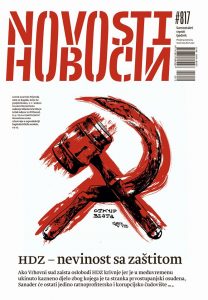
[vc_row][vc_column][vc_video link=”https://youtu.be/hKK5t6te-GE”][vc_column_text]Novosti weekly is a Serbian-language magazine in Croatia. It is run by journalists who are both Serbs and Croats, and are some of the most highly esteemed reporters in the country.
Although the weekly is fully funded as a Serb minority publication by the Serbian National Council, the paper deals with a whole range topics, not only those directly related to the minority status of Croatian Serbs, but also covering all the political, economic, social and cultural issues that are important for the Croatian society as a whole. 
The paper’s journalists have come under intense pressure in the last year from Croatian nationalists with attacks and death threats that have been sanctioned by ultra-conservative forces in the country.
“As journalists we realise that our professional duty is to write truth, but because of the conditions in which we work, a significant part of our business has become the defence of the right to freedom of expression, without which truth is not possible,” said Novosti Weekly.
This is against a backdrop of a nationalist coalition government led by the conservative Croatian Democratic Union (HDZ), which oversaw the sacking or demotion of 70 public broadcast journalists in the months after it came to power in January 2016.
Novosti irritates nationalists by writing about the things Croatian society is often silent on, for instance, the war crimes committed by the Croatian side during the Balkans war in the 1990s and the role of Croatian forces in the war in Bosnia and Herzegovina. It often uses satirical front covers to make its point.
The weekly also stands up for minorities, including LGBT groups, against the conservative forces of the Catholic Church and war veterans. One of their journalistic campaigns has been to challenge attempts by the far right to rehabilitate the Ustaše, the fascists who were in power in Croatia during World War II.
Novosti prides itself also on classic investigative journalism, which uncovers political and corporate corruption; and they do not shy away from exposing the pressure on editors and journalists from both censorship and self-censorship.
2017 was a year which saw the further rise in Croatia of right-wing extremism and ultra-conservative tendencies. Novosti weekly has been at the forefront of fighting the nationalist purges, becoming a forum for voices of resistance.
At the beginning of December 2016, Novosti broke a story about plans by the government, and veterans associations to install a memorial plaque with the World War II fascist slogan Za dom spremni (Ready for the Homeland) near the site of the former ustaše concentration camp at Jasenovac where more than 83,000 Serbs, Roma and Jews died.
Immediately after the release of the story in Novosti, the far-right political party A-HSP organised a protest under the windows of the magazine’s offices shouting, fascist slogans and anti-Serbian insults.
Some war veterans’ societies filed criminal charges against journalists, and others launched a series of private lawsuits against the publisher of the Novosti.
In August 2017, the extreme right piled on the pressure, accusing Croatian Serbs of setting the fires which burnt down forests in large parts of the Croatian coast during the summer.
They claimed Novosti Weekly had been encouraging the arsonists and Novosti received threats of violence – to shoot journalists and bomb the offices. The editorial team was told they would end up killed like Charlie Hebdo journalists.
The culmination of the summer of threats happened when the A-HSP organised another protest in front of Novosti’s offices and burnt copies of the magazine under the windows of the offices
“We would like to thank you for recognizing our work as well as for putting Novosti Weekly into the international spotlight after reaching the shortlist of the Freedom of Expression Awards,” said Novosti Weekly. “Your recognition means as much as the reactions of all relevant international journalistic organizations that stood in Weekly Novosti’s defense after facing pressure and threats for the work that we do. It’s a strong message of support that speaks volumes not only for all those who burnt out paper, but also to those who tried to ensure our destruction.”
See the full shortlist for Index on Censorship’s Freedom of Expression Awards 2018 here.[/vc_column_text][/vc_column][/vc_row][vc_row full_width=”stretch_row_content” equal_height=”yes” el_class=”text_white” css=”.vc_custom_1490258749071{background-color: #cb3000 !important;}”][vc_column width=”1/2″][vc_custom_heading text=”Support the Index Fellowship.” font_container=”tag:p|font_size:28|text_align:center” use_theme_fonts=”yes” link=”url:https%3A%2F%2Fwww.indexoncensorship.org%2Fsupport-the-freedom-of-expression-awards%2F|||”][vc_column_text]
By donating to the Freedom of Expression Awards you help us support
individuals and groups at the forefront of tackling censorship.
Find out more
[/vc_column_text][/vc_column][vc_column width=”1/2″ css=”.vc_custom_1521479845471{background-image: url(https://www.indexoncensorship.org/wp-content/uploads/2017/05/2017-awards-fellows-1460×490-2_revised.jpg?id=90090) !important;background-position: center !important;background-repeat: no-repeat !important;background-size: cover !important;}”][/vc_column][/vc_row][vc_row][vc_column][vc_basic_grid post_type=”post” max_items=”4″ element_width=”6″ grid_id=”vc_gid:1523523750750-06e6cb2f-6ea9-6″ taxonomies=”10735″][/vc_column][/vc_row]
11 Apr 2018 | Campaigns -- Featured, Statements
[vc_row][vc_column][vc_column_text]Index on Censorship is deeply concerned that the adoption of a “safe zone” around an abortion clinic in Ealing sets a dangerous precedent that could have far-reaching impacts on the right to protest and freedom of expression.
There are alternative legal remedies already on the books that can be used to police harassing and intimidating behaviour, as Ealing’s own options document pointed out.
The use of buffer zones to prevent protests could be used against all forms of speech – including those that wish to protest on environmental or political issues, for example.
As we wrote in our letter to the leader of the Ealing Council in March, the safe zones were potentially unlawful and disproportionate.
March 28 2018
Paul Najsarek
Ealing Council
Ealing W5 2HL
Dear Sir,
We have been advised by our lawyer that your consultation on exclusion zones was not open to non residents of the borough. But as a free speech organisation, we believe this has wider legal implications and should be open to a wider consultation.
We are, therefore, addressing this submission and letter to you personally.
Index would point out that “the proposal is unlawful on the grounds and is disproportionate to its purpose”.
Yours,
Jodie Ginsberg
CEO, Index on Censorship
IN THE MATTER OF A PROPOSED PSPO IN EALING[/vc_column_text][/vc_column][/vc_row]
11 Apr 2018 | Awards, Fellowship 2018, News
[vc_row][vc_column][vc_video link=”https://youtu.be/fW_rl97IupM”][vc_column_text]MuckRock is a non-profit, collaborative news site used by journalists, activists and members of the public to request, receive and share government documents from any agency that is subject to transparency laws in the United States. Their aim is to make policies more open to the public, and democracies further informed.
“MuckRock has continued to double in size each year,” said MuckRock. “We hope to continue increasing our impact, putting cutting edge transparency tools in the hands of journalists, whistleblowers, researchers and ordinary people to have impact at the national, international, and local levels.”
The site, which has a user base of 10,000, hosts an archive filled with hundreds of thousands of pages of original government materials, as well as information about how to file requests, and tools to make the requesting process easier. MuckRock has filed over 40, 000 requests, shedding light on government surveillance, censorship and police militarisation among hundreds of other issues. The site’s staff and contributors use the documents received through the site to create original investigative reporting and analysis.
MuckRock filed and won a lawsuit against the CIA, which resulted in the release of 13 million pages of previously secret documents from the CREST Database – the CIA’s database of declassified information dating back through the Cold War. The foundation also fought off a lawsuit from multinationals seeking to hide security flaws in their smart metering technology.
Their work investigating the US government’s 1033 programme, which supplied local police and the private prison system with military equipment, helped lead to major reforms of these policies.
Stories that MuckRock have reported on over the past year include: gaps in gun violence data, surveillance footage from the top of the Smithsonian building on inauguration day – contributing to the debate of the true crowd size, and classified CIA documents that were left stashed in the Rockefellers barn.
After he had been in office for over a year, MuckRock investigated the effects of president Trump’s harsher immigration policies, and found that the number of deportations was actually decreasing, while the number of people held in detention centres was rising.
The site has had a particularly successful 2017, seeing its 10,000th public records request successfully completed. They also celebrated International Right To Know day by expanding their reach to Canada, which is ranked a lowly 49th out of 111 countries on the RTI Rating.

The site has also focused on expanding its education about requesting documents, and produced a Freedom of Information Act 4 Kidz lesson plan to help educators to start discussions about government transparency.
“It’s impossible to quantify the impact of this acknowledgement of our amazing transparency community,” said MuckRock. “This nomination recognizes the important work of all the MuckRock users who have fought to open up government on so many issues, often facing bureaucratic hurdles and legal threats to create a strong civic society for all.”
See the full shortlist for Index on Censorship’s Freedom of Expression Awards 2018 here.[/vc_column_text][/vc_column][/vc_row][vc_row full_width=”stretch_row_content” equal_height=”yes” el_class=”text_white” css=”.vc_custom_1490258749071{background-color: #cb3000 !important;}”][vc_column width=”1/2″][vc_custom_heading text=”Support the Index Fellowship.” font_container=”tag:p|font_size:28|text_align:center” use_theme_fonts=”yes” link=”url:https%3A%2F%2Fwww.indexoncensorship.org%2Fsupport-the-freedom-of-expression-awards%2F|||”][vc_column_text]
By donating to the Freedom of Expression Awards you help us support
individuals and groups at the forefront of tackling censorship.
Find out more
[/vc_column_text][/vc_column][vc_column width=”1/2″ css=”.vc_custom_1521479845471{background-image: url(https://www.indexoncensorship.org/wp-content/uploads/2017/05/2017-awards-fellows-1460×490-2_revised.jpg?id=90090) !important;background-position: center !important;background-repeat: no-repeat !important;background-size: cover !important;}”][/vc_column][/vc_row][vc_row][vc_column][vc_basic_grid post_type=”post” max_items=”4″ element_width=”6″ grid_id=”vc_gid:1523523704690-32d26e8d-1852-3″ taxonomies=”10735″][/vc_column][/vc_row]
