21 Mar 2018 | Campaigns -- Featured, Statements
[vc_row][vc_column][vc_column_text]
On Wednesday 21 March 2018, a Bahraini Criminal Court convicted and sentenced Duaa Alwadaei to two months in prison for allegedly insulting a public institution. Duaa was sentenced in absentia after exposing her ill-treatment committed by Bahraini security forces at the Bahrain International Airport in October 2016, which Human Rights Watch described as “terrorizing”.
Duaa’s conviction falls on Mother’s Day in Bahrain and represents the latest escalation in the reprisals against the human rights advocacy of her husband, Sayed Ahmed Alwadaei, who is the Director of the UK-based Bahrain Institute for Rights and Democracy (BIRD).
Duaa did not receive any formal notification of the charges against her until her conviction. It was assumed that her charges relate to Duaa’s detention and interrogation at the airport in October 2016, following Sayed Ahmed’s participation in a protest in London.
The following day, Duaa told Human Rights Watch that during her interrogation, she was physically mistreated, repeatedly insulted and warned that her family would be imprisoned if she exposed her ill-treatment and her husband’s activities continued. She had been warned “not to speak out” about the incident, having been threatened with further police interrogations and fabricated criminal charges that could lead to a three-year imprisonment upon conviction. Eventually, Duaa’s tormentors carried out their threats.
Duaa’s then 18-month old son was present throughout the ordeal. He was forcibly separated from his mother and only reunited with her when Duaa’s interrogation began. Duaa told Human Rights Watch that her son was visibly “terrified” during the interrogation.
Commenting, Sayed Ahmed Alwadaei, Director of Advocacy at BIRD said: “By coming after my loved ones to silence me, the Bahraini government has sunk to an all time low. Bahraini allies in Washington D.C. and London must condemn this cowardly attempt to muzzle my activism.”
Duaa’s trial was entirely held in absentia because she resides in London. Since lawyers can only be hired through particular channels in Bahrain, the Bahraini Embassy in London is best placed to give power of attorney to a designated lawyer. However, this option has not been pursued due to the recent involvement of the Embassy in the conviction of her family. However, a representative from the British Embassy in Manama attended the hearing today.
Duaa’s mother, Hajer Mansoor Hassan, is currently serving a three-year sentence at Isa Town Prison following a conviction based on a coerced confession. Hajer began a hunger strike yesterday in protest against the ill-treatment of political prisoners by prison officials.
Background
Duaa’s Case
The incident to which Duaa’s charges relate occurred on 26 October 2016. Following Sayed Ahmed’s participation in a protest against the King of Bahrain’s meeting with Prime Minister Theresa May in London, Duaa was detained at Bahrain International Airport for several hours. Here, she was physically mistreated, threatened with criminal charges, and repeatedly insulted. The official also presented Duaa with a travel ban, thereby preventing her return to London.
Duaa Alwadaei told Human Rights Watch in October that a senior official had referred to her husband as “an animal” and asked, menacingly during an interrogation at Bahrain airport, “Where shall I go first, shall I go to his family or your family?” She said that the officer, who appeared to be a senior official, told her: “Deliver this message to your husband – I will get him,” as she left the interrogation.
Since Duaa’s son is a US citizen, the US Embassy in Manama intervened following significant international pressure, thereby facilitating their return to London on 1 November 2016.
Harassment of Duaa’s Family
Duaa is the latest victim of the reprisal campaign launched by the Bahraini authorities in response to Sayed Ahmed’s work as a human rights defender. His mother-in-law, Hajer Mansoor Hassan, brother-in-law, Sayed Nizar Alwadaei, and cousin Mahmood Marzooq Mansoor have been subjected to grossly unfair trials and are currently serving sentences ranging from three to six years in prison on the basis of coerced confessions and fabricated charges.
Yesterday, Hajer declared a hunger strike to protest her mistreatment and the harsh discrimination suffered by political prisoners in Bahrain. Prison officers often harass political inmates and detainees by eavesdropping on personal conversations and deny them free hygiene products. Other inmates do not suffer from this treatment.
When Hajer complained to the officer by requesting that she be treated with respect, she was told that senior prison officials had instructed officers to make Hajer’s life “difficult”, and threatened that the more she exposes the conditions of imprisonment for political prisoners, the more she will be punished. Furthermore, the prison authorities have revoked the 10 minute phone call that Hajer had been rewarded for participating in daily workshops at the prison.
International Response
In its most recent comment on Duaa’s trial, the UK Foreign and Commonwealth Office (FCO) simply reiterated that it will “continue to monitor proceedings”. The British government failed to call on the Bahraini authorities to drop the charges against Duaa.
Both the United Nations and the High Representative of the European Union for Foreign Affairs and Security Policy, Federica Mogherini, have recognised the significance of the reprisals against Sayed Ahmed’s family.
Following her ordeal at the airport, the US Department of State commented on their involvement in the incident.
A British Member of the European Parliament (MEP) Julie Ward wrote to the High Representative of the European Union for Foreign Affairs and Security Policy, Federica Mogherini, to express her concerns over the “judicial harassment of family members of prominent Bahraini activist, Sayed Ahmed Alwadaei, who are being subjected to a collective punishment ”.
[/vc_column_text][/vc_column][/vc_row][vc_row][vc_column][vc_basic_grid post_type=”post” max_items=”12″ style=”load-more” items_per_page=”4″ element_width=”6″ grid_id=”vc_gid:1521649653173-dc894e70-c40f-3″ taxonomies=”716″][/vc_column][/vc_row]
21 Mar 2018 | Awards, Fellowship, Fellowship 2018, News
[vc_row][vc_column][vc_video link=”https://youtu.be/-6JnYDCLKIE”][vc_column_text]The Museum of Dissidence in Cuba is an online website and public art project celebrating dissent in Cuba. It was set up in the summer of 2016 by acclaimed young artist Luis Manuel Otero Alcántara and his partner, curator and art historian Yanelys Nuñez Leyva. Their stated aim is to reclaim the word “dissident” and to give it in Cuba a positive connotation.

This is a daring and unique project, created by representatives of a new, young generation of artists who are not afraid to challenge the still repressive regime and promote freedom of expression. The repercussions have been fierce: Nuñez was sacked from her job at state sponsored magazine Revolution and Culture for founding the site. Otero was arrested in November 2017 for organising an unofficial #00Havana Biennal through the museum and threatened with prison for being a “counter-revolutionary”.
Cuba is still a one-party communist state. Political pluralism is outlawed and dissent repressed. There are also severe restrictions on press freedom, assembly, speech and association, according to Freedom House. The project aims to bring people from inside and outside Cuba together online, but specialises in radical public art projects and installations, concentrated in the poorer districts of Havana. The founders say that because it is not on either side of the political divide it is particularly vilified and attacked.
On his Index Awards nomination, Alcántara said “having won this prize is super important, for the MDC as well as for all Cuban activism, because it’s an acknowledgement from a prestigious international institution. This legitimises the work that we’ve been doing in favour of a future of freedom on the island, makes it more visible and brings protection and a certain empowerment to keep working despite all the unfairness and insecurity that we experience here.”
In 2017 the site promoted artistic projects round the island. The museum worked with a group of graffiti artists to create murals of aliens and balaclava clad men on the dilapidated walls of Havana in September 2017 to show up the government, which only allows political slogans and pictures of Cuban revolutionaries.
In another striking project they have reexamined the work and lives of important Cuban writers who committed suicide in suspicious circumstances. A terrifying art installation by Amaury Pacheco depicted a man hanging above the street in homage to the poet Juan Carlos Flores. The museum held a series of artistic events in San Isidro, a poor neighbourhood of Old Havana to honour the poets who had killed themselves because of the repressive Cuban regime.
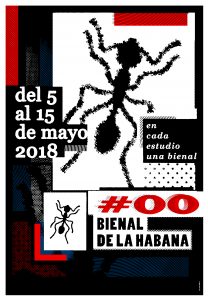
The project #00 Biennial of Havana is the museum’s latest action, born as an act of protest against the decision of the Ministry of Culture to postpone until 2019, the celebration of the XIII Biennial of Havana. It was this project which led to founder Otero being arrested. He is now free on bail.
With this Index Award nomination, the work is being recognised for its bravery. In response, curator Yanelys Levya notes that “living on an island makes us believe we are alone in everything that we do. To know that there’s someone, in any part of the world, that supports our struggle and that their dreams are close to ours, makes us feel safer, stronger and gives us hope.”
See the full shortlist for Index on Censorship’s Freedom of Expression Awards 2018 here.[/vc_column_text][/vc_column][/vc_row][vc_row][vc_column][vc_column_text]
#IndexAwards 2018: los creadores del Museo de la Disidencia siguen ferozmente fieles a su proyecto
El Museo de la Disidencia representa a una nueva generación de jóvenes artistas que no temen desafiar al todavía represor régimen cubano
El Museo de la Disidencia en Cuba es una página web y proyecto de arte público que celebra el acto de disidir en Cuba, creado el verano de 2016 por el aclamado joven artista Luis Manuel Otero Alcántara y su pareja, la comisaria e historiadora del arte Yanelys Núñez Leyva. Su objetivo es reclamar la palabra “disidente” y otorgarle una connotación positiva en el contexto cubano.
Se trata de un proyecto atrevido y extremadamente original, creado por los representantes de una nueva generación de jóvenes artistas que no temen desafiar al régimen, aún represor, y promover la libertad de expresión. Han sufrido duras represalias: Núñez fue despedida de su trabajo en la revista Revolución y Cultura, financiada por el estado, por fundar la web. A Otero lo arrestaron en noviembre de 2017 por organizar la #00Bienal de La Habana —un evento no oficial— a través del museo, y se enfrentó a penas de prisión por “contrarrevolucionario”.
Cuba sigue siendo un régimen comunista de partido único. La pluralidad política es ilegal y la disidencia, reprimida. También existen duras restricciones a la libertad de prensa, reunión, expresión y asociación, según informa Freedom House. El proyecto busca favorecer el encuentro online de personas dentro y fuera de Cuba, pero se especializa en proyectos e instalaciones de arte público y radical, concentrados en los distritos más pobres de La Habana. Los fundadores afirman que es el hecho de no encontrarse ni a un lado ni al otro de la división política lo que hace que sean objeto de tantos ataques e intentos de descrédito.
Sobre su nominación a los Index Awards, Alcántara dijo: «haber ganado este premio es súper importante, tanto para el MDC como para todo el activismo cubano, porque supone el reconocimiento de una institución de prestigio internacional. Legitima el trabajo que hemos estado haciendo a favor de un futuro de libertad en la isla, lo visibiliza y nos facilita protección y cierto empoderamiento para seguir trabajando pese a toda la injusticia y la inseguridad que vivimos aquí».
En 2017 la web promocionó proyectos artísticos de toda la isla. En septiembre del año pasado, el museo trabajó con un grupo de artistas de grafiti en la creación de murales de extraterrestres y hombres con pasamontañas sobre los deteriorados muros de La Habana para ridiculizar al gobierno, que solo permite eslóganes políticos e imágenes de revolucionarios cubanos.
En otro de sus llamativos proyectos, han reexaminado las vidas y obras de escritores cubanos de renombre que se suicidaron en circunstancias sospechosas. Una aterradora instalación de Amaury Pacheco representó a un hombre ahorcado sobre la acera en un homenaje al poeta Juan Carlos Flores. El museo celebró una serie de eventos artísticos en San Isidro, un barrio pobre de La Habana Vieja, en honor a los poetas que se han quitado la vida a causa de la represión del régimen cubano.
El proyecto #00Bienal de La Habana, la última acción del museo, nació como un acto de protesta contra la decisión del Ministerio de Cultura de posponer hasta 2019 la celebración de la XIII Bienal de la Habana. Fue este proyecto el que resultó en el arresto de Otero, quien actualmente se encuentra en libertad bajo fianza.
La nominación a los Index Awards reconoce la valentía de esta obra. En respuesta, la comisaria Yanelys Leyva ha declarado: «vivir en una isla nos hace creer que estamos solos en todo lo que hacemos. Saber que hay alguien, en alguna parte del mundo, que apoya nuestra lucha y cuyos sueños son cercanos a los nuestros nos hace sentir más seguros y fuertes, y nos da esperanza».
Traducción de Arrate Hidalgo
Accede a la lista completa de nominados a los Index on Censorship’s Freedom of Expression Awards 2018 aquí.[/vc_column_text][/vc_column][/vc_row][vc_row full_width=”stretch_row_content” equal_height=”yes” el_class=”text_white” css=”.vc_custom_1490259018105{background-color: #cb3000 !important;}”][vc_column width=”1/2″][vc_custom_heading text=”Support the Index Fellowship” font_container=”tag:p|font_size:28|text_align:center” use_theme_fonts=”yes” link=”url:https%3A%2F%2Fwww.indexoncensorship.org%2Fsupport-the-freedom-of-expression-awards%2F|||”][vc_column_text]
By donating to the Freedom of Expression Awards you help us support
individuals and groups at the forefront of tackling censorship.
Find out more
[/vc_column_text][/vc_column][vc_column width=”1/2″ css=”.vc_custom_1521478157564{background-image: url(https://www.indexoncensorship.org/wp-content/uploads/2017/05/2017-awards-fellows-1460×490-2_revised.jpg?id=90090) !important;background-position: center !important;background-repeat: no-repeat !important;background-size: cover !important;}”][/vc_column][/vc_row][vc_row][vc_column][vc_basic_grid post_type=”post” max_items=”4″ element_width=”6″ grid_id=”vc_gid:1523014419889-37e59a2b-3bf9-8″ taxonomies=”10735″][/vc_column][/vc_row]
21 Mar 2018 | Press Releases
 Hoy, el Centro Europeo para la Libertad de Prensa y Libertad de Expresión (ECPMF por sus siglas en inglés) y el Instituto Internacional de la Prensa (IPI por sus siglas en inglés), lanzan una subvención de hasta 450.000€ para apoyar el periodismo de investigación y transnacional en la UE.
http://www.ij4eu.net/
El Fondo para el Periodismo de Investigación en Europa (#IJ4EU) tiene como objetivo promover y fortalecer la colaboración entre periodistas y redacciones en Europa para la investigación de noticias de interés público, que afecten a más de un país de la UE. El Fondo pretende apoyar investigaciones periodísticas que reflejen el papel de “observador” de los medios de comunicación, y que, además, confieran al público el poder de exigir responsabilidad a aquellos que estando en el poder, hayan incumplido con sus obligaciones y funciones. De esta manera, el Fondo busca contribuir a que se mantenga la estabilidad democrática y el estado de derecho en la UE.
El Fondo será administrado por el IPI, una comunidad global de directores de medios de comunicación, redactores y periodistas, que defiende la libertad de prensa desde 1950.
Durante el 2018 aquellos equipos de periodistas de investigación transnacionales y/o medios de comunicación con sedes en al menos dos países de la UE, podrán solicitar una subvención de un máximo de 50.000€, para realizar una investigación sobre cualquier tema de interés público que afecte a más de un país de la UE.
Los proyectos presentados deberán revelar nueva información sobre el tema elegido. Podrán solicitar esta subvención equipos de investigación ya existentes o que hayan sido especialmente creados para este proyecto de #IJ4EU. También podrán participar investigaciones en curso o incompletos, siempre y cuando se cumpla con el objetivo final de terminar la investigación y proceder a su publicación. Animamos especialmente a que soliciten esta subvención, equipos de periodistas o medios de comunicación que trabajan en sedes fuera de la capital del país o de las grandes urbes o bien en países donde el periodismo de investigación resulte particularmente difícil.
El programa incluye subvenciones para todas las plataformas, prensa tradicional, digital, audiovisual, documentales y story-telling a través de múltiples plataformas o canales.
Para ser seleccionado, las propuestas deberán poder ser publicadas por medios de comunicación o plataformas reputados (y disponibles en formato publicable) en al menos dos países de la UE antes del 31 de diciembre 2018.
El plazo máximo para entregar la solicitud es el 3 mayo 2018, Día Internacional de la Libertad de Prensa. Todas las solicitudes deberán realizarse en inglés. Se deberá presentar una descripción detallada del proyecto, descripción del equipo de investigación, un plan de investigación y publicación, un presupuesto y una evaluación de riesgos.
Un jurado independiente seleccionará los proyectos que recibirán los fondos, con la intención de presentar las propuestas seleccionados el 15 de julio 2018.
Para poder realizar la solicitud y leer toda la información sobre requisitos, solicitud y proceso de selección, por favor accedan a la página web: http://www.ij4eu.net/
“El periodismo de investigación, que desempeña una función esencial en toda democracia, se encuentra, bajo presión en toda la UE”, comenta Barbara Trionfi, Directora Ejecutiva del IPI. “Apoyar económicamente a proyectos de investigación, es una manera de asegurar que temas como la corrupción, crímenes financieros, abusos de derechos humanos y daños medioambientales, lleguen al público.”
Además, añadió que “Como hoy en día, estas investigaciones no suelen estar limitadas a un único estado o país, es fundamental que los equipos periodísticos trabajen estos temas, “cruzando fronteras”: necesitan ser transnacionales”. Estamos orgullosos de que #IJ4EU nos dé esta oportunidad.
For any questions, please contact:
Javier Luque
Head of Digital Media
IPI
Email: [email protected]
Tel.: +43 1 5129011
20 Mar 2018 | Index in the Press
A campaign to remove hateful works from retailers like Waterstones and Foyles has kicked off a censorship row. Read the full article
Index on Censorship CEO Jodie Ginsberg’s comment to the New Statesman:
Stopping the spread of ideas we find abhorrent is an old tendency rather than a “new trend”, and not solved by making information inaccessible, argues the Index on Censorship’s chief executive Jodie Ginsberg. “Encouraging bookshops not to stock certain content because it’s considered hateful I think is problematic,” she says.
“When you’re suggesting [the removal of books from] some of the largest bookshops in the country, which are the ones most people can access, then you are limiting people’s access to information… Anything that limits people’s inability to find out information is a threat to freedom of expression.”
