NEWS

Journalists as well as generals have been purged – only Xi is safe in China today
The recent oustings show that the best way to stay out of trouble is to not align with, or investigate, those at the top
09 Feb 2026

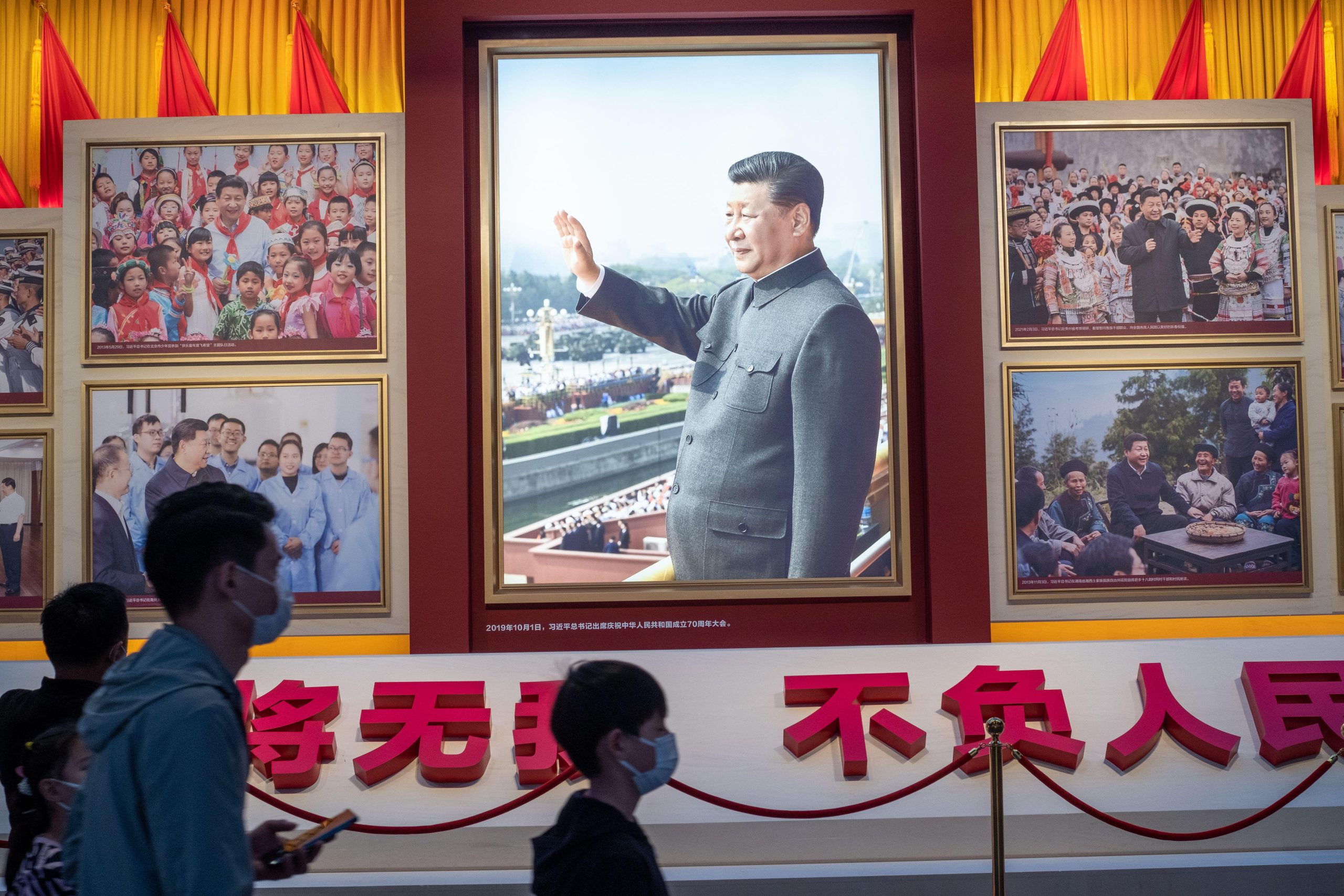
People walk past images showing Chinese President Xi Jinping. Photo: Lou-Foto/Alamy

Purges have defined Xi Jinping’s leadership from the start. Just before he came to power, he moved against his then biggest rival Bo Xilai. It was a scandal that rocked China, and indeed the world (Bo was linked to murdered British businessman Neil Heywood). Years later we still don’t know fully what happened to Heywood, Bo or his wife Gu Kailai – obfuscation being a key characteristic of the Chinese state – but the episode certainly set the stage. Once in power, Xi launched his so-called anti-corruption campaign, which sought to crackdown on “tigers” and “flies” – powerful leaders and lowly bureaucrats. Thousands of officials have since been jailed and millions more punished. And at the end of January, Xi took out two more “tigers” – top military brass Zhang Youxia, and an associate, Liu Zhenli. Both have been accused of “grave violations”.

There’s of course nothing wrong with stamping out corruption if and when it exists and if done with due process. It’s just that a genuine desire to rid the country of double-dealings rings hollow in Xi’s China, as the arrests of two journalists earlier this month remind us. On 1 February, Liu Hu and Wu Yingjiao were detained. Two days earlier they’d published an article on Hu’s public WeChat account alleging corruption by Sichuan’s county party secretary. The article is now offline. The pair have been accused of “making false accusations” and conducting “illegal business operations”.

This is not Liu’s first encounter with the Chinese authorities. A well-known investigative journalist, who cut his teeth in state media before turning online for his investigations, he was detained for nearly a year in 2013 after he finger-pointed at the former deputy mayor of Chongqing. Wu is younger, less high-profile, though he has been nominated for multiple journalism awards. They’re the kind of journalists that would be exalted in ordinary circumstances, except China is no ordinary place. It holds the global title of number one jailer of journalists of any country and goes big on publicising the cases of some to scare others. The repeated arrests of citizen journalist Zhang Zhan and the five-year sentencing of Sophia Huang Xueqin (a former Index award-winner) are two examples. Even a quirk – the fact that local TV in China is often full of stories exposing government corruption – serves a purpose. As the scholar Dan Chen outlined in the pages of Index, it’s a cunning way to entrench power.

Chen also said this: “Televised criticism of local officials contrasts with the taboo on criticism of central government officials, agencies and policies – a taboo that is enforced by brutal suppression.” It’s a useful yardstick when trying to make sense of what’s happening right now. Essentially Wu and Liu flew too close to the sun, and for totally different reasons so too did the military men. The best way to stay out of trouble in China is to not align with, or investigate, those at the top. Only Xi is safe. Everyone else is cannon fodder.
Support free expression for all


At Index on Censorship, we believe everyone deserves the right to speak freely, challenge power and share ideas without fear. In a world where governments tighten control and algorithms distort the truth, defending those rights is more urgent than ever.

But free speech is not free. Instead we rely on readers like you to keep our journalism independent, our advocacy sharp and our support for writers, artists and dissidents strong.

If you believe in a future where voices aren’t silenced, help us protect it.

Make a £10 monthly donation

At Index on Censorship, we believe everyone deserves the right to speak freely, challenge power and share ideas without fear. In a world where governments tighten control and algorithms distort the truth, defending those rights is more urgent than ever.

But free speech is not free. Instead we rely on readers like you to keep our journalism independent, our advocacy sharp and our support for writers, artists and dissidents strong.

If you believe in a future where voices aren’t silenced, help us protect it.

Make a £20 monthly donation

At Index on Censorship, we believe everyone deserves the right to speak freely, challenge power and share ideas without fear. In a world where governments tighten control and algorithms distort the truth, defending those rights is more urgent than ever.

But free speech is not free. Instead we rely on readers like you to keep our journalism independent, our advocacy sharp and our support for writers, artists and dissidents strong.

If you believe in a future where voices aren’t silenced, help us protect it.

Make a £10 one-off donation

At Index on Censorship, we believe everyone deserves the right to speak freely, challenge power and share ideas without fear. In a world where governments tighten control and algorithms distort the truth, defending those rights is more urgent than ever.

But free speech is not free. Instead we rely on readers like you to keep our journalism independent, our advocacy sharp and our support for writers, artists and dissidents strong.

If you believe in a future where voices aren’t silenced, help us protect it.

Make a £20 one-off donation

At Index on Censorship, we believe everyone deserves the right to speak freely, challenge power and share ideas without fear. In a world where governments tighten control and algorithms distort the truth, defending those rights is more urgent than ever.

But free speech is not free. Instead we rely on readers like you to keep our journalism independent, our advocacy sharp and our support for writers, artists and dissidents strong.

If you believe in a future where voices aren’t silenced, help us protect it.

Donate a different amount

By Jemimah Steinfeld

Jemimah Steinfeld has lived and worked in both Shanghai and Beijing where she has written on a wide range of topics, with a particular focus on youth culture, gender and censorship. She is the author of the book Little Emperors and Material Girls: Sex and Youth in Modern China, which was described by the FT as "meticulously researched and highly readable". Jemimah has freelanced for a variety of publications, including The Guardian, The Telegraph, The Independent, Vice, CNN, Time Out and the Huffington Post. She has a degree in history from Bristol University and went on to study an MA in Chinese Studies at SOAS.

READ MORE

CAMPAIGNS

SUBSCRIBE

SUPPORT INDEX'S WORK