NEWS

Orbán’s defeat should spell the end of foreign interference in European democracies
Illiberal forces are bankrolling attacks on free speech - it's time to stop them
17 Apr 2026

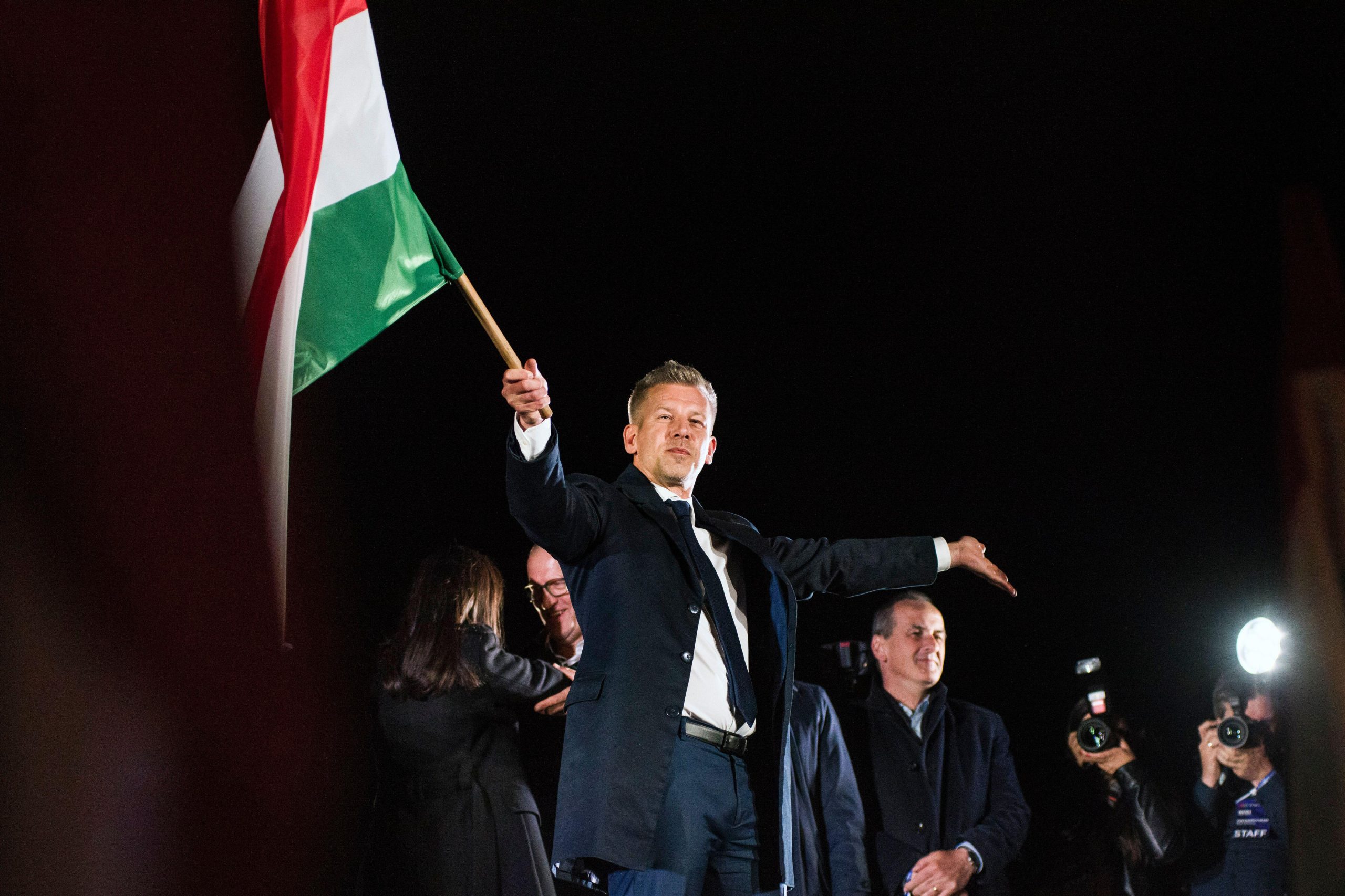
Budapest, Hungary. 13th Apr, 2026. Peter Magyar waves the Hungarian flag after his speech during the TISZA party's election night event in Budapest. Photo: ZUMA Press/Alamy

The Index team has been absorbed in everything Hungary-related this week. No surprise there, given Péter Magyar’s seismic election victory on Sunday, and Index’s roots in eastern Europe. Our latest magazine – just launched – explored the effect Orbán’s had in Hungary and on spreading his brand of illiberal democracy. We’re deep in the conjecture stage, awaiting what happens next and asking what an ex-Fidesz conservative who rode to power on an anti-corruption campaign will mean for freedom of expression. Could be good, could be the same old. We’ll be watching closely.

Already some positive news there though: Magyar has announced that he will suspend the Orbánised state media and only restore it when objective and impartial reporting can be ensured. It’s a similar move to the one Donald Tusk made when he became Prime Minister of Poland. Magyar also announced that he’d be looking into Viktor Orbán’s influence campaigns. Martin Bright reported on this for the latest magazine, attending a conference in Brussels which was funded by the Hungarian government and intended to bring together far right parties from around Europe. The event was part of a much wider project paid for partly by Russian oil money (filtered through Hungary) which smacked of foreign interference in European democracy. There now needs to be an urgent investigation of the funding of UK-based organisations and politicians by the Orbán government.

And when it comes to illiberal forces meddling in overseas affairs, there is way too much of that around. The Guardian rather made the point for me when they broke the story this week of London’s Victoria and Albert Museum censoring its own catalogues to keep in with Beijing. A series of images were removed upon the request of the Chinese printers. One of the images was a historic map of the British Empire, which included China. Presumably its 1930s borders didn’t dovetail with Beijing’s current narrative around Xinjiang and Tibet. This is not the first time the V&A has done an image swap upon the request of Beijing. Nor is the V&A alone, such interference has been happening for a while.

The V&A’s justification came down to cost. Apparently using a Chinese printer is half the price of a British or European one. I don’t doubt that. But while I have no idea of the financial margins we’re talking about here, I do know about the broader consequence: An emboldened China, a country that places bounties on the heads of Hong Kong dissidents and harasses lawyers, protesters, activists and journalists alike over here. This is the real cost of doing business on Beijing’s terms. It’s depressing that our cultural institutions – which are meant to be the leading incubators of plural thought after all – are playing ball.

The cost also isn’t confined to China; such capitulation emboldens others. So yes it’s great that this week we’ve potentially been rescued from the full-scale Orbánisation of Europe, but he was ultimately just a symptom of a rotten global order, one where speech rights can be bought by the highest bidder – or in the case of the V&A the one offering the cheapest paper.


Support free expression for all


At Index on Censorship, we believe everyone deserves the right to speak freely, challenge power and share ideas without fear. In a world where governments tighten control and algorithms distort the truth, defending those rights is more urgent than ever.

But free speech is not free. Instead we rely on readers like you to keep our journalism independent, our advocacy sharp and our support for writers, artists and dissidents strong.

If you believe in a future where voices aren’t silenced, help us protect it.

Make a £10 monthly donation

At Index on Censorship, we believe everyone deserves the right to speak freely, challenge power and share ideas without fear. In a world where governments tighten control and algorithms distort the truth, defending those rights is more urgent than ever.

But free speech is not free. Instead we rely on readers like you to keep our journalism independent, our advocacy sharp and our support for writers, artists and dissidents strong.

If you believe in a future where voices aren’t silenced, help us protect it.

Make a £20 monthly donation

At Index on Censorship, we believe everyone deserves the right to speak freely, challenge power and share ideas without fear. In a world where governments tighten control and algorithms distort the truth, defending those rights is more urgent than ever.

But free speech is not free. Instead we rely on readers like you to keep our journalism independent, our advocacy sharp and our support for writers, artists and dissidents strong.

If you believe in a future where voices aren’t silenced, help us protect it.

Make a £10 one-off donation

At Index on Censorship, we believe everyone deserves the right to speak freely, challenge power and share ideas without fear. In a world where governments tighten control and algorithms distort the truth, defending those rights is more urgent than ever.

But free speech is not free. Instead we rely on readers like you to keep our journalism independent, our advocacy sharp and our support for writers, artists and dissidents strong.

If you believe in a future where voices aren’t silenced, help us protect it.

Make a £20 one-off donation

At Index on Censorship, we believe everyone deserves the right to speak freely, challenge power and share ideas without fear. In a world where governments tighten control and algorithms distort the truth, defending those rights is more urgent than ever.

But free speech is not free. Instead we rely on readers like you to keep our journalism independent, our advocacy sharp and our support for writers, artists and dissidents strong.

If you believe in a future where voices aren’t silenced, help us protect it.

Donate a different amount

Jemimah Steinfeld

Jemimah Steinfeld has lived and worked in both Shanghai and Beijing where she has written on a wide range of topics, with a particular focus on youth culture, gender and censorship. She is the author of the book Little Emperors and Material Girls: Sex and Youth in Modern China, which was described by the FT as "meticulously researched and highly readable". Jemimah has freelanced for a variety of publications, including The Guardian, The Telegraph, The Independent, Vice, CNN, Time Out and the Huffington Post. She has a degree in history from Bristol University and went on to study an MA in Chinese Studies at SOAS.

READ MORE

CAMPAIGNS

SUBSCRIBE

SUPPORT INDEX'S WORK