NEWS

Imprisoned and critically ill Iranian Nobel prizewinner warned three years ago that prisons were set up to kill
Narges Mohammadi had a suspected heart attack in jail in Iran and she is in a hospital that cannot treat her condition
08 May 2026

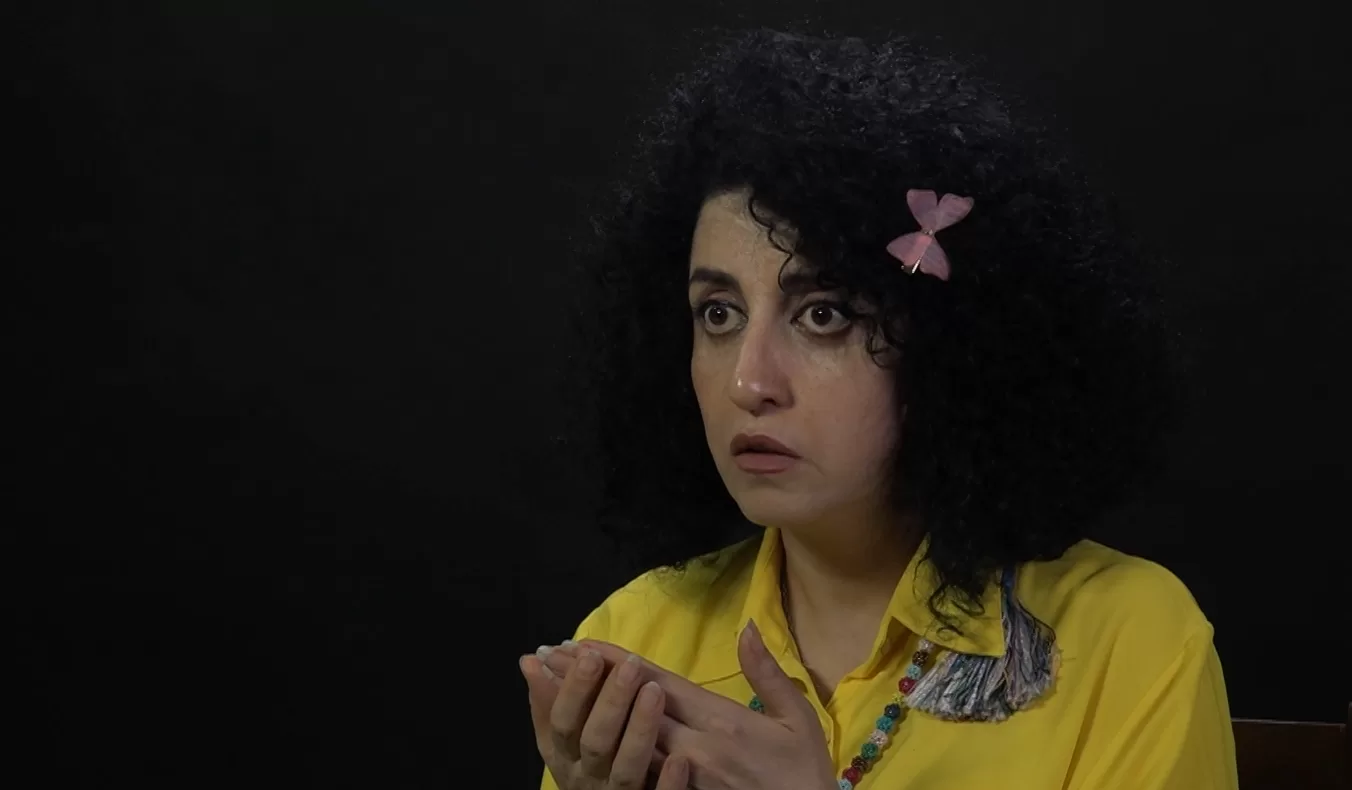
Narges Mohammadi, Iranian human rights defender and 2023 Nobel Peace Prize winner

I pray that when you read this Narges Mohammadi is still alive. The Nobel Peace Prize winner is currently in an Iranian hospital in a critical condition. Her brother, who lives in Oslo, is anticipating terrible news. Mohammadi, 54, is in ill-health and is suspected of having suffered a heart attack in jail. Her move to a hospital is purely tokenistic – she is not in the right place for her condition.

If she dies under these conditions, it’s a fate Mohammadi has warned about herself. In 2023 we shared a video made by Iranian filmmaker Vahid Zarezadeh of Mohammadi raising the alarm. When she gave the interview, she had just left hospital because of previous heart complications, following time in an appalling prison renowned for its punishing regime. In the video she said the “system sets up the conditions for the prisoner’s death,” and told people to not be surprised if, in the event she died in jail, the authorities blamed her death on an undiagnosed health problem. Heart attacks are common, they’d claim, downplaying their own role. Today it is even easier for them to downplay their role.

The country is still in digital darkness. This Thursday marks day 69. That is 1632 hours of no connection to the global internet. There are some workarounds but they’re hard and risky. The cover of war has also seen an escalation in the execution of political prisoners, including those who took part in January’s protests.

To be a dissident in Iran takes guts. To be as dedicated as Mohammadi is frankly awe-inspiring. What has made her so? Mohammadi was born in 1972 into a middle-class family with political persuasions. Following the Islamic revolution, her uncle and two cousins were arrested for activism. She studied nuclear physics at university, and it was there that she met her husband, Taghi Rahmani, who had himself spent 17 years in prison. After university, she worked for newspapers that were part of the reformist movement. In 2003 she joined the Defenders of Human Rights Center, founded by that year’s Nobel Peace Prize laureate, Shirin Ebadi. By this stage she had already been arrested and spent a year in jail. This became a pattern. According to her foundation, she’s been arrested 13 times and sentenced to a total of 31 years in prison and 154 lashes.

A mother of twins — Kiana and Ali – Mohammadi has called the long years of separation from them an indescribable suffering. She has spoken about the fear and anxiety of solitary confinement and once said: “The price of the struggle is not only torture and prison, it is a heart that breaks with every regret and a pain that strikes to the marrow of your bones.”

Still, she has continued to campaign for justice. Upon winning the Nobel Peace Prize in October 2023 “for her fight against the oppression of women in Iran and her fight to promote human rights and freedom for all”, she said: “I will never stop striving for the realisation of democracy, freedom and equality.” One month later she was on hunger strike to protest the delayed and neglectful medical care for sick prisoners.

I’m fascinated by the anatomy of courage, though I’m unsure I’ll ever get to the bottom of it. What I do know is that Narges Mohammadi deserves every accolade and if she dies in the coming days the Iranian authorities are the culprits and not a dodgy heart.


Support free expression for all

At Index on Censorship, we believe everyone deserves the right to speak freely, challenge power and share ideas without fear. In a world where governments tighten control and algorithms distort the truth, defending those rights is more urgent than ever.

But free speech is not free. Instead we rely on readers like you to keep our journalism independent, our advocacy sharp and our support for writers, artists and dissidents strong.

If you believe in a future where voices aren’t silenced, help us protect it.

Make a £10 monthly donation

At Index on Censorship, we believe everyone deserves the right to speak freely, challenge power and share ideas without fear. In a world where governments tighten control and algorithms distort the truth, defending those rights is more urgent than ever.

But free speech is not free. Instead we rely on readers like you to keep our journalism independent, our advocacy sharp and our support for writers, artists and dissidents strong.

If you believe in a future where voices aren’t silenced, help us protect it.

Make a £20 monthly donation

At Index on Censorship, we believe everyone deserves the right to speak freely, challenge power and share ideas without fear. In a world where governments tighten control and algorithms distort the truth, defending those rights is more urgent than ever.

But free speech is not free. Instead we rely on readers like you to keep our journalism independent, our advocacy sharp and our support for writers, artists and dissidents strong.

If you believe in a future where voices aren’t silenced, help us protect it.

Make a £10 one-off donation

At Index on Censorship, we believe everyone deserves the right to speak freely, challenge power and share ideas without fear. In a world where governments tighten control and algorithms distort the truth, defending those rights is more urgent than ever.

But free speech is not free. Instead we rely on readers like you to keep our journalism independent, our advocacy sharp and our support for writers, artists and dissidents strong.

If you believe in a future where voices aren’t silenced, help us protect it.

Make a £20 one-off donation

At Index on Censorship, we believe everyone deserves the right to speak freely, challenge power and share ideas without fear. In a world where governments tighten control and algorithms distort the truth, defending those rights is more urgent than ever.

But free speech is not free. Instead we rely on readers like you to keep our journalism independent, our advocacy sharp and our support for writers, artists and dissidents strong.

If you believe in a future where voices aren’t silenced, help us protect it.

Donate a different amount

Jemimah Steinfeld

Jemimah Steinfeld has lived and worked in both Shanghai and Beijing where she has written on a wide range of topics, with a particular focus on youth culture, gender and censorship. She is the author of the book Little Emperors and Material Girls: Sex and Youth in Modern China, which was described by the FT as "meticulously researched and highly readable". Jemimah has freelanced for a variety of publications, including The Guardian, The Telegraph, The Independent, Vice, CNN, Time Out and the Huffington Post. She has a degree in history from Bristol University and went on to study an MA in Chinese Studies at SOAS.

READ MORE

CAMPAIGNS

SUBSCRIBE

SUPPORT INDEX'S WORK