NEWS

Benjamin Netanyahu takes aim at Israel’s universities
New measures would limit universities' ability to speak out against the government
10 Jul 2026

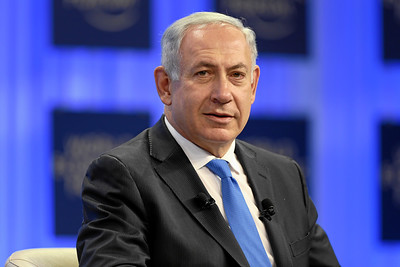
Israeli Prime Minister Benjamin Netanyahu. Photo: WORLD ECONOMIC FORUM/swiss-image.ch/Jolanda Flubacher

Benjamin Netanyahu’s coalition wants to impose what it calls “institutional neutrality” on the country’s universities. The proposals – which could become reality within a month – would prevent higher education institutions from taking political positions, organising strikes or suspending teaching in response to political developments. University presidents would themselves be barred from expressing views that might be perceived as political or could encourage others to be. All of which sounds more like “neuter” than “neutrality”.

There’s a concession: lecturers and students can express themselves politically and “participate in public discourse” provided that the activity is done privately “and is not specific to the institution or done by virtue of their academic or administrative role and does not harm the institution’s regular activity”. These are very broad caveats, which will still leave people very exposed.

There’s nothing subtle about these plans. They’re clearly designed to stop campuses mobilising against controversial government measures, of which in Netanyahu’s Israel there are now many. They will also chill academic freedom more broadly. After all, universities are not meant to be impartial spaces. They are meant to be intellectually independent and curious. They are meant to question orthodoxies, challenge power and create conditions in which difficult ideas can be tested. In the words of poet Stephen Spender in his op-ed that launched Index, “universities represent the developing international consciousness which depends so much on the free interchange of people, and of ideas.”

Israeli academics understand the danger. One organisation opposing the proposals described them as “the essence of dictatorship, tyranny of silencing and instilling fear in those whose nature is independent thought”. They warned: “History will remember who was in positions of power and did not turn over every stone to prevent the elimination of Israeli academia and democracy.”

This is not the first attack those within Israeli universities faced. As reported by our writer Akin Ajayi, Palestinian academics and students within Israel have already experienced harassment in various forms. This led to one person telling us “silence is the best option”. Then there’s the destruction of Gaza’s higher education system, which has been described by some as “scholasticide”.

The assault is not confined to academia either. I read about the plans in Israel’s leading, left-leaning newspaper Haaretz. The following morning came news that the newspaper’s offices had been vandalised after a masked man threw a brick through its entrance. Haaretz has repeatedly been targeted, while only last week a similar attack struck Channel 12 News in Tel Aviv.

In May this year, Israeli journalist Oren Persico wrote for us about how Israel’s targeting of Palestinian journalists had helped create an atmosphere in which Israeli journalists increasingly found themselves under attack too. His argument echoed Martin Niemöller’s famous warning: once repression becomes normalised against one group, it rarely stops there. Hence what we’re seeing in universities – both the continuation and the escalation of Netanyahu’s assault on freedom of expression.

Support free expression for all

At Index on Censorship, we believe everyone deserves the right to speak freely, challenge power and share ideas without fear. In a world where governments tighten control and algorithms distort the truth, defending those rights is more urgent than ever.

But free speech is not free. Instead we rely on readers like you to keep our journalism independent, our advocacy sharp and our support for writers, artists and dissidents strong.

If you believe in a future where voices aren’t silenced, help us protect it.

Make a £10 monthly donation

At Index on Censorship, we believe everyone deserves the right to speak freely, challenge power and share ideas without fear. In a world where governments tighten control and algorithms distort the truth, defending those rights is more urgent than ever.

But free speech is not free. Instead we rely on readers like you to keep our journalism independent, our advocacy sharp and our support for writers, artists and dissidents strong.

If you believe in a future where voices aren’t silenced, help us protect it.

Make a £20 monthly donation

At Index on Censorship, we believe everyone deserves the right to speak freely, challenge power and share ideas without fear. In a world where governments tighten control and algorithms distort the truth, defending those rights is more urgent than ever.

But free speech is not free. Instead we rely on readers like you to keep our journalism independent, our advocacy sharp and our support for writers, artists and dissidents strong.

If you believe in a future where voices aren’t silenced, help us protect it.

Make a £10 one-off donation

At Index on Censorship, we believe everyone deserves the right to speak freely, challenge power and share ideas without fear. In a world where governments tighten control and algorithms distort the truth, defending those rights is more urgent than ever.

But free speech is not free. Instead we rely on readers like you to keep our journalism independent, our advocacy sharp and our support for writers, artists and dissidents strong.

If you believe in a future where voices aren’t silenced, help us protect it.

Make a £20 one-off donation

At Index on Censorship, we believe everyone deserves the right to speak freely, challenge power and share ideas without fear. In a world where governments tighten control and algorithms distort the truth, defending those rights is more urgent than ever.

But free speech is not free. Instead we rely on readers like you to keep our journalism independent, our advocacy sharp and our support for writers, artists and dissidents strong.

If you believe in a future where voices aren’t silenced, help us protect it.

Donate a different amount

Jemimah Steinfeld

Jemimah Steinfeld has lived and worked in both Shanghai and Beijing where she has written on a wide range of topics, with a particular focus on youth culture, gender and censorship. She is the author of the book Little Emperors and Material Girls: Sex and Youth in Modern China, which was described by the FT as "meticulously researched and highly readable". Jemimah has freelanced for a variety of publications, including The Guardian, The Telegraph, The Independent, Vice, CNN, Time Out and the Huffington Post. She has a degree in history from Bristol University and went on to study an MA in Chinese Studies at SOAS.

READ MORE

CAMPAIGNS

SUBSCRIBE

DONATE TO INDEX