1 Nov 2018
[vc_row full_width=”stretch_row_content_no_spaces” full_height=”yes” css=”.vc_custom_1541435907815{background-image: url(https://mappingmediafreedom.org/wp-content/uploads/2018/11/MMF-overview-1460×490.jpg?id=100814) !important;background-position: center !important;background-repeat: no-repeat !important;background-size: cover !important;}”][vc_column][/vc_column][/vc_row][vc_row][vc_column][vc_custom_heading text=”Demonising the media: Threats to journalists in Europe” font_container=”tag:h1|text_align:left” use_theme_fonts=”yes”][vc_custom_heading text=”Burned in effigy. Insulted. Menaced. Spat at. Discredited by their nation’s leaders. Assaulted. Sued. Homes strafed with automatic weapons. Rape threats. Death threats. Assassinations.” use_theme_fonts=”yes”][vc_column_text]
This is the landscape faced by journalists throughout Europe over the past four years.
Mapping Media Freedom has documented media freedom incidents across Europe — over 3,000 were surveyed for this report — since May 2014. The information gathered shows journalists and media outlets targeted in a kaleidoscopic array by political leaders, businesses and the general public – but some key trends have emerged from the reports recorded and verified by the platform. This document outlines some of these, and is intended as a survey of the landscape for media freedom in the region to aid lawmakers and those who wish to help an independent, pluralistic media landscape to flourish.
[/vc_column_text][/vc_column][/vc_row][vc_row][vc_column][vc_custom_heading text=”Key trends” use_theme_fonts=”yes”][vc_custom_heading text=”Five issues that have been identified from the reports submitted to Mapping Media Freedom” font_container=”tag:h3|text_align:left” use_theme_fonts=”yes”][vc_column_text]
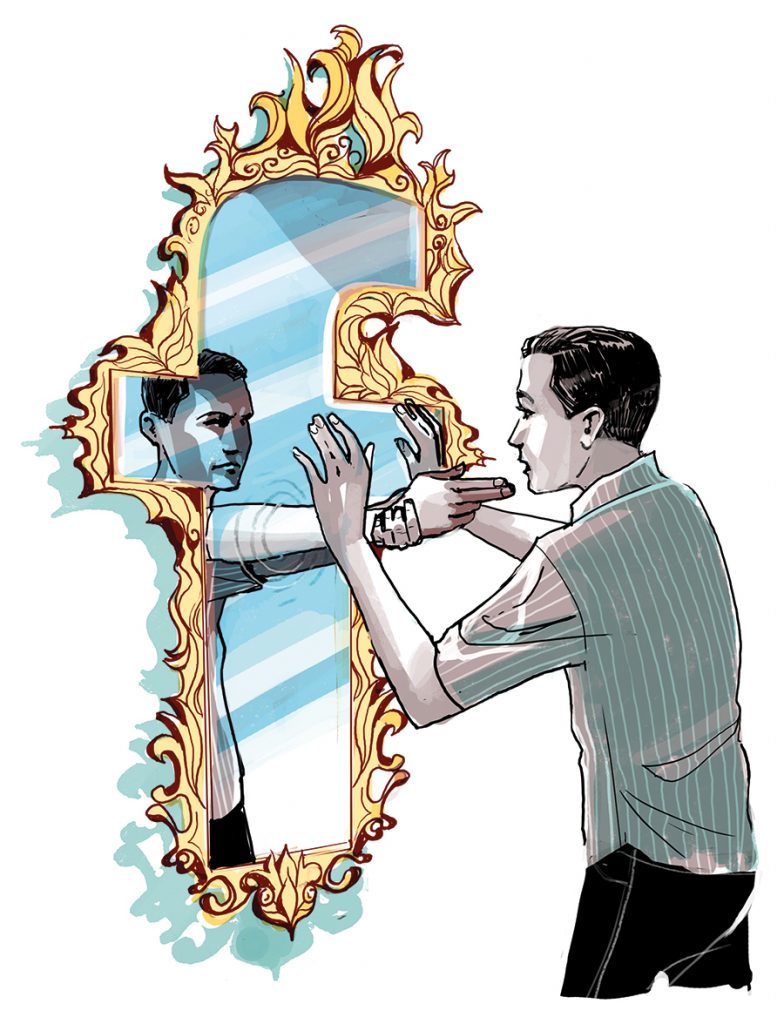 National Security and Counter-terrorism Legislation
Well-intentioned legislation that aims to protect the citizens and institutions of a country is, in the best-case scenario, often blind to journalism in the public interest. In the worst-case scenario, such laws are used deliberately to prevent the dissemination of information that is in the public interest. In 39 cases, reporters have been targeted for prosecution for publishing embarrassing leaked information that governments have asserted was not meant for public discussion. This is an acute issue that often involves the judicial and extrajudicial surveillance of journalists in an effort to ferret out the identities of whistleblowers.
Political Interference
This report identifies two key trends within this category. The first is direct interference in the operations of media outlets, either by politicians requesting editors or others involved in the production of news to alter or halt a story, or by replacing journalists critical of a particular political party or policy with ones more favourable to those in power.
Political interference has come from across the spectrum – from Podemos in Spain to the Front National in France, from Fidesz in Hungary to Labour and the Scottish National Party in the United Kingdom. The methods can take many forms, sometimes subtle (behind-the-scenes phone calls to an editor), sometimes overt (preventing a journalist affiliated with particular outlets from attending a press conference) – but the goal of controlling information flow remains the same.
The second form of interference is potentially more insidious: attempts to discredit media outlets by smearing journalists, news outlets, and in some cases an entire industry in order to sow doubt about the veracity of their reporting. This is having a damaging effect, particularly on the safety of journalists, who increasingly are seen as “fair game” by the broader public and subjected to both verbal and physical threats.
Social Media/Online Harassment
Social media has provided journalists with a wide avenue to share their information and interact with readers in a public yet intimate way. This has helped media professionals in reporting and allowed for constructive debates around current events, and can help improve the quality of information available to citizens overall. However, the other side of that bargain is the growing hostility toward journalists online. This takes many forms, from tweets of sexual harassment to death threats made via Facebook. This is a widespread and pernicious issue that journalists across the continent confront on a daily basis, and is fomented by the widely reported remarks of some politicians from member states. Women are most frequently the target of such attacks.
Protests
Journalists also face a number of risks offline. When protesters pour into the streets, journalists are necessarily among the first responders – an essential part of their professional duties. Traditionally present at demonstrations to document and interpret events, media workers – whether freelance or staff – are also among the first to be corralled, targeted and injured. A number of incidents documented at protests – as recorded by the Mapping Media Freedom project – provide insight into the multidimensional threats that journalists confront when called upon to report from the scene of demonstrations, whether small or large. These include a lack of understanding among some police forces about the role of media at such events.
Public Television
A significant but underreported trend during the period was the threat to public broadcasters. A number of national broadcasters were brought under closer government control. Taken together, these reports outline the importance of maintaining the editorial independence of these vital public services.
[/vc_column_text][/vc_column][/vc_row][vc_row][vc_column][vc_custom_heading text=”About Mapping Media Freedom” use_theme_fonts=”yes”][vc_custom_heading text=”Monitoring violations against media professionals” font_container=”tag:h3|text_align:left” use_theme_fonts=”yes”][vc_row_inner][vc_column_inner width=”1/4″][vc_icon icon_fontawesome=”fa fa-angle-double-right” color=”black” size=”xl” align=”right”][/vc_column_inner][vc_column_inner width=”3/4″][vc_column_text]
Driven by Index on Censorship’s decades-long experience in monitoring censorship across the globe, Mapping Media Freedom set out to record the widest possible array of press freedom violations.
[/vc_column_text][/vc_column_inner][/vc_row_inner][vc_column_text] Mapping Media Freedom is a project, funded by the European Commission, to investigate the full spectrum of threats to media freedom in the region – from the seemingly innocuous to the most serious infractions – in a near-real-time system that launched to the public on 24 May 2014.
Driven by Index on Censorship’s decades-long experience in monitoring censorship across the globe, Mapping Media Freedom set out to record the widest possible array of press freedom violations in an effort to understand the precursors to the retreat of media freedom in a country. The ambitious scope of the project called for a flexible methodology that draws on a network of regional correspondents, partner organisations and media sources.
Mapping Media Freedom defines a media worker as anyone partaking in the gathering, assessing, creating and presenting of news and information.
How It Works
Submitted reports are fact-checked against news outlets and through discussions with the submitting correspondent. Reports are then published to a public-facing website for use by researchers, journalists and policymakers. The outputs are available to the wider public through downloadable CSV files from the database and are shared widely on social media. The project has issued periodic reports that summarised data on a quarterly and yearly basis. This document is the result of a full review of the data reported to and verified by the project’s contributors covering 35 countries.
Each report is flagged against seven main categories and 64 subcategories to provide a sortable and searchable database of the types of press freedom violations taking place in a country. EU-affiliated countries are further categorised by their status: member states, candidates and potential candidates. Full descriptions of the categories and subcategories are available in the Mapping Media Freedom methodology section of this document.
Going beyond traditional statistical recording, Mapping Media Freedom’s correspondents write short narrative reports about the incidents. The goal is to recount the facts dispassionately, without bias toward the journalist or media outlet. Where possible, the incident is placed in the context of wider trends within the locality, whether a city or national media market. All reports for the 35 countries covered in this report are published in English and edited by project staff based at Index on Censorship.
The platform records incidents at the local and national levels. In addition to the categorisation, this geographic spread aims to provide for the first time the fullest possible awareness of the state of play for journalists away from a country’s largest media markets, where most well-publicised press freedom violations occur.
Because Mapping Media Freedom relies primarily on inputs from a concentrated group of part-time correspondents, it cannot record every violation of press freedom in the countries covered. Further, if incidents are not reported in the media, addressed by unions or self-reported by journalists on social media, there is no way for the database to register that the incident occurred.
Because of its focus on narrative, the platform allows for the retrospective interrogation of reports against new criteria as its methodology evolves, and as the database recorded an ever-larger pool of information new categories were added. For example, EU-related and “whistleblowing” flags were appended in late 2015, and a “commercial interference” flag was added in spring 2018. In a manual process, each new flag is tested against all the reports on the platform, providing researchers with insights into incidents that have occurred since 2014.
The methodology aims to be as succinct as possible, and directs submitters to flag the most appropriate subcategories that apply to the Limitation to Media Freedom category. As a result, reported incidents can appear – legitimately – in simultaneous subcategories across the project. For example, a journalist’s car or home could be firebombed after they have published a series of articles about corruption in the local administration. This report could be listed as a “Limitation to Media Freedom”, subcategories “Attack to Property” and “Intimidation”, depending on the facts of the incident. At the same time, reports are keyworded and mapped to appear geographically on the map and through the platform’s search functionalities.
Mapping Media Freedom covers all media workers, whether they work for state-backed news outlets, those funded by supporters of opposition parties or non-partisan media providers. In all instances, the reports documented are rigorously fact-checked by an independent editorial team working at Index on Censorship.
The Software
The Mapping Media Freedom map and database rest on a modified version of the Ushahidi platform, which was developed to track election violence in the wake of Kenya’s disputed 2008 presidential poll. The platform is now in its third iteration; Mapping Media Freedom uses the map as its primary visualisation of the data and offers targeted search functionality at mappingmediafreedom.org to help users navigate to the data they are seeking. [/vc_column_text][/vc_column][/vc_row][vc_row][vc_column][vc_custom_heading text=”European media freedom” use_theme_fonts=”yes”][vc_custom_heading text=”Key themes 2014-18″ font_container=”tag:h3|text_align:left” use_theme_fonts=”yes”][vc_row_inner][vc_column_inner width=”1/4″][vc_icon icon_fontawesome=”fa fa-angle-double-right” color=”black” size=”xl” align=”right”][/vc_column_inner][vc_column_inner width=”3/4″][vc_column_text]
As security – rather than the protection of fundamental rights and freedoms – becomes the number-one priority of governments worldwide, broadly written security laws have been twisted to silence journalists.
[/vc_column_text][/vc_column_inner][/vc_row_inner][vc_column_text]
National Security Legislation
In October 2017, a reporter for The Wall Street Journal was convicted of producing “terrorist propaganda” in Turkey and sentenced to more than two years in prison.
Ayla Albayrak was charged over an August 2015 article in the newspaper, which detailed government efforts to quell unrest among the nation’s Kurdish separatists, “firing tear gas and live rounds in a bid to reassert control of several neighbourhoods”.
Albayrak was in New York at the time the ruling was announced and was sentenced in absentia, but her conviction forms part of a growing pattern of arrests, detentions, trials and convictions for journalists under national security laws – not just in EU candidate country Turkey, the world’s top jailer of journalists.
As security – rather than the protection of fundamental rights and freedoms – becomes the number-one priority of governments worldwide, broadly written security laws have been twisted to silence journalists.
It is seen starkly in the 272 cases that Mapping Media Freedom has logged and verified from countries affiliated with the EU. This includes everything from the alleged glorification of terrorism in Spain to the hundreds of journalists jailed in Turkey following the failed coup to the seizure of a BBC journalist’s laptop in the United Kingdom.
This abusive phenomenon started small, as in the case of Turkey, where dismissive official rhetoric was aimed at small segments – like Kurdish journalists – among the country’s press corps, but over time expanded to extinguish whole newspapers or television networks that espoused critical viewpoints on government policy.
While Turkey has been an especially egregious example of the cynical and political exploitation of terror offences, the trend toward the criminalisation of journalism that makes governments uncomfortable is spreading.
In Spain, the police association filed a lawsuit against Mònica Terribas, a journalist for Catalunya Ràdio, accusing her of “favouring actions against public order for calling on citizens in the Catalonia region to report on police movements during the referendum on independence”. The association said information on police movements could help terrorists, drug dealers and other criminals.
In Turkey, reporting deemed critical of the government, the president or their associates is being equated with terrorism – as seen in the case of German journalist Deniz Yücel, who was detained in February 2017.
Yücel, a Turkish-German dual national, was working as a correspondent for the German newspaper Die Welt. He was arrested after he was summoned to a police station for questioning about a report he wrote about the Turkish energy minister. He was accused of sedition and using “terrorist propaganda to incite the population”. He was eventually released after a year in detention.
There are also multiple examples of Turkey using Interpol arrest warrants against exiled journalists like Can Dündar, whose extradition from Germany it demanded, and Hamza Yalçın, who was detained by Spanish authorities, though both of those countries declined to enforce the requests.
And governments are also using terror laws to spy on journalists. In 2014, the UK police admitted that it used powers under terror legislation to obtain the phone records of Tom Newton Dunn, political editor of The Sun newspaper, to investigate the source of a leak in a political scandal. Police used powers under the Regulation of Investigatory Powers Act, which circumvents another law that requires police to have approval from a judge to get disclosure of journalistic material. In September 2018, the European Court of Human Rights ruled that the UK’s mass surveillance regime violated human rights.
Even jokes can land journalists in trouble under terror laws. French police searched the office of community station Radio Canut in Lyon and seized the recording of a radio programme after two presenters were accused of “incitement to terrorism”. The presenters had been talking about the protests by police officers which had recently been taking place in France. One presenter said: “This is a call to people who killed themselves or are feeling suicidal, and to all kamikazes, [to] blow themselves up in the middle of the crowd.” One of the presenters was put under judicial supervision and forbidden to host the radio programme until he appeared in court.
The misuse and abuse of national security legislation to identify government critics, or silence critical media, is of growing concern. EU governments in particular need to be mindful that loosely drafted national security laws are often copied by far more restrictive regimes to support their repression of critical media.[/vc_column_text][vc_row_inner][vc_column_inner width=”1/4″][vc_icon icon_fontawesome=”fa fa-angle-double-right” color=”black” size=”xl” align=”right”][/vc_column_inner][vc_column_inner width=”3/4″][vc_column_text]
All too often, politicians and business interests are short-circuiting the public’s right to information by placing their personal or party agendas ahead of the public good.
[/vc_column_text][/vc_column_inner][/vc_row_inner][vc_column_text]
Political Interference
Direct Interference
A journalist working for a country’s public broadcaster produces a report that points out that a high-level politician’s family could potentially gain from a government investment. The politician sends a series of emails attacking the journalist for publishing false information and accusing them of acting unprofessionally. The journalist resigns, saying that further research into the conflict of interest is being prevented by their employer.
These events took place in Finland in November 2016. The country’s prime minister, Juha Sipilä, sent emails to Yle journalist Salla Vuorikoski after she wrote articles about a deal involving public money, a state-owned mining firm and another firm linked to the prime minister’s family. Nearly three weeks later, in December 2016, Vuorikoski stepped down, and fellow Yle senior reporter Jussi Eronen resigned citing pressure to act in contradiction of his journalistic ideals. Sipilä, who had handed control of his business interests to his children several years earlier, was ultimately cleared of any wrongdoing by the country’s parliamentary ombudsman.
Several months later, in March 2017, the political party The Finns, which was supporting Sipilä’s government in the Finnish parliament, proposed altering the governing structure of Yle, limiting its independence. At the time, the party’s opposition to multiculturalism was cited as the motive for the proposal.
While these two distinct events – the original reportage and the later push to amend Yle’s governance – may be unconnected, the appearance of political manoeuvring raises serious implications for press freedom, and highlights how journalists can come under pressure from politicians even in a country widely regarded as having some of the highest levels of media freedom worldwide.
In an ideal media environment, ethical journalists would be free to investigate and independently reveal the information that they had found, without retribution or pressurisation by political or business interests. Even the member states of the EU are not ideal environments. All too often, politicians and business interests are short-circuiting the public’s right to information by placing their personal or party agendas ahead of the public good.
Since the election of Emmanuel Macron as French president, several members of the government have tried to control coverage by calling editorial offices, by asking journalists not to criticise the government, write about the ruling party’s finances or explore allegations of corruption, or even by threatening legal action when information which was embarrassing for the government was leaked.
Other forms of interference include lawsuits, such as the 47 lawsuits being brought against investigative journalist Daphne Caruana Galizia at the time of her murder in Malta in 2017, as well as libel cases in countries such as Spain and Greece. The use of litigation to intimidate journalists is a serious concern and an area that Index on Censorship will be focusing on in 2019.
In the United Kingdom and France, journalists may be locked in side rooms or barred from attending conferences – an all-too-common occurrence across the continent, as Mapping Media Freedom’s “Blocked Access” subcategory shows.
The purchase or takeover of previously independent or critical media outlets by government supporters, or the abuse of the media licensing system is another form of interference. In Hungary, business interests aligned with the governing party have bought up media outlets and turned them from critical to pro-government outlets overnight, and popular radio stations have lost their licences against a backdrop of diminishing media plurality. In candidate country Serbia, when a tax inspection fails to find any impropriety at a media outlet, another is ordered, then another, then another. In Poland, a network was nearly fined for reporting on protests that were sparked by opposition to reporting restrictions in parliament.
Targeting the media financially is a well-trodden route for penalising critical outlets. On 6 July 2017 the offices of Rise Project, a Romanian investigative outlet, were raided by tax inspectors. Many believe the timing of the raid was chosen to intimidate the outlet, as Rise Project had previously announced that they would publish an important story on 6 July. The investigation alleged that Liviu Dragnea, the president of the governing Social Democratic Party, had exerted control over the Romanian secret services.
On 28 January 2018, a confidential report by the Romanian Tax Authority on the activity of Rise Project, containing its sources of income as well as the list of its paid collaborators and projects, was leaked to the press. The report was used in a smear campaign against the organisation.
Other forms of direct interference include intervening in the appointment of staff at state media operators, as outlined in section on Public Broadcasting.[/vc_column_text][vc_row_inner][vc_column_inner width=”1/4″][vc_icon icon_fontawesome=”fa fa-angle-double-right” color=”black” size=”xl” align=”right”][/vc_column_inner][vc_column_inner width=”3/4″][vc_column_text]
The willingness to smear journalists or the outlets they report for, rather than debate the facts, in order to warp the public’s right to information is the true threat to media freedom in the EU.
[/vc_column_text][/vc_column_inner][/vc_row_inner][vc_row_inner][vc_column_inner width=”2/3″][vc_column_text]Demonising the Media
The willingness to smear journalists or the outlets they report for, rather than debate the facts, in order to warp the public’s right to information is the true threat to media freedom in the EU, its candidate countries and potential candidate countries. This fraught situation is occurring in countries at the heart of the EU, but it is even more pronounced in countries on its fringes, where robust checks and balances are absent in practice, and the independent media are anaemic due to shrivelling advertising budgets – or, worse, dependent on government largesse for large portions of their financing.
Leading political figures in countries from the UK to Hungary have smeared journalists and media outlets critical of them, dismissing their reports as “fake news”; they have thus created an environment in which reporters are demonised, and thereby more vulnerable to abuse online and off.
In Romania, journalists are publicly chastised for “promoting” protests against government policies. In Italy, journalists have been threatened with having their police protection removed.
In November 2016, during a press conference, Slovakian Prime Minister Robert Fico called journalists dirty, anti-Slovak prostitutes, and before that he did not hesitate to call journalists “toilet spiders” or “slimy snakes”. In August 2017, during a press conference, Fico accused a reporter of being “controlled by the opposition”.
In Serbia, where President Aleksandar Vučić is a dominant presence on TV channels, he regularly humiliates journalists at press conferences. They are often shouted at, threatened and targeted: in some cases, journalists who Vučić mentioned by name in a negative context later receive death threats online.
Stevan Dojčinović, the editor-in-chief of KRIK, a media organisation which investigates crime and corruption, has been attacked and smeared numerous times by pro-government tabloids after reporting about the private property of politicians. Dojčinović and KRIK have been sued by Nenad Popović, a minister in the current Serbian government, after reporting on his offshore companies which appeared in the Paradise Papers data leak.
“If you are targeted, put on the front page or at the central headlines in the evening news, and accused of being a traitor, political activist, non-balanced or simply a thief – you are automatically forced to defend yourself, if not publicly, then at least in your nearest surrounding,” journalist Tamara Skrozza told Mapping Media Freedom. Skrozza was described as an “enemy of the state and President Vučić” by a pro-government TV station earlier this year, and describes the result of such smears: “Your family is in danger, your privacy is attacked and you are not able to lead a normal life. This, of course, causes a lot of stress and damages your health for a long time.”
None of this should be taken as an advocation of a position that holds that journalists and journalism should be free of critique. But the quality of the debate needs to be constructive, factual and professional. Burning a journalist in effigy, as happened twice in Croatia, does not contribute to the overall quality of information available to Croatians.
A culture of impunity is also exacerbating these problems. Investigative journalists are under particular pressure in the region: three journalists have been killed in the EU since October 2017.
These cases have received a great deal of attention internationally. However, other examples of impunity abound. In Croatia, a threatening comment was left on the Facebook page of independent and critical news website Index.hr: “These Index.hr journalists should be killed … because they undermine and damage everything that is Croatian.”
The poster was quickly identified and indicted, but legal authorities dropped the charges because, among other extenuating circumstances, he was a “highly decorated Croatian war veteran”. The Croatian Journalists’ Association (HND) condemned the decision, describing it as “scandalous”.
Ema Tarabochia, a researcher for a regional project on media freedom and the safety of journalists, said that the corrosive influence of hate speech on Croatian society in recent years has been very strong. “Even though there are no extremist parties in parliament, public space is poisoned by daily verbal attacks,” Tarabochia said. She said that evidence shows that journalists working for independent, commercial and nonprofit media, who are labelled as “leftist journalists”, are at a higher risk of suffering minor injuries and death threats. This pattern is repeated in a number of countries covered by the map.
“They are threatened or attacked out of ideological or ethnical reasons,” Tarabochia said, adding that there are still no verdicts in two cases in which members of a far-right party, Autochthonous Croatian Party of Right (A-HSP), burned copies of Novosti, the Serbian-language minority newspaper. The campaign, led by far-right political parties and conservative civil associations, reached fever pitch in September 2017 and was followed by numerous verbal threats to Novosti journalists.
“Lack of public rebuke from the centres of power, especially the political one, are encouraging the perpetrators,” Tarabochia said, adding that condemnation “would be a clear message to the perpetrators that such behaviour will not be tolerated”.
Moreover, an absence of reports should not be taken as evidence that the press freedom environment is healthy in such countries. With just 10 reports verified by Mapping Media Freedom during the time period covered here, Finland is the among the member countries with the fewest reports. Yet if the country’s prime minister is willing to pressurise a journalist, it should be assumed that only the most egregious examples of press freedom violations are being discussed in the public arena. A number of member states with smaller populations – Finland, Denmark, Ireland, Estonia, Latvia and Lithuania – have few reports, but this may be something of a false flag. Other factors – such as societal and professional pressures – may be interfering with the discussion of incidents.
The pressures placed on journalists as part of this widespread political interference also lead to self-censorship on the part of the individual, and lessen the appetite for risky investigative journalism on the part of news outlets; this was cited as the reason for the resignations in the Yle cases.
Reporting incidents of censorship – including self-censorship – is vital to building an accurate picture of the state of media freedom in the region; we would urge journalists’ unions and media outlets to continue to report incidents widely, and confidentially if necessary.[/vc_column_text][/vc_column_inner][vc_column_inner width=”1/3″][vc_column_text]
Blocked Access
Informal blacklists of media outlets. Exorbitant fees for access to public information. Restrictions on reporting from parliament and refugee camps. Journalists prohibited from asking questions at – or barred outright from – press conferences.
These Hungarian incidents, which were among the 545 cases of blocked access that were verified in the 35 EU-affiliated countries covered in this report, are all too often a fact of life for journalists. When journalists are prevented from reporting on an event – whether it be the opening of a pig farm or a press conference or a protest – the public’s right to information is damaged.
In the Hungarian context, preventing journalists from reporting comes in a variety of forms, from chasing them with a piece of construction equipment to preventing their investigation of a leak at a garbage dump to placing restrictions on where and how they can report in parliament. News outlets were barred from the Fidesz election centre. At the height of the government’s feud with television network RTL Klub, it was prevented from covering the opening of a new football stadium – as well as targeted with a punitive tax on its profits.
The Fidesz government’s shifting war with the media has seen journalists from outlets owned by business interests on the outs with the country’s prime minister repeatedly blocked from attending party events. In February 2018, yet more restrictions were placed on journalists, limiting members of the press to a 10-metre-long hall in parliament. During the period covered here, Mapping Media Freedom recorded seven incidents that highlight the limiting of the right to report from the seat of government power. Further restrictions on the press in the halls of power have arisen in Poland, the Netherlands and Germany.
At the height of the refugee crisis, Hungary repeatedly denied journalists the ability to access camps housing the migrants. An AP journalist was compelled to delete footage that showed police unleashing a dog on migrants crossing the border from Serbia. Police issued a letter forbidding journalists from approaching “illegal immigrants” to ask questions. In another incident, police declared a train station an “operational zone” and pushed journalists out. One journalist tweeted that the refugees said: “Do not leave us.” The journalist accused the Hungarian authorities of trying not to let the world see what they were doing. Similar restrictions have been placed on journalists at the Greek border.
Among the candidate countries, half of Turkey’s 103 incidents of blocked access reviewed for this report took place before the July 2016 coup attempt. Police and the government have placed an array of restrictions on reporters, from curfews near to the Syrian border to deportation orders and the well-documented trials of journalists taking place in the country.[/vc_column_text][/vc_column_inner][/vc_row_inner][/vc_column][/vc_row][vc_row][vc_column][vc_row_inner][vc_column_inner width=”1/4″][vc_icon icon_fontawesome=”fa fa-angle-double-right” color=”black” size=”xl” align=”right”][/vc_column_inner][vc_column_inner width=”3/4″][vc_column_text]
The immediacy and near-anonymity of social media allow journalists to connect with a huge audience, but leave them open to insult and derision.
[/vc_column_text][/vc_column_inner][/vc_row_inner][vc_column_text]
Online Harassment
In December 2016, an anonymous Twitter user posted a private photo of journalist Vonny Moyes, a writer for Scottish newspaper The National, to shame her. Moyes said that she was targeted because she had written for pro-independence outlets and drawn the attention of pro-union trolls. When a particular column was commented on by leading UK conservatives, Moyes said this acted as an amplifier and exposed her to more direct harassment than usual.
The individual who ultimately sought out and posted the nude images of the journalist had trolled her over earlier articles. When the photos appeared on Twitter, Moyes asked the user to remove them and told the troll she would be contacting the police. She asked her followers to report the user to Twitter, which they did. The user deleted their account soon after.
“I then tweeted for the rest of the evening about the issue in order to deconstruct the victim-blaming and sex-shaming narrative, to essentially take back the perceived power the troll believed they had,” Moyes told Mapping Media Freedom of the incident.
In August 2014, Amberin Zaman, a Turkish journalist who was then the Turkey correspondent for The Economist, was singled out by the country’s president, who said to her: “Know your place.” In November 2014, a Twitter user wrote that she would be cut in half for writing about Isis, and she was told by a western embassy to avoid travelling to the Syrian border. Later, Zaman’s press card was revoked for her critical – tweeted – opinions about the Turkish government. In each of these situations, Zaman faced an onslaught of threats via social media.
Foreign correspondents in Turkey have also come under pressure, with one saying he had to leave the country upon receiving thousands of threatening comments after his reporting on the Soma mine disaster.
The immediacy and near-anonymity of social media allow journalists to connect with a huge audience, but leave them open to insult and derision. The online harassment incidents reported to Mapping Media Freedom from the countries covered here include a litany of death, rape and fake news accusations from members of the public and politicians.
In the 117 cases of online harassment reviewed here, the largest number of reports among EU countries came from Croatia with 16. It was followed by Italy (9), Spain (9), the UK (8) and France (5). In candidate and potential candidate countries, the highest number of incidents was logged as originating in Bosnia and Herzegovina with 16. It was followed by Serbia (9), the Republic of Macedonia (5), Kosovo (4) and Turkey (4).
Other studies undertaken into the level of harassment faced by journalists, particularly female journalists online, suggest the number of cases reported to Mapping Media Freedom vastly underestimates the extent of the problem. We welcome the attention that bodies such as UNESCO and the OSCE have brought to this issue.[/vc_column_text][/vc_column][/vc_row][vc_row][vc_column][vc_row_inner][vc_column_inner width=”1/4″][vc_icon icon_fontawesome=”fa fa-angle-double-right” color=”black” size=”xl” align=”right”][/vc_column_inner][vc_column_inner width=”3/4″][vc_column_text]
Traditionally present at demonstrations to document and interpret events, media workers – whether freelance or staff – are also among the first to be corralled, targeted and injured.
[/vc_column_text][/vc_column_inner][/vc_row_inner][vc_column_text]
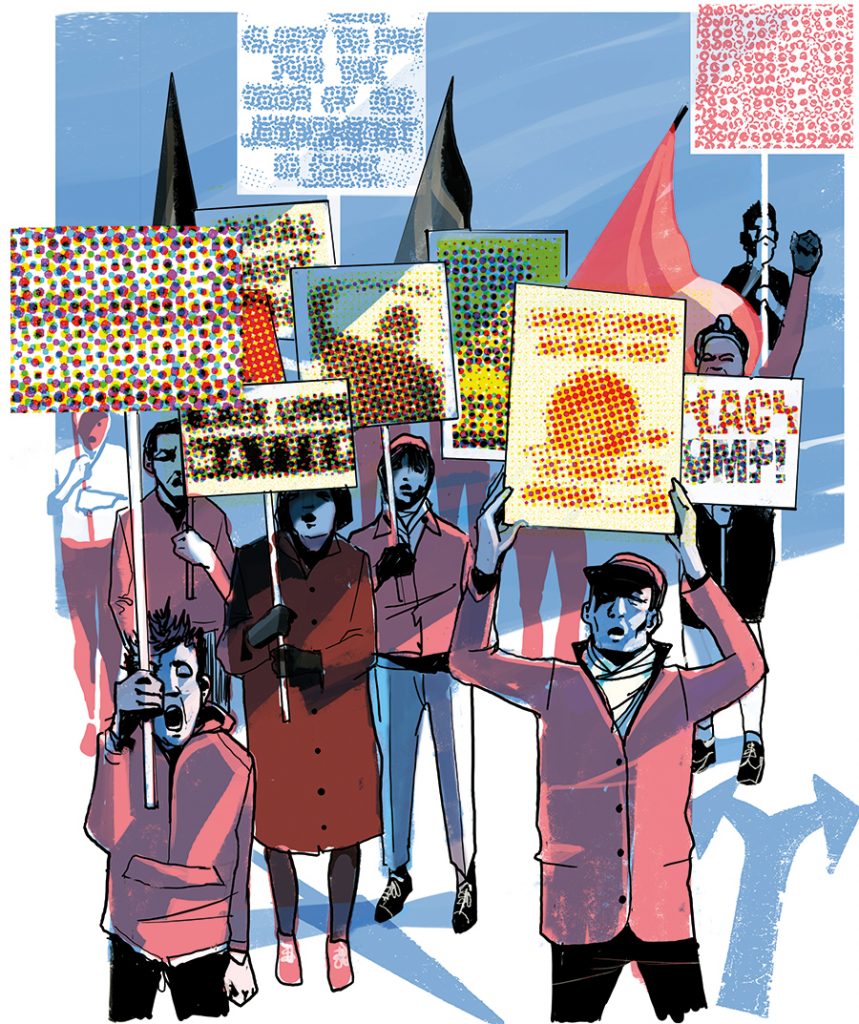 Protests
When protesters pour into the streets, journalists are necessarily among the first responders; this is an essential part of their professional duties. Traditionally present at demonstrations to document and reflect, media workers – whether freelance or staff – are also among the first to be corralled, targeted and injured.
A number of incidents happening at protests – as recorded by the Mapping Media Freedom project – have provided an insight into the various threats that journalists confront when called upon to report from the scenes of demonstrations, whether small or large.
Against a backdrop of nationalism, xenophobia, economic insecurity and anti-government sentiment, reporters have been indirectly targeted by demonstrators, counter demonstrators and police.
This report examined 191 verified cases from the 35 countries affiliated with the EU – 28 member states, 5 candidates for entry and 2 potential candidates for entry. There were 46 incidents in France, 31 in Spain, 27 in Germany and 14 in Romania.
The numbers reflect only what was reported to and verified by Mapping Media Freedom. We have repeatedly found during the project that journalists underreport incidents they see as too minor, commonplace or part of the job, or where they fear reprisals from organised groups or law enforcement. In some cases, project correspondents have identified incidents retrospectively as a result of offhand comments on social media networks or media reports appearing only after a similar incident has come to light.
Contexts vary, but journalists face risks originating with both protesters and police, and as a result of finding themselves stuck between protesters and police (or various groups of protesters). However, more than half the incidents (13 out of 25) reported in the first seven months of 2018 involve members of law enforcement, suggesting the need for improvements in police handling of media attending protests.
This year also saw a number of incidents in which protesters targeted journalists because of the political alignment that they or the media outlet they work for holds. This has been exhibited by reports originating from anti-government protests aimed at Poland’s conservative Law and Justice Party.
This issue is explored further in our companion report Targeting the Messenger, which is available here. [/vc_column_text][/vc_column][/vc_row][vc_row][vc_column][vc_row_inner][vc_column_inner width=”1/4″][vc_icon icon_fontawesome=”fa fa-angle-double-right” color=”black” size=”xl” align=”right”][/vc_column_inner][vc_column_inner width=”3/4″][vc_column_text]
The question of the independence of national broadcasters is regularly debated and contested across Europe.
[/vc_column_text][/vc_column_inner][/vc_row_inner][vc_column_text]
Public Broadcasting
During the period covered in this report, Mapping Media Freedom has recorded a number of incidents related to national broadcasters in EU member states. Taken together, these reports outline the importance of maintaining the editorial independence of public broadcasters.
The question of the independence of national broadcasters is regularly debated and contested across Europe. Many governments play an important role in selecting national broadcasters’ management, for instance in Italy or France.
Public broadcasters have come under particular pressure in Poland and Hungary. Overhauled in 2016, Telewizja Polska has come under the direct control of the ruling conservative Law and Justice Party. The Polish legislation was modelled on the Hungarian changes implemented by that country’s ruling party Fidesz. In each country, the restructuring resulted in the elimination of hundreds of positions, including dozens of journalists.
In Austria, the conservative and far-right coalition government is planning an extensive reform of the state Austrian Broadcasting Corporation (ORF), which would include scrapping the tax funding it gets so that funds would be directly allocated by the government.
In June 2018, presenters of Galician public broadcaster TVG’s afternoon news programme resigned in protest at the alleged political influence of the news agenda at the channel. The presenters and some of their colleagues had taken part in regular “Black Friday” actions in protest at the alleged manipulation of the channel’s news report. The action was inspired by an effort launched by staff at the Spanish national broadcaster RTVE in April 2018 in protest at what they see as political manipulation of the news agenda.
The control exerted by the Polish government over state broadcasters creates a situation where state channels can be used as a platform by members of the government to attack private media outlets and journalists working for them, as happened in May when TVP published information meant to discredit Łukasz Maziewski, a journalist who had been critical of the Law and Justice government. TVP pointedly described Fakt, the publication for which he writes, as a “German-Swiss tabloid”. Fakt is the bestselling newspaper in Poland.
In 2017, in Poland, there was a proposal to introduce a 15% cap on foreign ownership of media companies, reminiscent of a Russian law passed in 2014 which prevented foreign investors from owning more than a 20% stake in Russian media outlets. In Poland, public media are pitted against privately owned channels, which government officials regularly attempt to discredit, as happened in May when an MP claimed that 90% of privately owned media belong to foreign capital.
In Poland and Hungary, Mapping Media Freedom has logged incidents in which journalists who work for independent and privately owned media outlets are banned from accessing events, while journalists who work for state media gain access.
In Bosnia and Herzegovina, at the beginning of July, after months of pressure, a cantonal government replaced the managers of the local public broadcaster RTV USK. In Romania, at the end of June, Romanian public television terminated the contract of the production team responsible for the programme Starea Nației (State of the Nation), which had recently aired content that showed the broadcaster’s management in an unflattering light. In a video, TVR head Doina Gradea could be seen berating TVR journalists who had published reports critical of the government, and shouting: “They deserve fists in their mouths!” Gradea and the channel’s legal department signed the notice terminating the contract.
In Austria, in April, a month prior to his election as head of the ORF’s board of trustees, a member of the right-wing governing Freedom Party of Austria voiced his concerns about the “objectivity” of the broadcaster and threatened to dismiss a third of its foreign correspondents.
In Montenegro, at the beginning of June, the council supervising the Montenegrin public broadcaster RTGC dismissed the head of the broadcaster, Andrijana Kadija; the action was seen by local civil society and journalists as an attempt by the ruling Democratic Party of Socialists to stifle editorial independence. The Montenegrin Journalists’ Association said RTCG staff were working under “tremendous political pressure” from the government, making it “difficult for reporters and editors to do their jobs professionally”.
The pressure exerted on journalists results in politically warped content, increased censorship and self-censorship.
Mapping Media Freedom’s Poland correspondent said she felt that public broadcasters contributed to “creating a parallel reality”, and that when she worked for a state broadcaster she abstained from pitching stories that could be deemed controversial, as she knew they would not be commissioned. She said: “Most of the journalists for TVP are very young, not experienced and not qualified, but they fulfil their editors’ expectations. The rest does not matter. Public media outlets are seen as propaganda tools, detached from reality.”
Close governmental control over state broadcasters can have very tangible effects for a country’s citizens. Mapping Media Freedom’s Hungary correspondent, said: “Controlling and using the public media for political purposes is a very important piece in the overall plan of the Orbán government to control the information ordinary people living in rural areas have access to. In underdeveloped areas, most people get their daily news from public media. Local newspapers were purchased by businessmen close to the government; independent radio stations did not receive new licences from the Media Council (and were replaced by government-friendly stations), meaning that people who are not particularly tech-savvy, and don’t use the internet, have no access to information critical to the government. Meanwhile independent media is shrinking.”
Between 2015 and 2016, the European Audiovisual Observatory noted that a third of public media suffered budget cuts totalling nearly €139 million. In France the government asked for large cuts, prompting a strike in autumn 2017. The French government has also announced changes to public television due in 2019. Unions already fear that certain channels will be merged or eliminated.
Debate over licence fees persists across the EU, as seen last year in Switzerland, where the proposition to make the licence fee disappear was overwhelmingly opposed by citizens during a referendum.
This context of crisis contributes to deteriorating working conditions and job losses at state broadcasters. In the Czech Republic, in June, during a meeting of the parliamentary committee for the media, the head of the state radio announced planned cuts of 120 workers. When an opposition party deputy on the committee asked him whether he was planning to use this opportunity to settle scores with his opponents within the radio network by carrying out a purge, the director said that he did not want to increase the licence fee, and that the dismissals would provide enough money in the budget to pay the remaining employees.
These incidents suggest that public media, which plays a vital role in citizens’ right to information, is under acute pressure. The EU must act more decisively to ensure these services have independence.[/vc_column_text][/vc_column][/vc_row][vc_row][vc_column][vc_custom_heading text=”Limitations to media freedom: Key categories” use_theme_fonts=”yes”][vc_custom_heading text=”Five subcategories that register the most serious threats to individual media professionals” font_container=”tag:h3|text_align:left” use_theme_fonts=”yes”][vc_row_inner][vc_column_inner width=”1/4″][vc_single_image image=”106449″ img_size=”full”][/vc_column_inner][vc_column_inner width=”3/4″][vc_column_text]
The 19 reports coded with the death flag from EU member states, candidate states and potential candidate states in the database record a variety of factors.
Member States
Slovakia
Investigative journalist Ján Kuciak and his partner were killed at their home in February 2018. Kuciak was investigating the relationship between criminal syndicates and government officials. Authorities have since made a number of arrests.
Malta
Anti-corruption journalist Daphne Caruana Galizia was killed when the car she was driving exploded as a result of a bomb in October 2017. Caruana Galizia was the subject of multiple lawsuits at the time of her murder.
Denmark
Swedish freelance journalist Kim Wall was murdered during a trip on an experimental submarine in August 2017. Inventor Peter Madsen, who created the vessel Wall was writing a story about, was later found guilty of the crime.
Danish film director Finn Nørgaard and security guard Dan Uzan were murdered in February 2015 when an armed individual attacked two seminars in an attempt to assassinate Lars Vilks, a controversial Swedish cartoonist, who was scheduled to appear.
The Netherlands
Crime journalist Martin Kok was shot dead in December 2016. Kok, who was the founder of a blog about the Dutch criminal underworld, had been targeted with a car bomb in July 2016.
Poland
Journalist Łukasz Masiak was beaten to death in Mława in June 2015. Masiak, who ran local news site NaszaMlawa.pl, which monitored local officials, had regularly received death threats, though Polish authorities later found that his profession did not play a role in his death and the perpetrator was charged.
France
Twelve people were murdered in a January 2015 terrorist attack on satirical magazine Charlie Hebdo. Ten of the victims worked for the weekly, which had published cartoons depicting the Prophet Mohammed, and two were police officers. Four cartoonists were killed.
Candidate Countries
Serbia
Journalist and radio host Luka Popov was murdered at his home in Srpski Krstur during a burglary in June 2016. Three suspects were later arrested and police said they confessed to the crime.
Turkey
- Syrian journalists Orouba Barakat and her daughter Halla Barakat were murdered by a distant relative in September 2017. They had been subjected to threats from groups associated with the Bashar Assad government.
- In April 2017 Saeed Karimian was killed in Istanbul by several hooded men who shot him and his business partner, a native of Kuwait. Karimian, an Iranian television executive based in Istanbul, was condemned in absentia in Tehran for “spreading propaganda against Iran”.
- During the failed July 2016 coup attempt, soldiers shot and killed Mustafa Cambaz, a photographer with the pro-government newspaper Yeni Şafak, in the Çengelköy neighbourhood of Istanbul.
- Journalist Mohammed Zahir al-Sherqat was murdered in April 2016 by members of Isis, which claimed he was killed for presenting “anti-Islamic State programs”.
- Journalist Gülşen Yıldız was killed in February 2016 during a terrorist attack on a military convoy in Ankara. The journalist was among 28 people killed in the incident.
- The body of Rohat Aktaş, a news editor and reporter for the Kurdish-language daily Azadiya Welat, was recovered in February 2016 from a Cizre basement, where he was trapped with dozens of others during clashes between Kurdish separatists and Turkish forces.
- Syrian journalist Naji Jerf was shot and killed in Gaziantep. Jerf’s murder was seen as an assassination because he had documented atrocities by Isis and trained hundreds of citizen journalists.
- Syrian citizen-journalist Ibrahim Abd al-Qader was beheaded in the city of Şanlıurfa, where he had been living as a refugee. Al-Qader was a contributor to the “Raqqa is Being Slaughtered Silently” information network and the Ayn al-Watan website. The journalist’s body was found at the home of a friend, Fares Hammadi, who had also been decapitated.
- Influential Turkish blogger Ferdi Özmen was killed in Istanbul in October 2014. Özmen was an ardent supporter of Mustafa Kemal Atatürk’s policies and a critic of the government.
- Serena Shim was killed in a car crash in Suruç in October 2014. Shim, a reporter for Iran’s Press TV, had been reporting from the Turkish-Syrian border on Isis militants crossing into Turkey, and had recently said on air that she was accused of spying by Turkish intelligence.
- Media worker Kadri Bağdu was murdered in October 2014 while distributing the Kurdish dailies Azadiya Welat and Özgür Gündem in Seyhan, in the south-eastern province of Adana. He was shot five times by two individuals who then fled on a motorcycle.
[/vc_column_text][/vc_column_inner][/vc_row_inner][vc_empty_space height=”15px”][vc_row_inner][vc_column_inner width=”1/4″][vc_single_image image=”106447″ img_size=”full”][/vc_column_inner][vc_column_inner width=”3/4″][vc_column_text]
There were 445 verified incidents flagged as having a physical assault as part of the narrative in the EU member states, candidate and potential candidate countries.
Italy was the EU member state with the most reports categorised as physical assaults, with 83 incidents verified during the period covered. It was followed by Spain (38), France (36), Germany (25) and Hungary (18). In candidate and potential candidate countries, Turkey had the highest number of assaults with 36. It was followed by Serbia (26), Bosnia and Herzegovina (16), Macedonia (14) and Kosovo (13).
In Italy, assaults are most often directed against journalists by private individuals who are part of the stories being covered. In France, Germany, Spain and Hungary, journalists are most often assaulted during demonstrations – whether by protesters or police. [/vc_column_text][/vc_column_inner][/vc_row_inner][vc_row_inner][vc_column_inner width=”1/4″][vc_single_image image=”106446″ img_size=”full”][/vc_column_inner][vc_column_inner width=”3/4″][vc_column_text]
There were 437 verified incidents flagged as having included an arrest or detention as part of the narrative in the EU member states, candidate and potential candidate countries.
The overwhelming number of arrests and detentions in the countries covered in this report took place in Turkey. The country’s 324 reports – including the 80 that took place before the failed coup of July 2016 – document the ongoing crackdown on press freedom that accelerated after the attempted putsch.
Among the member states, Greece had 15 reports. It was followed by France (9), Germany (8), the Netherlands (7) and Latvia (6). In the candidate and potential candidate countries: Macedonia (9), Serbia (8), Bosnia and Herzegovina (4) and Kosovo (4). [/vc_column_text][/vc_column_inner][/vc_row_inner][vc_row_inner][vc_column_inner width=”1/4″][vc_single_image image=”106448″ img_size=”full”][/vc_column_inner][vc_column_inner width=”3/4″][vc_column_text]
There were 545 verified incidents categorised as having blocked access as part of the narrative in the EU member states, candidate and potential candidate countries.
Among the member states, Hungary’s journalists were prevented from covering events in 52 incidents. It was followed by France (38), Poland (36), Germany (34) and Italy (33). In candidate and potential candidate states, Turkey had 103 incidents. It was followed by Serbia (29), FYROM (28), Bosnia and Herzegovina (19), Albania (5) and Montenegro (5). [/vc_column_text][/vc_column_inner][/vc_row_inner][vc_row_inner][vc_column_inner width=”1/4″][vc_single_image image=”106453″ img_size=”full”][/vc_column_inner][vc_column_inner width=”3/4″][vc_column_text]
There were 697 verified incidents categorised as having intimidation as part of the narrative in the EU member states, candidate and potential candidate countries.
Among the member states, Italy’s journalists were intimidated most often, with 133 reports. It was followed by Romania (47), Croatia (41), France (39) and Hungary (36). In candidate and potential candidate countries, Bosnia and Herzegovina had 47 reported incidents. It was followed by Serbia (40), Macedonia (31), Turkey (31) and Montenegro (19).
Italian journalists are most often threatened by private citizens, who often resort to physical violence. The country’s journalists also face intense pressure from individuals allegedly connected to criminal syndicates. The high number of Italian reports is due to the awareness of the issue raised by the work of Ossigeno per l’informazione, which monitors press freedom in Italy using its oxygen methodology. [/vc_column_text][/vc_column_inner][/vc_row_inner][/vc_column][/vc_row][vc_row][vc_column][vc_column_text][/vc_column_text][vc_custom_heading text=”Selected countries” use_theme_fonts=”yes”][vc_custom_heading text=”We have chosen six nations from the project which demonstrate the various trends outlined above. These are not indicative of “best” or “worst”, and are here to illustrate the regional themes as they are experienced in individual countries.” font_container=”tag:h3|text_align:left” use_theme_fonts=”yes”][vc_column_text]
In Austria, Mapping Media Freedom has recorded a significant rise in the intimidation of media outlets and journalists. Seven of the eight incidents that have been categorised as intimidation were logged by the platform after the December 2017 election. Journalists’ unions and watchdogs see a correlation between the change in Austria’s political landscape and the increase in violations of media freedom.
“Since the inauguration of the Austrian conservative right-wing populist government on 18 December 2017, there are rapidly increasing signs that media freedom is being restricted in Austria. Journalists are publicly attacked by politicians,” Rubina Möhring, president of Reporters Without Borders, told Mapping Media Freedom in March 2018.
Eike-Clemens Kullmann, president of the Journalists Department of Austria’s Union of Private Sector Employees, Graphical Workers and Journalists, told Mapping Media Freedom: “In the print media, the union observes with great concern an increasing number of attacks and defamation aimed at intimidating colleagues who are willing to stand up for the freedom of journalism.”
A clear majority of threats reported to Mapping Media Freedom originated with the right-wing governing coalition partner FPÖ and its political affiliates, which targeted media outlets, in particular the public broadcasting cooperative ORF.
Fred Turnheim, president of the Austrian Journalists Club, told Mapping Media Freedom: “The former far-right opposition party FPÖ has been well known for criticising the press for what it considers a liberal bias and lack of objectivity in the past.”
Turnheim said that since joining the government, FPÖ has the ability to influence the media landscape and try to pressure journalists into silence.
Turnheim views the influence of US President Donald Trump as an important turning point, which now risks normalising the defamation of media outlets as peddlers of fake news and journalists as liars. “President Trump opened the possibility of discrediting journalists without providing any evidence. This is an attitude which has spread not only to Austria.”
Möhring cited the FPÖ’s intention “to intimidate individual journalists in order to produce and influence reports in their favour and to reduce the reputation of independent journalism, especially the ORF, among the general public”. However, she assigned responsibility for the rise in intimidation in the country not only to the FPÖ, but also to Chancellor Sebastian Kurz, “who tolerates and approves of the FPÖ’s behaviour and, additionally, pursues an enforced one-sided information policy called message control”.[/vc_column_text][vc_column_text]
Mapping Media Freedom published 69 reports of censorship in Hungary between May 2014 and 31 July 2018. The most important impact on the state of media freedom is the concentration of media outlets in the hands of a few businessmen close to the government.
Only a handful of independent media outlets continue working in Hungary, publishing almost exclusively on the internet. This has led to a situation where access to information critical of the government is difficult to obtain, especially in rural areas with low internet penetration and for people who are less tech-savvy.
One of the largest internet news sites, Origo, was sold to business circles close to the government in 2014. The most important left-leaning daily, Népszabadság, was closed in October 2016.
After Fidesz won the parliamentary elections in April 2018 for the third time, dissenting oligarch Lajos Simicska sold his media interests. The leading conservative newspaper Magyar Nemzet was closed in April 2018, and the only news channel critical of the government, Hír TV, was also sold in July 2018.
After a media outlet is taken over by business circles close to the government, the leading journalists and management are usually dismissed, and the outlet begins publishing/broadcasting materials in line with the direction set during informal meetings by people close to the government. Self-censorship is pervasive among the journalists who continue working at these outlets.
Press freedom and the right to access to information in Hungary were considerably affected by the acquisition of virtually all county newspapers by businessmen close to the government in 2016.
“We consider the government monopoly on news unhealthy and damaging, going against the laws concerning free competition and media,” Miklós Hargitai, the president of the National Association of Hungarian Journalists (MÚOSZ), told Mapping Media Freedom. He added that because MÚOSZ is not a government authority, its leverage is limited.
“We raise awareness of the illegalities through our statements and petitions, as well as interviews published in the few remaining free media outlets. We also plan to file a complaint to the European Commission, because the media conglomerate serving the interests of the government is functioning using mainly public funds: cheap credits and preferentially contracted state advertising. In our opinion, this is state subsidy, which is forbidden in the EU,” Hargitai said.[/vc_column_text][vc_column_text]
On 21 June this year, the offices of two Dutch weekly magazines were shot at with an anti-tank gun. The property was badly damaged, but as it was late at night, no one was injured. The weeklies, Panorama and Nieuwe Revu, are both known for their reporting on organised crime, and more specifically feuds between various criminal motorcycle gangs. The main suspect turned out to be a member of one of those motorcycle gangs.
Over the past five years, Mapping Media Freedom has shown that most of the media freedom violations in the Netherlands were reported in the subcategory “Intimidation”. The intimidation came from various sources: individuals, politicians, companies and the public. Journalists are mostly the target when they deal with such topics as organised crime, Islam, right-wing politician Geert Wilders and Turkish President Recip Tayyip Erdogan.
Several journalists received threats in the aftermath of the failed coup in Turkey and a diplomatic row between the Netherlands and Turkey in 2017. Political party Denk, a Dutch party accused of having ties with Erdogan’s Justice and Development Party, refused critical journalists at their press conferences. They published a campaign video in which they warn their voters to “distrust the media, don’t fall for it”.
Journalists who write critically about far-right parties like Geert Wilders’ Party for Freedom and Forum for Democracy also often receive threatening and intimidating messages.
A trend of sexist threats and intimidation against women journalists reached a low point in May 2017, when Dutch journalist Loes Reijmer received multiple rape threats after the right-wing blog GeenStijl published her photo with a salacious text. It resulted in many more women journalists coming out in the open with their stories about sexual harassment online.
“Parties like Denk and PVV increasingly depict journalists as a biased party,” said Thomas Bruning, from the Dutch Union for Journalists (NVJ). “And because of social media, the threshold is lower than it used to be for the public to react, often anonymously. And the chance of being caught is lower, so people are getting away with it.”
A prominent Dutch study showed that over 60% of Dutch journalists have at some point in their career received threats and experienced intimidation. The survey, A Threatening Climate (2017), showed that 61% of all (638) questioned Dutch journalists had been threatened, 22% even on a monthly basis. Amnesty International called the Dutch numbers “worrying”.
According to Alex Brenninkmeijer, the former Dutch ombudsman who led the investigation, an explanation is the lack of trust in the media. “This is a consequence of the attitude of politicians towards journalists. You see this in the US and the UK, and it’s spilled over to the Netherlands,” he said. “The tone used by politicians has become increasingly harsh. These are the people who should lead by example.” He added that journalism has become more polarised and politicised over the past few years, like the society has. “The pressure on journalists has increased, as if they are forced to take sides, left or right. As a result, they become the subject of hate and intimidation.”
This often results in self-censorship. The majority of journalists questioned in the survey stated that threats and intimidation have negative consequences on the quality, independence and diversity of their work, and are therefore a danger to press freedom. Some have become more careful when dealing with sensitive topics; some avoid certain places and topics.
Brenninkmeijer added that he is most worried about the vulnerable position of journalists in their profession. “Fewer journalists are contracted, instead they have flexible contracts or are freelancers,” he said. “This leads to an employer having less responsibility for the safety of the journalist. The journalist’s position is weak and unprotected. And journalism becomes increasingly under pressure in society.”[/vc_column_text][vc_column_text]
Between May 2014 and August 2018, Mapping Media Freedom reported 46 cases of censorship in Spanish media. Nemesio Rodríguez, president of the Spanish Federation of Journalism Associations, said: “There is evidence of journalists being pressured to change their information. Only 21% of journalists declare they have never received pressures to change their information. 75.7% believe it is usual that journalists yield to pressure, which in many occasions leads to self-censorship.”
Rodríguez pointed to judicial decisions as one of the factors that have limited the freedom of information. These decisions derive from restrictive laws passed during the right-wing People’s Party governments, especially the so-called “Gag Law” – the Citizen Security Law – which “contains articles that have weakened this freedom, since its judicial interpretation has ended by penalising free opinion. On the other hand, police sanctions against journalists and photojournalists have led to self-censorship to avoid problems.”
The Platform for the Defence of Freedom of Information also blames legislative and judicial powers. “The Citizen Security Law has been applied against journalists in the exercise of their work; and judicial procedures against investigative journalism, mainly in corruption cases by demands for the right to honour.”
Rodríguez also blames governments. “The News Service Council – the body in charge of guaranteeing internal control and independence within Spain’s public TV and radio corporation – reported hundreds of cases of censorship, manipulation, partisanship and other bad practices during Mariano Rajoy’s government.” Rajoy, the former head of the PP, was Spain’s prime minister from 2011 to 2018. “Also, Catalan television TV3 received accusations of informative manipulation and partiality in favour of a pro-independence thesis.”
PDLI pointed out: “We cannot forget other threats, such as the reform of the Criminal Code, as well as the deterioration of working conditions in the press; and the safety of journalists, especially women, due to threats and harassment in social networks would be another relevant factor.”
Overall, Rodríguez remarked that “this is not a state of widespread risk for freedom of expression and freedom of press. There is no censorship in Spain, if we understand censorship as the aim of a government to prevent the dissemination of information contrary to its interests.” Nevertheless, he admitted: “It is much harder to put an end to pressures coming from economic powers, since many media outlets are controlled by financial groups.”
PDLI does not share Rodríguez’s views. “There has been an unprecedented deterioration, particularly since the approval of the ‘Gag Law’, and it needs to be reverted urgently.”[/vc_column_text][vc_column_text]
Sweden is still home to resilient, diverse and independent media, with relatively healthy commercial media supplementing a well-funded public service offering over TV, radio and online. The past year has however seen further evidence that the rise of populist right-wing politics in Sweden threatens both the operational freedom of journalists and their traditional place as an important component in the functioning of Sweden’s parliamentary democracy.
This threat is most obvious in the actions of extra-parliamentary hard-right activists pursuing traditional neo-Nazi methods of intimidation through marching, physical attacks and directly criminal behaviour, but a more pervasive threat is the delegitimisation of the media more generally by activists and politicians from the insurgent Sweden Democrats party.
In August 2018, for example, the SD leader Jimmie Åkesson said on air that he would like to close down the public service radio channel P3 for being too left-wing, attracting criticism. In the runup to the recent election the party has maintained a consistent hostility to the established commercial and public media, which they claim are trapped by political correctness and populated by a leftist elite. On election night Åkesson audibly lamented the number of journalists in the room, and the party’s strong showing has raised the prospect of their influencing media legislation in the coming years. Jesper Bengtsson, the chairman of Swedish PEN, said that “in Jimmie Åkesson’s world all journalism seems to just be an opinion. How should we get away from that idea of journalism?”
This type of scepticism of professional journalistic work has also been evident in the Moderate Party. This summer Hanif Bali, a member of parliament, was heavily criticised after posting mocked-up pictures of himself on the cover of the computer game Call of Duty, indicating that he was at war with the newspaper Dagens Nyheter.
Other dangers in the Swedish media include the increased precarity of work for freelancers, who are facing structural challenges to carrying out their work safely, and the apparent indifference by some members of the police to the safety and responsibility of journalists operating in public spaces. There is also a secondary challenge from foreign broadcasters in the US and Russia producing inaccurate news reporting on Sweden, which then undermines the professional legitimacy of Swedish journalists – a phenomenon which became particularly evident during the election campaign.
Going forward, the Swedish government is taking measures to combat fake news and reform support it provides to online and offline publications.[/vc_column_text][vc_column_text]
Montenegro’s atmosphere of impunity is cited by reporters within the country as the main reason for the high rate of intimidation against media workers. Nineteen of the 47 incidents logged in the country between May 2014 and August 2018 included threats against journalists. The threats come from a variety sources, including politically connected individuals and politicians: “Prime minister’s brother threatens and swears at journalist” and “Parliament vice-president threatens and insults journalist” are among them.
Marijana Camović, president of the Trade Union of Media of Montenegro, told Mapping Media Freedom that the escalation of threats and intimidation is the end result of unresolved assaults and the 2004 murder of Duško Jovanović, who was the director and editor-in-chief of the daily Dan. “In a society where such things are unpunished, then intimidations are even less punished,” Camović said.
According to Tea Gorjanc-Prelević, executive director of Human Rights Action, an NGO that focuses on freedom of expression, one of the main reasons for the rise in intimidation is that there is little respect for the country’s laws, authorities or institutions – “especially if the one who is threatening is affiliated to the authorities”.
Camović said that authorities need to resolve threats against journalists quickly and effectively. She pointed to the case of journalist Sead Sadiković, who was targeted twice in as many years with threats and intimidation. A year after the first incident, an explosive device was thrown at his home because the perpetrators were upset with his reporting. “If the institutions were proactive in the first incident, the second would have never happened,” Camović said.
Gorjanc-Prelević said that priority should be given to strengthening the rule of law regarding all kinds of criminal behaviour, but pressure should also be put on authorities to diligently investigate and sanction those who are threatening journalists.
HRA recently proposed amendments to the Montenegrin Criminal Code with the aim of increasing the punishment for attacks on journalists, in order to contribute to the climate of general prevention.[/vc_column_text][/vc_column][/vc_row][vc_row][vc_column][vc_custom_heading text=”Methodology” use_theme_fonts=”yes”][vc_column_text]What is Mapping Media Freedom?
The map is a collection of narrative reports about incidents targeting journalists/media workers in 43 countries. While visualised as a map, it is a news service and database verifying, collating and recording threats to media freedom that have been reported to it by a network of correspondents, partners and journalists. The strength of Mapping Media Freedom is that it contains a wealth of details about the types of incidents affecting journalists.
What kinds of incidents are reported?
Mapping Media Freedom monitors limitations, threats and violations that affect journalists as they do their job. We strive to have a complete narrative of the objective facts of incidents without bias against news outlets or journalists.
Each incident is categorised by the following:
Limitation to Media Freedom
Did the incident happen to a media worker while they were carrying out their professional duties? If so, what categories fit the facts of the incident?
- Death: Media worker killed as a result of their work
- Physical Assaults: Media worker subjected to violence as a result of their work
- Injury: Media worker injured as a result of their work
- Arrest/Detention: Media worker arrested or detained as a result of their work
- Interrogation: Media worker questioned by authorities as a result of their work
- Intimidation: Media worker menaced as a result of their work
- Collateral Targets: Threats made against those associated with a journalist, ie family or friends
- Attack to Property: Computers, cameras or other tools damaged
- Civil Charges: Media worker sued as a result of their work
- Criminal Charges: Media worker charged in connection with their work
- Legal Measures: Laws or court orders curtailing media outlets or workers
- Loss of Employment: Termination, job cuts
- Blocked Access: Media worker prevented from covering a story or speaking to a source
- Defamation/Discredit: Media worker publicly ridiculed
- Psychological Abuse: Verbal harassment, offline bullying
- Sexual Harassment: Media worker targeted for gender or sexual identity
- Trolling/Cyberbullying: Media worker harassed online
- DDoS/Hacking: News site or journalist targeted
- Violation of Anonymity: Publicly naming a source
- Bribery/Payments: Money proffered to influence coverage
- Impunity: Incidents where crimes against journalists go unpunished
- Targeting Whistleblowers: Targeting anonymous sources
- Attacking Freedom of Association: Union-busting by media outlet management
Case of Censorship
Did this incident include content produced by a journalist/media worker? What happened to that content?
- Article/Work didn’t appear at all
- Article/Work was heavily cut omitting important information
- Article/Work was slightly but significantly changed
- Article/Work was framed in a misleading way
- Self-censorship
- Soft censorship
- Commercial interference
Source of the Threat/Violation/Abuse
Who targeted the journalist/media worker?
- Employer/Publisher/Colleague(s)
- Police/State Security
- Government/State Agency/Public Official(s)
- Court/Judicial
- Political Party
- Corporation/Company
- Private Security
- Known Private Individual(s)
- Criminal Organisation
- Another Media
- Other/Unknown
Type of Journalist
What type of journalist/media worker was involved? In the case of bloggers/citizen journalists: were they involved in journalistic activities?
- Journalist
- Broadcaster
- Photographer
- Documentarist
- Cameraperson
- Editor
- Blogger/Citizen Journalist
- Other
Gender
What is the gender of the journalist/media worker involved in the incident?
- Female
- Male
- Nonbinary
- Not Applicable
Support Needed
If known, what could unions or media outlets help the journalist with?
- Legal Aid
- Physical Protection
- Training
- Informational Resources
- Publicity
- Union Intervention
- Solidarity
EU Membership
To which category does the country in which the incident took place belong?
- EU Member States
- Candidate Countries
- Potential Candidates
How do we verify the incidents submitted?
The platform’s methodology complies with the journalistic standards employed by Reuters and AP. Each report is verified by 2-3 trusted and independent sources, which include but are not limited to local and national media outlets, journalists’ unions, police reports and the social media accounts of the individuals directly involved.
When violations are self-reported or clarification is needed, Index staff also verify incidents with the media worker(s) affected by getting first-hand testimony, and/or speak to journalists’ unions.
Our verification process is a multilayered one in which staff work with a team of independent journalists to verify and report incidents submitted to the website. The goal is the most complete narrative of the incident that reflects the objective events.
Who is considered a journalist/media worker?
A media worker is anyone partaking in the gathering, assessing, creating and presenting of news and information.
What countries are monitored?
Mapping Media Freedom monitors a total of 43 countries which include the EU member states, candidates and potential candidates for EU membership, non-EU EEA states and four former Soviet bloc nations.
Albania | Austria | Azerbaijan | Belarus | Belgium | Bosnia and Herzegovina | Bulgaria | Croatia | Cyprus (Northern Cyprus) | Czech Republic | Denmark | Estonia | Finland | France | Germany | Greece | Hungary | Iceland | Ireland | Italy | Kosovo | Latvia | Lithuania | Luxembourg | Macedonia | Malta | Montenegro | Netherlands | Norway | Poland | Portugal | Romania | Russia | Serbia | Slovakia | Slovenia | Spain | Sweden | Switzerland | Turkey | Ukraine (Crimea) | United Kingdom | Vatican
European Union member states
Austria | Belgium | Bulgaria | Croatia | Cyprus (Northern Cyprus) | Czech Republic | Denmark | Estonia | Finland | France | Germany | Greece | Hungary | Ireland | Italy | Latvia | Lithuania | Luxembourg | Malta | Netherlands | Poland | Portugal | Romania | Slovakia | Slovenia | Spain | Sweden | United Kingdom
European Union candidate states
Albania | Macedonia | Montenegro | Serbia | Turkey
European Union potential candidate states
Bosnia and Herzegovina | Kosovo
Non-EU states
Azerbaijan | Belarus | Iceland | Norway | Russia | Switzerland | Ukraine (Crimea) | Vatican[/vc_column_text][/vc_column][/vc_row][vc_row][vc_column width=”1/2″][vc_column_text]Acknowledgements
This report was prepared by Valeria Costa-Kostritsky, Sean Gallagher, Jodie Ginsberg, Joy Hyvarinen and Paula Kennedy with contributions from Mapping Media Freedom correspondents: Adriana Borowicz, Ilcho Cvetanoski, João de Almeida Dias, Amanda Ferguson, Dominic Hinde, Investigative Reporting Project Italy, Linas Jegelevicius, Juris Kaza, David Kraft, Lazara Marinkovic, Fatjona Mejdini, Mitra Nazar, Silvia Nortes, Platform for Independent Journalism (P24), Katariina Salomaki, Zoltan Sipos, Michaela Terenzani, Pavel Theiner, Helle Tiikmaa, Christina Vasilaki, Lisa Weinberger
Illustrations
Alex Green
Design
Matthew Hasteley[/vc_column_text][/vc_column][vc_column width=”1/2″][vc_row_inner][vc_column_inner width=”1/3″][/vc_column_inner][vc_column_inner width=”1/3″][vc_single_image image=”106454″ img_size=”full” alignment=”center”][/vc_column_inner][vc_column_inner width=”1/3″][/vc_column_inner][/vc_row_inner][vc_row_inner][vc_column_inner width=”1/3″][vc_single_image image=”106452″ img_size=”full” onclick=”custom_link” link=”https://ecpmf.eu/”][/vc_column_inner][vc_column_inner width=”1/3″][vc_single_image image=”106451″ img_size=”full”][/vc_column_inner][vc_column_inner width=”1/3″][vc_single_image image=”106450″ img_size=”full” onclick=”custom_link” link=”https://europeanjournalists.org/”][/vc_column_inner][/vc_row_inner][/vc_column][/vc_row]

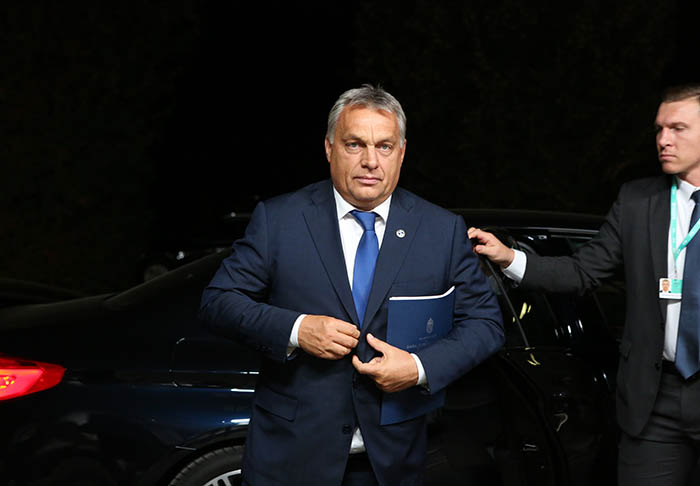
 SUBSCRIBE NOW[/vc_column_text][/vc_column_inner][/vc_row_inner][/vc_column][/vc_row][vc_row][vc_column][vc_column_text]This article has been updated on 18 April 2019 to reflect that the name of organisation Lutz Kinkel works for had been written incorrectly. The article read “European Centre for Press and Media Reform”, when it should have read “European Centre for Press and Media Freedom”.[/vc_column_text][/vc_column][/vc_row]