17 Mar 2014 | Volume 43.01 Spring 2014
[vc_row][vc_column][vc_custom_heading text=”In the Spring issue of the magazine, we include a special report, the war of words, on the use of propaganda and censorship during conflicts.”][vc_row_inner][vc_column_inner width=”1/2″][vc_column_text]
This theme seems particularly timely with the current situation in Crimea, where we are seeing classic propaganda techniques being rolled out to rally support for the vote to join Russia. Our special report of 15 articles and essays, starts with WWI where the current use of the term propaganda was invented and looks at poster campaigns, and propaganda journalism in the USA, but our writers, who include Lyse Doucet, David Aaronovitch, Rana Mitter, and serving army officer Ric Cole, also look at WWII, Iraq, Afghanistan and Syria.
[/vc_column_text][/vc_column_inner][vc_column_inner width=”1/2″][vc_single_image image=”80560″ img_size=”large”][/vc_column_inner][/vc_row_inner][vc_column_text]
Natasha Joseph interviews a journalist who worked in South Africa during apartheid, and what it was like to file stories from a newsroom knowing one of your colleagues was a spy; and Scottish journalist John MacLeod reports on a bombing cover-up in Clydebank, near Glasgow, where a huge swath of the town was flattened, and the rest of the country was left completely unaware because of wartime censorship. This Scottish story is still not that well known, even today. Something that illustrates the power of the cover-up during wartime, is the way details of the wartime flu epidemic was kept from millions of people all over the world.
In the other sections of the magazine, Irena Maryniak looks at the rise of racism and nationalism in Hungary; and Konstanty Gebert reports on hate crime and anti-semitism in Poland. The magazine includes two articles about censorship in science, one from Canada and one from the United States.
Also in this issue:
• Samizdat still going: underground newspapers in Belarus
• First extract in English of a controversial Turkish play
• Film fans go head to head on which decade has seen the strongest women’s voices on film. And don’t miss our competition to votes on the decade, and win tickets to a screening at Rich Mix cinema
• How do you feel about propaganda? Take our survey.
[/vc_column_text][/vc_column][/vc_row][vc_row][vc_column][vc_custom_heading text=”SUBSCRIBE” css=”.vc_custom_1481736449684{margin-right: 0px !important;margin-left: 0px !important;border-bottom-width: 1px !important;padding-bottom: 15px !important;border-bottom-color: #455560 !important;border-bottom-style: solid !important;}”][vc_column_text]Index on Censorship magazine was started in 1972 and remains the only global magazine dedicated to free expression. Past contributors include Samuel Beckett, Gabriel García Marquéz, Nadine Gordimer, Arthur Miller, Salman Rushdie, Margaret Atwood, and many more.[/vc_column_text][vc_row_inner][vc_column_inner width=”1/2″][vc_single_image image=”76572″ img_size=”full”][/vc_column_inner][vc_column_inner width=”1/2″][vc_column_text]In print or online. Order a print edition here or take out a digital subscription via Exact Editions.
Copies are also available at the BFI, the Serpentine Gallery, MagCulture, (London), News from Nowhere (Liverpool), Home (Manchester), Calton Books (Glasgow) and on Amazon. Each magazine sale helps Index on Censorship continue its fight for free expression worldwide.
 SUBSCRIBE NOW[/vc_column_text][/vc_column_inner][/vc_row_inner][/vc_column][/vc_row]
10 Jan 2014 | Digital Freedom, Europe and Central Asia, European Union, News

(Illustration: Shutterstock)
This article is part of a series based on our report, Time to Step Up: The EU and freedom of expression
The EU has made a number of positive contributions to digital freedom: it plays a positive part in the global debate on internet governance; the EU’s No-Disconnect Strategy, its freedom of expression guidelines and its export controls on surveillance equipment have all be useful contributions to the digital freedom debate, offering practical measures to better protect freedom of expression. Comparatively, some of the EU’s member states are amongst the world’s best for protecting online freedom. The World Wide Web Foundation places Sweden at the top of its 2012 Index of internet growth, utility and impact, with the UK, Finland, Norway and Ireland also in the top 10. Freedom House ranks all EU member states as “free”, and an EU member state, Estonia, ranks number one globally in the organisation’s annual survey, “Freedom in the World”. But these indices merely represent a snapshot of the situation and even those states ranked as free fail to fully uphold their freedom of expression obligations, online as well as offline.
As the recent revelations by whistleblower Edward Snowden have exposed, although EU member states may in public be committed to a free and open internet, in secret, national governments have been involved in a significant amount of surveillance that breaches international human rights norms, as well as these governments’ own legal commitments. It is also the case that across the EU, other issues continue to chill freedom of expression, including the removal or takedown of legitimate content.
The EU’s position on digital freedom is analysed in more detail in Index on Censorship’s policy paper “Is the EU heading in the right direction on digital freedom?” The paper points out that the EU still lacks a coherent overarching strategy and set of principles for promoting and defending freedom of expression in the digital sphere.
Surveillance
Recent revelations by former US National Security Agency (NSA) whistleblower Edward Snowden into the NSA’s PRISM programme have also exposed that mass state surveillance by EU governments is practised within the EU, including in the UK and France.
Mass or blanket surveillance contravenes Article 8 (the right to respect for private and family life) and Article 10 (the right to freedom of expression) of the European Convention on Human Rights. In its jurisprudence, the European Court of Human Rights has repeatedly stated that surveillance, if conducted without adequate judicial oversight and with no effective safeguards against abuse, will never be compatible with the European Convention.[1]
This state surveillance also breaches pledges EU member states have made as part of the EU’s new cybersecurity strategy, which was agreed in February 2013 and addresses mass state surveillance. The Commission stated that cybersecurity is predominantly the responsibility of member states, an approach some have argued gives member states the green light for increased government surveillance. Because the strategy explicitly states that “increased global connectivity should not be accompanied by censorship or mass surveillance”, member states were called upon to address their adherence to this principle at the European Council meeting on 24th October 2013. The Council was asked to address revelations that external government surveillance efforts, such as the US National Security Agency’s Prism programme, undermining EU citizens’ rights to privacy and free expression. While the Council did discuss surveillance, as yet there has been no common EU position on these issues.
At the same time, the EU has also played a role in laying the foundations for increased surveillance of EU citizens. In 2002, the EU e-Privacy Directive introduced the possibility for member states to pass laws mandating the retention of communications data for security purposes. In 2006, the EU amended the e-Privacy Directive by enacting the Data Retention Directive (Directive 2006/24/EC), which obliges member states to require communications providers to retain communications data for a period of between six months and two years, which could result in member states collecting a pool of data without specifying the reasons for such practice. A number of individual member states, including Germany, Romania and the Czech Republic, have consulted the European Convention on Human Rights and their constitutions and have found that the mass retention of individual data through the Data Retention Directive to be illegal.
While some EU member states are accused of colluding in mass population surveillance, others have some of the strongest protections anywhere globally to protect their citizens against surveillance. Two EU member states, Luxembourg and the Czech Republic, require that individuals who are placed under secret surveillance to be notified. Other EU member states have expanded their use of state surveillance, in particular Austria, the UK and Bulgaria. Citizens of Poland are subject to more phone tapping and surveillance than any other citizens in the European Union; the European Commission has claimed the police and secret services accessed as many as 1,300,000 phone bills in 2010 without any oversight either by the courts or the public prosecutor.
Internet governance
At a global level the EU has argued for no top-down state control of internet governance. There are efforts by a number of states including Russia, China and Iran to increase state control of the internet through the International Telecommunication Union (ITU). The debate on global internet governance came to a head at the Dubai World Conference on International Telecommunications (WCIT) summit at the end of 2012 which brought together 193 member states. At the WCIT, a number of influential emerging democratic powers aligned with a top-down approach with increased state intervention in the governance of the internet. On the other side, EU member states, India and the US argued the internet should remain governed by an open and collaborative multistakeholder approach. The EU’s influence could be seen through the common position adopted by the member states. The European Commission as a non-voting WCIT observer produced a common position for member states that opposed any new treaty on internet governance under the UN’s auspices. The position ruled out any attempts to make the ITU recommendations binding and would only back technology neutral proposals – but made no mention of free expression. The absence of this right is of concern as other rights including privacy (which was mentioned) do not always align with free speech. After negotiations behind closed doors, all 27 EU member states and another 28 countries including the US abstained from signing the final treaty. That states with significant populations and rising influence in their regions did not back the EU and leant towards more top-down control of the internet should be of significant concern for the EU.
Intermediate liability, takedown and filtering
European laws on intermediate liability, takedown and filtering are overly vague in defining what constitutes valid and legitimate takedown requests, which can lead to legal uncertainty for both web operators and users. Removal of content without a court order can be problematic as it places the content host in the position of judge and jury over content and inevitably leads to censorship of free expression by private actors. EU directorate DG MARKT[2] is currently looking into the results of a public consultation into how takedown requests affect freedom of expression, among other issues. It is expected that the directorate will outline a directive or communication on the criteria takedown requests must meet and the evidence threshold required, while also clarifying how “expeditiously” intermediaries must act to avoid liability. A policy that clarifies companies’ legal responsibilities when presented with takedown requests should help better protect online content from takedown where there is no legal basis for the complaint.
The EU must take steps to protect web operators from vexatious claims from individuals over content that is not illegal. Across the EU, the governments of member states are increasingly using takedown requests. Google has seen a doubling of requests from the governments of Germany, Hungary, Poland and Portugal from 2010-2012; a 45% increase from Belgium and double-digit growth in the Netherlands, Spain and the UK. Governments are taking content down for dubious reasons that may infringe Article 10 rights of the ECHR. In 2010, a number of takedown requests were made in response to ‘”government criticism” and four in response to “religious offence”. A significant 8% of takedown requests were in response to defamation offences. With regard to defamation charges, it must be noted that the public interest is not protected equally across all EU countries (see Defamation above).
Although corporate takedown is more prevalent than state takedown, particularly in the number of individual URLs affected, the outcome of the DG MARKT consultation must be to address both vexatious state and corporate takedown requests. The new communication or directive must be clearer than the EU e-Commerce directive has been with respect to the responsibility of member states. While creating a legal framework that was intended to protect internet intermediaries, the EU e-Commerce directive has failed to be entirely effective in a number of high-profile cases. EU member states use filters to prevent the distribution of child pornography with questionable effectiveness. However, filters have not been used by states to block other content after a Court of Justice of the European Union ruling stated EU law did not allow states to require internet service providers to install filtering systems to prevent the illegal distribution of content. The Court made it clear at the time that such filtering would require ISPs to monitor internet traffic, an infringement under EU law. This has granted European citizens strong protections against systematic web filtering on behalf of states. There continue to be legal attempts to force internet intermediaries to block content that is already in the public domain. In a recent case, brought by the Spanish Data Protection authority on behalf of a complainant, the authority demanded that the search engine Google remove results that pointed to an auction note for a reposessed home due to social security debts. The claimant insisted that referring to his past debts infringed on his right to privacy and asked for the search results to be removed. In June 2013, the Advocate General of the European Court of Justice decided Google did not need to comply to the request to block “legal and legitimate information that has entered the public domain” and that it is not required to remove information posted by third parties. Google has estimated that there are 180 cases similar to this one in Spain alone. A final decision in the case is expected before the end of this year, which could have profound implications for intermediate liability.
[1] In Liberty v. UK (58243/00) the ECHR stated: “95. In its case-law on secret measures of surveillance, the Court has developed the following minimum safeguards that should be set out in statute law in order to avoid abuses of power: the nature of the offences which may give rise to an interception order; a definition of the categories of people liable to have their telephones tapped; a limit on the duration of telephone tapping; the procedure to be followed for examining, using and storing the data obtained; the precautions to be taken when communicating the data to other parties; and the circumstances in which recordings may or must be erased or the tapes destroyed”; A. v. France (application no. 14838/89), 23.11.1993: found a violation of Article 8 after a recording was carried out without following a judicial procedure and which had not been ordered by an investigating judge; Drakšas v. Lithuania, 31.07.2012, found a violation of Article 13 (right to an effective remedy) on account of the absence of a judicial review of the applicant’s surveillance after 17 September 2003.
[2] The Internal Market and Services Directorate General
9 Jan 2014 | Europe and Central Asia, European Union, News, Politics and Society
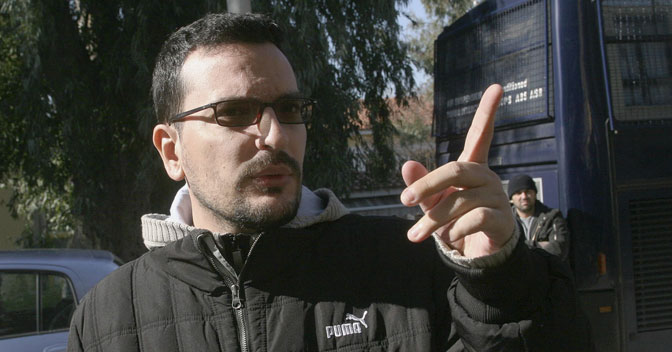
Sokratis Giolia, an investigative journalist, was shot dead outside his home in Athens prior to publishing the results of an investigation into corruption.
This article is part of a series based on our report, Time to Step Up: The EU and freedom of expression
The main threats to media freedom and the work of journalists are from political pressure or pressure exerted by the police, to non-legal means, such as violence and impunity. There have been instances where political pressure against journalists has led to self-censorship in a number of European Union countries. This pressure can manifest itself in a number of ways, from political pressure to influence editorial decisions or block journalists from promotion in state broadcasters to police or security service interventions into media investigations on political corruption.
The European Commission now has a clear competency to protect media freedom and should reflect on how it can deal with political interference in the national media of member states. As the heads of state or government of the EU member states have wider decision-making powers at the European Council this gives a forum for influence and negotiation, but this may also act as a brake on Commission action, thereby protecting media freedom.
Italy presents perhaps the most egregious example of political interference undermining media freedom in a EU member state. Former premier Silvio Berlusconi has used his influence over the media to secure personal political gain on a number of occasions. In 2009 he was thought to be behind RAI decision to stop broadcasting Annozero, a political programme that regularly criticised the government. In the lead up to the 2010 regional elections, Berlusconi’s party pushed through rules which effectively meant that state broadcasters had to either feature over 30 political parties on their talk shows or lose their prime time slots. Notably, Italian state broadcaster RAI refused to show adverts for the Swedish film Videocracy because it claimed the adverts were “offensive” to Silvio Berlusconi.
Under the government of Prime Minister Viktor Orbán, Hungary has seen considerable political interference in the media. In September 2011, popular liberal political radio station “Klubrádió” lost its licence following a decision by the Media Authority that experts believed was motivated by political considerations. The licence was reinstated on appeal. In December 2011, state TV journalists went on hunger strike after the face of a prominent Supreme Court judge was airbrushed out of a broadcast by state-run TV channel MTV. Journalists have complained that editors regularly cave into political interference. Germany has also seen instances of political interference in the public and private media. In 2009, the chief editor of German public service broadcaster ZDF, Nikolaus Brender, saw his contract terminated in controversial circumstances. Despite being a well-respected and experienced journalist, Brender’s suitability for the job was questioned by politicians on the channel’s executive board, many of whom represented the ruling Christian Democratic Union. It was decided his contract should not be renewed, a move widely criticised by domestic media, the International Press Institute and Reporters Without Borders, the latter arguing the move was “motivated by party politics” which, it argued, was “a blatant violation of the principle of independence of public broadcasters”. In 2011, the editor of Germany’s (and Europe’s) biggest selling newspaper, Bild, received a voicemail from President Christian Wulff, who threatened “war” on the tabloid if it reported on an unusual personal loan he received.
Police interference in the work of journalists, bloggers and media workers is a concern: there is evidence of police interference across a number of countries, including France, Ireland and Bulgaria. In France, the security services engaged in illegal activity when they spied on Le Monde journalist Gerard Davet during his investigation into Liliane Bettencourt’s alleged illegal financing of President Sarkozy’s political party. In 2011, France’s head of domestic intelligence, Bernard Squarcini, was charged with “illegally collecting data and violating the confidentiality” of the journalists’ sources. In Bulgaria, journalist Boris Mitov was summoned on two occasions to the Sofia City Prosecutor’s office in April 2013 for leaking “state secrets” after he reported a potential conflict of interest within the prosecution team. Of particular concern is Ireland, which has legislation that outlaws contact between ordinary police officers and the media. Clause 62 of the 2005 Garda Siochána Act makes provision for police officers who speak to journalists without authorisation from senior officers to be dismissed, fined up to €75,000 or even face seven years in prison. This law has the potential to criminalise public interest police whistleblowing.[1]
It is worth noting that after whistleblower Edward Snowden attempted to claim asylum in a number of European countries, including Austria, Finland, Germany, Italy, Ireland, the Netherlands, Spain, the governments of all of these countries stated that he needed to be present in the country to claim asylum. Others went further. Poland’s Foreign Minister Radosław Sikorski posted the following statement on Twitter: “I will not give a positive recommendation”, while German Foreign minister Guido Westerwelle said although Germany would review the asylum request “according to the law”, he “could not imagine” that it would be approved. The failure of the EU’s member states to give shelter to Snowden when so much of his work was clearly in the public interest within the European Union shows the scale of the weakness within Europe to stand up for freedom of expression.
Deaths, threats and violence against journalists and media workers
No EU country features in Reporters Without Borders’ 2013 list of deadliest countries for journalists. But since 2010, three journalists have been killed within the European Union. In Bulgaria in January 2010 , a gunman shot and killed Boris Nikolov Tsankov, a journalist who reported on the local mafia, as he walked down a crowded street. The gunman escaped on foot. In Greece, Sokratis Giolia, an investigative journalist, was shot dead outside his home in Athens prior to publishing the results of an investigation into corruption. In Latvia, media owner Grigorijs Nemcovs was the victim of an apparent contract killing, which Reporters Without Borders claims appeared to be carefully planned and executed.103 Nemcovs was also a political activist and deputy mayor, and his newspaper, Million, was renowned for its investigative coverage of political and local government corruption and mismanagement.
While it is rare for journalists to be killed within the EU, the Council of Europe has drawn attention to the fact that violence against journalists does occur in EU countries, particularly in south eastern Europe, including in Greece, Latvia, Bulgaria and Romania.[2] The South East Europe Media Organisation (SEEMO) has raised concerns over police violence against journalists covering political protests in many parts of south eastern Europe, particularly in Romania and Greece.
[1] There is an official whistleblowing mechanism instituted by the law, but it is not independent of the police.
[2] William Horsley for rapporteur Mats Johansson, ‘The State of Media Freedom in Europe’, Committee on Culture, Science, Education and Media, Council of Europe (18 June 2012).
7 Jan 2014 | Europe and Central Asia, European Union, News, Politics and Society, Religion and Culture
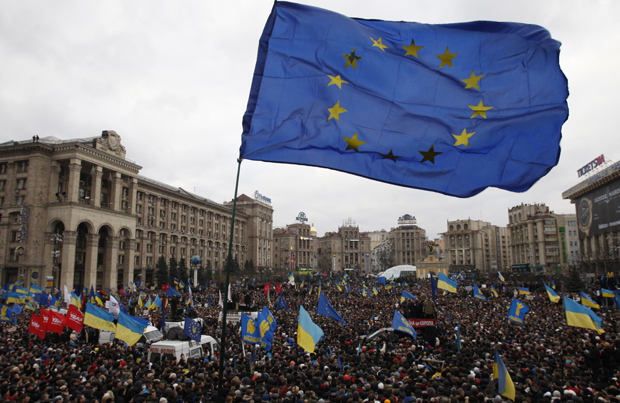
(Photo: Anatolii Stepanov / Demotix)
This article is part of a series based on our report, Time to Step Up: The EU and freedom of expression
Media concentration in the EU poses a significant challenge. The media in the EU is significantly more concentrated than in North America, even when taking into consideration explanations of population, geographical size and income. Even by global standards, media concentration in the EU is high.
Another challenge arises from national media regulation, which may both fail to protect plurality and, allow an unnecessary and unacceptable amount of political interference in the way the media works. While the EU does not have an explicit competency to intervene in all matters of media plurality and media freedom, it is not neutral in this debate. A number of initiatives are underway to help better promote media freedom, and in particular media plurality. Free expression advocates, including Index, welcome the fact that the EU is taking the issue of media freedom more seriously.
Media regulation
Across the European Union, media regulation is left to the member states to implement, leading to significant variations in the form and level of media regulation. National regulation must comply with member states’ commitments under the European Convention on Human Rights, but this compliance can only be tested through exhaustive court cases. While the European Commission has, in the past, tended to view its competencies in this area as being limited due to the introduction of the Charter of Fundamental Rights into EU primary law, the Commission is looking at its possible role in this area. In part, the Commission is acting upon the guidance of the European Parliament, which has expressed significant concerns over the state of media regulation, and in particular with regard to Hungary, where regulation has been criticised for curtailing freedom of expression.
The national models of media regulation across Europe vary significantly, from models of self-regulation to statutory regulation. These models of regulation can impact negatively on freedom of expression through the application of unnecessary sanctions, the regulator’s lack of independence from politicians and laws that create a burdensome environment for online media. Statutory regulation of the print and broadcast media is increasingly anachronistic, raising questions over how the role of journalist or broadcaster should be defined and resulting in a general and increasing confusion about who should be covered by these regulatory structures, if at all. Frameworks that outline laws on defamation and privacy and provide public interest and opinion defences for all would provide clarify for all content producers. In the majority of countries, the broadcast media is regulated by a statutory regulator (due to a scarcity of analogue frequencies that required arbitration in the past), yet, often, the print media is also regulated by statutory bodies, including in Slovenia, Lithuania, Italy; or regulated by specific print media laws and codes, for example in Austria, France, Sweden and Portugal. As we demonstrate below, many EU member states have systems of media regulation that are overly restrictive and fail to protect freedom of expression.
In many EU member states, the system of media regulation allows excessive state interference in the workings of the media. Hungary’s system of media regulation has been criticised by the Council of Europe, the European Parliament and the OSCE for the excessive control statutory bodies exert over the media. The model of “co-regulation” was set up in 2010 through a new comprehensive media law[1], culminating in the creation of the National Media and Infocommunications Authority, which was given statutory powers to fine media organisations up to €727,000, oversaw regulation of all media including online news websites, and acts as an extra-judicial investigator, jury and judge on public complaints. The president of the Media Authority and all five members of the Media Council were delegated exclusively by Hungary’s Fidesz party, which commanded a majority in Parliament. The law forced media outlets to provide “balanced coverage” and had the power to fine reporters if they didn’t disclose their sources in certain circumstances. Organisations that refused to sign up to the regulator faced exemplary fines of up to €727,000 per breach of the law. While the European Commission managed to negotiate to remove some of the most egregious aspects of the law, nothing was done to rectify the political composition of the media council, the source of the original complaint to the Commission.
Hungary is not the only EU member state where politicians have excessive influence over media regulators. In France, the High Council for Broadcasting (CSA), which regulates TV and radio broadcasting, has nine executives appointed by presidential decree, of which three members are directly chosen and appointed by the president, three by the president of the Senate, and three by the president of the National Assembly. According to the Centre for Media and Communication Studies, this system for appointing authorities has the fewest safeguards from governmental influence in the EU.
Many countries have statutory underpinning of the press, which includes the online press, including Austria, France, Italy, Lithuania, Slovenia and Sweden. Some statutory regulation can provide freedom of expression protections to those who voluntarily register with the regulatory body (for instance in Sweden), but in many instances, the regulatory burden and possibility of fines for online media can chill freedom of expression.
The Leveson Inquiry in the UK was established after the extent of the phone-hacking scandal was discovered, revealing how journalists had hacked the phones of victims of crime and high profile figures. Lord Justice Leveson made a number of recommendations in his report, including the statutory underpinning of an “independent” regulatory body, restrictions to limit contact between senior police officers and the press that could inhibit whistleblowing, and exemplary damages for publishers who remain outside the regulator. Of particular concern was the notion of statutory unpinning by what was claimed to be an “independent” and “voluntary” regulator. By setting out the requirements for what the regulator should achieve in law, it introduced some government and political control over the functioning of the media. Even “light” statutory regulation can be revisited, toughened and potentially abused. Combined with exemplary damages for publishers who remained outside the “voluntary” regulator (damages considered to be in breach of Article 10 of the European Convention of Human Rights by three eminent QCs), the Leveson proposals were damaging to freedom of expression. The situation was compounded by the attempt by a group of Peers in the House of Lords to exert political pressure on the government to regulate the press, potentially sabotaging much-needed reform of the archaic libel laws of England and Wales. This resulted in the government bringing in legislation through the combination of a Royal Charter (the use of the Monarch’s powers to establish a body corporate) and by adding provisions to the Crime and Courts Act (2013) that established the legal basis for exemplary damages. It is arguable that the Leveson proposals have already been used to chill public interest journalism.
In part a response to the dilemma posed by Hungary, but also to wider issues of press regulation raised by the Leveson Inquiry in the UK, vice president of the Commission Neelie Kroes has overseen renewed Commission interest in the area of media regulation. This interest builds upon the possibility of the Commission using new commitments introduced through the Charter of Fundamental Rights into EU primary law, such as Article 11 of the Charter, which states: “The freedom and pluralism of the media shall be respected.” The Commission is now exploring a variety of options to help protect media freedom, including funding the establishment of the Centre for Media Pluralism and Media Freedom and the EU Futures Media Forum. In October 2011, Kroes founded a High Level Group on Media Freedom and Pluralism to look at these issues in more detail. The conclusions were published in January 2013.
Many of the recommendations of the High Level Media Group are useful, in particular the first recommendation: “The EU should be considered competent to act to protect media freedom and pluralism at State level in order to guarantee the substance of the rights granted by the Treaties to EU citizens”. Yet some of the High Level Group’s conclusions do not provide a solution to questions of appropriate legislation within the EU. The group called for all member states to have “independent media councils” that are politically and culturally balanced with a socially diverse membership and have enforcement powers including fines, the power to order printed or broadcast apologies and, particularly concerning, the power to order the removal of (professional) journalistic status.[2] Political balance could be interpreted as political representation on the media councils, when the principle should be that the media is kept free from political interference. This was an issue raised in particular by Hungarian NGOs during the consultation. Also of particular concern is the suggestion that the European Commission should monitor the national media councils with no detail as to how the Commission is held to account, or process for how national media organisations could challenge bad decisions by the Commission. The Commission is awaiting the results of a civil society consultation. Depending on the conclusions of the Commission, stronger protections for media freedom may be considered when a state clearly deviates from established norms.
[1]Act on the Freedom of the Press and the Fundamental Rules on Media Content (the “Press Freedom Act”) and the Media Services and Mass Media Act (or the “Media Act”)
[2] p.7, High Level Media Group on Media Freedom and Pluralism
