
The women who paid the ultimate price
Wednesday marked International Women’s Day, an opportunity to reflect upon the role of women in society. In the midst of a war in Europe and global economic crisis it is easy to focus on the immediate, on the current existential crisis, but there is an onus on us to remember what is happening further afield.
On Wednesday for International Women’s Day I addressed students on behalf of the Anne Frank Trust. I highlighted the importance of not only telling women’s stories but also the power of amplifying their lived experiences, wherever they may be. Collectively we all made a promise that this week – and I hope in future weeks – we would seek to tell the stories of the women who have made a mark and ensure that the world knows their names.
I seek to deliver on that promise.
I am proud to be the Chief Executive of Index on Censorship, a charity which endeavours to provide a voice to the persecuted, which campaigns for freedom of expression around the world. I work daily with dissidents who risk everything to change their societies and their communities for the better. Men and women. But today I would like to highlight the names of some of those women who have paid the ultimate sacrifice in the last year for the supposed “crime” of doing something we take for granted every day – using the human right of freedom of expression.
-
Deborah Samuel – a student brutally murdered in Nigeria after being accused of blasphemy on an academic social media platform.
-
Nokuthula Mabaso – a leading woman human rights defender in South Africa and leader of the eKhenana Commune. She was assassinated outside of her home, in front of her children.
-
Shireen Abu Akleh – a veteran Palestinian-American correspondent for Al Jazeera who was killed while reporting on an Israeli raid in the West Bank.
-
Jhannah Villegas – a local journalist in the Philippines was killed at her home. The police believe this was linked to her work.
-
Francisca Sandoval – a local Chilean journalist was murdered, and several others hurt when gunmen opened fire on a Workers’ Day demonstration.
-
Mahsa Amini – a name all too familiar to us, as her murder inspired a peaceful revolution which continues to this day. Murdered by the Iranian morality police for “inappropriate attire”.
-
Oksana Baulina – a Russian journalist killed during shelling by Russian forces in the Ukrainian capital, Kyiv.
-
Oksana Haidar – a 54-year-old Ukrainian journalist and blogger better known under the pseudonym “Ruda Pani”, killed by Russian artillery, northeast of Kyiv.
-
Oleksandra Kuvshynova – a Ukrainian producer who was killed outside of Kyiv, while working with Fox News.
-
Petronella Baloyi – a South African land and women human rights defender gunned down while in her home.
-
Yessenia Mollinedo Falconi, a Mexican journalist who was the founder and editor of El Veraz. A crime and security correspondent, she received a death threat a fortnight before she was shot. She was killed alongside her colleague Sheila Johana García Olivera
-
Vira Hyrych – a journalist for Radio Free Europe’s Ukrainian service, killed by Russian shelling.
-
Yeimi Chocué Camayo – an Indigenous women’s rights activist, killed in Columbia when returning to her house.
-
Cielo Rujeles – wife of social leader Sócrates Sevillano, shot and killed alongside her husband in Colombia.
-
Luz Angelina Quijano Poveda – a delegate of the Community Action Board in Punta Betín, Colombia, murdered at her home.
-
Sandra Patricia Montenegro – a PE teacher and social leader was shot and killed in front of her students in Colombia.
-
Melissa Núñez – a transgender activist shot dead by armed men in Honduras.
-
María del Carmen Vázquez – a Mexican activist and member of the Missing Persons of Pénjamo, murdered by two men at her home in. She was looking for her son who disappeared last summer.
-
Blanca Esmeralda Gallardo – activist and member of the Collective Voice of the Missing in Puebla, who was assassinated on the side of the highway in Mexico as she waited for a bus to take her to work. She was searching for her 22-year-old daughter who vanished in 2021.
-
Yermy Chocue Camayo – treasurer of the Chimborazo indigenous reservation in Colombia, and human rights defender, killed as she headed home.
-
Dilia Contreras – an experienced presenter for RCN Radio in Columbia, shot dead in a car alongside her colleague Leiner Montero after covering a festival in a local village.
-
Edilsan Andrade – a Colombian social leader and local politician, shot and killed in the presence of one of her children.
-
Jesusita Moreno, aka Doña Tuta – a human rights activist who defended Afro-Colombian community rights. Facing threats against her life, she was assassinated whilst at her son’s birthday party.
-
Maria Piedad Aguirre – a Colombian social leader who was a defender of black communities, violently murdered with a machete; she was found at home by one of her grandchildren.
-
Elizabeth Mendoza – social leader, was shot and killed in her home in Colombia. Her husband, son and nephew were also murdered.
-
María José Arciniegas Salinas – a Colombian indigenous human rights defender, assassinated by armed men who said they belonged to the Comandos de la Frontera group.
-
Shaina Vanessa Pretel Gómez – who was known among the LGBTIQ+ community for her activism, including work to establish safe spaces for homeless people and a passion for the arts, was shot dead early in the morning by a suspect on a motorbike.
-
Rosa Elena Celix Guañarita – a Colombian human rights defender was shot while socialising with friends.
-
Mariela Reyes Montenegro – a leader of the Union of Workers and Employees of Public Services was murdered in Colombia.
-
Alba Bermeo Puin – an indigenous leader and environmental defender in Ecuador was murdered when five months pregnant.
-
Mursal Nabizada – a former female member of Afghanistan’s parliament and women’s rights campaigner murdered at her home.
This is not an exhaustive list by any stretch of the imagination. Compiling the names and profiles of women who have been killed as a result of their right to exercise freedom of expression is almost impossible, not least because of the nature of the repressive regimes which too many people live under. But every name represents thousands of others who day in, day out put their lives at risk to speak truth to power. They were mothers, grandmothers, daughters, nieces, granddaughters, sisters, aunts, friends, partners, wives.
To their families, they were the centre of the world. To us, today, their stories bring fear and inspiration in equal measure. They are heroes whose bravery we should all seek to emulate.
Major new global free expression index sees UK ranking stumble across academic, digital and media freedom
A major new global ranking index tracking the state of free expression published today (Wednesday, 25 January) by Index on Censorship sees the UK ranked as only “partially open” in every key area measured.
In the overall rankings, the UK fell below countries including Australia, Israel, Costa Rica, Chile, Jamaica and Japan. European neighbours such as Austria, Belgium, France, Germany and Denmark also all rank higher than the UK.
The Index Index, developed by Index on Censorship and experts in machine learning and journalism at Liverpool John Moores University (LJMU), uses innovative machine learning techniques to map the free expression landscape across the globe, giving a country-by-country view of the state of free expression across academic, digital and media/press freedoms.
Key findings include:
-
The countries with the highest ranking (“open”) on the overall Index are clustered around western Europe and Australasia – Australia, Austria, Belgium, Costa Rica, Denmark, Estonia, Finland, Germany, Ireland, Latvia, Lithuania, Netherlands, New Zealand, Norway, Portugal, Sweden and Switzerland.
-
The UK and USA join countries such as Botswana, Czechia, Greece, Moldova, Panama, Romania, South Africa and Tunisia ranked as “partially open”.
-
The poorest performing countries across all metrics, ranked as “closed”, are Bahrain, Belarus, Burma/Myanmar, China, Cuba, Equatorial Guinea, Eritrea, Eswatini, Laos, Nicaragua, North Korea, Saudi Arabia, South Sudan, Syria, Turkmenistan, United Arab Emirates and Yemen.
-
Countries such as China, Russia, Saudi Arabia and United Arab Emirates performed poorly in the Index Index but are embedded in key international mechanisms including G20 and the UN Security Council.
Ruth Anderson, Index on Censorship CEO, said:
“The launch of the new Index Index is a landmark moment in how we track freedom of expression in key areas across the world. Index on Censorship and the team at Liverpool John Moores University have developed a rankings system that provides a unique insight into the freedom of expression landscape in every country for which data is available.
“The findings of the pilot project are illuminating, surprising and concerning in equal measure. The United Kingdom ranking may well raise some eyebrows, though is not entirely unexpected. Index on Censorship’s recent work on issues as diverse as Chinese Communist Party influence in the art world through to the chilling effect of the UK Government’s Online Safety Bill all point to backward steps for a country that has long viewed itself as a bastion of freedom of expression.
“On a global scale, the Index Index shines a light once again on those countries such as China, Russia, Saudi Arabia and United Arab Emirates with considerable influence on international bodies and mechanisms – but with barely any protections for freedom of expression across the digital, academic and media spheres.”
Nik Williams, Index on Censorship policy and campaigns officer, said:
“With global threats to free expression growing, developing an accurate country-by-country view of threats to academic, digital and media freedom is the first necessary step towards identifying what needs to change. With gaps in current data sets, it is hoped that future ‘Index Index’ rankings will have further country-level data that can be verified and shared with partners and policy-makers.
“As the ‘Index Index’ grows and develops beyond this pilot year, it will not only map threats to free expression but also where we need to focus our efforts to ensure that academics, artists, writers, journalists, campaigners and civil society do not suffer in silence.”
Steve Harrison, LJMU senior lecturer in journalism, said:
“Journalists need credible and authoritative sources of information to counter the glut of dis-information and downright untruths which we’re being bombarded with these days. The Index Index is one such source, and LJMU is proud to have played our part in developing it.
“We hope it becomes a useful tool for journalists investigating censorship, as well as a learning resource for students. Journalism has been defined as providing information someone, somewhere wants suppressed – the Index Index goes some way to living up to that definition.”
Cause for alarm: Author Zinovy Zinik in conversation with Martin Bright
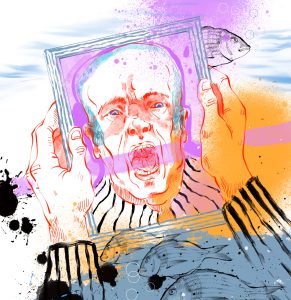 Pushkin House invites you to a joint celebration of Zinovy Zinik’s collection of short stories No Cause for Alarm (2022) and the winter issue of the Index on Censorship magazine, which features one of his stories.
The publication of Zinovy Zinik’s collection of short stories in Russia coincided with the Russian invasion of Ukraine last year. The idea of launching the newly published book in Moscow has become unthinkable. “I feel again in a state of being ‘locked out’, like I felt four decades ago when I arrived in London to work for the BBC World Service”, says Zinik in his interview to Martin Bright, Editor at Large of Index on Censorship. One of the consequences of the harrowing war in Ukraine was a new wave of mass migration of the Russian intelligentsia to Europe and beyond.
Martin Bright and Zinovy Zinik will be discussing the paradoxes of different forms of exile, the sense of complicity and dissent, vagaries of censorship, as well as cultural stereotypes that new arrivals in Britain from different countries have to confront. Their conversation will be accompanied by the author’s reading of excerpts from his surreal novella ‘His Master’s Voice’, published in Index on Censorship magazine.
About the speakers
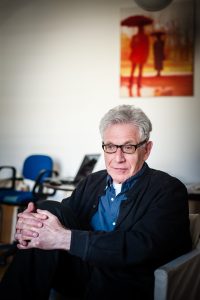 A Moscow-born author Zinovy Zinik was stripped of his Russian citizenship in 1975 when he left the Soviet Union for Israel. He was invited to come to Britain in 1976 to work for the BBC. Since then he has been living and working in London. Zinik’s eighteen books of prose include novels, collections of short stories and essays that dwell on the subject of dual existence of bilingual immigrants, religious converts and social outcasts. His short stories and his novel Russian Service were adapted for Radio 3 and his novel The Mushroom Picker was made into a film by the BBC TV (1993). Zinik’s shorter prose and essays appeared in The Guardian, The Encounter, The New Yorker, N+1, Index on Censorship, Eurozine and other periodicals. He regularly contributed to the Times Literary Supplement and BBC radio. His recent books in English include an autobiographical tale History Thieves (Seagull Books, London, 2011) and a novel Sounds Familiar or the Beast of Artek (Divus, London, 2016). His nonfictional My Private Prime Meridian was published in the collection Lucifer Over London (Influx Press, 2020). During the last four years he has also published four books of prose in Russian, including a novel The Orgone Box and a nonfictional Yarmulke under the Turban.
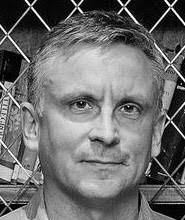 Martin Bright is the Editor at Large at Index on Censorship. He has over 30 years of experience as a journalist, working for The Observer, The Guardian and The New Statesman among others. He has worked on several high-profile freedom of expression cases often involving government secrecy. He broke the story of Iraq War whistleblower Katharine Gun, which was made into the movie Official Secrets (2019) starring Keira Knightley.
He is the founder of Creative Society, a youth employment charity set up in response to the economic crash of 2008.
[/vc_column_text][/vc_column][/vc_row][vc_row][vc_column][vc_column_text]