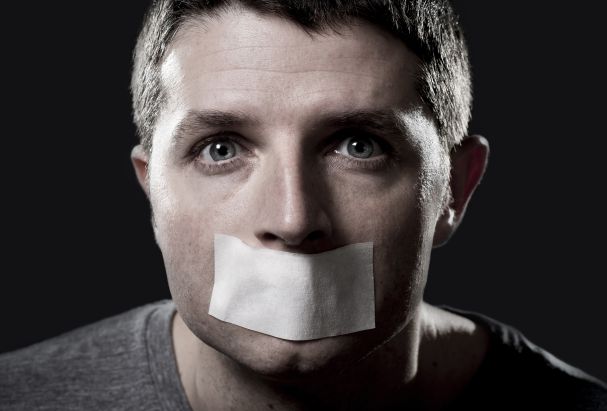
First I would like to thank the Internet Librarian International conference for inviting me to speak to you this morning. It is an honour to speak to a group of people who have been so important in forming me as a person. As a child I was the kind of person who got six books out of the library on a Saturday afternoon and had read all of them by Monday morning. I was addicted to reading, hooked on the spellbinding power and beauty of words.
Today I am very proud to work for an organisation that defends expression in all its forms; one that recognises not only the power of words, but also of images, of music, of performance – to convey ideas, thoughts, opinions and feelings.
In this morning’s talk I want to talk about how we balance what often seems like competing rights: the rights to privacy, security – the right to life – and freedom of expression in an information age. I want to argue that these should not be seen as mutually exclusive rights but importantly symbiotic rights, which must co-exist equally for the other to survive. I will illustrate this from examples from our work at Index on Censorship, and consider some of the challenges and causes for optimism for the next few years.
First, a little about Index on Censorship. Index on Censorship is a 43 year old organisation founded by the poet Stephen Spender in response to what seemed like a simple request: what could the artists and intellectuals of the West do to support their counterparts behind the Iron Curtain and those under the thumb of oppressive regimes elsewhere? Organisations like Amnesty and PEN already existed, doing then – as now – a formidable job of petitioning and campaigning, particularly on the cases of the imprisoned. What more could be done? The answer – those who established Index decided – was to publish the works of these censored writers and artists and stories about them. Index on Censorship magazine was born and we have continued to produce the magazine – this magazine – on at least a quarterly basis ever since. The motivation, as Stephen Spender wrote in the first edition of the magazine, was to act always with concern for those not free, responding to the appeals from Soviet writers to their Western counterparts. “The Russian writers,” Spender wrote, “seem to take it for granted that in spite of the ideological conditioning of the society in which they live, there is nevertheless an international community of scientists, writers and scholars thinking about the same problems and applying to them the same human values. These intellectuals regard certain guarantees of freedom as essential if they are to develop their ideas fruitfully… Freedom, for them, consists primarily of conditions which make exchange of ideas and truthfully recorded experiences possible.”
I will come back later to that notion of ‘conditions which make exchange of ideas possible’ as a central tenet of my argument regarding the essential interplay between privacy and free expression.
I hope you will allow me a brief pause before that, however, to describe to you the evolution of Index. Over time, Index has developed a campaigning and advocacy arm in addition to its publishing work, but we remain focused on the notion that it is that by providing a voice to the voiceless – by providing the information that others seek to keep from us – that we take the first important steps to overcoming censorship.
Why is it important to tackle censorship? Sometimes we forget to ask ourselves this question because we take it for granted that freedom is a good thing. Consider all those who were quick to shout ‘Je Suis Charlie’ following the attacks on French satirical magazine Charlie Hebdo – the knee jerk reaction in Western liberal democracies is often to say you are for free speech, without ever really stopping to consider why you might be for it. Or why free speech is and of itself a good thing.
I would argue this failure to understand the value of free speech lies at the heart of one of the dilemmas we face in modern democracies where free speech is being gradually eroded – where ‘Je Suis Charlie’ quickly became ‘Je Suis Charlie, but…’.
It is vital to understand the value inherent in free expression to understand why some of the current tensions between privacy and security on the one hand and free speech on the other exist. It is also crucial for understanding ways to tackle the dangerous trade offs that are increasingly being made in which free expression is seen as a right that can legitimately be traded off against privacy and security.
So forgive me for what might seem like making a small diversion to rehearse some of the arguments on the value of free expression. Locke, Milton, Voltaire have all written eloquently on the benefits of free expression, but I think Mill expresses it best when he talks of free expression being fundamental to the “permanent interests of man as a progressive being.” “The particular evil of silencing the expression of an opinion,” he argues in On Liberty, “is that it is robbing the human race… If the opinion is right, they are deprived of the opportunity of exchanging error for truth; if wrong, they lose, what is almost as great a benefit, the clearer perception and livelier impression of truth produced by its collision with error.”
This latter argument is particularly powerful when we consider, for example, the introduction of Holocaust denial laws. Such laws suggest that there are some truths so precious that they have to be protected by laws, rather than having their truth reinforced by repeated “collision with error.” You can imagine authoritarian regimes everywhere looking at such laws and rubbing their hands with glees at the prospect of being able to impose a single view of history on the populace, without any kind of challenge.
The free exchange of ideas, opinions, and information is in Mill’s – and others’ – doctrine a kind of positive cacophony from which clear sounds emerge. In this doctrine, it is not just the having of ideas, but the expressing of them that becomes vital. And it is here that those who would pit freedom of expression against privacy find grounds for the undermining of the latter. If the goal of free expression is the exchange of ideas for the better progression of mankind through the discovery of truths, then keeping ideas secret undermines that goal.
This is the particularly pervasive argument used in Western liberal democracies to justify surveillance. If you have nothing to hide, you have nothing to fear, the mantra goes: in liberal democracies, we’re not interested in your ideas, we’re just out to get the bad guys committing crimes. It shouldn’t stop you expressing yourself.
Except that it does. Anyone who has read Dave Eggers book The Circle will be familiar with a world in which privacy is demolished, in which every action and movement is recorded – in an inversion of Mill’s vision – for the betterment of society. The result is a world in which actions and habits are changed because there is no longer a private sphere in which thought and behaviour can developed. And it is a world that is not just a dystopian alternative reality. A study by the PEN American center earlier this year demonstrated that knowledge of mass surveillance by governments is already changing the way in which writers work. The report, Global Chilling, showed an astonishing one third of writers – 34 percent – living in countries deemed “free” – based on the level of political rights and civil liberties – have avoided writing or speaking on a particular topic, or have seriously considered it, due to fear of government surveillance. Some 42 percent of writers in “free countries” have curtailed or avoided activities on social media, or seriously considered it, due to fear of government surveillance, the survey found.
In countries that are not free, the consequence of a lack of privacy is acute. Colleagues in Azerbaijan, for example, note that authorities are quick to demonstrate the country’s openness by arguing a lack of curbs on social media.
As one commentator points out, such curbs are unnecessary, because as soon as an individual expresses an opinion unpalatable to government on an outlet such as Twitter, they are soon targeted, arrested, and jailed – often on spurious charges unrelated to free speech but which effectively at curbing it.
We are now also seeing, increasingly, the tactics pursued by illiberal regimes being adopted by supposedly liberal ones. Consider the use for example of UK anti-terror laws to snoop on the phone calls of the political editor of The Sun newspaper. British police used the Regulation of Investigatory Powers Act – legislation introduced explicitly to tackle terrorism – to obtain the phone records of Tom Newton Dunn for an investigation into whether one of its officers had leaked information about a political scandal, thereby seriously comprising the basic tenet of a free and independent media: the confidentiality of sources.
And such methods, indeed even the hardware, are being used elsewhere to quash free expression. As the journalist Iona Craig wrote for Index on Censorship magazine last year: “Governments going after journalists is nothing new. But what is increasingly apparent is that those listening and watching when we work in countries infamous for their consistent stifling of freedom of speech and obstruction of a free press, are often doing so with the infrastructure, equipment or direct support of supposedly “liberal” Western nations.
Craig, a regular reporter from Yemen, describes the phone tapping and other surveillance methods that put her and her sources at risk and how she and her colleagues are resorting to traditional methods of reporting – meeting contacts in person, using pen and paper, to evade surveillance.
Privacy, then, is vital for communication, for the free exchange of ideas and information. Index knows this from a long history that has ridden both the analogue and the digital wave. In our latest edition of the magazine, for example, retired primary school teacher Nancy Martinez Villareal recalls smuggling pieces of information to the Revolutionary Left Movement in Chile in documents hidden in lipstick tubes. Copies of our own magazine were smuggled into eastern Europe during the 1980s, by intrepid reporters hiding the copies under bunches of then much-coveted bananas. We ourselves now communicate with persecuted individuals in some of the world’s most repressive environments for free speech using encrypted communications such as PGP. Again in the latest edition of the magazine, Jamie Bartlett, director of the Centre for the Analysis of Social Media at the Demos think tank, writes about new auto-encryption email services such as Mailpile and Dark Mail that will allow private communication to evade the censors. In addition to these services, projects like Ethereum and Maidsafe are building an entirely new web out of the spare power and hard drive space of millions of computers put on the network by their owners. Because the network is distributed across all these individual computers, it is more or less impossible to censor.
Surveillance is just one example in which we see the argument of security being used to justify incursions into an array of civil liberties from privacy to free expression.
In fact, privacy campaigners have been at the forefront of campaigning against mass surveillance and other techniques.
And while I hope I have shown that privacy and free expression are both necessary so that the other can flourish, it would be remiss of me not to caution against any temptation to let privacy rights – which often appear all the more important in both an age of mass surveillance and a bare-all social media culture – trump freedom of expression in such a way that they prevent us, as per the Mill’s doctrine, coming closer to the truth.
It is for this reason that Index on Censorship opposed the so-called ‘Right to be Forgotten’ ruling made in Europe last year. Europe’s highest court ruled in May 2014 that ‘private’ individuals would now be able to ask search engines to remove links to information they considered irrelevant or outmoded. In theory, this sounds appealing. Which one of us would not want to massage the way in which we are represented to the outside world? Certainly, anyone who has had malicious smears spread about them in false articles, or embarrassing pictures posted of their teenage exploits, or even criminals whose convictions are spent and have the legal right to rehabilitation. In practice, though, the ruling is far too blunt, far too broad brush, and gives far too much power to the search engines.
The ruling came about after a Spanish man, Mario Costeja González requested the removal of a link to a digitised 1998 article in La Vanguardia newspaper about an auction for his foreclosed home, for a debt that he had subsequently paid. Though the article was true and accurate, Costeja Gonzalez argued that the fact this article was commonly returned in name searches gave an inaccurate picture of him. After hearing the case, the European Court of Justice ruled that search engines must remove links to any content that is “inadequate, irrelevant or no longer relevant”. The content itself is not deleted, but Google will not list it in search results.
Index warned at the time that the woolly wording of the ruling – its failure to include clear checks and balances, or any form of proper oversight – presented a major risk. Private companies like Google should not be the final arbiters of what should and should not be available for people to find on the internet. It’s like the government devolving power to librarians to decide what books people can read (based on requests from the public) and then locking those books away. There’s no appeal mechanism, very little transparency about how search engines arrive at decisions about what to remove or not, and very little clarity on what classifies as ‘relevant’. Privacy campaigners argue that the ruling offers a public interest protection element (politicians and celebrities should not be able to request the right to be forgotten, for example), but it is over simplistic to argue that simply by excluding serving politicians and current stars from the request process that the public’s interest will be protected.
We were not the only ones to express concern. In July last year the UK House of Lords’s EU Committee published a report claiming that the EU’s Right to be Forgotten is “unworkable and wrong”, and that it is based on out-dated principles.
“We do not believe that individuals should have a right to have links to accurate and lawfully available information about them removed, simply because they do not like what is said,” it said.
Here are some examples of stories from the UK’s Telegraph newspaper to which links have been removed since the ruling:
• A story about a British former convent girl who was jailed in France for running a ring of 600 call girls throughout Europe in 2003. Police were tipped-off about her operation by a former colleague following an argument.
• An article from 2008 about a former pupil from a leading boarding school who returned to his halls of residence after a night out drinking and drove his car around the grounds at speeds of 30mph before crashing. The Telegraph goes on to add: “He eventually collided with a set of steps in a scene reminiscent of the 1969 cult classic movie starring Michael Caine. His parents had given him the silver Mini just the day before.”
• A story which includes a section taken from the rambling “war plan” of Norwegian man Anders Behring Breivik to massacre 100 people.
• A story from 2009 on The Telegraph’s property page documenting how a couple and their two sons gave up pressured London life and moved into a rolling Devon valley.
Search engines removed such articles at the request of indviduals. Publishers have no real form of appeal against the decision, nor are the organisations told why the decision was made or who requested the removals. Though the majority of cases might be what privacy campaigners deem legitimate – such as smear campaigns – the ruling remains deeply problematic. We believe the ruling needs to be tightened up with proper checks and balances – clear guidelines on what can and should be removed (not leaving it to Google and others to define their own standards of ‘relevance’), demands for transparency from search engines on who and how they make decisions, and an appeals process. Without this, we could find that links to content that is true, factual, legitimately obtained – and indeed vitally relevant for the searcher, even if not deemed to be so by the individual – could be whitewashed from history.
In this way we see that protection of the individual, using notions of harm defined by the individual themselves – is used as an argument for censorship. I want to use the remainder of my talk to discuss ways in which this drive to shield from potential and perceived harm, is having an impact.
Let us start with libraries and the example of the United States’ Children’s Internet Protection Act (CIPA), which brought new levels of Internet censorship to libraries across the country. CIPA was signed into law in 2000 and found constitutional by the Supreme Court in 2003: two previous attempts at legislating in this area – the Communications Decency Act and the Child Online Protection Act, were held to be unconstitutional by the US Supreme Court on First Amendment grounds.
As the Electronic Frontier Foundation has written eloquently on this, the law is supposed to encourage public libraries and schools to filter child pornography and obscene or “harmful to minors” images from the library’s Internet connection. However, as with all such laws, the devil is in the implementation not the original intention.
Schools and libraries subject to CIPA must certify that the institution has adopted an internet safety policy that includes use of a “technology protection measure”— in other words filtering or blocking software — to keep adults from accessing images online that are obscene or child pornography. The filtering software must also block minors’ access to images that are “harmful to minors,” in other words, sexually explicit images that adults have a legal right to access but would be inappropriate for young people.
Only images, not text or entire websites, are legally required to be blocked. Libraries are not required to filter content simply because it is sexual in nature. Libraries aren’t required to block social networking sites, political sites, sites advocating for LGBT issues, or sites that explore controversial issues like euthanasia.
However, this is what happens – either through technological illiteracy or overzealous implementation.
As all of you will be aware, filters don’t work effectively. Not only can filters block perfectly legitimate content, they can also fail to block certain content that is obscene.
We saw this in the case of Homesafe, a network-level filter that was being offered by one of Britain’s largest internet providers. The filter was designed to block adult content on the network level, but in late 2011 IT expert Cherith Hateley demonstrated that the filter failed to block Pornhub, which offers thousands of free explicit videos and is ranked as the third largest pornography provider on the web. Hateley found that on the Pornhub website the HomeSafe blocking page had been relegated to a small box normally reserved for advertising, leaving its adult content fully accessible.
In addition to the challenge of poor filtering, there is the problem of transparency. We don’t know exactly what’s being blocked. There’s no documentation of which libraries are filtering what specific websites and most filtering technology companies keep their algorithms for blocking sites a closely guarded secret. Without clarity on precisely what is being blocked, by whom, and how often, it’s impossible to know what content is being filtered and therefore whether libraries are being over censorious.
Where does this leave ethics? Librarians play an important role in ensuring free speech online. The American Library Association’s code of ethics states: “We uphold the principles of intellectual freedom and resist all efforts to censor library resources.”
This impulse to protect from harm is also seeping away from internet controls and filters into the broader public discourse and nowhere is this more alarming than in universities. I want to argue that the impulse I described earlier – of a private realm that is so crucial for the development of ideas and in some cases their incubation and dissemination – is being warped by an extension of the idea of personal physical safety into a demand for a kind of safety from ideas that is shutting down debate more widely.
It is clear that something is going wrong at universities. Institutions that should be crucibles for new thinking, at the forefront of challenges to established thought and practice, are instead actively shutting down debate, and shying away from intellectual confrontation.
Driven by the notion that students should not be exposed to ideas they find – or might find – offensive or troubling, student groups and authorities are increasingly squeezing out free speech – by banning controversial speakers, denying individuals or groups platforms to speak, and eliminating the possibility of “accidental” exposure to new ideas through devices such as trigger warnings.
The trend was particularly noticeable last year when a number of invited speakers withdrew from university engagements – or had their invitations rescinded – following protests from students and faculty members. Former US Secretary of State Condoleezza Rice withdrew from a planned address at Rutgers University in New Jersey after opposition from those who cited her involvement in the Iraq war and the Bush administration’s torture of terrorism suspects; Brandeis University in Massachusetts cancelled plans to award an honorary degree to Islam critic Ayaan Hirsi Ali; and Christine Lagarde backed out of a speech at Smith College following objections by students over the acts of the International Monetary Fund, which Lagarde runs. In the UK, the University of East London banned an Islamic preacher for his views on homosexuality. And a new law – a counter-terrorism bill – was proposed in Britain that could be used to force universities to ban speakers considered “extremist”.
Registering your objection to something or someone is one thing. Indeed, the ability to do that is fundamental to free expression. Actively seeking to prevent that person from speaking or being heard is quite another. It is a trend increasingly visible in social media – and its appearance within universities is deeply troubling.
It is seen not just in the way invited speakers are treated, but it stretches to the academic fraternity itself. Last year, the University of Illinois at Urbana-Champaign withdrew a job offer to academic Steven Salaita following critical posts he made on Twitter about Israel.
In an open letter, Phyllis Wise, University of Illinois at Urbana-Champaign chancellor, wrote: “A pre-eminent university must always be a home for difficult discussions and for the teaching of diverse ideas… What we cannot and will not tolerate at the University of Illinois are personal and disrespectful words or actions that demean and abuse either viewpoints themselves or those who express them. We have a particular duty to our students to ensure that they live in a community of scholarship that challenges their assumptions about the world but that also respects their rights as individuals.”
These incidents matter because, as education lecturer Joanna Williams wrote in The Telegraph newspaper: “If academic freedom is to be in anyway meaningful it must be about far more than the liberty to be surrounded by an inoffensive and bland consensus. Suppressing rather than confronting controversial arguments prevents criticality and the advance of knowledge, surely the antithesis of what a university should be about?”
Yet, increasingly, universities seem to want to shut down controversy, sheltering behind the dangerous notion that protecting people from anything but the blandest and least contentious ideas is the means to keep them “safe”, rather than encouraging students to have a wide base of knowledge. In the US, some universities are considering advising students that they don’t have to read material they may find upsetting, and if they don’t their course mark would not suffer. The introduction of “trigger warnings” at a number of universities is a serious cause for concern.
In the UK, increasing intolerance for free expression is manifest in the “no platform” movement – which no longer targets speakers or groups that incite violence against others, but a whole host of individuals and organisations that other groups simply find distasteful, or in some way disqualified from speaking on other grounds.
The decision to cancel an abortion debate at Oxford in late 2014, which would have been held between two men – and noted free speech advocates – came after a slew of objections, including a statement from the students’ union that decried the organisers for having the temerity to invite people without uteruses to discuss the issue. More recently, a human rights campaigner was barred from speaking at Warwick University – a decision that was subsequently overturned – after organisers were told she was “highly inflammatory and could incite hatred” and a feminist was banned from speaking at the University of Manchester because her presence was deemed to violate the student union’s “safe space” policy.
Encountering views that make us feel uncomfortable, that challenge our worldview are fundamental to a free society. Universities are places where that encounter should be encouraged and celebrated. They should not be places where ideas are wrapped in cotton wool, where academic freedom comes to mean having a single kind of approved thinking, or where only certain “approved” individuals are allowed to speak on a given topic.
Index on Censorship knows well the importance of the scholar in freedom of expression. Though we have come to be known as Index, the charity itself is officially called Writers and Scholars Educational Trust, an effort to capture as simply as possible the individuals whom we intended to support from the outset. The title was never intended to be exclusive, but the inclusion of “scholar” signals the importance our founders attached to the role of the academic as a defender and promoter of free speech. In 2015, as we watch the spaces for free expression narrow, I hope that together we can work doubly hard to ensure that traditional bastions for free speech – such as universities and indeed libraries – remain arena for the clash of ideas, not the closure of minds.
Journalist Jonathan Dimbleby is the former chair of Index on Censorship. This lecture was delivered at the 2015 Prix Italia.
It is a privilege to be asked to deliver this lecture at this great annual event which celebrates all that is best in television and radio. It is also therefore daunting.
As you know, this year marks the 70th anniversary of the end of the Second World War. The triumph of freedom and democracy over tyranny – an outcome that has shaped all our lives.
If you will forgive a personal touch, it also shaped my father, Richard Dimbleby, who was the BBC’s first war correspondent and later became its most famous broadcaster. By this I mean that he emerged from the war chastened by what he had witnessed on the battlefield and, perhaps most terribly of all, in the concentration camp at Bergen-Belsen, the horror of which he was the first to reveal to the world.
His experiences between 1939 and 1945 confirmed in him a passion for law and order and freedom and democracy as the only guardians against anarchy or despotism. It was this passion – all but universally shared in Europe at the end of the war – which created the environment in which freedom was enshrined in laws and constitutions to ensure that the values of western democracy should never again be so imperilled. Among those freedoms was the right to freedom of expression, which found formal expression in Article 10 of the European Convention on Human Rights.
It is my purpose in the next 40 minutes or so to highlight some of the growing challenges that threaten this fundamental right. And, in that context, to focus on the role of the public service broadcasting – notably, the daddy of all public service broadcasters, the BBC, in an era of extraordinary uncertainty.
When I speak of freedom, I am not now thinking of China, which makes no pretence of being democratic or free, or Russia, which pretends to be both. Russia and China and are important but easy targets for a western critic but they are not my present focus.
I want to explore what freedom of expression means – or should mean – in those societies which claim to recognise it as a defining characteristic of Western civilisation. By comparison with the outrages committed by tyrannies elsewhere, the challenges we face in the West may seem marginal, even nugatory. I think they are insidious and growing. I believe our freedom of expression is under a degree of pressure, and even threat that should set the alarm bells ringing very loudly indeed.
Inevitably, I know rather more about the United Kingdom than I do about the other nations which profess the same values. So you’ll forgive me if I emphasise developments in my own country – though I’m confident they have a wider pertinence.
In Britain, the European Convention has been codified in the Human Rights Act of 1998 – the future of which, incidentally, is in grave doubt. As it stands, the Act has been framed to meet the criteria laid out in the European Convention which provides that “everyone has the right to freedom of expression” subject only to “restrictions and penalties prescribed by law and as are deemed necessary in a democratic society”.
And there’s the rub. What restrictions are necessary in a democratic society?
In our troubled and insecure environment, Britain has accumulated laws which curtail freedom of expression in the name of national security, territorial integrity, to prevent public disorder and to combat crime. Laws which also compromise freedom of expression in order to restrict what we now call hate speech.
Take the UK’s Public Order Act which makes it a criminal offence to use threatening or abusive language with the intention of causing alarm or distress to an individual OR anybody else who hears it.
It is a criminal offence to wave banners, to use language, or publish written material intended to incite racial hatred. It is a criminal offence to incite religious hatred. It is a criminal offence to incite hatred against individuals on the grounds of their sexual orientation.
In all such cases, it is not only an offence to be threatening or abusive but to use language that is intended to cause alarm or distress to another individual or may have that effect. The law applies to every form of public expression. Not only the spoken and written word but in the theatre, film, and visual arts as well.
And “why not?” you might reasonably ask? Is it not reprehensible to violate the feelings of others in such ways? Of course it is and, like you no doubt, I recoil at the thought of so doing. Like you, I suspect, I hate hate speech. But that is not quite the point.
The dilemmas we face today in liberal democracies were defined with great clarity by Britain’s answer to Voltaire, John Stuart Mill, almost 150 years ago. In his seminal work, On Liberty, he wrote, “We should have absolute freedom of opinion and sentiment on all subjects”. Adding the proviso, so long as the exercise of such freedom does not cause “harm to others.”
Of course that simple phrase – harm to others – raises all manner of questions. All law is open to interpretation. What is it, for example, to cause alarm and distress? What should precisely constitute an expression of hatred that should merit criminal sanction?
In the first instance it is for individual police officers to determine whether or not an individual appears to be breaking the law. It is for the police to judge whether your language has incited hatred or thereby caused alarm or distress; and whether therefore, your speech, article, book, play, radio or television programme, film, painting or sculpture justifies your arrest.
Self-evidently, this is a quite different order of judgement from assessing whether physical violence or intimidation has been committed or a house has been burgled or a car has been stolen.
There is a critically important distinction – that the law ostensibly seeks to protect – between causing distress, which may be a crime, and causing offence which is not. Indeed it is axiomatic – or has been – that the right to express oneself in terms which may cause or are intended to cause offence are essential to a free society and a lively democracy. I don’t know about you, but I would be very offended indeed if your right to offend me was withdrawn – and vice versa.
But the distinction between causing alarm and distress and causing offence is not that easy for the layman to define and the two are only too easy – and perhaps too tempting – to elide. And this happens only too often, and at a rate which is accelerating.
This, I believe, is not so much due to the laws against hate speech themselves – but because of the attitudes which brought them into being and the prevailing climate in which the law now operates. There is a growing number of people – especially young people – for whom the long struggle to establish and protect freedom of expression belongs to a bygone age. Who do not recognise or care about that precious distinction. Who believe that you should be able to say what you like, but only so long as they agree with you. Who seem not to care about the European Convention which was established precisely to protect the expression of alternative and disagreeable and offensive opinions – as a bulwark against totalitarian fascism.
This attitude is having a growing impact on what is said or not said, depicted or not depicted in public discourse: in lectures and speeches, on university campuses and in town halls, on radio and television, in theatres and art galleries.
Last autumn, a white South African artist ignited a great controversy when he created a tableaux with living black actors chained and in cages to mimic the way in which 19th century Europeans were apparently entertained by such so-called freak shows in the 19th century.
His work, which he billed as anti-racist and anti-colonialist received critical acclaim. Some, though, took the opposite view. A journalist mounted an online petition calling for it to be banned on the grounds of complicit racism.
Fuelled by outrage, some 200 protesters gathered outside the Barbican Centre in London on the night it was due to open, waving placards and banging drums. The show was cancelled; its organisers intimidated by the protestors.
The censors in the street – won the day. As their victim, the artist, Brett Bailey, said ‘My work has been shut down today, whose will be closed down tomorrow?’
Earlier this year, a play commissioned by Britain’s National Youth Theatre was withdrawn ten days before it was due to open. The work was inspired by the case of three teenage girls who hit the media headlines after leaving their secondary school in London apparently to become Jihadi brides in Syria. The play was to be billed as an exploration of their decision and the attitudes towards Islam provoked by it.
When it was cancelled, the director and writer complained: “Voices have been silenced here…”, claiming that the only possible explanation for the decision must pressure from the authorities and the police. A claim the theatre, normally a champion of artistic freedom, denied in a mealy-mouthed apologia, claiming that it was not a good enough play.
It goes without saying that this febrile atmosphere is explained in large measure by the growing threat posed by extremists – though I think we would do better to call them fanatics. Those terrorists who perpetrated the Charlie Hebdo murders last January brought this into the most dastardly focus.
For me, some of the reactions to that atrocity were not only disconcerting but were a disturbing illustration of a growing intolerance of offensive expression.
Pope Francis led the way. He defended freedom of expression but almost in the same breath he told us that religions should not be insulted or ridiculed. Fine in itself – his opinion. But then he added that if you were to curse someone’s mother you could expect to be punched in the face. To the gullible this must have appeared as a vindication of violence. I’m sure he did not mean that but that was the message he sent to an impressionable world.
Worse were those who went berserk on Twitter and elsewhere to condemn the slogan, Je suis Charlie Hebdo, because, they claimed, the magazine was Islamaphobic and racist and therefore not worthy of defending on grounds of free expression.
These leap-to-judgement critics evidently failed to understand either the irony implicit in the cartoons or the embedded satire that is the magazine’s – sometimes puerile – raison d’etre as an anarchistic publication long renowned for being anti-racist.
Not to be outdone by the tweeters, a cavalcade of righteous authors, led by the likes of Michael Ondaatje and Peter Carey, wrote an open letter attacking the American branch of PEN for awarding Charlie Hebdo a prize for courage following the assassinations.
Not surprisingly, Salman Rushdie, the author of The Satanic Verses, who lived for more than a decade under a death sentence issued by Ayatollah Khomeini, was appalled when these literary giants put Charlie Hebdo in the dock for publishing what they described as “material that intensifies the anti-Islamic…. sentiments already prevalent in the Western world”.
The author was driven to say, that instead of supporting him over The Satanic Verses, such writers “would have accused me of insulting an ethnic and cultural minority.” And he added “We are living in the darkest time I have ever known.”
Starkly put, but not so very far out. In institutions across the Western world, the hecklers’ veto is growing in frequency and volume. Last year, in the United States, this veto was applied successfully to – among others – the former US Secretary of State, Condoleeza Rice and the Head of the International Monetary Fund, Christine Lagarde who were driven to withdraw from scheduled speaking engagements on university campuses by such threats.
On some campuses, there are calls for trigger warnings to be inserted in books like The Great Gatsby (because its misogynist), Huckleberry Finn (racist), and the Merchant of Venice (anti-Semitic). How long, one wonders, before such books are removed from the shelves altogether to protect the vulnerable from being offended.
In Britain it is no better. When a professor of government at Essex University invited Israel’s deputy ambassador to give a talk to at his department, the Ambassador was heckled so violently that his words were drowned out and the event had to be abandoned.
The professor, Thomas Scotto, said afterwards, “It broke my heart that some students came with pages and pages of notes to challenge the speaker, and that was wasted because other students violently opposed him being there…”
There is something peculiarly ugly about those young minds so closed to alternative views that they block their ears and intimidate others into silence.
It flies in the face of the belief that, above all in academic institutions, every view should be heard and argued out and challenged however disagreeable it may be – so long as it is expressed in terms which do not violate the law. As J.S. Mill said, “He who knows only his own side of the case knows little of that.”
At the London School of Economics, a couple of years ago, a pair of undergraduates manned the Atheists, Humanist and Secularist Society stand at the University’s freshers fair. They wore joke T-shirts mockingly depicting Jesus and a Muslim prophet named Mo who were holding banners saying “Stop drawing holy prophets in a disrespectful manner NOW”.
Witnessing this, the gauleiters from the Students’ Union took it upon themselves to order the pair to lose the tee-shirts and then seized the atheist literature from the stand. Five security guards arrived to inform the pair that the T-shirts constituted “an act of harassment” that could “offend others”.
The two students obediently concealed the tee-shirts from view.
The School later apologised saying that “with hindsight” wearing the tee-shirts did not amount to harassment or contravene the law or LSE policies. It shouldn’t have taken hindsight. Too often university authorities are supine in the face of student intimidation.
And it is intimidation. Three months ago, an eminent scientist, Sir Tim Hunt, made an off-the cuff speech at a conference of science journalists in Seoul. In his opening words, the septuagenarian Nobel Laureate joked feebly that girls shouldn’t work with men in the laboratory because they fall in love and women cry when criticised. It was a very poor joke.
And it went viral on the Twitter-sphere. University College, London, where he held an Honourary Professorship was aghast. And rushed to judgement, demanding his resignation.
No matter that it soon emerged he had gone on to say that an old dinosaur like him should be ignored and that woman of course had an important role to play in scientific research, it was too late. The online trolls – who managed to ignore that small fact – had won.
No matter either, that he apologised for causing such offence.
With a craven disregard for justice and fairness, the academics at UCL closed ranks behind the Provost – who had opined that Hunt’s joke had “sent out the wrong message.” On the same grounds, he resigned from roles at Royal and European Research Council. A distinguished scientist’s career as nothing compared with a bad joke that “sent the wrong message”. So much for freedom of expression.
As a footnote, I should add that, like a good number of UCL’s alumni, I was appalled and, in my case, took the painful step of disowning my own honorary fellowship, of which I had been mightily proud.
Unhappily, it is not only theatres and art galleries and universities which threaten this principle.
In the name of national security and to protect the public from a very real threat from extremists the government seeks quite properly to deter British citizens from condoning, supporting or participating in the terrorist outrages committed around the world by murderous cults like ISIS and its associates.
To that end it is soon to launch a counter-extremism strategy. Extremism being defined as “the vocal or active opposition to fundamental British values, including democracy, the rule of the law, individual liberty and the mutual respect and tolerance of different faiths and beliefs…”
In this endeavour, the Prime Minister has declared that “our strongest weapon [is] our own liberal values.”
Who could disagree? The objectives are not at issue. No, it is means, not the ends that are troubling. There are to be “new narrowly targeted powers” in the forthcoming Extremism Bill designed to prevent what the Prime Minister describes as “cult leaders” from peddling their hatred in public places.
If he means that such hate preachers should not be treated as latter day messiahs, I am with him. If, however, he wants to stop them being interrogated, cross-examined, contradicted or ridiculed, then I think he is wrong.
Preachers spouting hateful nonsense – as opposed to advocating hateful action – should be subjected to merciless scrutiny. The essence of liberal values. So it is dismaying to read reports that the British Home Secretary wants to go further and has been considering the imposition of a “pre-transmission regulatory regime” – the words used by one cabinet minister evidently aghast that any of his colleagues should contemplate muzzling radio and television in the hope of stamping out extremism.
This would not only be wrong in principle but, in today’s climate, it would nurture all manner of conspiracy theories that fanatics would foster and relish. Nothing could better calculated to incubate the virus of extremism. It would be driven even further underground where it would find a ready host in those who feel lost, alienated and resentful.
The vulnerable would be seduced into those dark corners of the world wide web which can’t be policed and where terrorists can speak their vile minds and show their horrific images without let or hindrance. Far from countering extremism, such bans would give it succour.
As I have tried to indicate, we live in a world where freedom of expression is being tested as never before in our lifetimes. Paradoxically, it is also a world in which the revolution in global communications offers freedoms that were – until very recently – unimaginable.
Online, you can browse the web to explore infinite vistas. You can discover and learn, entertain and inspire, you can share thoughts and feelings. It is in almost every way a liberation for all of us.
Almost! In this Babel, you can also babble with impunity. You can numb our senses with twittering bromides, or, under the cloak of anonymity, you can express the ugliest of sentiments to which you would never have the guts to put your name. You can join a witch-hunt to destroy a reputation or to assassinate a character.
We are thus simultaneously liberated and imprisoned by social media in a virtual world where falsehoods enjoy the same status as truths – or, at least, where it is easier than ever, in that old phrase, for a lie to get half way round the world before truth has got its boots on.
Add to this, the cacophony of words and sounds and images that emanate from countless commercial radio and television stations that are readily available to meet almost any taste. And you might wonder what more we could possibly want?.
To which my answer is public service broadcasting, which is assuredly more important than ever and, ironically, under greater threat than ever.
Once again, I exclude the state broadcasters in Russia and China and elsewhere, who lavish huge amounts of money and deploy the kind of skills that Goebbels pioneered to hone their propaganda for a global audience. I am talking about those public service broadcasters which may be financed entirely or in part by the citizen or the state but whose independence is supposed to be constitutionally sacrosanct.
If I may, I will focus on the United Kingdom which may claim to have pioneered public service broadcasting – and on the BBC, which has become the most influential public service broadcaster in the world. It sets a benchmark for all broadcasters – public and commercial. It is a beacon that serious programme-makers in all parts of the world look to as source of strength that helps to reinforce their own aspirations. Where the BBC leads others follow. That is why I think you should pay close attention to what is happening to the BBC today, and what threatens to happen tomorrow..
In the complicated world that I have described, the BBC has a unique and vital role. It a forum which is trusted more than any other. Because it is impartial. Because it doesn’t take sides. Because it offers a sanctuary of reliable information and facts against the bombardment of dubious claims and dishonest propaganda by which the innocent are constantly assaulted. Because, because, because…
I should perhaps declare an interest. I earn part of my income from the BBC, but I don’t think that what I want to say is warped by a reluctance to bite the hand that helps to feed me.
In the recent past, the BBC has not infrequently demonstrated a unique ability to be its own worst enemy. It has managed to seem arrogant and defensive at the same time. Its senior executives paid themselves far too much. It wasted tens of millions on IT systems which didn’t work and failed to own up until the truth was forced out.
It had layer upon layer of bureaucracy – an army of middle managers. And when they were past their sell-by date, they were bumped sideways and paid more. When programme-makers got things wrong – as they are sometimes bound to do – the BBC has been slow to admit error and reluctant to apologise.
But under the merciless gaze of a hostile press and its allies in Parliament, the leadership of the BBC is well on the way to eradicating these flaws. Of course mistakes are still made and they will be made. People get things wrong. But every time they do, however small the error, the critics – lacking all perspective – are swift to pounce.
Facing this noisome chorus of critics the BBC has, in the past, too often sounded as though it had lost its way, no longer certain of its role and purpose.
And sometimes it has responded with timidity. Backing away from controversy, playing safe. Avoiding risk. But that is changing. Mercifully, the critics have galvanised the Corporation. Under the leadership of a gutsy director-general, it no longer sounds defensive. It is at last on the front foot. It is not a moment too soon.
I say “critics”. I should, in some cases, say “enemies”. Because enemies there are. And today they are more powerful than they have ever been. Some are ideological enemies. Some are commercial enemies.
The former are to be found at their most ferocious on the backbenches of the House of Commons. These individuals have a visceral belief that in the 21st century the BBC no longer has a useful role; that in the global market place, the market should prevail.
It’s a perfectly coherent stance – but I wish they’d pin their colours to the mast before using their privileged platform to pin the BBC to the wall as though it were led by people who were enemies of the state rather than guardians of David Cameron’s liberal values.
In their animosity, they forget that – with a global audience of more than 300 million – potentially rising to 500 million within the next seven years – the BBC has a unique ambassadorial role for Britain that no commercial rival can emulate.
They forget that the rest of the world would think us mad to diminish the BBC as a global force by making a range of programmes that vast numbers of people devour with delight and relief.
They forget that the BBC provides an unrivalled cultural platform for the nation’s most creative talents. They forget such things because they think the BBC is an anachronistic behemoth that has had its day – or at the very least should be cut back to the core – whatever they think should be.
They might take a moment to look at the figures.
Not only at those which show that a majority of the British public – who pay the equivalent of £2. 80 a week (that’s less than four euros) – would have it no other way.
Not only those which show that the BBC today reaches 97% of the nation, providing them with more channels and services than was dreamed of 20 years ago – and for the same amount of money in real terms as it did then.
And, while they’re about it, they should remind themselves that the big digital players they so admire have come to dwarf the BBC in size and income. The revenues earned by Sky (£7.6 billion pounds), Google (£60 billion), Apple (£170 billion). Compare that to the BBC’s total income at just over £5 billion pounds.
Then are the enemies in the media. Not so much driven by ideology as profit. Principal among these – but by no means alone – is News UK, which is owned by News Corp which is owned by Rupert Murdoch who owns Fox which, in case you wondered, is the parent company that owns Sky.
News Corp’s papers in Britain – whose freedom of expression, incidentally, I would do nothing to curb, assiduously canvass the views of those MPs who are most likely to put the BBC is in the dock for this or that failure to live up to the Murdoch empire’s well-attested standards of integrity and probity.
I could give you scores of examples. But one, I think, will make the point. There’s an innocuous weekly television programme which emanates from the BBC’s Religion department. It’s called Songs of Praise. A few weeks ago its editor elected to film the programme in Calais where refugees seeking asylum in Britain are encamped at Sangatte.
The Sun newspaper detected an open goal. Under the banner headline – Hymnigrants – BBC BLASTED, it reported: “BBC Chiefs spark outrage by filming Songs of Praise at a notorious Calais migrant camp.”
Further down, it cited its source for the alleged outrage – its only source: a Conservative backbencher who obligingly told the newspaper, “We are facing a grave crisis. The BBC should be careful not to start looking as if they are making political points out of this.”
Never mind that the Archbishop of Canterbury welcomed the fact that Songs of Praise was to celebrate the ‘love of Christ’ in a makeshift Ethiopian church. Or that the programme contained no political content, or that it was sensitively produced and presented. That was of no interest to The Sun. The Murdoch message was clear. The BBC is run by a bunch of lefties who are soft on immigration.
News Corp and its ilk have a vested financial interest in reducing the BBC’s scope and influence in the hope that the edifice will tumble leaving a gaping hole in the market for them to fill. If they are good enough to report this lecture it will be interesting to see whether they report anything more than the criticisms of the BBC that I made a moment or two ago. For they and their cronies in Westminster are doing their best to shape the outcome of the negotiations now under way between the broadcaster and the government over the renewal of the BBC’s Charter – effectively its licence to broadcast.
The process is in the hands of the UK’s Culture Secretary, John Whittingdale. In July he produced a Green Paper outlining the issues which the government believes to be at stake. It is open to public comment.
The invitation, made on the Department’s blog, made his agenda pretty clear. It asserts that today, “the BBC is just one voice among many” before going on to ask the public if, the Corporation had, I quote, “become too big, and if so, should it be more focused.” What a lawyer might describe as a leading, and, I would call, a loaded question.
Mr Whittingdale has also appointed eight people to advise him on the renewal of the Charter – all of whom have interests or roles in the media or private sector. This was enough to prompt the Tory grandee, Lord Patten, the last chairman of the BBC Trust and incidentally the first BBC lecturer at the Prix Italia, to say that the Secretary of State had appointed a “team of assistant gravediggers” to help him “bury the BBC that we love.”
At the same time, the Government bounced the BBC into accepting a licence fee from 2016 onwards, which appeared to guarantee an increase in line with inflation – until we learned that this deal would depend on any changes to “the purpose and scope of the BBC” during the Charter negotiations. So what appeared to be set in stone has actually been built on quicksand.
The BBC’s Director-General, Tony Hall, puts a brave face on it. But he has already to find some £700 million of savings over the next five years – a cut of 25% in the BBC’s budget. As well as the loss of thousands of jobs he must now contemplate closing or radically re-casting the four national BBC television channels – and, to me, it looks horribly like mission virtually impossible.
Whatever ministers may say, Hall knows the BBC faces an existential struggle against those commercial and ideological pressures to which the government is listening with close attention. And he has opted to go on the offensive, telling the government bluntly not to “screw around” with the UK broadcasting ecology.
A host of famous figures has weighed in to support the BBC and to demand, in effect, that those who happen to be in power for a while shouldn’t misuse their positions to destroy a great national institution; saying in effect that the BBC belongs to the British people and not to any ‘here today, gone tomorrow’ claque of politicians.
This may be having some effect. The Culture Secretary has changed his tone, saying at the Edinburgh Television Festival, “It was never our intention to create the impression that the BBC was under attack.” Well, on that count, he has so far failed magnificently!
At the Cambridge Television Festival last week, he made it clear that everything about the BBC was up for grabs – its system of funding, governance, performance, and market impact. And he warned specifically that it was “important to look at the impact the BBC has on commercial rivals.” In a novel departure for a cabinet minister, he even tried his hand as a TV scheduler, suggesting that it was unfair on ITV’s News at Ten to go head to head against the BBC’s Ten O’clock News. All of which is a trifle unsettling for those who think that ministers are supposed to have a hands-off relationship with the editorial decisions of the public service broadcaster.
It is not easy to make head or tail of what is in the government’s mind. It would of course be all too easy to enforce the BBC to downsize, to limit its remit and then reduce the licence fee accordingly. We can already see that happening elsewhere in Europe. It may be tempting to argue that a smaller, leaner BBC would be a good thing. That programmes like Strictly Come Dancing – Dancing with the Stars to some of you – which garner huge audiences, should be left to the market.
That radio stations which devote themselves principally to popular music – but also offer sharp news, lively comment, and intelligent discourse to many millions of listeners – should be sold off.
And that the BBC should confine itself to those genres that make it unique: its news and current affairs, documentaries, drama and high end arts.
But it would have disastrous consequences. The BBC would shrink to become a minnow among the sharks in the broadcasting ocean. Its income would fall to the point at which it would be impossible to finance a national and global news service on anything like the scale it now provides – let alone the documentaries and drama for which it is internationally renowned. It would tail spin down into a broadcasting vortex.
Which takes me back to where I began. To that post-war commitment to the rule of law and to freedom and democracy. And to the world in which we now live and in which, for reasons I have tried to explore, those essential qualities of Western civilisation are once again imperilled.
In this dysfunctional world, the BBC, like other public service broadcasters across Europe, has a vital role. It is a unique forum. Its values are not so much enshrined in its Charter as deeply embedded in its DNA: the way in which it reports the world, the way in which it offers comment and analysis, the way in which it tests propositions, mediates debate and genuinely seeks clarity and light is unique and invaluable.
The BBC is a world leader because – if I can state a truth that is almost universally acknowledged – it gets closer to achieving the unachievable than any other broadcasting institution.
It would be a tragedy if any government, wittingly or unwittingly, were so to tamper with the BBC as to turn it into merely into ‘one voice among many.’ It would also be unforgivable. We would all be the losers.
In 1972, Michael Scammell, the first editor of Index on Censorship magazine, wrote in the launch issue: “Freedom of expression is not self-perpetuating but needs to be maintained by the constant vigilance of those who care about it.”
We obviously haven’t been very vigilant here in the UK.
As we heard last week, when the artist Mimsy’s work Isis Threaten Sylvania was removed from the Passion for Freedom exhibition at the Mall Galleries, London, artistic freedom of expression was put up for sale at £36,000.
And disturbing though it is, the news is a gift to those who have been concerned about the direction policing of politically or socially challenging art was taking. Now the situation is crystal clear and marks an alarming new approach to the policing of controversial art.
In last week’s case, the police were concerned about the “potentially inflammatory content” of Mimsy’s work, so they gave the organisers a classic Hobson’s Choice: if they went ahead with their plans to display it, they would have to pay the police £36,000 to cover the cost of security for the six-day show.
The police took the view that a perfectly legal piece of art, which had already been displayed without incident earlier in the year, was inflammatory. And in the balance of things as they stand, this opinion outweighs the right of the artist to express him or herself, the organisation’s right to present provocative political art, the audience to view it and those that protest against it, the right to say how much they hate it.
If this goes unchallenged, it will set a very dangerous precedent for foreclosing any work that the police don’t approve of.
But going against police advice is tough. In Index’s information pack on Public Order – part of a series of booklets looking at laws that impact on what is sayable in the arts, we ask the question: “What happens if police advise you not to continue with presenting a piece of work because they have unspecified concerns about public safety – and yet tell you it is your choice and they can only advise you?”
The answer is that in principle, in law, you are free to proceed.
But it goes on to talk about duties the organisation has to their employees and members of the public present on their premises, which fall under licencing and other obligations.
But the point is no one has taken this to the courts, so it hasn’t been tried and tested.
As it stands — and in the heat of a crisis when these decisions are mostly reached — police advice is a Hobson’s Choice in pretty much every case.
This latest example of policing comes hot foot after revelations in the summer that the police were involved in, though allegedly not directly responsible for, the cancellation of Homegrown.
And it is only a year since Exhibit B at the Vaults in London and the Israeli hip-hop opera The City in Edinburgh were cancelled on the advice of the police following protests outside both venues.
Way back in 2004 the theatre world was shocked when protest led to the closure of Gurpreet Kaur Bhatti’s play – Behzti following police advice. Gurpreet says that what shocked her most at the time, was how the politicians didn’t take the closure as an opportunity to challenge the police decision, defend her right, and promote the importance of freedom of expression.
Six years later, the Coventry police wanted £10,000 per night to guarantee the safety of the premier production of Gurpreet’s subsequent play Behud at the Belgrade Theatre, which was her creative response to having her play cancelled in Birmingham; and which, because of the playwright’s history of attracting controversy, was treated by the police as a public order issue from day one of the production.
When faced with the police’s bill, Hamish Glen, artistic director of the Belgrade wrote to the police and said it was a fiscal impossibility for the theatre to pay up, and would amount to de facto censorship of Gurpreet’s voice for a second time. They came back asking for £5,000 per night instead which got the same response from Hamish – and finally they waived the fee and the show went ahead without incident.
In investigating this for a case study I wrote, I asked how the police had come up with the figure, and the answer was that it was assessed by the same criteria for special police services at a football match or a music festival. There is no guidance on policing a not-for-profit arts organisation dealing with fundamental rights – it is not on the police radar.
Writing a case study on the policing of the picketing of Exhibit B by Boycott the Human Zoo earlier this year also gave a series of interesting insights
Only one police officer from British Transport Police – The Vaults are under Waterloo Station and therefore under BTP jurisdiction – and two Community Police Officers attended the demonstration of 200 people – so it was obviously not considered a priority, despite the fact that social and print media made it clear that the production was very divisive and both the Boycott and the Barbican had talked to the police.
When, as the protest escalated and extra police arrived, the officer who took charge, talked to Sara Myers, the organiser of the Boycott, asking what was going on – they seemed not to know anything about it. He asked Sara what she wanted. She said she wanted the Barbican to close the show, and she told him that they intended to picket each of the five performances if they did not. The officer’s response was this is much ado about nothing – we haven’t got the resources to police this – we have to be out fighting serious crime.
So The Heckler’s Veto was seen to be working in London and in Edinburgh, just as it had worked in Birmingham ten years previously. When faced with a noisy demonstration, the police showed that they would take the path of least resistance and advise closure of whatever was provoking the protest.
And now a year later, with the removal of Isis Threaten Sylvania, we have seen a shift from the police advising closure following protest, to the police contributing indirectly or directly to the decision to remove work to avoid protest.
This is pre-emptive censorship by the police and represents a major shift in policing and is a clear infringement of civil liberties. It threatens the arts as a space for public debate about the politics of the world we live in.
Though of course because of the paradox of censorship, it actually has the opposite effect, it has amplified the work and many, many more people will be talking about that work because of the police’s move to close it. That doesn’t lessen the sting of the police’s new boldness and the trajectory they seem to be on with this latest act of censorship.
But let’s look at it from the police’s point of view. They are facing massive cuts themselves. George Osbourne’s latest figures indicate at the lowest end – a 25% cut on top of previous rounds. There are fewer police officers on the streets than at any time since the 1970s.
There is no guidance about policing of artistic freedom of expression, compared to pages of guidance on managing protest which stresses on every page the right to protest. When it comes to artistic cases it is left to professional judgement. I have spoken to several senior police officers about this and they will admit that mistakes have been made, but there have never been any consequences for these mistakes, so they remain quite blithe about them. And the bottom line with the police is always public safety.
They also, I believe, feel they have jurisdiction over certain volatile and socially sensitive areas of society where they have duties to prevent crime and to maintain law and order and have community cohesion responsibilities. So when artists venture into this territory with work that may cause offence, their reaction is to simply remove the provocation.
We also now have elected police commissioners who have political agendas – where inevitably policing unpopular, minority voices is going to come low on their agenda – however brilliant they may be, or however important they might be to the fundamental tenets of a liberal democracy.
And this has never been challenged. There has never been any judicial review of the policing of artistic freedom of expression. Judicial Review is the recourse that any arts organisation has when faced with what they consider to be inadequate or unfair policing. Actions by the police are subject to review by the courts for a number of reasons, including for instance if the police failed to consider alternatives to closure, or Article 10 rights generally.
We can and should expect more of the police. Tamsin Allen – senior partner at Bindmans states in an article she wrote for the case study of Behud: “The police have an obligation to fulfil their core duties – those are now enhanced by their duties under the Human Rights Act not to act incompatibly with the European Convention on Human Rights. The convention imposes both a qualified obligation not to interfere with the exercise of the right to freedom of expression and protest and a positive obligation to take appropriate steps to protect those rights. This may change if the Human Rights Act is abolished.”
And we are talking here about legal expression. We do not see artists going to court in the UK – the last major case in this country was Lady Chatterly in the 60s; the Oz Trial, the publishers of the poem The Love That Dares to Speak its Name in the 70s; and the lesser known case of the Human Earrings in 1989, being amongst the very few other cases.
It is also worth pointing out what is obvious – that nearly all the artworks that have been foreclosed by the police over the past few years deal with race and or religion and, Exhibit B notwithstanding, the majority of contemporary cases of contested art are by artists from black and ethnic minorities. This only emphasises the fact that freedom of expression is a biased affair in the UK and I believe will remain so while our society and our culture are not equal.
Acknowledging that, I would add to what Michael Scammell said – the space for freedom of expression has to be more than just maintained – it has to be enlarged and extended.
And as an urgent part of that, we have to challenge this culture of policing, this policing of culture.
The climate is not set fair for promoting the importance of artistic freedom of expression – the political climate is set against human rights. Policing as we have seen with absolute clarity this week in the case of Mimsy’s work, is subject to the prevailing laissez faire of the market place.
In late 2013, I asked Keir Starmer, former director of public prosecutions at the Crown Prosecution Service, if he felt there was a need for police guidance in the area of art and offence and he said emphatically yes. He said he thought it was going to be an increasingly major policing issue over the coming years. He was right.
We have to open up discussion at the highest level with police and the prosecution service, if we are to safeguard the space for freedom of expression in the arts, especially where it relates to political art. The climate might not be conducive, but it has not been tried before, systematically – it is uncharted – let’s go there.
The shock general election result in May gave David Cameron licence to lay out his vision for Britain in the first Conservative Queen’s Speech for almost 20 years. Gone were the concessions to the Liberal Democrats of five years previous, and instead the key planks of the Conservative manifesto were there in full. Expected measures to cut the deficit, reform welfare and introduce an in/out EU referendum were all announced. But, according to many, another common thread ran through the new government’s legislative programme: an assault on free speech.
“We’re deeply concerned that the government says one thing – that it believes freedom of expression is a fundamental British value – but in practice doesn’t believe that and is introducing legislation that could have quite a severe impact on freedom of expression,” says Jodie Ginsberg, chief executive of Index on Censorship, which campaigns against attacks on free speech across the globe.
Critics of the Conservatives’ record on civil liberties point to the resurrection of plans that were sidelined during the last Parliament, largely because of Lib Dem intervention. Privacy activists are alarmed that the new Investigatory Powers Bill may represent the revival of the so-called snoopers charter, allowing the security services access to everyone’s online and social media records. Plans to abolish the Human Rights Act and replace it with a British Bill of Rights have been delayed.
But proposals that have free speech campaigners up in arms are being introduced over the coming months. The Extremism Bill will introduce new banning and extremism disruption orders, giving the home secretary and other agencies the power to intervene against suspected extremist groups, and strengthen Ofcom’s role in tackling broadcasters who transmit extremist content.
Introducing it in May, the Prime Minister said: “For too long, we have been a passively tolerant society, saying to our citizens: as long as you obey the law, we will leave you alone.”
The bill is part of the government’s five-year counter-extremism strategy to combat Islamist extremism and the increasing number of Britons travelling abroad to fight for Islamic State in Iraq and Syria (Isis). A key component of this strategy will be challenging those who promote “non-violent extremism”, said David Cameron in a wide-ranging July speech.
He said: “This means confronting groups and organisations that may not advocate violence – but which do promote other parts of the extremist narrative.
“We’ve got to show that if you say ‘yes, I condemn terror, but the kuffar are inferior’, or ‘violence in London isn’t justified, but suicide bombs in Israel are a different matter’ then you too are part of the problem.” He added that simply condemning Isis atrocities was insufficient, and that “we must demand that people also condemn the wild conspiracy theories, the anti-Semitism, and the sectarianism too”.
A lack of clarity on how the government will define what constitutes non-violent extremism has caused alarm among many in the Muslim community. Dr Shuja Shafi, secretary general of the Muslim Council of Britain, said there was concern that the strategy would “set new litmus tests which may brand us all as extremists, even though we uphold and celebrate the rule of law, democracy and rights for all”.
“The Prime Minister hasn’t given concrete proposals. The home secretary was asked to define extremism and she wasn’t able to do that,” says Mohammed Shafiq, chief executive of the Ramadhan Foundation, a Muslim welfare organisation.
Shafiq questioned which views would be considered beyond the pale. “If, for example, you say you believe in sharia law the Prime Minister is suggesting that will make you an extremist and you could potentially face infringement of your civil liberties by expressing those views. It could be a Muslim who says he opposes gay marriage. Does that make him a bigot? I think it’s a really dangerous erosion of civil liberties.
“My approach is very simple – if you believe in freedom of speech as I do, then the likes of Anjem Choudary, Tommy Robinson and other far-right leaders have the right to express their views, and equally we have the right to challenge, debate and expose them.
“But you don’t defeat extremism by taking away an individual’s ability to put their view across.”
In the speech, Cameron said the ideology that underpins Islamist extremism must be countered by “British values”, such as democracy and the rule of law.
But Ginsberg agrees that having such broad definitions of “acceptable” speech means that it is impossible to know what could be deemed extremist. “[Cameron] has talked very vaguely about British values but does that mean that anyone who questions the current voting system, for example, or the current political set up is being un-British? Or says that they favour anarchy even if they’re not actively advocating violence. Is that unacceptable?
“What’s fundamental about democracy is that you should be able to ask questions and to express views that sometimes will conflict with the prevailing political thinking.”
Other upcoming legislation is also causing alarm to free speech campaigners. The Trade Union Bill has been described as the most radical package of union reforms since the 1980s and dramatically alters how industrial action is called for and carried out. The bill would introduce a turnout threshold of 50 per cent on strike ballots, a 14-day notice period on strikes, allows employers to bring in agency workers to replace striking staff and outlines new regulations on picketing to prevent “intimidation” of non-strikers. It has been bitterly opposed by unions and the Labour Party.
But one small line in an accompanying consultation document to the bill has drawn particular gasps of astonishment. It proposes that unions must inform employers and police 14 days ahead of strike action of any online or social media activity it plans to adopt and whether a loudspeaker or banners will be used on the picket line. Failure to comply could result in an enforcement order being served or a fine. “It would mean there are enormous levels of employer and political scrutiny of trade union protests, beyond what we think is the norm among modern democracies in the developed world.
The worry is that the package of measures in the bill taken together substantially undermine the basic democratic right to strike,” says Nicola Smith, head of economic and social affairs at the TUC.
Although ministers say that restrictions would not apply to individuals, labour groups say that employees who already have little legal protection will feel intimidated and less likely to publicly support strike action. Many also believe it would be unworkable.
“It will be impossible to police. Who can control Facebook or Twitter? Who will monitor that?” says Carolyn Jones, director of the Institute of Employment Rights, a labour movement thinktank. “If one stray person – who may not be in the union – if they send something out, does that mean the strike is then illegal? And then the union has got to run the very expensive, very-time consuming ballots because this is seen to be illegitimate.
“The threat is there – it’s intimidation. What happened to freedom of association? There are so many bits of international law that it would threaten to break. It’s madness – is it proportionate to the problem? No.”
Union concerns are shared by free speech campaigners. “It’s an attack on freedom of expression, it’s a potential attack on freedom of assembly… The idea that you might have to seek permission from government or that government might be vetting the kinds of people who can and can’t say things is extremely worrying,” says Ginsberg.
But the government defended the bill as a whole. A Department for Business, Innovation & Skills spokesperson says: “People have the right to know that the services on which they and their families rely will not be disrupted at short notice by strikes supported by a small proportion of union members.
“The ability to strike is important but it is only fair that there should be a balance between the interests of union members and the needs of people who depend on their services.”
Index on Censorship is to launch a campaign against the Extremism Bill, and unions are resisting the changes to strike laws. But campaigners are gloomy about the prospect of the government changing tack over the long-term and abandoning policies they believe infringe on free speech. “This has been the direction of travel for a long time,” says Ginsberg, particularly in relation to national security. “The problem is that there is only one direction that it’s going in and that’s to restrict further free expression. We’re not seeing any move back or any relaxation of the foot on the pedal.”