12 Aug 2014 | Draw the Line, News, Youth Board
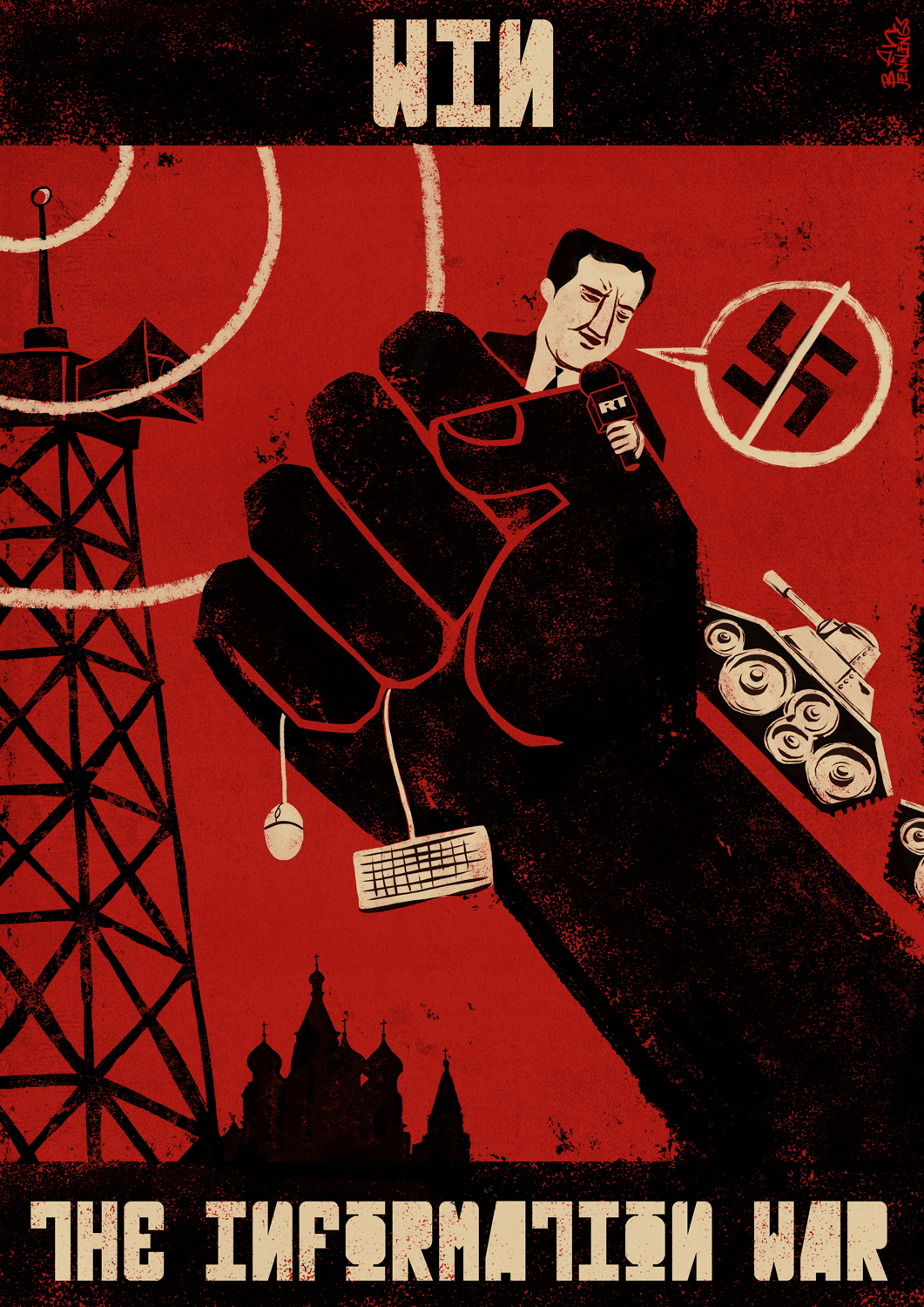
Ben Jennings for Index on Censorship
Draw the Line: We want to hear your thoughts on key free expression issues
Each month, our Youth Advisory Board will choose a free expression topic and encourage readers to respond to the issues it raises via social media. Draw the Line also features pieces from our Young Writers/Artists programme as well as relevant features from our award-winning quarterly magazine.
This month’s question: Do wars justify censorship?
The British government established the War Office Press Bureau 100 years ago this month to censor reports from the British Army before they were issued to the press. Colonel Ernest Swinton, the first man to be appointed the Army’s official journalist, wrote later: “The principle which guided me in my work was above all to avoid helping the enemy… I essayed to tell as much of the truth as was compatible with safety, to guard against depression and pessimism, and to check unjustified optimism which might lead to a relaxation of effort.”
During the First World War, censorship was deemed crucial to send the public the right messages, and keep the enemy in the dark about tactics.
Today, especially in times of war, governments continue with their attempts to control what the public and the outside world are told, often in the name of national security.
Amid the conflict in Israel and Gaza, both sides have been guilty of clamping down on free speech and the press.
Israel last month conducted three air strikes on buildings housing media outlets in Gaza, injuring at least three journalists and, according to the Committee to Protect Journalists, violating international law.
On the Palestinian side, Hamas expelled Russia Today journalist Harry Fear after he referred to the location of rockets fired towards Israel on Twitter, and a university lecturer was arrested for criticising Palestinian president Mahmoud Abbas on Facebook.
As the internet provides a platform for everyone to publish information that might aid the enemy, reporting restrictions that were once limited to the work of journalists extend into the personal lives of us all.
In times of war, can censorship be justified in the name of keeping us safe? Or is national security simply an excuse used by governments to clamp down on their critics?
Participate in the discussion by tweeting your thoughts with the hashtag #indexdrawtheline and follow responses at Draw the Line.
7 Aug 2014 | News, Politics and Society, Religion and Culture
First, the inevitable throat clearing and hand wringing. The most recent conflict between Israel and Hamas has been beyond horrendous. As I type, the ceasefire is holding. Over 1,800 Palestinians have lost their lives, more than 300 of them children. Dozens of Israelis, mostly young conscript soldiers, are also dead. There is an enormous imbalance, in firepower and in defensive capability. Better men than I have gone mad attempting to imagine a way to stop this happening again. Even that statement, I realise, reads like a cop out, but a particular sense of despair looms over this latest manifestation of a war that is only ever dormant at best.
Some clearly feel that the horror has gone too far. Author Hari Kunzru, for example, has decided to join calls for a cultural boycott of Israel. Writing on his Facebook wall, Kunzru cited an op-ed in the Jerusalem Post which suggested the “dismantling” of Gaza and the “relocation” of its non-humanitarian population. Kunzru also cited “”the targeting of schools and hospitals, the picture of a child my son’s age being dug out of rubble that reduced me to helpless tears, the total disregard of the Netanyahu government for international laws and norms…” as signs that Israel was a country that had “lost its moral compass”.
This is notable not because Hari is a well-known figure in the arts world – there are enough of those willing to sign up to any cause that comes along, and more than enough already willing to tell us exactly what they think about Israel/Palestine, or Cuba, or any other issue to which sections of the left are drawn to, like particularly verbose moths to the flames of revolution, or, worse, the great unspecified “resistance”.
No, this is notable exactly because Hari Kunzru is not one of those people. Hari is thoughtful and unshowy. And Hari has actually put in real work for free speech. I recall, in 2012, scrabbling to find a local sympathetic lawyer who would represent Hari when he faced serious risk of prosecution for reading from the Satanic Verses at the Jaipur Literary Festival, in solidarity with Salman Rushdie. He has made himself available for organisations such as Index and English PEN well beyond the call of duty. So when someone such as Hari Kunzru identifies with a cultural boycott, it means we have to take the question seriously.
The concept of boycotts, and particularly cultural and academic boycotts, have for a long time been problematic for people engaged in the promotion of free expression. Most criticisms of censorship are based on a fundamental assumption that communication of ideas is, in and of itself, a good thing. Some vague belief abounds based loosely on the Hegelian triad of thesis, antithesis, synthesis.
This can sometimes sound naive, but it does lead to useful perspectives on any argument: 1) that there are entirely sincere, well-meaning people, who may hold views completely anathema to your own, and 2) following from that, in formulating any position on proscription of certain attitudes or beliefs, or people, one must imagine being on the wrong end of the argument – a kind of categorical imperative crossed with the “golden rule”, that can end up making the certainty of others unsettling.
Boycotters often carry that absolutism and conviction that brooks no argument: a simple righteousness anchored in the belief that their view of the world is so self-evidently correct that anyone who is unconvinced by them is either deviant or deficient.
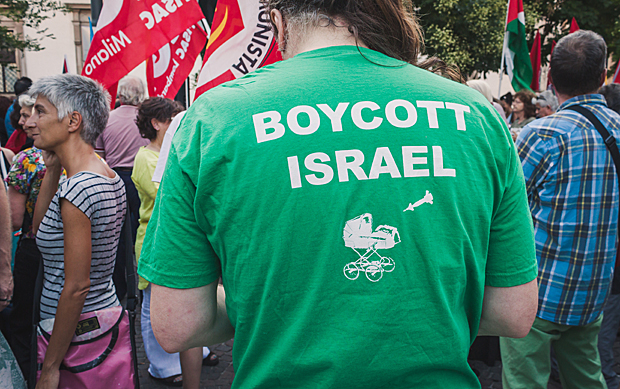
Then there is always the question of who benefits from boycotts? And who is hurt? The traditional, free expression view on cultural boycotts is that they punish precisely the people who are most outward looking and also most likely to seek change in their own countries. Is it fair to punish the artists for the actions of the government, as we have seen with the cancellation of Israeli show The City at the Edinburgh Festival following protests by the Scottish Palestine Solidarity Campaign? Or to request that the UK Jewish Film Festival should ditch Israeli government funding before it can use a venue, as Kliburn’s Tricycle Theatre has, in the name, it says, of attempting to depoliticise the event?
It is argued that theatre companies, dance troupes etc are legitimate targets for boycott if they benefit from state funding, but in truth, there is hardly a theatre company in the civilised world that does not take funding from government agencies: indeed, most western liberals see state agency funding of arts as a sign, even a crucial part, of a healthy democracy, and it is rare that state-funded companies engage in Red-Army Choir style propaganda tours – though Venezuela’s Orquesta Sinfónica Simón Bolívar, decked out in baseball jackets in the colours of the national flag, can sometimes feel a little too Potemkin for comfort.
Writing on the subject (£) of anti-Israel boycotts back in 2012, Irish Times literary editor Fintan O’Toole drafted these five rules for artists and writers invited to perform in countries with dubious records:
1) Don’t take money, directly or indirectly, from governments that systematically abuse human rights, or from oligarchs who benefit from those abuses.
2) Give a significant part of your fee to human-rights defenders or oppressed artists in the relevant country.
3) Don’t accept any restrictions on your own freedom of expression when you’re in that country.
4) Don’t perform to audiences forcibly segregated on lines of race, gender or ethnicity.
5) Don’t let yourself be used for propaganda purposes.
This was very much the approach used by Sweden’s Loreen during and after the Eurovision Song Contest hosted by Azerbaijan in 2012. The singer made efforts to meet opposition figures and voice their concerns in press conferences and TV interviews, and was widely praised for it.
In fact, O’Toole’s rules are not a million miles from the boycott pledge signed by Hari Kunzru, which states: “We support the Palestinian struggle for freedom, justice and equality. In response to the call from Palestinian artists and cultural workers for a cultural boycott of Israel, we pledge to accept neither professional invitations to Israel, nor funding from any institution linked to its government until it complies with international law and universal principles of human rights.”, though there is a crucial difference in that the boycott statement punishes both state and non-state entities, thus preventing signatories from accepting invitations from, say, a hypothetical human rights group.
And this is the problem I will continue to have with boycotts against nations, particularly nations’ cultural endeavours. They seem too blunt, too broad and flawed. Even the much-cited cultural boycott against South African apartheid went awry, with the bizarre irony of Paul Simon being criticised for technically breaking the boycott by travelling to the country to work with Ladysmith Black Mambazo, the black acapella singing group that was far from a friend of the regime.
But the problem is that for many seeking to register their disgust at the actions of foreign governments, boycott seems the only option. Perhaps it’s time for those of us uncomfortable with the idea of shutting down free speech to figure out new avenues of expression.
This column was posted on August 7, 2014 at indexoncensorship.org
24 Jul 2014 | Digital Freedom, News, United Kingdom

(Photo: Shutterstock)
Last week, the social web, at one end of its endless, pendulum-like swings between mawkishness and self-righteous fury, discovered a letter from the head teacher at Barrowford primary school, East Lancashire. It was a sweet-natured letter, congratulating students on their exam results and then going on to note all the things exams can’t measure and examiners don’t know:
“The people who create these tests and score them do not know each of you the way your teachers do, the way I hope to, and certainly not the way your families do.
“They do not know that many of you speak two languages. They do not know that you can play a musical instrument or that you can dance or paint a picture. They do not know that your friends count on you to be there for them or that your laughter can brighten the dreariest day.”
…and so on; examiners did not that “know that you have travelled to a really neat place or that you know how to tell a great story ” etc etc etc.
All very sweet sentiments, and new and traditional outlets went crazy for it. The letter went viral, and then the mainstream media, including BBC Radio 4’s The Today Programme, covered the fact the letter had gone viral.
There were a few problems with the well-meaning letter, though. As Toby Young pointed out in the Telegraph, it was incorrect to say the people who “scored” the children’s Key Stage 2 achievements “do not know each of you the way your teachers do”; part of the assessment is done by teachers at the schools.
Meanwhile, children in East Lancashire do not, generally, go to “really neat” places. American kids go to “really neat” places. Barrowford kids might, say, get taken to Turf Moor to see a Burnley match, or more likely at this time of year, Blackpool Pleasure Beach, and it would be proper good.
The reason for these disparities was simple: large sections of the letter had been lifted from elsewhere; apparently, it’s been circulating in various forms since originally being written by a Mary Ginley of Massachusetts in 1999.
When various people (including me) pointed this out on Twitter, they were seen as being somewhere between the Grinch and ISIS in terms of spoilsport misanthropy. “So what if it wasn’t original?” we were told. The sentiment was correct, and that’s what was important.
It may seem unduly curmudgeonly to complain about a rural school’s end of term letter, but the point of interest here is how quickly it spread, and how blase people have been about the basics of who actually wrote it.
Consider another example: after Algeria went out of the World Cup, it was widely rumoured on Facebook, Twitter and other networks that the team had donated its fee for the tournament to “Gaza”; not the ICRC or MSF, or even Hamas, just vague “Gaza”.
It felt good, and it felt nice, and it was plainly not true. But no one really cared whether it was true or not because (a) Algeria had been quite an enjoyable team to watch, b) people wanted to think someone was doing something about Gaza, and c) well, the Algerian team were Muslims, so they’re probably concerned about Palestine (I never said this was a well-thought out view).
This pattern was repeated when German Muslim player Mesut Ozil was similarly reported to have donated his fee to “Gaza” after his team’s eventual World Cup triumph. The news spread like wildfire, because people wanted it to be true. It wasn’t. Ozil had already pledged his cash to projects in Brazil.
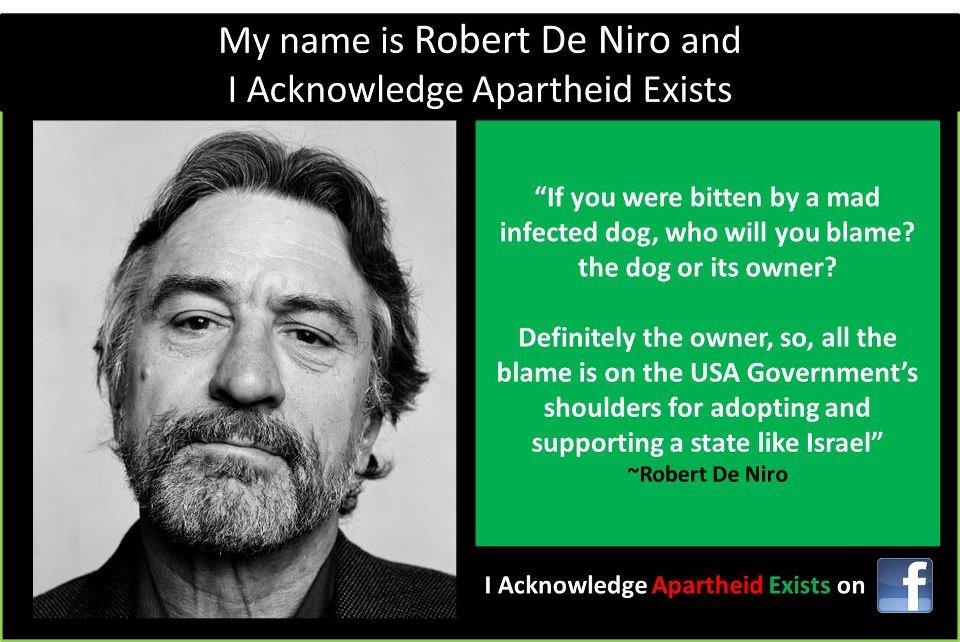
The Gaza conflict has provided more of these moments: a picture of thousands of Orthodox Jewish men protesting in New York is widely touted as a pro-Palestine protest; it is not. It is taken from a protest against Israeli conscription laws in March; a meme circulates quoting actor Robert De Niro comparing Israel to a mad dog; there is no evidence that he has ever said this.
But these things, like the school letter, circulate because they feel right and they make us feel good.
As the old line says “a lie will go round the world while truth is pulling its boots on”. The speed with which we can now move information around surely compels us to be even more mindful of this fact. And yet, what’s the answer? Social media thrives on the instantaneous; slowing it down could be severely damaging to the positive aspects of it. Draconian Chinese laws on “spreading rumours” are reported to have severely affected the number of interactions on social media. In democracies, it would likely be impossible to prevent feelgood-but-false memes, as well as straighforward propaganda, to spread without a massive crackdown on free expression.
For a long time, the web has demanded that we “become our own editors”, ensuring that we take in a broad amount of information rather than merely reading the sites we like on the topics we like, avoiding challenging or new ideas.
But the editorial process must always involve a high level of scepticism; some of the greatest journalistic failures of the past 40 years, such as the Hitler Diaries Hoax, or Piers Morgan’s disastrous publishing of fake pictures of Iraq war abuses in the Daily Mirror, came down to an editor’s and others involved required scepticism being overwhelmed by a story that was simply too good to be true. Disaster ensued.
The same must apply for anyone who thinks themselves vaguely “active” in the political sense on the web. Inaccurate information ultimately damages your cause. So the next time you see a meme on NHS spending, Israel, or whatever it is you care about, think before you tweet: Is this too good to be true? Do I have any way of checking this for myself?
This article was published on July 24, 2014 at indexoncensorship.org
8 Jul 2014 | Egypt, News
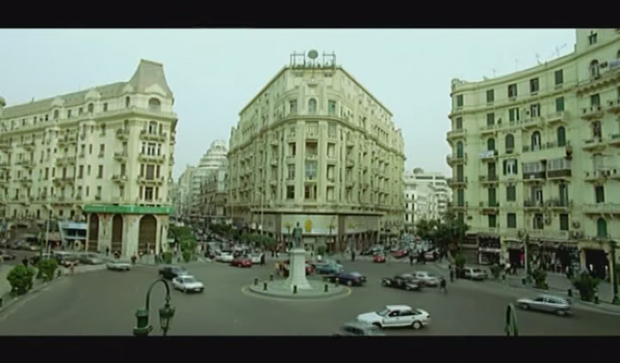
A still from the trailer of big-budget Egyptian film Yacoubian Building (Image: Strand Releasing/YouTube)
When mass protests broke out in Egypt on January 25 2011, the uprising took many people around the world, including Egyptians, by surprise. But some believe the stage was in fact already being set for revolution years earlier — and that popular culture played a part.
On 17 December 2010, Mohamed Bou Azizi, a Tunisian street vendor had set himself on fire in protest of the confiscation of his wares and the humiliation inflicted on him by a municipal official. His act sparked mass street protests in Tunisia which 28 days later, led to the overthrow of the authoritarian regime of Zine El Abidine Ben Ali.
When Ben Ali fell, analysts questioned whether the uprising in Tunisia would inspire similar revolts in other North African countries with despotic regimes, including Egypt which they pointed out, also suffered enormous socio-economic inequalities, widespread youth unemployment and political marginalisation of the masses.
The thought of a mass uprising in Egypt was however, quickly dismissed by Egyptian officials as “outrageous”.
“Egypt is not Tunisia”, scoffed veteran diplomat Amr Moussa when I asked him if Egypt would be next. I met Moussa on January 19, 2011 at a Sharm El Sheikh conference on Arab Economic Integration — a gathering that was overshadowed by the dramatic events unfolding in Tunisia. The veteran diplomat who had served as foreign minister under Hosni Mubarak, confidently told me that Egypt was “a much bigger country and vastly different in terms of demography”. Moussa’s argument convinced me. Indeed, Tunisia is a homogeneous society with a relatively well-educated population unlike Egypt — a more diverse society with in excess of 16 million illiterate people, according to a 2012 study released by the Central Agency for Public Mobilisation and Statistics.
Besides, there was widespread political apathy in Egypt. For decades, the Egyptian people had silently tolerated rights abuses at the hands of the corrupt regime. So patient were the Egyptians with their repressive government that analyst Khaled Diab joked about their political apathy in an op-ed published in the Guardian in June 2009, saying that: “The people of Egypt possessed some sort of a cultural gene against rebellion and risk taking.”
It was not surprising that the Egyptians had shown remarkable immunity to the Tehran protest virus, he wrote, explaining that “the Egyptian people had for decades, been ruled by a long succession of foreigners who cared little for their well being. They considered their native rulers just as alien.”
The widely-anticipated political pandemic had hitherto, failed to materialise… Until Tunisians revolted.
But contrary to popular belief, the eighteen-day uprising that overthrew Mubarak was not an “overnight eruption”. In fact, it had taken several years of ground-laying and a series of events helped pave the way for the revolt that was to come.
Some analysts believe the stage was being set for the 2011 mass protests from as early as 2004, not long after the fall of Iraqi strongman Saddam Hussein.
This was the year Egyptian intellectuals, artists and activists founded the Kefayya (Enough) Movement that would oppose the Mubarak regime and call for fundamental constitutional and economic reforms. Although the overarching ideology of the movement is largely secular, many members of the then-outlawed but tolerated Muslim Brotherhood joined forces with the leftists and secularists.
Moreover, there were the workers’ unions, which in the years leading up to the uprising had organised a series of labour strikes, protesting low wages and rising food costs. The 2008 labour protests which began as an initiative of workers in the textile industry in Mehalla El Kobra and other Egyptian cities, inspired mass momentum and were the first spark that ignited the street protests that followed two years later.
Egypt’s pro-democracy youth activists were also active and widely credited for using social media networks to fuel the anger against the brutal regime. The April 6 Youth Movement and “We are All Khaled Said” Facebook group mobilised Egyptians for the protests by posting videos of police brutality and calling for civil disobedience.
Again, contrary to popular belief, the January 2011 uprising was not merely a “people’s movement”, as it has often been described. Some analysts think the uprising may have been driven by the security state much like the revolt that ousted Mohamed Morsi, Egypt’s first freely elected president, two years later. Breakaway members of Tamarod, the movement that last summer gathered signatures for a petition calling on the Islamist president to step down, later revealed that “state security agents had guided and influenced our campaign”.
Some members of the group went as far as admitting that “some of the movement’s founders had been planted by state security” according to a Reuters article published online on February 20, 2014. Similarly, the January 25 uprising may have also been guided, albeit more subtly by the deep state — a term used to refer to the country’s combined security apparatus: the intelligence services, the police and National Security. It was no secret that Mubarak had been grooming his son Gamal to succeed him — a move that was rejected by senior-ranking generals in the army. The generals had expected the succession bid to cause popular unrest and decided to be prepared to step in.
“General Abdel Fattah El Sisi, who was head of military intelligence in 2010, had already been picked by his bosses as the country’s next defence minister and was asked to prepare a study of Egypt’s political future. He proposed that the army should be prepared to move in to ensure stability and preserve its central role in the state in the likely event of civic unrest breaking out,” journalist Richard Spencer wrote in an opinion piece published in the Telegraph in June 2014. Political analyst Hassan Nafaa was quoted as telling Spencer that: “When the revolution of 2011 exploded, the army had already made plans to deploy.”
“They chose to sacrifice Mubarak rather than the regime itself,” Nafaa added.
Egypt’s powerful military firmly believes it is entitled to remain in power, having fought two wars with Israel. Besides, at stake — should the country be ruled by a civilian president — is the military’s vast business empire estimated to be as much as 40 percent of the country’s GDP.
So how did the deep state in Egypt prepare unsuspecting Egyptians for the uprising that was to come?
Culture and the arts served as the catalysts for the movement for change that was being shaped as early as four or five years before the actual “revolution” erupted. From 2006 onwards many artistic works, including locally-produced films screened in Egyptian theatres, helped fuel the people’s anger and frustration, inciting protests against the inept government. While some may dismiss this theory as absurd, in reality, there is strong evidence to support it.
Take the big-budget film “Yacoubian Building”, based on the novel of the same name by author Alaa Aswany, a member of the opposition Kefayya Movement. The three hour epic, screened in Egypt in 2006, shed the spotlight on a host of societal ills including the rampant corruption, sexual repression and religious fundamentalism plaguing contemporary Egyptian society. It also reflected the hopes of young Egyptians for a just society based on rule of law and respect for civil liberties. Like Egypt itself, the building in which the film’s lead characters reside had crumbled “from a once-elegant edifice of Art-Deco splendour now slowly decaying in the smog and bustle of downtown Cairo”, Nana Asfour, who works as a cultural editor for the New Yorker, wrote in a 2007 review of the book.
The book brings to life “a seedy and despicable Cairo where only the corrupted and corruptible can fare well” she wrote, adding that “in this scathing critique of contemporary Egyptian society, one is hard put to find a redeemable character”.
From Abdou and Busayna, who by necessity acquiesce to selling their bodies to feed their families, to Talal, who seeks solace in religion and later resorts to “martyrdom” — they all are victims of their merciless society. The film also portrays the fake religiosity widespread in today’s Egypt where many conceal their greed behind deceiving pious behaviour and appearances — like prominent lawyer Kamal El Fouli who rigs the parliamentary vote in favour of Hag Azzam, justifying the action as “implementation of God’s will”.
“Our Lord created the Egyptians to accept authority,” El Fouli tells Azzam in the film.
Shocking as it was to an audience previously unaccustomed to having the realities of their everyday lives mirrored so brazenly, the Yacoubian Building was a wake-up call to many Egyptians who were able to identify with the film’s characters. It was also the first in a series of films produced between 2005 and 2010 that were fiercely critical of society and which spurred Egyptians to rebel against the flagrant injustices within it.
Heya Fawda (“It’s Chaos”), an Egyptian-French 2007 co-production and the last film by internationally-acclaimed Egyptian director Youssef Shahin, meanwhile brought international attention to Egypt’s longstanding problem of police corruption and brutality when it was screened at that year’s Venice Film Festival. Police brutality was one of the main causes that triggered the 2011 uprising which aptly coincided with the country’s National Police Day. Set in Cairo’s populous district of Shoubra, the film shockingly depicts the brutal actions of a shady police officer, feared and loathed by the residents in his neighbourhood. So shocking was his brutality that it prompted some film critics to question whether the film was “serious or a lampoon”.
Khaled Youssef, who co-directed the film with Shahin, was later credited with having had the vision to foresee the coming political changes and for “stirring the still waters” with his films. The filmmaker and scriptwriter, who joined the pro-democracy activists in Tahrir Square during the 2011 uprising, would later reveal himself as a fierce opponent of the democratically elected Muslim Brotherhood regime, aligning himself closely with the military-backed authorities that replaced the ousted Morsi. His close links with the military have raised questions over whether his films were actually the outcome of his foresight or a premeditated and carefully calculated plan by the country’s security apparatus to topple Mubarak.
Youssef’s follow-up to Heya Fawda was another shocking revelation of the flagrant social injustice prevalent in modern-day Egyptian society. Set in a Cairo slum area, it depicts the daily struggles of the inhabitants of this deprived neighbourhood, including sexual violence against women and the plight of street children. The film ends with the residents of the slum rising up in arms to protest their conditions — which some observers viewed as a possible beckoning call on needy Egyptians to rise in similar fashion.
Last but not least, was the 90 minute comedy “The President’s Chef” released in 2010. In the film, a simple cook tries to convey to a president out of touch with his people, the hardships faced by average Egyptians in their daily lives. Film critics drew similarities between the film’s lead character and the real president who during the last ten years of his rule, had often been criticized for isolating himself in his own ivory tower, oblivious to the needs of his people.
In a country with a long tradition of strict censorship rules, one cannot help but wonder if the censors’ decision to pass those films was a coincidental loosening up of their tight restrictions in a bid to give a semblance of democracy and free speech. Or was it instead, a deliberate and tactical scheme to pave the way for Mubarak’s ouster?
Looking back at the events of the last three years that have ended with the return of the old regime minus Mubarak, it appears clear that nothing in Egypt happens by sheer coincidence.
This article was posted on 7 July 2014 at indexoncensorship.org