12 Feb 2014 | Academic Freedom, News, Politics and Society, Religion and Culture, United Kingdom
1. The Flying Spaghetti Monster
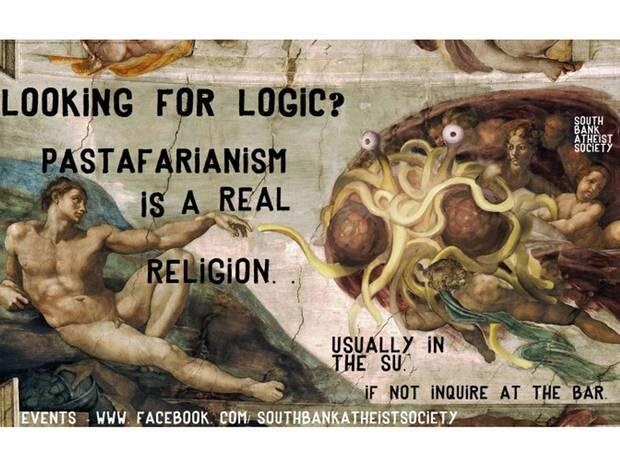
The poster, used by the London South Bank University’s atheist society, was banned by student union officials (Image: DavidPWFreeborn/Twitter)
In the most recent incident of student-orchestrated censorship, a poster promoting a university society, which depicts God from Michelangelo’s famous Creation of Adam as a flying spaghetti monster, has been banned from public view.
Members of London South Bank University’s atheist society put up the poster last week as part of a freshers’ fair stall; it was later reportedly removed by student union officials for being “religiously offensive”, with the society’s stall taken down the following day.
The Church of the Flying Spaghetti Monster has been used by atheists as a satirical way of criticising beliefs in a supreme being, first appearing in American schools in 2005. The anti-religious statement has since caught on at British universities.
2. ‘Jesus and Mo’ t-shirts
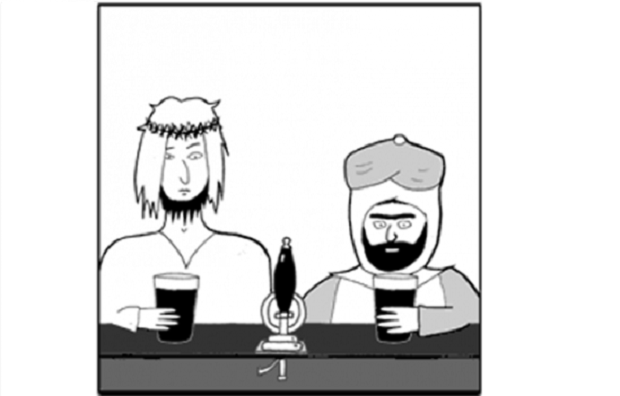
Members of the London School of Economics atheist society were told to cover up their t-shirts depicting the cartoon ‘Jesus and Mo’ during a freshers’ fair. (Image: AuthorJ&M/Twitter)
Another atheist society, another fresher’s fair, and another case of a university smothering the free speech of its students. This time, members of the London School of Economic SU Atheist, Secularist and Humanist Student Society were banned from wearing t-shirts depicting images from the controversial ‘Jesus and Mo’ cartoons in October 2013.
According to members of the society passers-by had complained to SU staff about their t-shirts and several pieces of literature. They were told by a member of the LSE Legal and Compliance Team and Head of Security said that the t-shirts could be considered “harassment”, as it could “offend others” by creating an “offensive environment”. The t-shirts were unwillingly covered up.
In response to the fiasco the creators of the cartoon produced a new comic strip. The university also made a public apology in December.
3. Robin Thicke’s Blurred lines
Robin Thicke’s Blurred Lines song has been banned in at least 20 student unions after it was released in March 2013. (Image: George Weinstein/Demotix)
First it was the University of Edinburgh, then Leeds University followed suit. Now, around 20 university student unions across the UK have banned the playing of Robin Thicke’s song Blurred Lines .The chart-topping hit, featuring Pharrell Williams, T.I., and an original music video deemed too risqué for YouTube, has been accused of being “rapey” and includes the lyrics “Talk about getting blasted, I hate these blurred lines, I know you want it, but you’re a good girl, the way you grab me, must want to get nasty.”
The Guardian might be on the right track with their claims of Blurred Lines being the most controversial song of the decade but should universities really be allowed to dictate what their students listen to?
4. People
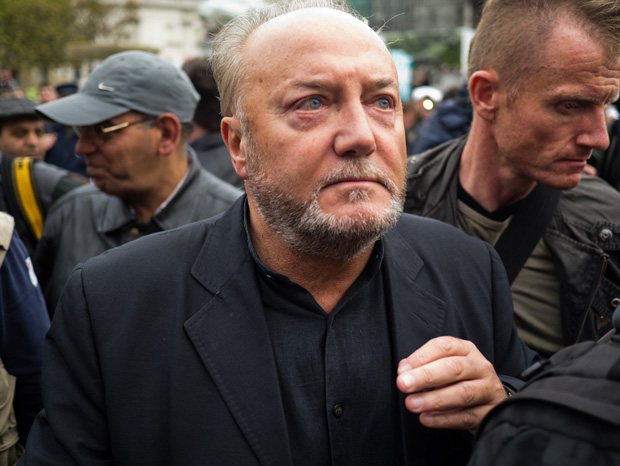
George Galloway attends an anti-war rally in 2011 (Image: Paul soso/Demotix)
It’s not just posters and protests that have been banned by universities- in some instances people, usually those scheduled to speak at a university-held event, have been informed it would not be acceptable for them to participate. For instance, an invitation for MP George Galloway to speak at an event by the University of Chester Debating Society was revoked by the student union under the National Union of Students’ No Platform policy . Galloway had recently been involved in several controversial incidents, including refusing to debate with an Israeli Oxford University student during a panel discussion panel as well as referring to the Julian Assange rape allegations as merely “bad sexual etiquette”.
Several other speakers have been denied attendance to university lectures and debates.
5. Student protest at London universities
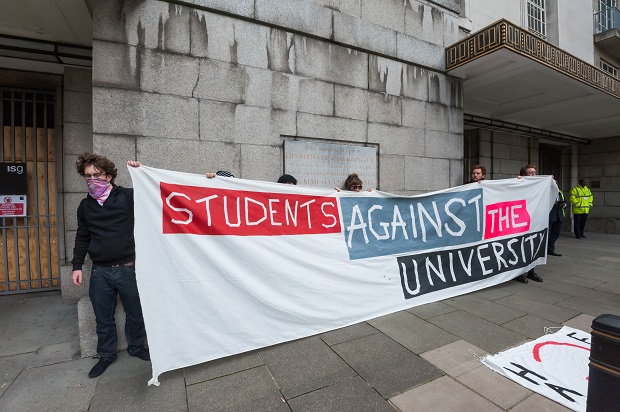
Students defy the protest ban imposed by the University of London to speak out against the privatisation of university support services. (Photo: Peter Marshall/Demotix)
Although not a ban implemented by a student union, as of December 2013 at least four London-based universities have banned student protests on campuses for six months. The offending universities- University College London, the School of Oriental and African Studies (SOAS), Birkbeck and the London School of Economics- announced that any students found holding sit-in protests in an area of Holborn, which includes a student union and the buildings of SOAS and Birkbeck, would face imprisonment.
The injunction on student protests by the University of London was passed by the High Court in-light of violent clashes between students, disputing the proposed privatisation of university support services, and police at the beginning of December.
UPDATE: London South Bank University have issued an apology for removing the South Bank Atheists Society’s posters of Flying Spaghetti Monster. Full story at the British Humanist Association
This article was posted on February 12, 2014 at indexoncensorship.org
4 Feb 2014 | Digital Freedom, News
[vc_row][vc_column][vc_column_text]
Today Facebook celebrates its 10th anniversary. The social networking giant now has over 1.23 billion users, but there are still political leaders around the world who don’t want their country to have access to the site, or those who have banned it in the past amid fears it could be used to organise political rallies.
North Korea
Perhaps the most secretive country in the world little is known about internet access in Kim Jong-un’s nation. Although a new 3G network is available to foreign visitors, for the majority of the population the internet is off limits. But this doesn’t seem to bother many who, not knowing any different, enjoy the limited freedoms offered to them by the country’s intranet, Kwangmyong, which appears to be mostly used to post birthday messages.
A limited number of graduate students and professors at Pyongyang University of Science and Technology do have access to the internet (from a specialist lab) but in fear of the outside world many chose not to use it. Don’t expect to see Kim Jong-un’s personal Facebook page any time soon.
Iran
In Iran, however, political leaders have taken to social media- despite both Facebook and Twitter officially being extraordinarily difficult to access in the country. Even President Hassan Rouhani has his own Twitter account, although apparently he doesn’t write his own tweets, but access to these accounts can only be gained via a proxy server.
Facebook was initially banned in the country after the 2009 election amid fears that opposition movements were being organised via the website.
But things may be beginning to looking up as Iran’s Culture Minister, Ali Jannati, recently remarked that social networks should be made accessible to ordinary Iranians.
China
The Great Firewall of China, a censorship and surveillance project run by the Chinese government, is a force to be reckoned with. And behind this wall sits the likes of Facebook.
The social media site was first blocked following the July 2009 Ürümqi riots after it was perceived that Xinjiang activists were using Facebook to communicate, plot and plan. Since then, China’s ruling Communist Party has aggressively controlled the internet, regularly deleting posts and blocking access to websites it simply does not like the look of.
Technically, the ban on Facebook was lifted in September 2013. But only within a 17-square-mile free-trade zone in Shanghai and only to make foreign investors feel more at home. For the rest of China it is a waiting game to see if the ban lifts elsewhere.
Cuba
Facebook isn’t officially banned in Cuba but it sure is difficult to access it.
Only politicians, some journalists and medical students can legally access the web from their homes. For everyone else the only way to connect to the online world legally is via internet cafes. This may not seem much to ask but when rates for an hour of unlimited access to the web cost between $6 and $10 and the average salary is around $20 getting online becomes ridiculously expensive. High costs also don’t equal fast internet as web pages can take several minutes to load: definitely not value for money for the Caribbean country.
Bangladesh
The posting of a cartoon to Facebook saw the networking site shut down across Bangladesh in 2010. Satirical images of the prophet Muhammad, along with some of the country’s leaders, saw one man arrested and charged with “spreading malice and insulting the country’s leaders”. The ban lasted for an entire week while the images were removed.
Since then the Awami-League led government has directed a surveillance campaign at Facebook, and other social networking sites, looking for blasphemous posts.
Article continues below[/vc_column_text][/vc_column][/vc_row][vc_row][vc_column][vc_custom_heading text=”Stay up to date on freedom of expression” font_container=”tag:p|font_size:28|text_align:left” use_theme_fonts=”yes”][vc_separator color=”black”][/vc_column][/vc_row][vc_row][vc_column width=”1/2″][vc_column_text]
Index on Censorship is a nonprofit that defends people’s freedom to express themselves without fear of harm or persecution. We fight censorship around the world.
To find out more about Index on Censorship and our work protecting free expression, join our mailing list to receive our weekly newsletter, monthly events email and periodic updates about our projects and campaigns. See a sample of what you can expect here.
Index on Censorship will not share, sell or transfer your personal information with third parties. You may may unsubscribe at any time. To learn more about how we process your personal information, read our privacy policy.
You will receive an email asking you to confirm your subscription to the weekly newsletter, monthly events roundup and periodic updates about our projects and campaigns.
[/vc_column_text][/vc_column][vc_column width=”1/2″][gravityform id=”20″ title=”false” description=”false” ajax=”false”][/vc_column][/vc_row][vc_row][vc_column][vc_separator color=”black”][/vc_column][/vc_row][vc_row][vc_column][vc_column_text]Egypt
As Egyptians took to the streets in 2011 in an attempt to overthrow the regime of Egyptian President Hosni Mubarak the government cut off access to a range of social media sites. As well as preventing protestors from using the likes of Facebook to foment unrest, many websites registered in Egypt could no longer be accessed by the outside world. Twitter, YouTube, Hotmail, Google, and a “proxy service” – which would have allowed Egyptians to get around the enforced restrictions- seemed to be blocked from inside the country.
The ban lasted for several days.
Syria
Syria, however, dealt with the Arab Spring in a different manner. Facebook had been blocked in the country since 2007 as part of a crackdown on political activism, as the government feared Israeli infiltration of Syrian social networking sites. In an unprecedented move in 2011 President Bashar al-Assad lifted the five year ban in an apparent attempt to prevent unrest on his own soil following the discontent in Egypt and Tunisia.
During the ban Syrians were still able to easily access Facebook and other social networking sites using proxy servers.
Mauritius
Producing fake online profiles of celebrities is something of a hobby to some people. However, when a Facebook page proclaiming to be that of Mauritius Prime Minister Navin Ramgoolam was discovered by the government in 2007 the entire Mauritius Facebook community was plunged into darkness. But the ban didn’t last for long as full access to the site was restored the following day.
These days it would seem Dr Ramgoolam has his own (real) Facebook account.
Pakistan
Another case of posting cartoons online, another case of a government banning Facebook. This time Pakistan blocked access to the website in 2010 after a Facebook page, created to promote a global online competition to submit drawings of the prophet Muhammad, was brought to their attention. Any depiction of the prophet is proscribed under certain interpretations of Islam.
The ban was lifted two weeks later but Pakistan vowed to continue blocking individual pages that seemed to contain blasphemous content.
Vietnam
During a week in November 2009, Vietnamese Facebook users reported an inability to access the website following weeks of intermittent access. Reports suggested technicians had been ordered by the government to block the social networking site, with a supposedly official decree leaked on the internet (although is authenticity was never confirmed). The government denied deliberately blocking Facebook although access to the site today is still hit-and-miss in the country.
Alongside this, what can be said on social networking sites like Facebook has also become limited. Decree 72, which came into place in September 2013, prohibits users from posting links to news stories or other news related websites on the social media site.
This article was published on 4 February 2014 at indexoncensorship.org[/vc_column_text][/vc_column][/vc_row][vc_row][vc_column][vc_basic_grid post_type=”post” max_items=”12″ style=”load-more” items_per_page=”4″ element_width=”6″ grid_id=”vc_gid:1538131415482-d092e45b-9f66-5″ taxonomies=”136″][/vc_column][/vc_row]
20 Jan 2014 | Middle East and North Africa, News, Palestine
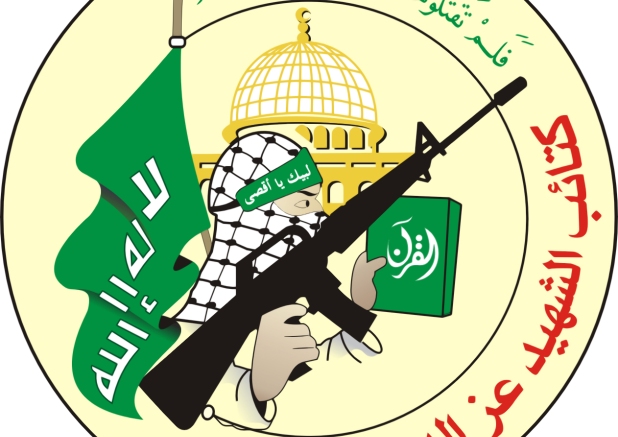
The logo of the Al Qassam Brigade, the armed wing of Hamas
Last week, Hamas’ militant wing the Iz Al Din al Qassam Brigades announced via their website that their primary English-language Twitter account, @alqassamBrigade had been suspended. The group said : “The Qassam Brigades confirmed that they did not violate Twitter’s terms of service ever … Twitter still not sending Al Qassam any justifications for the suspension.”
When asked by Index why the account was suspended, a spokesperson from Twitter responded: “”We do not comment on individual accounts, for privacy and security reasons.”
Twitter’s decision to suspend the account becomes evermore confusing beyond this first glance. If the goal is to prevent Al Qassam from using Twitter, it’s ineffective, as their secondary English-language account as well as a primary Arabic account are both still active- not to mention the ease with which a new account can be created. It’s difficult to see what closing the account achieved other than giving a group that, by definition feeds off exclusion from the mainstream, fuel for pariah status.
Moreover, the timing of the decision appears to be somewhat out of the blue. If Twitter was truly concerned about inflammatory remarks, then they would have suspended the account back in November 2012, when Al Qassam and the Israeli Defence Force used Twitter to bait one another during the last Gaza war. This period set a new bar in terms of direct and hostile communication via Twitter, not just between Al Qassam and the IDF but also by their supporters. Objectionable though some of it may have been, Twitter never interfered with the fray.
Nonetheless, this particular corner of the Internet is constantly caught between the need that websites such as Twitter act as a transmitter of free speech, and the extreme pressure that it is subjected to by interest groups. On the 20 November 2012, “Christians for a United Israel” filed a petition with Twitter to close Al Qassam’s account, on the grounds that it counted as “material support” for an internationally recognised terrorist group, Hamas.
But as David Cole pointed out in a piece for the Daily Beast’s Open Zion blog at the time, the terms of what constitutes this “material support” are so broad as to be almost meaningless – and Gaza is filled with so many international products that it could be argued that Coca Cola, ExxonMobil and a large number of Israeli products that are regularly exported to Gaza are also supporting Gaza’s ruling Hamas party. Twitter is simply a conduit – as Cole points out, “Twitter is for all practical purposes a ‘common carrier’, providing its service to all comers. Would we hold a telephone company responsible for allowing a gang to use its phone lines to plan a crime, or the Postal Service responsible for delivering a package of drugs?”
The other curious element about this timing is that the suspension comes at a time when jihadist accounts are proliferating on Twitter, in Arabic and in English. Jihadist individuals and groups within Syria have increasingly taken to social media as a way to spread a message about their beliefs and intentions as part of Syria’s civil war. Individual members of Jabhat Al Nusra and increasingly ISIS have used Twitter as a means of provoking one another off the battlefield. While this may not be the official accounts of each group tweeting, it is not so different in content from anything that Al Qassam have tweeted recently. If Twitter were truly concerned about the content of Al Qassam’s account, then they would have been forced to close far more than just the one.
Terrorist groups using different forms of media to transmit their message to a wider public is nothing new. Complaining that Twitter helps terrorists talk to the public sounds as outdated as complaining that Al Jazeera broadcasted statements by Osama bin Laden: in this sense, the medium is not the message.
To consider the alternative for a moment: Gaza is not a haven for free media. Journalists of any nationality that operate on the ground there do so under heavy restrictions from a variety of parties. Beyond the day to day restrictions on their movement, speech and work, talking directly to the Al Qassam Brigades is almost impossible. Social media, while potentially a tool for propaganda, is one of the few ways that the wider public is able to know what is happening inside Al Qassam Brigades and Hamas. Cutting off this line further maligns part of a regime that uses this seclusion to its political advantage within Gaza, and allows Hamas to further clamp down on free speech within the Strip. In short: the content may be a strange development on Twitter, but its absence potentially has tangible effects for people on the ground.
This article was posted on 20 January 2014 at indexoncensorship.org
17 Jan 2014 | Middle East and North Africa, News, Palestine
 A leading Palestinian human rights activist has claimed that freedom of speech is far greater under the Hamas regime in Gaza than in the Fatah-controlled West Bank.
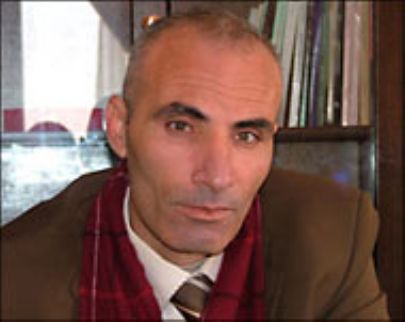
Khalil Abu Shamala, director of the al-Dameer Centre For Human Rights – which works in both Gaza and the West Bank – said that although there were still occasional arrests of Fatah members, “nowadays we don’t document many violations”.
He noted that this was partly down to Hamas’s weakness in the face of international pressures, particularly the breakdown of relations with the Egyptian regime.
In the past, Hamas has made large-scale arrests of journalists and called many others in for questioning, with opposition activists and bloggers facing harassment.
But although abuses still occurred in Gaza, Abu Shamala said that government forces in the Palestinian Authority–controlled West Bank took much harsher action against critics.
“Freedom of expression in Gaza is better than in the West Bank,” he told Index on Censorship. “We have many cases where the PA arrest and attack people because they criticize them on Facebook, and many Facebookers in the West Bank use alternative names, not their real names. But here, they speak without any harassment by Hamas.”
A rift between Hamas and Fatah, which culminated in the Islamist group seizing power in the Strip in 2007, has led to the creation of two near-separate entities in Gaza and the West Bank. Hamas refuses to recognise the Jewish state and is under an embargo by Israel and the international community.
“I don’t know why, but in the West Bank, Palestinian Authority security systems have cooperation and coordination with Israel – and they don’t want to give the opportunity for a third intifada, and they don’t want to allow Hamas or those who are against the Palestinian Authority [to speak out] because they know many of the Palestinians in the West Bank hate the Palestinian Authority,” Abu Shammala continued.
Hamas has previously issued proceedings against Abu Shamala for his outspoken criticism of the Islamist group.
“After they took over Gaza, they wanted from the beginning to impose their Islamic agenda on the society,” he said, adding that his organisations and others had tried to combat these efforts.
The Hamas deputy foreign minister, Ghazi Hamed, denies that his government took any action to silence their critics.
“We are not oppressing people and people can speak loudly, can criticise the government, can criticise Hamas,” said Hamed. “We never put anyone in jail who criticizes Hamas or write something against Hamas. We have different organisations, political parties, even writers, they have full freedom to write what they want.”
