[/vc_column][/vc_row][vc_row disable_element=”yes”][vc_column][vc_custom_heading text=”Apply for Free Speech Training and Mentoring” font_container=”tag:h2|text_align:center” use_theme_fonts=”yes”][vc_column_text]
>> Applications for Free Speech Is For Me have now closed <<
Following a successful initial pilot of Free Speech is for Me we are now preparing to offer our free speech training to a wider group of the public. We hope to make this next group bigger than ever, and the training will be free and online. If you are interested in these free sessions on free speech and free expression, with links to advocacy, activism and defending human rights please fill in this form to express your interest today.
[/vc_column_text][/vc_column][vc_column width=”1/2″][vc_video link=”https://youtu.be/_pmpc3CpGn0″][/vc_column][/vc_row][vc_row][vc_column][vc_column_text]Free speech has been critical to social movements throughout history. It has consistently been used as a powerful tool for marginalised groups to articulate their grievances and demand to be heard.
But today discussions surrounding “free speech” have unfortunately been dominated by a small number of people who seek to use it primarily to curtail the rights of others and spread hate, leading many to question it as a value.
However, when the principle of free speech is abandoned, those who already face oppression are hurt most: including people of colour, religious and ethnic minorities, and those who campaign on sex and gender issues. Free Speech is for Me aims to show how freedom of expression furthers democracy and individual liberty and benefits everyone. If we allow free speech protections to be weakened, we lose our greatest tool in advocating for change.
We are now supporting these advocates in reclaiming free speech as a fundamental right that must apply to everyone by offering training and mentoring on freedom of expression issues. This will include one on one support from leading free speech experts plus media, communications and public speaking training. They will end the programme with a clearer understanding of the challenges of censorship and the tools to overcome them.[/vc_column_text][/vc_column][/vc_row][vc_row disable_element=”yes”][vc_column width=”1/4″ css=”.vc_custom_1565187480669{background-color: #e52d1c !important;}”][vc_column_text]
We are recruiting six people in the US and six people in the UK, from groups whose belief in the value of free expression principles has been challenged in recent years.
We are seeking applicants who would bring a different angle to discussions around free speech.
Applicants may come from all age groups and particular consideration will be given to activists who have experienced the shutting down of speech. We want applicants who will champion free speech as a right that benefits them and their peers and is essential to their cause but is also a right shared by all.[/vc_column_text][/vc_column][/vc_row][vc_row disable_element=”yes”][vc_column][vc_separator color=”white”][/vc_column][/vc_row][vc_row disable_element=”yes”][vc_column width=”1/4″ css=”.vc_custom_1565187500255{background-color: #E52D1C !important;}”][vc_column_text]
If your application is successful you will receive:
Mentoring: Advocates will be paired with experienced free speech advocates who will act as an advisor and mentor to each individual over the course of the training. You will have 4-6 meetings delivered either face to face or virtually, plus additional support as needed.
Media training: Advocates will receive one full day of professional media training plus regular training on public speaking/writing as necessary.
Public events: Advocates will be given the skills to talk about issues of free speech at public events, in private meetings and in the media. We will work with you to identify these opportunities. We will pay for your expenses to attend training and a speaker fee for events and writing.
Please complete the following application form and submit to us by Friday 27 September 2019.
If you are shortlisted you will also be asked for full resume and may be invited to an interview, which will take place during the last week of September.[/vc_column_text][/vc_column][/vc_row][vc_row disable_element=”yes”][vc_column][vc_separator color=”white”][/vc_column][/vc_row][vc_row disable_element=”yes”][vc_column][gravityform id=”42″ title=”false” description=”false” ajax=”false”][/vc_column][/vc_row][vc_section][vc_row][vc_column][vc_column_text]
Free Speech is for Me: Class of 2020 US
See what this year’s American intake have been doing as part of their programme.[/vc_column_text][/vc_column][/vc_row][vc_row][vc_column width=”1/2″][vc_single_image image=”112393″ img_size=”full” add_caption=”yes”][/vc_column][vc_column width=”1/2″][vc_single_image image=”112394″ img_size=”full” add_caption=”yes”][/vc_column][/vc_row][vc_row][vc_column width=”1/2″][vc_single_image image=”112395″ img_size=”full” add_caption=”yes”][/vc_column][vc_column width=”1/2″][vc_single_image image=”112396″ img_size=”full” add_caption=”yes”][/vc_column][/vc_row][vc_row][vc_column][vc_column_text]
Free Speech is for Me: Class of 2020
See updates from the first intake of the programme, featuring interviews with mentors and advocates.[/vc_column_text][/vc_column][/vc_row][vc_row][vc_column width=”1/2″][vc_single_image image=”111324″ img_size=”large” onclick=”custom_link” link=”https://www.indexoncensorship.org/2019/12/free-speech-is-for-me-class-of-2020/”][/vc_column][vc_column width=”1/2″][vc_video link=”https://www.youtube.com/watch?v=3qc8MSYLkQg”][/vc_column][/vc_row][/vc_section][vc_row][vc_column][vc_custom_heading text=”Meet the mentors” font_container=”tag:h2|text_align:center” use_theme_fonts=”yes”][vc_column_text]
Through training and mentoring, Free Speech is for Me is equipping people from all backgrounds and beliefs to speak out against censorship. The mentors will work with the 13 advocates to help them defend and champion the issue of free speech.
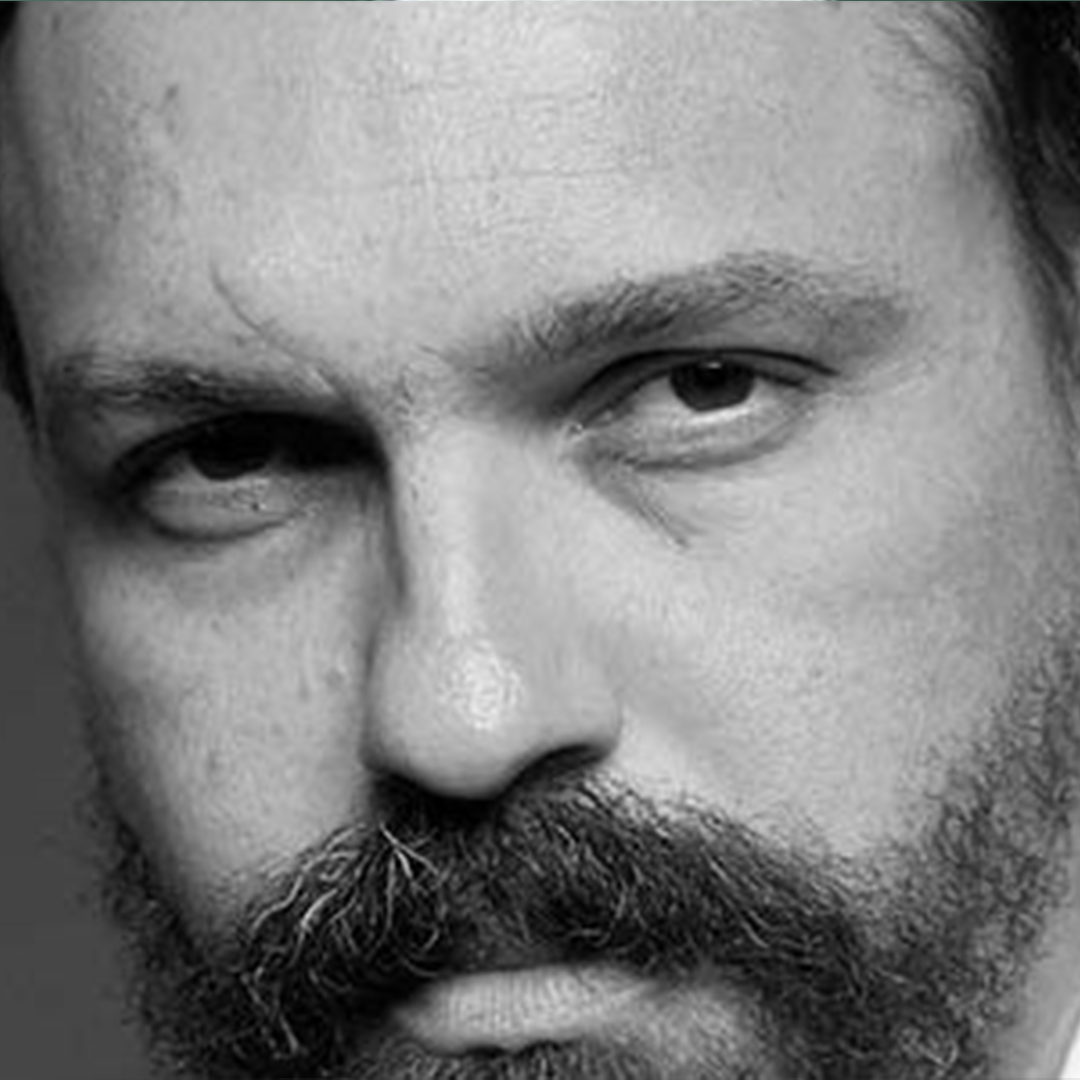
[/vc_column_text][vc_row_inner][vc_column_inner width=”1/4″][staff name=”Jodie Ginsberg” title=”CEO, Index on Censorship” profile_image=”104110″]Jodie Ginsberg is the CEO of Index on Censorship. Prior to joining Index, she worked as a foreign correspondent and business journalist and was previously UK bureau chief for Reuters. She sits on the council of global free expression network IFEX and the board of the Global Network Initiative, and is a regular commentator in international media on freedom of expression issues.[/staff][/vc_column_inner][vc_column_inner width=”1/4″][staff name=”Will Gore” title=”Columnist” profile_image=”110641″]Will Gore is the head of partnerships for the National Council for the Training of Journalists and former managing editor of The Independent, i, Independent on Sunday and the London Evening Standard. He writes on a wide range of topics, including politics, the media and cricket, and writes a weekly column for the Independent on memorable journeys.[/staff][/vc_column_inner][vc_column_inner width=”1/4″][staff name=”Kiri Kankhwende” title=”Journalist and campaigner” profile_image=”110611″]
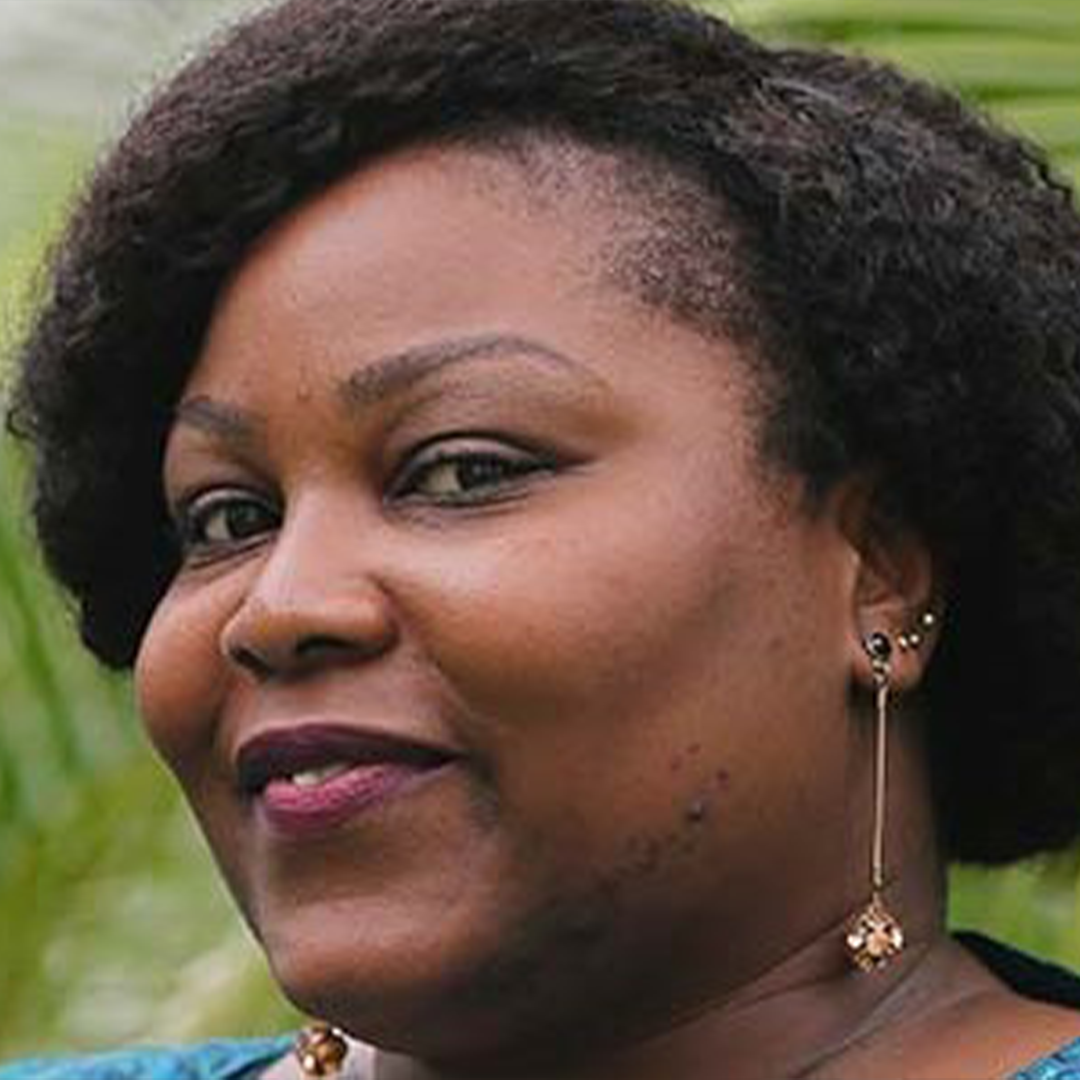
Kiri Kankhwende is a Malawian journalist and political analyst based in London who writes primarily about politics and immigration. She has worked in human rights campaigning and is a member of Writers of Colour. She is also a member of Index on Censorship’s board of trustees.
[/staff][/vc_column_inner][vc_column_inner width=”1/4″][staff name=”Meera Selva” title=”Journalist” profile_image=”110962″]Meera is an accomplished senior journalist with experience in Europe, Asia and Africa, currently the Director of the Journalism Fellowship Programme at the Reuters Institute. She joined the Reuters Institute from Handelsblatt Global where she had been working out of Singapore, having helped launch the digital daily business paper in Berlin in 2014. Her previous experience includes several years as a London based correspondent for the Associated Press, and three years as Africa correspondent for the Independent based in Nairobi, along with stints in business journalism at a range of publications including the Daily Telegraph.[/staff][/vc_column_inner][/vc_row_inner][vc_row_inner][vc_column_inner width=”1/4″][staff name=”Nadine Strossen” title=”Professor of law” profile_image=”111384″]New York Law School professor Nadine Strossen, the immediate past President of the American Civil Liberties Union (1991-2008), is a leading expert and frequent speaker/media commentator on constitutional law and civil liberties, who has testified before Congress on multiple occasions. Her acclaimed 2018 book HATE: Why We Should Resist It with Free Speech, Not Censorship was selected by Washington University as its 2019 “Common Read.”[/staff][/vc_column_inner][vc_column_inner width=”1/4″][staff name=”Kenan Malik” title=”Writer, lecturer and broadcaster” profile_image=”82874″]Kenan Malik is a British writer, lecturer and broadcaster. His main areas of interest are the history of ideas, philosophy of science, religion, politics, race and immigration. His books include The Meaning of Race (1996), Man, Beast and Zombie (2000) and Strange Fruit: Why Both Sides Are Wrong in the Race Debate (2008). He writes a column for The Guardian and the New York Times.[/staff][/vc_column_inner][vc_column_inner width=”1/4″][staff name=”Xinran” title=”Author and journalist” profile_image=”106837″]Xinran is a British–Chinese author, journalist and activist. Her first book, The Good Women of China, was published in 2002 and became an international bestseller. She has written two novels, Miss Chopsticks (2008) and The Promise (2018) and four other non-fiction books: Sky Burial, China Witness, Message from an Unknown Chinese Mother and Buy Me the Sky. She is an advocate for women’a issues and is a contributor to Index on Censorship magazine.[/staff][/vc_column_inner][vc_column_inner width=”1/4″][staff name=”Konstantin Kisin” title=”Comedian” profile_image=”110630″]Konstantin Kisin is an award-winning Russian-British comedian, podcaster and writer. In 2018 he refused to sign a university “behavioural agreement form” which banned jokes about religion, atheism and insisted that all humour must be “respectful and kind”. He is also the creator and co-host of Triggernometry, a posdcast and YouTube show where comedians interview economists, political experts, journalists and social commentators about controversial and challenging subjects.[/staff][/vc_column_inner][/vc_row_inner][vc_row_inner][vc_column_inner width=”1/4″][staff name=”Emily Knox” title=”Professor in the School of Information Sciences” profile_image=”111712″]Emily Knox is a professor in the School of Information Sciences at the University of Illinois at Urbana-Champaign and teaches on information access, intellectual freedom and censorship. She is also the author of Book Banning in 21st Century America and recently edited Trigger Warnings: History, Theory, Context. Knox serves on the boards of the Association for Information Science & Technology, Beta Phi Mu, the Freedom to Read Foundation, and the National Coalition Against Censorship.[/staff][/vc_column_inner][vc_column_inner width=”1/4″][staff name=”Will Creeley” title=”Lawyer” profile_image=”111713″]Will Creeley is a lawyer and senior vice president of Legal and Public Advocacy at Fire (Foundation for Individual Rights in Education). Creeley has appeared on television and radio and has spoken to thousands of students, faculty, administrators and lawyers at events across the country. He is a member of the First Amendment Lawyers Association. Creeley’s writing has been published by The New York Times and The Washington Post, amongst others. Creeley edited the second edition of Fire’s Guide to Due Process and Campus Justice, coedited the second edition of Fire’s Guide to Free Speech on Campus and has coauthored amicus curiae briefs submitted to a number of courts, including the Supreme Court of the United States.[/staff][/vc_column_inner][vc_column_inner width=”1/4″][staff name=”Chris Finan” title=”Executive director, National Coalition Against Censorship” profile_image=”111714″]Chris Finan is executive director of the National Coalition Against Censorship, an alliance of 56 national non-profits that defends free speech. Finan has been involved in the fight against censorship throughout his career. He is former president of American Booksellers Foundation for Free Expression. He is author of From the Palmer Raids to the PATRIOT Act: A History of the Fight for Free Speech in America.[/staff][/vc_column_inner][vc_column_inner width=”1/4″][staff name=”Emma Llansó” title=”Director, Centre for Democracy and Technology Free Expression Project” profile_image=”111767″]Emma Llansó is the director of the Center for Democracy and Technology Free Expression Project. Llansó leads CDT’s legislative advocacy and amicus activity around freedom of expression in the USA and the EU. Llansó serves on the board of the Global Network Initiative, an organisation that works to advance individuals’ privacy and free expression rights in the ICT sector around the world. She is also a member of the Freedom Online Coalition Advisory Network, which provides advice to FOC member governments aimed at advancing human rights online.[/staff][/vc_column_inner][/vc_row_inner][vc_empty_space][/vc_column][/vc_row][vc_row][vc_column][vc_custom_heading text=”Meet the advocates” font_container=”tag:h2|text_align:center” use_theme_fonts=”yes”][/vc_column][/vc_row][vc_row][vc_column width=”1/4″][staff name=”Ash Kotak” profile_image=”111138″]Ash Kotak is an award-winning playwright & film maker. He is also a curator and journalist. Free speech is at the core of all his work as he is often challenging and questioning popular narratives to illuminate greater truths.
His works as a playwright includes Maa (Royal Court); Hijra (Bush Theatre, Theatre Royal Plymouth, West Yorkshire Playhouse, Theatre Du Nord, Lille (in French), New Conservatory Theatre, San Francisco, USA); No Gain, No Pain (The Other Place, Stratford-Upon-Avon). He is working on a new play entitled The AIDS Missionary. His latest film work includes: The Joneses(Exec Producer, USA, 90 mins, 2017); Punched By a Homosexualist (Exec Producer, Russia, 55 mins, 2018).
He set up an arts curating collective, Aesthesia, in 2014 which works with dehumanised, marginalised and disempowered communities to amplify individual voices through creative art projects.[/staff][/vc_column][vc_column width=”1/4″][staff name=”Athena Stevens” profile_image=”111594″]Athena Stevens is an Olivier nominated writer and performer, a spokesperson for the UK’s Women’s Equality Party, and a human rights activist.
As both a creative and as an advocate she relies on free speech in the hopes that she and others will be able to give language to trauma, tell their story, and create a systematic change that leads to equality[/staff][/vc_column][vc_column width=”1/4″][staff name=”Dan Clarke” profile_image=”111595″]Dan Clarke is a master’s student of international public policy at UCL. He is interested in censorship issues around the world, especially in authoritarian countries such as China and many others in the Middle East and Africa.
Promoting freedom of the media and freedom of expression for all in society, including artists and critics, is vital for a fair, equitable and honest society where social issues can be addressed directly and without fear of repercussion. The protests in Hong Kong and the crackdown on the Uyghurs in China are two of the most important censorship issues for him. [/staff][/vc_column][vc_column width=”1/4″][staff name=”Max Lake” profile_image=”111181″]Max graduated from the University of Birmingham in July 2019 and, as a liberal, was deeply alarmed at the student union’s censorious policies. He wants to change the culture of free speech, particularly on university campuses, where he and other students were fearful of speaking freely in seminars and lectures.
He has previously been constituency coordinator for Vote Leave in Rossendale and Darwen and is currently a constituency organiser for The Brexit Party. He would love to advocate for free speech, democracy and other constitutional issues as a future career.[/staff][/vc_column][/vc_row][vc_row][vc_column width=”1/4″][staff name=”Rhiannon Adams” profile_image=”111207″]Rhiannon is a researcher and campaigner for human rights and technology. Educated at UCL and UC Berkeley, she trained at Amnesty International in their technology programme. She currently works in the legal sector, working with activists who have been targeted with spyware for their activism. She also works on the #NotYourPorn campaign to end revenge porn.
Her interests are targeted surveillance, spyware, online censorship and the issues that come with free speech on the internet, specifically self-censorship, internet shutdowns and blanket bans on certain types of speech. She hopes her insight into technology and human rights will bring an interesting perspective to the discussion on freedom of expression. [/staff][/vc_column][vc_column width=”1/4″][staff name=”Maya Thomas” profile_image=”111601″]Maya is a third-year history undergraduate at Oxford University, and founder of the Oxford Society for Free Discourse, a group dedicated to countering censorship among students and academics. OSFD’s aim is to promote free speech as a universal value essential to facilitating constructive interaction between polarised ideas.
Maya’s work with OSFD varies from organising speaker’s events and public demonstrations, to informal debates and research. Linking her interest in free speech to her former presidency of the History Society, Maya has also become involved in the production of “Clear and Present Danger”, a podcast on the history of free speech.[/staff][/vc_column][vc_column width=”1/4″][staff name=”Madeleine Stone” profile_image=”111605″]Madeleine recently completed an MA in human rights law at SOAS and is currently working with Big Brother Watch, where she has focused on technology, surveillance, data and free speech online. She is involved in the ‘Preventing Prevent’ campaign, which seeks to educate and organise resistance to the government’s intrusive counter-terrorism strategy, Prevent.
She is particularly interested in how counterterrorism, surveillance and policing combine to create a chilling effect that dampens free speech, particularly for those who have traditionally been at the sharp end of state power. She is also passionate about women’s rights and LGBT rights and seeks to amplify the voices of these communities in her work.[/staff][/vc_column][vc_column width=”1/4″][staff name=”Marjory Wentworth” profile_image=”112016″]
Marjory Wentworth is the New York Times bestselling author of Out of Wonder, Poems Celebrating Poets (with Kwame Alexander and Chris Colderley). She is the co-writer with Herb Frazier and Bernard Powers of We Are Charleston, Tragedy and Triumph at Mother Emanuel, and also wrote Taking a Stand, The Evolution of Human Rights, with Juan E. Mendez. She is the current poet laureate of South Carolina. Wentworth serves on the board of advisors at The Global Social Justice Practice Academy. She teaches courses in writing, social justice and banned books at The College of Charleston.
[/staff][/vc_column][/vc_row][vc_row][vc_column width=”1/4″][staff name=”Lillian Bustle” profile_image=”112131″]Lillian Bustle is a TEDx speaker, burlesquer and body love activist. Bustle has lobbied the state of New Jersey and municipalities for trans rights and successfully removed laws prohibiting cross dressers in bars and obscenity laws statewide. She is an advocate for sex workers’ rights, the LGBTQ community, and intersectional feminism. She recently led an advocacy workshop at a national burlesque conference and is working to connect her advocacy to the protection and promotion of freedom of expression more directly. Bustle is based in New Jersey.[/staff][/vc_column][vc_column width=”1/4″][staff name=”Mariana Nogales-Molinelli” profile_image=”112136″]Mariana Nogales-Molinelli is a human rights lawyer in Puerto Rico. She has a breadth of experience and is publicly active in diverse human rights (feminist, queer, environmentalist, anti-austerity) networks. Nogales-Molinelli’s recent free speech work has focused on protecting the right to protest through the organisation, Brigada Legal Solidaria. She is one of the founders of Humanistas Seculares de Puerto Rico, an organisation that advocates for the separation of church and state.[/staff][/vc_column][vc_column width=”1/4″][staff name=”Maya Rubin” profile_image=”112058″]Maya Rubin is a sophomore at Wellesley College. She is passionate about free speech for students on college campuses, and has worked with the Wellesley Freedom Project as an Adam Smith fellow and senior fellow to further the intellectual diversity at Wellesley. She has also worked with Index on Censorship as an intern. She hopes to show students the importance of free expression to improve their ability to honestly engage with one another.[/staff][/vc_column][vc_column width=”1/4″][staff name=”Obden Mondésir” profile_image=”112015″]Obden Mondésir is an archivist and oral historian at the Weeksville Heritage Center in Brooklyn, New York. He is also active in the prison abolition movement. Obden’s parents are Haitian immigrants who lived under dictatorship and Obden saw firsthand how a culture of fear was sustained in the USA through self-censorship. Last year, he helped to organise a free speech series with the New School, NCAC and Article 19. As part of that effort, he began a research project on historic “seditious” speech.[/staff][/vc_column][/vc_row][vc_row][vc_column width=”1/4″][staff name=”Adeline Lee” profile_image=”112263″]Adeline Lee is a graduate of Wellesley College. She is currently at the American Civil Liberties Union’s Speech, Privacy and Technology Project which works to advance and defend First and Fourth Amendment freedoms amid developments in technology and science. Prior to the ACLU, Lee helped establish PEN America’s Campus Free Speech Program, working with university officials, faculty and student leaders across the country to foster dialogue and understanding following major free speech controversies. She is the coauthor of Chasm in the Classroom: Campus Free Speech in a Divided America, analysing over one hundred instances of Trump-era free speech infringements and debates, and served in 2019 on education-technology company EVERFI’s first national advisory board for diversity, equity and inclusion.[/staff][/vc_column][vc_column width=”1/4″][/vc_column][vc_column width=”1/4″][/vc_column][/vc_row][vc_row][vc_column][vc_zigzag][/vc_column][/vc_row]
[vc_row][vc_column][vc_custom_heading text=”Contributors include Lily Cole, Daphne Selfe, Linda Grant, Bibi Russell, Katy Werlin, Jang Jin-sung, Maggie Alderson and Eliza Vitri Handayani”][vc_row_inner][vc_column_inner width=”1/2″][vc_column_text]
The latest issue of Index on Censorship magazine looks at fashion and how people both express freedom through what they wear. But it also looks at how women in particular have their freedom of expression curtailed by rigid dress codes – whether they are women in Saudi Arabia who have to wear abayas by law or women in the UK and Canada whose employers insist they wear high heels shoes.
Models Lily Cole and Daphne Selfe discuss why changes in society are reflected in the clothes we (are allowed) to wear. Maggie Alderson, former editor of Elle describes how she was arrested for being a punk rocker in the 1970s, while Eliza Vitri Handayani talks about how punks in Indonesia today are still persecuted for what they wear and how they look. Nigerian model and journalist Wana Udobang riffs on fashion in Nigeria and how she was snubbed by bouncers and waiters at a wedding for wearing the wrong clothes.
Ismail Einashe describes how traditional dress can be life-threatening for Oromos in Ethiopa, while Magela Baudoin delves into class and ethnic gradations in Bolivia and reveals that the way some women dress means they are discriminated against. Novelist Linda Grant describes how her Jewish immigrant parents used the way they dressed to try and fit into middle-class British society. Meanwhile Katy Werlin gives a historical perspective as she discusses how the 18th century French revolutionaries, known as sans-culottes, celebrated their peasant clothes as they overthrew the aristocratic regime.
Martin Rowson brings another perspective to fashion in his new cartoon which depicts a catwalk on which despots show off their latest costumes. Spot President-elect Donald Trump sporting a furry thong. Trump is also in US media expert Eric Alterman’s sights as he describes why journalists in the USA believe the new president will seek to challenge media freedoms guaranteed by the constitution. Turkish researchers Burak Bilgehan Özpek and Başak Yavcan investigate how the Turkish government is using state advertising to control the media.
We also publish an interview with Turkish intellectual, linguist and founder of a mathematics village Sevan Nişanyan. Our reporter communicated with him using notes smuggled out from the prison where he is serving a 16-year sentence on charges connected with freedom of speech. The culture section includes poems from a former North Korean propagandist Jang Jin-sung who defected to the South and now runs a website smuggling news out of North Korea. We also carry poems about the extraordinariness of everyday life from Brazilian author Paulo Scott and a never before seen English translation of a short story by legendary Argentine writer Haroldo Conti.
Dressing to oppress: why dress codes and freedom clash
The censors’ new clothes, by Rachael Jolley: Freedom is not about the amount of clothing you put on or take off, but about having the choice to do so
Fashion police, by Natasha Joseph: Some feel the miniskirt is a threat to the state in Uganda and women are getting attacked for wearing it
Wearing a T-shirt got me arrested, byMaggie Alderson: Wearing punk clothes in 1970s London was dangerous, but now British teenagers can wear anything
Colour bars, by Magela Baudoin: Traditional clothing is still a sign of social status in Bolivia and wearing such clothes often leads to discrimination
Models of freedom, by Bibi Russell: Bangladeshi women are now vital to the economy but they are still restricted in their dress
The big cover-up, by Laura Silvia Battaglia: Women in Saudi Arabia and Yemen test how far they can customise what they are allowed to wear. Translation by Lucinda Byatt
Rebel with a totally fashionable cause, by Wana Udobang: A Nigerian model refuses to conform to stifling social expectations and sees the consequences
Stripsearch cartoon, by Martin Rowson: A fetching new range of despotwear
Ethiopia in crisis, closes down news, by Ismail Einashe The Oromo people use traditional clothing as a symbol of resistance and it is costing them their lives
Baggy trousers are revolting , by Katy Werlin: The sans-culottes of the French revolution transformed peasant dress into a badge of honour
Muslim punks in mohawks attacked, by Eliza Vitri Handayani: Punks in Indonesia are persecuted but still manage to maintain a culture which stands up for difference
Design is the limit, by Jemimah Steinfeld: China is loosening up on personal freedoms including fashion, but designers still face some constraints
A modest proposal, by Kaya Genç: “Modest” dress codes are all the rage in Turkey as some turn their backs on the legacy of Atatürk
Uniformity rules, by Jan Fox: Prisoners often try to customise their uniforms but does stripping individuality make rehabilitation more difficult?
Keeping up appearances, byLinda Grant: Linda Grant’s immigrant family were upwardly mobile and bought clothes that showed their aspirations
Sewing it up, by Rachael Jolley: At 88 Daphne Selfe is Britain’s oldest supermodel. She talks about how fashion has changed in her lifetime
Style counsels, by Kieran Etoria-King: Model, activist and actor Lily Cole talks about how school girls customise their uniforms to give them a sense of individuality
Tall stories, by Sally Gimson: Wearing high heels is a way for some women to express freedom, while for others it’s a form of oppression
Challenging media, by Eric Alterman: If his campaign is anything to go by, President Trump is likely to restrict freedom of the press
Living in limbo, by Marco Salustro: A journalist reveals the challenges of reporting from inhumane migrant detention camps in Libya
Follow the money, byBurak Bilgehan Özpek and Başak Yavcan: The Turkish government is rewarding newspapers which favour its position with more state-sponsored advertising
Fighting for our festivalfreedoms, by Peter Florence: Mutilated bodies, petitions and a citizen’s arrest: the director of the Hay literary festivals describes the trials and tribulations of his job
Barring the bard, by Jennifer Leong: Actor Jennifer Leong on confronting attempts to censor performances of Shakespeare around the world
Assessing Correa’s freespeech heritage, by Irene Caselli: The Ecuadorian president’s record on free speech is reviewed as his term in office comes to an end. He gave sanctuary to Wikileaks founder, Julian Assange, in the country’s London embassy but brought in restrictive media laws at home
Framed as spies, by Steven Borowiec: South Korean journalist Choi Seung-ho hit a national nerve when he exposed the security services for framing ordinary citizens as North Korean spies
Back from the Amazon, byPaulo Scott: Newly translated poems from Scott’s acclaimed collection, Even Without Money I Bought a New Skateboard. Interview by Kieran Etoria-King. Poems translated by Stefan Tobler
A story from the disappeared, byHaroldo Conti: Jon Lindsay Miles introduces a poignant short story, published in English for the first time, by the award- winning Argentine writer who disappeared in 1976. Translation also by Jon Lindsay Miles
Poems for Kim, by Jang Jin-sung: North Korean propagandist poet turned high profile defector talks about life within the world’s most secretive country. Interview by Sybil Jones
Global view, by Jodie Ginsberg: Face-to-face encounters are still important and governments worldwide know that restricting travel continues to be an effective way of stifling voices
Index around the world, byKieran Etoria-King: Coverage of Index’s work over the last few months including exposing the difficulties of war reporting and our Mapping Media Freedom project
Where’s our president? byKiri Kankhwende: Malawi’s journalists tease their president as part of a campaign to make the government more transparent
[/vc_column_text][/vc_column][/vc_row][vc_row][vc_column][vc_custom_heading text=”SUBSCRIBE” css=”.vc_custom_1481736449684{margin-right: 0px !important;margin-left: 0px !important;border-bottom-width: 1px !important;padding-bottom: 15px !important;border-bottom-color: #455560 !important;border-bottom-style: solid !important;}”][vc_column_text]Index on Censorship magazine was started in 1972 and remains the only global magazine dedicated to free expression. Past contributors include Samuel Beckett, Gabriel García Marquéz, Nadine Gordimer, Arthur Miller, Salman Rushdie, Margaret Atwood, and many more.[/vc_column_text][vc_row_inner][vc_column_inner width=”1/2″][vc_single_image image=”76572″ img_size=”full”][/vc_column_inner][vc_column_inner width=”1/2″][vc_column_text]In print or online. Order a print edition here or take out a digital subscription via Exact Editions.
Copies are also available at the BFI, the Serpentine Gallery, MagCulture, (London), News from Nowhere (Liverpool), Home (Manchester), Calton Books (Glasgow) and on Amazon. Each magazine sale helps Index on Censorship continue its fight for free expression worldwide.
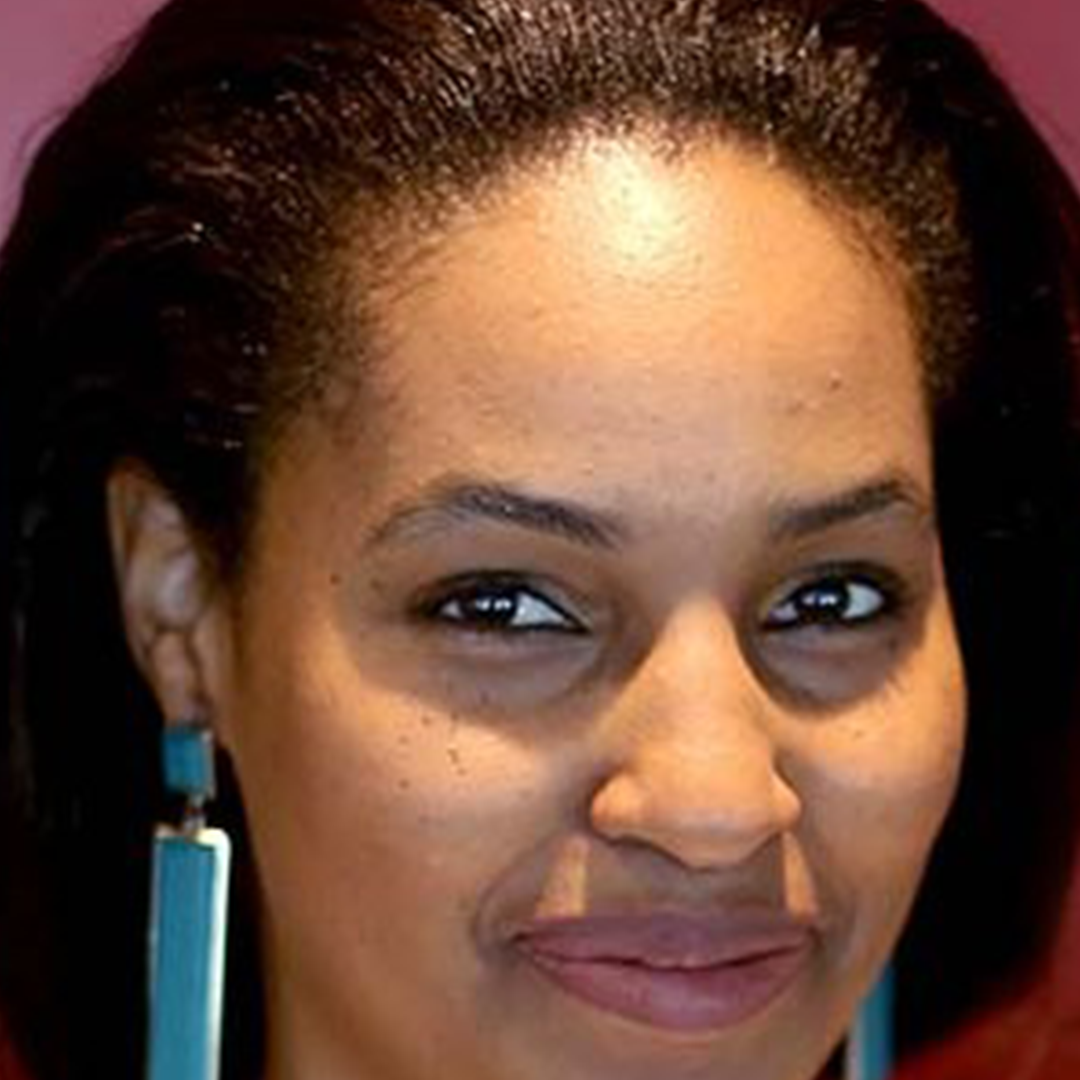
Wana Udobang is a multimedia journalist, writer, poet, filmmaker and model working in Nigeria. Her work is at the intersection of women’s rights, human interest stories, culture and art.
Paulo Scott
Poet
Paulo Scott is a novelist and poet. A former lawyer and activist, he taught law at university for 10 years before moving to Rio de Janeiro in 2008 to become a full-time writer. He has published four books of poetry and four works of fiction. His novel Nowhere People is his first book to be published in English.
Kiri Kankhwende
Journalist
Kiri Kankhwende is a Malawian journalist and blogger specialising in immigration and politics. She tweets @madomasi
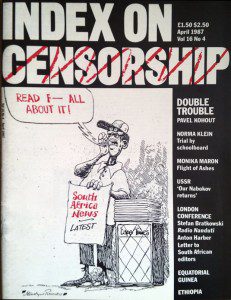
In conjunction with the Cambridge Festival of Ideas 2015, we will be publishing a series of articles that complement many of the upcoming debates and discussions. We are offering these articles from Index on Censorship magazine for free (normally they are held within our paid-for archive) as part of our partnership with the festival. Below is an article by children’s book author Norma Klein, on the censorship of children’s books, taken from the spring 1987 issue. It’s a great starting point for those who plan to attend the Banned books: controversy between the covers session at the festival this year.
I used to feel distinguished, almost honoured, when my young books were singled out to be censored. Now, alas, censorship has become so common in the children’s book field in America that almost no one is left unscathed. Some of the most conservative writers are being attacked; it’s reached a point of ludicrousness which, for me, was symbolised by my most recent encounter with ‘the other side’ in Gwinett county, Georgia, in April 1986.
Usually, my books are attacked for their sexual content. The two school board meetings I had attended in the early 1980s, one in Oregon, one in the State of Washington, had centred on two books for older teens, It’s Okay if You Don’t Love Me, a book about two 18- year-olds having a love affair, and Breaking Up, a novel about a 15-year-old girl who discovers her mother is gay. I might add parenthetically that these books have just been published in England for the first time by Pan Books in a new series aimed at teenagers, ‘Horizons’. Already, as in America, they are selling well and already, as in America, I have been told of indignant parents storming into bookstores and objecting to certain passages. It seems that things are not very different in other countries.
What was unusual about the Gwinnett county case was that the book selected to be attacked was one of my early ones, Confessions of an Only Child, about an eight-year-old girl. The offending sentence was one where the girl’s father is putting up wallpaper. Here it is in its entirety:
‘God damn it,’ Dad said as the wallpaper swung around and whacked him in the face.
When the paperback publisher of Confessions first heard of the attack, he attempted to defend the book in the following way:
Abrasive words are sometimes used by writers to add definition to a character or a story; they give the reader an understanding of the situation or kind of person speaking, but are not meant to be words which the reader should use or admire. It is our belief that the family relationships are so positive in this book that they far outweigh the use of realistic language.
My attacker, Theresa Wilson, a stunning blonde, had been heartened by her success in having another book she objected to, Deanie by Judy Blume, removed from the shelves. Her first attempt to remove my book was defeated by a 10-member review panel consisting of six parents, three teachers and a librarian. Ms Wilson claimed to have ‘stumbled’ upon the offending passage one afternoon while in the Beaver Ridge library looking for books that contain material to which she might object. In her thirties, she has no profession and, in a sense, being a censor has led to her becoming a local celebrity; she now, whether her attacks succeed or fail, appears regularly on TV and radio and is covered widely in local newspapers. The 10-member panel voted to keep Confessions on the shelves; only one person voted to keep it on a restricted shelf. ‘The consensus is that the book had literary merit for the age group intended,’ said principal Becky Hopcraft.
Free Thinking! A unique partnership in 2015, Cambridge Festival of Ideas are working with Index on Censorship to offer in-depth articles and follow-up pieces from leading artists, writers and activists on all of our headline events.
In the latest issue of Index on Censorship magazine Spies, secrets and lies: How yesterday’s and today’s censors compare, we look at nations around the world, from South Korea to Argentina, and discuss if the worst excesses of censorship have passed or whether new techniques and technology make it even more difficult for the public to attain information. Subscribe to the magazine.
Incidentally, Ms Wilson said she didn’t object to my heroine’s mother saying, ‘Ye Gods,’ in the next line, because she does not believe ‘Gods’ refers to the Christian god. She wants every book containing the word ‘damn’ restricted from Gwinnett elementary schools. She cited a US Supreme Court ruling against hostility toward religion and said the use of God Damn in Confessions indicated a ‘hostility toward Christianity’.
All this, the initial attack on my book and its initial success in being retained on the shelves, helped to achieve an important result — the founding of a group called Gwinnett Citizens for Freedom in Education. Initially a small group, it now has nearly 500 members. Its president, Lorna Cox, said she was amazed at the diversity of the group’s members, proving that liberals in America are not, as some right-wingers insist, an elitist minority. ‘We’ve got people who didn’t graduate from high school,’ Ms Cox said, ‘college graduates, doctors, professionals, and people who aren’t even affiliated with a school but have a deep, burning desire to be involved in education.’ The group participates in workshops to learn more about censorship at the local and national levels and contacts school administrators each week to learn about potential book bannings.
As in the cases involving It’s Okay if You Don’t Love Me, and Breaking Up, my travel expenses to Georgia were paid by the author’s organisation, PEN. They have a Freedom to Read committee with a fund for cases like this. My own reason for attending these meetings is that I feel having the author appear and help argue the case not only gives heart to the local anti-censorship organisations involved, such as Gwinnett Citizens for Freedom in Education, but may focus national attention on the case. Perhaps it was co- incidental, but CBS did appear in the courtroom to cover the debate for a TV segment on ‘secular humanism’.
Before flying to Georgia I was interviewed by phone. I was quoted as saying, ‘I’m not a religious person… To me the phrase god damn has no more negative a connotation than the expression, Oh gosh. I added that I attributed the swing toward censorship in America to the conservative mood of the Reagan administration. When I arrived, I was told by two of my supporters that the negative reference to Reagan was a mistake. ‘Everyone is for him down here,’ they said. I have to add parenthetically that one of the reasons I write the kinds of books I do and am, perhaps ingenuously, surprised at the reaction they provoke, is due to the fact that I’ve lived all my life in New York City and know personally only liberal people. I’ve never met anyone who voted for Reagan; I am always amazed when the Republicans win an election. But it’s probably similar that in a two-week stay in London’ in the spring of 1986,1 didn’t meet anyone who was for Margaret Thatcher either. This may, however, give me a kind of inner freedom from certain restrictions, due simply to underestimating the power of the right.
The school board meeting I attended was crowded with supporters from both sides. It was conducted as a kind of mock trial. Both sides were allowed to question anyone from the other side about anything that was relevant to the case. I was pleased and relieved that every time Ms Wilson tried to bring the questioning around to my own personal religious beliefs, she was told that was not relevant to the book. In a perverse way I found her performance at the trial fascinatiing. She alternately flirted with, and tried to antagonise, the three-member school board which consisted of two men and a woman. Luckily for me, her case was weak and she overstepped the bounds of tolerance — even within a conservative, religious community — by telling the school board members that if they didn’t ban my book, they would, on Judgment Day, go straight to Hell. ‘One day each and every one of you will stand before God almighty and you will answer to how’you believe, how you voted, how you stand.’ Evidently this threat did not frighten anyone sufficiently.
The closest Ms Wilson got to making me come forward and state my personal beliefs was when she asked if I considered myself to be ‘above God’. I responded, ‘I assume that’s a rhetorical question.’ She laughed nervously and said she didn’t know what ‘rhetorical’ meant.
Confessions of an Only Child is about a family in which the mother gets pregnant and loses her baby. It shows how this affects the heroine who was enjoying her only child status. In deciding that Confessions had ‘redeeming educational value’, one of the board members, Louise Radloff, stated, ‘I think this book has much literary merit and it shows an open discussion within the family’. I had argued in my presentation that I felt that books could be an avenue to open discussion… a way to bring parents and children closer together, that simply having a book available was not forcing it on anyone.
What amazed me, though, was that in their closing remarks, though each school board member re-iterated the literary values of my book, all three said that, indeed, the phrase ‘God damn’, was offensive and should have been left out. One board member said he, thank heaven, had never used that word. Another said he had used it once, at the age of 10 and had been beaten so severely by his parents for this that he had never used it again. I am utterly unable to judge the sincerity of these remarks. What I did feel was the pressure on everyone living in these suburban communities to conform to what is felt to be a general set of beliefs. People are terribly afraid to come out and say they are feminists, atheists, or even, God forbid, Democrats.
In a sense this is a success story. Not only will my book remain on the shelves, but the Gwinnett Citizens for Freedom in Education feel heartened that the positive publicity they received will help them in future battles. But Theresa Wilson is, seemingly, not daunted. She’s already after another book, Go Ask Alice. ‘I don’t love publicity,’ she said when interviewed on a local radio show the day after the hearing. ‘I love showing the glory of God.’ Sadly, even the local people who are against her regard her as good copy. Although she had lost her case, she was brought forward to be on the radio show with me and most of the time was spent, not debating the issues involved, but in baiting her with peculiar call-in questions from the audience. What a pity. But still, no matter how absurd and tiny this one case is, I feel I would do it again for my own books and would encourage other authors to do the same. Passivity and inaction only encourages censorship groups even more. I think now they are beginning to realise they will, at least, have a fight on their hands.
Reporting the Third World
World leaders, or their top ministers, in an effort to arrive at something we call ‘balanced coverage’. Most Third World leaders feel you are either for ’em or against ’em and there is not much middle ground to walk upon. Some, as in Saudi Arabia, just don’t want to talk to the Western press. I can remember one visit to the Saudi kingdom in early 1981 when four American correspondents — from the New York Times, Time magazine, the Associated Press, and myself from The Washington Post — jointly applied for an interview with either King Khalid or Crown Prince Fahd. Each of us knew it was unlikely either would bother with an interview for just one publication, but here was a broad segment of the US print media asking collectively for an interview. After waiting around for two weeks, we collectively gave up and left.
One major problem for American correspondents is the near total ignorance of Third World leaders about how the Western media work and how to use them for their own ends. While the correspondent may regard his or her request for an interview with a leader or top minister as a chance to air their views, they seem to look upon it as a huge favour which they are uncertain will be rewarded in any way.
Other forms of indirect censorship come in control over a correspondent’s access to the story or means of communication. Israel restricted, or at least tried to restrict, access to southern Lebanon after its invasion in June 1982 to those it felt were sympathetic to its cause or important to convince of its view. The policy never really worked because correspondents could always get into Israeli-occupied territory from the north through one back road or another. But it got more difficult as time went on. The Israeli attempt at restricting access to southern Lebanon was hardly the worst example of this kind of censorship I experienced in nearly two decades of working in the Third World, however. Covering the war between Iran and Iraq was, and remains, far more difficult. In four years, I never once got a visa to Iran. I got to Baghdad several times, but imagine my surprise the first time customs officials seized my typewriter at the airport and told me I would have to get special permission from the Information Ministry to bring it in. (At the airport in Tripoli there was a roomful of confiscated typewriters the last time I visited there in September 1984.) Whether one was allowed to the Iraqi war front depended on either an Iraqi victory or a lull in the war. As for permission to travel into Iraqi Kurdistan, it was never granted to any Western correspondent I can think of in the four-to-five years I was covering the Middle East.
The other game Iraqi information officials play is attempting to censor your coverage of the war. When I first went there, there was a Ministry of Information official sitting at the hotel who had to okay your copy or you could not send it out by phone or telex. This kind of direct censorship of copy was rare in my experience, however. Other than Israel, where military news is supposed to pass through the censor’s office, and Iraq and Libya, I can think of no examples where I had to submit my copy before sending it.
Are the techniques of indirect censorship getting worse? In the areas of the world where I have worked, I am not sure. If Syria has become worse, Iraq is probably better today. Egypt has definitely got better, and so had Kuwait until recently. Saudi Arabia, on the other hand, has restricted access to a far greater degree in the past two years, and Bahrain has become more sensitive. South Africa has taken a turn for the worse. Countries that were always difficult to cover, such as Zaire, Malawi, Ethiopia and Angola, remain more or less the same.
As economic problems have got worse or rulers have felt a greater threat to their regimes, Third World governments seem to be tightening up when it comes to outside press coverage.
If this is indeed the underlying principle governing the degree of press censorship, then the problem may be more cyclical than linear, getting worse or better according to the political and economic health of a country or the special challenges it is facing at that time.
Who believes it?
‘That is how the theory goes: Restrict the press to supportive comment, and a country’s life will be calmer and better. But experience and reason suggest that the opposite will happen. Faulty government policies, if they are not subject to real criticism, grow worse. Autocrats become more autocratic. Can anyone believe that repression of criticism leads to efficiency in a society, to new ideas?’
Join us on 25 October at the Cambridge Festival of Ideas 2015 for Question Everything an unconventional, unwieldy and disruptive day of talks, art and ideas featuring a broad range of speakers drawn from popular culture, the arts and academia. Moderated by Index on Censorship CEO Jodie Ginsberg.