2 May 2014 | China, News, Religion and Culture, United States
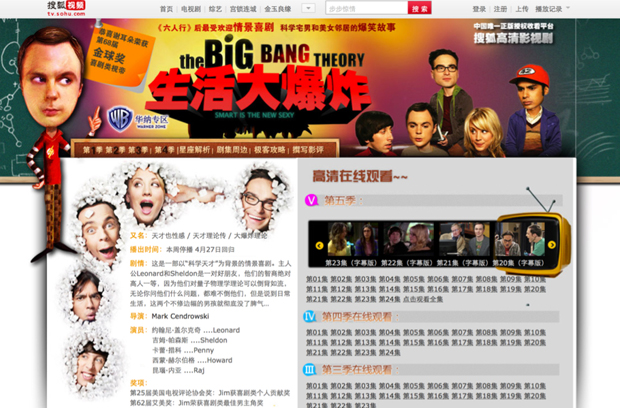
Chinese fans of American TV have been dealt a serious blow after some of their favorite shows were removed from the country’s main video streaming websites. On Saturday, The Big Bang Theory, The Good Wife, NCIS and The Practice all disappeared from the sites of Sohu TV, iQiyi and Youku. Immediately after, fans took to online forums to voice their disapproval. Netizens lashed out at the government, referring to China as “West North Korea,” a phrase that was quickly blocked from online searches.
No one knows exactly why the government has ordered the shows offline. Others, such as House of Cards and Breaking Bad, both of which have gained huge followings in China and present darker material, remain unscathed. Speculating in the state-controlled newspaper Global Times, leading film critic Tan Fei argued that “the machetes the monitoring departments waved to the U.S. dramas are not only aimed at protecting teenagers’ physical and mental health but, on a deeper level, are aimed at protecting our weak domestic film industry.”
Of Fei’s last point, it’s worth noting that until recently, the main video providers have been free to broadcast shows without the hurdle of obtaining official approval. China’s TV stations, by contrast, are heavily restricted when it comes to content. Poorly acted soap operas and over-the-top dramas about corrupt emperors and the Sino-Japanese War are the mainstay of these channels. As a result, viewers have fled to the more free and entertaining realms of online TV.
In order to lure people back, state-owned television channels have started to broadcast some of the same shows as Chinese streaming platforms, albeit censored versions. China’s national TV broadcaster CCTV will soon air The Big Bang Theory and has recently introduced a dubbed version of Game of Thrones to its paid channel.
Li Bingwen, who has worked for Chinese state media and is now at a western publication, watches a range of popular US shows, including the ones that have been removed. For Li, who tells Index that Chinese TV shows make him “doze off”, the latest government move is “cynical.”
“Forcing video web sites like Youku.com to remove The Big Bang Theory from their play lists is the most cynical act by Chinese censors ever. Banning speech for ideological reasons is evil but understandable. Taking a show off the site of a private company just so a state-owned broadcaster can air it is the new height of hypocrisy.”
Commerce doesn’t explain the move entirely though. The development comes as the government is tightening control of all areas online, particular the areas that attract the most attention, which these shows do.
“There’s been a tendency for the government to treat different forms of communication differently when it comes to censorship, being most restrictive about the media that reach the broadest spectrum of people,” explained Jeffrey Wasserstrom, a prominent academic and author of China in the 21st Century: What Everyone Needs To Know.
“The internet was seen for a time as having less broad a reach than film and television, so you were given more latitude for what you said online as opposed to in a television show. Now, of course, streaming content and growing numbers of people who go online regularly blurs that distinction,” he added.
While people of all ages within China watch these shows, it is the youth who tune in the most, and are therefore the most affected. On top of making up the biggest proportion of online users, the under-30 demographic are particularly drawn to the themes of the shows, and disillusioned by those themes presented on Chinese TV. For example, the story of science geeks trying to find their way in the world post graduation, as is illustrated in The Big Bang Theory, resonates with millions of young Chinese. With the job market in China becoming fiercely competitive and living costs soaring across major cities, graduates are now finding their dreams scuppered, much like the characters of this show.
Today’s Chinese youth also see US and UK shows as windows to foreign cultures, and more importantly, as exercises in English. For many of these people then, who might be politically apathetic, or at least profess to be so, the recent attack will be a first direct taste of censorship.
“Moves like this, which limit access to works of western popular culture, are particularly significant for Chinese youth,” Wasserstrom said.
“When people in China go online, as when people in other places do this, they often do so in search not of news but of entertainment and other kinds of non-political things, such as information about restaurants. Being suddenly unable to access a favorite television show is both annoying and a reminder of the prevalence of the government’s ability to exert control over many different aspects of life, when it wants to.”
The battle is not over yet. In the wake of the ban, people have started exploring alternative methods to access the shows. Committed viewers like Li can still gain access to the programmes. Li is boycotting CCTV and says he will explore unsanctioned methods to access the shows.
“If you are really serious, you can find them, maybe on someone’s virtual hard drive that they make accessible to everyone. A friend for example goes to a place to download tons of shows shortly after they air in the US. He is very discreet about that place and he is helping me now.”
Less tech savvy fans will have to await the airing of The Big Bang Theory on Chinese TV and hope it’s not too sanitised. Wang Meimei, another fervent Big Bang fan who Index spoke to, says she’s not holding her breath. She’ll tune in anyway.
“I want to see how much they will ruin a good drama,” explains the 26-year-old curtly.
This article was published on May 2, 2014 at indexoncensorship.org
30 Apr 2014 | Egypt, Iraq, News, Nigeria, Pakistan, Religion and Culture, Syria, Tajikistan, Turkmenistan, Vietnam
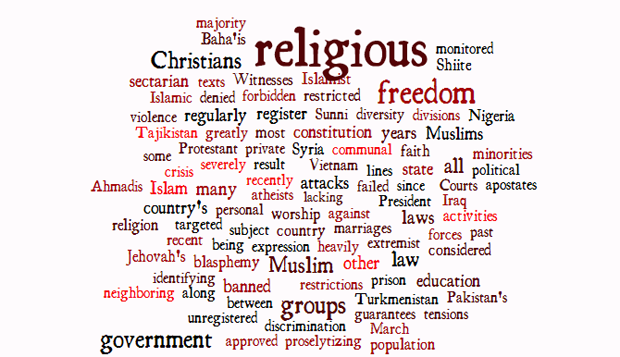
In January, Index summarised the U.S. State Department’s “Countries of Particular Concern” — those that severely violate religious freedom rights within their borders. This list has remained static since 2006 and includes Burma, China, Eritrea, Iran, North Korea, Saudi Arabia, Sudan, and Uzbekistan. These countries not only suppress religious expression, they systematically torture and detain people who cross political and social red lines around faith.
Today the U.S. Commission on International Religious Freedom (USCIRF), an independent watchdog panel created by Congress to review international religious freedom conditions, released its 15th annual report recommending that the State Department double its list of worst offenders to include Egypt, Iraq, Nigeria, Pakistan, Tajikistan, Turkmenistan, Vietnam and Syria.
Here’s a roundup of the systematic, ongoing and egregious religious freedom violations unfolding in each.
1. Egypt
The promise of religious freedom that came with a revised constitution and ousted Islamist president last year has yet to transpire. An increasing number of dissident Sunnis, Coptic Christians, Shiite Muslims, atheists and other religious minorities are being arrested for “ridiculing or insulting heavenly religions or inciting sectarian strife” under the country’s blasphemy law. Attacks against these groups are seldom investigated. Freedom of belief is theoretically “absolute” in the new constitution approved in January, but only for Muslims, Christians and Jews. Baha’is are considered apostates, denied state identity cards and banned from engaging in public religious activities, as are Jehovah’s Witnesses. Egyptian courts sentenced 529 Islamist supporters to death in March and another 683 in April, though most of the March sentences have been commuted to life in prison. Courts also recently upheld the five-year prison sentence of writer Karam Saber, who allegedly committed blasphemy in his work.
2. Iraq
Iraq’s constitution guarantees religious freedom, but the government has largely failed to prevent religiously-motivated sectarian attacks. About two-thirds of Iraqi residents identify as Shiite and one-third as Sunni. Christians, Yezidis, Sabean-Mandaeans and other faith groups are dwindling as these minorities and atheists flee the country amid discrimination, persecution and fear. Baha’is, long considered apostates, are banned, as are followers of Wahhabism. Sunni-Shia tensions have been exacerbated recently by the crisis in neighboring Syria and extremist attacks against religious pilgrims on religious holidays. A proposed personal status law favoring Shiism is expected to deepen divisions if passed and has been heavily criticized for allowing girls to marry as young as nine.
3. Nigeria
Nigeria is roughly divided north-south between Islam and Christianity with a sprinkling of indigenous faiths throughout. Sectarian tensions along these geographic lines are further complicated by ethnic, political and economic divisions. Laws in Nigeria protect religious freedom, but rule of law is severely lacking. As a result, the government has failed to stop Islamist group Boko Haram from terrorizing and methodically slaughtering Christians and Muslim critics. An estimated 16,000 people have been killed and many houses of worship destroyed in the past 15 years as a result of violence between Christians and Muslims. The vast majority of these crimes have gone unpunished. Christians in Muslim-majority northern states regularly complain of discrimination in the spheres of education, employment, land ownership and media.
4. Pakistan
Pakistan’s record on religious freedom is dismal. Harsh anti-blasphemy laws are regularly evoked to settle personal and communal scores. Although no one has been executed for blasphemy in the past 25 years, dozens charged with the crime have fallen victim to vigilantism with impunity. Violent extremists from among Pakistan’s Taliban and Sunni Muslim majority regularly target the country’s many religious minorities, which include Shiites, Sufis, Christians, Hindus, Zoroastrians, Sikhs, Buddhists and Baha’is. Ahmadis are considered heretics and are prevented from identifying as Muslim, as the case of British Ahmadi Masud Ahmad made all too clear in recent months. Ahmadis are politically disenfranchised and Hindu marriages are not state-recognized. Laws must be consistent with Islam, the state religion, and freedom of expression is constitutionally “subject to any reasonable restrictions imposed by law in the interest of the glory of Islam,” fostering a culture of self-censorship.
5. Tajikistan
Religious freedom has rapidly deteriorated since Tajikistan’s 2009 religion law severely curtailed free exercise. Muslims, who represent 90 percent of the population, are heavily monitored and restricted in terms of education, dress, pilgrimage participation, imam selection and sermon content. All religious groups must register with the government. Proselytizing and private religious education are forbidden, minors are banned from participating in most religious activities and Muslim women face many restrictions on communal worship. Jehovah’s Witnesses have been banned from the country since 2007 for their conscientious objection to military service, as have several other religious groups. Hundreds of unregistered mosques have been closed in recent years, and “inappropriate” religious texts are regularly confiscated.
6. Turkmenistan
The religious freedom situation in Turkmenistan is similar to that of Tajikistan but worse due to the country’s extraordinary political isolation and government repression. Turkmenistan’s constitution guarantees religious freedom, but many laws, most notably the 2003 religion law, contradict these provisions. All religious organizations must register with the government and remain subject to raids and harassment even if approved. Shiite Muslim groups, Protestant groups and Jehovah’s Witnesses have all had their registration applications denied in recent years. Private worship is forbidden and foreign travel for pilgrimages and religious education are greatly restricted. The government hires and fires clergy, censors religious texts, and fines and imprisons believers for their convictions.
7. Vietnam
Vietnam’s government uses vague national security laws to suppress religious freedom and freedom of expression as a means of maintaining its authority and control. A 2005 decree warns that “abuse” of religious freedom “to undermine the country’s peace, independence, and unity” is illegal and that religious activities must not “negatively affect the cultural traditions of the nation.” Religious diversity is high in Vietnam, with half the population claiming some form of Buddhism and the rest identifying as Catholic, Hoa Hao, Cao Dai, Protestant, Muslim or with other small faith and non-religious communities. Religious groups that register with the government are allowed to grow but are closely monitored by specialized police forces, who employ violence and intimidation to repress unregistered groups.
8. Syria
The ongoing Syrian crisis is now being fought along sectarian lines, greatly diminishing religious freedom in the country. President Bashar al-Assad’s forces, aligned with Hezbollah and Shabiha, have targeted Syria’s majority-Sunni Muslim population with religiously-divisive rhetoric and attacks. Extremist groups on the other side, including al-Qaeda and the Islamic State of Iraq and the Levant (ISIL), have targeted Christians and Alawites in their fight for an Islamic state devoid of religious tolerance or diversity. Many Syrians choose their allegiances based on their families’ faith in order to survive. It’s important to note that all human rights, not just religious freedom, are suffering in Syria and in neighboring refugee camps. In quieter times, proselytizing, conversion from Islam and some interfaith marriages are restricted, and all religious groups must officially register with the government.
This article was originally posted on April 30, 2014 at Religion News Service
24 Feb 2014 | Burma, Index Reports, News, Politics and Society, Religion and Culture
The Art of Transition Symposium took place in Yangon on March 30th – 31st 2013. It was the first public discussion of artist freedom of expression in Burma, looking in particular at the impact of the wave of political reforms, which started at the end of 2011, on artistic freedom of expression. Here is a short film directed by artist Htein Lin, who also was artistic advisor to the symposium with comedian and director Zarganar. The film reports briefly on the Symposium, and gives a snapshot of some of the performances and exhibitions that have taken place in Yangon during the year since the symposium. The Symposium was co-produced by HOME – Zarganar’s new company HOME (which stands for House of Media and Entertainment) and Index on Censorship. The Burmese team was led by journalist and former political prisoner Zaw Thet Htwe.
The Art of Transition Symposium[1] in Yangon was a significant event in the unfolding drive towards democracy in Burma, providing a public platform to discuss how changing political and social conditions are affecting artistic freedoms. It was the first symposium of its kind in Burmese[2] and another in the series of firsts as the space for expression opens up. While the abolition of pre-censorship of print media released all writers, including poets and novelists from censorship and ensured that debate around media freedom was centre stage, discussion about broader artistic freedoms was trailing and needed to be considered in depth.
The symposium featured an unprecedented gathering of artists from Yangon and Mandalay facilitating exchange between historical, traditional and contemporary art forms and between artists of all ages. Many of the most respected artists in the country across all art forms, in particular those traditionally most associated with political and social engagement – poets, cartoonists, comedians, performance artists and film-makers – came together with political leaders, journalists, academics and lawyers for two days of presentations and discussion of the status of artistic freedom of expression and artists was possible.
Political backdrop
The symposium took place against a background of political and social change, optimism, instability, and uncertainty of President Thein Sein’s commitment to reforms[3]. There were two key free speech issues in the headlines. On April 1st, the day after the symposium, four new independent daily newspapers were published in Burma, the first since 1962. This historic moment for free speech was to an extent undermined by the on-going uncertainty surrounding press laws, which were to go through parliament in June. The other key freedom of expression issue was the debate around hate-speech triggered by outbreaks of violence between Buddhists and Muslims.
Ko Htut, chairman of the government appointed Press Council and member of Association of Former Political Prisoners, addressed the uncertain future of the press laws and called for the Ministry of Information’s (MoI) draft Printing and Publishing Enterprise Law to be rejected[4] as he saw it risked endorsing the old censor board under a new name.
Violence between Buddhists and Muslims figured strongly; the role played by social media in fuelling the violence was a major topic of discussion in the media at the time and continues to be at the time of writing. Hate speech and songs with Islamophobic lyrics circulated on the internet were discussed at the symposium and one of the performance pieces explored online hate speech. Emergency talks took place over the same weekend as the symposium which meant that Zarganar, a member of the interfaith council that met to discuss the tensions and violence, was only able to play a relatively small role in the symposium.
Artistic context
The symposium partners – HOME, comedian, film-maker and former political prisoner Zarganar’s new company and Index on Censorship[5] – viewed the symposium as a follow up to the Art of Freedom Film Festival[6] which took place in Yangon in January 2012, screening uncensored films about freedom and the title of the symposium – Art of Transition – was chosen accordingly. The film festival had given a green flag to the public debate about free expression, in large part due to Zarganar’s call for short films about freedom which elicited nearly two hundred entries, many by first time film-makers. The film festival, co-produced by Aung San Suu Kyi, was a very high-profile event with thousands of people watching the films on huge screens in the streets and squares of Yangon. It had clearly had a massive impact on the relationship between artists and the government, especially as ‘Ban That Film’ a fierce satire on film censorship boards, was the winning entry of the short film competition. The timing was critical and the organisers agreed to move quickly, to capture the conversation at an early stage of transition, making sure debate about freedom of artistic expression is on the agenda alongside media freedoms at this time of rapid reform.
The abolition of pre-censorship in print media is having a knock-on effect across other art forms, with artists taking more risks in terms of their choice of subject matter and putting on unlicensed events, in the belief that there would be less consequence or repercussion. The symposium, which was a licenced event, was in fact monitored by government officials standing at the back of the hall, though this did not seem to limit the discussion. It could be seen as one of a series of artistic initiatives and projects that are testing and interrogating the new freedoms in Burma during this period of accelerated change. Other notable events that took place around the time of the symposium were Zarganar’s comedy performance March 27, 2013 was a six hour live broadcast marathon of unbridled satire; Thangyat performances for New Year Celebrations were openly critical of the government; and Padauk 7000 a temporary unlicensed arts space that showed a series of site specific installations from March – June 2013. See Annex for more information on these events.
Symposium Summary
Over the two days of the symposium the presentations and discussions moved from the experiences of surviving the most brutal treatment of political prisoners on Cocos Island, to President Thein Sein administration’s apparent openness to criticism and satire, from the opportunities opening as a result of greater access to the internet to the impact of new independent artist associations and unions.
Many speakers chose to use this public platform to relate past experience of living through years of oppression and working in an environment extremely hostile to artistic freedom. Many spoke openly, some for the first time, about how they continued to create work in spite of considerable personal danger and hardships and described their courageous, ingenuous and often humorous strategies for circumventing censorship. Another discussion centred around the emergence of public censorship which, as the role of the state censor diminishes appears to fill the void. Public censorship, made up of many voices and sensibilities, brings with it a new, some felt more complex debate around freedom and the responsibilities of the artist.
There was a call to test limits and take risks to determine how far state imposed boundaries can be pushed, but at the same time there was concern that people need more time to learn how to exercise these new freedoms, especially in relation to the hate speech proliferating on the internet. The impact on artistic style and content was also discussed, as subjects that were previously banned can now be openly discussed. Whilst some felt liberated by these changes, others spoke about how they felt a paradoxical constraint generated by the new freedom and that they felt they had lost their bearings.
Artist Htein Lin played an important role in the symposium stimulating further thought and conversation with speakers and the audience about the core questions of the conference. He stressed that this is a new situation and there is a new reality which requires a new way of thinking and talking about freedom of expression. He posed questions about what artists should being doing to look after and increase the scope of the right to freedom of expression, pressing artists to think about the role of the police and how to work with new legislation.
Getting past the censors
Censorship is not about not writing a poem but about not being allowed to read it. Moe Saw
For many the symposium provided a very important opportunity to talk, sometimes for the first time in public, about the suffering and injustices leading up to and after 1988 and their work as artists and activists in underground movements. In the current climate of rapid change, it was clear that many felt that taking account of the past was an important step towards embracing reform. The ubiquitous presence of informers had made it impossible to talk about these things even amongst friends. Htet Myak, former political prisoner and survivor from the Cocos Islands one of the military junta’s most notorious prisons described the brutality of life for the 153 political prisoners who were incarcerated there and their efforts to continue to write using any available materials.
There were many accounts of how censorship boards operated before the recent reforms. Editor Chit Win Maung gave examples to illustrate the nature of censorship. One short story featuring a man who had to pluck out a white hair, using the word “tweezers” which is “zarganar” in Burmese was banned the comedian Zarganar was black-listed at the time. ‘Ye-nan-thit’ magazine was banned for six months after it published an essay about “democracy”. Even though the military government has always promised democracy the word could only be used in state-published materials.
Min Htin Ko Ko Gyi’s film ‘Uninterruptedness’ made after the cyclone Nargis, illustrated the lengths that artists would go to, to get work past censors. Itfeatured layers of text – the front layer being a series of words floating across the screen, over a layer of back to front text from Min Ko Naing’s book ‘Rear View Mirror’ (nauq-kyi-hman), only published in Thailand, banned in Burma, based on his experiences in 1988.
Public Censorship
Min Ko Naing talked about the changing nature of literary talks in villages. In the past, writers would tour talks about literary classics, often by westerners, which masked discussion of current affairs and political commentary. On recent tours he had encountered disbelief that it was now possible to talk openly about politics and he had to negotiate the use of microphones with the villagers, who finding the new openness shocking enough, were reluctant to amplify his presentation, fearing repercussions from the authorities.
Sharaad Kuttan, visiting speaker from Malaysia, spoke about the importance of controversy for generating public debate around challenging art, even if the public may call for the banning of the work in question. Controversy around art work often means that the artist has struck a nerve and is addressing an issue that is uncomfortable or divisive in society and he stressed the importance of art generating debate.
Expression online:
“Because we open the door, some dust comes in. We don’t need to be afraid of the dust.” Htun Win Nyein
Blogger Nay Phone Latt spoke of his sense that the country could fall apart at the touch of a key, because of the intensity of hate speech online especially about race and religion. He said “we are free but not safe”. He had investigated the online hate speech against Muslims and discovered that it was generated by a small group using a fake account. He suggested that “absolute freedom is not good for us”, we should take responsibility to speak up from the other side, those who want to live together in harmony with other faiths, but this voice is not coming across. Nay Phone Latt and journalist Zaw Thet Htwe both raised questions about how to counter misinformation, to be vigilant and stop circulation of hate speech.
Participants of the symposium were concerned that people did not know how to exercise these new freedoms, especially in relation to the hate speech proliferating on the internet. Htein Lin added that people need to take responsibility to oppose these voices and overcome intimidation. He said that we needed more speech, not less.
New Freedoms and new responsibilities:
“Now I am free but have to work within the constraints of society, of what is happening” San Saw Htwe – visual artist
Religious conflict was forefront in many people’s minds and it was pointed to as a reminder that freedom of speech is not without its problems. Many agreed that there need to be boundaries and there was some discussion about how to arrive a boundaries, but more focussed discussion on these and other related topics is needed. One artist who had created hundreds of artworks in prison, said that he felt his most free when he was behind bars. He explained that even though he was now free the constraints of society and pressure of what is happening are distractions that make him feel less free as an artist.
Poet and editor Maung Tin Thit saw it another way. He said that in the time of precensorship of print media, he would send in his work to the censorship board and the censor would decide what would be published. Now the decision about what to say in public lies with the author and the editor, bringing new responsibilities which he found liberating.
Impact on artistic style and content
“With the political situation changing, how will art change?” – Zarganar
One of the key questions the symposium asked was how had the reforms affected artists who had developed a nuanced and subtle vocabulary to circumvent censorship. For several it is difficult to find their bearings, the mind-set is so deep seated that a two poets I spoke to agreed it would take time, maybe two years, to make work under such different conditions.
A performance artist who has made deeply political work for many years, told Index he had decided not to perform at all until after the 2015 elections and would spend his time documenting his work and making short films.
Performance artist Moe Satt commented that in performance and conceptual art he has seen a change from an urgent, cathartic explosion of tension to more conceptual work. Artists have repeatedly performed images of breaking out from closed spaces and now they have more space, work is more about feelings generated by breaking out.
A speaker claimed that poets were being criticised for sounding more like journalists than poets and the subtlety of their voice was lost; critics claimed there is more depth and substance when the message was indirect and hidden. It was acknowledged there is a hunger for new subjects that were formally banned but that the public appetite will change soon and grow tired of works about prison experiences and political leaders.
Poet Eindra recited a work about the monks demonstrations in 2007. At the time it would not have been possible for her to recite her own work so she had given it to fellow poet Ma Ei to circulate. One poet said that he did not want to publish his poems that were banned in the past because they would no longer be of the moment.
Testing the limits
“Every step is a test because we don’t know if it is allowed or not” Aw Pe Kyel (APK) – cartoonist
As seasoned activists, the symposium participants had experienced the pattern in contemporary Burma where space opens up for greater public participation only for this to be shut down again. While there is a strong feeling that this opening up is different and will be more lasting, there was a wariness about how long people will be able to enjoy this period of more free expression, how much daily life had really been affected and whether there would be some form of retribution in the future. Min Ko Naing encouraged artists to test the authorities by going ahead with different works without permission.
Self-censorship: Several speakers referred to self-censorship as the most crippling form of censorship. APK put it succinctly – “We have these freedoms but we still censor ourselves”. Old habits of self-censorship are hard to overcome; artists had to keep a censor in their heads for so many years that they were having difficulty escaping those unconscious boundaries. American anthropologist Jenny Leehey who wrote her PhD on censorship in Burma, talked about ‘public secrets’ that underpin all societies and how the symposium was an opportunity to openly share and so maybe finally dispel these public secrets from the old administration. Her rhetorical question to the symposium was to ask what the new public secrets are and how they were changing.
Artist Associations and Unions
“We are in a boat – trying to row forward. Some people may want to paddle sideways or backward. That’s your right, but please don’t try to sink the boat” – Thitsar Ni – poet
Independent artist unions and associations have flourished since becoming legal early in 2012. Previously they had been run by government elected officials and toed the party line except for a brief period in 1988 when they joined the protests. Musician Myint Moe Aung reported that younger musicians and hip-hop artists have been accepted into the association and there is greater cooperation across generations, though it is not without tensions. They have successfully campaigned for copyright and now, for the first time, radio stations have to pay musicians for broadcasting their music. Poet Thitsar Ni spoke about the new poets union which was the first of the new wave of independent groups to come together. He also spoke positively about the possibilities of collaboration, though noted difficulty of artists acting collectively.
Performance art
Throughout the symposium, as well as recitation of previously banned poetry, there were four performances that took the current state of the arts as their subject.
- Ma Ei – she sat motionless in lotus position looking straight ahead, her eyes hardly blinking would occasionally fill with tears. She threaded flowers which had already been discarded onto a long piece of thread. When the thread was full her performance ended. After the performance she described that the woman was threading together old flowers thinking about when the time when there would be fresh flowers.
- Saw Wai –Central to his performance was a torn map of Burma, referencing recent social conflicts, the savagery of hate speech and particularly songs with hate speech lyrics, a guitar and blooded paper also featured. He read a poem of his called Aungban where nonagenarian poet Dagon Tar Yar friend of General Aung San lives.
- Suu Myint Thein In his own performance the day before ‘We live in Myanmar’ he asked people in the audience what they wished for and collected these on pieces of paper, almost choking as he ate them. He then tried to reach a bag of water, dyed blue to symbolise peace, hampered by ropes tied to his ankles.
- Thet Swe Win is a poet who works on interfaith programmes. He burned a computer keyboard, reference to Muslim-Buddhist conflict and the inflammatory role of social media in fuelling anti-Muslim feeling. He sang ‘Imagine’ by John Lennon and quoted Buddhist texts and texts from the Koran and the Bible.
- Sow Thaw Dar – wore a t-shirt that depicted three phases of censorship. The censors went from using black ink and then switched to silver, because people discovered they could rub off black ink and reveal the censored text underneath. Censorship became more invisible when computers were introduced and censors simply cut out words and phrases or whole pieces they did not like.
Translation
Zeyar Lin dedicated his presentation to the discussion of poetry in translation. He featured two books of poems – one ‘Bones Will Crow’ which he edited with James Byrne editor of Wolf Magazine and an anthology of Burmese poetry translated into French without knowledge or permissions from the poets. Despite the unprincipled way the French editors had appropriated the poems, the fact is that there are now two anthologies of contemporary Burmese poetry out there in the world. This is a sign of art in transition and opening up of opportunities and possibilities for poets and new audiences around the world. He finished his presentation by reading poems by a North Korean poet Jang Jin-Sung.
Conclusion
That independent newspapers hit the newsstands for the first time in over half a century the day after the first ever symposium on artistic freedom of expression illustrates clearly that political reforms are delivering concrete change in Burma. At the same time violence between Buddhists and Muslims triggered debate about people’s readiness to handle new freedoms and uncertainty about the future of the press laws fuelled cynicism about the government’s commitment to reform. This mixed picture of opportunity, cynicism and anxiety was mirrored in the range of perspectives aired by the artists, activists and journalists at the symposium.
The premise of the symposium was clearly that artists are enjoying considerably more freedom and that the abolition of pre-censorship in print media had had a knock on effect across all the arts. However, the emerging role of public censorship, the changing nature of self-censorship and concerns about free speech online, were all cited as constraints on new freedoms.
Many of the presentations focussed on experiences of censorship that took place in the 80s, 90s and the last decade which reflected a preoccupation not to lose sight of the past in this period of transition. These stories still need to be told; they have been insufficiently heard and acknowledged and the contributing artists have experienced dramatic reversals by the government in the past. A relatively small number of presentations focused on what is changing now, what is possible now and what needs to change in the future. Younger artists were more able to talk about the present than the older artists who had lived through 88 but they also expressed their concern that their work is only valued as much as it comments on the social and political situation of Burma.
There was a strong debate about the relationship between art and politics that will go on and the infrastructure is there to support it, in the form of new independent artist associations and unions, including The Motion Picture association. There are other key agencies, many of which were represented at the symposium: HOME, New Zero, MCAC Beyond Pressure and education programmes like Loka Ahlin; the Burma Lawyer Council (led by NLD U Aung Thein), the Former Political Prisoner Association, Generation 88 Association. There was interest in activating these networks to develop the debate, though it was also acknowledged that collective action by the conference participants would be very difficult given the number of different artist alliances and unions. It was felt that there was need for a specialist organisation like Index to get help these groups to engage at higher level of decision making, how to campaign and influence law making.
Annex – examples of projects and programmes that illustrate the artistic context for the symposium
Zarganar’s comedy event March 27 2013 – People’s Park
Without doubt the most significant and boundary pushing example of this was Zarganar’s comedy show, the biggest ever Anyeint performance[7], produced, written by and starring Zarganar which took place three days before the symposium. Featuring comedians who had recently returned from exile, the six hour marathon performance was broadcast live by Sky Net, a new pay-to-view independent TV channel and reinstated Zarganar as the most outspoken comedian in the country with an explosion of bare fisted satire. It was said that President Thein Sein watched the show on TV, and it would be interesting to know if he was surprised to find himself a target for satire alongside many other reformers and democrats including Aung San Suu Kyi, Min Ko Naing, Zarganar himself as well as democracy and freedom.
Freedom was portrayed in an unglamorous light “we are free to do anything now – sell our shit, piss on the streets” and even political activists were held up for ridicule as one scene saw protesters with empty placards went round in circles chanting join our cause – when asked what their cause was they said they didn’t know. He had had to submit the scripts to SkyNet before the show, but he departed from the script during the live broadcast performance and some of his riskiest gags were improvised, including a ruthless portrayal of the very unpopular but still powerful grandson of former premier, General Than Shwe.
Thangyat performance – April 2013
At the same time, celebrations for Thingyen – the Burmese new year four day water festival, were being prepared, in particular Thangyat troupes. Traditionally an outspoken form of entertainment for the Burmese New Year, where teams of performers, competing for cash prizes, satirise mistakes made during the year so as to avoid repeating them in the coming year. Last year the ban, which had been in place since 1988 was lifted and there was a low key revival of the form. Now with more media attention than ever before, Sky Net was broadcasting the competition in Yangon and the first ever women’s troupe was performing in Mandalay it was interesting to see how new freedoms were being exercised and constrained.
Sky Net required all participating teams to submit their scripts or videos in advance and subsequently banned one troupe from the competition. The performers from the banned troupe thought that Sky Net was more sensitive to political satire than the current government and they were shocked and angry at being excluded. The troupe went ahead anyway and performed during the festival. In Mandalay pre-censorship of Than Gyat remains in the hands of city authorities and the all women Thangyat ensemble, like all the other troupes had to submit their scripts to the censors, though the group was determined to perform their script whatever the censors said.
Padauk 7000
Another art project Padauk 7000 was launched the weekend of the symposium. A temporary art space in the docks of Yangon, based in a fragile two storey wooden house due to be demolished in June to make way for a new apartment building. The space is run by an artist and an American journalist who crowd-sourced money to fund a series of weeklong site-specific exhibitions over a period of two months. They didn’t apply for a licence. Public exhibitions should, in theory, be licensed by the ministry of culture but they decided to test these requirements. 2 years ago running a squatted art space without alerting authorities would have risked arrest for the artist and deportation for the American. There is still a slight possibility of those things happening (a transitional government is an unpredictable one) but not enough to deter them.
[1] The symposium was a co-production between Index on Censorship and House of Media and Entertainment (HOME)
[2] The Irrawaddy literature festival, organised by the wife of the British Ambassador and conducted in English took place in February
[3] See a detailed assessment of the broader picture in Index’s report ‘Burma: freedom of expression in transition’.
[4] The MOI ‘Printers and Publishers Regulation Bill’ was passed by the Lower House of Parliament in July taking on very few of the changes pressed by the Press Council
[5] www.indexoncensorship.org
[6] Art of Freedom Film Festival co-produced with Min Htin Ko Ko Gyi and Aung San Suu Kyi took place within three months of Zarganar’s release from prison in October 2011.
[7] Anyeint is a traditional form of comic entertainment featuring an ensemble of comedians, with singers, dancers and musicians
This article was posted on February 24, 2014 at indexoncensorship.org
4 Feb 2014 | Digital Freedom, News
[vc_row][vc_column][vc_column_text]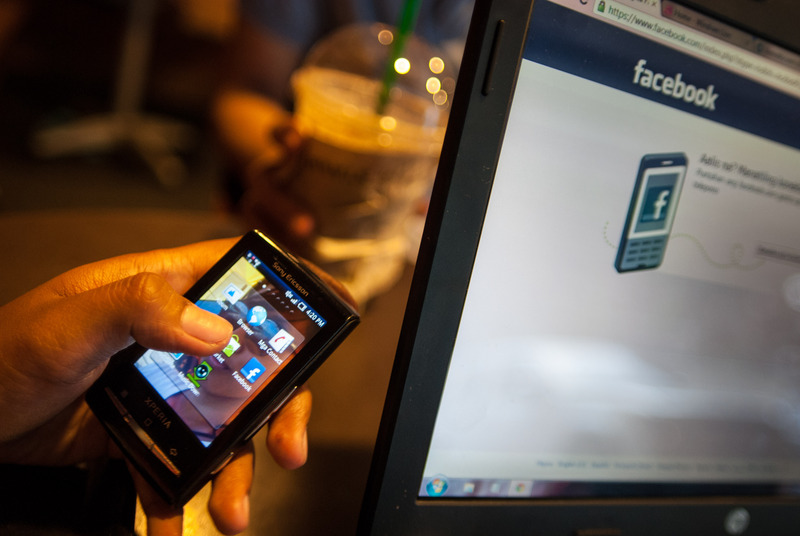
Today Facebook celebrates its 10th anniversary. The social networking giant now has over 1.23 billion users, but there are still political leaders around the world who don’t want their country to have access to the site, or those who have banned it in the past amid fears it could be used to organise political rallies.
North Korea
Perhaps the most secretive country in the world little is known about internet access in Kim Jong-un’s nation. Although a new 3G network is available to foreign visitors, for the majority of the population the internet is off limits. But this doesn’t seem to bother many who, not knowing any different, enjoy the limited freedoms offered to them by the country’s intranet, Kwangmyong, which appears to be mostly used to post birthday messages.
A limited number of graduate students and professors at Pyongyang University of Science and Technology do have access to the internet (from a specialist lab) but in fear of the outside world many chose not to use it. Don’t expect to see Kim Jong-un’s personal Facebook page any time soon.
Iran
In Iran, however, political leaders have taken to social media- despite both Facebook and Twitter officially being extraordinarily difficult to access in the country. Even President Hassan Rouhani has his own Twitter account, although apparently he doesn’t write his own tweets, but access to these accounts can only be gained via a proxy server.
Facebook was initially banned in the country after the 2009 election amid fears that opposition movements were being organised via the website.
But things may be beginning to looking up as Iran’s Culture Minister, Ali Jannati, recently remarked that social networks should be made accessible to ordinary Iranians.
China
The Great Firewall of China, a censorship and surveillance project run by the Chinese government, is a force to be reckoned with. And behind this wall sits the likes of Facebook.
The social media site was first blocked following the July 2009 Ürümqi riots after it was perceived that Xinjiang activists were using Facebook to communicate, plot and plan. Since then, China’s ruling Communist Party has aggressively controlled the internet, regularly deleting posts and blocking access to websites it simply does not like the look of.
Technically, the ban on Facebook was lifted in September 2013. But only within a 17-square-mile free-trade zone in Shanghai and only to make foreign investors feel more at home. For the rest of China it is a waiting game to see if the ban lifts elsewhere.
Cuba
Facebook isn’t officially banned in Cuba but it sure is difficult to access it.
Only politicians, some journalists and medical students can legally access the web from their homes. For everyone else the only way to connect to the online world legally is via internet cafes. This may not seem much to ask but when rates for an hour of unlimited access to the web cost between $6 and $10 and the average salary is around $20 getting online becomes ridiculously expensive. High costs also don’t equal fast internet as web pages can take several minutes to load: definitely not value for money for the Caribbean country.
Bangladesh
The posting of a cartoon to Facebook saw the networking site shut down across Bangladesh in 2010. Satirical images of the prophet Muhammad, along with some of the country’s leaders, saw one man arrested and charged with “spreading malice and insulting the country’s leaders”. The ban lasted for an entire week while the images were removed.
Since then the Awami-League led government has directed a surveillance campaign at Facebook, and other social networking sites, looking for blasphemous posts.
Article continues below[/vc_column_text][/vc_column][/vc_row][vc_row][vc_column][vc_custom_heading text=”Stay up to date on freedom of expression” font_container=”tag:p|font_size:28|text_align:left” use_theme_fonts=”yes”][vc_separator color=”black”][/vc_column][/vc_row][vc_row][vc_column width=”1/2″][vc_column_text]
Index on Censorship is a nonprofit that defends people’s freedom to express themselves without fear of harm or persecution. We fight censorship around the world.
To find out more about Index on Censorship and our work protecting free expression, join our mailing list to receive our weekly newsletter, monthly events email and periodic updates about our projects and campaigns. See a sample of what you can expect here.
Index on Censorship will not share, sell or transfer your personal information with third parties. You may may unsubscribe at any time. To learn more about how we process your personal information, read our privacy policy.
You will receive an email asking you to confirm your subscription to the weekly newsletter, monthly events roundup and periodic updates about our projects and campaigns.
[/vc_column_text][/vc_column][vc_column width=”1/2″][gravityform id=”20″ title=”false” description=”false” ajax=”false”][/vc_column][/vc_row][vc_row][vc_column][vc_separator color=”black”][/vc_column][/vc_row][vc_row][vc_column][vc_column_text]Egypt
As Egyptians took to the streets in 2011 in an attempt to overthrow the regime of Egyptian President Hosni Mubarak the government cut off access to a range of social media sites. As well as preventing protestors from using the likes of Facebook to foment unrest, many websites registered in Egypt could no longer be accessed by the outside world. Twitter, YouTube, Hotmail, Google, and a “proxy service” – which would have allowed Egyptians to get around the enforced restrictions- seemed to be blocked from inside the country.
The ban lasted for several days.
Syria
Syria, however, dealt with the Arab Spring in a different manner. Facebook had been blocked in the country since 2007 as part of a crackdown on political activism, as the government feared Israeli infiltration of Syrian social networking sites. In an unprecedented move in 2011 President Bashar al-Assad lifted the five year ban in an apparent attempt to prevent unrest on his own soil following the discontent in Egypt and Tunisia.
During the ban Syrians were still able to easily access Facebook and other social networking sites using proxy servers.
Mauritius
Producing fake online profiles of celebrities is something of a hobby to some people. However, when a Facebook page proclaiming to be that of Mauritius Prime Minister Navin Ramgoolam was discovered by the government in 2007 the entire Mauritius Facebook community was plunged into darkness. But the ban didn’t last for long as full access to the site was restored the following day.
These days it would seem Dr Ramgoolam has his own (real) Facebook account.
Pakistan
Another case of posting cartoons online, another case of a government banning Facebook. This time Pakistan blocked access to the website in 2010 after a Facebook page, created to promote a global online competition to submit drawings of the prophet Muhammad, was brought to their attention. Any depiction of the prophet is proscribed under certain interpretations of Islam.
The ban was lifted two weeks later but Pakistan vowed to continue blocking individual pages that seemed to contain blasphemous content.
Vietnam
During a week in November 2009, Vietnamese Facebook users reported an inability to access the website following weeks of intermittent access. Reports suggested technicians had been ordered by the government to block the social networking site, with a supposedly official decree leaked on the internet (although is authenticity was never confirmed). The government denied deliberately blocking Facebook although access to the site today is still hit-and-miss in the country.
Alongside this, what can be said on social networking sites like Facebook has also become limited. Decree 72, which came into place in September 2013, prohibits users from posting links to news stories or other news related websites on the social media site.
This article was published on 4 February 2014 at indexoncensorship.org[/vc_column_text][/vc_column][/vc_row][vc_row][vc_column][vc_basic_grid post_type=”post” max_items=”12″ style=”load-more” items_per_page=”4″ element_width=”6″ grid_id=”vc_gid:1538131415482-d092e45b-9f66-5″ taxonomies=”136″][/vc_column][/vc_row]
