27 Sep 2017 | Europe and Central Asia, Hungary, Mapping Media Freedom, Media Freedom, media freedom featured, News
[vc_row][vc_column][vc_column_text]
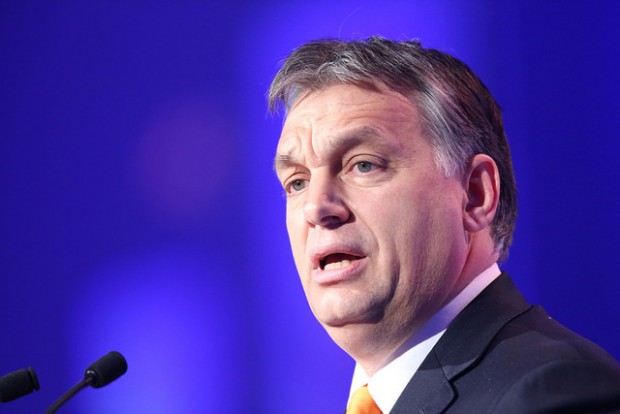
Viktor Orban (Credit: European People’s Party)
As Hungary prepares for parliamentary elections, independent journalists have become a target of the pro-government media outlets. This follows a speech by Hungarian prime minister Viktor Orban at the end of July at Tusványos, the annual Fidesz jamboree in Băile Tușnad, Romania, during which he said: “We must stand our ground against the Soros mafia network and bureaucrats in Brussels, and will have to go to battle against the media they operate in the coming months.”
Orban’s message at Tusványos is considered a preview of what to expect from the Hungarian government in the following months. A few days after the speech, Magyar Nemzet daily reported that the prime minister’s words signal a clear change in tactics: instead of defaming independent media outlets and their owners, pro-government media outlets started going after prominent journalists, known for their work of exposing the corruption of the Hungarian government.
During September 2017, pro-government media outlets started publishing articles discrediting leading Hungarian journalists critical to Orban’s regime.
On 5 September 2017, 888.hu published a list of journalists accused of being “mouthpieces” for George Soros, who has been called a “national security risk” and a “public enemy” by Orban for allegedly supporting the mass immigration of Muslims into Europe.
“The international media, with a few exceptions, generally write bad things about the government because a small minority with great media influence does everything to tarnish the reputation of Hungary in front of the world — prestige that has been built over hundreds of years by patriots,” 888.hu wrote.
Among those listed are Lili Bayer, a journalist working for Politico, László Balogh, a Pulitzer-winner photographer, Márton Dunai, Gergely Szakács and Sándor Pető, journalists working for the Reuters news agency, as well as Zoltán Simon, a journalist working for Bloomberg, and ZDF producer István Sinkovicz.
“The article is indicative of the extent to which the pro-government press seems willing to carry out the political orders of prime minister Viktor Orbán,” Budapest Beacon commented, adding that the editor in chief of 888.hu is Gábor G. Fodor, deputy chairman of Századvég Foundation’s board of trustees. Századvég is a think-tank and consultancy that has been embroiled in numerous scandals involving large government orders since 2010. The publisher of 888.hu is Modern Media Group Zrt., a company owned by Árpád Habony, an informal advisor to the prime minister.
The list was condemned by the 3,500-member National Association of Hungarian Journalists (MUOSZ). The body said that there is no evidence of any contact between Soros and the journalists named in the piece. “Stigmatising colleagues by using listing methods that hark back to former anti-democratic times is far from the practice of democratic journalism and informing (the public),” said MUOSZ.
The campaign against journalists continued on 11 September 2017 with a piece on 888.hu attacking Gergely Brückner, one of Hungary’s leading business journalists working at index.hu. The piece accused Brückner of writing an article about the political-diplomatic background of several millions of dollars transferred to Hungary from an Azerbaijani slush fund without any evidence.
“I was not particularly bothered by the editorial, although I don’t think he understands correctly where the trenches in the Hungarian media landscape are,” Gergely Brückner told Index on Censorship. “He also exaggerates my importance (of course, I felt flattered), and for sure he does misunderstand the goals I had with my articles.”
“It is known that the ruling party is always looking for enemies, these being refugees, Soros, the EU, NGOs and independent journalists, all of which are under attack,” Brückner added. “This is how they are trying to keep their core voters engaged.”
Unfortunately, ordinary media consumers have a difficulty in making a distinction between independent, fact-based journalism and biased, post-truth journalism, as Brückner explains. “I am not disturbed at being targeted and it does not influence my work or my sources. They had an obviously exaggerated opinion about me, but they did not have false statements. In the latter case, I would seek legal redress.”
On 14 September 2017, Attila Bátorfy, a data journalist at investigative website Atlatszo.hu and research fellow at CEU’s Center for Media and Communication Studies was also the target of a defamatory article published on an obscure blog, Tűzfalcsoport. The piece, illustrated with a photo of enlarged mites, is claiming that Bátorfy’s piece on the spread of Russian propaganda in Hungary is based on faulty evidence.
A day later, on 15 September 2015, Pesti Srácok, another website close to the government published an article about András Földes, a journalist working for index.hu who reported extensively on the migration crisis. The piece is a list of Földes’s more important reports, along with “ironic” commentary.
“When he goes to war zones, he watchfully takes a peek on the trenches, carefully avoiding danger, then he presents the things he saw as he wishes (…). His extraordinary talent is also shown by the fact that he believes anything to 17-year old immigrant men born on 1 January. At least we hope he naively believes the overstatements he writes about, and these (overstatements) are not invented by him,” the article goes.
Even if the readership of such a blog or website is relatively small, these articles are usually echoed in the media universe loyal to Orban and are often referenced by the public media as well, meaning that the allegations reach a considerable audience.
The recent defamatory pieces are only the tip of the iceberg of the attacks on press freedom in Hungary. Since 2010, the Hungarian government led by Orbán is working systematically to silence critical voices by changing the legal framework regarding media, redrawing the advertising market, introducing preferential taxes that only hit certain, independent broadcasters, buying up media companies, or simply closing them down, as happened with the largest opposition newspaper, Népszabadság.
The most alarming recent incidents regarding press freedom in Hungary:
Police check IDs of TV crew filming new PM office
Journalist assaulted at a Fidesz public forum
Largest opposition daily suspended
Parliamentary amendment restricts access to public information[/vc_column_text][/vc_column][/vc_row][vc_row][vc_column][vc_basic_grid post_type=”post” max_items=”4″ element_width=”6″ grid_id=”vc_gid:1506503807710-1289f6d8-e51b-2″ taxonomies=”2942″][/vc_column][/vc_row]
26 Sep 2017 | Artistic Freedom, News
[vc_row][vc_column][vc_column_text]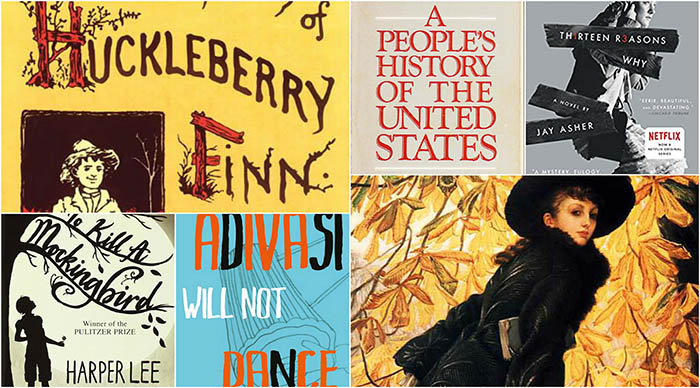
An annual celebration of the freedom to read, Banned Books Week was launched in 1982 in response to a surge in book censorship in schools, bookshops and libraries in the USA.
Since then, over 11,300 books have been banned. Thankfully, there have always been those committed to challenging censorship, including authors, librarians, teachers and students.
But what are the censors so afraid of? Here are 10 books banned in some way over the last year to give us an idea.
13 Reasons Why – Jay Asher
The Netflix adaption of Jay Asher’s young adult novel 13 Reasons Why has been causing controversy over its exploration of teenage suicide ever since its release in March 2017. So much so that New Zealand’s classifications body created a whole new category of censorship, RP18, to restrict the showing of the series to anyone under the age of 18.
Naturally, the treatment of the book itself has followed suit, with many calling for the book to be banned over its perceived irresponsible or unrealistic handling of issues of mental health.
An official Mesa County Valley School District in Colorado, USA, briefly ordered librarians to pull 13 Reasons Why from school bookshelves in April 2017. However, after the intervention of a number of librarians, the curriculum director for the district reversed her decision.
The works of Howard Zinn fall foul of US Republican lawmakers
In May 2017, US Republican senator Kim Hendren of Arkansas introduced a bill to ban the works of the late social activists and Boston University professor Howard Zinn from public schools.
Zinn’s A People’s History of the United States, which is part of many school and college curriculums across the country, is an attempt to bring to light parts of US history that aren’t covered in-depth elsewhere, including equality movements throughout the 20th century.
Many US conservatives argue that there is already too much focus on race and class, including slavery and the genocide of Native Americans, in school curriculums. Bills such as Hendren’s — and that of an Oklahoma lawmaker in 2015 which sought to correct the fact that the USA was not portrayed in a positive enough light in history curriculums — are intended to redress the situation.
However, Hendren’s bill has only increased demand for the works of Zinn. Some 700 copies of A People’s History of the United States were sent free to teachers and librarians throughout Arkansas thanks to the controversy and thanks to a flood of donations copies are being given away to any middle or high school teacher or librarian in Arkansas who asks.
To Kill a Mockingbird – Harper Lee
The Adventures of Huckleberry Finn – Mark Twain
In December 2016, a US school district has banned To Kill a Mockingbird and The Adventures of Huckleberry Finn after a parent complained about use of racist language. The books were removed from classrooms and school libraries in Accomack County, Virginia.
It came after one parent told a school board meeting: “I’m not disputing this is great literature, but there is so much racial slurs in there and offensive wording that you can’t get past that, and right now we are a nation divided as it is.”
Racism is a central theme in Mark Twain’s classic work, which explores the oppression of black slaves in pre-Civil War America. It includes the word “nigger” over 200 times. But it is a satire which tackles racism with irony and many fans of the book would agree that is, in fact, a great anti-racist novel. Which is why so many were dismayed in 2011 when a new edition of Huckleberry Finn was released with all uses of the offending word removed.
Likewise, the treatment of To Kill a Mockingbird seemed to be more motivated by the words characters use rather than its critique of racism.
The Adivasi Will Not Dance – Hansda Sowvendra Shekhar
Along with thinking of the children, protecting the dignity of women has always been a mainstay of the moralists. In 1928 all of Chicago’s public libraries removed the Wizard of Oz for “depicting women in strong leadership roles”. Such attitudes are not a thing of the past.
In August of this year, the Jharkhand government in eastern India banned The Adivasi Will Not Dance, a collection of short stories by the award-winning Indian writer Hansda Sowvendra Shekhar, for daring to depict women from the Santhal tribe in a sexual way.
Authorities, claiming that the content of the book may disturb law and order situation in Jharkhand, began seizing copies and the author, a government doctor, was suspended from his position.
Shekhar vowed not to edit a single word and advised all who have a problem with it to take the time to actually read it.
Fanny Hill – John Cleland
Sexual content has been the number one reason for the banning of books this century, and just because a book wasn’t written in this century, doesn’t mean it escapes the censor’s pen.
Memoirs of a Woman of Pleasure, more widely known as Fanny Hill, an erotic novel first published in London in 1748, has been peeving off puritans since it was first printed. While it doesn’t contain a single rude word, John Cleland’s work is about a sex worker who enjoys her work.
For this, the author was prosecuted for “corrupting the king’s subjects”. The book is one of the most banned in history, and in August 2017, a professor at Royal Holloway, University of London, Judith Hawley, said she would worry about upsetting students by teaching the work. Many in the media have accused Hawley of banning the book outright, some saying she removed it from a reading list, but she claims she hasn’t as it was never on the course in the first place. But when is a ban a ban? Speaking on BBC Radio 4, Hawley said of the book: “I use it less than I used to. In the 1980s I both protested against the opening of a sex shop in Cambridge and taught Fanny Hill. Nowadays I’d be afraid of causing offence to my students.” She also raised concerns that her “students would slap me with a trigger warning”. Not teaching something for fear of offending students or to avoid becoming a trigger warning does amount to a ban.
“We shouldn’t assume that pornography is really speaking about sex, or that the only way to speak about sex is pornography,” she later added, but then expressed her worry at the “pornification of modern culture”.
LGBT books banned at Honk Kong book fair
Unless a book contains strictly conventional values and conduct, it has probably irked someone in a position of power somewhere along the way. Unfortunately, this means if you write a book called Gay Soldier’s Diary, you’re likely to to face trouble.
This was the case at the Hong Kong Book fair in July, where several titles, including Gay Soldier’s Diary, were banned on the grounds that they were “indecent”. The books depict no violence or nudity, so don’t actually breach the fair’s rules on indecency, but this didn’t stop organisers removing nine of 15 titles at the Taiwan Indie Publishers Alliance stall, including A Gentleman’s Wedding and Crying Girls.
Winnie the Pooh – AA Milne
In 1988, when official censorship ceased in the Soviet Union, banned publications suddenly became easily accessible to the general public. Works by Aleksandr Solzhenitsyn, Leon Trotsky and even Henry Kissinger, which were critical of the Soviet Union or deemed in some way to be subversive.
Whenever the vaults in China finally open, Chinese citizens will find curiosities like Winnie the Pooh, English writer AA Milne’s children’s series.
Pooh Bear’s only crime was to resemble China’s current president Xi Jinping, which some Chinese dissidents were only too eager to point out. Memes that went viral included a 2013 photo of a meeting between Xi and then-US president Barack Obama alongside a picture of Winnie the Pooh and his friend Tigger. As a result, the Chinese name for Winnie the Pooh (Little Bear Winnie) is blocked on Chinese social media sites and those who write”Little Bear Winnie” on the site Weibo are met with an error message.
Breaking the Silence – G25
G25 is a group of 25 Malay-Muslim leaders whose goal is to preserve the basic rights of freedom of expression and worship in Malaysia, where Islam is the official religion.
A book by the group, Breaking the Silence: Voices of Moderation – Islam in a Constitutional Democracy, has been banned after the Malaysian government deemed it to be “prejudicial to public order”. According to G25’s Noor Griffin, “it is meant to encourage debates about the Islamic religion”.
Deputy prime minister Ahmad Zahid Hamidi authorised the ban on the book on 14 June.
In 2014, a comic called Ultraman was banned in the country because it referred to the hero as “Allah”.
Little Bill – Bill Cosby
Challenges to Bill Cosby’s Little Bill children’s book series followed allegations of sexual assault were made against the comedian by a number of women, reaching back over many years. The censoring of Little Bill books is believed to the first time a title has been targeted solely for its author and not its content, ALA Office for Intellectual Freedom Director James LaRue said.
This article was updated on 28 September to add more context to Judith Hawley’s views on Fanny Hill.[/vc_column_text][/vc_column][/vc_row][vc_row][vc_column][vc_basic_grid post_type=”post” max_items=”2″ element_width=”6″ grid_id=”vc_gid:1506589920727-40713b18-3658-2″ taxonomies=”8820, 6696″][/vc_column][/vc_row]
13 Sep 2017 | Mapping Media Freedom, media freedom featured, News, Ukraine
[vc_row][vc_column][vc_single_image image=”95583″ img_size=”full” alignment=”center” onclick=”custom_link” link=”https://mappingmediafreedom.org/#/”][vc_column_text]Journalists across Ukraine are being suppressed, deported and banned from the country, according to the Index on Censorship’s Mapping Media Freedom project.
Ukraine has imposed a number of restrictions on the media as a response to Russian propaganda in order to protect its national security.
Mapping Media Freedom correspondent Vitalii Atanasov said that “the deportation of journalists is not an effective and justified response to such challenges and threatens press freedom. It is necessary to develop another mechanism to maintain a truly professional and fair media that could compete with all sorts of propaganda and fake news.”
The conflict has led to a rise in anti-media sentiments across Ukraine with some prominent members of the Ukrainian government branding journalists as traitors. Public opinion has swayed over the course of the conflict and the press is often criticised for showing the problems of Ukrainian society.
“Another disturbing trend is that the authorities and their supporters are promoting the idea of the ‘fifth column’, hinting that critical journalism can be a threat inspired from outside. Unfortunately, journalists are an easy target,” Atanasov said
Journalists operating in Ukraine are being blamed for the spread of classified information and for undermining the Ukrainian army. “There have been several cases when journalists were accused of having published classified information, but in the end, the accusations were not confirmed,” Atanasov added.
With both the public and the politicians demonising the press, it has become increasingly dangerous for journalists to work and operate in the Ukraine. The most extreme example of the dangers the media face in Ukraine is the assassination of Pavel Sheremet in July 2016.
Atanasov said that this has led to some self-censorship in the Ukrainian press. “I can assume that some journalists resort to self-censorship in some cases, as they would like to avoid obstacles and problems for their work in the future.”[/vc_column_text][/vc_column][/vc_row][vc_row][vc_column][vc_separator][vc_custom_heading text=”Media freedom is under threat worldwide. Journalists are threatened, jailed and even killed simply for doing their job.” font_container=”tag:h3|text_align:left” use_theme_fonts=”yes” link=”url:https%3A%2F%2Fwww.indexoncensorship.org%2Fcampaigns%2Fpress-regulation%2F|||”][vc_row_inner][vc_column_inner width=”1/2″][vc_column_text]Index on Censorship monitors media freedom in Ukraine and 41 other European area nations.
As of 11/9/2017, there were 296 verified violations of press freedom associated with Turkey in the Mapping Media Freedom database.[/vc_column_text][/vc_column_inner][vc_column_inner width=”1/2″][vc_column_text]Index on Censorship campaigns against laws that stifle journalists’ work. We also publish an award-winning magazine featuring work by and about censored journalists. Support our work today.[/vc_column_text][/vc_column_inner][/vc_row_inner][vc_separator][/vc_column][/vc_row][vc_row][vc_column][vc_column_text]Recent cases reported to Mapping Media Freedom’s database of European area press freedom violations:
Two Russian journalists were deported and banned from Ukraine this August. The first was Tamara Nersesyan, a correspondent for the All-Russian State Television and Radio Company on 15 August. Shortly after her report on the Ukrainian music festival Bandershtat was shown on Channel One she was deported and banned from the country.
On 30 August, Russian State TV Channel One correspondent Anna Kurbatova was deported. A spokesperson for the Security Service of Ukraine (SBU) Olena Gitlyanska wrote that “Russian propagandist Anna Kurbatova was forcibly expelled from Ukraine… she is forbidden to enter the territory of our state for three years.” The reason stated for deportation was “because of activities, which hurt the national interests of Ukraine.” Information about Kurbatova was published on the Myrotvorets because she was judged to be distributing “anti-Ukrainian propaganda” and to be “manipulating significant information”. In 2016, the Myrotvorets leak shared the names of thousands of journalists accredited in the separatist republics. She had recently reported on the deportation of two Spanish journalists and covered Ukrainian Independence Day for Channel One.
Spanish journalists Antonio Pampliega and Manuel Ángel Sastre were deported from Ukraine. Both had been blacklisted in 2015 but granted access to the country after pressure from Spanish authorities. However, on 25 August an SBU spokeswoman said that the journalists were barred because of their “activities that contradict the national interest of Ukraine,” according to the Committee to Protect Journalists. The pair were deported to the Netherlands after a 20-hour detention in Kiev airport. Sastre said the Ukrainian authorities “treated us like criminals”.[/vc_column_text][/vc_column][/vc_row][vc_row][vc_column][vc_basic_grid post_type=”post” max_items=”4″ element_width=”6″ grid_id=”vc_gid:1505295853750-ecfb674d-953f-9″ taxonomies=”6564″][/vc_column][/vc_row]
12 Sep 2017 | Magazine, Magazine Contents, Volume 46.03 Autumn 2017
[vc_row][vc_column][vc_custom_heading text=”Contributors include Madeleine Thien, Xinran, Peter Bazalgette, Laura Silvia Battaglia, Mahesh Rao, Chawki Amari and Amie Ferris-Rotman”][vc_column_text]
The retro medium of radio is back, as we explore in the Autumn issue of Index on Censorship magazine 2017, which is excellent news for the delivery of well, news. Laura Silvia Battaglia reports from Mosul on the radio station that is giving a voice to the people there, while Claire Kopsky interviews people behind “radio boats“, boats that are broadcasting information on cholera in the Central African Republic in a bid to educate the population about the disease.
[/vc_column_text][vc_single_image image=”95458″ img_size=”full” alignment=”center”][/vc_column][/vc_row][vc_row][vc_column][vc_column_text]
Then there are the examples of radio proving a perfect outlet for people to share their most private inner thoughts and experiences, as Wana Udobang writes about from a Nigerian context and Xinran remembers back in China.
Part of the increased popularity of radio is that it’s managed to evolve and we have an article on how podcasts are being made in some of the least likely – and most censored – places, such as China, and smuggled into North Korea. We also have a handy guide on making your own podcasts, for those with an idea.
But radio’s ability to reach the masses also means that this powerful tool can get into the wrong hands. Ismail Einashe explores this in his article on al-Shabaab in Somalia, who operate a very popular radio station. Then there’s Rwanda, which two decades ago saw the airwaves being monopolised by voices promoting genocide. The country has moved on a lot, but radio is still far from free.
Outside the special report, we take you to Russia where a seemingly innocent film about the last tsar has angered the country’s church. With Banned Books Week coming up, we ask a selection of writers to choose the books that made them think most about free speech. What would be your pick? And we have an extract from a forthcoming novel highlighting the dangers of being a journalist in Mexico, with superb illustrations to accompany.
Finally, don’t miss our cut-out-and-keep male nipple template, a handy tool to ensure female nipples are social media friendly.
[/vc_column_text][/vc_column][/vc_row][vc_row][vc_column][vc_custom_heading text=”Special report: Free to air “][vc_column_text]
Why the rebirth of radio is delivering more news
Fear for the airwaves, by Ismail Einashe: In Somalia al-Shabaab control a prominent radio station and a fifth of the country. Meet the radio presenters who brave danger to keep reporting
Project freedom? by Sally Gimson: Radio Free Europe was at the frontline of Cold War reporting. Three decades on, is it still needed?
Sound unbound, by Oleg Shynkarenko: How a new radio station was built from scratch using crowdfunding to break away from oligarchs and government pressure
Don’t touch that dial, by Kieran Etoria-King, Rachael Jolley, Jemimah Steinfeld: Interviews with a pirate rain DJ, comedian Robin Ince, a Hong Kong presenter, the controller of BBC World Service English and the editor of a refugee radio station
Syrians speaking, by Rhodri Davies: Syrians in exile on why they set up a new radio station and what it covers
Power to the podcast, by Mark Frary: Podcasting is bringing a whole new audience to radio and giving investigative journalism a boost. Plus, our handy guide to making your own podcasts
Stripsearch cartoon, by Martin Rowson: There’s a new app out called Smart Ink. Will it become a dictator’s favourite tool?
Tuning into a brave new world, by Jan Fox: Grassroots radio is on the rise in the USA, where a 98-year-old granny is a station superstar, but it’s not without challenges
Under the rad(io)ar, by Kaya Genç: A radio station in Turkey, known for its criticism of the government, is somehow surviving the current crackdown
Taboos and telephones, by Xinran: Radio was one of the first outlets where Chinese women spoke about personal issues such as forced abortions. Is the same honesty possible today?
Stationed in the warzone, by Laura Silvia Battaglia: Radio presenters in Mosul tell Index how the station is giving a voice to the people, but it has not been easy operating under bombardment
Secrets, lies and Lagos lives, by Wana Udobang: Exorcisms and illicit affairs are just some of the topics callers to a popular talk show in Nigeria wanted to share
New waves, by Claire Kopsky: Radio took to riverboats in the Central African Republic to bring information and news about a cholera epidemic
Chat rooms, by Milton Walker: Talk about interactivity, Jamaican radio shows sometimes receive as many as 4,000 text messages
Sound and fury, by Graham Holliday. Two decades ago Rwandan radio was monopolised by voices promoting genocide, but radio is still not free from controversy
Let’s get this show on the road, by Silvia Nortes: Meet the Spanish comedians behind Radio Gaga, a television show about radio which visits overlooked communities
[/vc_column_text][/vc_column][/vc_row][vc_row][vc_column][vc_custom_heading text=”In focus”][vc_column_text]
China’s other great wall, by Madeleine Thien: 1980s Beijing saw the creation of another wall, one promoting democracy. The Booker Prize nominee discusses its legacy today
Closing access to the back door, by Iona Craig: Investigative journalists working in hostile environments need encrypted apps to work more safely. This is being forgotten in the current debate on encryption
No one owns language, by Jemimah Steinfeld: The 2016 Man Booker Prize winner Paul Beatty discusses “offensive” language and teaching styles
Risky business, by Charlotte Bailey: Amid confiscations and threats, one chain of bookstores continues to operate in Libya
Tracking down the F word in fiction, by Mahesh Rao, Sean Gallagher, Kieran Etoria-King, Grainne Maguire, Ryan McChrystal: Ahead of Banned Books Week, writers choose the books that make them think about free speech
Costume drama, by Amie Ferris-Rotman: Russia’s religious right claim God is annoyed about a film on the last tsar, just part of a new censorship culture
Bulldozing his way through the media, by Natasha Joseph: Tanzania’ current president has been nicknamed “the bulldozer” and the media is in his sight
Big brother we’re watching you, by Jason Daponte: Members of a new, hip London club claim to have empowered voters in the UK General Election
Making a killing, by Duncan Tucker: A special Index investigation looking at why Mexico is an increasingly deadly place to be a journalist as reporters face threats from corrupt police to deadly drug gangs
New tribal instinct, by Peter Bazalgette: Our pact mentality has become more pronounced as we spend more time online, the author argues
[/vc_column_text][/vc_column][/vc_row][vc_row][vc_column][vc_custom_heading text=”Culture”][vc_column_text]
Parallel lives and unparalleled risks, by Tim MacGabhann: The author discusses his time reporting from Mexico, how the death of one journalist particularly affected him and introduces an excerpt from his forthcoming book
The people’s poet, by Wiji Thukul: Nearly 20 years since Indonesia’s famous poet disappeared, Eliza Vitri Handayani introduces the man and some new translations of his poems
The disappeared, by Chawki Amari: The award-winning Algerian writer talks about prison in Algeria and the media landscape in France. Plus a short story
[/vc_column_text][/vc_column][/vc_row][vc_row][vc_column][vc_custom_heading text=”Column”][vc_column_text]
Index around the world, by Kieran Etoria-King: Top comedy acts discuss the importance of humour following our event Stand up for Satire, plus news of other Index summer highlights
[/vc_column_text][/vc_column][/vc_row][vc_row][vc_column][vc_custom_heading text=”Endnote”][vc_column_text]
Uncovering the nipple cover-up, by Jemimah Steinfeld: The battle to give the female nipple equal rights as one woman heads to the Supreme Court. Plus, a cut-out-and-keep male nipple for social media use
[/vc_column_text][/vc_column][/vc_row][vc_row content_placement=”top”][vc_column width=”1/3″][vc_custom_heading text=”Free to air” font_container=”tag:p|font_size:24|text_align:left” link=”url:%20https%3A%2F%2Fwww.indexoncensorship.org%2F2017%2F09%2Ffree-to-air%2F|||”][vc_column_text]Through a range of in-depth reporting, interviews and illustrations, the autumn 2017 issue of Index on Censorship magazine explores how radio has been reborn and is innovating ways to deliver news in war zones, developing countries and online
With: Ismail Einashe, Peter Bazalgette, Wana Udobang[/vc_column_text][/vc_column][vc_column width=”1/3″][vc_single_image image=”95458″ img_size=”medium” alignment=”center” onclick=”custom_link” link=”https://www.indexoncensorship.org/magazine”][/vc_column][vc_column width=”1/3″ css=”.vc_custom_1481888488328{padding-bottom: 50px !important;}”][vc_custom_heading text=”Subscribe” font_container=”tag:p|font_size:24|text_align:left” link=”url:https%3A%2F%2Fwww.indexoncensorship.org%2Fsubscribe%2F|||”][vc_column_text]In print, online. In your mailbox, on your iPad.
Subscription options from £18 or just £1.49 in the App Store for a digital issue.
Every subscriber helps support Index on Censorship’s projects around the world.
 SUBSCRIBE NOW[/vc_column_text][/vc_column][/vc_row]
