5 Sep 2017 | Campaigns -- Featured, Statements
[vc_row][vc_column][vc_column_text]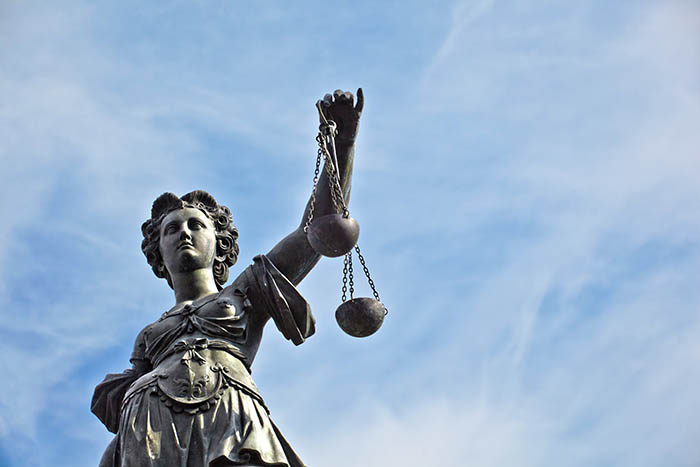
The Hague, 5 September 2017
Dear members of the International Association of Prosecutors members, executive committee and senate,
In the run-up to the annual conference and general meeting of the International Association of Prosecutors (IAP) in Beijing, China, the undersigned civil society organisations urge the IAP to live up to its vision and bolster its efforts to preserve the integrity of the profession.
Increasingly, in many regions of the world, in clear breach of professional integrity and fair trial standards, public prosecutors use their powers to suppress critical voices.
In China, over the last two years, dozens of prominent lawyers, labour rights advocates and activists have been targeted by the prosecution service. Many remain behind bars, convicted or in prolonged detention for legal and peaceful activities protected by international human rights standards, including the Universal Declaration of Human Rights. Azerbaijan is in the midst of a major crackdown on civil rights defenders, bloggers and journalists, imposing hefty sentences on fabricated charges in trials that make a mockery of justice. In Kazakhstan, Russia and Turkey many prosecutors play an active role in the repression of human rights defenders, and in committing, covering up or condoning other grave human rights abuses.
Patterns of abusive practices by prosecutors in these and other countries ought to be of grave concern to the professional associations they belong to, such as the IAP. Upholding the rule of law and human rights is a key aspect of the profession of a prosecutor, as is certified by the IAP’s Standards of Professional Responsibility and Statement of the Essential Duties and Rights of Prosecutors, that explicitly refer to the importance of observing and protecting the right to a fair trial and other human rights at all stages of work.
Maintaining the credibility of the profession should be a key concern for the IAP. This requires explicit steps by the IAP to introduce a meaningful human rights policy. Such steps will help to counter devaluation of ethical standards in the profession, revamp public trust in justice professionals and protect the organisation and its members from damaging reputational impact and allegations of whitewashing or complicity in human rights abuses.
For the second year in a row, civil society appeals to the IAP to honour its human rights responsibilities by introducing a tangible human rights policy. In particular:
We urge the IAP Executive Committee and the Senate to:
- introduce human rights due diligence and compliance procedures for new and current members, including scope for complaint mechanisms with respect to institutional and individual members, making information public about its institutional members and creating openings for stakeholder engagement from the side of civil society and victims of human rights abuses.
We call on individual members of the IAP to:
- raise the problem of a lack of human rights compliance mechanisms at the IAP and thoroughly discuss the human rights implications before making decisions about hosting IAP meetings;
- identify relevant human rights concerns before travelling to IAP conferences and meetings and raise these issues with their counterparts from countries where politically-motivated prosecution and human rights abuses by prosecution authorities are reported by intergovernmental organisations and internationally renowned human rights groups.
Supporting organisations:
Amnesty International
Africa Network for Environment and Economic Justice, Benin
Anti-Corruption Trust of Southern Africa, Kwekwe
Article 19, London
Asian Forum for Human Rights and Development (FORUM-ASIA)
Asia Justice and Rights, Jakarta
Asia Indigenous Peoples Pact, Chiang Mai
Asian Human Rights Commission, Hong Kong SAR
Asia Monitor Resource Centre, Hong Kong SAR
Association for Legal Intervention, Warsaw
Association Humanrights.ch, Bern
Association Malienne des Droits de l’Homme, Bamako
Association of Ukrainian Human Rights Monitors on Law Enforcement, Kyiv
Associazione Antigone, Rome
Barys Zvozskau Belarusian Human Rights House in exile, Vilnius
Belarusian Helsinki Committee, Minsk
Bir-Duino Kyrgyzstan, Bishkek
Bulgarian Helsinki Committee, Sofia
Canadian Human Rights International Organisation, Toronto
Center for Civil Liberties, Kyiv
Centre for Development and Democratization of Institutions, Tirana
Centre for the Development of Democracy and Human Rights, Moscow
China Human Rights Lawyers Concern Group, Hong Kong SAR
Civil Rights Defenders, Stockholm
Civil Society Institute, Yerevan
Citizen Watch, St. Petersburg
Collective Human Rights Defenders “Laura Acosta” International Organization COHURIDELA, Toronto
Comunidad de Derechos Humanos, La Paz
Coordinadora Nacional de Derechos Humanos, Lima
Destination Justice, Phnom Penh
East and Horn of Africa Human Rights Defenders Project, Kampala
Equality Myanmar, Yangon
Faculty of Law – University of Indonesia, Depok
Fair Trials, London
Federation of Equal Journalists, Almaty
Former Vietnamese Prisoners of Conscience, Hanoi
Free Press Unlimited, Amsterdam
Front Line Defenders, Dublin
Foundation ADRA Poland, Wroclaw
German-Russian Exchange, Berlin
Gram Bharati Samiti, Jaipur
Helsinki Citizens’ Assembly Vanadzor, Yerevan
Helsinki Association of Armenia, Yerevan
Helsinki Foundation for Human Rights, Warsaw
Human Rights Center Azerbaijan, Baku
Human Rights Center Georgia, Tbilisi
Human Rights Club, Baku
Human Rights Embassy, Chisinau
Human Rights House Foundation, Oslo
Human Rights Information Center, Kyiv
Human Rights Matter, Berlin
Human Rights Monitoring Institute, Vilnius
Human Rights Now, Tokyo
Human Rights Without Frontiers International, Brussels
Hungarian Civil Liberties Union, Budapest
IDP Women Association “Consent”, Tbilisi
IMPARSIAL, the Indonesian Human Rights Monitor, Jakarta
Index on Censorship, London
Indonesian Legal Roundtable, Jakarta
Institute for Criminal Justice Reform, Jakarta
Institute for Democracy and Mediation, Tirana
Institute for Development of Freedom of Information, Tbilisi
International Federation for Human Rights (FIDH)
International Partnership for Human Rights, Brussels
International Service for Human Rights, Geneva
International Youth Human Rights Movement
Jerusalem Institute of Justice, Jerusalem
Jordan Transparency Center, Amman
Justiça Global, Rio de Janeiro
Justice and Peace Netherlands, The Hague
Kazakhstan International Bureau for Human Rights and Rule of Law, Almaty
Kharkiv Regional Foundation Public Alternative, Kharkiv
Kosovo Center for Transparency, Accountability and Anti-Corruption – KUND 16, Prishtina
Kosova Rehabilitation Center for Torture Victims, Prishtina
Lawyers for Lawyers, Amsterdam
Lawyers for Liberty, Kuala Lumpur
League of Human Rights, Brno
Macedonian Helsinki Committee, Skopje
Masyarakat Pemantau Peradilan Indonesia (Mappi FH-UI), Depok
Moscow Helsinki Group, Moscow
National Coalition of Human Rights Defenders, Kampala
Netherlands Helsinki Committee, The Hague
Netherlands Institute of Human Rights (SIM), Utrecht University, Utrecht
NGO “Aru ana”, Aktobe
Norwegian Helsinki Committee, Oslo
Pakistan Rural Workers Social Welfare Organization (PRWSWO), Bahawalpur
Pensamiento y Acción Social (PAS), Bogotá
Pen International, London
People’s Solidarity for Participatory Democracy (PSPD), Seoul
Philippine Human Rights Advocates (PAHRA), Manila
Promo-LEX Association, Chisinau
Protection International, Brussels
Protection Desk Colombia, alianza (OPI-PAS), Bogotá
Protection of Rights Without Borders, Yerevan
Public Association Dignity, Astana
Public Association “Our Right”, Kokshetau
Public Fund “Ar.Ruh.Hak”, Almaty
Public Fund “Ulagatty Zhanaya”, Almaty
Public Verdict Foundation, Moscow
Regional Center for Strategic Studies, Baku/ Tbilisi
Socio-Economic Rights and Accountability Project (SERAP), Lagos
Stefan Batory Foundation, Warsaw
Suara Rakyat Malaysia (SUARAM), Petaling Jaya
Swiss Helsinki Association, Lenzburg
Transparency International Anti-corruption Center, Yerevan
Transparency International Austrian chapter, Vienna
Transparency International Česká republika, Prague
Transparency International Deutschland, Berlin
Transparency International EU Office, Brussels
Transparency International France, Paris
Transparency International Greece, Athens
Transparency International Greenland, Nuuk
Transparency International Hungary, Budapest
Transparency International Ireland, Dublin
Transparency International Italia, Milan
Transparency International Moldova, Chisinau
Transparency International Nederland, Amsterdam
Transparency International Norway, Oslo
Transparency International Portugal, Lisbon
Transparency International Romania, Bucharest
Transparency International Secretariat, Berlin
Transparency International Slovenia, Ljubljana
Transparency International España, Madrid
Transparency International Sweden, Stockholm
Transparency International Switzerland, Bern
Transparency International UK, London
UNITED for Intercultural Action the European network against nationalism, racism, fascism and in support of migrants, refugees and minorities, Budapest
United Nations Convention against Corruption Civil Society Coalition
Villa Decius Association, Krakow
Vietnam’s Defend the Defenders, Hanoi
Vietnamese Women for Human Rights, Saigon
World Organisation Against Torture (OMCT)
Zimbabwe Lawyers for Human Rights, Harare[/vc_column_text][/vc_column][/vc_row][vc_row][vc_column][vc_basic_grid post_type=”post” max_items=”4″ element_width=”6″ grid_id=”vc_gid:1504604895654-8e1a8132-5a81-8″ taxonomies=”8883″][/vc_column][/vc_row]
8 Aug 2017 | Artistic Freedom, Magazine, News, Russia, Volume 46.02 Summer 2017
[vc_row][vc_column][vc_custom_heading text=”Influential Soviet director Sergei Eisenstein is often portrayed as the godfather of propaganda in film. David Aaronovitch argues in the summer 2017 issue of Index on Censorship magazine that historical drama can also be manipulative when it ignores details of the past”][vc_row_inner][vc_column_inner][vc_column_text]
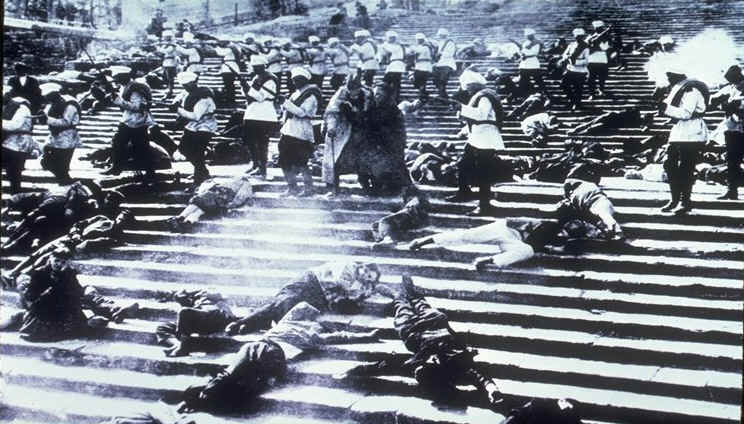
A still from Sergei Eisenstein’s 1925 film, Battleship Potemkin, portraying a massacre that never happened. Credit: Wikimedia
[/vc_column_text][/vc_column_inner][/vc_row_inner][/vc_column][/vc_row][vc_row][vc_column][vc_column_text]
My friend, a writer, reminded me of the English romantic poet John Keats’s axiom that “we hate poetry that has a palpable design upon us”. You could say, though, that Lenin and Mussolini – at least when it came to the poetry of film – knew differently. “Of all the arts, for us,” said Lenin, “the cinema is the most important”. “For us” meaning, of course, for the ruling Bolsheviks in the aftermath of the October 1917 revolution. When the Italian dictator Mussolini’s new super studios were opened in 1936 a sign was erected over the gate reading “Il cinema è l’arma più forte”, “cinema is the strongest weapon”.
It was George Orwell, not a dictator (though they doubtless would smilingly have agreed with him) who wrote that, “he who controls the past controls the future. He who controls the present controls the past.” It is pretty obvious that the way the powerful medium of film depicts the “then” has important implications for what people can be brought to believe about the “now”.
I was brought up partly on films made in the Soviet Union and saw some of the most celebrated early movies when I was young. The director Sergei Eisenstein was the most famous name and before I was 12 I’d seen almost all his films, from the silent Strike made in 1924 to the extraordinarily ambivalent and terrifying two-part classic Ivan the Terrible. Every single one of them can be said to have had some kind of agenda that dovetailed – sometimes perfectly, sometimes awkwardly – with that of the Soviet state.
[/vc_column_text][vc_row_inner][vc_column_inner width=”1/4″][vc_icon icon_fontawesome=”fa fa-quote-left” color=”custom” align=”right” custom_color=”#dd3333″][/vc_column_inner][vc_column_inner width=”3/4″][vc_custom_heading text=”The massacre on the Odessa steps (once seen, never forgotten) from the movie Potemkin didn’t actually happen” google_fonts=”font_family:Libre%20Baskerville%3Aregular%2Citalic%2C700|font_style:400%20italic%3A400%3Aitalic”][/vc_column_inner][/vc_row_inner][vc_column_text]
The two that were most obviously about Bolshevism and Russia were The Battleship Potemkin, dealing with events in the city of Odessa in 1905, and October, an account of the “ten days that shook the world” – the Bolshevik seizure of power – in Petrograd (St Petersburg) in 1917.
Both deploy Eisenstein’s famous techniques of intercutting, juxtaposition and montage to create mood and drama. Sometimes cutaways of objects or expressions are inserted to refer obliquely to what the viewer is supposed to think of the person or the moment being depicted.
And in both films the actual history is bent for the purposes of the filmmaker. The massacre on the Odessa steps (once seen, never forgotten) from the movie Potemkin didn’t actually happen. The film version of the storming of the Winter Palace in October involved many more actors than the actual event itself. And October was criticised in Keatsian terms by no less a luminary than Lenin’s widow, Nadezhda Konstantinovna Krupskaya.
The full article by David Aaronovitch is available with a print or online subscription.
[/vc_column_text][/vc_column][/vc_row][vc_row][vc_column][vc_custom_heading text=”Film and the Soviet state”][vc_column_text]
Sidebar by Margaret Flynn Sapia
[/vc_column_text][vc_video link=”https://www.youtube.com/watch?v=3UQMg3saU4Q&t=1s” title=”Strike (1925)”][vc_column_text]The Soviet version of Russian history had two goals: to legitimise the rise and rule of the current government, and to instil its values into future generations. Strike, the first film directed by Sergei Eisenstein, undoubtedly does both. The film, set before the revolution, tells the story of a group of factory workers as they rise up against their abusive management. It begins with a quote by Lenin – “The strength of the working class is organisation” – and ends with a violent strike cross cut with the slaughter of animals. From the first frame to the last, the message is clear.[/vc_column_text][vc_video link=”https://www.youtube.com/watch?v=JcJkHCihTmE” title=”Ivan the Terrible (1944)”][vc_column_text]It is fitting that Joseph Stalin regarded Tsar Ivan IV as his role model, given that the two men men are renowned as two of Russia’s cruelest and most feared leaders. Directed by Eisenstein and commissioned by Stalin himself, Ivan the Terrible takes a stab at telling Ivan’s story in a way that flatters the Stalin regime. The plot portrays the boyars, the highest of bourgeois aristocracy, as internal enemies seeking to undermine the singular strength of Ivan’s leadership, a less-than-subtle parallel for the one-party Soviet state of the 1940’s.[/vc_column_text][vc_video link=”https://www.youtube.com/watch?v=kS5kzTbNKjs” title=”Battleship Potemkin (1925)”][vc_column_text]Like a dozen other Soviet films, The Battleship Potemkin depicts the horrors of the tsarist regime and a subsequent popular revolt. It dramatises the true story of a 1905 mutiny by the crew on a Russian battleship, but its most famous and enduring scene, the massacre on the Odessa steps, was entirely invented. However, unlike many of its comrades, this movie was internationally celebrated for its technical excellence, and was ranked as the 11th best film of all time in a 2017 BFI critics poll. Through the film’s five acts, Eisenstein demonstrates that propaganda and art are not mutually exclusive, and that the confines of oppression can sometimes breed incredible creativity.[/vc_column_text][vc_video link=”https://www.youtube.com/watch?v=riOLSslKvxU” title=”October: 10 Days That Shook the World (1928)”][vc_column_text]A retelling of Russia’s 1917 Revolution, this film creates a fascinatingly skewed representation of the Soviet Union’s rise. While the series of major events in the film is historically accurate, the depictions of Soviet leaders and opposition give the film’s biases away, as key facets of character and decisions are highlighted and hidden. When watching the film, pay special attention to the portrayals of Lenin and the Bolsheviks. [/vc_column_text][vc_video link=”https://www.youtube.com/watch?v=R-QBqT9RQAM” title=”Panfilov’s 28 Men (2016)”][vc_column_text]Panfilov’s 28 Men demonstrates how Russian manipulation of history did not end with the Soviet Union. Released in 2016, this film is based on a famous but disputed incident in World War II wherein a small group of Russian soldiers purportedly warded off a wave of Nazi tanks and soldiers, all dying in the process. The events were heavily embellished by Soviet propagandists and later debunked, but the film based on them was partially funded by the Russian Ministry of Culture and is widely advertised as an accurate depiction of historical events. Times change, but the Russian regime continues to use cinema to its benefit.[/vc_column_text][/vc_column][/vc_row][vc_row][vc_column][vc_column_text]
This article is published in full in the Summer 2017 issue of Index on Censorship magazine. Print copies of the magazine are available on Amazon, or you can find information about print or digital subscriptions here. Copies are also available at the BFI, the Serpentine Gallery, MagCulture, (London), News from Nowhere (Liverpool), and Home (Manchester). Each magazine sale helps Index on Censorship continue its fight for free expression worldwide
[/vc_column_text][/vc_column][/vc_row][vc_row][vc_column][vc_custom_heading text=”From the Archives”][vc_row_inner][vc_column_inner width=”1/3″][vc_single_image image=”80560″ img_size=”213×289″ alignment=”center” onclick=”custom_link” link=”http://journals.sagepub.com/doi/pdf/10.1177/0306422014523227″][vc_custom_heading text=”Reel Drama: WWII propaganda” font_container=”tag:p|font_size:24|text_align:left” link=”url:http%3A%2F%2Fjournals.sagepub.com%2Fdoi%2Fpdf%2F10.1177%2F0306422014523227|||”][vc_column_text]March 2014
David Aaronovitch argues that all’s fair in war against fascist dictatorship, including seducing the United States into war with pretty faces and British accents.[/vc_column_text][/vc_column_inner][vc_column_inner width=”1/3″][vc_single_image image=”89184″ img_size=”213×289″ alignment=”center” onclick=”custom_link” link=”http://journals.sagepub.com/doi/pdf/10.1080/03064220512331339706″][vc_custom_heading text=”The ferghana canal” font_container=”tag:p|font_size:24|text_align:left” link=”url:http%3A%2F%2Fjournals.sagepub.com%2Fdoi%2Fpdf%2F10.1080%2F03064220512331339706|||”][vc_column_text]February 2005
The first 145 shots of a shooting-script by Sergei Eistenstein, a prologue to the modern drama of Uzbekistan’s reclamation of its desert wastes.[/vc_column_text][/vc_column_inner][vc_column_inner width=”1/3″][vc_single_image image=”98486″ img_size=”213×289″ alignment=”center” onclick=”custom_link” link=”http://journals.sagepub.com/doi/pdf/10.1080/03064229108535073″][vc_custom_heading text=”Iron fist, silver screen” font_container=”tag:p|font_size:24|text_align:left” link=”url:http%3A%2F%2Fjournals.sagepub.com%2Fdoi%2Fpdf%2F10.1080%2F03064229108535073|||”][vc_column_text]March 1991
An examination of how film is an arm of party propaganda in Saddam Hussein’s Iraq, highlighting the 1973 Law on Censorship of Foreign Films.[/vc_column_text][/vc_column_inner][/vc_row_inner][vc_separator][vc_row_inner][vc_column_inner width=”1/3″][vc_custom_heading text=”100 Years On” font_container=”tag:p|font_size:24|text_align:left” link=”url:https%3A%2F%2Fwww.indexoncensorship.org%2F2017%2F06%2F100-years-on%2F|||”][vc_column_text]Through a range of in-depth reporting, interviews and illustrations, the summer 2017 issue of Index on Censorship magazine explores how the consequences of the 1917 Russian Revolution still affect freedoms today, in Russia and around the world.
With: Andrei Arkhangelsky, BG Muhn, Nina Khrushcheva[/vc_column_text][/vc_column_inner][vc_column_inner width=”1/3″][vc_single_image image=”91220″ img_size=”medium” alignment=”center” onclick=”custom_link” link=”https://www.indexoncensorship.org/2017/06/100-years-on/”][/vc_column_inner][vc_column_inner width=”1/3″][vc_custom_heading text=”Subscribe” font_container=”tag:p|font_size:24|text_align:left” link=”url:https%3A%2F%2Fwww.indexoncensorship.org%2Fsubscribe%2F|||”][vc_column_text]In print, online. In your mailbox, on your iPad.
Subscription options from £18 or just £1.49 in the App Store for a digital issue.
Every subscriber helps support Index on Censorship’s projects around the world.
 SUBSCRIBE NOW[/vc_column_text][/vc_column_inner][/vc_row_inner][/vc_column][/vc_row]
