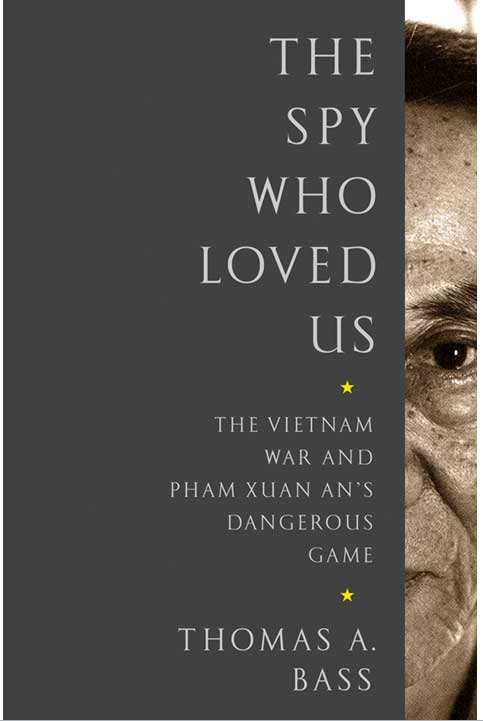
Today Index on Censorship completes publishing Swamp of the Assassins by American academic and journalist Thomas Bass, who takes a detailed look at the Kafkaesque experience of publishing his biography of Pham Xuan An in Vietnam.
The first installment was published on Feb 2 and can be read here.
Cyberspace will be the only space in Vietnam free of censorship
About Swamp of the Assassins
Thomas Bass spent five years monitoring the publication of a Vietnamese translation of his book The Spy Who Loved Us. Swamp of the Assassins is the record of Bass’ interactions and interviews with editors, publishers, censors and silenced and exiled writers. Begun after a 2005 article in The New Yorker, Bass’ biography of Pham Xuan An provided an unflinching look at a key figure in Vietnam’s pantheon of communist heroes. Throughout the process of publication, successive editors strove to align Bass’ account of An’s life with the official narrative, requiring numerous cuts and changes to the language. Related: Vietnam’s concerted effort to keep control of its past
About Thomas Bass
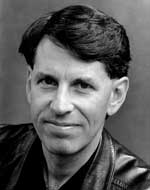
Thomas Alden Bass is an American writer and professor in literature and history. Currently he is a professor of English at University at Albany, State University of New York.
About Pham Xuan An
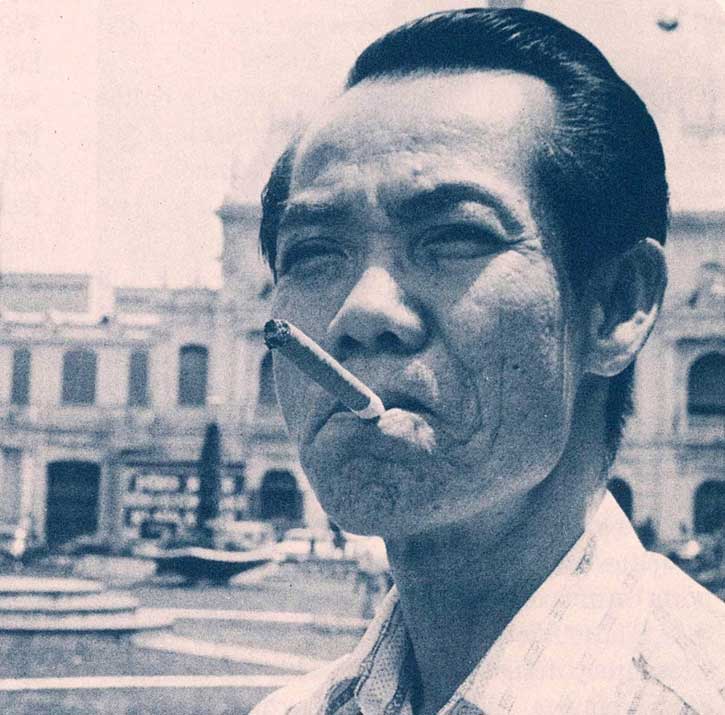
Pham Xuan An was a South Vietnamese journalist, whose remarkable effectiveness and long-lived career as a spy for the North Vietnamese communists—from the 1940s until his death in 2006—made him one of the greatest spies of the 20th century.
A few weeks after talking to Duong Thu Huong, I arrange another meeting with a writer driven into exile by Vietnam’s censors. This time, I travel to Berlin to meet Pham Thi Hoai. Born in 1960 in Hai Duong, east of Hanoi, Hoai studied archival science at Humboldt University in the former East Berlin. Then she began to write stories and novels and translate into Vietnamese the works of Kafka, Brecht, Tanazaki, Amado, and other writers. Combining the fastidiousness of the Germans with the fastidiousness of the Vietnamese, Hoai has long presided over Vietnam’s intellectual community-in-exile. For thirteen years, as producer, editor, writer, and translator, she ran talawas and its successor pro&contra, two electronic journals of culture and politics that were the key sites for anyone interested in learning what was really happening in Vietnam. From her exile on the Spree, forbidden from returning home to Vietnam, Hoai became the Sybil known for delivering the final word on her country’s benighted fate. This work will end, she promises, at the stroke of midnight on December 31, 2014, when her websites will be closed. “I will return to being a writer, but perhaps not to fiction,” she says. “I am not really interested in fiction.”
We agree to meet at 6:00 p.m. on a Saturday night for dinner at her apartment in Prenzlauer Berg, in the former East Berlin. Hoai will be cooking. The menu, discussed in several emails, will blend East and West in a medley of flavors. Even before the first bite, I am impressed by the logic and rigor of her planning.
I ride the S train to Bornholmer Strasse and exit onto the bridge where thousands of East Berliners gathered on November 9, 1989 to demand entry to the West. This was the first border crossing to fall on that momentous night. Soon the Wall would come tumbling down and then all of East Germany and then the Soviet Union, as forty years of Cold War came to an end. Today the last vestige of this war can be found only in the few states like Vietnam that are still propped up by Marxist-Leninist ideology.
I walk down a wide boulevard with a trolley running down the middle of it. The street is lined with modest five-story buildings, a few small cafes and billiard parlors, a bookshop, and some stores selling vegetables, beer, and coffee. I ring the bell and walk upstairs to the apartment that Hoai shares with her German partner. I am greeted at the door by a trim woman with a round face, pixie haircut, and lustrous smile. The first thing I notice on entering Hoai’s apartment is a blinking array of lights and switches—an industrial strength security system that Hoai installed after death threats and attacks on her computers.
Walking down a hallway, we pass a bathroom with a Japanese soaking tub and a modern kitchen to arrive at a large room that opens onto bedrooms and studies and yet more doors, hidden behind Japanese sliding screens. Hoai tells me that the unusual layout is due to the fact that she and her partner recently knocked down the walls and put together two separate apartments. The room holds a dining room table, decorated with a bouquet of freshly cut daisies, and a bookshelf filled floor-to-ceiling with a neatly archived collection. In Hoai’s office next door, more shelves are filled with clasp binders in serried ranks.
Seated at the table are Andreas, Hoai’s companion, and Dan, her son from her former marriage. A handsome man in a blue work shirt, Andreas runs a ten-person electrical engineering firm that specializes, among other things, in installing alarm systems. The apartment is his handiwork, and so, too, is the security system at the front door. With an ironic tug to his smile, he is the kind of solid fellow one would want to consult after receiving death threats.
Dan, nineteen, is a slender young man who will be studying applied computation and mathematics at Jacobs University in Bremen in the fall. He lives nearby with Hoai’s former husband, a German whom she married in 1991. Hoai speaks English quite well, but Dan is fluent, and he is being pressed into service tonight as his mother’s translator.
Hoai explains that the meal will be running from spicy to not-so-spicy, from hot to cold, “the opposite direction from normal,” she says. The thought enters my mind that the meal will be retracing her steps into exile, moving from the spicy East to the temperate West. While Hoai busies herself in the kitchen, I chat with Andreas about Prenzlauer Berg, the bohemian enclave that is rapidly being gentrified. “In this building we have Italians, Argentineans, Russians, Americans, and Vietnamese,” he says. “I am the only German.”
“The reason this part of the city still exists is because the East Germans had no money to destroy it,” he says. “The area is full of artists. The poor ones live in the basement. The rich ones live on top.” Bemused by Berlin’s new-found prosperity, Andreas for kicks spends his weekends cycling pedicabs full of tourists around the city.
The table is set with a full assortment of crystal glasses, a fish knife, and three forks for each upcoming course. We start drinking a Gewürztraminer Riesling and later switch to a Spanish Rioja. During our first course—papaya salad with shrimp, a Thai dish—I get a closer look at my hostess. Nam, as she is known to her friends (her full name is Pham Thi Hoai Nam) has the classic features, flat nose, golden skin, high cheekbones, of a north Vietnamese. Dressed in jeans, a white blouse, and a light wool sweater, also white, she wears wire-rim spectacles with tortoise shell highlights and a pair of silver earrings holding a dark stone, maybe an emerald. The conversation flows through English, German, French, and Vietnamese—whichever is the sharpest tool for the concept at hand.
“I am not sure of my exact birth date,” Hoai says, when I ask about her family. “It was sometime in 1960, during the war, when people didn’t register births until weeks or months after they occurred.”
“During Ho Chi Minh’s version of the Chinese Cultural Revolution, in the 1950s, my parents were sent from Hanoi to the countryside, to work as school teachers,” she says. “My grandfather had been Minister of Education in Thanh Hoa province, but my father, revolting against his bourgeois background, had left at the age of twelve to fight with the Viet Minh. His big dream was to become a Party member, but he was never allowed to join.”
Her father’s uncle was Pham Quynh, a journalist and publisher of the largest Vietnamese newspaper in the French colony. Quynh was minister of education and then minister of the interior in the government of the last Vietnamese emperor, before he was kidnapped and killed by the communists in 1945.
“The first generation of communist leaders all came from bourgeois families,” she says. “But after the Party was formed, they closed the door behind them. No one else from the bourgeoisie could rise into the ranks. They needed followers, not leaders. They needed useful idiots.
“Ho Chi Minh is the perfect example. He eliminated all the intellectuals around him, thereby removing the competition. Since then, the idiots have reproduced themselves so successfully that in the present government not a single official speaks a foreign language, and this is in spite of the fact that eighty percent of them have Ph.D. in their title.”
Excelling in school, Hoai in 1977 was chosen as one of a hundred and thirty students sent to the Eastern Bloc to be trained as archivists by the Stasi and other communist police agencies. “This was paradise for us,” she says, about leaving war-torn Vietnam for Europe. The war had been present for the first fifteen years of her life “like clouds in the sky,” and then after the war came the “reign of hardline ideology,” a period of “poverty, backwardness, and repression.”
One day, one of her professors at Humboldt University saw her waiting at a bus stop reading a book. Another day, he cracked a joke in class about Robert Musil’s Man Without Qualities. “I was the only one who laughed, because I was the only one who had read the book,” she says.
“He sent me on an internship, first to the Goethe archives, then to the Schiller and Brecht archives, where I wrote my master’s thesis. These were happy days for me, spent reading and living among the papers of these great writers. My professor did me a big favor,” she says.
After six years in Germany Hoai moved back to Vietnam in 1983, where she worked as an archivist at the Institute of History and began, in her spare time, to write short stories and novels. “When I was twelve, I thought I was born to be a writer. Now, I think I may not have been correct. One is not born to be anything. One chooses what to do.”
“I went back to Vietnam because I was disappointed by life in East Germany,” she says. “It was just like Vietnam. There was no freedom or human rights, and the East German food was horrible.”
“I thought I had a debt to Vietnam, for having sent me here to be trained,” she says. “But on my return, I was classified as ‘untrustworthy,’ because of the time I had spent abroad.”
In 1988 Hoai published The Crystal Messenger, the novel that made her famous in Vietnam and pushed her to the forefront of doi moi writers. It also got her censored and eventually banished from the country. Vietnamese censors, with what Hoai describes as “a twinge of idiocy,” will block books from publication, if there is too much interest in them, or ban books that have already been published, if they become too successful. This is what happened with The Crystal Messenger. It was pulled from the shelves after selling fifty thousand copies and winning the LiBeraturpreis for the best foreign novel at the Frankfurt Book Fair.
Told through the interweaving stories of several young women, one of them a Vietnamese Amerasian who comes of age in a country corrupted by careerism and consumerism, The Crystal Messenger is an allegory about the reunification of north and south Vietnam. It tells a wry tale about how a beautiful Vietnamese Amerasian with Texan blood can conquer the hearts of all the uptight men in Hanoi. In their banning order, the censors charged Hoai with “salacious” writing, an “excessively pessimistic view” of Vietnam, and of abusing the “sacred mission of a writer.”
Hoai went on to publish literary essays, two collections of short stories, Me Lo (1989) and Man Nuong (1995), and another novel, Marie Sen (1996). At the same time, she was producing numerous translations from German into Vietnamese. After publication of The Crystal Messenger, nothing written by Hoai has been published in Vietnam, except for a few things that appeared in print and were quickly suppressed. “The censors never tell you when a book is withdrawn from circulation. I consider myself lucky if I even learn that something has been published in the first place.”
“The same thing happened all the time in East Germany,” says Andreas. “Here we had lots of films that were made, and then the censors got scared and never released them.”
“One day I received in the mail an article that I had written,” says Hoai. “It had been heavily censored, and it even had someone else’s name on it. Everyone in Vietnam accepts this level of corruption. It doesn’t even surprise me anymore.”
Now Hoai posts all her writing online. “I’m not writing books for money,” she says. “I write to make myself happy.”
“Every author I deem important is publishing his or her works online, rather than allowing them to be censored. Some let their work be published in hard copy—censored—and then send it to Talawas to be published in its original form.” She suggests that I do the same thing with The Spy Who Loved Us, and I tell her that I will be pleased to accept her offer.
Moving on to a German recipe, our next course is celery-apple soup. Dan is working hard as his mother’s amanuensis, while Andreas sits listening, sometimes offering a humorous quip or story of his own.
In 1993 Hoai returned to Berlin, where she had lived as a student a decade earlier. The city had been transformed in her absence, with the Wall coming down and Westerners flooding into the ramshackle neighborhoods of the former East Berlin. Hoai settled in the city and married. “I made several trips back to Vietnam when Dan was small, but since 2004, I have been banned from traveling to Vietnam,” she says.
In 2001 she had begun publishing the censored news out of Vietnam on her Talawas web site. “Talawas is a Dadaist name,” she says. “It was created by putting ‘Ta la’ (we are) together with ‘was,’ as in ‘Was ist los?’ (‘What’s up?’), which gives you a double entendre meaning either, ‘What are we?’ or ‘We are something.’” Her “journal of culture” became a target for government hackers who tried for years to close the site with denial-of-service and other electronic attacks. Hoai kept outsmarting them behind ever-more-elaborate firewalls, and she is proud of the fact that Talawas was only briefly closed twice. Electronically, she was following in the footsteps of her great uncle Pham Quynh.
“It lasted nine years, as long as Vietnam’s war with the French,” she says about her decision to close the site. “It took an entire day to put it out. It was updated several times a day. No one was volunteering to do the work; so I decided to put an end to it.”
“Ten years ago I stopped writing fiction,” she says. “Now, in two years’ time, I plan to write fiction again.” In the meantime, she has begun publishing a blog called pro&contra. “I want to use the next two years, via the blog, to return to writing. I want to get an inventory of what I am able to do and my strengths. This is a transitional phase for me to learn to walk again.”
“When I get back to writing, I will be writing a combination of fiction and nonfiction,” she says. “Pure fiction is too boring. The Vietnamese reality is more interesting than any fiction I could imagine.”
While running her web sites, Hoai has supported herself as a simultaneous translator—rejecting only the most odious clients. “I watch the delegations of high Vietnamese officials,” she says. “They come to Germany to learn, but they learn nothing. They are people with no education. This is why they hire me. They don’t even know who I am.”
“She is seldom at home,” says Dan, of his mother’s busy schedule as an interpreter.
After a salad of radish sprouts, tomatoes, and carrots, our next course is a baked codfish served with rice. “While talking, I forgot to turn on the oven,” Hoai apologizes. “Cooking is like prose writing, not poetry. It takes the same attention to creative detail.”
We return to talking about censorship. “The governments of China and Vietnam are not afraid of anything,” she says. “This is linked to U.S. tolerance of their oppression. The U.S. does nothing to oppose them; so they have nothing to be afraid of.”
“Before their economies boomed, they weren’t sure of the Western response, but now they know,” she says. “If business is booming, then they have nothing to fear from the West. Whenever I criticize human rights in Vietnam, the government refers to the prisoners in Guantánamo. ‘If the Americans can do it, why can’t we? We aren’t doing anything different.’ Whenever I criticize corruption, they start talking about Lehman Brothers. Whenever I criticize the economy, they say, ‘Look at Spain or Greece.’ The pool of bad examples they draw from is just too large.”
“The government in Hanoi was lucky,” she says. “During the Cold War they had a lot of support from Western countries, especially from leftist movements. Now they have the support of the global capitalists. Standing in this good light, they don’t need to fear anybody. They have always found support in the West, whether during the Cold War or now.”
Andreas opens another bottle wine for our next course, a fruit and cheese tray, and Hoai excuses herself to go smoke a cigarette.
“When I first started writing, I had no money for cigarettes,” she says, on her return. “A friend said, ‘I will give you one cigarette per page.’ As time went on, to fill up the pages faster, my letters got bigger and bigger. I still write for cigarettes,” she says. “But now, I allow myself to smoke after every line.”
Hoai tells me a story about how censorship destroys even successful writers. “One day in Vietnam a writer came to me, asking for my advice. ‘How can I write about the war?’ he said. He had written books about the war, but they were not working anymore, and now he had no clue what to write.
“This is a story about a writer who has died as a writer, who has been eliminated. A serious writer would not consider what people wanted to read. He would look at his own perception of the war. This writer had been writing in a style approved by the government. He had voluntarily adopted this style, which made the work of the censors superfluous. It also made him susceptible to every new way of being censored, including censorship through the market, which allows you to write only what you’re expected to write, and which is happening more and more.”
She tells me the Vietnamese are borrowing their approach to censorship from the Chinese. “We always look to the Chinese and copy them, but when we copy them, we do it even worse than the Chinese, several orders of magnitude worse and in even more minute detail.”
“It is mandatory for every high Vietnamese official to get training in China once a year, just as it was in the time of the Cold War,” she says. “It is no accident that every campaign and law in China a half year later is introduced into Vietnam. Right now the press is filled with the Bo Xi Lai scandal—a high official accused of corruption. In Vietnam the sides are set for a similar struggle for power. I am certain that a Vietnamese official will soon be suffering the same fate.”
“Your story about the writer who came to visit you reminds me of Bao Ninh,” I say. “Without consulting anyone, he wrote the great novel about the war.”
“I don’t think it’s a great novel,” she says. “I am not fond of the Romantic style, and the way it’s written in Vietnamese is very Romantic. The English translation is different from the original, and perhaps this explains why the book is more popular for English readers than Vietnamese. The English translation was inevitably—because of the nature of English—more direct.”
“I prefer Franz Kafka to Thomas Mann,” she says. “I prefer a clear, crisp intelligent use of language, which dispenses with any decoration or superfluous elements.”
“This is the language she uses to boss me around,” says Dan. All of us, including his mother, laugh at the joke.
I ask about the two novels Bao Ninh wrote after The Sorrow of War. “He has retreated because of censorship, gone into internal exile,” she says. “Everybody who hasn’t migrated from Vietnam suffers from this.”
“The best thing for Bao Ninh would be live his life, after writing his one book,” she says. “At the end of his life he can publish his last, best work. Then he will have two books in his life, one at the beginning and one at the end. This is the best thing for a writer.”
She explains how it is getting rarer for artists to leave Vietnam for the West. “Artists and writers live better than ever before in Vietnam,” she says. “With today’s media, the people who can write, who can create things for radio, TV, and the internet are at a premium. Intellectuals and artists who have spent time abroad find that life is so expensive that they are not able to create anything. You can’t be creative and write under these circumstances, so you return.”
“I am no longer a Vietnamese citizen,” Hoai says. “I have a German passport. It is my trauma to be Vietnamese. My son has been spared this trauma. Why am I still confronted by Vietnamese problems? They stopped worrying about human rights and losing the support of the West when they realized that all the West cares about is making money.”
The major exception to the banalization of Vietnamese literature is Duong Thu Huong. She is a throwback to the days when exiled authors were politically potent. When I mention her name, I can tell from Andreas’s and Dan’s raised eyebrows that Huong has already been a subject of conversation. “I admire her courage and bravery,” Hoai says. “She can be very disagreeable, but that’s alright. She is very honest and frank.
“I am not fond of her work, though. Her writing is tendentious. When she claims something is bad she tries to prove it in her writing. When you read her books, you won’t find any surprises. You know what’s going to happen. You know in advance who are the good guys and the bad guys, and that’s pretty boring.
“The structure of her work is also boring, which is too bad, because she is a good observer of details, and her narrative skills are pretty good. When she’s not drifting into propaganda, her use of language can be very beautiful, as well. If she could get beyond propaganda and make use of her skills, she could be a fine writer.”
Pham Thi Hoai is the polar opposite of Duong Thu Huong. Her writing is concise and elegant. Her stories are deftly crafted. She is conducting an intellectual conversation, not with the ghosts of dead combatants, but with Kafka and the other writers whom she has translated into Vietnamese.
In other ways, though, Pham Thi Hoai is very much like Duong Thu Huong. Both decided to place the fight against Vietnam’s authoritarian government above their work as writers. Both are committed militants, fearless opponents of a regime they consider corrupt and oppressive. While Hoai runs the most important websites for Vietnamese dissidents, her writing is required reading for tens of thousands of Vietnamese, both inside and outside the country. She is one of the axes around which Vietnam’s artistic community turns, a commander leading the attack on Vietnam’s censors.
When I ask Hoai about Duong Thu Huong’s Novel Without a Name, she says, “I read only twenty pages and put it down.” So who is she reading today? Hoai mentions Mo Mieng, the Open Your Mouth poets, who have not been translated into English, since their writing is “difficult.” Mo Mieng began as a quartet of poets who set out in the early 2000s to shock the niceties of Vietnam’s Confucian norms. They use the language people speak on the street and publish their work in samizdat xeroxes passed from hand-to-hand. “We want to avoid the state censorship that often cuts the life out of literary works,” Open Your Mouth poet Ly Doi told the BBC in 2004. Since then a dozen other Vietnamese artists have begun writing “dirty” poetry, and Hoai recently released on her website the dirtiest of Vietnamese literary transgressions, a work called “Di Thui” (“Stinking Whore”) by Nguyen Vien, which retells Vietnam’s national epic, The Tale of Kieu, as an attack on the Communist Party.
I ask Hoai if she sees any signs of hope for things getting better in Vietnam.
She clears her throat for an oracular pronouncement, and Andreas laughs. “Twenty years from now the ocean will be much higher than it is today, so the coastal area won’t exist anymore,” she says. “If the coastal people are gone, the mountainous people will remain. If Vietnamese literature succeeds in moving from the coastal areas to the mountains, it will survive. It might also learn to swim.”
“The internet does not know the flooding of oceans, so the internet is a space where one can survive,” she says. “Maybe Vietnam will become the first cyberspace country—a country that exists only in cyberspace.”
By then Vietnam’s literature and culture, maybe all of Vietnam itself, will be updated daily and living online, and cyberspace will be the only space in Vietnam free of censorship.
Safa Al Ahmad is a Saudi journalist and documentary maker who has spent the last three years covertly filming an unreported mass uprising in Saudi Arabia’s Eastern Province.
Her 30-minute documentary, Saudi’s Secret Uprising, was broadcast by the BBC in May 2014, and has drawn widespread attention to the violent and bloody protests.
Al Ahmad took enormous risks in her regular filming trips to the Eastern Province. First, as a woman travelling alone, she drew the attention of Saudi officials, who operate in a country in which women have limited control over their day-to-day lives. Second, she carried a camera full of footage of dissenting activists. Saudi Arabia is ranked by Freedom House as one of the most restrictive Arab countries in terms of free expression – Al Ahmad would almost certainly have faced severe punishment if caught filming.
She also directed Al Qaeda in Yemen: A new front in 2012, documenting one of the militant group’s principal strongholds; she is currently editing her second Yemen documentary. Her article about the restrictive treatment of women in Saudi Arabia compared to neighbouring Arab countries, Wishful Thinking, was featured in the PEN award-winning book Diaries of an Unfinished Revolution.
Al Ahmad’s film work was done in Qatif, an urban area home to the world’s biggest oil field. But the dilapidated area has seen little of the vast wealth provided by these natural reserves. Qatif is the centre of Shia Muslims in Saudi Arabia, who make up less than 15 per cent of the country’s population. Residents believe that they are subject to sectarian discrimination by the Sunni monarchy.
Impoverished and blocked from celebrating Shia religious festivals by authorities, people from across the Eastern Province began peacefully demonstrating in March 2011. Buoyed by the ongoing Arab Spring, the protests for improved civil rights quickly gained traction, becoming the biggest series of political demonstrations ever witnessed in Saudi Arabia.
But faced with a government which refused to meaningfully engage with protesters or recognise the demonstrations as a serious issue, activists soon turned violent. Stones and molotov cocktails were thrown at police forces, and handguns were increasingly used. In the subsequent two years of conflict, 20 activists and two policemen were killed, and hundreds of people were detained for months at a time without trial.
Al Ahmad single-handedly broke the media blackout on the protests holding sway both inside and outside the country, where the image of Saudi Arabia as a relatively stable region has dominated. She travelled into the heart of the violence and searched, sometimes for months, for protesters willing to speak to her. She interviewed activists on the government’s most wanted list, who would later be killed or imprisoned. Eventually, she gained the activists’ trust to the point that she was given dozens of hours of footage of the violent protests.
Extensive and violent online abuse has been directed at Al Ahmad by Saudi government supporters. They regard the documentary as sectarian propaganda, even though the documentary ends by showing the destructive belligerence of many protesters.
She has sparked a row between the BBC and the Saudi government, who contacted the broadcaster to express their displeasure at the documentary’s characterisation of events. She has been informally advised not to return to the country, where her family live.
Today Index on Censorship continues publishing Swamp of the Assassins by American academic and journalist Thomas Bass, who takes a detailed look at the Kafkaesque experience of publishing his biography of Pham Xuan An in Vietnam.
The first installment was published on Feb 2 and can be read here.
The dance of the censors, with works allowed to appear in print and then removed from bookstore shelves and then reprinted in altered form, shadows all of Vietnam’s writers
About Swamp of the Assassins
Thomas Bass spent five years monitoring the publication of a Vietnamese translation of his book The Spy Who Loved Us. Swamp of the Assassins is the record of Bass’ interactions and interviews with editors, publishers, censors and silenced and exiled writers. Begun after a 2005 article in The New Yorker, Bass’ biography of Pham Xuan An provided an unflinching look at a key figure in Vietnam’s pantheon of communist heroes. Throughout the process of publication, successive editors strove to align Bass’ account of An’s life with the official narrative, requiring numerous cuts and changes to the language. Related: Vietnam’s concerted effort to keep control of its past
About Thomas Bass
Thomas Alden Bass is an American writer and professor in literature and history. Currently he is a professor of English at University at Albany, State University of New York.
About Pham Xuan An
Pham Xuan An was a South Vietnamese journalist, whose remarkable effectiveness and long-lived career as a spy for the North Vietnamese communists—from the 1940s until his death in 2006—made him one of the greatest spies of the 20th century.
It is a sunny morning in July 2012 when my daughter Maude and I set out to meet Duong Thu Huong, Vietnam’s best-known novelist, who is currently living in exile in the 13th arrondisement of Paris, the city’s Chinatown, southeast of the Seine. I know from talking to her on the telephone that Madame Thu Huong speaks heavily-accented French, rich in vocabulary, but weak in grammar. She says she learned French in prison, during seven months of solitary confinement in 1991. After falling out of favor as the “fille bien aimée par le Parti” (the darling of the Communist Party), she was arrested for “selling secret documents to foreigners,” the documents being, in this case, the manuscript for her fourth work of fiction, Novel Without a Name. Allowed to have one book with her in prison, Huong chose a French dictionary. Hence the rich vocabulary and wobbly grammar.
My daughter lives in Paris and speaks fluent French. She will help translate, but I have also brought her along as a witness in case the interview gets tricky. Huong lives alone in a two-room apartment on the ninth floor of a modern building with a car dealership on the ground floor. She works at night, writing from midnight to six in the morning, sleeps until noon, and then spends the rest of the day on “la lutte.” The French word for struggle usually entails a political platform on the left, but, in this case, la lutte describes Huong’s fight against the Vietnamese Communist Party. Huong refers to herself as a “sans papier,” an illegal immigrant. Her passport was stolen in Marseille a few years ago, and neither the Vietnamese nor French government has offered to replace it. During the “Sarkozy mandarinate,” as she dismissively refers to the right-wing government of Nicolas Sarkozy, she was afraid to leave her apartment, for fear of being picked up on the street and deported. For Huong, one of the benefits of voting Sarkozy out of office was the fact that the new government gave her a French carte d’identité, although she still has no passport.
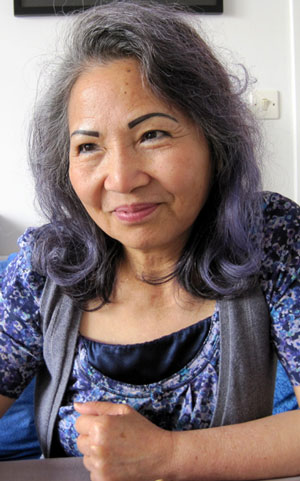
Huong is a lively woman, with flashing black eyes and shoulder-length hair, dyed blue—the same color as her eye shadow, the pillows on her sofa, her blouse, and jeans. Her round face is smooth and even-featured, with tattooed eyebrows and rouged lips that break often into a winning smile. She has the hands of a musician, with long, tapered fingers that have begun to curl with arthritis, but her girlish charm and colored hair make her look younger than someone born in 1947. Seated in the salle de séjour that doubles as her office, she plies us with cherries, sliced pineapple, tea, and chocolate.
Huong is a natural-born story-teller. She answers my questions in discursive loops that reach back through hundreds of years of Vietnamese history. We begin by talking about her family, which sets the scene and dictates everything that follows in a Vietnamese narrative. A “beloved daughter of the Communist Party” might be expected to have working class roots, but Huong, born in a village north of Hanoi, is the granddaughter of a mandarin landowner. Her family lost its wealth and status by getting in trouble, first with the French, for manufacturing rice wine without paying the necessary fees to the colonial government, and then with the Communists, for being bourgeois landowners during the agrarian reforms of the1950s.
Her grandmother, Le Thi Cam, sold half the family land to bail out of prison an alcoholic uncle. (The hapless male saved by a noble female is a common trope in Huong’s fiction.). Huong’s father fought in the maquis against the French and led a troop of engineers in General Giap’s signal corps, but the General did nothing to save Huong’s father during Vietnam’s Maoist-inspired land campaign. In 1954, he was sent to a labor camp in the mountains. (This will become another trope in Huong’s fiction—Party ideologues protecting their own prerogatives, while throwing their loyal followers to the mob.)
After losing their land, Le Thi Cam and three of her four sons moved to south Vietnam. Huong’s father, the youngest, worked for the post office after he got out of prison. Her mother taught in a primary school. In spite of the ardor with which Huong joined her classmates in chanting “Down with the landowners!” she was penalized for her class background. Not allowed to learn foreign languages or go to university, she enrolled in art school and then dropped out in 1967, at the age of twenty, to join a Communist youth brigade. She played accordion in a troupe of female singers and dancers who were sent to the military front to raise morale. Out of her art school class of eighty, Huong tells us that two others survived the war, one with no arms and the other crazy from shell shock.
Huong spent seven years in the jungles and tunnels north of the 17th Parallel, the dividing line between the opposing armies and the most heavily bombed part of Vietnam. A girl crouching next to her was killed by a bomb that left Huong deaf in her right ear. Her fiancé was also killed. In 1968 Huong married a fellow student from the Ministry of Culture Arts College. She gave birth to a son, Minh, in 1970, and a daughter, Ha, in 1972. “He was not talented enough to perform at the front,” she says dismissively of her husband, whom she divorced in 1982. (Her unhappy marriage provided Huong with another theme that runs through her writing. Wars are fought by good men who die young. The Party hacks with special privileges survive, while the unlucky women who marry them will either suffer in silence or revolt against these men who oppress them.)
After the war Huong began writing screenplays for propaganda films and working as a “nègre,” a ghostwriter, for communist generals penning their memoirs. Five of her scripts were made into forgettable movies by the Hanoi Fiction Film Studio. She wrote anti-Chinese tracts while serving as a combatant-reporter during Vietnam’s war with China in 1979. She was admitted to the Communist Party in 1985 and traveled to the Soviet Union the following year in a delegation of screenwriters. She also began publishing fiction, beginning with a short work called Journey Into Childhood (1985). Her first full-length novel, Beyond Illusions (1987), tells the story of a woman’s disillusionment with her marriage, which parallels her falling out of love with the Communist Party. In bed—in government—unworthy men plague women everywhere. The novel sold as many as a hundred thousand copies before it was banned.
According to Nina McPherson, who for a decade worked as Huong’s English translator into English, the artist first tangled with Vietnam’s censors in 1982, when one of her screenplays was suppressed. Huong protested at a Writers Union congress, but banning orders against her work remained in place until 1985. Perhaps as a result of joining the Communist Party, Huong was allowed to publish her writing for the next two years, until her novel Paradise of the Blind, an attack on Vietnam’s Maoist land reform campaign, was banned in 1988. Paradise—the first Vietnamese novel published in the United States in English—tells the story of a young woman who labors as a “guest worker” at a textile factory in the Soviet Union. The book attacks Party hacks who use their political connections to traffic in consumer goods. It also attacks the government officials who implemented Ho Chi Minh’s disastrous agrarian campaign. Equally radical is Huong’s redefinition of the Vietnam war, which, by this time, she has come to see not as a holy crusade against Western invaders, but as an internecine struggle among north and south Vietnamese family members.
Huong publishes one more novel in Vietnam, The Lost Life (1989), before the censors began moving against her with increasing ferocity. She is expelled from the Party in 1990 and arrested in 1991. This ends her career as a novelist published in her own country. Her next three books, Novel Without a Name (1991), Memories of a Pure Spring (2000), and No Man’s Land (2002), will appear only in foreign editions. None of her books is legally sold today in Vietnam, with the exception of some stories that the government bowdlerized and republished in 1997. (This allows them to claim with a straight face that the author is not censored in Vietnam.) The dance of the censors, with works allowed to appear in print and then removed from bookstore shelves and then reprinted in altered form, shadows all of Vietnam’s writers, but none more than Duong Thu Huong. Beginning with Novel Without a Name, she has published her works in French, English, and overseas Vietnamese editions, but not in Vietnam. The sole exception is her eighth novel, The Zenith (2009), which Huong allowed to be released in a Vietnamese edition on the web. The book has been read online by a half million readers, says Huong of this novel about the murder of Ho Chi Minh’s wife in 1958 by the Vietnamese Communist Party, who wanted the “father” of the country to preserve his purity.
“My British agent tells me I shouldn’t release any more books on the web,” she says. Apparently, he was displeased by the lost sales. “My life is dedicated to the fight against communism,” she says. “Writing is in second place, and I leave everything having to do with that to my agent.” For someone who dismisses her writing, Huong is remarkably prolific. Her ninth novel, Sanctuary of the Heart, published in France in 2011, tells the story of a Vietnamese gigolo kept in a luxurious villa by a wealthy businesswoman. Her tenth novel, The Hills of Eucalyptus, published in 2014, is the story of a homosexual man imprisoned and sentenced to forced labor.
Today, Huong has an international and generally appreciative audience. In 1991, for example, she was awarded France’s Prix Femina. In the words of one critic, “She is unmatched in her ability to capture the small, telling details of everyday life.” Other readers are more critical. Reviewer Brendan Wolfe calls her style “intensely sentimental and unfashionably melodramatic.” Vietnamese American poet Linh Dinh, who appreciates “Huong’s literary gifts sans soapbox,” describes how her “fine descriptive passages are perverted by a heavy-handed political subtext. Its bias can be traced to the war, in which both North and South demonized each other.”
Huong would say that Linh Dinh and her other critics have missed the point. She cares more about politics than literature. Her life is dedicated to the struggle for social justice and democracy, a global campaign that employs novelists but values them foremost as propagandists. “We want to see a democratic government in Vietnam,” she says. “Our example is Korea. Here you have the same people, the same history, until the people are cut in half. In the north, under communism, the people live like wild animals in caves. In the south, you have a relatively powerful and prosperous country. This is how you liberate people, how you change society for the better. Our struggle in Vietnam is similar. It is very difficult, but one must not abandon hope.”
Phan Huy Duong, the exiled Vietnamese writer living in Paris who for a decade was Huong’s translator into French, says of the author that “she was the first writer who dared to criticize the Vietnamese land reform campaigns and the degradation of intellectual life in Vietnam under the communists.” The Maoist campaigns, lasting from 1951 to 1953, were followed in 1956 by the repression of intellectuals and artists—a dark period in Vietnamese history that ended, albeit briefly, only with the onset of the doi moi “Renovation” movement in 1986.
Unfortunately, doi moi, quickly gave way to the paranoia of today’s censorious regime. “Vietnamese literature is in a grave state,” says Duong. “The people in power have developed a mafia of corruption” that allows only for the publication of propaganda and third-rate authors imported from the West.
“It is the old resistance fighters like Bao Ninh and Duong Thu Huong who frighten the government, because they speak the language of the people,” he says. “These writers are the only ones who can bring Vietnamese literature and culture back to life.”
“Duong Thu Huong shows that the power of the communists resides solely in violence,” he concludes. “First, the popular violence against colonialism. Then the violence against the Vietnamese people themselves. … Duong Thu Huong is respected because she says out loud what everyone else in Vietnam only says to themselves.”
Apart from her novels and speeches at Party congresses, Huong’s most politically subversive act was a film, “The Sanctuary of Despair,” which she began shooting in 1986. Huong had discovered in the mountains near Tan Ky, at the narrow waist of Vietnam above the 17th parallel, a concentration camp holding seven hundred North Vietnamese soldiers. This “gulag-style psychiatric camp,” as Nina McPherson describes it, was filthy with excrement and disease-wracked prisoners who looked like walking cadavers.
Huong began filming in the camp. “It was a movie about soldiers driven crazy by the war,” she says. “They were thrown in a concentration camp in the forest to hide the fact that they had been driven crazy. They were treated like criminals. The authorities are hypocrites. They want to hide these facts. The soldiers were pissing and crapping everywhere. The place was filthy. The nurses and doctors had become crazy along with the soldiers. They, too, were prisoners.”
“This was the most atrocious, the most stupid war in our history,” she says. “This is why everything written about the war by the Vietnamese is nothing but propaganda, while the real history is hidden. All my friends were killed in the war. Others were driven insane. I am the only one who has returned to bear witness.”
“We are a people deprived of hope, “she says. “We yearn for freedom and are given only enough to survive. We are condemned to unhappiness. This destiny weighs on me. It crushes me. This is why I made this film. I would finish it and wait for the right moment to release it.”
Huong’s film was being processed at a lab in Saigon when government agents broke into the facility in 1988 and destroyed the negatives with acid. Officials moved to expel Huong from the Party, and, by the time she was arrested in 1991, Communist Party Secretary Nguyen Van Linh was referring to Huong as “con di cua dang,” “the Party’s whore,” a denigrating reference to everything she had done since working as a female performer at the front.
Duong Thu Huong (Photo: Thomas Bass)
After spending seven months in solitary confinement in a high-security prison for political prisoners, Huong was released through the intercession of Danielle Mitterrand, wife of the former French president. “The French government also paid the Vietnamese a large bribe,” she says. Made a Chevalier des Arts et des Lettres in 1994, Huong was given political asylum in France in 2006. This is also the year she appeared on stage at the 92nd Street Y in New York. Praised by war novelist Robert Stone and cheered by the crowd, Huong, after introducing herself as a “criminal,” launched a fierce attack on governmental stupidity and corruption.
By the time I find her in Paris’s Chinatown in 2012, the French government has shifted from right to left, but her scorn for the French president (“that little mandarin Sarkozy”) is as piquant as that for the communist rulers back in Vietnam. “I was like a dish rag, a prisoner in my house,” she says of her life as “a sans papier” (an illegal immigrant) in France. Now that the French government has given her an identity card, “I’m as good as the street sweepers,” she says. “I have my working papers. I can circulate in France, but I can’t leave the country.”
Her feud with the French government is part of a larger feud that Huong has been waging with former friends and colleagues. “I detest Vietnamese men,” she says at the end of a story about why she has fallen out with her French translator, Pham Huy Duong. Huong has also fallen out with her American translator, Nina McPherson. Huong tells us that she is a member of no political party and not close to her fellow refugees or French hosts. Her friends, she says, are Americans or Australians, who, unlike the French, are not “too sophisticated.” “I am sorry for your daughter who has to work here,” she says.
Now that she has broken with her former translators and friends, Huong has nothing to do but write, producing a book every couple of years and becoming almost as quirky and famous as that other great Franco-Vietnamese writer, Marguerite Duras. Indistinguishable by now are the biographical details in Huong’s life and the recurring tropes in her novels. Women are ensnared through “the drug of love” by men unworthy of them. Sexual jealousy divides the world into possessed and possessors. Instead of socialist harmony we live in a fallen state of greed and hypocrisy. The solitary hero is the author speaking truth to power. To comfort herself in the loneliness of this struggle, Huong tells herself stories, late at night, when the ghosts of her dead friends return to talk to her. Expelled from her country, cut off from the translators who made her famous, disillusioned with the French political mandarins, a lonely woman with blue hair and tattooed eyebrows sits in front of me, a brave, even heroic figure who is creating out of her loneliness a partial and one-sided, but also a noble vision of what Vietnam could be.
We are headed into our third hour of conversation, when I broach the subject of plagiarism. Especially in their first twenty pages, Bao Ninh’s The Sorrow of War and Duong Thu Huong’s Novel Without a Name are remarkably similar. Both novels tell the story of a twenty-eight-year-old soldier fighting in the Central Highlands. One book opens in the Jungle of Screaming Souls, the other in the Gorge of Lost Souls. The infantryman hero encounters innocent girls mutilated by marauding troops, a dead orangutan with human characteristics, and narcotic flowers blooming in a hallucinatory forest. While Bao Ninh’s novel burns with the intensity of lived experience, Duong Thu Huong’s work often falls into set pieces with “soap box” dialogue.
Roneo copies of The Sorrow of War began circulating around Hanoi in 1989. A year later, what Nina McPherson calls the “hastily titled” Novel Without a Name, was sent to small overseas publishers in France and the United States. The best-selling author of three novels was rushing her fourth book into print, while a thirty-seven-year-old former soldier was trying to finish his thesis at the Nguyen Du Writers School.
“Scenes in your novel resemble scenes from Bao Ninh’s book,” I say. Before I can continue, Huong sits bolt upright on the sofa. Her face hardens. She adopts the formal French that inserts monsieur into its declarations. “Yes, this is true,” she says about the similarities between the two texts. “We were writing our books at the same time. Each of us was approaching the same subject from different directions.”
“But you wrote your book after the appearance of Bao Ninh’s novel,” I say, mentioning the date at the end of her manuscript, which says it was finished in “Hanoi, December 11, 1990.”
“I don’t know,” she says. “I only read his book many years later, here in France. I never read it in Vietnam. I am not close to Bao Ninh. We live in different worlds. I am a committed dissident, while he leads a normal life.”
Then Huong tells me a story about meeting Bao Ninh. The story is composed of Huong’s customary elements. It reveals a weak man overwhelmed by fear, but it has a surprise ending.
“When Bao Ninh visited me in Paris last year, I asked him, ‘Why is this book the only thing you have written in your life?’
“‘It is because of my wife,’ he said. ‘She was worried about the safety of our family.’ To protect his son and allow him to study in the United States, he rejected his other son. Literature is a child also. We give birth to it. He had to refuse this child out of fear for his family. It’s sad. This may be hard for you to understand, but he had to turn his back on his own book. The police tortured him by threatening his family.
“‘This was a mistake,’ he confessed. ‘It was wrong of me to do this. I regret it. I should have done things differently. You have to forgive me. I did it for my wife, so my son could finish his studies and travel overseas.”
“This is the inevitable bargain for every Vietnamese writer,” Huong says.
After talking for more than four hours, after drinking endless cups of tea and being plied with cherries and cashews, we are given as a parting gift not one but two boxes of chocolates. I am reminded of the fact that in Vietnam a gift is not a gift. It is an obligation.
“I believe you are a true journalist, a journalist who can interview gangsters and criminals,” she says on parting. “I myself feel like a sort of criminal who has just had her past history examined.”
“I’m sorry for making you feel like a criminal,” I say.
Back on the street, my daughter and I begin searching for a florist. I will be the next man in her life to send Duong Thu Huong his apologies, along with a large bouquet of flowers.
Today Index on Censorship continues publishing Swamp of the Assassins by American academic and journalist Thomas Bass, who takes a detailed look at the Kafkaesque experience of publishing his biography of Pham Xuan An in Vietnam.
The first installment was published on Feb 2 and can be read here.
The kind of wariness one develops after many years spent trying to avoid people who want to kill you
About Swamp of the Assassins
Thomas Bass spent five years monitoring the publication of a Vietnamese translation of his book The Spy Who Loved Us. Swamp of the Assassins is the record of Bass’ interactions and interviews with editors, publishers, censors and silenced and exiled writers. Begun after a 2005 article in The New Yorker, Bass’ biography of Pham Xuan An provided an unflinching look at a key figure in Vietnam’s pantheon of communist heroes. Throughout the process of publication, successive editors strove to align Bass’ account of An’s life with the official narrative, requiring numerous cuts and changes to the language. Related: Vietnam’s concerted effort to keep control of its past
About Thomas Bass
Thomas Alden Bass is an American writer and professor in literature and history. Currently he is a professor of English at University at Albany, State University of New York.
About Pham Xuan An
Pham Xuan An was a South Vietnamese journalist, whose remarkable effectiveness and long-lived career as a spy for the North Vietnamese communists—from the 1940s until his death in 2006—made him one of the greatest spies of the 20th century.
It is a steamy night in June when I meet Bao Ninh at his house in Hanoi, where we will spend the evening chatting and sweating over green tea. Located in an old part of the city, the house has the usual barred gate opening into a covered patio filled with motorbikes. Behind the bikes lies a narrow room with yellowed walls lit by neon tubes. The room is furnished with a black couch, a couple of chairs, and a coffee table holding lychees, biscuits, and our bitter tea. I am accompanied to this meeting by my Vietnamese assistant and another young woman who is serving as our translator.
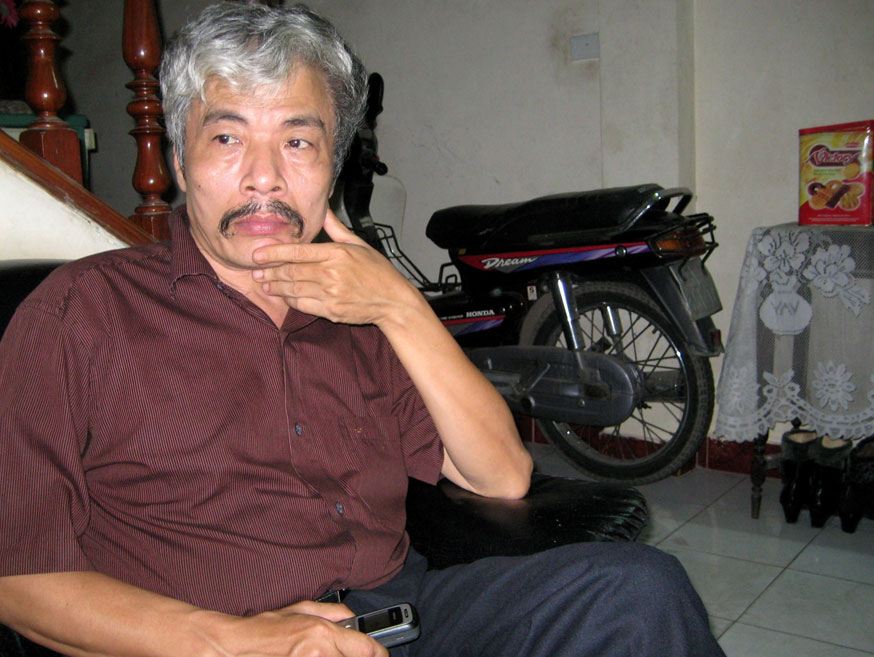
Ninh strikes me as hyper-cautious, with the kind of wariness one develops after many years spent trying to avoid people who want to kill you. Curled in a chair, ready to spring, his body looks as if it has muscles that have forgotten how to relax. When it enters my mind I can’t shake the idea that he has eyes in the back of his head. It is a large head, crowned with silver hair. Ninh’s eyebrows sweep over glancing black eyes, above sunken cheeks and a drooping mustache. Wearing a brown, short-sleeved shirt and black trousers, he chain smokes Camel Lights through smoke-stained fingers. A fan blows on us as we sit in the yellow gloom.
The next thing I notice about Ninh are his feet. He is barefoot, with wide, spatulate toes gripping the linoleum. Sunburned and flat, these are the feet of someone who spent years walking in rubber sandals, made out of old truck tires, down jungle paths with a backpack on his shoulders and an AK 47 in his hand. These are the feet of a peasant warrior whose physical needs have been stripped to a bare minimum. As he stares at me through his narrowed eyes, I realize that I am traveling heavy, with notebooks, digital recorders, and two assistants, while Ninh is still traveling light.
This first visit falls on National Journalists’ Day, which is celebrated mainly through bottoms-up drinking with one’s fellow cadre. Ever since his career as an author got derailed, after the denunciation campaign that began in the early 1990s, Ninh has supported himself writing a column for Literature newspaper (Bao Van Nghe), published by the Vietnamese Writers Union. “In principle, I have to go to work every day, but I am an old man, so I stay at home instead of going to the office,” says the author, who at the time was fifty-six. “I write an article a week. My last piece was on the countryside, about illiteracy among rural kids who are so poor that they have never been taught to read.”
After years of penning his inoffensive columns for Literature, Ninh was allowed to publish a short story collection in 2002 and another collection in 2005 called Daydreaming During a Traffic Jam. “As is usual in Vietnam, the publisher printed two or three thousand copies of Daydreaming and then allowed the book to go out of print,” he says. “You will have a hard time finding it now. I don’t even have a copy.” One story in the volume was translated and published in English as “Savage Winds.” “The title refers to the wind that blows in the Central Highlands,” he says. The rest of the stories remain untranslated. When I ask him if he minds his literary obscurity, Ninh shrugs. “I only care about the royalties,” he says.
In 2006, Ninh was also allowed to release a Vietnamese version of The Sorrow of War, for which he was paid a few thousand dollars. “The book has been translated and published in ten countries,” he says. “I don’t know anything about these translations. People tell me that sometimes parts of the text have been left out.” Again, he tells me how much he appreciates the royalties from these foreign publications.
“I have written two unpublished novels,” he says, when I broach the subject of censorship. “I do not intend to publish them.” The first, called “A Plain of Grass” (“Thao Nguyen”), is about a platoon of soldiers who capture a Montagnard village in the Vietnamese Highlands. Here they find a white missionary who has filed down his teeth like a Montagnard and gone native. What do the soldiers do with their half-white, half-Montagnard captive—kill him, set him free, or ship him to Hanoi? The question divides the unit, and they begin fighting among themselves. “The central character is a Catholic priest,” says Ninh. “The story is set during the war, when times were very different than they are now. We were ardent communists back then.”
“The second novel is about the interrelation of cultures and people, about the mixing of cultures. It, too, is about the war,” he says. The final, yet-to-be-named volume in Ninh’s trilogy is the most incendiary. It tells the story of South Vietnamese prisoners of war who have been sent to a POW camp in the north. (I have been told that the camp is located in Ho Chi Minh’s natal province of Nghe An.) Since most of the village men have died in the war, the local women mate with the southern soldiers and produce a new Vietnamese race, blended from Ho Chi Minh northerners and defeated southerners.
“The novel deals with soldiers, President Thieu’s soldiers,” says Ninh, referring to soldiers in the Army of the Republic of Vietnam. “After the war they are arrested and sent to the north, to undergo a kind of brainwashing. Ten years later they are released.”
“My son has a girlfriend, who is the daughter of a Republican soldier,” he says, confirming that the new, blended Vietnam is already here. His son at the time is working in Hanoi for an American investment firm. “It is safe to have money now,” says Ninh. He mentions that his son appeared recently on TV, in a program about Vietnamese youth, and how he is helping to organize a film festival in Hanoi. “It’s strange to me how Vietnamese youth like American movies,” he says. “Americans and Vietnamese have something in common. We Vietnamese are often mistaken for Chinese, but we are very different. We are more open than the Chinese, more like Americans.”
Ninh returns to narrating the plot of his novel. “The soldiers are brought to the north.”
“To Nghe An province?” I ask.
Bao Ninh at his house in Hanoi (Photo: Thomas Bass)
“I didn’t say that,” Ninh says, narrowing his eyes and retreating behind a cloud of cigarette smoke. Everyone knows that if he mentions Nghe An province, the book will be read as a commentary on Ho Chi Minh. He wants to drop the subject. “It is too difficult to understand,” he says. I urge him to continue.
“They are sent to a labor camp, in a residential area. Some northern women get pregnant. The soldiers are released and go to America. Then they return from America, to visit the women and their children.”
“So at this point the soldiers are viet kieu,” I suggest, using the term for exiled Vietnamese.
“You are right, but the Vietnamese people don’t like the term viet kieu,” he says. “This originated from the Chinese, and now you Americans use the term, but we prefer to say nguoi viet hai ngoai, overseas Vietnamese, which is more precise.”
“Do the soldiers stay in Vietnam?”
“Are they happy?” Bao Ninh replies. “It depends. Life in America is easier. They keep their American nationality. This is a fable about the history of Vietnam. It was written a couple of years ago. I do not intend to publish this now. For me, writing is more important than publishing. This is a story from the past.”
“Usually I never talk about my books, only with my closest friends,” he says. “I wrote the novel from my personal interests. I wrote about Vietnamese soldiers who worked with Americans. I tried to find out special things about Republican soldiers. I tried to understand them.”
“Did you succeed?”
“No one can understand another person fully,” he says. “I believe I understood them. It took me a long time, actually from the end of the war until now. I have traveled to the south a lot. I stayed in the south for several months after the end of the war. Many of my relatives live in the south. My younger sister, a teacher, lives there. It’s easier to earn money in Saigon than in Hanoi.”
As if to skirt away from a sensitive subject, Ninh says, “I haven’t finished writing the book yet. I spend most of my time drinking with friends.”
“Drinking what?” I ask.
He leans over and writes in my notebook “bia hoi,” draft beer, and then jokingly gestures toward my colleagues, “This is not a suitable subject for your translator,” he says.
“Middle-aged people like me are undisciplined,” he says. “I write at night, for three to four hours, starting after 10:00 p.m. I was born in the Year of the Cat, and cats don’t sleep at night. Writing is not an occupation here in Vietnam. It is a hobby. You don’t earn any money for it.”
My final question concerns Duong Thu Huong, one of whose books, Novel Without a Name, contains a number of passages resembling his own work. Ninh avoids the question. “There’s a lot of false information about her, saying she isn’t respectable, which isn’t true,” he says. “I have read all of her books, even those not allowed to be published in Vietnam because she is anti-communist.” To get my question answered, he suggests I go to Paris and ask Duong Thu Huong herself.