22 Sep 2022 | Iran, News
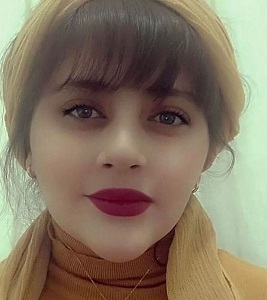 Iranians are again finding it impossible to access the internet and social media messaging platforms after yet another shutdown by the country’s authorities. The move comes after protests erupted in the country, sparked by the death of 22-year-old Mahsa Amini (right) last Friday.
Critics say the shutdown of services and the filtering of content is restricting freedom of expression and preventing peaceful protest. Access to news in Iran is strictly controlled by the government and for many Iranians, their only access to independent news sources is through digital platforms.
Amini, a Kurdish woman from Saggez in Iranian Kurdistan, was visiting relatives in Tehran on 13 September when she was arrested by the Gasht-e Ershad. These so-called “morality police” uphold respect for Islamic morals, including detaining women who they see as being improperly dressed, such as wearing revealing or tight-fitting clothing or not wearing the required hijab.
The morality police detained Amini as she and her brother were coming out of the city’s Haqqani metro station. Eyewitnesses said Amini was brutally assaulted by the agents inside their vehicle and then taken to a police station.
Two hours after her arrest, Amini went into a coma. She was then taken to Kasra Hospital where doctors said she had suffered a heart stroke and brain haemorrhage due to a fractured skull. She died on Friday, 16 September.
Ever since her death, protests have spread across the country, reaching more than 80 cities nationwide. In typical fashion, the authorities have responded by shutting down access to the internet in a bid to quell the protests.
Iran is one of the world’s biggest censors of the internet. The country has been concerned about the internet since the turn of the millennium and has been operating a sophisticated system of hardware and software-based content filtering ever since. A broad project now known as the National Information Network (NIN), and similar to China’s Great Firewall, was launched in 2005. It requires companies to use Iranian data centres and forces internet users to register using their social IDs and telephone numbers.
NIN was finally fully implemented in 2019 and that same year Iran’s Supreme Leader Ayatollah Ali Khamenei said of the internet, “During these past 40 years, and today as ever, the enemy’s propaganda and communication policy, as well as its most active programmes, have revolved around making people and even our officials and statesmen lose their hope in the future. False news, biased analysis, reversing facts, concealing the hopeful aspects, amplifying small problems and berating or denying great advantages, have been constantly on the agenda of thousands of audio-visual and internet-based media by the enemies of the Iranian people.”
The country also has a history of using internet shutdowns to crack down on dissent.
In 2019, protests broke out across the country when the Iranian government announced a 50 per cent increase in fuel prices and monthly rationing of petrol. More than 100 people died, according to reports. The government swiftly shut down the internet and mobile networks for several days.
In February 2021, at least ten fuel couriers in Sistan and Baluchistan province on the border with Pakistan were killed after a two-day stand-off triggered by the Islamic Revolutionary Guard Corps blocking the road to the city of Saravan. The killings triggered demonstrations, leading to further deaths, and the regime shut down the internet across several cities in the province.
The UN High Commissioner for Human Rights said at the time: “Blanket internet shutdowns violate the principles of necessity and proportionality applicable to restrictions of freedom of expression and constitute a violation of international human rights law.”
The protests around the death of Mahsa Amini have seen the Iranian authorities reach for the internet shutdown playbook once more.
NetBlocks and AccessNow report that internet access began to be disrupted in Tehran and other parts of the country on the day of Amini’s death and on Monday 19 September, internet access was shut down almost totally in parts of the Kurdistan province.
The KeepItOn coalition, of which AccessNow is a member, said that this represents Iran’s third internet shutdown in less than 12 months. They said the “repressive, knee-jerk response to recent protests seriously interferes with people’s right to freedom of expression and assembly”.
Iranians have increasingly resorted to using unfiltered channels to get their news, as the only parts of the internet that they can access are censored. By 2018, it was believed that more than half of Iran’s population were using Telegram. In April that year the judiciary banned the popular messaging app, claiming it has been used to organise attacks and street protests. Since then, Iranians have switched to WhatsApp and Instagram.
It comes as no surprise that with the current protests NetBlocks has reported that access to Instagram, one of the last remaining social media platforms in Iran, was restricted across all major internet providers on Wednesday 21 September.
The authorities appear to have clamped down because of the widespread nature of the protests and, perhaps more worryingly for the regime, a large number of video clips that have gone viral and which they are keen to suppress.
A peaceful protest in Saqqez
Not just the young
A clip of several men defending a woman who has removed her hijab
Another video clip shared on Twitter by British comedian Omid Djalili, whose parents are Iranian, suggested that, perhaps, attitudes may finally be changing in Iran.
Responding to the crackdown on protest and the internet shutdowns, experts from the UN Human Rights Council’s Special Procedures group said in a statement, “Disruptions to the internet are usually part of a larger effort to stifle the free expression and association of the Iranian population, and to curtail ongoing protests. State-mandated internet disruptions cannot be justified under any circumstances.”
“Over the past four decades, Iranian women have continued to peacefully protest against the compulsory hijab rules and the violations of their fundamental human rights,” the experts said. “Iran must repeal all legislation and policies that discriminate on the grounds of sex and gender, in line with international human rights standards.”
Speaking to Index, exiled Iranian film-maker Vahid Zarezdeh said the WhatsApp and Instagram ban means he has been cut off from his young son and the rest of his family still in the country.
He said, “In the absence of independent parties and free media, Iranian society gets its news and events, social and political issues from the internet. News reaches its audience very quickly and people can easily distinguish fake news from real news. How, you ask? The solution is very easy. By looking at the state television, you can understand which news is true and which is false. Whenever the government reacts sharply to news and prepares a report, it is very likely that the news is true, and when it ignores the news and is indifferent, it means that it is fake.”
State TV has been reporting on the protests but its coverage has focused less on the protests by women and instead suggesting that the unrest has been caused by Iran’s enemies, rather than spurred on by the regime’s crackdown. Certainly, TV viewers in the country have not seen the clips above.
“This is a system of repression and the Iranian regime does not care what the world community thinks about it and human rights,” said Zarezdeh.
He added, “It’s more than forty years since Iranian women started to be ignored by the Islamic regime. Now they have found the courage and belief to stand in front of the bullets with empty hands and without a scarf.
15 Sep 2022 | Mexico, News
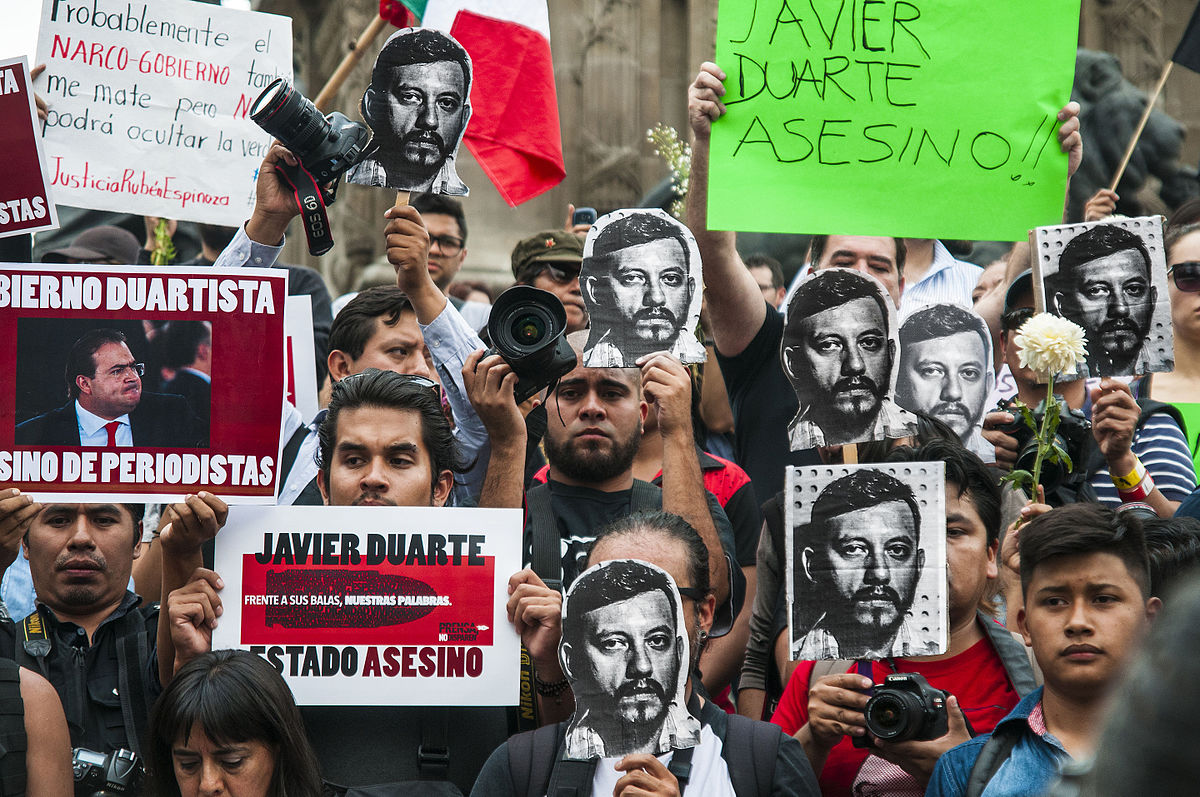
People march in the streets of Mexico to protest the death of journalist and photographer Rubén Espinosa, killed in Mexico City in 2015. Photo: Eneasmx/wikimedia commons
Mexico has long been a ruthless place for journalists and press freedom. According to the international human rights organisation Article 19, 156 journalists have been murdered in Mexico since 2000. Of the total, 144 were men and 12 were women. In April 2017, the journalist Duncan Tucker revealed in Index on Censorship magazine that it was really common for the newsrooms of local media to have drug cartel spies and informants infiltrated as staff members. Threats from corrupt government officials were also a daily problem for the Mexican press.
“Without a drastic change, Mexico and its journalists will face an even bleaker future,” Tucker wrote. Sadly, five years on this drastic change has not arrived in Mexico. Eleven journalists have lost their lives so far this year in the country due to their work. The most recent example is Juan Arjón López, who was killed with a blow to his head in the state of Sonora, in August.
One of the most dangerous regions for journalists in Mexico is the state of Veracruz: between December 2010 and November 2016, when Javier Duarte was governor of the state, 18 journalists were killed. A well-known case was the death of Regina Martínez Pérez, a journalist who investigated corruption in Veracruz and its connection with drug cartels. Her body was found in her flat on 28 April 2012, strangled to death. Four years later, Duarte resigned as governor following a series of corruption scandals, which led to a nine-year sentence in jail.
To understand more about this situation, Index talked to Mexican journalist Témoris Grecko, who currently lives in Mexico City and is a columnist for Aristegui Notícias, and a contributor to other media including Milenio Daily, La Octava TV and Rompeciento TV. In 2020 Grecko’s book, Killing the Story: Journalists risking their lives to uncover the truth in Mexico, was published.
Drug cartels seem to be a massive threat across Mexico. What is the relationship between them and the government or public officials?
The first thing I’d like to point out is that there is a bit of a myth regarding narco-trafficking in Mexico. Of course, it exists and there are many criminal gangs, but it’s not to be blamed for everything and that’s what happens. If a woman is killed or a journalist is killed, or something terrible happens, you can’t only blame the narco-trafficking and that’s it. And the narcos serve to mask many other activities. Many of the gangs are secondarily dedicated to narco-trafficking. Maybe they are in different kinds of smuggling, or they are doing illegal logging. Narcos are believed to be opposed to the government, but the real international mafias are in many governments, criminal gangs are usually related to people who work in the government, either in the Mexican government or the American. And in this way, the narcos need to be blamed for what happens to journalists of course, but organisations that are working with freedom of speech, such as Reporters Without Borders (RSF) and the Committee to Protect Journalists (CPJ), have collected data that shows that most aggressions are coming from official figures, maybe from politicians, political parties, police, the army or other authorities.
What kind of story can be the most dangerous one for journalists to work on?
There is crime-related journalism. But also, journalists who are exposing activities from mega companies. Maybe mining or logging companies or companies who are doing labour exploitation, and of course activities of politicians. For instance, we suspect Rubén Espinosa [who worked for the investigative magazine Proseco], a photographer murdered in 2015 in Mexico City, was killed by people linked to the then governor of the state of Veracruz, Javier Duarte. And this is because he felt very uncomfortable with some of the pictures that Rubén had published, that didn’t show Duarte in the life he wanted to be seen [the best example is a photo that Espinosa took for the left-wing news magazine Proceso, which showed Duarte’s white shirt with his name embroidered on it and a police cap written “Governor”]. And there have been journalists obviously murdered by criminal gangs, such as Javier Valdez [who became known for covering drug cartels], killed in 2017 in the state of Sinaloa.
Is there a particular region in Mexico that you consider the most dangerous for journalists?
By far the state of Veracruz. Two-thirds of the killings have happened there since 2010 and then there are other very dangerous states, such as Sinaloa, Guajaca and Tamaulipas. But sometimes it is not only about killings, but other types of aggression. For instance, maybe in the state of Tamaulipas they don’t kill so many journalists, but they are regularly beaten up or threatened. Persecuted somehow. Tamaulipas is the best example of what we call a silence zone. A place where politicians and criminal gangs control the news. They have people that we call ‘enlaces’, who work as press officers for these powerful people. And they are in touch with the journalists to tell them what can be published and what cannot. And also they suggest, which is actually an imposition, some news or photographs that they want to see published.
Have you ever been threatened due to your work as a journalist in Mexico City?
Not in Mexico. While working in the Middle East, Africa and Asia, yes [Grecko has covered conflicts in places like Libya, Egypt, Iran, Syria, Palestine, Congo and The Phillippines], but not in Mexico.
How do you manage to keep yourself safe in this ruthless environment?
First of all, there is a massive difference between living in the capital and other states. With my team and my crew, when we go to work in risky states, we have security protocols which include making sure our sources are safe, using secure communication channels, and studying entry and exit ways. We monitor each other. We try to spend the least possible time there. We don’t really tell anyone what we are doing. We are also very careful in trying to keep our sources safe. And in my case, as a more public person, exposure should be a bit of a shield to protect, even if it’s never enough.
What do you believe could be done to overcome this situation and make Mexico a safer place for journalists?
There are different initiatives. For twelve years we’ve had a mechanism for the protection of human rights defenders and journalists [called The Special Prosecutor For Attention to Crimes Committed against Freedom of Expression, or Feadle in Spanish, it was created in 2010 to tackle the increase in attacks, particularly murders, against journalists and its measures have included panic buttons for threatened journalists, installed security cameras at their homes and bodyguards in extreme situations]. This has saved some lives and protected some people, but also has had very resounding failures. Also, the problem with this mechanism is that it shouldn’t exist. It is needed due to Mexican justice’s failure to take the aggressors of journalists to accountability. What we really need is that the justice system and prosecutors really go after those who are committing these aggressions, and these crimes and take them to jail. I think that less than 1% of crimes committed against journalists in Mexico are actually punished, meaning that the potential aggressors have no deterrent. And they know that they can get away with it. This is something that encourages them to perpetrate these crimes. The Special Prosecutor For Attention to Crimes Committed against Freedom of Expression and its office is more of a problem for us than a help. They rarely do their most basic work. Only when there’s great public or political interest putting pressure on them. They tend to dismiss the journalistic work of a victim as a cause of the crime and tend to suggest sexual or romantic causes instead. They need to remove everyone from the head of the Office and try to rebuild it from scratch. And put people there who are professional and who really want to do their jobs. What they are actually doing is making life more difficult for journalists.
Have you ever thought of leaving the country for good?
I’ve lived in several countries due to work. But no, I don’t feel personally threatened in Mexico. I could leave at any time, but this is not something that obscures my daily life. I’m fine with that. In Mexico City journalists have a privilege. It shouldn’t be like this, but we have the privilege of security. There are other things threatening us here, other ways of hurting us here. Photographers who cover street protests, for example, have a degree of risk. But we have to use this privilege to focus on the journalists working in risky and dangerous areas. In this century in which so many journalists have been killed in Mexico, only one was in Mexico City [Rubén Espinosa], but it was a crime linked to the state of Veracruz. He came to Mexico City to find refuge here, but sadly they came after him.
15 Sep 2022 | News, Saudi Arabia
The decades-long sentences handed to two Saudi Arabian women for their use of Twitter in recent weeks have shocked the world. The jail terms imposed on the women represent a significant ramping up of the crackdown on online speech by the country’s rulers and have thrown further light on the activities of Saudi Arabia’s Specialized Criminal Court (SCC).
The SCC was set up in 2008, its purpose being to handle the trials of people involved in terrorist attacks in the country linked to al-Qaeda. However, following the 2011-12 protests kindled by the Arab Spring movement, it also began handling the cases of peaceful activists whose views differed from those of the country’s rulers.
In 2016, the UN Committee Against Torture expressed their concerns that the country’s 2014 Penal Law for Crimes of Terrorism and its Financing had broadened the definition of terrorism “to enable the criminalisation of acts of peaceful expression considered as endangering ‘national unity’ or undermining ‘the reputation or position of the State’”. The legislation was revised in 2017.
Of more concern is the use of the SCC to try cases relating to Saudi’s anti-cybercrime laws which includes the offence of “the production, preparation, transmission, or storage of material impinging on public order, religious values, public morals, or privacy, through an information network or computer.”
The SCC is also routinely trying cases under the country’s cybercrime legislation and recent cases against two women for using Twitter are of particular concern.
At the end of August, the SCC convicted Nourah bint Saeed al-Qahtani on charges of “using the internet to tear the (Saudi Arabia’s) social fabric” and “violating public order” via social media” and sentenced to 45 years in prison.
Two weeks earlier, Salma al-Shehab was sentenced to 34 years in prison and a subsequent travel ban of the same length for using Twitter to support human rights defenders in her native Saudi Arabia while she was studying at the University of Leeds. A number of her tweets were posted when she was outside the country.
The length of the two sentences is particularly shocking given that the country’s terrorism laws suggest a maximum sentence of 30 years for activities such as supplying explosives or hijacking an aircraft.
These two examples are just the latest in a long line of cases involving egregious abuses of human rights. The SCC has also been accused of keeping detainees incommunicado and denying them access to lawyers before their trials and also stands accused of being complicit in the use of torture or ill treatment of detainees to obtain confessions.
During the 2011 protests, Muhammad al-Bajadi, co-founder of the Saudi Civil and Political Rights Association, was arrested on charges of “insurrection against the ruler, instigating demonstrations, and speaking with foreign [media] channels”. On 10 April 2012, al-Bajadi was sentenced to four years’ imprisonment and a five-year ban on foreign travel. He was accused of unlawfully establishing a human rights organisation, distorting the state’s reputation in media and impugning judicial independence among other charges.
Influential Shi’a cleric Sheikh Nimr al-Nimr was arrested in July 2012 over his support for the 2011 protests and for “inciting sectarianism”. He was denied access to his lawyer in pre-trial detention and was sentenced to death in October 2014, a sentence that was carried out 15 months later. The cleric’s nephew, Ali Mohammed Baqir al-Nimr was also imprisoned and sentenced to death when he was only 17 years old for his role in the 2011 protests. While the SCC sentenced him to death by “crucifixion”, it was commuted in February 2021 after the death penalty for some crimes committed by children was ended. In October 2021, Ali al-Nimr was released from prison.
In 2012, 17-year-old Dawood al-Marhoun was arrested for protesting discrimination against Saudi Arabia’s Shi’a minority during the 2011 protests. After nearly two years of detention in which he was regularly denied access to a lawyer and prevented from communicating with his family, al-Marhoun was convicted by the SCC of all charges and sentenced to death. In November 2020, his sentence was commuted to ten years in prison.
In 2016, journalist Alaa Brinji was handed a five-year sentence and a subsequent travel ban for “insulting the rulers of the country”, “inciting public opinion” and “violating Article 6 of the Anti-Cyber Crime Law”. The charges result from Brinji’s use of Twitter to support Saudi Arabian women’s right to drive cars and for raising the cases of other human rights defenders and prisoners of conscience.
Women’s rights activist Loujain al-Hathloul is another who has passed through the SCC system. Al-Hathloul was arrested in May 2018 and initially denied access to a lawyer and was not permitted to speak with her family. During her detention, she was tortured. Her case was transferred from the Criminal Court in Riyadh to the SCC in 2020 and she was charged with sharing information about women’s rights in Saudi Arabia with journalists and human rights activists abroad. She was sentenced to more than five years in prison but was released in February 2021 after international pressure, including from Index. On release, part of her sentence was suspended but the original sentence has since been reinstated by the SCC including a five-year travel ban.
In 2018, the Saudi authorities arrested Mohammed al-Rabiah, an activist who has peacefully opposed the Saudi male guardianship system. He was charged with “striving to destabilise the social fabric and weaken national cohesion and community cohesion” and “communicating with others with the intent of disturbing the security and stability of the nation” under both the cybercrime and terrorism legislation. In March 2021, al-Rabiah’s case was transferred to the SCC and he was sentenced to six years and six months in prison followed by a travel ban.
Other sentences handed down by the SCC include 15 years of imprisonment and a further 25 year travel ban to lawyer Waleed abu al-Khair.
The case of internet activist Dr Lina Al-Sharif is also expected to be handled by the SCC.
The Gulf Centre for Human Rights reports that in late May 2021, a group of agents of the Presidency of State Security raided the family home and arrested Dr Al-Sharif arbitrarily without a warrant. She was then detained incommunicado for two months before being transferred to Al-Ha’ir Prison in Riyadh, where she is still being held.
Prior to her arrest, Dr Al-Sharif was active on social media, discussing Saudi politics and advocating for women’s rights, freedom of belief and freedom of expression, in addition to calling for the release of all prisoners of opinion.
Despite this peaceful expression of her views, the Saudi government has informed the UN that she faces charges under the 2017 Law of Combating Crimes of Terrorism and its Financing. The precedents set in the other cases handled by the SCC suggest that Dr Al-Sharif faces similarly harsh sentencing.
Actions around the make-up of the SCC also suggest a consolidation of state control over the court. According to an Amnesty International report, in 2017, several SCC judges were arbitrarily arrested as part of a broader crackdown on civil society and the consolidation of prosecutorial powers and intelligence agencies in the hands of the King and Crown Prince. This was followed by the appointment or promotion of 110 judges of various ranks by the King. The actions of the SCC have drawn widespread criticism from around the world. Human Rights Watch called for its abolition in 2012. It said at the time, “Trying Saudi political activists as terrorists merely because they question abuses of government power demonstrates the lengths the Saudi government will go to suppress dissent.”
In December 2021, the United States Commission on International Religious Freedom said in a report, “The SCC imposes harsher sentences than other Saudi criminal courts for similar offences, routinely denies defendants access to legal counsel, and delays issuing judicial decisions. The court’s convictions are sometimes based on confessions obtained through torture.” Amnesty International’s own examination of individual cases heard by the SCC identified examples of “judges accept[ing] defendants’ pre-trial confessions as evidence of guilt without investigating how they were obtained.” This also included examples of defendants subsequently retracting confessions due to them being coerced.
Marking 20 months since the arbitrary arrest of Salma al-Shehab in Saudi Arabia, Index on Censorship CEO Ruth Smeeth said, “Courts are not weapons to be used to equate free expression with acts of terror. The weaponising of the SCC to target free online expression corrupts the judiciary against the public and ultimately turns the state against its citizens. The number of people who have been sentenced, imprisoned and even executed due to the opaque actions of this court is a shocking indictment of the modern Saudi state, the hollowing out of its judiciary and its disregard for human rights.”
12 Aug 2022 | Iran, Iraq, News
At four in the afternoon on 16 April 2022, Iranian documentary filmmaker Gelareh Kakavand was at home when there was an insistent hammering at the door.
“There were five security police officers accompanied by a woman. They threatened to break it if it didn’t open immediately,” Kakavand told Index.
“They locked me in a room, put a camera in front of me, and started searching the house. When I protested that this was illegal to search my house and confine me in the room, they threatened to arrest and beat me.”
After the search of her home, which doubled up as her film studio, they confiscated Kakavand’s camera, camcorder and mobile phone.
Across the city at around the same time, Kakavand’s fellow filmmaker Vahid Zarezade returned home to find his door broken down.
“Agents had stormed my residence in my absence,” said Zarezade in an interview with Index. “The intelligence and security officers had told my landlord that the occupant of the house was engaged in ‘fraud and embezzlement’.”
The couple were then taken to one of Iran’s intelligence ministry buildings and interrogated, accompanied by threats, obscenities and insults.
Their work in documentaries – which they like to refer to as artivism – had always attracted unwanted attention from the authorities.
“During our career, we have made films about political prisoners such as Abbas Amir-Entezam, Mohammad Ali Amouei and Jila Bani Yaghoub, and the problems and sufferings of life and education among Baha’is in Iran. We also covered Keyvan Emamverdi’s case, documenting cases of sexual harassment and rape, and the emergence of the Iranian #metoo movement,” said Zarezade.
“As a result, we faced security, professional, and even financial and livelihood issues. Because of a film we made about the removal of paintings in the Museum of Contemporary Art of Iran we were handed a two-year suspended sentence and fined. We were also threatened many times for our film about Entezam. I was also imprisoned for one of the documentaries I worked on,” he said.
They were threatened verbally and had contracts cancelled for refusing to bow down to the authorities.
It soon became clear that the violent April raids related to a documentary they had started making two years earlier called White Torture, based on the book of the same name by human rights defender Narges Mohammadi.
White Torture features hard-hitting accounts of torture and sexual and physical humiliation faced by prisoners in Iran, particularly those who follow the Baha’i faith, the country’s second-most followed religion after Islam. The name refers to psychological torture relating to the extreme sensory deprivation and isolation of solitary confinement.
After they were released from interrogation but still fearing for their lives, Kakavand and Zarezade made the difficult decision to flee the country, prompted by the re-arrest and imprisonment of Mohammadi.
“We were worried the security forces might have gotten hold of the hard drives that contained videos and human rights documents, so we decided to leave Iran to make the pressure less on the members of the group as well as our families,” said Zarezade.
“We left Iran in order to finish the film and to ensure the narrators would remain secure and the accounts of prisoners would be preserved.”
Index spoke to Zarezade at an undisclosed location as the pair decided on their next moves.
—
Vahid Zarezade has been fascinated by the world of cinema since childhood.
“Despite my family’s disagreement, my first and only choice was to study cinema at university. Gradually, I started getting more interested in documentaries,” he said. “Society and my surroundings, with their cruelty and injustice, made the poetic and dreamlike aspect of cinema seem unreachable and impractical. Through documentaries I could intertwine concrete reality with the world of cinema.”
Zarezade soon began collaborating with Gelareh Kakavand on documentary work.
“Gelareh is a reflection of an egalitarian and demanding artist. More than being a filmmaker, she tries to create inner reflections and experiments. For example, in a film project about Iran’s mandatory hijab, she was one of those who used to walk the streets without a hijab many years ago. For many people, this was very inspiring.”
He believes that making films in Iran is not difficult but that the problems come later.
“What is difficult is the supervision and censorship that is applied to every cultural product and not only films, and this exhausts the artists,” he said. “The security system very noticeably monitors the artistic community of Iran and threatens them in different ways.”
Zarezade says filming White Torture was inevitable. “It was not me who chose to film this documentary, it was White Torture that chose me.”
“I was imprisoned years ago because of making a documentary which was never completed.
“Prison had a great impact on my life and my choices. During those years, I became acquainted with different people and thoughts. Throughout all those years, I endeavoured to highlight this both directly and indirectly in my projects. After getting to know Narges Mohammadi and becoming aware of the book she was writing, White Torture, I suggested making a documentary simultaneously.”
White Torture includes an interview with fellow Iranian filmmaker Jafar Panahi, who was sentenced to six years in prison in July. In the footage, Panahi and his lawyer go to court to complain against solitary confinement.
Zarezade believes the White Torture, which was released in spring 2022 White Torture and won an award at the Geneva Human Rights Film Festival, shines a strong light on what is truly happening in Iran.
“For years, the Iranian regime claims not to have any political prisoners and that the judicial system of the country perfectly performs according to law and justice. Totalitarian regimes are always trying to create an appropriate image of how they govern the society to the world. Taking a look at prisons and the diaries of prisoners and civil right activists will make the reality clear,” he said.
“In a country where endeavouring to create a civil society is considered a crime, in a country where a women’s right activist is charged by the crime of being a feminist, there probably would be no space left for civil demands and seeking justice. They have taken a large part of the Iranian society as hostage and their propaganda machine is spreading lies day and night.”
Despite their relative safety, the future for Zarezade and Kakavand remains uncertain.
“I think we will always be concerned about being forced back to Iran. We get out of the house infrequently,” Zarezade explained. “On the streets and in crowded places, even when grocery shopping, we do not address each other in Farsi. This is because the security agents of the Islamic Republic are very active outside the country, taking hostages and even committing assassinations. What happened to Ruhollah Zam shows that it is not far-fetched for them to kidnap people in any country.” (Zam, the founder of Amadnews and a critic of the Iranian government, was executed in December 2020 after being lured from exile in France. He was tricked into attending a meeting in Iraq where he was seized by agents of the Islamic Revolution Guards Corps in what they described as “a complicated operation”.
Zarezade says he has now become numb to censorship.
“I have spent 40 years of my life under supervision and censorship. Sometimes I feel like I have become my own censor. To my mind, the responsibility of the art and its artist is to turn a blind eye to censorship and move around it with new means of expression. This might seem unreachable in practice but what is important is to ignore censorship in art and do your work your own way regardless. Thus, your work, just like a signature that solely belongs to you, will go through a monitoring and censoring process and the new work that comes out of these censoring processes will find its own way of publication and survival.
