10 Mar 2023 | Hungary, Israel, News, Poland, United Kingdom, United States
When the most distinguished former chair of Israel’s Supreme Court, the 86-year-old Holocaust survivor Aharon Barak, said that he would go before a “firing squad” if it would help prevent what he sees as an existential threat to his country’s democracy, it’s a safe bet he was talking about something momentous.
Barak’s January denunciation of the attempt by Benjamin Netanyahu’s new government to neuter the Court was just part of what has brought many tens of thousands of Israeli citizens out in unprecedented protests across the country. An impressive array of judicial, political, ex-military and intelligence leaders have warned that Netanyahu’s programme is leading Israel on a path akin to that of authoritarian governments like Hungary and Poland at best, and dictatorship and “fascism” at worst.
The coalition formed on 29 December is easily the most right wing in Israel’s history and includes in key Cabinet posts two religious and avowedly extreme and anti-Arab supremacists, Bezalal Smotrich and Itamar Ben Gvir, both determined that Israel should annex the occupied West Bank. Their appointment adds a volatile new element to a conflict in which 14 Israelis and 70 Palestinians have been killed this year alone.
But it is the “reforms” to the Supreme Court drawn up by Netanyahu’s justice minister Yariv Levin which, opposed by an Israeli majority in opinion polls, have unleashed a wave of outrage on the streets. These include clauses heavily curbing judicial review, removing the criterion of “reasonableness” by which it can judge government decisions, for appointments of the Court to fall under the direct control of the government, and for judgements ruling that a government decision in unlawful or conflicts with semi-constitutional Basic Laws to be overruled by a simple majority in the Knesset (parliament).
The Court is hardly the “overmighty” bastion of liberalism depicted by its critics. Last year, for example, it approved the planned eviction of 1000 southern West Bank Palestinians from their homes purportedly to make way for an Israeli military firing zone. But it remains the last hope for individuals, Jewish or Arab, fighting against unjust decisions, whether legal or administrative. What’s more in Israel’s single parliamentary chamber system the Court is the only check and balance on the executive and the Knesset majority it invariably commands.
The changes to the Court should not be seen in isolation from other measures planned or already in various stages of enactment or proposal. These include allowing the death penalty – unused since the Nazi war criminal Adolf Eichmann’s execution in 1962 – for Palestinian terrorists, and the power to deprive Arab—though not Jewish—terrorists of residency as well as citizenship. Fears of secular Israelis have been fuelled by calls from ultra-orthodox parties for an end to the ban on segregation of men and women at publicly funded events, while Smotrich has even called for the banning of Arab political parties, representing nearly 20% of the Israeli population. Already under way is a bill to curb the law officers’ power to declare the prime minister unfit to rule. Many Israelis also see the wider judicial reforms partly as an attempt by Netanyahu to escape the possible consequences of his ongoing trial on three corruption charges.
The Netanyahu coalition agreement provides for prohibitively high taxation of Israeli civil-society organisations, several defending Palestinian human rights, which draw funding from mainly European governments, including Britain’s. The measure will not mostly apply to the many right-wing, pro-government advocacy groups because they are mainly funded by rich individuals, especially in the USA.
There has not yet been any legislative attack on Israel’s still fairly vibrant press, albeit in a market dominated by the pro-Netanyahu freesheet Israel Hayom. But writing after the election last October Aluf Benn, editor of the liberal newspaper Haaretz, pointed out that existing legislation for ordering a state of emergency lays down powers for a press clampdown, and suggested that Netanyahu, Smotrich and Ben Gvir wanted a state “in which criticising the government or replacing it will only be a pipe dream.”
In a sense, however, the changes to the Supreme Court are the programme’s hinge, by severely weakening its right to strike down any of these or other measures because, say, they do not conform with the 1992 Basic Law on Human Dignity and Liberty. Indeed if so far vain attempts by Israel’s President Isaac Herzog fail to secure a compromise on the changes, and the government passes the Court legislation by the end of March as it intends, a major stand-off between it and the Court is in prospect, leaving much of Israel—perhaps even including senior Army figures—having to choose between its recognition of an elected government and its respect for the law as it has prevailed since the state’s foundation 75 years ago.
2 Mar 2023 | Afghanistan, Burma, China, Hungary, News, Poland, Russia, United Kingdom, United States
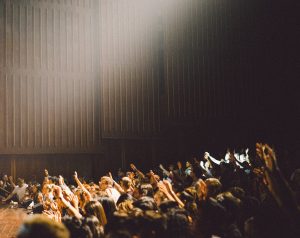
Academic freedom is under attack. Photo: Edwin Andrade
Students should be encouraged to challenge ideas and question the world around them. Higher education is meant to teach us how to think freely, and for ourselves. Unsettling new data published by the Academic Freedom Index proves that this freedom is under threat. The report finds that academic freedom is in decline for over 50 percent of the world’s population and that many people on campuses worldwide have significantly less freedom today than they did ten years ago. In the past decade, academic freedom has improved in only a handful of countries, affecting just 0.7% of the world’s population. The most populous of these countries is Uzbekistan, a closed autocracy in which universities and scholars still face severe limitations, such as the government’s control over contacts between universities or scholars and foreign entities.
AFI’s data signals a decline across all regions and all region types. Our own ranking, the recently published Index Index, a project that uses innovative machine learning techniques to map the free expression landscape across the globe, shows just how this plays out on a country-by-country basis. Some obvious patterns can be drawn. Dwindling academic freedom clearly correlates to the deterioration of democracy in countries such as Poland, Hungary, Russia and Belarus. Political developments, including military coups in countries such as Myanmar and Afghanistan, have coincided with severe declines in academic freedom. In December 2022, the latter saw a ban by the Taliban on women and girls attending universities, a ruling that illustrates how academic freedom extends beyond what is taught on campuses and delineates one’s freedom to simply exist within academic spaces.
That said, the data shows that declines in academic freedom worldwide have occurred in different political settings and do not always follow the same pattern. Liberal democracies such as the United States of America and the United Kingdom are among the countries under which freedom is proven to be under threat. The AFI attributes this to ‘differences between individual and institutional dimensions of academic freedom’. This demarcates the difference between the freedom of an individual to teach, research and communicate freely and an institution’s autonomy and freedom to operate without government regulation. The AFI report gives a number of examples showing how disaggregation has occurred.
China, for instance, has witnessed a decrease in institutional academic freedom since 2010, when the State Council launched a ten-year strategy for education reform. Chinese universities have since remained in a subordinate position to the party-state, with universities that maintain leadership and management systems controlled by the university’s party committee. The party sets the boundaries of permissible research, exchange, and academics’ public speech. This system facilitated a serious decline in the freedoms enjoyed by academics under President Xi Jinping who has consolidated and centralised power, reestablished the party’s control over information, education and media, and made censorship in China a fact of life. Moreover, the draconian National Security Law enacted in Beijing in 2020 has exacerbated pressure on academic freedom.
The United States, however, presents an altogether different picture. Despite being lauded as a bastion of free expression, the US has seen a visible decline in academic freedom since 2021. This is because educational matters in the USA are largely regulated by individual states, which have increasingly used their authority to interfere in academic affairs. Several Republican-led states have adopted bills that ban the teaching of concepts related to “critical race theory” in universities. Conservative groups have lobbied state legislatures in attempts to withdraw funding from subjects such as gender, minority studies, and environmental science. Some institutions have introduced self-censoring measures following abortion bans to avoid persecution by state governments. In September 2022, Idaho’s flagship university curtailed individual academic freedom by blocking staff from discussing abortion or emergency contraception on campus.
Mexico’s government, led by Andrés Manuel López Obrador, has weakened institutional autonomy by regularly appointing university directors, often resulting in student protests. Attacks on (predominantly female) students, protests against these harassments, and a drug war fought on university campuses has also fuelled a decline in campus integrity, university safety and academic freedom.
The underwhelming glimpse of hope that emerges from this year’s findings (compared with 2022) is that the number of countries with improvements in academic freedom grew from two to five. Overall, the data signals a shift toward a less free world, in a worse state than it was 10 years ago. It’s a tough pill to swallow.
27 Jan 2023 | Germany, Opinion, Poland, Ruth's blog
The theme of Holocaust Memorial Day this year is ordinary people. Words have power and their meaning changes with context – and in the context of the Holocaust the word ordinary is one that brings conflicted emotions. Those killed were indeed ordinary people who happened to be different, Jewish, gay, Roma, disabled, trade unionists and political dissenters. Many of those that killed them probably started as ordinary people who believed the propaganda that inspired hate and murder. Those that intervened to save them were ordinary people with an incredible value set that demanded in many cases that they risked their lives to save people that they barely knew.
In the run up to Holocaust Memorial Day I had the privilege of hearing the testimony of Janine Webber, a Holocaust survivor who lost huge swathes of her family. There is nothing quite so stark and shocking as hearing first-hand the stories of those people who were confronted with the ultimate evil. Janine survived the ghetto and was hidden and betrayed several times, eventually finding sanctuary in a convent and then with an elderly Polish family. She was saved by ordinary people and betrayed by ordinary people and before this happened to her she was an ordinary little girl in Poland. But in the course of four years she lost her parents, her brother and all of her extended family – the only other surviving members of her family were her aunt and an uncle. Her story will stay with me – and everyone else who heard her testimony – for as long as we live.
The question that has stuck with me since I had the privilege of listening to Janine, is what happens when she is sadly no longer with us. When the survivors are no longer with us to challenge those people who seek to deny or distort the facts of the Holocaust? The onus is on all of us to tell their stories and to shine a light on the lies and misinformation spouted by political extremists who seek to use one of the worst chapters in human history as a political football.
Last week the British House of Lords held its first debate to mark Holocaust Memorial Day. As a new member of the Lords, it was my privilege and responsibility to contribute to the debate. You can read my speech here.
Speaking about such an important topic in a national legislature is not something that anyone would or should take lightly, it was politics at its best – informed, considered and heartfelt.
The debate has made me think repeatedly about the fundamental importance of our core human rights and how we have to cherish and protect them. I can write this blog today because I have a guaranteed right, under British law, to express myself and articulate my opinions. Tyrants and dictators, always, as one of their earliest actions, seek to restrict a free media, undermine academic freedoms, remove books from libraries, and silence their critics. Index exists to provide a platform to those being silenced and we always will – but we also provide a voice to those who seek to tell truth to power, who seek to challenge misinformation, who stand against tyranny. We have for the last fifty years and we will for the next fifty.
11 Nov 2022 | Magazine, News, Volume 51.03 Autumn 2022, Volume 51.03 Autumn 2022 Extras
It is increasingly uncomfortable to be a politically engaged sports fan. As big sport has become big business, more and more international events are moving to countries that have highly questionable human rights records.
I’m sure I’m not the only one whose usual enthusiasm for the men’s football World Cup was tempered by Russia’s hosting in 2018, or who felt unmotivated tuning into the 2022 Winter Olympics in Beijing following China’s recent actions in Xinjiang and Hong Kong.
In motor racing, Formula One’s willingness to follow the money means the race calendar includes a grand tour of wealthy but corrupt regimes.
Qatar’s hosting of the 2022 men’s football World Cup is just another sign of how sport has prioritised money over fair play off the field. Amnesty has highlighted the country’s human rights abuses of migrant workers, women and LGBTQ+ people, as well as its lamentable freedom of expression. The successful bid to host the tournament has been plagued by accusations of corruption, which – although unproven – seem to many observers to be strong.
Fans can easily choose to tune out or vent their objections. But what about the players? Should they be refusing to play, or at least making some kind of public protest?
In one sense, the answer is obviously yes. Anyone who participates in an event that helps give credibility and income to a corrupt regime becomes complicit. That does not mean it is always wrong to engage, but it does mean there are negative consequences which ought to be counteracted.
The most straightforward way of doing this is to counter the positive PR by speaking out. There’s a strong case that this is done more effectively by participating than not. Imagine, for instance, that one of the world’s best players, such as Argentina’s Lionel Messi or Poland’s Robert Lewandowski, refused to play in Qatar. That would put its human rights record in the global spotlight for a day or two. But if they went to the tournament and spoke out while they were there, the impact could be greater, and it would be more likely to get through to Qataris.
However, while we should rightly applaud any player who refuses to just kick the ball and shut up, I’m less convinced that we could reasonably expect them to do so. There is an important difference between actions which are morally required and others which are“supererogatory”, meaning they are laudable but optional.
But like most binaries, it is more helpful to think of a sliding scale.While some actions are absolutely required and others obviously optional, in between there are degrees of obligation. My contention is that the obligation for footballers to speak out or opt out on Qatar is weak, because we cannot reasonably expect them to be able and willing to take the most admirable moral stance.
First, think about what refusing to participate would mean for them. Professional footballers have short careers so they could be depriving themselves of the peak of their professional lives. Speaking out may come at less cost but they may still fear damaging their careers. Because the cost of action could be quite high, the obligation to take it has to be commensurably lower.
These are young men who travel the world and know enough to be aware that moral norms vary between nations. But should we expect them to be able to make carefully calibrated decisions about which countries are beyond the pale? It is easy to imagine them thinking, “Qatar may not be perfect, but compared with what the UK and the USA did in Iraq and Afghanistan, its crimes are minor.” That’s not a very sophisticated moral argument, of course, but many intellectuals defend more complex versions.
A player’s failure to reach the best all-things-considered judgement is no more blameworthy than the morally sub-optimal choices most “ordinary” people make. Many people buy meat and dairy sourced from animals kept in terrible conditions, goods made by Uyghurs in internment camps, go on holiday in countries with bad human rights records. When we say they shouldn’t do all these things, we are right. But we don’t judge them too harshly for doing so because we know that once you start thinking about what is ethical or not, it gets very complicated very quickly, and it is difficult to see the seriousness of an issue when the rest of society is behaving as though nothing is amiss.
There is also a risk that if we pressure players into speaking out and taking action on moral and political issues, we could actually end up with many choosing the wrong causes. Asking young, unintellectual, rich people to take on the role of society’s moral spokespeople is giving them a task they are ill-equipped to carry out.
In sport, the main responsibility for ensuring that regimes do not use “sportswashing” to gloss over their human rights abuses lies with those higher up the power command – people who are generally older, more experienced and with a better grasp of the wider situation. Fifa, world football’s governing body, should take into account the human rights situation in a country before awarding it a major tournament to host. National governing bodies should take clear public stands and ensure that if their teams are required to play in disreputable countries, there is no complicity with breaches of human rights. Team managers should be charged with communicating such views to the wider public.
The idea that sports people should be role models is overplayed. They should model good qualities such as fair play, dedication, teamwork and respect for opponents because those are the qualities that they can reasonably be expected to have. But to ask them to model statesmanship and political activism is like asking our elected politicians to be exemplars of good exercise regimes or artistic creativity.
This article appears in the autumn 2022 issue of Index on Censorship. To subscribe click here
