20 Feb 2017
[vc_row][vc_column][vc_column_text]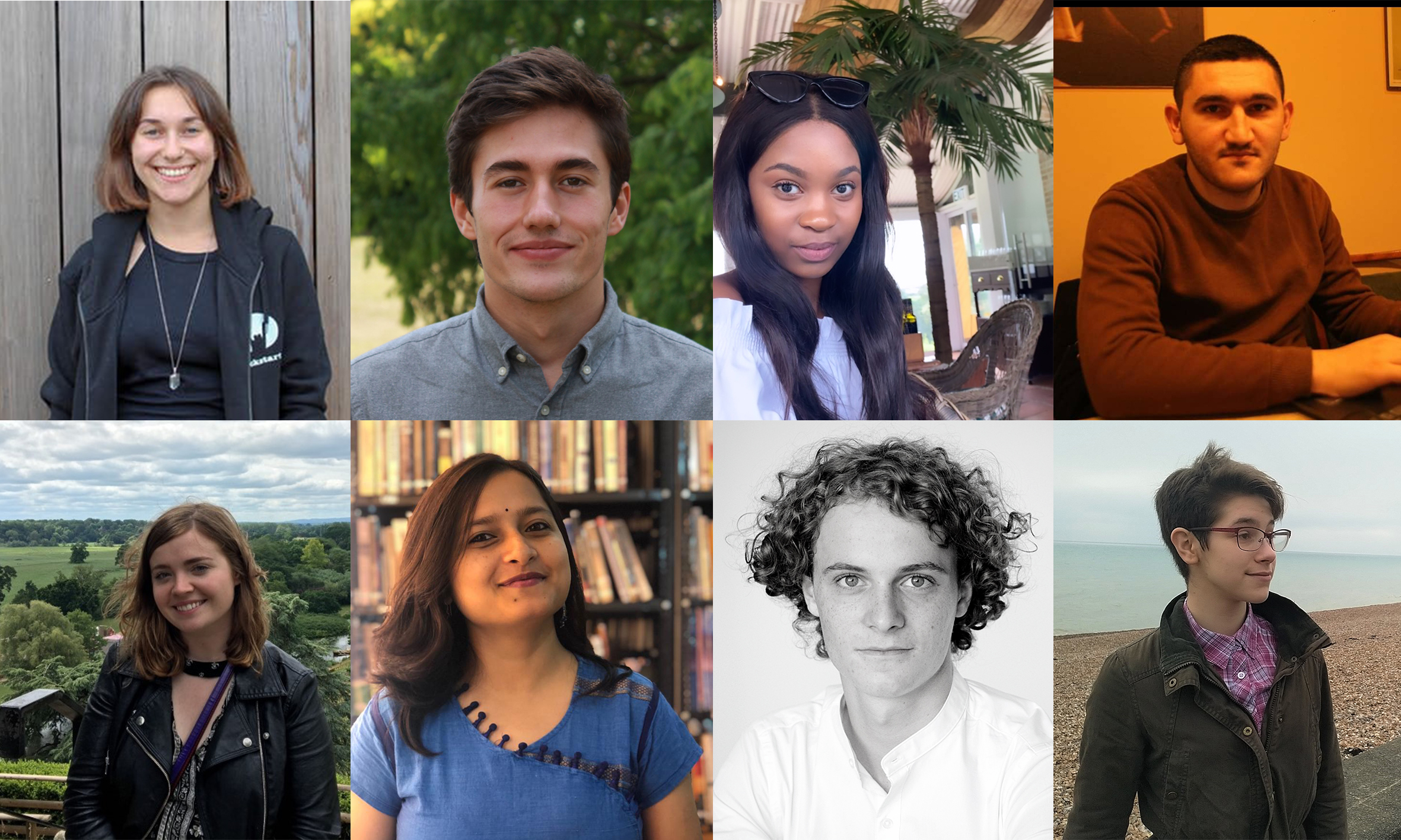 [/vc_column_text][vc_custom_heading text=”Youth Advisory Board” font_container=”tag:h1|text_align:center|color:%230a0a0a” use_theme_fonts=”yes”][vc_column_text]
The youth advisory board is Index on Censorship’s project aimed at engaging with young people aged 16-25 from around the world and gathering their views on freedom of expression issues.
What is the youth advisory board?
The youth board is a specially selected group of young people aged 16-25 who advise and inform Index on Censorship’s work, support our ambition to fight for free expression around the world and ensure our engagement with issues with tomorrow’s leaders. The current members are sitting from January to June 2020.
Why does Index have a youth board?
Index on Censorship is committed to fighting censorship not only now, but also in future generations, and we want to ensure that the realities and challenges experienced by young people in today’s world are properly reflected in our work.
Index is also aware that there are many who would like to commit some or all of their professional lives to fight for human rights and the youth board is our way of supporting the broadest range of young people to develop their voice, find paths to freely expressing it and potential future employment in the human rights, media, and arts sectors.[/vc_column_text][/vc_column][/vc_row][vc_row disable_element=”yes”][vc_column][vc_column_text css_animation=”none”]
Applications now open!
We are looking for enthusiastic young people, aged between 16-25, who must be committed to taking part in monthly meetings, which are held online with fellow participants. Applicants can be based anywhere in the world. We are looking for people who are communicative and who will be in regular touch with Index.
Each youth advisory board sits for six months, has the chance to participate in monthly video conferencing discussions about current freedom of expression issues from around the world, which sometimes include guest speakers. There are exciting opportunities to be interviewed for the podcast and contribute to Index’s Instagram page.
The next youth board is currently being recruited, and will sit from July to December 2020.
How to apply
Please send us the following:
- Cover letter
- CV
- A 250-word blog post about any free speech issue
Applications can be submitted to Orna Herr at [email protected]. The deadline for applications is 26 July at 11:59pm GMT.
What is the youth advisory board?
The youth board is a specially selected group of young people aged 16-25 who advise and inform Index on Censorship’s work, support our ambition to fight for free expression around the world and ensure our engagement with issues with tomorrow’s leaders. The current members are sitting from July to December 2019.
Why does Index have a youth board?
Index on Censorship is committed to fighting censorship not only now, but also in future generations, and we want to ensure that the realities and challenges experienced by young people in today’s world are properly reflected in our work.
Index is also aware that there are many who would like to commit some or all of their professional lives to fight for human rights and the youth board is our way of supporting the broadest range of young people to develop their voice, find paths to freely expressing it and potential future employment in the human rights, media, and arts sectors.[/vc_column_text][vc_row_inner disable_element=”yes”][vc_column_inner width=”1/4″][staff name=”Shini Wang” title=”USA” profile_image=”108370″]Shini Wang is a poet, journalist, and BA student of philosophy at the University of Texas at Austin. She is a member of her university’s liberal arts council, the editor of The Liberator Magazine, and a host of open discussions on campus. Interested in how freedom of expression plays into the creative and imaginative process of international writers and artists who witness injustice, her research investigates censorship and its effects during our post-truth political era.[/staff][/vc_column_inner][vc_column_inner width=”1/4″][staff name=”Nikhil Singh” title=”India” profile_image=”108371″]Nikhil Singh is a law student based in Kolkata, India. He has a keen interest in advocating the right to free speech and often spends his free time promoting it. In the past he has interned with senior advocates in the Supreme Court of India, and has worked on cases involving violation of the right to free speech, civil liberty, and human rights. After graduating from college, Singh intends to work in the legal industry, to fight for people’s rights.[/staff][/vc_column_inner][vc_column_inner width=”1/4″][staff name=”Charles Terroille” title=”France” profile_image=”108373″]Charles Terroille is a French dual degree student in political science and international relations at Sciences Po (Lille) and the University of Kent. His field of work covers media and journalism. After directing his first TV documentary about Dharavi in India at 16 years old, he continued to report in different types of newsrooms in France and the UK. Terroille also specialises in the issue of whistleblowers and has worked on the Luxleaks and Football Leaks cases. He collaborated with the Signals Network Foundation for advocacy and research on the leaks. Terroille is also the founder and director of the International Consortium of Student Journalism (ICSJ).[/staff][/vc_column_inner][vc_column_inner width=”1/4″][staff name=”Emma Quaedvlieg” title=”Serbia” profile_image=”104865″]Emma Quaedvlieg is a Master’s graduate from the Institute of Development Studies, where she focused on popular movements and inequality. She also holds a BA (Hons) in politics and international relations from the University of Nottingham. She has actively campaigned for various gender issues and was elected women’s officer for the student’s union in Nottingham. Her research largely focuses on the western Balkans, where she is contributing to freedom of expression and wider development in local government. Quaedvlieg has also worked in various (international) human rights organisations.[/staff][/vc_column_inner][/vc_row_inner][vc_row_inner disable_element=”yes”][vc_column_inner width=”1/4″][staff name=”Arpitha Desai” title=”India” profile_image=”104862″]Arpitha Desai is a lawyer based in New Delhi, India. As an avid student of constitutional law, she is passionate about civil liberties with a keen interest in censorship, surveillance, and digital rights. Keeping in mind the ever-evolving nature of technology and the needs of the government, industry, and common man, Desai believes that law and policy must strike a holistic balance between conflicting rights.[/staff][/vc_column_inner][vc_column_inner width=”1/4″][staff name=”Krzysztof Katkowski” title=”Poland” profile_image=”108374″]Krzysztof Katkowski is a student of Czacki High School in Warsaw. He is a young activist and journalist cooperating with “Krytyka Polityczna” where he focuses on youth’s community-minded engagement and education. Passionate about science, literature, and philosophy, he wants to popularise the idea of free speech and dialogue between different environments. In the future, Katkowski wants to fight for open society and tolerance which is endangered in recent years, especially in Poland.[/staff][/vc_column_inner][vc_column_inner width=”1/4″][staff name=”Elyse Popplewell” title=”Australia” profile_image=”108372″]Elyse Popplewell is the social media editor at The Australian, the most widely circulated national newspaper in Australia. After attaining a bachelor of communications (journalism) at the University of Technology, Sydney, she began her career at the Institute for Economics & Peace, the think tank that publishes the Global Peace Index annually. Popplewell focuses on the issue of Australian defamation laws gagging important journalism and movements like #MeToo.[/staff][/vc_column_inner][vc_column_inner width=”1/4″][/vc_column_inner][/vc_row_inner][/vc_column][/vc_row][vc_row disable_element=”yes”][vc_column][three_column_post title=”Recent posts” full_width_heading=”true” category_id=”6514″][/vc_column][/vc_row][vc_row][vc_column][vc_column_text]
Meet the Board
The current board is sitting from July to December 2020.[/vc_column_text][vc_row_inner][vc_column_inner width=”1/4″][staff name=”Aliyah Kaitlyn Orr” profile_image=”112187″]Aliyah Kaitlyn Orr (pen name A.K. Nephtali) is a college student in Britain. Orr has been inspired by the power of words ever since a novel helped them realise their gender-neutral identity. Orr writes inclusive fiction that aims to empower LGBTQ+ people around the world. One of their short stories will be published in a digital anthology by the end of 2020. [/staff][/vc_column_inner][vc_column_inner width=”1/4″][staff name=”Subhan Hasanli” profile_image=”114478″]Subhan Hasanli is a 25 year old lawyer, who works with local and international human rights organisations in Azerbaijan. He holds a bachelor’s degree in law from Nakhichevan State University. His goal is to promote the rule of law and human rights, and he hopes to achieve changes in these fields. Hasanli’s hobbies include catching fish, playing chess and reading books about science, politics, and philosophy. His favourite book is Diplomacy by Henry Kissinger. [/staff][/vc_column_inner][vc_column_inner width=”1/4″][staff name=”Carmen Ferri” profile_image=”114479″]Carmen Ferri is a digital rights activist based in Canada. She obtained an undergraduate degree in cultural studies and sociology at Maastricht University, Netherlands, and a master’s degree from the University of Amsterdam in new media and digital culture. During her studies, she worked on projects related to disinformation, hate speech and subcultural expression on digital platforms. Ferri has completed two internships with the Association for Progressive Communications. She worked as a policy analyst intern researching counter-hate speech movements in Asia, then as a communications research intern where she implemented a project examining actors and discourses within digital rights spaces on social media.[/staff][/vc_column_inner][vc_column_inner width=”1/4″][staff name=”Sneha” profile_image=”114480″]Sneha graduated from the Asian College of Journalism with a postgraduate diploma in journalism (new media) and is now a journalist for The Times of India. She previously worked as a reporter for the International Business Times. Sneha is concerned about the issues around press freedom in her country. She is an advocate for open discourse in the hope that it will lead to solutions. Sneha has an avid interest in governance, ecology, environment and urban planning.[/staff][/vc_column_inner][/vc_row_inner][/vc_column][/vc_row][vc_row][vc_column width=”1/4″][staff name=”Pablo Aguera” profile_image=”114481″]Pablo Aguera is a research fellow for Research ICT Africa working on digital rights, data justice and internet access and use. Aguera has produced creative multimedia projects and worked with social enterprises and youth movements across multiple countries. He holds a BSc in philosophy, politics and economics from the University of Warwick, and is currently completing a dual master’s degree in global media and communications at the London School of Economics and the University of Cape Town.
[/staff][/vc_column][vc_column width=”1/4″][staff name=”Siphesihle Fali” profile_image=”114482″]Siphesihle Fali is in her final year studying English literature & language, and media and writing at the University of Cape Town, South Africa. Fali is passionate about expanding her knowledge on societal constructs and the definitions of freedom. She aspires to create real conversations around the right to freedom of expression for the most censored and vulnerable communities, to safeguard and protect their rights. Fali’s interests lie mostly with the rights of women and children, and she intends on dedicating her career to being a voice for those who are denied one.[/staff][/vc_column][vc_column width=”1/4″][staff name=”Claes Kirkeby Theilgaard” profile_image=”114483″]Claes Kirkeby Theilgaard works as the editor-in-chief of the Danish online newspaper 180Grader. He is set to begin his studies in business and communications at the Copenhagen Business School. Theilgaard has worked in journalism and in various political organisations with the aim of furthering democracy and freedom, which has resulted in violent threats and other forms of intimidation. These experiences have made him more motivated to fight for the cause of free speech. Theilgaard is currently working to launch a campaign against “hate speech” laws in Denmark, as well as an organisation to fight censorship and work for free speech both in Denmark and abroad.[/staff][/vc_column][vc_column width=”1/4″][staff name=”Cecily Donovan” profile_image=”114484″]Cecily Donovan graduated from Boston University with degrees in International Relations and Political Science in 2019. She currently lives in New York City working in economic development for Invest Northern Ireland, a UK government agency. She has a background in state government, French language and politics, and European affairs. Donovan is passionate about women’s rights, LGBTQ+ rights, the Black Lives Matter movement and the impact of authoritarianism on freedom of expression globally.
[/staff][/vc_column][/vc_row]
27 Jan 2017 | News, Turkey, Turkey Uncensored
[vc_row][vc_column][vc_column_text]
Turkey Uncensored is an Index on Censorship project to publish a series of articles from censored Turkish writers, artists and translators.
[/vc_column_text][vc_video link=”https://youtu.be/LzWBgzJrQdo”][vc_column_text]As tens of thousands of women took to the streets around the world on 21 January, another woman, the Turkish MP Şafak Pavey was being treated in hospital for injuries sustained during a physical assault on the floor of the Grand National Assembly during debates on constitutional amendments.
Pavey had just delivered a moving speech in which she warned that the presidential system being considered would bring about unchallenged one-man rule. The “bandits”, as she called them, a group of women MPs belonging to the ruling AKP, attacked her and two other MPs, Aylin Nazlıaka, an independent, and Pervin Buldan from the Kurdish HDP. The AKP MPs were said to be acting under a male colleague’s orders.
The attack contrasted sharply with the pictures of enthusiastic women from around the United States and the world committed to sisterhood and equality. The distance between the two extremes might seem to be yawning but isn’t. In Turkey, the gap opened up in just four short years.
The empowered mood created by women marching for equal rights and uniting their voices in opposition reminded me of the heady days of 2013 when the anti-government Gezi Park protests rocked Turkey. Like the demonstrators in DC and London, people all over Turkey took to the streets to raise a chant against our own Trump: President Recep Tayyip Erdogan. In Gezi, the seeds of dissent spread through social media and bloomed across the country just as the women’s march did across the globe. It was just the beginning, or so we thought.
After a brutal suppression that left at least 10 dead and over 8,000 injured, the Gezi spirit, that united voice, faded away. The most significant political heritage was the “Vote and Beyond” organisation, which launched an incredibly effective election monitoring network during the June 2015 elections. Thanks to that group and the popular young Kurdish leader Selahattin Demirtaş’s energy, the outcome of the polls reflected the full and complete picture of Turkey’s population in parliament. The combined opposition parties were the majority in the assembly and to continue governing, the AKP would be forced to form a coalition. Then things happened.[/vc_column_text][vc_single_image image=”85130″ img_size=”full” add_caption=”yes”][vc_column_text]As the ceasefire with the Kurdistan Workers’ Party (PKK) collapsed and armed conflict resumed, coalition negotiations ground into political deadlock as the summer wore on. Erdogan called a snap election for that November that lined up with his political ambitions. Less than a month before the election, a staggering terror attack rocked Ankara and ongoing deaths of security personnel in the country’s south-east added to a grim mood. At the polls, the AKP regained its majority in parliament. Though the governing party was nominally back in full control, it lacked political legitimacy and popular support, both of which would be delivered by the rogue military units that staged the failed July 15 coup and paved the way for Erdogan’s emergency rule.
Witch hunts are a strange thing. Even if you spot one when it’s getting underway, it’s always too late to stop it.
After the election, the political opposition was locked out of enacting change through parliament. It was further paralysed by Erdogan’s “shock and awe” tactics, which saw the leaders of the parties assaulted on the floor of the assembly or imprisoned on fabricated terror charges. Opposition voters are too depressed now to remember the confident and exhilarating days of the Gezi protests.
It would be a mistake to dismiss Turkey’s experience as a unique case. There are parallels with the unfolding situations in Russia, Poland, Hungary and now the USA. The bullies of our interesting times are singing from the same hymn sheet, using identical language and narratives — power to the right people, experts and intellectuals are overrated, overturn the establishment. The forces of resistance must now share strategies as well. Opposition to the growing threat of illiberal democracy needs to network and be vocal or else our initial responses to the horrors and human rights violations — including the purge of Turkey’s press under emergency rule — would be a waste of time.
Here’s a small taste of where we failed in Turkey — a warning to Europeans and Americans of what not to do.
“No” is an intoxicating word that gives emotional fuel to the masses. After swimming in the slack waters of identity politics or concerning yourself with whether or not your avocados are fair trade, taking to the streets en masse for a proper cause is like a fresh breeze. But as we learned in Turkey, “No” can also be a dead end. It exists in a dangerous dependency on the what those in power are up to. It shouldn’t be mistaken for action as it is only a reaction.
“No” is unable to create a new political choice. It is an anger game that sooner or later will exhaust all opposition by splitting itself into innumerable causes intent on becoming an individual obstacle to the ruling power.
Make no mistake: the bullies of the world are united in a truly global movement. It is sweeping all before it. And it’s not just Putin, Trump, Erdogan or even Orban, it’s their minions, millions of fabricated apparatchiks that invade the political, social and digital spheres like multiplying gremlins.
What the opposition must do — what Turkey’s protesters failed to do — is strengthen the infrastructure, harden networks and open strong lines of communication between disparate groups whether at home or abroad. All those lefty student movements, marginalised progressive newspapers or resisting communities that are labelled as naïve or passé until now must coalesce around core campaigns and goals.
Failure to move beyond “No”, in Turkey’s case, has made alternative and potential political movements all but invisible. There are just three leftist newspapers in Turkey, three ghosts to break news about women MPs being beaten up. And that’s because we can’t move past “No” when others were shut down or silenced.[/vc_column_text][/vc_column][/vc_row][vc_row][vc_column][vc_basic_grid post_type=”post” max_items=”4″ element_width=”6″ grid_id=”vc_gid:1485771885900-d32a2643-5934-8″ taxonomies=”8607″][/vc_column][/vc_row][vc_row][vc_column][/vc_column][/vc_row]
20 Jan 2017 | Media Freedom, News
[vc_row][vc_column][vc_column_text]In recent years, there has been a perceptible increase in far-reaching restrictions on the media across the globe. This impulse to restrain media freedom stems from a variety of real and perceived “threats” – from concerns about national security, to demands for media “ethics” and “responsibility”, to accusations of the media’s role in the dissemination of so-called “fake news”, most recently. The urge of states to regulate is also reinforced by the overall devaluation of the critical role played by a free and independent media across liberal democracies around the world.
The trend towards ramping up the regulation of the media has worrying implications in these states and others who are currently considering a similar response: the inability of the media to perform its role as a – if not, the – key public watchdog, the erosion of states’ international legal obligations and political commitments on freedom of expression, and a lessening of freedom of the media as a whole.
Under international law, specifically Article 19 of the International Covenant on Civil and Political Rights, states do not have free reign to control the media. Limitations on media freedom, as an aspect of freedom of expression, are allowed only in certain, narrowly defined circumstances, such as national security or the protection of privacy. However, a great many governments are currently approaching media regulation as though restrictions may be imposed at the complete discretion of states regardless of international law and commitments.
[/vc_column_text][vc_row_inner content_placement=”top”][vc_column_inner width=”1/4″][vc_icon icon_fontawesome=”fa fa-quote-left” color=”black” size=”lg” align=”right”][/vc_column_inner][vc_column_inner width=”3/4″][vc_column_text]
The trend towards ramping up the regulation of the media has worrying implications
[/vc_column_text][/vc_column_inner][/vc_row_inner][/vc_column][/vc_row][vc_row][vc_column][vc_column_text]There have been moves to exert political control over how the media is regulated in a number of OSCE participating states. Take, for example, the January 2016 decision by Poland in a move reminiscent of Hungary’s media law reforms of 2012, to enact a law handing over the power to appoint and dismiss members of management boards of public service broadcasters, Polski Radio and Telewizja Polska, from the National Broadcasting Council to the government. I warned, before the adoption, that the legislation “endanger[s] the basic conditions of independence, objectivity and impartiality of public service broadcasters”.
Anxieties about the effects of media regulation on media freedom are not limited to transitional or newer democracies, however, as the recent debate around the implementation of section 40 of the Crime and Courts Act 2013 in the UK, a traditional bastion of press freedom, suggests. As I have noted, the commencement of the provision would have punitive effects on the press for reporting on public interest issues in the UK, and have an especially onerous impact up on local and regional newspapers who are already facing significant financial challenges. It would also mean that the UK as a long-standing bastion of press freedom would send out a negative message to other states on the possibilities to regulation.
The picture is not all bad, of course. Some states have made significant positive strides in advancing freedom of the media by engaging with my office on legislative amendments, such as the government of the Netherlands on its draft Law on the Intelligence and Security Services, while others have shown advances in terms of case-law, such as Norway on the protection of sources.
Unfortunately, however, the dominant trend is a regressive one – towards control of the media rather than the reinforcement of it through, among other things, the promotion of media self-regulation and pluralism. This tendency of states to try and control the media is not just a matter of concern for my office, other international institutions, the media itself and civil society organisations. It is one that should worry all those who care about democratic values, the rule of law and human rights.
Dunja Mijatović is the Representative on Freedom of the Media for the OSCE, based in Vienna.[/vc_column_text][/vc_column][/vc_row][vc_row][vc_column][vc_basic_grid post_type=”post” max_items=”4″ element_width=”6″ grid_id=”vc_gid:1484907257319-fb6254e3-0fad-6″ taxonomies=”6380″][/vc_column][/vc_row]
6 Jan 2017 | Campaigns, Campaigns -- Featured, Media Freedom, media freedom featured, Statements
[vc_row][vc_column][vc_column_text]Section 40 is part of the Crime and Courts Act 2013, which deals with a whole range of issues but also implemented some of the recommendations contained in the Leveson Report into phone hacking by newspapers. Index on Censorship strongly opposes the introduction of section 40.
Section 40 addresses the awarding of costs in a case where someone makes a legal claim against a publisher of “news-related material”. The provision means that any publisher who is not a member of an approved regulator at the time of the claim can be forced to pay both sides’ cost in a court case — even if they win.
What is wrong with Section 40?
Section 40 does not protect “ordinary” individuals as its advocates claim. It protects the rich and powerful and is a gift to the corrupt and conniving to silence investigative journalists – particularly media outfits that don’t have very deep pockets. Special interest investigative news outlets could shy away from exposing government officials engaged in bribery, for example, because – even if the publication is right – they could end up paying both sides’ legal costs if the story is challenged by a claimant. This could bankrupt a small organisation and would make many investigative journalists think twice about publishing a story for fear of being hit with crippling costs from any claim. The role of the press is to hold the powerful to account and they need to be able to do this without the fear of being punished for doing so.
But there is a recognised regulator — Impress — why not join that?
Index — which is itself a small publisher as well as a freedom of expression campaign group – will not join any regulator that has to have the approval of a state body. The Press Recognition Panel – set up by an arcane political mechanism called a Royal Charter – is the body that approves any press regulator and we do not believe it is sufficiently separate from politicians and political interests. Keeping Section 40 on statute effectively forces publishers to join an approved regulator even if they do not believe it represents their best interests or those of the public.
The Royal Charter isn’t really state involvement, is it?
Yes it is. Its supporters claim that the Press Recognition Panel, established by something called a Royal Charter, is at arm’s length from the government. It’s true that changes to the Royal Charter require a two thirds majority from both houses but after the recent manoeuvring we have seen from the House of Lords to introduce a version of Section 40 by the back door, and given all the unprecedented political upheavals worldwide over the past year, it’s not at all beyond the bounds of possibility that it could happen. Index on Censorship has always opposed the Royal Charter and we will continue to do so. We also campaign against government control of the media across the world as a principle.[/vc_column_text][/vc_column][/vc_row][vc_row][vc_column width=”1/4″][vc_icon icon_fontawesome=”fa fa-times-circle” color=”black” background_style=”rounded” align=”right”][/vc_column][vc_column width=”3/4″][vc_column_text]
[/vc_column_text][/vc_column][/vc_row][vc_row][vc_column][vc_column_text]What’s wrong with state involvement?
It’s a fundamental principle of a free press – and a free society – that if journalists or anyone else wants to ensure politicians are held to account then they must be entirely free from political control.
But some of your patrons are supporters of Hacked Off, which supports section 40.
Yes. And on this point we disagree with them. This includes people like the highly respected journalist Harold Evans. But many people also agree with our position, including human rights expert Lord Lester who has called the Royal Charter a “steamroller to crack a nut”.
But didn’t we need new laws?
No. The elements that the Leveson Inquiry was set up to investigate — contempt of court, phone tapping, bribing the police — were already all illegal. We had all those laws.
Would you join IPSO, the regulator to which the majority of the press belong and which is not approved?
No. We think that as a free expression organisation, albeit with a publishing arm, it is important that we stand outside the various vested interests of different parts of the media.
Isn’t this all just about protecting the big commercial interests of the press and allowing big newspapers to print lies?
No. The publications most likely to be affected by Section 40 are small publications like Index on Censorship or local newspapers, like the Maidenhead Advertiser, that refuse to join a government-recognised regulator. Many local newspaper editors are very worried about the impact of this. Section 40 does not protect individuals from an unchecked, irresponsible press. That is achieved by making redress cheaper and faster by mechanisms such as early arbitration and mediation that avoid courts altogether, and by making sure any self-regulator applies a clear and robust code of conduct that holds papers clearly to account for any mistakes.
But broadcasters are regulated, why not the press?
Broadcast regulation seems largely a relic of a bygone era when viewers had a choice between one or two providers and therefore the risk of skewed information loomed large. Government regulation of any media which has the power to stop stories being broadcast or otherwise published is a principle that Index opposes.
Should there be Leveson 2 to investigate the relationships between press and police?
We see absolutely no need for Leveson 2 – Leveson 1 already exceeded quite considerably its remit and investigating the relationship between the police and press seems no longer the most important concern when considering the print media. Leveson was already outmoded when it began and the inquiry’s recommendations fail to address the largely unregulated realm of online news.
Who is doing press regulation right?
Sadly there aren’t any models that work perfectly. Finland has an excellent model of self-regulation and is ranked at the top of the world’s press freedom indices but even there this is backed by statute, which has the taint of political involvement that Index on Censorship would be wary of. We monitor threats to press freedom in detail in Europe and neighbouring countries and the picture is deteriorating rapidly. Countries such as Poland and Hungary are introducing more stringent controls on the press that threaten the media’s independence. You only have to look to what’s happening to journalists in Turkey to see how easily democracies can extinguish press freedom by arguing it’s in the interests of national security.[/vc_column_text][/vc_column][/vc_row][vc_row][vc_column][vc_basic_grid post_type=”post” max_items=”4″ element_width=”6″ grid_id=”vc_gid:1488189869194-a6a69648-dcf8-0″ taxonomies=”8993″][/vc_column][/vc_row]
