2 Mar 2023 | Afghanistan, Burma, China, Hungary, News, Poland, Russia, United Kingdom, United States
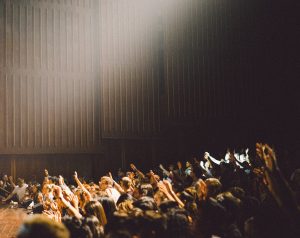
Academic freedom is under attack. Photo: Edwin Andrade
Students should be encouraged to challenge ideas and question the world around them. Higher education is meant to teach us how to think freely, and for ourselves. Unsettling new data published by the Academic Freedom Index proves that this freedom is under threat. The report finds that academic freedom is in decline for over 50 percent of the world’s population and that many people on campuses worldwide have significantly less freedom today than they did ten years ago. In the past decade, academic freedom has improved in only a handful of countries, affecting just 0.7% of the world’s population. The most populous of these countries is Uzbekistan, a closed autocracy in which universities and scholars still face severe limitations, such as the government’s control over contacts between universities or scholars and foreign entities.
AFI’s data signals a decline across all regions and all region types. Our own ranking, the recently published Index Index, a project that uses innovative machine learning techniques to map the free expression landscape across the globe, shows just how this plays out on a country-by-country basis. Some obvious patterns can be drawn. Dwindling academic freedom clearly correlates to the deterioration of democracy in countries such as Poland, Hungary, Russia and Belarus. Political developments, including military coups in countries such as Myanmar and Afghanistan, have coincided with severe declines in academic freedom. In December 2022, the latter saw a ban by the Taliban on women and girls attending universities, a ruling that illustrates how academic freedom extends beyond what is taught on campuses and delineates one’s freedom to simply exist within academic spaces.
That said, the data shows that declines in academic freedom worldwide have occurred in different political settings and do not always follow the same pattern. Liberal democracies such as the United States of America and the United Kingdom are among the countries under which freedom is proven to be under threat. The AFI attributes this to ‘differences between individual and institutional dimensions of academic freedom’. This demarcates the difference between the freedom of an individual to teach, research and communicate freely and an institution’s autonomy and freedom to operate without government regulation. The AFI report gives a number of examples showing how disaggregation has occurred.
China, for instance, has witnessed a decrease in institutional academic freedom since 2010, when the State Council launched a ten-year strategy for education reform. Chinese universities have since remained in a subordinate position to the party-state, with universities that maintain leadership and management systems controlled by the university’s party committee. The party sets the boundaries of permissible research, exchange, and academics’ public speech. This system facilitated a serious decline in the freedoms enjoyed by academics under President Xi Jinping who has consolidated and centralised power, reestablished the party’s control over information, education and media, and made censorship in China a fact of life. Moreover, the draconian National Security Law enacted in Beijing in 2020 has exacerbated pressure on academic freedom.
The United States, however, presents an altogether different picture. Despite being lauded as a bastion of free expression, the US has seen a visible decline in academic freedom since 2021. This is because educational matters in the USA are largely regulated by individual states, which have increasingly used their authority to interfere in academic affairs. Several Republican-led states have adopted bills that ban the teaching of concepts related to “critical race theory” in universities. Conservative groups have lobbied state legislatures in attempts to withdraw funding from subjects such as gender, minority studies, and environmental science. Some institutions have introduced self-censoring measures following abortion bans to avoid persecution by state governments. In September 2022, Idaho’s flagship university curtailed individual academic freedom by blocking staff from discussing abortion or emergency contraception on campus.
Mexico’s government, led by Andrés Manuel López Obrador, has weakened institutional autonomy by regularly appointing university directors, often resulting in student protests. Attacks on (predominantly female) students, protests against these harassments, and a drug war fought on university campuses has also fuelled a decline in campus integrity, university safety and academic freedom.
The underwhelming glimpse of hope that emerges from this year’s findings (compared with 2022) is that the number of countries with improvements in academic freedom grew from two to five. Overall, the data signals a shift toward a less free world, in a worse state than it was 10 years ago. It’s a tough pill to swallow.
1 Mar 2023 | News, Statements
The undersigned organisations reiterate their support for journalist Carole Cadwalladr as the Court of Appeal handed down its judgment in the case taken against her by millionaire businessman and political donor Arron Banks. Banks’ legal action related to two publications in which Cadwalladr had said the businessman was lying about his relationship with the Russian state – one in a TED Talk and one in a tweet.
Last June, Banks lost the libel action against Cadwalladr. At the time, the judge ruled that Cadwalladr had successfully established a public interest defence for the TED Talk, which was the only of the two publications to have reached the threshold for serious harm. While the judge found that Cadwalladr’s public interest defence was no longer applicable after the Electoral Commission exonerated Banks (in April 2020), she did not believe that the continued publication of the TED Talk could cause serious harm to his reputation. In his appeal, Banks argued that the judge should have found that both the TED Talk and the Tweet did seriously harm his reputation after April 2020.
Yesterday the Court of Appeal upheld Banks’ argument that the continued publication of the TED Talk had the potential to harm his reputation, but it dismissed two other grounds of his appeal, upholding the initial decision to dismiss the claim in respect of the Tweet. Although the court acknowledged that Cadwalladr does not have control over TED’s publications, she will nonetheless be liable for the damages arising from the publication of the TED Talk after April 2020.
“We are pleased that the judge dismissed the majority of the appeal against Cadwalladr,” the members of the UK Anti-SLAPPs Coalition said. “We have long categorised this case as a strategic lawsuit against public participation (SLAPP), aimed at intimidating and silencing Cadwalladr.” SLAPPs abuse the law in order to intimidate and silence public watchdogs from speaking out on matters of public interest.
Last year, the co-chairs of the UK Anti-SLAPP Coalition rebutted Mrs Justice Steyn’s assertion that the case against Cadwalladr was not a SLAPP, highlighting the fact that Banks could have taken action against The Observer or TED instead of her. “In compounding the power imbalance between him and the defendant, [Banks’] decision to take legal action against [Cadwalladr] as an individual adds weight to the categorisation of the case as a SLAPP,” they wrote.
“Last July, the government set out a package of measures aimed at tackling SLAPPs, but it appears that limited – if any – progress has been made at enacting those measures since then,” the organisations concluded. “We once again call on the government to step up. Our democracy relies on the ability of public watchdogs to hold power to account.”
Signed:
Index on Censorship
Justice for Journalists Foundation
Whistleblowing International Network
openDemocracy
National Union of Journalists (NUJ)
Public Interest News Foundation
ARTICLE 19
English PEN
The Daphne Caruana Galizia Foundation
Committee to Protect Journalists
Protect
Spotlight on Corruption
PEN International
The Bureau of Investigative Journalism
24 Feb 2023 | Belarus, FEATURED: Jessica Ní Mhainín, News, Ukraine
The people in Belarus are not willing to fight against Ukraine. It won’t be easy to convince them,” Ukrainian president Volodymyr Zelensky told the Munich Security Conference last week amid threats from Belarus that it could join the Russian offensive. The Belarusian regime has supported Russia since the invasion, but their armed forces have not (yet) been directly involved in the conflict.
Like in Russia, anti-war rhetoric has been heavily repressed in Belarus. Last March mothers of Belarusian soldiers were arrested after they gathered in the church to pray for peace. And only last week a 65-year-old garage owner was fined, and his business closed for having called Russian military personnel “occupiers” and refusing to sell them goods.
Nonetheless, some political prisoners have managed to communicate their feelings about the war. “We are one, we used to be at peace […] Hide your pride and shake hands,” Siarhei Sakavets wrote in his poem “22.02.2022” on the eve of the invasion. “There are so many rumours about everything that is happening, and the news on TV. God help me. I am very worried about you,” Larysa Kuzmenka wrote to her daughter and grandson last November.
Reading these letters from Belarusian political prisoners published by Index on Censorship, Pasha Bystrova – a Ukrainian woman who now lives in the Netherlands – says she felt a sense of “extreme injustice”. In different ways, Ukrainians and Belarusians are being deprived of their fundamental rights. They are suffering the consequences of tyranny.
Bystrova, who now works with refugees – including Ukrainian refugees – told Index that she feels that political prisoners and refugees are alike in that they are often perceived as being ‘the other’ by wider society. They are misunderstood because many people have preconceived ideas of who a ‘political prisoner’ or ‘refugee’ is. Having read political prisoners’ letters, Bystrova said: “I felt this could be me, any of us or our loved ones.”
Bystrova feels that the fates of Ukraine and Belarus are intertwined. “I believe the result of this war will greatly influence the situation in Belarus,” Bystrova told Index. “The collapse of the Lukashenka regime is inevitable.” That’s why defending Ukraine is “for our freedom and yours”.
Index on Censorship has so far published letters from 29 of the 1450 political prisoners in Belarus. Read their letters here
21 Feb 2023 | News, Russia, Ukraine
Immediately after Russia’s invasion of Ukraine in February 2022, Chechen leader Ramzan Kadyrov loudly announced the active involvement of Chechen security forces in it. Units of the Russian army and the Interior Ministry for Chechnya, which de facto report to Kadyrov personally, lined the grounds of his residence in the centre of the Chechen capital. Kadyrov said at the time that 12,000 Chechen volunteers were ready to leave for any special operation in the interests of Russia.
Since then, various sources have claimed that about 200 Chechens have been killed. The figure for the number of Chechens fighting for Russia is about 10,000 according to Kadyrov. Russian human rights activists put the number at around 3,000.
In September 2022 several women decided to organise a demonstration against sending Chechens to join Russia’s war. In a voice message that circulated on social media at the time, the organisers called on people to come to the central square of the city of Grozny: “They killed us in two wars, aren’t there enough dead, mutilated and crippled?” the woman in the message asks. On the same day, Kadyrov said on his Telegram channel that the women had been detained, a preventive conversation was held with them, and he promised to send their sons to fight in Ukraine.
This was something of an understatement. The human rights group Memorial has since confirmed that the women were taken to Grozny’s City Hall and their husbands forced to beat them. The son of at least one of the women was sent to Ukraine and her husband died a few days later, seemingly of “a broken heart”.
This kind of harsh reaction had an effect: people became afraid to express their opinions, even in front of their long-time friends. Umar from Grozny says that recently a friend of his sent a meme about the war in Ukraine into a group chat room, and five minutes later deleted it. “This has never happened before, everyone knows everyone in this chat room and before the war everyone trusted each other,” said Umar.
That said, one activist of a Russian human rights organisation believes that the situation of free speech in Chechnya has changed, but not necessarily for the worse. She confirms that people are less likely to express their discontent with the authorities in public, but among trusted circles, criticism of the Chechen authorities has become harsher. She says that even those who used to be apolitical are now speaking out against the actions of the authorities. She believes that the people who fear that their sons who survived the Chechen wars or were born later will die in a new, “alien war”.
According to Marina, a 33-year-old who works at a public institution in Chechnya, “not a single lunch with friends goes by without talking about Ukraine”. She follows all the news from the front and cheers for Ukraine’s victory. Most of Marina’s friends also support Ukraine and want Russia to lose. When she and her friends discuss Ukraine in a café, everyone keeps asking each other to keep their voices down.
“Ukraine is going through the same thing we went through. The same rhetoric, only we were accused of being a nation of terrorists, while the Ukrainians are ‘Nazis’,” Marina said. She is sure that among Chechens there is no patriotism toward Russia. “Where does it come from?” she asked rhetorically.
“The Chechens we see on social networks and state channels talking about love for Russia are people who need something from the authorities. They pursue purely material goals.”
Marina personally knows Chechens who went to Ukraine for money but that was at the very beginning of the war (the minimum amount paid by the Russian government for participation in the war is 195,000 rubles monthly, about $2615),
Umar, 43, a courier from Grozny, tells of his neighbour who was sent to Ukraine recently. “He liked to drink and make noise. He was taken to prison and stayed there for several months. Then he was offered: either you go to Ukraine or we put you in jail for a long time. He agreed to Ukraine. I recently saw a picture of him standing somewhere in the Luhansk region of Ukraine, in a Russian military uniform, with a submachine gun in his hands”. According to Umar, there are many such cases.
There are also those in Chechnya who think differently and support Kadyrov’s army. These are mostly families of Chechens who are fighting on the side of Russia. “They are not rooting for Russia’s victory, but for their family members,” said Tamara, a 49-year-old housewife from a Chechen village. Those whose children have gone to fight in Ukraine sincerely want them to return home and support them. These parents need to explain to themselves that their sons are not risking their lives for nothing, and they speak “the language of television” Tamara said. Most of their rhetoric boils down to a line they’ve been told that Russia was forced to attack and that “the (Russian) government isn’t stupid”.
For the residents of Grozny, which was rebuilt after almost total destruction in the early 2000s, today they live ordinary, peaceful lives. As in other Russian cities, there is almost no indication that the country is waging an aggressive war against its neighbour. It is almost the same war Russia waged against Chechnya in the 1990s and 2000s when it fought for independence. The graffiti on the walls that used to say “Welcome to hell”, left for the Russian soldiers by Chechen fighters for independence, has been replaced by murals depicting Kadyrov and his men. But there is little faith in the sincerity of Kadyrov’s love for the Russian leadership. Marina says:
“Kadyrov has no patriotism for Russia. All he protects is his position and his stability.”
This article is written by a journalist from Chechnya. For their safety they wished to remain anonymous and excluded identifying features of those they spoke to as well
