10 Jan 2019 | Events
[vc_row][vc_column][vc_single_image image=”104613″ img_size=”full”][vc_column_text]The Holocaust never happened. The planet isn’t warming. Vaccines cause autism. All of us deny inconvenient truths sometimes, but what happens when denial becomes ‘denialism’, a systematic attempt to overturn established scholarly findings? And how do we relate to this phenomenon in a ‘post-truth’ age?
Our panellists, whose expertise covers history, contemporary culture, the law and psychotherapy, discuss the significance of phenomena such as Holocaust denial and climate change denial, and how they relate to ‘everyday’ denial.
Speakers[/vc_column_text][vc_row_inner][vc_column_inner width=”1/3″][vc_single_image image=”104622″ img_size=”full”][vc_column_text]Jane Haynes is a psychotherapist who works through dialogue and relationship. She was part of a team responsible for contributing to the training syllabus in Russia after President Yeltsin permitted analytic psychotherapy to be returned to the academe. She has written several books of which the latest are Doctors Dissected (With Dr Martin Scurr) and her memoir: If I Chance to Talk A Little Wild(2018) both published by Quartet Books.[/vc_column_text][/vc_column_inner][vc_column_inner width=”1/3″][vc_single_image image=”104621″ img_size=”full”][vc_column_text]Dr Keith Kahn-Harris is a writer and sociologist. He teaches at Leo Baeck College and Birkbeck College and runs the European Jewish Research Archive at the Institute for Jewish Policy Research.[/vc_column_text][/vc_column_inner][vc_column_inner width=”1/3″][vc_single_image image=”104623″ img_size=”full”][vc_column_text]Mark Levene has been an environmental-cum-peace activist, an academic, and an unsuccessful advocate of their merger. He writes, mostly about genocide and climate change. He also runs study tours to the once multicultural city of Salonika (The Greek Project).[/vc_column_text][/vc_column_inner][/vc_row_inner][vc_row_inner][vc_column_inner width=”1/3″][vc_single_image image=”104620″ img_size=”full”][vc_column_text]James Libson is a partner at Mishcon de Reya, solicitors, where he has been for 27 years. He has acted in many high profile cases including for Deborah Lipstadt in her case against David Irving, Gina Miller in her challenge to the government over Article 50, and most recently on behalf of Margaret Hodge MP resisting her expulsion from the Labour Party. He chaired World Jewish Relief from 2011-16 and currently chairs Prism, the Gift Fund. He has an Honorary Ph.D. from the University of Law.[/vc_column_text][/vc_column_inner][vc_column_inner width=”1/3″][vc_single_image image=”104619″ img_size=”full”][vc_column_text]Lucy Siegle is a writer and TV presenter specialising in environmental issues, ethical shopping and lifestyles. She is an authority on the environmental and social footprint of the global fashion industry. She co-founded the Green Carpet Challenge with Livia Firth and she was The Observer and The Guardian’s eco agony aunt. She is known on TV as a reporter and presenter on BBC1’s The One Show and has been reporting on the problem of single use plastic since the show began. Her book, Turning the Tide on Plastic: How Humanity (and you) Can Make Our Globe Clean Again will ignite the plastic activist in all of us.[/vc_column_text][/vc_column_inner][vc_column_inner width=”1/3″][vc_single_image image=”80210″ img_size=”full”][vc_column_text]Jodie Ginsberg is chief executive of global freedom of expression organisation, Index on Censorship. She is a passionate believer in the power of words and the importance of good heels.[/vc_column_text][/vc_column_inner][/vc_row_inner][/vc_column][/vc_row][vc_row][vc_column][vc_column_text]
When: Thursday 7 March, 8:30pm
Where: Hall One, Kings Place, 90 York Way, London, N1 9AG
Tickets: £16.50 via Jewish Books Week
[/vc_column_text][/vc_column][/vc_row]
4 Jan 2019 | Magazine, News, Volume 47.04 Winter 2018 Extras
[vc_row][vc_column][vc_column_text]
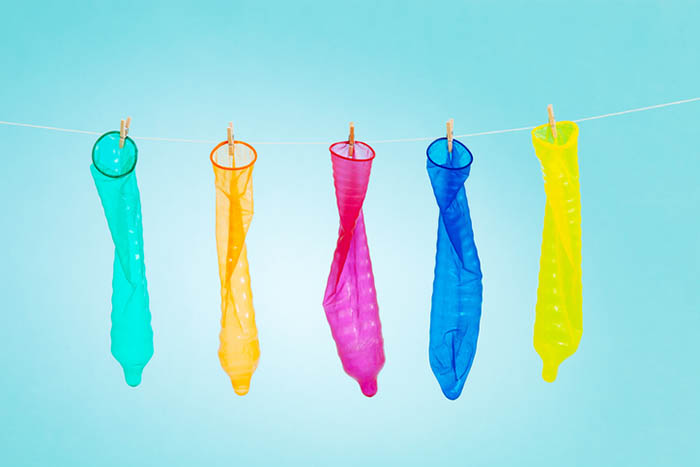
Credit: iStock / LemonTreeImages
Sex and pregnancy continue to be taboo subjects around the world as a special report in Index on Censorship magazine shows. From using toothpaste as emergency contraception to not receiving proper treatment during childbirth, fictional beliefs around sex education and reproductive health, combined with a lack of resources, are leading to sexually transmitted diseases, unwanted pregnancies and problems or death during pregnancy.
Toothpaste isn’t just for cleaning teeth, it can also prevent pregnancy
In Ecuador’s Amazonian region, health workers have reported instances of women using toothpaste after sex to prevent pregnancy. A woman in Mexico, who believed contraception was immoral, thought she’d successfully avoided pregnancies when she had green vaginal discharge — a sign of infection. Latin America and the Caribbean are the only regions in the world where pregnancies are rising among girls ages 15 and under due to ineffective use of contraception and lack of education.
Just touching a man’s hand can lead to pregnancy
In North Korea, a country where information is restricted by the government, topics such sex and reproduction are off-limits in schools, and myths such as touching a man’s hand can lead to pregnancy so prevalent, that STIs and unwanted pregnancies are major problems. Condoms and other forms of contraception are unknown, even among adults. Because the signs of pregnancy aren’t talked about, many women won’t know they’re pregnant until they start to show, leading to a rise in illegal and unsafe abortions. But, as Jieun Baek writes in the latest Index on Censorship magazine, the situation may be improving.
Only “weak” and “lazy” women have Caesarean sections
Nigeria has the highest rate of maternal deaths in sub-Saharan Africa, and sentiments like this contribute to societal pressure for women not to have C-sections. Even yelling or shouting during delivery may be viewed as a sign of personal failure. Many women who have C-sections still tell people they had a vaginal delivery, and the stigma against is so strong that some may attempt or be pressured into a vaginal delivery at the cost of their or their babies’ lives. According to Unicef, Nigeria has the second highest global maternal mortality rate, behind only India, a country with more than five times Nigeria’s population.
If someone experiences pain during childbirth, it’s their fault
Obstetric abuse in Russia has become almost commonplace, with often only three to four midwives and four doctors to care for 30 to 40 women. Doctors and obstetricians carry out procedures like inducing labour without asking for permission or informing the mother. And if the patient is in pain? The response may be: “How are you planning on delivering the baby if you’re already in pain?” The systemic issue of a lack of resources in hospitals has become a health endemic for women in Russia.
If you don’t have a condom, chicken skin or cling film will work just fine
According to a 2009 survey in the UK questioning 1,000 women aged 18-50, one in five said they had heard of these items being used. Misinformation such as this may be the cause behind Britain’s high rate of teenage pregnancy. Based on 2016 data, this number is at an all-time low for the country, with a rate of 18.9 conceptions per thousand women aged 15 to 17, but Britain still has the highest teenage pregnancy rate in western Europe.
[/vc_column_text][/vc_column][/vc_row][vc_row][vc_column width=”1/3″][vc_custom_heading text=”Birth, Marriage and Death” font_container=”tag:h3|text_align:left” link=”url:https%3A%2F%2Fwww.indexoncensorship.org%2F2018%2F12%2Fbirth-marriage-death%2F|||”][vc_column_text]
The winter 2018 issue of Index on Censorship magazine explores taboos surrounding birth, marriage and death. What are we afraid to talk about?
With: Liwaa Yazji, Karoline Kan, Jieun Baek
[/vc_column_text][/vc_column][vc_column width=”1/3″][vc_single_image image=”104225″ img_size=”full” onclick=”custom_link” link=”https://www.indexoncensorship.org/2018/12/birth-marriage-death/”][/vc_column][vc_column width=”1/3″][vc_custom_heading text=”Subscribe” font_container=”tag:h3|text_align:left” link=”url:https%3A%2F%2Fshop.exacteditions.com%2Findex-on-censorship|||”][vc_column_text]In print, online. In your mailbox, on your iPad.
Subscription options from £18 or just £1.49 in the App Store for a digital issue.
Every subscriber helps support Index on Censorship’s projects around the world.
 SUBSCRIBE NOW[/vc_column_text][/vc_column][/vc_row]
19 Dec 2018 | Americas, Awards, Fellowship, Fellowship 2018, Honduras, News
[vc_row][vc_column][vc_column_text]
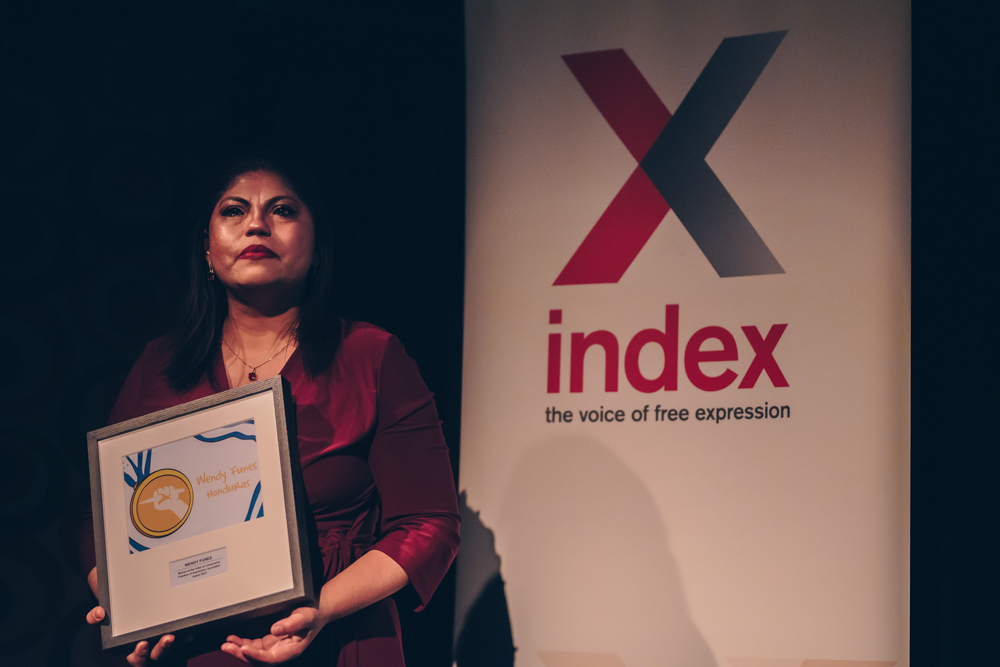
2018 Freedom of Expression Journalism Award-winner and 2018 Journalism Fellow Honduran investigative journalist Wendy Funes at the 2018 Index on Censorship Freedom of Expression Awards (Photo: Elina Kansikas)
“Violence is a way of keeping society under control because a lot of what people do or don’t do is a reaction to fear,” Wendy Funes, winner of the 2018 Index on Censorship Freedom of Expression Awards Fellowship for Journalism, tells Index on Censorship. “It becomes an indirect method of control, not just over society, but journalism as well.”
Funes worries this kind of violence has become “normalised” in Honduras and says the shooting and wounding of journalist Geovanny Sierra — who has survived numerous attempts on his life — by military police while covering protests of electoral fraud in late November is just the latest example. The Honduran authorities issued a statement saying that law enforcement was attacked first, which is why they started shooting. “With this they have justified the crime,” Funes says, adding that nothing is being done about the attacks on journalists in the country: “The most terrible thing is the impunity that exists because if something like this happened in another country it would a scandal, but here it is already forgotten.”
Funes is no stranger to covering either corruption or protest and has had her own brushes with heavy-handed state forces, although she says for the most part she has been lucky. “I’ve had training opportunities in self-protection and security,” she says. “I am also very cautious — I try to plan my routes and if I go inter dangerous areas, I try to have a safety protocol, to have alliances with civil society groups, so if something happens to me I can let them know.”
Recently, Funes’ investigative website Reporteros de Investigacion has been focusing on issues such as human trafficking, violence against student protesters, femicide and the high-level cocaine trafficking case involving Juan Antonio Hernández, brother of Honduran president Juan Orlando Hernández. The website has also been covering the caravan of people fleeing persecution, poverty and violence in the country. “They are facing a very cruel situation,” Funes says.
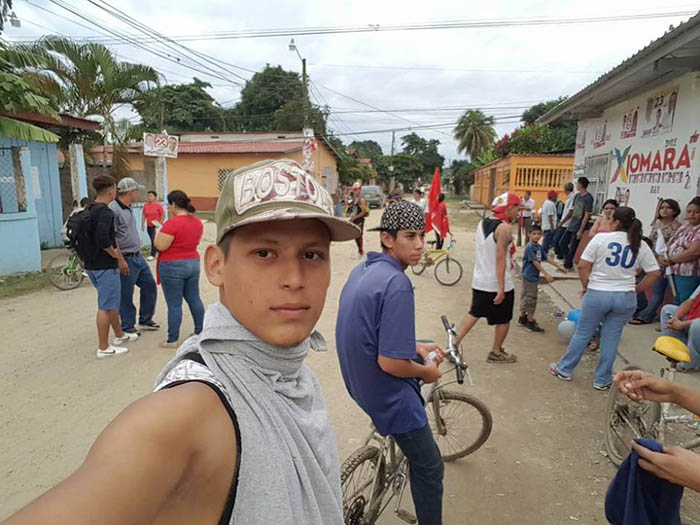
Honduran migrant Daniel Portillo
Although Reporteros de Investigacion doesn’t have the resources to cross the border, it has been working closely with some of those who have fled, such as 25-year-old Daniel Portillo, who left Honduras in search of the “American dream”. Portillo is now in Mexico. “He has found someone who works with migrants and helps migrants,” Funes, who first met him when she was covering protests in San Pedro Sula, a city in the northwest of Honduras, said. “He is a young person with a lot of leadership qualities, a lot of desire to advocate for other young people.”
While in Honduras Portillo organised sports tournaments in an area controlled by the criminal gang MS-13. “He resisted joining the gang,” Funes says. “He was always trying to negotiate with them so that he could help other young people so they wouldn’t get into drugs or alcohol.”
Writing in Reporteros de Investigacion, Portillo explains the difficulty of explaining to his young daughter that he left so she could have a better future: “If God allows it, we will see each other again or else, I am writing this letter to you in case unfortunately they killed me on the way and buried me; my heart is that of a warrior and I will continue forward, whatever happens, my mother suffers for my departure.”
“He told me that he has seen many people carved up since he was a child,” Funes tells Index. “Violence weighed on his psyche and made him very vulnerable young person. He told me that he looked for employment in Honduras, and when he could not find he decided to migrate with the caravan.”
It is such vulnerability that makes poor Hondurans so susceptible to human trafficking. “It’s like Russian roulette,” Funes says. “I have come to realise that there are many Hondurans who have an eagerness to migrate to the USA, but have ended up staying in countries like El Salvador, Guatemala, Mexico and Belize and have become victims of sexual exploitation, domestic service and forced matrimonies as they flee from gangs and narco-politics. Some of the people who have left come back mutilated because they lose limbs on the trains.”
For those that do make it to the USA, they face discrimination, but at least they have the opportunity for better salaries, with which they can send money to their families struggling back home, Funes says. These remittances play a key role in sustaining the Honduran economy. In May 2018 Hondurans abroad sent back an all-time high of $456.2 million in a single month.
While Funes would like to see more Hondurans stay at home, not only to avoid the very real risks that come with being a migrant, but also to fight for real change, she is all too aware of why people choose instead to leave. “You have to work five times harder than a corrupt individual to be able to sustain yourself and get ahead in Honduras. This economic model displaces the most vulnerable individuals.”
Much of what Funes and her team do over the next year will be geared towards her dream of founding a centre of investigative journalism, including training journalists and students with the help of Factum magazine in El Salvador. “This will bring together many different journalists who want to transform Honduras with investigative journalism,” Funes says.
With a grant from the National Endowment for Democracy, Funes and her team will also work on a project called Sembrando el Periodismo de Investigación en Honduras (Sowing Investigative Journalism In Honduras), which will involve four major investigations over the course of 2019.
“Many of the things that I dreamt of happening one day, in an idealistic way, have become reality, all thanks to Index,” Funes adds. “Solidarity, love and friendship are really the things that can move this world, and that is what Index is made of with all of the support they have extended to me.”
[/vc_column_text][/vc_column][/vc_row][vc_row][vc_column][vc_basic_grid post_type=”post” max_items=”4″ element_width=”6″ grid_id=”vc_gid:1561460137741-61f82764-3b8a-4″ taxonomies=”23255″][/vc_column][/vc_row]
17 Dec 2018 | Magazine, News, Volume 47.04 Winter 2018
[vc_row][vc_column][vc_custom_heading text=”Vital moments during our lifetimes are complicated by taboos about what we can and can’t talk about, and we end up making the wrong decisions just because we don’t get the full picture, says Rachael Jolley in the winter 2018 issue of Index on Censorship magazine” google_fonts=”font_family:Libre%20Baskerville%3Aregular%2Citalic%2C700|font_style:400%20italic%3A400%3Aitalic”][vc_column_text]
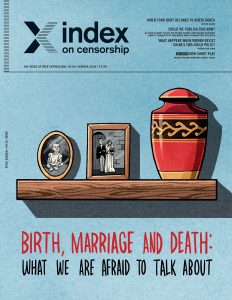
Birth, Marriage and Death, the winter 2018 issue of Index on Censorship magazine.
Birth, marriage and death–these are key staging posts. And that’s one reason why this issue looks at how taboos around these subjects have a critical impact on our world.
Sadly, there are still many of us who feel we can’t talk about problems openly at these times. Societal pressure to conform can be a powerful element in this and can help to create stultifying silences that frighten us into not being able to speak.
Being unable to discuss something that has a major and often complex impact on you or your family can lead to ignorance, fear and terrible decisions.
Not knowing about information or medical advice can also mean exposing people to illness and even death.
The Australian Museum sees death as the last taboo, but it also traces where those ideas have come from and how we are sometimes more shy to talk about subjects now than we were in the past.
The Sydney-based museum’s research considers how different cultures have disposed of the dead throughout history and where the concepts of cemeteries and burials have come from.
For instance, in Ancient Rome, only those of very high status were buried within the city walls, while the Ancient Greeks buried their dead within their homes.
The word “cemetery” derives from the Greek and Roman words for “sleeping chamber”, according to the Australian Museum, which suggests that although cremation was used by the Romans, it fell out of favour in western Europe for many centuries, partly because those of the Christian faith felt that setting fire to a body might interfere with chances of an afterlife.
Taboos about death continue to restrict speech (and actions) all around the world. In a six-part series on Chinese attitudes to death, the online magazine Sixth Tone revealed how, in China, people will pay extra not to have the number “4” in their mobile telephone number because the word sounds like the Mandarin word for “death”.
It also explores why Chinese families don’t talk about death and funerals, or even write wills.
In Britain, research by the charity Macmillan Cancer Support found just over a third of the people they surveyed had thoughts or feelings about death that they hadn’t shared with anyone. Fears about death concerned 84% of respondents, and one in seven people surveyed opted out of answering the questions about death.
These taboos, especially around death and illness, can stop people asking for help or finding support in times of crisis.
Mental health campaigner Alastair Campbell wrote in our winter 2015 issue that when he was growing up, no one ever spoke about cancer or admitted to having it.
It felt like it would bring shame to any family that admitted having it, he remembered. Campbell said that he felt times had moved on and that in Britain, where he lives, there was more openness about cancer these days, although people still struggle to talk about mental health.
Hospice director Elise Hoadley tells one of our writers, Tracey Bagshaw, for her article on the rise of death cafes (p14), that British people used to be better at talking about death because they saw it up close and personal. For instance, during the Victorian period it would be far more typical to have an open coffin in a home, where family or friends could visit the dead person before a funeral. And vicar Laura Baker says of 2018: “When someone dies we are all at sea. We don’t know what to do.”
In a powerful piece for this issue (p8), Moscow-based journalist Daria Litvinova reports on a campaigning movement in Russia to expose obstetric abuse, with hundreds of women’s stories being published. One obstacle to get these stories out is that Russian women are not expected to talk about the troubles they encounter during childbirth. As one interviewee tells Litvinova: “And generally, giving birth, just like anything else related to women’s physiology, is a taboo subject.” Russian maternity hospitals remain institutions where women often feel isolated, and some do not even allow relatives to visit. “We either talk about the beauty of a woman’s body or don’t talk about it at all,” said one Russian.
Elsewhere, Asian-American women talk to US editor Jan Fox (p27) about why they are afraid to speak to their parents and families about anything to do with sex; how they don’t admit to having partners; and how they worry that the climate of fear will get worse with new legislation being introduced in the USA.
As we go to press, not only are there moves to introduce a “gag rule” – which would mean removing funding from clinics that either discuss or offer abortion – but in the state of Ohio, lawmakers are discussing House Bill 565, which would make abortions illegal even if pregnancies arise from rape or incest or which risk the life of the mother. These new laws are likely to make women more worried than before about talking to professionals about abortion or contraception.
Don’t miss our special investigation from Honduras, where the bodies of young people are being discovered on a regular basis but their killers are not being convicted. Index’s 2018 journalism fellow Wendy Funes reports on p24.
We also look at the taboos around birth and marriage in other parts of the world. Wana Udobang reports from Nigeria (p45), where obstetrician Abosede Lewu tells her how the stigma around Caesarean births still exists in Nigeria, and how some women try to pretend they don’t happen — even if they have had the operation themselves. “In our environment, having a C-section is still seen as a form of weakness due to the combination of religion and culture.”
Meanwhile, there’s a fascinating piece from China about how its new two-child policy means women are being pressurised to have more children, even if they don’t want them — a great irony when, only a decade ago, if women had a second child they had to pay.
[/vc_column_text][vc_row_inner][vc_column_inner width=”1/4″][vc_icon icon_fontawesome=”fa fa-quote-left” color=”custom” size=”xl” align=”right” custom_color=”#dd3333″][/vc_column_inner][vc_column_inner width=”3/4″][vc_custom_heading text=”Taboos, especially around death and illness, can stop people asking for help or finding support in times of crisis” font_container=”tag:h3|text_align:left” google_fonts=”font_family:Libre%20Baskerville%3Aregular%2Citalic%2C700|font_style:400%20italic%3A400%3Aitalic”][/vc_column_inner][/vc_row_inner][vc_column_text]
In other matters, I have just returned from the annual Eurozine conference of cultural journals, this year held in Vienna. It was interesting to hear about a study into the role of this specific type of publication. Research carried out by Stefan Baack, Tamara Witschge and Tamilla Ziyatdinova at the University of Groningen, in the Netherlands, is looking at what long-form cultural journalism does and what it achieves.
The research is continuing, but the first part of the research has shown that this style of magazine or journal stimulates creative communities of artists and authors, as well as creating debates and exchanges across different fields of knowledge. Witschge, presenting the research to the assembled editors, said these publications (often published quarterly) have developed a special niche that exists between the news media and academic publishing, allowing them to cover issues in more depth than other media, with elements of reflection.
She added that in some countries cultural journals were also compensating for the “shortcomings and limitations of other media genres”. Ziyatdinova also spoke of the myth of the “short attention span”.
At a time when editors and analysts continue to debate the future of periodicals in various forms, this study was heartening. It suggests that there still is an audience for what they describe as “cultural journals” such as ours – magazines that are produced on a regular, but not daily basis which aim to analyse as well as report what is going on around the world. Lionel Barber, the editor of the Financial Times newspaper, spoke of his vision of the media’s future at the James Cameron Memorial Lecture at London’s City University in November. As well as arguing that algorithms were not going to take over, he said he was convinced that print had a future. He said: “I still believe in the value and future of print: the smart, edited snapshot of the news, with intelligent analysis and authoritative commentary.”
His belief in magazines as an item that will continue to be in demand, if they offer something different from something readers have already consumed, was made clear: “Magazines, which also count as print – are they going to just disappear? No. Look at The Spectator, look at the sales of Private Eye.”
The vibrancy of the magazine world was also clear at this year’s British Society of Magazine Editors awards in London, with hundreds of titles represented. Jeremy Leslie, the owner of the wonderful Magculture shop in London (which stocks Index on Censorship) received a special award for his commitment to print. This innovative shop stocks only magazines, not books, and has carved out a niche for itself close to London’s City University. Well done to Jeremy. Index was also shortlisted for the specialist editor of the year award, so we are celebrating as well.
We hope you will continue to show your commitment to this particular magazine, in print or in our beautiful digital version, and think of buying gift subscriptions for your friends at this holiday time (check out https://shop.exacteditions.com/index-on-censorship for a digital subscription from anywhere in the world). We appreciate your support this year, and every year, and may you have a happy 2019.
[/vc_column_text][/vc_column][/vc_row][vc_row][vc_column][vc_column_text]
Rachael Jolley is editor of Index on Censorship. She tweets @londoninsider. This article is part of the latest edition of Index on Censorship magazine, with its special report on Birth, Marriage and Death.
Index on Censorship’s winter 2018 issue is Birth, Marriage and Death, What are we afraid to talk about? We explore these taboos in the issue.
Look out for the new edition in bookshops, and don’t miss our Index on Censorship podcast, with special guests, on Soundcloud.
[/vc_column_text][/vc_column][/vc_row][vc_row][vc_column width=”1/3″][vc_custom_heading text=”Birth, Marriage and Death” font_container=”tag:h3|text_align:left” link=”url:https%3A%2F%2Fwww.indexoncensorship.org%2F2018%2F12%2Fbirth-marriage-death%2F|||”][vc_column_text]The winter 2018 issue of Index on Censorship magazine explores taboos surrounding birth, marriage and death. What are we afraid to talk about?
With: Liwaa Yazji, Karoline Kan, Jieun Baek[/vc_column_text][/vc_column][vc_column width=”1/3″][vc_row_inner][vc_column_inner][vc_single_image image=”104225″ img_size=”full” onclick=”custom_link” link=”https://www.indexoncensorship.org/2018/12/birth-marriage-death/”][/vc_column_inner][/vc_row_inner][/vc_column][vc_column width=”1/3″][vc_custom_heading text=”Subscribe” font_container=”tag:h3|text_align:left”][vc_row_inner][vc_column_inner][vc_column_text]In print, online. In your mailbox, on your iPad.
Subscription options from £18 or just £1.49 in the App Store for a digital issue.
Every subscriber helps support Index on Censorship’s projects around the world.
SUBSCRIBE NOW[/vc_column_text][/vc_column_inner][/vc_row_inner][/vc_column][/vc_row]
