29 Sep 2017 | Campaigns -- Featured, Media Freedom, media freedom featured, Statements
[vc_row][vc_column][vc_column_text]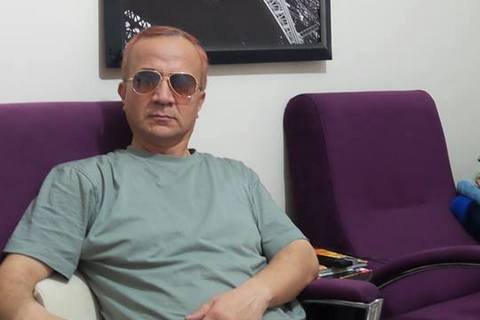
Index on Censorship urges Ukraine to not extradite journalist Narzullo Okhunjonov to Uzbekistan where he faces prosecution.
On 20 September authorities detained Okhunjonov when he arrived at an international airport in Kyiv, Ukraine, following an Interpol red notice.
Uzbek authorities issued an international arrest warrant on fraud charges against Okhunjonov, who denies the charges.
A Kyiv court then approved a 40-day detention period for the journalist, the limit under an Interpol notice.
Okhunjonov along with his wife and five children were seeking political asylum from the Ukrainian authorities. The journalist has been living in exile in Turkey since 2013 in order to avoid politically motivated persecution for his reporting.
“This abuse of the Interpol system is a direct violation of Article 2 of its constitution and a clear effort to silence critical journalists,” Hannah Machlin, project manager of Index on Censorship’s Mapping Media Freedom platform, said. “We call on the Ukrainian authorities to allow Narzullo Okhunjonov to remain in Ukraine, grant him political asylum and reject requests to extradite him to his home country.”
Okhunjonov writes in Uzbek and Russian for media outlets including BBC Uzbek on topics such as Uzbekistan’s authoritarian government and has criticised by the late president Islam Karimov.
The journalist’s family is currently residing in Kyiv.
The Council of Europe’s parliamentary assembly published Resolution 2161 in April 2017 on the abuse of the Interpol system. The resolution underlined that “in a number of cases in recent years, however, Interpol and its Red Notice system have been abused by some member States in the pursuit of political objectives, in order to repress freedom of expression”.
In August, two exiled Turkish journalists, Hamza Yalçın and Doğan Akhanli, were detained in Spain following Interpol red notices from Turkey. Both are no longer facing extradition. [/vc_column_text][/vc_column][/vc_row][vc_row][vc_column][vc_basic_grid post_type=”post” max_items=”4″ element_width=”6″ grid_id=”vc_gid:1506702230284-c0425a2a-f87f-6″ taxonomies=”6564″][/vc_column][/vc_row]
27 Sep 2017 | Europe and Central Asia, Hungary, Mapping Media Freedom, Media Freedom, media freedom featured, News
[vc_row][vc_column][vc_column_text]
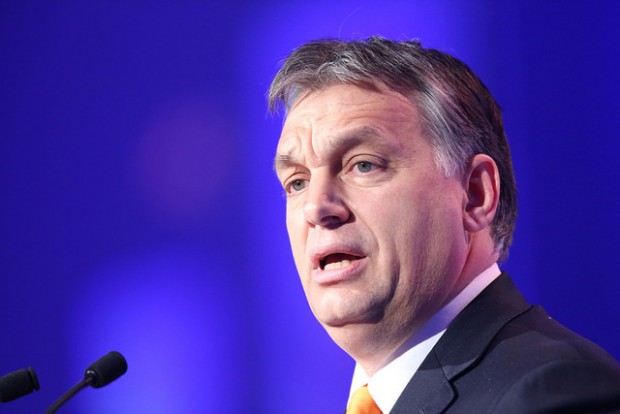
Viktor Orban (Credit: European People’s Party)
As Hungary prepares for parliamentary elections, independent journalists have become a target of the pro-government media outlets. This follows a speech by Hungarian prime minister Viktor Orban at the end of July at Tusványos, the annual Fidesz jamboree in Băile Tușnad, Romania, during which he said: “We must stand our ground against the Soros mafia network and bureaucrats in Brussels, and will have to go to battle against the media they operate in the coming months.”
Orban’s message at Tusványos is considered a preview of what to expect from the Hungarian government in the following months. A few days after the speech, Magyar Nemzet daily reported that the prime minister’s words signal a clear change in tactics: instead of defaming independent media outlets and their owners, pro-government media outlets started going after prominent journalists, known for their work of exposing the corruption of the Hungarian government.
During September 2017, pro-government media outlets started publishing articles discrediting leading Hungarian journalists critical to Orban’s regime.
On 5 September 2017, 888.hu published a list of journalists accused of being “mouthpieces” for George Soros, who has been called a “national security risk” and a “public enemy” by Orban for allegedly supporting the mass immigration of Muslims into Europe.
“The international media, with a few exceptions, generally write bad things about the government because a small minority with great media influence does everything to tarnish the reputation of Hungary in front of the world — prestige that has been built over hundreds of years by patriots,” 888.hu wrote.
Among those listed are Lili Bayer, a journalist working for Politico, László Balogh, a Pulitzer-winner photographer, Márton Dunai, Gergely Szakács and Sándor Pető, journalists working for the Reuters news agency, as well as Zoltán Simon, a journalist working for Bloomberg, and ZDF producer István Sinkovicz.
“The article is indicative of the extent to which the pro-government press seems willing to carry out the political orders of prime minister Viktor Orbán,” Budapest Beacon commented, adding that the editor in chief of 888.hu is Gábor G. Fodor, deputy chairman of Századvég Foundation’s board of trustees. Századvég is a think-tank and consultancy that has been embroiled in numerous scandals involving large government orders since 2010. The publisher of 888.hu is Modern Media Group Zrt., a company owned by Árpád Habony, an informal advisor to the prime minister.
The list was condemned by the 3,500-member National Association of Hungarian Journalists (MUOSZ). The body said that there is no evidence of any contact between Soros and the journalists named in the piece. “Stigmatising colleagues by using listing methods that hark back to former anti-democratic times is far from the practice of democratic journalism and informing (the public),” said MUOSZ.
The campaign against journalists continued on 11 September 2017 with a piece on 888.hu attacking Gergely Brückner, one of Hungary’s leading business journalists working at index.hu. The piece accused Brückner of writing an article about the political-diplomatic background of several millions of dollars transferred to Hungary from an Azerbaijani slush fund without any evidence.
“I was not particularly bothered by the editorial, although I don’t think he understands correctly where the trenches in the Hungarian media landscape are,” Gergely Brückner told Index on Censorship. “He also exaggerates my importance (of course, I felt flattered), and for sure he does misunderstand the goals I had with my articles.”
“It is known that the ruling party is always looking for enemies, these being refugees, Soros, the EU, NGOs and independent journalists, all of which are under attack,” Brückner added. “This is how they are trying to keep their core voters engaged.”
Unfortunately, ordinary media consumers have a difficulty in making a distinction between independent, fact-based journalism and biased, post-truth journalism, as Brückner explains. “I am not disturbed at being targeted and it does not influence my work or my sources. They had an obviously exaggerated opinion about me, but they did not have false statements. In the latter case, I would seek legal redress.”
On 14 September 2017, Attila Bátorfy, a data journalist at investigative website Atlatszo.hu and research fellow at CEU’s Center for Media and Communication Studies was also the target of a defamatory article published on an obscure blog, Tűzfalcsoport. The piece, illustrated with a photo of enlarged mites, is claiming that Bátorfy’s piece on the spread of Russian propaganda in Hungary is based on faulty evidence.
A day later, on 15 September 2015, Pesti Srácok, another website close to the government published an article about András Földes, a journalist working for index.hu who reported extensively on the migration crisis. The piece is a list of Földes’s more important reports, along with “ironic” commentary.
“When he goes to war zones, he watchfully takes a peek on the trenches, carefully avoiding danger, then he presents the things he saw as he wishes (…). His extraordinary talent is also shown by the fact that he believes anything to 17-year old immigrant men born on 1 January. At least we hope he naively believes the overstatements he writes about, and these (overstatements) are not invented by him,” the article goes.
Even if the readership of such a blog or website is relatively small, these articles are usually echoed in the media universe loyal to Orban and are often referenced by the public media as well, meaning that the allegations reach a considerable audience.
The recent defamatory pieces are only the tip of the iceberg of the attacks on press freedom in Hungary. Since 2010, the Hungarian government led by Orbán is working systematically to silence critical voices by changing the legal framework regarding media, redrawing the advertising market, introducing preferential taxes that only hit certain, independent broadcasters, buying up media companies, or simply closing them down, as happened with the largest opposition newspaper, Népszabadság.
The most alarming recent incidents regarding press freedom in Hungary:
Police check IDs of TV crew filming new PM office
Journalist assaulted at a Fidesz public forum
Largest opposition daily suspended
Parliamentary amendment restricts access to public information[/vc_column_text][/vc_column][/vc_row][vc_row][vc_column][vc_basic_grid post_type=”post” max_items=”4″ element_width=”6″ grid_id=”vc_gid:1506503807710-1289f6d8-e51b-2″ taxonomies=”2942″][/vc_column][/vc_row]
22 Sep 2017 | Azerbaijan, Azerbaijan News, Mapping Media Freedom, media freedom featured, News
[vc_row][vc_column][vc_column_text]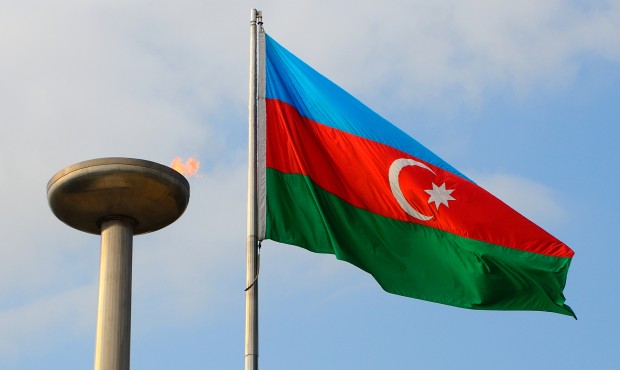
The government of Azerbaijan is waging a war on independent journalism within the country.
“This has been the case for years now,” says Arzu Geybulla, Index on Censorship’s Mapping Media Freedom correspondent for Azerbaijan. “Most of the journalists, editors, bloggers who are behind bars are there on bogus charges of hooliganism, tax evasion, slander, abuse of power, illegal entrepreneurship.”
The government has recently taken two of its cases internationally for the first time. This may change the way international reporters critical of Azerbaijan’s government cover the country in their own media.
Thorbjørn Jagland, the secretary general of the Council of Europe, has called on the authorities in the country “to respect the spirit of the country’s cooperation with the Council of Europe and to fully abide by its commitments under the European Convention on Human Rights in order to avoid yet another case of unjust deprivation of liberty which has no place in a democratic society”.
Here are some of the new cases and developments in the past month where Azerbaijani officials target the media domestically and abroad.
10 September, 2017 ‒ The regional reporter for opposition Azadliq newspaper Ziya Asadli was given a three-year sentence by a Bilasuvar region court after being charged with hooliganism.
In April 2017 Asadli reported that he was approached and pressured by police after reporting on local protests. After publishing these pieces, authorities accused Asadli of engaging in hooliganism at a local tea house.
During the incident at the tea house, he notified the police and learned that there was a complaint against him. He is denying these accusations, explaining that it was he who was attacked.
Azadliq Radio is the Azerbaijani service for Radio Free Europe/Radio Liberty.
5 September, 2017 ‒ French journalists Elise Lucet and Laurent Richard are being sued for defamation by the government of Azerbaijan. The two journalists are facing these charges after describing Azerbaijan as a dictatorship.
“This is the first time our government has engaged in an action of this kind and while it is hard to make any concrete projections, I suspect this may set the tone for future international reporters critical of the authorities and the language they use,” Geybulla said. “Clearly the authorities in Baku are very sensitive to the kind of language used describing them in international coverage.
A French court will make a ruling on 7 November 2017.[/vc_column_text][/vc_column][/vc_row][vc_row][vc_column][vc_separator][vc_custom_heading text=”Media freedom is under threat worldwide. Journalists are threatened, jailed and even killed simply for doing their job.” font_container=”tag:h3|text_align:left” use_theme_fonts=”yes” link=”url:https%3A%2F%2Fwww.indexoncensorship.org%2Fcampaigns%2Fpress-regulation%2F|||”][vc_row_inner][vc_column_inner width=”1/2″][vc_column_text]Index on Censorship monitors media freedom in Azerbaijan and 41 other European area nations.
As of 21/9/2017, there were 70 verified violations of press freedom associated with Azerbaijan in the Mapping Media Freedom database.[/vc_column_text][/vc_column_inner][vc_column_inner width=”1/2″][vc_column_text]Index on Censorship campaigns against laws that stifle journalists’ work. We also publish an award-winning magazine featuring work by and about censored journalists. Support our work today.[/vc_column_text][/vc_column_inner][/vc_row_inner][vc_separator][/vc_column][/vc_row][vc_row][vc_column][vc_column_text]
11 September, 2017 ‒ Russian-Israeli blogger Alexander Lapshin was released by authorities following a pardon for Azerbaijan President Aliyev.
Lapshin is a Moscow-based writer of a Russian-language travel blog and was wanted in Azerbaijan both for visiting the disputed region of Nagorno-Karabakh and for criticising Azerbaijani policies.
On 15 December 2016, Lapshin was detained in Minsk on an extradition request from Azerbaijan.
On 20 January 2017, the General Prosecutor’s Office of Belarus ruled to extradite Lapshin. One week later, his lawyer made an appeal to the Higher Court of Belarus. If extradited, the criminal case filed in Azerbaijan, if convicted, can lead to a prison sentence from five to eight years.
According to the Azadliq Radio, Lapshin attempted to commit suicide a day before his pardon fearing the extension of his extradition case. The pardoning means that his three-year sentence was commuted by the authorities.
Lapshin holds Russian, Ukrainian and Israeli citizenship, and will instead be extradited back to Israel.
11 September, 2017 ‒ A court has freed Mehman Aliyev, the director of independent news agency Turan, from pretrial detention and has now been placed under a conditional release.
On 24 August 2017 Aliyev was detained by Azerbaijani authorities on tax evasion charges. It was reported by Azadliq Radio that the next day he was sentenced to three months in pretrial detention. It was also reported that Aliyev was questioned for eight hours the day before his detention.
Aliyev has also been charged with carrying out “illegal entrepreneurship activities” which carries with it at least seven years sentence. He now faces three charges in total.
“The Council of Europe is working closely with the authorities in Azerbaijan on reforms intended to soften the punishment system and avoid unnecessarily harsh sentences and detentions whenever possible – for instance, in cases when the person who is detained does not threaten the security of the state or its citizens,” announced Secretary General of the Council of Europe Thorbjørn Jagland the day after the arrest. “These changes are a part of a presidential initiative that Azerbaijani officials recently reported to the Committee of Ministers as being on the point of adoption.”
Aliyev’s news agency Turan announced that it will be suspending its work temporarily. The tax probe launched against the agency resulted in the closing of its bank accounts, which has led to its forced temporary closure. On 15 September 2017 the official tax evasion charges were dropped, but the company’s bank accounts remain frozen.
The conditional release states that Aliyev is responsible for checking in regularly to the police and notifying them if he leaves the city of Baku.
In an interview with Azadliq Radio, Aliyev’s lawyer Fuad Agayev stated that there has been no changes to the charges brought against his client.[/vc_column_text][/vc_column][/vc_row][vc_row][vc_column][vc_basic_grid post_type=”post” max_items=”4″ element_width=”6″ grid_id=”vc_gid:1506001163566-c20aafba-9c85-8″ taxonomies=”6564″][/vc_column][/vc_row]
20 Sep 2017 | Campaigns -- Featured, Press Releases
 Index on Censorship’s database tracking violations of press freedom recorded 571 verified threats and limitations to media freedom during the first two quarters of 2017.
During the first six months of the year: three journalists were murdered in Russia; 155 media workers were detained or arrested; 78 journalists were assaulted; 188 incidents of intimidation, which includes psychological abuse, sexual harassment, trolling/cyberbullying and defamation, were documented; 91 criminal charges and civil lawsuits were filed; journalists and media outlets were blocked from reporting 91 times; 55 legal measures were passed that could curtail press freedom; and 43 pieces of content were censored or altered.
“The incidents reported to the Mapping Media Freedom in the first half of 2017 tell us that the task of keeping the public informed is becoming much harder and more dangerous for journalists. Even in countries with a tradition of press freedom journalists have been harassed and targeted by actors from across the political spectrum. Governments and law enforcement must redouble efforts to battle impunity and ensure fair treatment of journalists,” Hannah Machlin, Mapping Media Freedom project manager, said.
Q1 2017
During the first quarter the MMF database registered several trends that can be recognised as acute challenges to media freedom. A total of 299 incidents were reported to the project by MMF correspondents and other journalists between 1 January and 31 March 2017.
Some European governments clearly interfered with media pluralism. Other governments harassed, intimidated and detained journalists. The net effect of these interventions have been to debase and devalue the work of the press and undermine a basic foundation of democracy.
Throughout Q1: one journalist was murdered; 42 incidents of assault were confirmed; there were 89 verified reports of intimidation; media professionals were detained in 69 incidents; 38 criminal charges and civil lawsuits were filed; and journalists were barred from reporting in 54 verified incidents.
The full Q2 report is available on the web or in a combined Q1/Q2 PDF.
Q2 2017
The crackdown on media freedom throughout Europe — even within those countries perceived to be more democratic — continued in Q2 2017. A total of 272 incidents were reported to the project by MMF correspondents and other journalists between 1 April and 30 June 2017.
While the number of reports recorded during the second quarter declined nearly 10 per cent from the first quarter, this does not indicate an improvement in the overall state of media freedom. The situation for journalists across Europe remained extremely concerning. For example, the number of arrests decreased during the quarter, but hundreds of journalists were in detention or were forced into exile. In addition, based on the severity of the second quarter reports, inhumane treatment of media workers actually increased.
Throughout Q2: two journalists were killed; 36 incidents of physical assault and injury were reported; 53 criminal charges and civil lawsuits were filed; 99 instances of intimidation, which includes psychological abuse, sexual harassment, trolling/cyberbullying and defamation, took place; journalists were blocked from covering stories 54 times; 20 legal measures were passed that curtail press freedom; and 19 works were censored/altered by the state or editorial teams.
The full Q2 report is available on the web or in a combined Q1/Q2 PDF.
For more information, please contact:
For further information, please contact Hannah Machlin, project manager, Mapping Media Freedom on [email protected]
About Mapping Media Freedom
Mapping Media Freedom – an Index on Censorship-lead project with partner European Federation of Journalists and Turkey-based P24, Platform for Independent Journalism, partially funded by the European Commission – covers 42 countries, including all EU member states, plus Bosnia, Iceland, Kosovo, Macedonia, Montenegro, Norway, Serbia, Turkey, Albania along with Ukraine, Belarus and Russia and Azerbaijan. The platform was launched in May 2014 and has recorded over 3,300 incidents threatening media freedom by the end of Q2 2017.
Search reported incidents throughout Europe at https://mappingmediafreedom.org.
