11 Jul 2017 | Digital Freedom, Europe and Central Asia, Mapping Media Freedom, News, Ukraine
[vc_row][vc_column][vc_column_text]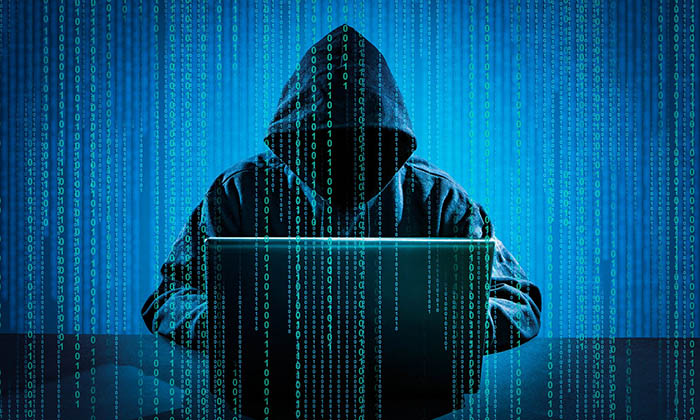
Alongside the digitalisation of journalism comes the increasing danger of cyber-attacks on media workers. Reporters in Ukraine have faced a string of such attacks recently, including cyberbullying, the blacklisting of websites and ransomware viruses, as reports to Index on Censorship’s Mapping Media Freedom project show.
“Online threats have become increasingly prevalent throughout Ukraine, and the climate of impunity that exists within the country prevents these cases from being taken seriously,” Hannah Machlin, the project manager at Mapping Media Freedom, said. “Index calls upon the Ukrainian authorities to investigate instances of online harassment more thoroughly and hold offenders accountable.”
Machlin urges Ukraine to “adhere to European press freedom standards by ceasing to censor the media, including pro-Russian websites”. Furthermore, she urges both the Ukrainian government the international community to “increase investments in digital security efforts”.
Hromadske TV journalist Nastya Stanko was the victim of a cyberbullying campaign. The harassment began on 10 June when Stanko received official thanks from Ukrainian Ministry of Defense “for significant contribution to the development of national war journalism”.
Katya Gorchinskaya, Hromadske TV executive director, claimed that the campaign against Stanko was a clear example of anonymous cyberbullying. “It’s not just a campaign against Stanko, this is just one example of harassment against journalists doing their work,” Gorchinskaya told Detector Media. “We saw many similar incidents last year, and this persecution is not only against those who spoke and wrote about the situation on the frontline, but also those who were writing about corruption in governance. Hromadske TV, Radio Liberty, Ukrayinska Pravda, Novoe Vremiya, OCCRP and all investigative journalists in general – they all suffer from such harassment.”
On 19 June, the Ministry of Information Policy released a list of 20 websites that it plans to ban, many of which are considered to be pro-Russian. These are: rusvesna.su, rusnext.ru, news-front.info, novorosinform.org, nahnews.org, antifashist.com, antimaydan.info, lug-info.com, novorossia.today, comitet.su, novoross.info, freedom.kiev.ua, politnavigator.net, odnarodyna.org, zasssr.info, ruspravda.info, on-line.lg.ua, ruscrimea.ru, c-pravda.ru and 1tvcrimea.ru.
According to the ministry, this list was compiled by experts and was sent to the Security Service of Ukraine. It believes that these websites violate Ukrainian legislation by fuelling ethnic and interethnic hostility, calling for the overthrow of the constitutional system, violating the territorial integrity of the country and violating legislation on decommunisation.
This comes after a 15 May decree by Petro Poroshenko, the country’s president, that bans a number of Russian media and social media websites including VKontakte and Odnoklassniki along with the search engine Yandex and the email service Mail.ru.
On 30 June Ukrainian news websites Korrespondent.net and Komsomolskaya Pravda were blocked for three days as a result of a ransomware attack known as Petya. A message on Korrespondent.net read: “Dear visitors, the site’s work was blocked by a massive virus attack. Our team is currently working hard to resume its work in the near future.”
According to Ukrainian police, 1,508 companies and individuals filed complaints about computers being locked by the Petya virus, which encrypts data on a computer and demands a ransom to release access. The attack is assumed to be a part of the 27 June large-scale hack which began in Ukraine, targeting the government, banks, enterprises and media outlets. Attacks also took place in Italy, central Europe, Israel, Germany and Russia.[/vc_column_text][/vc_column][/vc_row][vc_row][vc_column][vc_column_text]
Mapping Media Freedom
Click on the bubbles to view reports or double-click to zoom in on specific regions. The full site can be accessed at https://mappingmediafreedom.org/[/vc_column_text][/vc_column][/vc_row]
10 Jul 2017 | Artistic Freedom, News, Volume 46.02 Summer 2017 Extras, Youth Board
[vc_row][vc_column][vc_custom_heading text=”Members of Index’s youth board looked at three famous works that fell victim to the Russian censors”][/vc_column][/vc_row][vc_row][vc_column][vc_column_text]
The Summer 2017 issue of Index on Censorship magazine looks at the long-term consequences of 1917 Russian Revolution, which launched the global communist experiment, and the long-term impact that it had on free speech around the world. Here, three members of Index’s youth board give examples of works that failed to find favour with the authorities the revolution ushered in.
[/vc_column_text][/vc_column][/vc_row][vc_row][vc_column][vc_column_text]
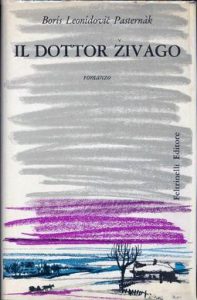
The original Italian edition of Dr Zhivago. Credit: Wikimedia
Dr Zhivago – Boris Pasternak
Isabela Vrba Neves (Stockholm)
A depiction of Russian life between the Bolshevik Revolution and World War II, Dr Zhivago (1957) by Boris Pasternak is a piece of literature presenting the reader with romance and the tragedies experienced by Russians during the early twentieth century.
Dr Zhivago tells the story of Yuri Zhivago, a man suffering hardship throughout his life, from becoming an orphan to being in love with two women and arousing the suspicions of those in power. Through an intricate plot introducing many characters, Zhivago witnesses the revolution and civil war, all while exploring questions of religion and philosophy.
Pasternak submitted his book for publishing in 1956 but was rejected in the Soviet Union due to it containing anti-Soviet passages and criticism of the Bolsheviks. As a result, the book was banned in the Soviet Union until 1988. However, in 1957 a manuscript was smuggled to Milan, where it was first published.
The following year Pasternak was awarded a Nobel Prize in Literature, which he had to turn down after being threatened with ejection from the Soviet Union. The award was later accepted in 1988 by his relatives.
A film adaptation of Dr Zhivago was released in 1965, starring the late actor Omar Sharif and Geraldine Chaplin. Immensely popular in Europe and North America, the film adaption was also banned for many years in the Soviet Union.
[/vc_column_text][/vc_column][/vc_row][vc_row][vc_column][vc_column_text]
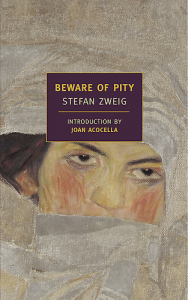
The cover of Stefan Zweig’s Beware of Pity. Credit: Wikimedia
The Collected Novellas of Stefan Zweig
Samuel Rowe (London)
As I was leaving a house on the outskirts of Copenhagen some summers ago, I was handed a bright orange hardback book. It was The Collected Novellas of Stefan Zweig. I was told that Zweig’s novel, Beware of Pity, had loosely inspired the 2014 Wes Anderson film The Grand Budapest Hotel and that Zweig’s works had been burned in the streets during the Third Reich. But this was not the first time his literature had been burned.
Not long before – 30 October 1929, to be precise – Krupskaia Lenin, wife of Vladmir, had sent out a circular to all librarians in the Soviet Union. It contained a list of literature considered decadent or which fostered “social pessimism”, and required they be removed from all public libraries. Zweig’s stories could have fallen into the former or the latter category; his stories were popular and hilarious, subversive and frank.
Once the procedure was completed, two copies of each title on the list were sent to the central library of each region, accessible only to qualified researchers.
[/vc_column_text][/vc_column][/vc_row][vc_row][vc_column][vc_column_text]
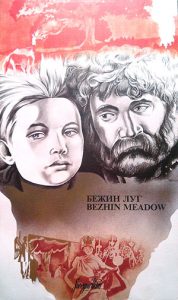
A poster for Bezhin Meadow. Credit: Wikimedia
Bezhin Meadow – Sergei Eisenstein
Sophia Smith-Galer (London)
One of the most famous films to have been scuppered by censorship in the Soviet Union was Bezhin Meadow, a film adaptation of the story Bezhin lug by Ivan Turgenev. The film, directed by Sergei Eisenstein, was believed to have been destroyed before its completion, but parts of it resurfaced in the 1960’s, allowing for a crude recreation.
The main character Ivan’s life story was based on the life of Pavlik Morozov, a young Russian boy who denounced his father to the Soviet Union and, ultimately, died at the hands of his family. It grew to become a story of political martyrdom after his death in 1932.
Sergei Eisenstein was nonetheless already a world famous film director – Battleship Potemkin (1925) is still used as an example of groundbreaking cinematography to this day – and is best remembered for pioneering the montage.
[/vc_column_text][/vc_column][/vc_row][vc_row][vc_column][vc_column_text]
This piece was written by members of Index on Censorship’s youth advisory board. You can find out more about the youth advisory board here
[/vc_column_text][/vc_column][/vc_row][vc_row content_placement=”top”][vc_column width=”1/3″][vc_custom_heading text=”100 Years On” font_container=”tag:p|font_size:24|text_align:left” link=”url:https%3A%2F%2Fwww.indexoncensorship.org%2F2017%2F06%2F100-years-on%2F|||”][vc_column_text]Through a range of in-depth reporting, interviews and illustrations, the summer 2017 issue of Index on Censorship magazine explores how the consequences of the 1917 Russian Revolution still affect freedoms today, in Russia and around the world.
With: Andrei Arkhangelsky, BG Muhn, Nina Khrushcheva[/vc_column_text][/vc_column][vc_column width=”1/3″][vc_single_image image=”91220″ img_size=”medium” alignment=”center” onclick=”custom_link” link=”https://www.indexoncensorship.org/magazine”][/vc_column][vc_column width=”1/3″ css=”.vc_custom_1481888488328{padding-bottom: 50px !important;}”][vc_custom_heading text=”Subscribe” font_container=”tag:p|font_size:24|text_align:left” link=”url:https%3A%2F%2Fwww.indexoncensorship.org%2Fsubscribe%2F|||”][vc_column_text]In print, online. In your mailbox, on your iPad.
Subscription options from £18 or just £1.49 in the App Store for a digital issue.
Every subscriber helps support Index on Censorship’s projects around the world.
 SUBSCRIBE NOW[/vc_column_text][/vc_column][/vc_row]
27 Jun 2017 | Artistic Freedom, Magazine, News, Volume 46.02 Summer 2017 Extras
[vc_row][vc_column][vc_custom_heading text=”As the Summer 2017 issue of Index on Censorship magazine looks at the modern implications of the Russian revolution 100 years on, Margaret Flynn Sapia lists 10 global songs inspired by revolutions of the last century”][vc_row_inner][vc_column_inner][vc_video link=”https://www.youtube.com/watch?v=Q2wneBVssPc&list=PLCY0ZVWasL3FginL7uuYQJy6JfXGIWmGu”][/vc_column_inner][/vc_row_inner][/vc_column][/vc_row][vc_row][vc_column][vc_column_text]
Music has an undeniable ability to move people; musicians can reach across borders and boundaries, pull at the heartstrings and say the unsayable. As a result, music has long been used to call for revolution, urging listeners to rise up against injustice and power. For the launch of Index on Censorship magazine’s summer 2017 issue, 100 Years On: What difference Russia’s revolution makes to our freedom today, we have compiled a playlist themed around the idea of revolution.
Tracy Chapman – Talkin ‘Bout A Revolution
In a world gripped by the denouement of the Cold War, Tracy Chapman saw change on the horizon. “Poor people gonna rise up /And get their share/ Poor people gonna rise up/And take what’s theirs” sums up the sentiment of Talkin ‘Bout A Revolution. Optimistic, perhaps, but the song arrived in 1988, at the cusp of a global uprising that saw the fall of Apartheid South Africa, the Soviet Union and several smaller communist regimes, as well as a Western ideological shift away from the ruthless capitalism of Thatcher and Reagan.
Gil Scott-Heron – The Revolution Will Not Be Televised
The Revolution Will Not Be Televised was released in 1970, at the end of a turbulent decade that saw the assassinations of several civil rights heroes including John F. Kennedy, Martin Luther King, Malcolm X and Fred Hampton. It calls on people to unite and take action beyond watching a television screen, warning that the revolution will not come with the glitz and glamour of television, and that the television will not be on their side. Gil Scott-Heron, an important figure and musician during the US Civil Rights movement, is keen to call for realistic understandings of how change can be achieved in this song.
The Specials – Nelson Mandela
The Specials’ Nelson Mandela drew popular attention to Mandela’s mistreatment in South Africa when it was released in 1984, bringing the injustice of his then two-decade imprisonment into common knowledge. When it was performed at a Wembley concert on Mandela’s 70th birthday in 1988, its chorus of “free Nelson Mandela” became a global rallying cry for the end of apartheid. Two years later, Mandela walked out of prison, and the apartheid regime fell shortly after.
David Zé – Mwangolé (O guerrilheiro)
One of Angola’s most renowned revolutionary artists, David Zé is particularly adept in his descriptions of the suffering and abuse of Angolans under Portuguese colonial rule. Mwangolé O guerrilheiro may not call for a specific course of revolutionary action, but its representation of the enduring pain and intolerable living conditions of Angolans remind listeners of what can drive a person to risk everything and revolt for their freedom. In a country that suffered through a generation-long civil war, that context can never be forgotten.
Carlos Puebla –Y en eso llego Fidel
“The fun was over, El Comandante came and ordered them to stop”, Puebla sings in this famous hymn to the Cuban revolution. Throughout the song, Carlos Puebla celebrates Castro’s arrival and overtake of the island, putting an end to capitalism’s prior corruption and exploitation of the island’s people. The droves of people who fled the subsequent corruption and exploitation by Castro’s communist regime might dispute the song’s celebratory tone.
The Korean People’s Army State Merited Chorus – Defend the Headquarters of the Revolution (혁명의 수뇌부 결사옹위하리라)
In North Korea, even revolutionary music – what should be defined and expressed by the people, free of censorship – is an unyielding expression and promotion of state power. Defend the Headquarters of the Revolution provides no mention of Korean culture or history preceding Kim Jong II, instead extolling the virtue of picking up arms for the Kims and fighting to the death, viewing this fight as a revolution against the rest of the world.
Vasily Agapkin – Farewell of Slavianka
Farewell of Slavianka (Proshchaniye slavyanki) became so popular during the 1917 Revolution that, despite its non-communist roots, the Soviet Union eventually adopted it as an official national song. This piece represents two fundamental components of revolution: popular sentiment during the people’s initial rebellion, and post-revolutionary appropriation of that sentiment into state propaganda.
Yulduz Usmonova – Ayting Ayting
Songs which explicitly detail Soviet occupation in Uzbekistan are scarce. However, songs sung in Uzbek instead of Russian (especially before the country’s independence) have long served as expressions of nationalism and rejection of the Russian hierarchy. Ayting Ayting is not a typical revolutionary song, but its defiance lies in its subtle refusal to conform to Russian norms.
Yoko Ono and John Lennon – Imagine
“Imagine there’s no countries, it isn’t hard to do, nothing to kill or die for”, sings John Lennon. This song co-written by Lennon and his wife Yoko Ono asks us to contemplate a different kind of revolution – not a singular uprising or struggle, but a new peaceful world where the divisions of religion and nationality have disappeared. The chorus of “You may say I’m a dreamer, but I’m not the only one” hints at the faint possibility of this future, if people could only come together long enough to realise how similar they are. In a sad irony, he was eventually assassinated by a mentally ill Christian extremist who considered this blasphemy.
Crosby, Stills, Nash and Young – Ohio
The Vietnam War and its national impact are deeply entrenched within US society, and have inspired countless pieces of art, film and music. Crosby, Stills, Nash and Young’s song Ohio was written in response to the 1970 Kent State University massacre, in which national guard soldiers opened fire on anti-war student protesters leaving four dead and nine wounded. The song was released just a few weeks after the incident, and placed the blame directly on the Richard Nixon administration. It was soon adopted as an anthem of the US’s anti-establishment movement.
[/vc_column_text][/vc_column][/vc_row][vc_row][vc_column][vc_column_text]
Print copies of Index on Censorship magazine are available on Amazon, or you can find information about print or digital subscriptions here. Copies are also available at the BFI, the Serpentine Gallery, MagCulture, (London), News from Nowhere (Liverpool), and Home (Manchester). Each magazine sale helps Index on Censorship continue its fight for free expression worldwide
[/vc_column_text][/vc_column][/vc_row][vc_row content_placement=”top”][vc_column width=”1/3″][vc_custom_heading text=”100 Years On” font_container=”tag:p|font_size:24|text_align:left” link=”url:https%3A%2F%2Fwww.indexoncensorship.org%2F2017%2F06%2F100-years-on%2F|||”][vc_column_text]Through a range of in-depth reporting, interviews and illustrations, the summer 2017 issue of Index on Censorship magazine explores how the consequences of the 1917 Russian Revolution still affect freedoms today, in Russia and around the world.
With: Andrei Arkhangelsky, BG Muhn, Nina Khrushcheva[/vc_column_text][/vc_column][vc_column width=”1/3″][vc_single_image image=”91220″ img_size=”medium” alignment=”center” onclick=”custom_link” link=”https://www.indexoncensorship.org/magazine”][/vc_column][vc_column width=”1/3″ css=”.vc_custom_1481888488328{padding-bottom: 50px !important;}”][vc_custom_heading text=”Subscribe” font_container=”tag:p|font_size:24|text_align:left” link=”url:https%3A%2F%2Fwww.indexoncensorship.org%2Fsubscribe%2F|||”][vc_column_text]In print, online. In your mailbox, on your iPad.
Subscription options from £18 or just £1.49 in the App Store for a digital issue.
Every subscriber helps support Index on Censorship’s projects around the world.
SUBSCRIBE NOW[/vc_column_text][/vc_column][/vc_row]
19 Jun 2017 | Artistic Freedom, News, Volume 46.02 Summer 2017
[vc_row][vc_column][vc_custom_heading text=”When cartoonists are being arrested, and novelists told their plots must only support the government line, you know your nation is in deep trouble, argues Rachael Jolley”][vc_row_inner][vc_column_inner][vc_column_text]
[/vc_column_text][/vc_column_inner][/vc_row_inner][/vc_column][/vc_row][vc_row][vc_column][vc_column_text]
A COUNTRY’S SENSE OF humour is a nebulous thing. But when it starts to disappear, something serious is afoot.
And so it is in Spain right now. Comedy, it turns out, is touching a nerve, as it often does, and rather surprisingly the lawyers are getting involved. Comedy is not only a threat, but under threat.
What’s bizarre is, this is Spain, a modern democracy, a solid, sensible country at the centre of Europe. Locking people up for making a joke, that’s something you might expect from an authoritarian and struggling state. But Spain?
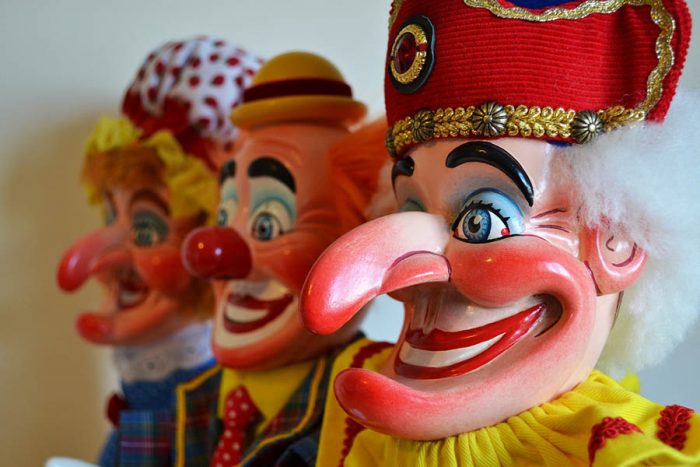
Well, it turns out, this is Spain in the 21st century. The list of comedy offences is not short. Spanish comedian Dani Mateo was told to testify before a judge in May for telling a joke referring to a monument built by Franco’s regime as “shit”. He told the joke during a satirical show. Now it doesn’t sound like the best joke in the world, but hell, we defend his right to tell it. And Mateo is not alone in the Spanish comic fraternity. There’s Facu Díaz, who was prosecuted last year for posting jokes on social media; Cassandra Vera, who was sentenced to a year in prison for making jokes about a former Spanish president; and three women who were accused of a religious hate crime for mocking a traditional Easter procession. Puppeteers whose Punch and Judy show included a sign for a made-up terrorist organisation carried by a witch spent a year fighting prosecution, unable to leave the country for weeks, receiving anonymous threats and having to report regularly to the police. On and on it goes, as Silvia Nortes reports for us on page 85.
So why does any of this matter? Well, jokes are a barometer of public mood, and as British comedian Andy Hamilton told this summer’s Hay Festival, you can even use them to test how much the public like or dislike a politician or public figure. He remembered making a joke about then Prime Minister Margaret Thatcher, and being told by one of her staunchest supporters to expect a wave of outrage. On checking, he found just three complaints, and that’s when, he said, he knew Thatcher was on the way out. Similarly, a recent joke about former UK Justice Secretary Michael Gove received a big fat zero moans in the BBC complaints box. Hamilton reckoned this was a sign of just how little the public cared about Gove.
So jokes do take the temperature of the nation, and one of many reasons politicians fear them is, as Mark Twain said, “Against the assault of laughter, nothing can stand.”
Politicians fear being made fun of, and fear that a satirical representation of themselves may take root in the electorate’s brain. They fear the public seeing their weaknesses. Some may remember that the classic satirical British TV puppet show Spitting Image reduced each member of the cabinet to a single ridiculous idea, a spitting former Home Secretary Roy Hattersley or a tiny David Steel tucked in the top pocket of David Owen (joint leaders of the SDP-Liberal alliance). Not good for their egos, not good for their future prospects. Steel said later that the sketch definitely affected his image.
[/vc_column_text][/vc_column][/vc_row][vc_row][vc_column width=”1/4″][vc_icon icon_fontawesome=”fa fa-quote-left” color=”custom” align=”right” custom_color=”#dd3333″][/vc_column][vc_column width=”3/4″][vc_custom_heading text=”That idea of groupthink, honed by the Soviet Union, satirised by George Orwell, continues to haunt writers in former communist countries today” google_fonts=”font_family:Libre%20Baskerville%3Aregular%2Citalic%2C700|font_style:400%20italic%3A400%3Aitalic”][/vc_column][/vc_row][vc_row][vc_column][vc_column_text]
Joke-telling is not the only ingredient in the comedy cupboard that upsets the powers that be. Historically, exaggerated portraits, as Edward Lucie-Smith writes in issue 197 of Index on Censorship, have long been used to diminish or enhance a public character. The most obvious creators of exaggerated portraits are newspaper cartoonists, who sometimes feel the long arm of the police on their shoulders as a result.
In our exclusive interview with legendary South African cartoonist Zapiro, he talks not only about the power of cartoonists, but the pressure on them not to offend or upset. In an interview with South African journalist Raymond Joseph, Zapiro said: “We provoke thought, even if that thought is pretty outrageous. Others can do it too. We just occupy a space where you can really push the boundaries.” Zapiro faced a six-year court battle with South Africa’s President Jacob Zuma over one of his cartoons. But Zapiro is just as feisty as ever, and reckons he is bolshier than the generations that have come after him.
Cracking down on comedy is just one way to command and control society. This issue’s special report examines others as we study the long shadows Russia’s 1917 revolution cast within and without its national borders.
From the beginning the early Soviets were not particularly fond of disagreement. Shortly after their rise to power, between October 1917 and June 1918, around 470 opposition publications were closed down. Lenin was clear how the nation should work. He believed that journalists, novelists and opinion formers were either with him, or against the state. If they were against the state, they shouldn’t be allowed to write or outline their views. “Down with non-partisan writers,” he argued. This is a view very much in favour with many other rulers today, including Angola’s President José Eduardo dos Santos, Chinese President Xi Jinping, and, recently, US President Donald Trump.
That idea of groupthink, honed by the Soviet Union, satirised by George Orwell, continues to haunt writers in former communist countries today. In Uzbekistan, as Hamid Ismailov outlines, the Soviet Union may have fallen, but the thinking remains the same. Writers with arguments that contradict President Shavkat Mirziyoyev are either neutralised by being employed by the state as advisers and consultants, or leave the country, or fail to be published.
In President Vladimir Putin’s Russia most of the media, apart from a few brave exceptions, fall into line with government positions. For instance, in February this year, according to the Index-led Mapping Media Freedom project, major Russian national television channels abruptly reduced the number of times they mentioned the US president. This followed a Kremlin order to cut back on “fawning coverage” of Trump.
In all the recent furore over “fake news”, prompted by almost incessant use of the term by Trump to undermine any reporting he didn’t like, it’s worth pointing out that tricks to get the public to believe something that is not true have been used throughout history. In fact, as Jemimah Steinfeld investigates (page 114), the Roman emperor Augustus was a master of manipulation well before PR handbooks were written.
And open the pages of a treasured book in our office and you’ll see an early version of photoshopping at work. Photographs featured in The Commissar Vanishes: The Falsification of Photographs and Art in Stalin’s Russia, show how people were “disappeared” from official Soviet portraits in the 1930s as they fell out of favour. Belarusians have been experiencing government attempts to get them to believe false stories for decades. In his report on page 52, Andrei Aliaksandrau unpicks the tricks used over the years and holds them up to the light.
And there’s some excellent thoughtful pieces in our fiction section too, with two new short stories written for this publication: one by Turkish writer Kaya Genç, and the other by British writer Jonathan Tel. The final slice is a new English translation of a much older story, by Russia’s “Comrade Count” Alexei Tolstoy.
To finish, a sad note. Our regular, and fantastic, Brazil correspondent Claire Rigby has died suddenly. Claire did amazing reporting for us, and we will miss her.
[/vc_column_text][/vc_column][/vc_row][vc_row][vc_column][vc_column_text]
Rachael Jolley is the editor of Index on Censorship magazine. She recently won the editor of the year (special interest) at British Society of Magazine Editors’ 2016 awards
[/vc_column_text][/vc_column][/vc_row][vc_row][vc_column][vc_custom_heading text=”From the Archives”][vc_row_inner][vc_column_inner width=”1/3″][vc_single_image image=”80569″ img_size=”213×289″ alignment=”center” onclick=”custom_link” link=”http://journals.sagepub.com/doi/pdf/10.1177/0306422017716030″][vc_custom_heading text=”Provoking the president” font_container=”tag:p|font_size:24|text_align:left” link=”url:http%3A%2F%2Fjournals.sagepub.com%2Fdoi%2Fpdf%2F10.1177%2F0306422017716030|||”][vc_column_text]June 2016
Legendary South African cartoonist Zapiro talks about being sued for millions by Jacob Zuma, fighting for “Lady Press Freedom” and death threats.[/vc_column_text][/vc_column_inner][vc_column_inner width=”1/3″][vc_single_image image=”90636″ img_size=”213×289″ alignment=”center” onclick=”custom_link” link=”http://journals.sagepub.com/doi/pdf/10.1177/030642200002900126″][vc_custom_heading text=”Funeral of laughter” font_container=”tag:p|font_size:24|text_align:left” link=”url:http%3A%2F%2Fjournals.sagepub.com%2Fdoi%2Fpdf%2F10.1177%2F030642200002900126|||”][vc_column_text]January 2000
Oscar Collazos reports on the Colombian mourners after the assassination of comedian Jaime Garzon, who told insolent truths to the world.[/vc_column_text][/vc_column_inner][vc_column_inner width=”1/3″][vc_single_image image=”89185″ img_size=”213×289″ alignment=”center” onclick=”custom_link” link=”http://journals.sagepub.com/doi/pdf/10.1080/03064220500157814″][vc_custom_heading text=”You must be joking! ” font_container=”tag:p|font_size:24|text_align:left” link=”url:http%3A%2F%2Fjournals.sagepub.com%2Fdoi%2Fpdf%2F10.1080%2F03064220500157814|||”][vc_column_text]May 2005
Israeli comedians who dare to make jokes around the Shoah run foul of their country’s ultimate taboo: this is no laughing matter.[/vc_column_text][/vc_column_inner][/vc_row_inner][vc_separator][/vc_column][/vc_row][vc_row content_placement=”top”][vc_column width=”1/3″][vc_custom_heading text=”100 Years On” font_container=”tag:p|font_size:24|text_align:left” link=”url:https%3A%2F%2Fwww.indexoncensorship.org%2F2017%2F06%2F100-years-on%2F|||”][vc_column_text]Through a range of in-depth reporting, interviews and illustrations, the summer 2017 issue of Index on Censorship magazine explores how the consequences of the 1917 Russian Revolution still affect freedoms today, in Russia and around the world.
With: Andrei Arkhangelsky, BG Muhn, Nina Khrushcheva[/vc_column_text][/vc_column][vc_column width=”1/3″][vc_single_image image=”91220″ img_size=”medium” alignment=”center” onclick=”custom_link” link=”https://www.indexoncensorship.org/magazine”][/vc_column][vc_column width=”1/3″ css=”.vc_custom_1481888488328{padding-bottom: 50px !important;}”][vc_custom_heading text=”Subscribe” font_container=”tag:p|font_size:24|text_align:left” link=”url:https%3A%2F%2Fwww.indexoncensorship.org%2Fsubscribe%2F|||”][vc_column_text]In print, online. In your mailbox, on your iPad.
Subscription options from £18 or just £1.49 in the App Store for a digital issue.
Every subscriber helps support Index on Censorship’s projects around the world.
SUBSCRIBE NOW[/vc_column_text][/vc_column][/vc_row][vc_row full_width=”stretch_row_content_no_spaces” content_placement=”middle”][vc_column][vc_single_image image=”91122″ img_size=”full” alignment=”center” onclick=”custom_link” link=”https://www.indexoncensorship.org/2017/05/stand-up-for-satire/”][/vc_column][/vc_row]