13 Apr 2017 | Awards, Digital Freedom, News
[vc_row][vc_column][vc_column_text]In a Russian republic marked by a clash between the rule of law, the weight of traditions, and the growing influence of Islamic fundamentalism, Daptar, a website run by journalists Zakir Magomedov and Svetlana Anokhina, covers the issues affecting women that receive little coverage by other local media. Daptar seeks to promote debate. The small team of journalists, working alongside a volunteer lawyer and psychologist, also tries to provide help to the women they are in touch with.
Index spoke to Magomedov ahead of the Freedom of Expression Awards.
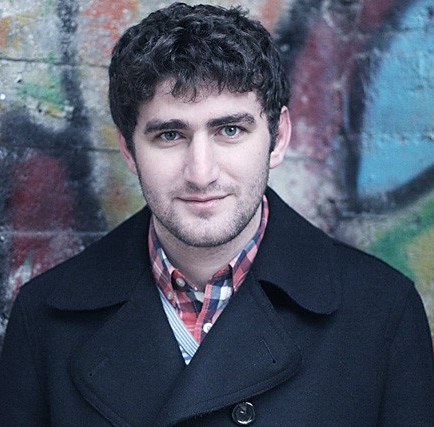 Ryan McChrystal: What led you to set up Daptar?
Zakir Magomedov: I am a journalist from Dagestan. A few years ago I worked for a human rights organisation there, helping people mistreated by the police. During that time we received a lot of statements from victims of domestic and sexual violence. In Dagestan there are a lot of human rights organisations, but they are human rights organisations in name only – they don’t actually do anything, especially when it comes to women’s rights.
I decided it would be a good idea to create a website for women, which we started in 2014. We write a lot of articles about domestic violence and honour killings in Dagestan, Chechnya and other North Caucasus regions. And our content isn’t just about women’s problems; we also profile women doing well in business, sports and other areas.
McChrystal: What does the name “Daptar” mean?
Magomedov: It’s an Arabic word that means different things in different caucuses. In the Chechen language it means copybook. In one of the Dagestani languages it means diary.
McChrystal: How is Daptar staffed?
Magomedov: It’s just me and my colleague Svetlana. I am like the director and she is the editor. These are positions without money or salary. The little funds we do receive go towards paying journalists for their articles, for example. We also worked with a lawyer and a psychologist for online consultation services, but now we haven’t any support. I often spend my own money to pay for articles.
We sometimes got support from some local businessmen, but it wasn’t enough. But Svetlana and I aren’t working for money. For me, it’s about doing something good.
McChrystal: How has the lawyer helped?
Magomedov: In one case, the child of a woman from Dagestan was kidnapped by her ex-husband. The woman was beaten. He then took gasoline and said if she didn’t sign papers to say the children could live with him, he would burn her.
After that, she came to us and we took her to the police to give her statement. Every day during that month, I waited for her after work to walk her home because she feared her ex-husband would come. In the end, she got her child and is now living in Russia. We helped her move from Dagestan.
McChrystal: Why do journalists in the region seem to neglect these issues? What are the main difficulties?
Magomedov: In Dagestan, for example, there is freedom of speech, but local journalists don’t cover women’s problems. I don’t know why – perhaps they don’t want to work with unpopular topics, or maybe it’s because of the dangerous.
When we wrote an article about FGM we got a lot of abuse from the internet, especially directed at Svetlana. She got very depressed when a lot of people wrote things like: “we’re going to kill you”, “we’re going to destroy your website”, “you shouldn’t write about this topic”, “you are lying”.
Many suppose we were lying about the extent of FGM, domestic violence and honour killings.
McChrystal: You say Svetlana has suffered quite badly as a result of Daptar’s work. Is it any easier for you as a man to speak out on these issues?
Magomedov: It was difficult for me at first. I was born and grew up in this society. My friends would call me a feminist and say things like: “Today you write about women’s issues and tomorrow it’ll be LGBT issues.” They didn’t mean this in a good way. They would say horrible things, but I’m OK with that. I can write about these topics just like an ordinary journalist with a job.
I was the first person to write about women’s circumcising in Dagestan and I got bullied a lot for that. I don’t care though.
McChrystal: What is it about the culture in Dagestan that makes a word like “feminism” such a dirty word?
Magomedov: It is definitely a dirty word in Dagestan, especially for men. This is a patriarchal society. The culture is that a women’s place is the kitchen. She should just look after the children and be a housewife. Anyone writing about women’s rights is seen as an enemy. The word “feminist” is a dirty word in Russian, but in Dagestan it is especially negative. But I have no problem with calling myself a feminist.
McChrystal: Your investigation into FGM last year went a long way to breaking the silence around the practice by fostering a nation-wide debate. This must make you very proud. What other investigations are you proud of in the last year?
Magomedov: The generation gap among Chechens means that a lot of older relatives don’t like the behaviour of their children. They don’t it like when Chechen girls have dates or are meeting with guys, especially if they aren’t Chechen guys. It all brings shame on that person. There have been a few situations where parents take their girls and kill them. We are currently investigating these cases. We worked with an expert in Chechnya on this issue.
We also cover dress codes in Chechnya, because officials there want girls to wear the hijab. We wrote about divorce in the region and one story in particular where one murdered woman’s sister wasn’t able to get justice for her in court.
Children with HIV is a big issue in Chechnya, and we’ve done work in this area. We cover a lot of stories, and all of them are very important.
McChrystal: What have been some of the more positive reactions to Daptar?
Magomedov: I won’t lie – we haven’t really seen much of a positive reaction. After the work on FGM, we met with Muslim leaders in Dagestan. They acknowledged it was a big problem and said we shouldn’t talk about it, we should write more and more articles, even in religious newspapers. But it was just one meeting and nothing happened after that.
We do hear stories from and about women we have aided or encouraged, including the eight victims of domestic violence we helped last year.[/vc_column_text][/vc_column][/vc_row][vc_row][vc_column][vc_basic_grid post_type=”post” max_items=”4″ element_width=”6″ grid_id=”vc_gid:1492084802623-2cd71c55-f5dc-8″][/vc_column][/vc_row]
7 Apr 2017 | Digital Freedom, Mapping Media Freedom, News
[vc_row][vc_column][vc_column_text]
Each week, Index on Censorship’s Mapping Media Freedom project verifies threats, violations and limitations faced by the media throughout the European Union and neighbouring countries. Here are recent reports that give us cause for concern.
According to a document published on the state-run website of legal information, on 28 March, Vladimir Putin signed a new law that restricts coverage of court sessions. The law forbids taking photos and recording video during hearings, as well as any other form of recording without a judge’s permission. Streaming from pre-trial procedures is also forbidden.
If there is a recording of the hearing of any kind, a note regarding that fact along with the names of all media involved must be included in the minutes of said hearing. Prior to the law, journalists were not required to seek permission to film and take photos at open court hearings. The same applied for pre-trial live streaming.
The 2012 Resolution of the Supreme Court, which guaranteed journalists the right to publish live text updates, will not be changed by the new law.
On 3 April, press agency Beta reported that Serbian Prime Minister Aleksandar Vucic was accused of controlling the mainstream media during his presidential election campaign. Critics are accusing the prime minister of rigging the elections by keeping a strong grip on the media in the country.
Vucic, who was elected President on Sunday, April 2nd, was also accused of orchestrating a smear campaign against his competitors. Nedim Sejdinovic, the president of the Independent Journalist Association of Vojvodina, said the elections were irregular due to a “media blackout”.
“When the government dominates the media with the lynching of political opponents, it has nothing to do with free elections and democracy,” said Sejdinovic. “But only with totalitarianism.”
On 30 March, a staff member for Ozgur Toplum magazine by the name of Fahrettin Kilic was formally arrested on charges of “membership of a terrorist organisation”, reported pro-Kurdish news agency Dihaber.
Kilic was detained on March 28th along with two other journalists who have since been released on probation terms. The charges were merely based on a photograph featuring Kilic in a regional Kurdish outfit, stated the report.
According to independent Azadliq Radio, The Azerbaijan Service for Radio Free Europe, publishing house E-Q was shut down following tax inspections on 1 April.
The director of the publishing house, Akif Guliyev, said the decision was made after a series of unsubstantiated tax inspections along with various other inspections as well. E-Q was known for publishing Azadliq newspaper, which it stopped printing in August of 2016.
Vladimir Stolyarov, the owner and editor of the infotainment website gagster.ru, was detained at his home on March 26th, reported Stolyarov’s brother on the website.
“Today, at around 4pm police officers came into my brother’s flat with a detention warrant,” said the editor’s brother. “They have accused him of extremism and detained him because he posted a link to the live stream of the protests and set up streaming on his website.”
Later that day, Vladimir Stolyarov was released, also made known on the website by his brother. [/vc_column_text][/vc_column][/vc_row][vc_row][vc_column][vc_basic_grid post_type=”post” max_items=”4″ element_width=”6″ grid_id=”vc_gid:1491562871372-fe072c87-7117-6″ taxonomies=”6564″][/vc_column][/vc_row]
30 Mar 2017 | Digital Freedom, Mapping Media Freedom, News
[vc_row][vc_column][vc_column_text]
Each week, Index on Censorship’s Mapping Media Freedom project verifies threats, violations and limitations faced by the media throughout the European Union and neighbouring countries. Here are recent reports that give us cause for concern.
A mass detention of journalists took place in three Belarusian cities during Freedom Day marches. Freedom Day is an unofficial holiday in Belarus, which is celebrated on 25 March to commemorate the proclamation of the Belarusian People’s Republic in 1918.
The current regime does not recognise Freedom Day and often prevents opposition forces from celebrating it. This year the holiday events included a protest against a jobless tax that the authorities want to introduce. In Minsk 30 journalists were detained. Multiple journalists reported they were beaten by the police.
In Vitsebsk, Belsat TV journalists Volha Czajczyc and Andrus Kozel were violently detained as well as Artsiom Sizintsau, a journalist for Radio Ratsyya. Volha Czajczyc and Andrus Kozel were pushed into a police car. Riot policemen failed to give them the reason for their detention and seized their equipment. The journalists were driven to Kastrychnitski district police station then set free.
Freelance journalist Larysa Schyrakova, who contributes to Belsat TV, was also summoned to the police station on 25 March and detained after the rally. Police gave the journalist an official warning against contributing to Belsat TV, and two other reports – for failure to appear after being summoned and for illegal production of media products – were written on her. On 26 March, the local police filed four more reports on Shchyrakova’s being late; for the alleged mess near her flat; for failing to register as well as reports on illegal production of media products. Children’s officer Dzmitry Volkau threatened to take her son away
Website OVD-Info, which monitors human rights violations and political repression in Russia, came under DDOS-attack after it started covering detentions and violations during the mass protests that took place on Sunday 26 March in Russia, the website reported on Facebook. Visitors could not access the website and the staff experienced problems when publishing new reports.
According to OVD-Info, the attack began from 12 pm, 2 hours before the protests were to start. In Moscow, OVD-Info wrote that 1,030 people were detained during the protests. In Saint Petersburg, they wrote that around 140 participants were detained. Many detainees spent the night in police stations.
Journalist Gaspard Glanz, who regularly covers protests for independent website Taranis news, was assaulted by police officers posing as journalists on 19 March.
In a video published by StreetPress, two men who Glanz claimed had been posing as journalists spoke to him during an anti-racist march for justice and dignity in Paris.
Journalists for StreetPress and Le Monde informed Glanz that the two individuals were policemen posing as journalists.
When Glanz confronted the alleged police officers about their disguise, one of them started punching his camera before spitting on it, StreetPress reported. The incident took place in the presence of an Amnesty International observer.[/vc_column_text][/vc_column][/vc_row][vc_row equal_height=”yes” content_placement=”middle” el_class=”text_white” css=”.vc_custom_1490622992989{background-color: #d5473c !important;background-position: center !important;background-repeat: no-repeat !important;background-size: cover !important;}”][vc_column width=”1/2″][vc_column_text]
[/vc_column_text][/vc_column][vc_column width=”1/2″ css=”.vc_custom_1490623105487{background-image: url(https://www.indexoncensorship.org/wp-content/uploads/2017/01/MMF_report_2016_WEB-1-1A.jpg?id=85872) !important;background-position: center !important;background-repeat: no-repeat !important;background-size: cover !important;}”][/vc_column][/vc_row][vc_row][vc_column][vc_column_text]
A Turkish court issued an arrest warrant for journalist Ahmet Nesin, who failed to attend a court session, independent online news platform Dokuz8Haber reported.
Nesin, along with Reporters Sans Frontiers Turkey representative Erol Önderoğlu, academic Şebnem Korur Fincancı, was tried on 21 March because of his participation in a campaign showing solidarity with the now defunct Özgür Gündem newspaper.
The court issued a warrant to bring in Nesin, who was not present on the day of the trial, to force him to testify.
Nesin is accused of “openly inciting the public to commit a crime,” “praising a crime and a criminal” and “spreading propaganda for a terrorist organisation.” Prosecutors have asked for the journalist to be sent to jail for up to 14.5 years on different counts.
The solidarity campaign for Özgür Gündem began on 3 May last year, lasting until 7 August 2016. 52 of the 56 participants were subjected to legal investigations. Eleven of those cases were dropped and 38 individuals were taken to court on various terror-related charges.
During protests against corruption that took place on 26 March in Moscow, Saint Petersburg and Makhachkala, police detained over 1,000 participants, including journalists.
Those detained included Echo of Moscow journalist Alexandr Pluschev, correspondent for Delovoy Peterburg Artyom Aleksandrov and journalists for Vedomosti business newspaper, Aleksandr Petrosyan and Nadezhda Zaitsev.
Guardian correspondent Alec Luhn who was covering the protest was detained for more than five hours after he took a picture of someone being detained, Luhn wrote on his Twitter page.
Luhn claimed that no officer could explain why he was detained.
All journalists claim they showed their journalist IDs and accreditation to police, but that it did not help.[/vc_column_text][/vc_column][/vc_row][vc_row][vc_column][vc_column_text]
Click on the bubbles to view reports or double-click to zoom in on specific regions. The full site can be accessed at https://mappingmediafreedom.org/
[/vc_column_text][/vc_column][/vc_row][vc_row][vc_column][vc_basic_grid post_type=”post” max_items=”4″ element_width=”6″ grid_id=”vc_gid:1490865658249-a1126bf7-fea4-6″ taxonomies=”7442″][/vc_column][/vc_row]
29 Mar 2017 | Azerbaijan, Azerbaijan News, Digital Freedom, Mapping Media Freedom, News
[vc_row][vc_column][vc_column_text]
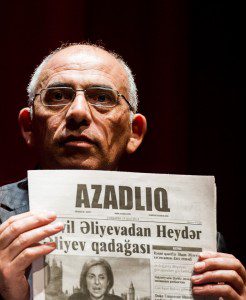
Rahim Haciyev, acting editor-in-chief of 2014 Index on Censorship Freedom of Expression Journalism Award-winning Azerbaijani newspaper Azadliq (Photo: Alex Brenner for Index on Censorship)
Civil, political and human rights are harshly restricted and frequently violated in Azerbaijan. Independent and critical journalists frequently find themselves — or their families — targeted.
Rahim Haciyev, acting editor in chief of the Index Award-winning independent newspaper Azadliq, was forced to flee Azerbaijan after years of official harassment. The government has repeatedly cracked-down on dissent.
Haciyev wrote to Index on Censorship from exile in a western European country:
I’m very sorry that the repressive policy of the Azerbaijani authorities against the Azadliq newspaper forced me to leave the country.
After the arrest of the newspaper’s financial director Faig Amirli, the authorities soon stopped issuing a print version. Amirli was arrested on obviously fabricated charges. I was summoned several times to the prosecutor’s office several times to testify about the paper’s financial affairs. The prosecutors said that this was connected with the criminal case of Amirli, but are invesitgating him under charges of “inciting religious hatred” and “violating the rights of citizens under the pretext of conducting religious rights”.
It turned out that they were interested in the financial issues of the newspaper in order to find a way to silence it. In addition, several employees of the newspaper were summoned for questioning. Then a court ordered tax authorities to comb through the paper’s financial activities. It’s clear that this was undertaken to increase pressure on the newspaper and me personally.
Aiming to cripple Azadliq, the government-owned distribution company was ordered to withhold circulation receipts — $84,000. So we weren’t able to print or even pay our bills. Three staffers are in prison — Seymur Hezi, Faig Amirli and Elchin. Each of them had sharply criticised the lawlessness and corruption of Azerbaijani officials.
In February, 11 Azadliq employees were summoned to the prosecutor’s offices to be interrogated again. Several government agencies increased their pressure on the newspaper’s online operation.
I had been warned twice in the past two years by the prosecutor general’s office that under my leadership Azadliq had been slandering Azerbaijani authorities. In their notices I was told that failure to comply with their terms would mean legal repercussions for me. But I refused. The newspaper continued to report on corruption, abuses of power and the absence of the rule of law. We were devoted to pursuing the truth.
And that is why the authorities intensified repression against the newspaper. Now this lawlessness has forced me to leave the country.
This decision was extremely difficult. I am cut off from my family and friends. I have two children and don’t know when I will see them again.
But despite all the problems I will continue to work daily for the newspaper’s website.
It’s my job, this is my job, this is my life.
Rahim Haciyev
Acting Editor-in-Chief, Azadliq
Haciyev is just one of the many journalists who have been targeted by Azerbaijani authorities in recent years. The country is ranked 163rd out of 180 countries in RSF’s 2016 World Press Freedom Index, which ranks 180 countries according to the level of freedom available to journalists. Almost everyone who speaks out against the regime of President Ilham Aliyev, including journalists, human rights defenders, activists and bloggers, are commonly imprisoned on spurious charges, such as drug and weapon possession, hooliganism and tax evasion. Reports of torture and abuse are typical by those being detained. At least 15 Azerbaijani prisoners of conscience currently remain in jail, including:[/vc_column_text][/vc_column][/vc_row][vc_row][vc_column width=”1/2″][vc_column_text]
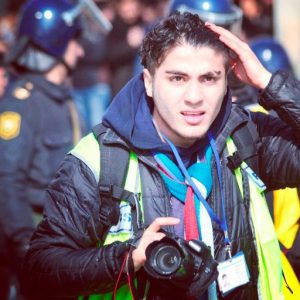
Mehman Huseynov (Twitter)
Mehman Huseynov, an Azerbaijani journalist and pro-opposition blogger, was sentenced to two years in jail on 3 March by a Baku court for defaming the police chief of the city’s Nasimi district. Huseynov intends to appeal his sentencing. According to Front Line Defenders, a group of police officers violently attacked Huseynov on 9 January. The next he was brought to court, found guilty of disobeying police orders and fined 200 manat (£96). [/vc_column_text][/vc_column][vc_column width=”1/2″][vc_column_text]
Founder and editor of online news portal Kend.info Elchin Ismayilli was arrested on 17 February on charges of “extorting money” and “aggravated abuse of a position of influence”. According to the Caucasian Knot, he was also accused of blackmailing a local office, charges he insists were fabricated to silence his coverage of local corruption and human rights violations. On 18 February, Ismayilli was sentenced to a pre-trial detention period of 24 days. He has previously been subject to multiple arrests and cases of harassment related to his work as a journalist.[/vc_column_text][/vc_column][/vc_row][vc_row][vc_column width=”1/2″][vc_column_text]
On 3 March, a court decided to prolong the period of investigation of Faig Amirli for three months, the Azerbaijan Press Agency reported. Amirli, financial director of newspaper and assistant chairman of the Azerbaijani Popular Front Party (APFP), was arrested on 20 August 2016 for “inciting religious hatred” and “violating the rights of citizens under the pretext of conducting religious rights,” according to Radio Free Europe/Radio Liberty.[/vc_column_text][/vc_column][vc_column width=”1/2″][vc_column_text]
Writer and blogger Rashad Ramazanov was arrested on 9 May 2013 and sentenced to nine years in prison. According to English PEN, his charges included “illegal possession and sale of drugs”. Police claimed to have found nine grams of heroin on his body, although Ramazanov insists that the drugs were planted by the officers, who he claims also beat him up and tortured him during interrogation. Ramazanov was sentenced to nine years in prison in November 2013 on a trumped-up drug trafficking charge. PEN International reported that on 23 January Ramazanov was moved to solitary confinement for 15 days, the reason for which remains unknown. On 7 February Ramazanov was released from solitary confinement, and his family was given permission to visit him.[/vc_column_text][/vc_column][/vc_row][vc_row][vc_column width=”1/2″][vc_column_text]
Founder and editor of the website Azel, Afgan Sadygov, was sentenced on 12 January to 2.5 years in jail. Sadygov was arrested on 22 November 2016 based on accusations of “hooliganism” after he was attacked on 9 August 2016 and allegedly hit a woman, Contact Online news reported. Sadygov’s website often reports on issues such as poor infrastructure maintenance, bad quality of roads and waste of public funds in Azerbaijan’s Jalilabad region.[/vc_column_text][/vc_column][vc_column width=”1/2″][vc_column_text]
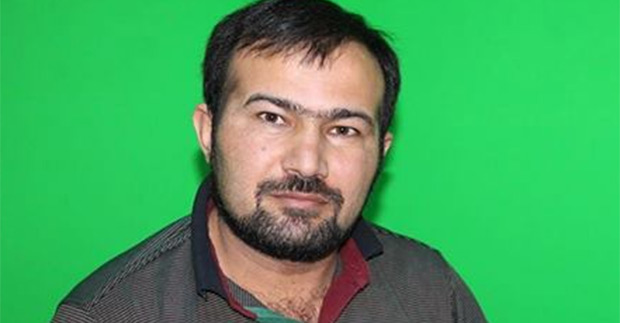
Seymur Hezi
According to MeydanTV, the Supreme Court will hear the appeal of Seymur Hezi, reporter for opposition news source Azadliq and presenter for critical TV program “Azerbaycan Saati” on 13 April. The journalist was sentenced to five years in prison on 29 January 2015 on a trumped-up charge of aggravated hooliganism, Index on Censorship reported. The charge came after Hezi was attacked on 29 August by Maherram Hasanov, a complete stranger, and defended himself. Hezi has accused President Ilham Aliyev and chief of staff Ramiz Mehdyev of ordering his arrest.[/vc_column_text][/vc_column][/vc_row][vc_row][vc_column width=”1/2″][vc_column_text]
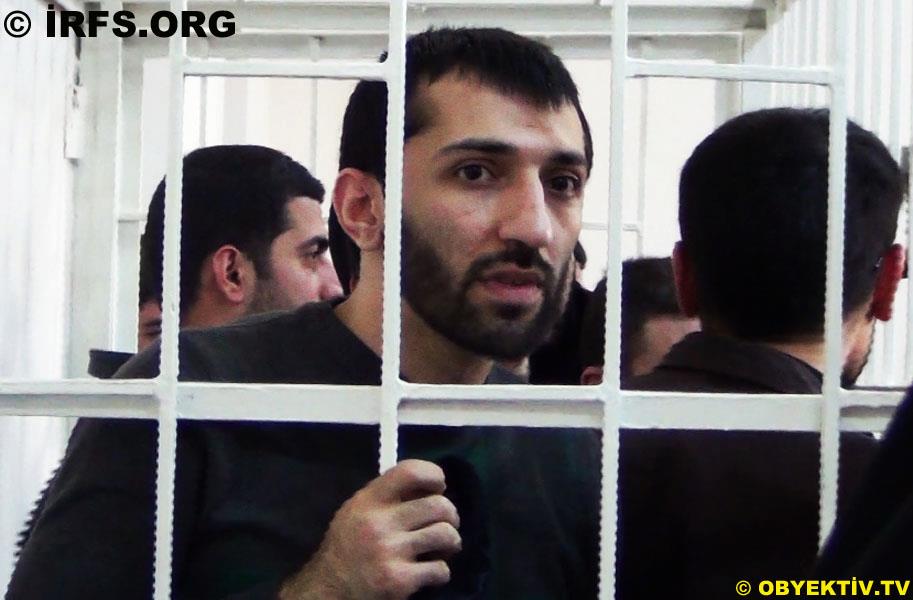
The lawyer of Nijat Aliyev, former chief editor of religious website Azadxeber.org, has not been able to get hold of the text of the verdict of the Supreme Court of Azerbaijan for his client, Contact Online news reported. Aliyev’s lawyer believes that the delay has been intentional in order to prevent the filing of a complaint with the European Court of Human Rights, Contact Online news reported. According to IRFS, Aliyev was detained on 20 May 2012 and sentenced to 10 years in prison on 9 December 2013 on charges of illegal possession of drugs and weapons, incitement of religious hatred, calls to seize power and distributing banned religious literature. Aliyev’s website previously published criticisms of the government’s policies in regards to religion, the possibility of a LGBT parade in Baku and the allotment of too much funding for the Eurovision Song Contest in 2012, OCCRP reported.[/vc_column_text][/vc_column][vc_column width=”1/2″][vc_column_text]
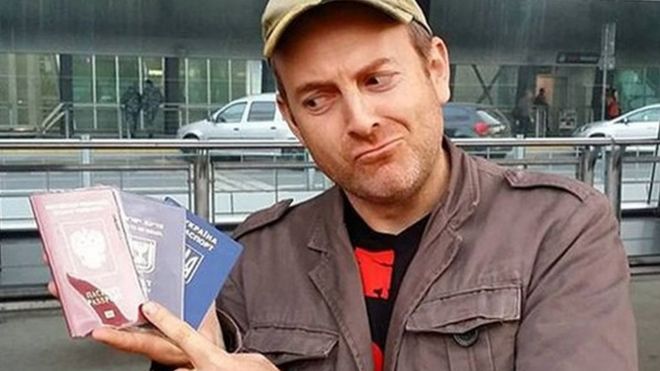
Alexander Lapshin (BBC)
Russian-Israeli travel blogger Alexander Lapshin was extradited from Belarus to Azerbaijan on 7 February. He faces up to five years in prison on charges of “public calls against the state” and “unauthorised crossing of borders,” according to Armenian News Agency ArmenPress. These charges came after Lapshin traveled to the disputed territory of Nagorno-Karabakh and sympathised in his blog entries with the Armenians he met, GlobalResearch reported. [/vc_column_text][/vc_column][/vc_row][vc_row][vc_column width=”1/2″][vc_column_text]
Fikrat Faramazoglu, editor-in-chief of news website jam.az, has been detained since 30 June 2016 on the charge of extortion by means of threats, which is punishable by up to five years in prison. According to Azerbaijan Free Expression Platform, these charges originated when a local restaurant owner accused Faramazoglu of extorting money from him when asked to remove defamatory articles about the restaurant on websites owned by the journalist.[/vc_column_text][/vc_column][vc_column width=”1/2″][vc_column_text]
Blogger and social media activist Abdul Abilov has been imprisoned since 22 November 2013. According to Azerbaijan Free Expression Platform, Abilov was charged with illegal possession, storage and manufacturing or sale of drugs when authorities claim to have found illegal drugs in his home and on his person, which Abilov continues to protest were planted on him. On 27 May 2014 Abilov was sentenced to five-and-a-half years in prison. Stop Sycophants!, the Facebook page previously run by Abilov, was shut down following his arrest, IRFS reported. The page was known to strongly criticise authorities.[/vc_column_text][/vc_column][/vc_row]