4 Dec 2015 | Azerbaijan, Azerbaijan News, Campaigns, mobile
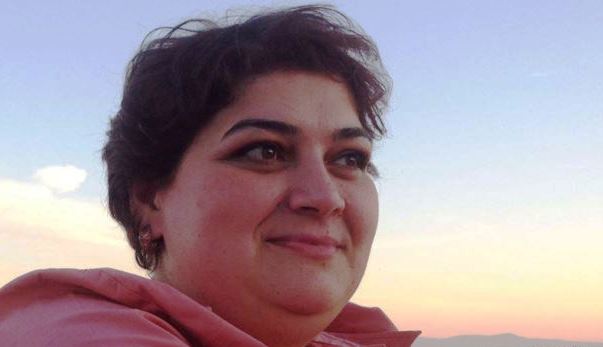
Khadija Ismayilova
On the eve of the anniversary of the arrest of journalist Khadija Ismayilova, members of the Sport for Rights coalition and the Civic Solidarity Platform underscore the unprecedented nature of the repression that has taken place in Azerbaijan in the year that has passed. The groups reiterate their call for the immediate and unconditional release of Ismayilova and Azerbaijan’s other political prisoners, and for the international community to take steps to hold the Azerbaijani government accountable for its human rights obligations as matter of urgent priority.
“Ismayilova’s arrest a year ago signalled an escalation of repression in Azerbaijan”, noted Karin Deutsch Karlekar, Director of Free Expression Programs at PEN American Center. “Independent voices are being silenced at an unprecedented rate, and we urge the authorities to cease the legal and extra-legal harassment of journalists and media outlets immediately”.
On 5 December 2014, prominent investigative journalist Khadija Ismayilova was arrested on charges of inciting a local man, Tural Mustafayev, to attempt suicide. Two months later, authorities slammed her with additional politicised charges of embezzlement, illegal business, tax evasion, and abuse of power. After eight months in pre-trial detention, Ismayilova’s trial started on 7 August at the Baku Court of Grave Crimes.
Ismayilova referred to the proceedings as an “express trial”, and observers noted it was rife with due process violations, with the judges rarely granting any motions made by the defence. During the trial, Mustafayev publicly told the court that prosecutors forced him to make a statement against Ismayilova, and withdrew his accusations. Additionally, Ismayilova’s lawyer told the court that her employer did not report any funds missing, that she was not authorised to hire or dismiss other journalists, and that she was not engaged in any commercial enterprise.
On 1 September, the court convicted Ismayilova of the charges of embezzlement, illegal entrepreneurship, tax evasion, and abuse of office, and sentenced her to 7.5 years’ imprisonment. She was acquitted of the charge of inciting Mustafayev to attempt suicide. On 25 November, the Baku Court of Appeals upheld this conviction, and Ismayilova was transferred to Prison Number 4 on 27 November.
Sport for Rights considers the charges against Ismayilova to be politically motivated and connected to her work as an investigative journalist, particularly her exposure of corruption among the ruling elite. Sport for Rights believes that in jailing Ismayilova, the Azerbaijani authorities sought to silence her critical voice before the country faced increased international media attention during the inaugural European Games, which took place in Baku in June. For this reason, Sport for Rights has referred to Ismayilova as a “Prisoner of the Games”.
“Ismayilova’s imprisonment is emblematic of the Azerbaijani authorities’ repression of independent journalists and human rights defenders”, said Melody Patry, Senior Advocacy Officer at Index on Censorship. “Every day Ismayilova and the other political prisoners spend in jail is another reminder to the world that the Azerbaijani government fails to respect and protect the democratic principles and fundamental rights it has committed to upholding”.
Ismayilova is one of dozens of political prisoners in Azerbaijan. Other prominent cases include journalists Nijat Aliyev, Araz Guliyev, Parviz Hashimli, Seymur Hezi, Hilal Mammadov, Rauf Mirkadirov, and Tofig Yagublu; bloggers Abdul Abilov, Faraj Karimli, Omar Mammadov, Rashad Ramazanov, and Ilkin Rustamzade; human rights defenders Intigam Aliyev, Rasul Jafarov, Taleh Khasmammadov, Anar Mammadli, Arif Yunus, and Leyla Yunus; NIDA civic movement activists Rashadat Akundov, Mammad Azizov, and Rashad Hasanov; opposition activist Yadigar Sadikhov; and opposition REAL movement chairman Ilgar Mammadov.
Besides politically motivated arrests and imprisonment, the Azerbaijani authorities continue to employ a wide range of tactics as part of an aggressive crackdown to silence the country’s few remaining critical voices. Independent online television station Meydan TV has been a particular target, with its staff and their relatives threatened, detained, and otherwise pressured in connection with Meydan TV’s critical news coverage of Azerbaijan. Other independent NGOs and media including the Institute for Reporters’ Freedom and Safety and its online television project Obyektiv TV, as well as Radio Free Europe/Radio Liberty’s Baku office, have also been aggressively targeted over the past year.
In addition to the post-European Games crackdown, the Azerbaijani authorities also worked to silence criticism ahead of the 1 November parliamentary elections. For the first time, the elections took place with almost no credible international observers, and with the majority of the traditional opposition boycotting. Independent domestic observers reported widespread fraud, such as carousel voting and irregularities in the vote counting and tabulation process. Now, in the run-up to the Formula One European Grand Prix, which will take place in Baku in June 2016, the crackdown shows no signs of relenting.
These issues and more are detailed in a new Sport for Rights report, No Holds Barred: Azerbaijan’s Human Rights Crackdown in Aliyev’s Third Term, which also contains specific recommendations to the Azerbaijani authorities and the international community on urgent measures needed to improve the dire human rights situation in the country. Sport for Rights and the Civic Solidarity Platform particularly urge the international community to sustain focus on Azerbaijan over the coming months, when critical voices will need concrete support more than ever before.
Supporting organisations:
ARTICLE 19
Association of Ukrainian Human Rights Monitors on Law Enforcement
Canadian Journalists for Free Expression
Center for Civil Liberties (Ukraine)
Centre for the Development of Democracy and Human Rights (Russia)
Civil Rights Defenders
Committee to Protect Journalists
Crude Accountability
Freedom Now
Front Line Defenders
Georgian Young Lawyers’ Association
Golos Svobody Public Foundation (Kyrgyzstan)
Human Rights House Foundation
Human Rights Movement “Bir Duino-Kyrgyzstan”
Index on Censorship
Institute for Reporters’ Freedom and Safety
International Federation for Human Rights (FIDH), within the framework of the
Observatory for the Protection of Human Rights Defenders
International Partnership for Human Rights
Kazakhstan International Bureau for Human Rights and Rule of Law
Kharkiv Regional Foundation – Public Alternative (Ukraine)
Kosova Rehabilitation Centre for Torture Victims
Norwegian Helsinki Committee
PEN American Center
People In Need
Platform
Promo-LEX (Moldova)
Public Verdict Foundation (Russia)
Reporters Without Borders
Sova Center for Information and Analysis (Russia)
World Organisation Against Torture (OMCT), within the framework of the
Observatory for the Protection of Human Rights Defenders
3 Dec 2015 | Belgium, Europe and Central Asia, Mapping Media Freedom, mobile, News
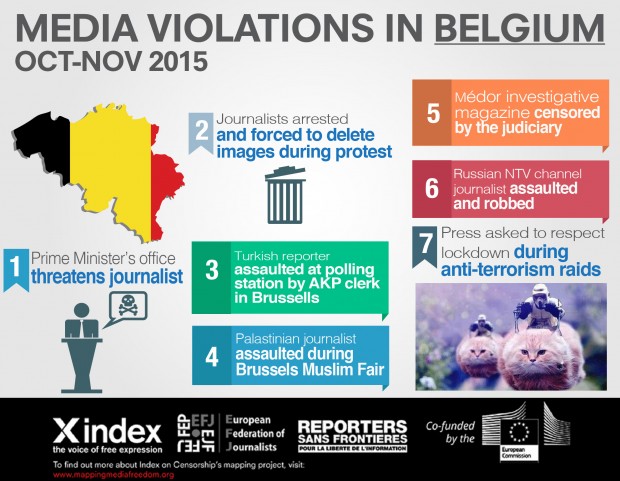
Following the murderous barbarism in France last month, a state of alert was subsequently declared in Belgium amid concerns that a “Paris-style” attack was imminent in Brussels. The city went into lockdown for five days, the army was deployed on the streets, and the authorities asked the media and public not to report on what was happening.
Belgian media complied, as did Belgian Twitter users, who, under the hashtag #BrusselsLockdown, posted pictures of cats rather than comment on police raids.
The lockdown of Brussels has certainly raised some important questions. As Index on Censorship’s Mapping Media Freedom project shows, it may indicative of a wider problem of media violations within the country.
1. Prime Minister’s office threatens journalist
During the visit of Turkish President Recep Tayyip Erdoğan, Tristan Godaert, a journalist working for RTBF, the public broadcasting organisation of the French community of Belgium, was repeatedly threatened by the press secretary and the spokesperson of the Belgian Prime Minister Charles Michel while covering the visit of Turkish President Erdogan. On 6 October, during a speech by the Turkish president, Godaert shouted: “Mr. Erdoğan, why is Mohammed Rasool still in prison in Turkey?” A Turkish embassy official then a representative of the Belgian government who then informed RTBF that they were no longer allowed to film. Afterward, the Belgian Prime Minister’s communications director threatened the journalists, saying that if the footage was aired there would be “consequences”.
2. Journalists arrested and forced to delete images during protest
On 15 October, around 100 people were arrested in Brussels at a mass demonstration against TTIP (Transatlantic Trade and Investment Partnership), an impending free trade deal between the US and the EU.
During the protest, Thomas Michel, a freelance journalists working for Zin TV, and Maxime Lehoux, an Italian photojournalist, were arrested by the Belgian police and forced to delete photographs they had taken.
A press release by Zin TV following the incident said: “The images contain the humiliation of the police inflicted on protesters […] We remind that it is illegal to be seized from its sources, it is a violation of professional secrecy and the level of justification 3 of 4 on the scale of the risk of terrorism is simply bogus.”
3. Turkish reporter assaulted at polling station
R Doğan, a Cihan news agency reporter, was physically and verbally assaulted on 19 October by a polling clerk at a voting station in Turkey’s Consulate General in Brussels for the Turkish Justice and Development Party (AKP).
Doğan was insulted by the AKP clerk, who grabbed his arm and escorted him out of the building. The reporter was there to observe Turkish citizens based abroad who were voting as part of the 1 November Turkish general election.
4. Palestinian journalist assaulted during Brussels Muslim Fair
On 7 November, Palestinian journalist Salama Attaallah was assaulted while covering the annual Muslim Fair activities in Brussels for Al Ghad TV. While shooting, an individual introducing himself as a representative of Al Aqsaa demanded he stop filming women participating to the fair. Attaallah refused, explaining that he was not there to film women, but rather to report about the event in general. As a result, he was punched repeatedly in the face. The whole altercation was caught on film.
5. Médor investigative magazine censored by the judiciary
Médor a new investigative magazine in Belgium, has been censored by the Belgian judiciary at the request of a businessman representing a pharmaceutical company.
In its first issue, Médor published a story about the financial structure of the pharmaceutical company that is largely supported by regional authorities. The investigation, which lasted more than six months and compiled extensive documentation, was conducted by the award-winning David Leloup.
The Association of Professional Journalists, an EFJ-IFJ affiliate, has expressed its shock at the censorship and offered legal support to Leloup.
6. Russian NTV channel journalists assaulted and robbed
On 18 November, NTV channel reporter Konstantin Panushkin and cameraman Zakir Ansarov were beaten and robbed in northern Brussels. The Russia-based journalists were seeking to speak with relatives and friends of a jihadist-related to attacks in Paris.
Panushkin said that they were interviewing a group of 10 teenagers, when both were assaulted and robbed. The assailants took a backpack with documents, money and a laptop.
Details of attacks on the media across Europe can be found at Index on Censorship’s Mapping Media Freedom website. Reports to the map are crowdsourced and then fact-checked by the Index team.
Mapping Media Freedom
Click on the bubbles to view reports or double-click to zoom in on specific regions. The full site can be accessed at https://mappingmediafreedom.org/
|
3 Dec 2015 | Europe and Central Asia, Mapping Media Freedom, mobile, News
 Propaganda, counterpropaganda and information wars are all terms that, unfortunately, have become part of our daily discourse.
As the Organization for Security and Co-operation in Europe (OSCE) Representative on Freedom of the Media, I have raised the issue of propaganda emanating from the conflict in and around Ukraine. I have called propaganda an ugly scar on the face of modern journalism and called on governments to get out of the news business.
Tackling propaganda is not a new concept to the participating states of the OSCE. It goes back to the beginning of this organization. At the time of the Helsinki Final Act, the participating states committed themselves to promote “a climate of confidence and respect among peoples consonant with their duty to refrain from propaganda for wars of aggression” against other participating states.
Those promises were broken for the first time before and during the war in former Yugoslavia in the 1990s. Dangerous stereotypes that dominated state media since the beginning of the crisis significantly contributed to the development of an intolerant atmosphere and influenced people’s beliefs and increased feelings of national and religious differences.
Creating an environment of fear and general anxiety, with constant labelling of enemies was now expanded to nationalities. Ethnic intolerance, built by cleverly devised propaganda in the media, resulted in general support for a brutal war. Many studies and much research about the role of media in the former-Yugoslav conflict indicated that media, while serving the regime, produced war and hatred.
Fast forward to 2015. The media landscape has changed almost completely, but journalism still suffers from propaganda and its wicked elements. In the 21st century, where new technologies are bringing information – and journalism – to readers in new ways and faster than ever before, propaganda is alive and doing very well.
It is apparent that some media are in dire need of self-examination. There is a need to cleanse journalism of fear, propaganda and routine frustration. In the absence of critical journalism, democracy suffers and deliberate misinformation becomes the standard.
In the past 12 months my office has been heavily engaged in a campaign on several fronts to attack the root causes of propaganda and its all-too-likely consequences: ignorance, hate and hostility. My team has spent considerable time and resources working with Russian and Ukrainian journalists in confidence-building measures designed to bridge the gap between them. We have instituted training for young journalists from the two states on such topics as ethics in journalism, conflict reporting and propaganda.
The latest element in our campaign against propaganda was just published: Propaganda and Freedom of the Media offers an in-depth look at at the legal and historical basis against propaganda.
The report recommends that:
- Media pluralism must be enforced as an effective response that creates and strengthens a culture of peace, tolerance and mutual respect.
- Governments and political leaders should refrain from funding and using propaganda.
- Public service media with strong professional standards should be strongly supported in their independent, sustainable and accessible activity.
- Propaganda should be generally uncovered and condemned by governments, civil society and international organizations as inappropriate speech.
- The independence of the judiciary and media regulators should be guaranteed in law and in policy.
- The root causes of propaganda for war and hatred should be dealt with a broad set of policy measures.
- National and international human rights and media freedom mechanisms should be enabled to foster social dialogue in a vibrant civil society and also address complaints about incidents of hateful propaganda.
- Strengthening educational programmes on media literacy and internet literacy may dampen the flames that fire propagandists.
- Media self-regulation, where it is effective, remains the most appropriate way to address professional issues.
Propaganda does a disservice to all credible, ethical journalists who have fought for and, in some cases, given their lives to produce real, honest journalism. In sum, propaganda for war and hatred is effective only in environments where governments control media and silently support hate speech. A resilient, free media system is an antidote to hatred.
My hope is that the report Propaganda and Freedom of the Media will assist OSCE participating States, policymakers, academia and media professionals throughout the OSCE region and beyond.
2 Dec 2015 | Magazine, mobile, Volume 44.04 Winter 2015
[vc_row][vc_column][vc_custom_heading text=”What can’t people talk about? The latest magazine looks at taboos around the world”][vc_row_inner][vc_column_inner width=”1/2″][vc_column_text]
What’s taboo today? It might depend where you live, your culture, your religion, or who you’re talking to. The latest issue of Index on Censorship magazine explores worldwide taboos in all their guises, and why they matter. Comedians Shazia Mirza and David Baddiel look at tackling tricky subjects for laughs; Alastair Campbell explains why we can’t be silent on mental health; and Saudi Arabia’s first female feature-film director Haifaa Al Mansour speaks out on breaking boundaries with conservative audiences.
[/vc_column_text][/vc_column_inner][vc_column_inner width=”1/2″][vc_empty_space height=”60px”][vc_single_image image=”71995″ img_size=”full”][/vc_column_inner][/vc_row_inner][vc_column_text]
Plus a crackdown on porn and showing your cleavage in China; growing up in Germany with the ghosts of WW2; what you can and can’t say in Israel and Palestine; and the argument for not editing racism out of old films. As the anniversary of Charlie Hebdo murders approaches, we also have a special section of cartoonists from around the world who have drawn taboos from their homelands – from nudity, atheism and death to domestic violence and necrophilia.
Also in this issue, Mark Frary explores the secret algorithms controlling the news we see, Natasha Joseph interviews the Swaziland editor who took on the king and ended up in prison, and Duncan Tucker speaks to radio journalists who lost their jobs after investigating presidential property deals in Mexico.
And in our culture section, Chilean author Ariel Dorfman looks at the power of music as resistance in an exclusive short story, which is finally seeing the light after 50 years in the pipeline. We have fiction from young writers in Burma tackling changing rules in times of transition, and there’s newly translated poetry written from behind bars in Egypt, amid the continuing crackdown on peaceful protest.
Each magazine sale helps Index on Censorship fight for free expression worldwide. Order your copy here, or take out a digital subscription via Exact Editions (just £18 for the year).
[/vc_column_text][/vc_column][/vc_row][vc_row][vc_column][vc_custom_heading text=”SPECIAL REPORT: WHAT’S THE TABOO? ” css=”.vc_custom_1483453507335{margin-right: 0px !important;margin-left: 0px !important;border-bottom-width: 1px !important;padding-top: 15px !important;padding-bottom: 15px !important;border-bottom-color: #455560 !important;border-bottom-style: solid !important;}”][vc_column_text]
Why breaking down social barriers matters
Stand up to taboos – Shazia Mirza and David Baddiel on how comedy tackles the no-go subjects
The reel world – Nikki Baughan interviews female film directors Susanne Bier and Haifaa Al Mansour, from Denmark and Saudi Arabia
Not just hot air – Kaya Genç goes inside Turkey’s right-wing satire magazine Püff
Slam session – Péter Molnár speaks to fellow Hungarian slam poets about what they can and can’t say
Whereof we cannot speak – Regula Venske on growing up in Germany after WWII
China’s XXX factor – Jemimah Steinfeld investigates a crackdown on porn and cleavage
Pregnant, in danger and scared to speak – Nina Lakhani and Goretti Horgan on abortion laws and social stigma in El Salvador and Ireland
Airbrushing racism – Kunle Olulode explores the problems of erasing racist words from books and films
Why are we whispering? – Alastair Campbell on why discussing mental illness still makes some people uncomfortable
Shouting about sex (workers) – Ian Dunt looks at the debate where everyone wants to silence each other
The history man – Professor Mohammed Dajani Daoudi explains how he has no regrets, despite causing outrage after taking Palestinian students to Auschwitz
Provoking Putin – Oleg Kashin on how new laws are silencing Russians
Quiet zone: a global cartoon special – Featuring taboo-busting illustrations from Bonil, Dave Brown, Osama Eid Hajjaj, Fiestoforo, Ben Jennings, Khalil Rhaman, Martin Rowson, Brian John Spencer, Padrag Srbljanin, Toad and Vilma Vargas
[/vc_column_text][/vc_column][/vc_row][vc_row][vc_column][vc_custom_heading text=”IN FOCUS” css=”.vc_custom_1481731813613{margin-right: 0px !important;margin-left: 0px !important;border-bottom-width: 1px !important;padding-top: 15px !important;padding-bottom: 15px !important;border-bottom-color: #455560 !important;border-bottom-style: solid !important;}”][vc_column_text]
Reining in power – Natasha Joseph talks to the Swaziland editor who took on the king
Whose world are you watching? – Mark Frary explores the secret algorithms controlling the news we see
Bloggers behind bars – Ismail Einashe interviews Ethiopia’s Zone 9 bloggers
Mexican airwaves – Duncan Tucker speaks to radio journalists who were shut down after investigating presidential property deals
Head to head – Bassey Etim and Tom Slater debate whether website moderators are the new censors
Off the map – Irene Caselli on how some of the poorest people in Buenos Aires fought back against Argentina’s mainstream media
[/vc_column_text][/vc_column][/vc_row][vc_row][vc_column][vc_custom_heading text=”CULTURE” css=”.vc_custom_1481731777861{margin-right: 0px !important;margin-left: 0px !important;border-bottom-width: 1px !important;padding-top: 15px !important;padding-bottom: 15px !important;border-bottom-color: #455560 !important;border-bottom-style: solid !important;}”][vc_column_text]
The rocky road to transition – Ellen Wiles introduces new fiction by young Burmese writers Myay Hmone Lwin and Pandora
Sounds of solidarity – Chilean author Ariel Dorfman presents his short story on the power of music as resistance
Poetry from a prisoner – Omar Hazek shares his verses written in an Egyptian jail and translated by Elisabeth Jaquette
[/vc_column_text][/vc_column][/vc_row][vc_row][vc_column][vc_custom_heading text=”COLUMNS” css=”.vc_custom_1481732124093{margin-right: 0px !important;margin-left: 0px !important;border-bottom-width: 1px !important;padding-top: 15px !important;padding-bottom: 15px !important;border-bottom-color: #455560 !important;border-bottom-style: solid !important;}”][vc_column_text]
Global view – Index on Censorship’s CEO, Jodie Ginsberg, on the pull between extremism legislation, free speech and terrorism
Index around the world – Josie Timms presents Index’s latest work and events
[/vc_column_text][/vc_column][/vc_row][vc_row][vc_column][vc_custom_heading text=”END NOTE” css=”.vc_custom_1481880278935{margin-right: 0px !important;margin-left: 0px !important;border-bottom-width: 1px !important;padding-top: 15px !important;padding-bottom: 15px !important;border-bottom-color: #455560 !important;border-bottom-style: solid !important;}”][vc_column_text]
[/vc_column_text][/vc_column][/vc_row][vc_row][vc_column][vc_custom_heading text=”SUBSCRIBE” css=”.vc_custom_1481736449684{margin-right: 0px !important;margin-left: 0px !important;border-bottom-width: 1px !important;padding-bottom: 15px !important;border-bottom-color: #455560 !important;border-bottom-style: solid !important;}”][vc_column_text]Index on Censorship magazine was started in 1972 and remains the only global magazine dedicated to free expression. Past contributors include Samuel Beckett, Gabriel García Marquéz, Nadine Gordimer, Arthur Miller, Salman Rushdie, Margaret Atwood, and many more.[/vc_column_text][vc_row_inner][vc_column_inner width=”1/2″][vc_single_image image=”76572″ img_size=”full”][/vc_column_inner][vc_column_inner width=”1/2″][vc_column_text]In print or online. Order a print edition here or take out a digital subscription via Exact Editions.
Copies are also available at the BFI, the Serpentine Gallery, MagCulture, (London), News from Nowhere (Liverpool), Home (Manchester), Calton Books (Glasgow) and on Amazon. Each magazine sale helps Index on Censorship continue its fight for free expression worldwide.
 SUBSCRIBE NOW[/vc_column_text][/vc_column_inner][/vc_row_inner][/vc_column][/vc_row]
