Mr Ilham Aliyev
President of the Republic of Azerbaijan
Azerbaijan Avenue 7
1005 Baku
Republic of Azerbaijan
Fax: +994124923543 and +994124920625
Email: [email protected]
Mr President,
We, the undersigned members and partners of the Human Rights House Network (HRHN) and the South Caucasus Network of Human Rights Defenders, are dismayed by the sentences upheld against human rights defender Rasul Jafarov and against human rights lawyer Intigam Aliyev, two prominent and internationally respected voices of the Azerbaijani civil society. We call upon the Azerbaijani authorities, through you, Mr President, to put an end to the unprecedented repression against civil society.
We call upon you to immediately and unconditionally release all human rights defenders, journalists and activists currently detained, including and especially human rights defenders Leyla and Arif Yunus, Rasul Jafarov, Intigam Aliyev and the journalist Khadija Ismayilova. Anar Mammadli must also be released, as his detention is solely due to his non-governmental organisation’s monitoring of elections in the Azerbaijan.
During the summer and fall of 2014 the main leaders of civil society were arrested. Many others decided to flee the country, rather than facing court hearings, of which the outcome is well known in advance. A few others have been forced into hiding.
On 22 April 2015, the Court for Grave Crimes in Baku sentenced Intigam Aliyev to 7 years and 6 months of detention on bogus charges of illegal business, misappropriation, tax evasion, abuse of office and forgery. Although Intigam Aliyev’s defence brought documentation to the court that all his grants were registered, as of the entry into force of such an obligation for NGOs in Azerbaijan, in violation of basic principles in regard to freedom of association as found by the Council of Europe’s Venice Commission. We denounce the sentencing of Intigam Aliyev and believe the charges brought against him are politically motivated, and a direct consequence of his human rights work .
Intigam Aliyev is one of the most widely-respected human rights lawyers in Azerbaijan and leader of the Legal Education Society, an organization that both promotes awareness of the law and provides legal support to individuals and organizations, The Legal Education Society is a member of the Human Rights House Azerbaijan. Intigam Aliyev is also a lawyer active regionally, including by his participation in the Human Rights House Network’s International Law in Advocacy Programme.
Intigam Aliyev has strived for the legal protection of victims of human rights violations for more than 15 years and has to date represented them in proceedings before the European Court of Human Rights in more than 200 cases (around 40 cases are currently awaiting decision). When he was detained, he was defending more than 140 people in the Court. By detaining Intigam Aliyev the Azerbaijani authorities also deprive their citizens the right to appeal and seek justice before the Court.
In detention, Intigam Aliyev’s health condition has deteriorated and remains inadequately addressed by detention authorities. His conditions prior to his pre-trial detention since 8 August 2014 have continuously gotten worse, giving a strong indication that in fact the medication he is receiving in detention only addresses his pain and not his illness. We believe Intigam Aliyev’s detention conditions might have irremediable consequences on his health.
In the backdrop of an unprecedented repression against civil society in Azerbaijan, charges were also brought against many other human rights defenders, journalists and activists in Azerbaijan, either sentenced or held on pre-trial detention, such as Leyla Yunus, and her husband, Arif Yunus, Anar Mammadli, Rauf Mirkadirov and Hilal Mammadov, Tofiq Yaqublu, Ilgar Mammadov, various NIDA activists, as well as investigative journalist Khadija Ismayilova. Charges are also brought against many human rights NGOs, such as the Institute for Reporters’ Freedom and Safety (IRFS) and human rights defenders either forced into hiding, such as IRFS’s leader Emin Huseynov, or have left the country.
On 16 April 2015, the human rights defender Rasul Jafarov was sentenced to 6.5 years imprisonment, also on similar charges as Intigam Aliyev. The court ignored that out of the many so-called “victims” who were interrogated by the court did in fact have no knowledge of any damage supposedly committed by Rasul Jafarov against them. We also denounce the sentencing of Rasul Jafarov and believe the charges brought against him are politically motivated, due to his human rights work.
Rasul Jafarov is a widely respected human rights defender and advocate on the issue of wrongful imprisonment in Azerbaijan. After forming the Human Rights Club in December 2010. He is the initiator of the human rights and democracy campaign “Sing for Democracy,” as well as “Art for Democracy” and later in preparation of the upcoming European Olympic Games to be held in Baku in June 2015, the campaign “Sport for Rights.”
We call upon the Azerbaijani authorities, through you, Mr President, to put an end to the unprecedented repression against civil society in your country. We specifically call upon you to immediately and unconditionally release all above mentioned civil society actors, and drop all charges
held against them.
Yours sincerely,
Human Rights House Azerbaijan:
• Human Rights Centre of Azerbaijan
• Due to the risk of retaliation against Azerbaijani human rights defenders, we decided not to indicate the names of other Azerbaijani NGOs who would be signing this letter.
Barys Zvozskau Belarusian Human Rights House in exile, Vilnius (on behalf of the following NGOs):
• Belarus Watch (ByWatch)
• Belarusian Association of Journalists
• Belarusian Helsinki Committee
• Belarusian PEN Centre
• City Public Association “Centar Supolnasc”
• Human Rights Centre “Viasna”
Human Rights House Belgrade (on behalf of the following NGOs):
• Lawyers Committee for Human Rights YUCOM
Education Human Rights House Chernihiv (on behalf of the following NGOs):
• Chernihiv Public Committee of Human Rights Protection
• Center of Humnistic Tehnologies “AHALAR”
• Center of Public Education “ALMENDA”
• Human Rights Center “Postup”
• Local Non-governmental Youth organizations М’АRТ
• Transcarpathian Public Center
• Ukrainian Helsinki Human Rights Union
Human Rights House Kyiv (on behalf of the following NGOs):
• Association of Ukrainian Human Rights Monitors on Law Enforcement
• Center for Civil Liberties
• Civil Service
• Human Rights Information Center
• Institute of Mass Information
• International Women’s Rights Center
• Kharkiv Human Rights Protection Group
• Social Action Center
• Ukrainian Helsinki Human Rights Union
• Ukrainian Legal Aid Foundation
Human Rights House Oslo (on behalf of the following NGOs):
• Human Rights House Foundation
• Norwegian Helsinki Committee
Human Rights House Tbilisi (on behalf of the following NGOs):
• Georgian Centre for Psychosocial and Medical Rehabilitation of Torture Victims
Human Rights House Voronezh (on behalf of the following NGOs):
• Charitable Foundation
• Civic Initiatives Development Centre
• Confederation of Free Labor
• For Ecological and Social Justice
• Free University
• Golos
• Interregional Trade Union of Literary Men
• Lawyers for labor rights
• Memorial
• Ms. Olga Gnezdilova
• Soldiers Mothers of Russia
• Voronezh Journalist Club
• Voronezh-Chernozemie
• Youth Human Rights Movement
Human Rights House Zagreb (on behalf of the following NGOs):
• APEO/UPIM Association for Promotion of Equal Opportunities for People with Disabilities
• B.a.B.e.
• CMS – Centre for Peace Studies
• Documenta – Centre for Dealing with the Past
• GOLJP – Civic Committee for Human Rights
• Svitanje – Association for Protection and Promotion of Mental Health
Helsinki Foundation for Human Rights (HFHR), Poland
Index on Censorship, United Kingdom
Public Association for Assistance to Free Economy, Azerbaijan
Resource Centre for Human Rights, Moldova
Copies to:
• Office of the Commissioner for Human Rights of the Council of Europe
• Private Office of the Secretary General of the Council of Europe
• Delegation of the Council of Europe in Azerbaijan
• United Nations Special Rapporteur on the situation of human rights defenders
• United Nations Special Rapporteur on the rights to freedom of association and peaceful assembly
• Office for Democratic Institutions and Human Rights of the Organisation for Security and
Cooperation in Europe (OSCE ODIHR)
• Cabinet of Commissioner Johannes Hahn for European Neighbourhood Policy and Enlargement
Negotiations
• Delegation of the European Union in Azerbaijan
• Subcommittee on Human Rights of the European Parliament
• Diplomatic community in Baku, Brussels, Geneva, New York and Strasbourg
• Various ministries of foreign affairs and parliamentary committees on foreign affairs
About the Human Rights House Network (www.humanrightshouse.org)
The Human Rights House Network (HRHN) unites 90 human rights NGOs joining forces in 18 independent Human Rights Houses in 13 countries in Western Balkans, Eastern Europe and South Caucasus, East and Horn of Africa, and Western Europe. HRHN’s aim is to protect, empower and support human rights organisations locally and unite them in an international network of Human Rights Houses.
The Human Rights House Azerbaijan is one of the members of HRHN and served as an independent meeting place, a resource centre, and a coordinator for human rights organisations in Azerbaijan. In 2010, 6’000 human rights defenders, youth activists, independent journalists, and lawyers, used the facilities of the Human Rights House Azerbaijan, which has become a focal point for promotion and protection of human rights in Azerbaijan. The Human Rights House Azerbaijan ceased all its activities following an order of the Ministry of Justice of the Republic of Azerbaijan on 10 March 2011.
In the mid-80s, advertising firm Saatchi and Saatchi made a short film for Index on Censorship. Starring Anthony Hopkins in the title role, The Censor, written by Ivan Kraus, depicted a dancer being ordered about by a commissar who repeatedly tells her what movements she is forbidden from making. When she finally comes to a standstill the censor demands of her: “Why aren’t you dancing? You call that a dance?”
In a pleasing irony, the film, intended as a cinema advert, never made it to screens as it was deemed “too political”.
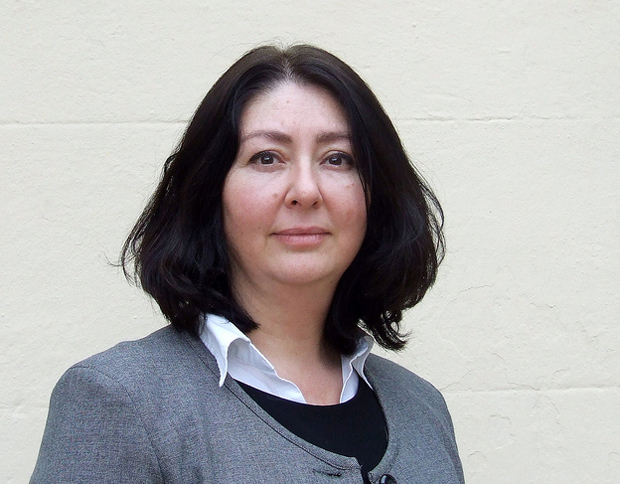
I was reminded of this earlier in the week when I read about activist Maryam Namazie’s clash with Trinity College Dublin’s Society For International Affairs (SoFIA). Namazie claims that conditions were placed on her speaking at an event, in particular the imposition of a “moderator” in the form of Dr Andrew Pierce, an assistant professor in Ecumenics at TCD.
I don’t know Dr Pierce, or his work, so have no reason to doubt that he would be a perfectly fine moderator.
I do know Maryam Namazie, having moved in roughly the same atheist/secular/free speechy circles, and I’m not sure that she is very much into the idea of Ecumenics or being moderated.
Maryam Namazie is a refugee from the Islamic Republic of Iran. Her political education came in the Worker-communist Party of Iran, a group that does not spend a lot of time on “interfaith dialogue”. She retains a deep-seated anti-clericalism which has not so much gone missing from the British hard left, as never really existed (with the exception of libertarian communist/anarchist circles). She’s not into “interfaith”.
You can see why, as SoFIA speakers are normally not moderated, Namazie would not tolerate this exception. Like the dancer in the film, she felt so constrained by conditions that she could not continue. You can also see why SoFIA would imagine this as unreasonable, and cast it as so.
So has Maryam been prevented from speaking at TCD or not? Is this, as people like to ask “a free speech issue”?
The answers are: yes and no, and yes.
To the first question: yes and no. Yes, as she has been prevented from speaking under the terms she originally agreed to. Namazie clearly feels that the imposition of “moderation” will by its nature stifle her. And no, because, technically, the only person to actually prevent her from speaking was herself. It was she who pulled the plug.
Is this a “free speech issue”? Well yes. There are few more irritating arguments than “it’s not a free speech issue”.
This statement is usually backed up by the following arguments:
“X is against the law.” And? Resorting to the fact that something is illegal is to run away from an argument, not to win it. There are all sorts of bad laws, as anyone who has ever so much as signed a petition to change one has acknowledged. If you cannot form an argument as to whether someone should or should not do something without recourse to existing laws, you probably need to work a bit harder on it.
“Not compatible with Article 10 of the European Convention on Human Rights/Article 19 of the Universal Declaration of Human Rights.” See above. Legalistic arguments are for lawyers.
“This is an abuse of free speech”. Because you can only use your rights for the purposes I wish them to be used for. That’s how rights work.
“No one has a right to a platform.” This is absolutely true. However, the flip side of that is that clubs, societies etc have a right to invite the speakers and guests they choose. Every so often, the Oxford Union, or a university debating or philosophy society, will invite a fascist or a Holocaust revisionist to discuss “free speech” and its limits. It’s a dull trick, made even duller by the reaction of United Against Fascism/Socialist Workers Party student activists who will attempt to shut the talk down. (And, yes, before there are letters, you have every right to try to get something shut down. Yes, that is exercising your free speech, until you storm the hall. Then you’re using force).
“We’re not saying she can’t speak: just that she can’t speak here.” See above.
“You wouldn’t get away with that in X country (usually Saudi Arabia, Russia or China).” No, you wouldn’t. Why you want to compare the free world with regimes like that, I’ve no idea, but we should be glad that people “get away with” saying more in democracies than they do in autocracies.
“Free speech does not mean the ability to say X.” Nah, sorry. It definitely does.
And on it goes. The problem is that these caveats always apply to things that are, obviously so, free speech issues. But — and this is probably a good thing — nobody wants to be seen as against free speech (though it was amusing to see the format of the various censorious motions brought at the National Union of Students’ Women’s Conference this week: “Motion to Condemn XXXXphobia on campus. Speech for: NUS XXXX Society. Speech Against: Free”).
One wishes sometimes we could be more honest. Don’t say “this isn’t a free speech issue”, rather “this is a free speech issue, and I’m OK with this amount of censorship, for this reason.” Then we can talk.
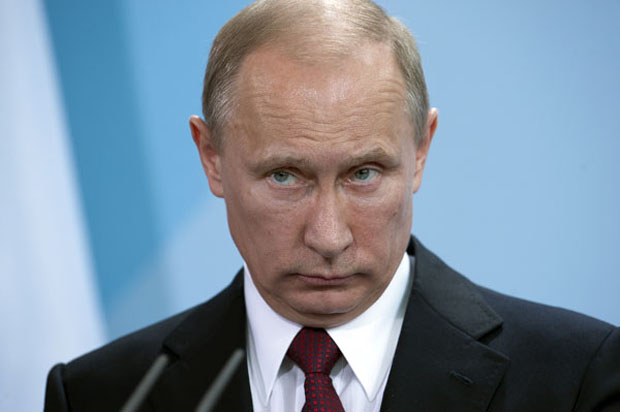
Vladimir Putin has returned to his people after a noted absence. Like Jesus Christ, but with a longer interlude. Was Vladimir Vladimirovich on paternity leave? Has he been ill? Did a botox injection go wrong? Was he fending off a coup? Has there, in fact, been a coup? Is this even the real Putin we see before us? Has he been replaced by a KGB cyborg?
It’s all delightfully old-fashioned, as if global politics was being staged by the Secret Cinema people. Any day now, someone will declare that Kremlinology is the hot new thing among urban ABC1 early adopters.
As ever, this column aims to be ahead of the curve. So what do we know?
The near-coincidence of the murder of Boris Nemtsov and the temporary disappearance of the president is bound to raise suspicion. I recall a conversation with an old colleague who grew up under the Soviet system. The idea of “cock up versus conspiracy” came up. I explained haughtily how people were wrong to see invisible hands guiding events when sheer human incompetence was almost always the explanation when things went weird. “Yes,” my friend replied. “But where I’m from, there usually is a conspiracy.”
Fair point.
The rounding up of some Chechens to pin the assassination of Nemtsov on feels almost contemptuous. It’s like the Russian authorities are not even bothering any more, or as if they are hoping to win a medal for sheer chutzpah in the face of the facts.
The suggestion that seems to be gaining ground is that Putin is no longer in charge, or perhaps won’t be for much longer. People such as The Economist’s Ed Lucas, The Times’s Roger Boyes and The Interpreter’s Catherine Fitzpatrick now speak deadly seriously about a return to the Cold War, with Putin outflanked by people who think he is not hardline enough.
A long blogpost on the current situation by Fitzpatrick outlines the scenarios. Former Prime Minister Primikov has issued an ultimatum to Putin, but Primakov himself could not command a move against Putin. Nemtsov had to go because a popular outsider could have caused problems for a palace coup. What is the involvement of Duma Deputy Delimkhanov, a cousin of Chechen President Kadyrov? What is the position of Viktor Zolotov, head of internal troops? It all becomes dizzyingly complicated, like an epic Russian novel, or Woody Allen’s parody of the epic Russian novel, Love and Death: “Alexei loves Tatiana like a sister… Tatiana’s sister loves Trigorian like a brother… Trigorian’s brother is having an affair with my sister, who he likes physically, but not spiritually… The firm of Mishkin and Mishkin is sleeping with the firm of Taskov and Taskov.”
Putin returned this week, not offering an explanation for his 10-day absence, but instead wryly commenting, during a press conference with the president of Kyrgyzstan, Almazbek Atambayev, that “life would be boring without gossip”.
Indeed, Vladimir Vladimirovich. Indeed.
The miasma to the east of the European Union’s borders has become more impenetrable and more obvious since the outbreak of fighting in Ukraine. Events there now take on the characteristics of the title of Peter Pomerantsev’s recent book Nothing Is Real And Everything Is Possible — a state of affairs where the brazen manipulation of truth is taken to staggering levels, to the point where an invasion is not an invasion, a war is somehow not taking place.
The Kremlin and its oligarch clients may not care much for truth, but one would hope that Cambridge University Press would.
CUP has been criticised by the organisers of a book prize for its refusal to publish a book on Russia by one of its own authors in the United Kingdom. According to The Observer, judges of the Pushkin House Russian Book Prize attempted review Putin’s Kleptocracy by Karen Dawisha for competition, but CUP refused to submit it.
“We attempted to get hold of the Dawisha book but the publisher would not submit it to us because of legal advice about UK libel laws. Our judges noted the book and said it raised important issues that deserved a wider audience, but unfortunately could not all get hold of a copy to pass judgment,” Andrew Jack, chair of the judges told the paper.
Disappointing indeed, and confirmation of the continual refusal by CUP to publish this book in the UK. The depressing thing about this, as noted in this column last year, is that CUP has not questioned the veracity of Dawisha’s work.
John Haslam of CUP wrote last year that: “We have no reason to doubt the veracity of what you say, but we believe the risk is high that those implicated in the premise of the book — that Putin has a close circle of criminal oligarchs at his disposal and has spent his career cultivating this circle — would be motivated to sue and could afford to do so. Even if CUP was ultimately successful in defending such a lawsuit, the disruption and expense would be more than we could afford, given our charitable and academic mission.”
I don’t like the language of “bravery” around publishers, but frankly, I’m beginning to doubt CUP’s commitment to the cause of academic freedom. More particularly, one wonders who is offering the company legal advice. Substantive reform to the libel law has made it considerably more difficult for foreigners to bring cases in London. Dawisha is not a fly-by-night hack, but a serious researcher. Conditions for publication are favourable. And faced with an entire Kremlin apparatus which has perfected the use of smoke and mirrors, the world needs all the information it can get.
CUP says it has contacted Dawisha to see “whether we might be able to find a compromise”. But considering they have already admitted there is nothing wrong with the book, it’s difficult to see what Dawisha’s side of the compromise might be.
This thing has dragged on too long now. For God’s sake, Cambridge; just publish the bloody thing.
Index on Censorship magazine’s editor, Rachael Jolley, introduces a special issue on refugee camps, looking at how migrants’ stories get told across the world, from Syria and Eritrea to Italy and the UK
Nothing is national any more, everything and everyone is connected internationally: economies, communication systems, immigration patterns, wars and conflicts all map across networks of different kinds.
Those linking networks can leave the world better informed and more aware of its connections, or those networks can fail to acknowledge their intersections, while carrying as much misinformation as information.
Where people are living in fear a connected world can be frightening, it can carry gossip and information back to those who pursue them. Decades ago, when people escaped from their homes to make a new life across the world, they were not afraid that their words, criticising the government they had fled from, could instantly be broadcast in the land they had left behind.
It is no wonder that in this more connected world, those fleeing persecution are more afraid to tell the truth about what the regime that tortured or imprisoned them has been doing. While, on the one hand, it should be easier to find out about such horrors, the way that your words can fly around the world in seconds adds enormous pressures not to speak about, or criticise, the country you fled from.
That fear often produces silence, leaving the wider world confused about the situation in a conflict-riven country where people are being killed, threatened or imprisoned. The consequences of instant communication can be terrifyingly swift.
Yet a different side of those networks, new apps or free phone services such as Skype, can provide some help in getting messages back to families left behind, giving them some hope about their loved ones’ future. That is one aspect that those in decades and centuries past, who fled their homelands, could never do. In the late 19th century, someone who escaped torture in Russia and travelled thousands of miles to the United States, might never speak to the family they had left behind again.
Communication has been revolutionised in the last two decades – where once a creaky telephone line was the only way of speaking to a sister or father across a continent or two, now Skype, Viber, Googlechat, and others offer options to see and speak every day.
In this issue’s special report Across the Wires, our writers and artists examine the threats of free expression within refugee camps, and as refugees desperately flee from persecution. Sources estimate that there are between 15.5 and 16.7 million refugees in the world today. Some are forced to live in camps for decades, others are fleeing from new conflicts, such as three million who have already left Syria. Many of us may know someone who has been forced to flee from another regime, those that don’t may in the future, and have some understanding of what that journey is like.
In this issue, writer Jason DaPonte examines how those who have escaped remain worried that their words will be captured and used against their families, and the steps they take to try avoid this. He also looks at “new” technology’s ability to keep refugees in touch with the outside world and to help tell the story of the camps themselves.
Italian journalist Fabrizio Gatti spent four years undercover, discovering details of refugee escape routes and people trafficking. In an extract from his book, previously unpublished in English, he tells his story of assuming the identity of a Kurdish man Bilal escaping torture, and fleeing to Italy via the Lampedusa detention camp, and the treatment he encountered. He speaks only Arabic and English to camp officials, but is able to hear what they said to each other in Italian about those seeking asylum. He uncovers the inhumanity and lack of rights those around him experienced in this powerful piece of writing.
Some of our authors in this issue speak from personal experience of seeking refuge, not speaking the language of the land they are forced to move to, and the steps they go through to resettle and be accepted in another land. Kao Kalia Yang’s family fled Laos during the Vietnam war, moving first to Thailand and then to the United States. She remembers how the family struggled first without understanding or speaking in Thai, then the same battles with English once they settled in the United States.
Ismail Einashe, whose family fled from Somaliland, talks to those who have escaped from one of the most secretive countries in the world, Eritrea. Einashe talks to Eritreans, now living in the UK, who are still afraid to speak openly about the conditions at home for fear of retribution.
The report also examines how the global media portrays refugee stories, the accuracy of those portrayals and how projects such as a new Syrian soap opera, partly written by a refugee, are giving asylum seekers and camp dwellers more power to tell the stories themselves.
But when people are escaping danger, the natural inclination is to stay quiet and under the radar. Some bravely do not. They intend to alert the world to a situation that is unfolding, and to attempt to protect others. Our report shows how much easier it is for the world’s citizens to find out about terrible persecution than it was in other eras, but how those communication tools can be turned back on those that are persecuted themselves. The push and pull of global networks, to be used for freedom or to silence others, is an on-going battle and one that we can only become more aware of.
Order your digital version of the magazine from anywhere in the world here