15 Oct 2014 | Press Releases, Uncategorized

- Awards honour journalists, campaigners and artists fighting censorship globally
- Judges include journalist Mariane Pearl and human rights lawyer Sir Keir Starmer
- Nominate at www.indexoncensorship.org/nominations
Beginning today, nominations for the annual Index on Censorship Freedom of Expression Awards 2015 are open. Now in their 15th year, the awards have honoured some of the world’s most remarkable free expression heroes – from Israeli conductor Daniel Barenboim to Syrian cartoonist Ali Farzat to education activist Malala Yousafzai.
The awards shine a spotlight on individuals fighting to speak out in the most dangerous and difficult of conditions. As Idrak Abbasov, 2012 award winner, said: “In Azerbaijan, telling the truth can cost a journalist their life… For the sake of this right we accept that our lives are in danger, as are the lives of our families. But the goal is worth it, since the right to truth is worth more than a life without truth.” Pakistani internet rights campaigner Shahzad Ahmad, a 2014 award winner, said the awards “illustrate to our government and our fellow citizens that the world is watching”.
Index invites the public, NGOs, and media organisations to nominate anyone they believe deserves to be part of this impressive peer group: a hall of fame of those who are at the forefront of tackling censorship. There are four categories of award: Campaigner (sponsored by Doughty Street Chambers); Digital Activism (sponsored by Google); Journalism (sponsored by The Guardian), and the Arts. Nominations can be made online via http://www.indexoncensorship.org/nominations
Winners will be flown to London for the ceremony, which takes place at The Barbican on March 18 2015. In addition, to mark the 15th anniversary of the Freedom of Expression awards, Index is inaugurating an Awards Fellowship to extend the benefits of the award. The fellowship will be open to all winners and will offer training and support to amplify their work for free expression. Fellows will become part of a world-class network of campaigners, activists and artists sharing best practice on tackling censorship threats internationally.
Jodie Ginsberg, CEO of Index, said: “The Index Freedom of Expression Awards is a chance for those whom others try to silence to have their voices heard. I encourage everyone, no matter where they are in the world, to nominate a free expression hero.”
The 2015 awards shortlist will be announced on January 27th 2015. Judges include journalist Mariane Pearl and human rights lawyer Sir Keir Starmer. The public will be asked to participate in selecting the winner of the Google Digital Activism award through a public vote beginning January 27th 2015. Sir Keir said: “Freedom of expression is part of the bedrock of civilised, democratic society. The Index on Censorship Awards have a material influence on promoting such freedom and both celebrating and protecting those who fight against censorship worldwide. That’s why Doughty Street Chambers chooses Index as its principal charity.”
For more information please contact David Heinemann: [email protected]
_______________________________________________________________________
NOTES FOR EDITORS
About Index on Censorship:
Index on Censorship is an international organisation that promotes and defends the right to freedom of expression. The inspiration of poet Stephen Spender, Index was founded in 1972 to publish the untold stories of dissidents behind the Iron Curtain and beyond. Today, we fight for free speech around the world, challenging censorship whenever and wherever it occurs. Index believes that free expression is the foundation of a free society and endorses Article 19 of the Universal Declaration of Human Rights, which states: “Everyone has the right to freedom of opinion and expression.”
About The Index on Censorship Freedom of Expression Awards:
The Index Freedom of Expression Awards recognise those deemed to be making the greatest impact in tackling censorship in their chosen area.
Awards categories:
Journalism – for impactful, original, unwavering journalism across all media (sponsored by The Guardian).
Campaigner – for campaigners and activists who have fought censorship and who challenge political repression (sponsored by Doughty St Chambers).
Digital Activism – for innovative uses of new technology to circumvent censorship and foster debate (sponsored by Google).
Arts – for artists and producers whose work asserts artistic freedom and battles repression and injustice.
Previous award winners include:
Journalism: Azadliq (Azerbaijan), Kostas Vaxevanis (Greece), Idrak Abbasov (Azerbaijan), Ibrahim Eissa (Egypt), Radio La Voz (Peru), Sunday Leader (Sri Lanka), Arat Dink (Turkey), Kareen Amer (Egypt), Sihem Bensedrine (Tunisia), Sumi Khan (Bangladesh), Fergal Keane (Ireland), Anna Politkovskaya (Russia), Mashallah Shamsolvaezin (Iran)
Digital/New Media: Bassel Khartabil (Palestine/Syria), Freedom Fone (Zimbabwe), Nawaat (Tunisia), Twitter (USA), Psiphon (Canada), Centre4ConstitutionalRights (US), Wikileaks
Advocacy: Malala Yousafzai (Pakistan), Nabeel Rajab (Bahrain), Gao Zhisheng (China), Heather Brooke (UK), Malik Imtiaz Sarwar (Malaysia), U.Gambira (Burma), Siphiwe Hlope (Swaziland), Beatrice Mtetwa (Zimbabwe), Hashem Aghajari (Iran)
Arts: Zanele Muholi (South Africa), Ali Farzat (Syria), MF Husain (India), Yael Lerer/Andalus Publishing House (Israel), Sanar Yurdatapan (Turkey)
You have received this email because email address ‘[email protected]’ is subscribed to ‘AWARDS 2015 Call For Nominations’.
14 Oct 2014 | Awards, News
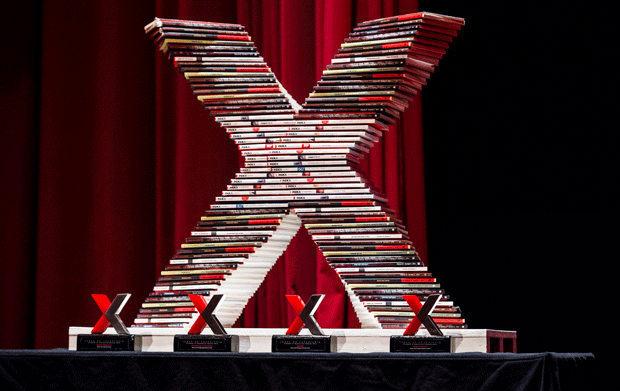
(Photo: Alex Brenner / Index on Censorship)
Nominations for the annual Index on Censorship Freedom of Expression Awards 2015 are open. Now in their 15th year, the awards have honoured some of the world’s most remarkable free expression heroes – from Russian investigative journalist Anna Politkovskaya to education activist and 2014 Nobel Peace Prize winner Malala Yousafzai.
The awards shine a spotlight on individuals fighting to speak out in the most dangerous and difficult of conditions. As Idrak Abbasov, 2012 award winner, said: “In Azerbaijan, telling the truth can cost a journalist their life… For the sake of this right we accept that our lives are in danger, as are the lives of our families. But the goal is worth it, since the right to truth is worth more than a life without truth.” Pakistani internet rights campaigner Shahzad Ahmad, a 2014 award winner, said the awards “illustrate to our government and our fellow citizens that the world is watching”.
Index invites the public, NGOs, and media organisations to nominate anyone they believe deserves to be part of this impressive peer group. There are four categories of award: Campaigner (sponsored by Doughty Street Chambers); Digital Activism (sponsored by Google); Journalism (sponsored by The Guardian), and the Arts. Nominations can be made online and are open until November 20, 2014.
Jodie Ginsberg, CEO of Index, said: “The Index Freedom of Expression Awards is a chance for those whom others try to silence to have their voices heard. I encourage everyone, no matter where they are in the world, to nominate a free expression hero.”
Winners will be flown to London for the ceremony, which takes place at The Barbican on March 18 2015, and which will feature music and entertainment from across the globe.
In addition, to mark the 15th anniversary of the Freedom of Expression awards, Index is inaugurating an Awards Fellowship to extend the benefits of the award. The fellowship will be open to all winners and will offer training and support to amplify their work for free expression. Fellows will become part of a world-class network of campaigners, activists and artists sharing best practice on tackling censorship threats internationally. The fellowship will be launched formally later in the year.
Determination to tell the truth
Judges for this year’s Freedom of Expression awards include journalist Mariane Pearl and human rights lawyer Sir Keir Starmer. Sir Keir said: “Freedom of expression is part of the bedrock of civilised, democratic society. The Index on Censorship awards have a material influence on promoting such freedom and both celebrating and protecting those who fight against censorship worldwide. That’s why Doughty Street Chambers chooses Index as its principal charity.”
Alan Rusbridger, editor-in-chief, Guardian News & Media said: “We’re proud to once again be sponsoring the Journalism category of the Freedom of Expression Awards. Previous winners of this category have demonstrated dogged determination to tell the truth, and at a time when journalistic freedom is under pressure like never before, this category holds even greater significance.”
The Digital Activism Award will, for the second year running, be chosen by public vote. Google’s Head of Free Expression, Europe, William Echikson said: “Our support of the Index awards reflects our common concerns about the ongoing and increasing government crackdown against the free and open internet. When we first learned about the Digital Activism Award, we were immediately impressed with its motto, which celebrates the fundamental right to ‘write, blog, tweet, speak out, protest and create art and literature and music.’”
Index on Censorship is delighted also to have the continued support of academic and professional publishers, SAGE, for this year’s awards. Ziyad Marar, Global Publishing Director of SAGE, which sponsors the awards, said: “Through working with Index for many years both as publisher of the magazine and sponsors of the awards ceremony we are proud to support a truly outstanding organization as they defend free expression around the world.”
This article was posted on 14 Oct, 2014 at indexoncensorship.org
1 Oct 2014 | Magazine, Volume 43.03 Autumn 2014
[vc_row][vc_column][vc_custom_heading text=”The explosion of social media, the rise of citizen reporters, the dangers of freelancing in a war zone, the invention of new technology: journalism is clearly going through its biggest changes in history. But will the public know more or less as a result?”][vc_row_inner][vc_column_inner width=”1/2″][vc_column_text]
This is the question we explore in great depth in the latest issue of Index on Censorship magazine. Contributors include Iona Craig (2014 winner of the Martha Gellhorn Prize for her reporting in Yemen); Index award nominee Dina Meza and the BBC’s Samira Ahmed. We also have an exclusive, new short story by acclaimed novelist, playwright and author Ariel Dorfman.
[/vc_column_text][/vc_column_inner][vc_column_inner width=”1/2″][vc_single_image image=”59980″ img_size=”full”][/vc_column_inner][/vc_row_inner][vc_column_text]
And Australia’s race commissioner, Tim Soutphommasane, speaks out on how the right to be a bigot should not override the right to be free from the effects of bigotry.
[/vc_column_text][/vc_column][/vc_row][vc_row][vc_column][vc_custom_heading text=”SPECIAL REPORT: THE FUTURE OF JOURNALISM” css=”.vc_custom_1483551011369{margin-right: 0px !important;margin-left: 0px !important;border-bottom-width: 1px !important;padding-top: 15px !important;padding-bottom: 15px !important;border-bottom-color: #455560 !important;border-bottom-style: solid !important;}”][vc_column_text]
Back to the future: Iona Craig on journalists trying to stay safe in war zones
Digital detectives: Ray Joseph on the new technology helping Africa’s journalists investigate
Re-writing the future: Five young journalists talk on their hopes and fears for the profession – from Yemen, India, South Africa, Germany and the Czech Republic
Attack on ambition: Dina Meza on a Honduran generation ground down by fear
Stripsearch cartoon: Martin Rowson envisages an investigative reporter meeting Deep Throat
Generation why: Ian Hargreaves asks on how the powerful may or may not be held to account in the future
Making waves: Helen Womack reports from Russia on the radio station standing up for free media
Switched on and off: US journalist Debora Halpern Wenger on TV’s power shift from news producers to news consumers
TV news will reinvent itself (again): Taylor Walker interviews a veteran TV reporter on the changes ahead
Right to reply: Samira Ahmed on how the BBC tackles viewers’ criticism
Readers as editors: Stephen Pritchard on how news ombundsmen create transparency
Lobby matters: Political reporter Ian Dunt on the push/pull of journalists and politicians inside Britain’s corridors of power
Funding news freedom: Glenda Nevill looks at innovative ways to pay for reporting
Print running: Will Gore on how newspapers innovate for new audiences
Paper chase: Luis Carlos Díaz on overcoming Venezuela’s newsprint shortage
[/vc_column_text][/vc_column][/vc_row][vc_row][vc_column][vc_custom_heading text=”IN FOCUS” css=”.vc_custom_1481731813613{margin-right: 0px !important;margin-left: 0px !important;border-bottom-width: 1px !important;padding-top: 15px !important;padding-bottom: 15px !important;border-bottom-color: #455560 !important;border-bottom-style: solid !important;}”][vc_column_text]
Free thinking? Australia’s race commissioner Tim Soutphommasane on bigotry
Guarding the guards: Jemimiah Steinfeld on China’s human rights lawyers becoming targets
Taking down the critics: Irene Caselli investigates allegations that Ecuador’s government is silencing social media users
Maid equal in Brazil: Claire Rigby on the Twitter feed giving voice to abuse of domestic workers in Brazil
Home truths in the Gulf: Georgia Lewis on how UAE maids fear speaking out on maltreatment
Text messaging: Indian school books are getting “Hinduised”, reports Siddarth Narrain from India
We have to fight for what we want: our editor, Rachael Jolley, interviews the OSCE’s Dunja Mijatovic on 20 years championing free speech
Decoding defamation: Lesley Phippen’s need-to-know guide for journalists
A hard act to follow: Tamsin Allen gives a lawyer’s take on Britain’s libel reforms
Walls divide: Jemimah Steinfeld speaks to Chinese author Xiaolu Guo about a life of censorship
Taking a pop: Steven Borowiec profiles controversial South Korean artist Lee Ha
Mapping media threats: Melody Patry and Milana Knezevic look at rising attacks on journalists in the Balkans
Holed up in Harare: Index’s contributing editor Natasha Joseph reports from southern Africa on the dangers of reporting in Zimbabwe
Burma’s “new” media face threats and attack: Burma-born author Wendy Law-Yone looks at news in the run up to the impending elections
Head to head: Sascha Feuchert and Charlotte Knobloch debate whether Mein Kampf should be published
[/vc_column_text][/vc_column][/vc_row][vc_row][vc_column][vc_custom_heading text=”CULTURE” css=”.vc_custom_1481731777861{margin-right: 0px !important;margin-left: 0px !important;border-bottom-width: 1px !important;padding-top: 15px !important;padding-bottom: 15px !important;border-bottom-color: #455560 !important;border-bottom-style: solid !important;}”][vc_column_text]
Political framing: Kaya Genç interviews radical Turkish artist, Kutlug Ataman
Action drama: Julia Farrington on Belarus Free Theatre and the upcoming Belarus election
Casting away: Ariel Dorfman, a new short story by the acclaimed human rights writer
[/vc_column_text][/vc_column][/vc_row][vc_row][vc_column][vc_custom_heading text=”COLUMNS” css=”.vc_custom_1481732124093{margin-right: 0px !important;margin-left: 0px !important;border-bottom-width: 1px !important;padding-top: 15px !important;padding-bottom: 15px !important;border-bottom-color: #455560 !important;border-bottom-style: solid !important;}”][vc_column_text]
Index around the world: Alice Kirkland gives a news update on Index’s global projects
[/vc_column_text][/vc_column][/vc_row][vc_row][vc_column][vc_custom_heading text=”END NOTE” css=”.vc_custom_1481880278935{margin-right: 0px !important;margin-left: 0px !important;border-bottom-width: 1px !important;padding-top: 15px !important;padding-bottom: 15px !important;border-bottom-color: #455560 !important;border-bottom-style: solid !important;}”][vc_column_text]
From the factory floor: Vicky Baker on listening to the world’s garment workers via new technology
[/vc_column_text][/vc_column][/vc_row][vc_row][vc_column][vc_custom_heading text=”SUBSCRIBE” css=”.vc_custom_1481736449684{margin-right: 0px !important;margin-left: 0px !important;border-bottom-width: 1px !important;padding-bottom: 15px !important;border-bottom-color: #455560 !important;border-bottom-style: solid !important;}”][vc_column_text]Index on Censorship magazine was started in 1972 and remains the only global magazine dedicated to free expression. Past contributors include Samuel Beckett, Gabriel García Marquéz, Nadine Gordimer, Arthur Miller, Salman Rushdie, Margaret Atwood, and many more.[/vc_column_text][vc_row_inner][vc_column_inner width=”1/2″][vc_single_image image=”76572″ img_size=”full”][/vc_column_inner][vc_column_inner width=”1/2″][vc_column_text]In print or online. Order a print edition here or take out a digital subscription via Exact Editions.
Copies are also available at the BFI, the Serpentine Gallery, MagCulture, (London), News from Nowhere (Liverpool), Home (Manchester), Calton Books (Glasgow) and on Amazon. Each magazine sale helps Index on Censorship continue its fight for free expression worldwide.
 SUBSCRIBE NOW[/vc_column_text][/vc_column_inner][/vc_row_inner][/vc_column][/vc_row]
26 Sep 2014 | Hungary, News, Politics and Society, Religion and Culture
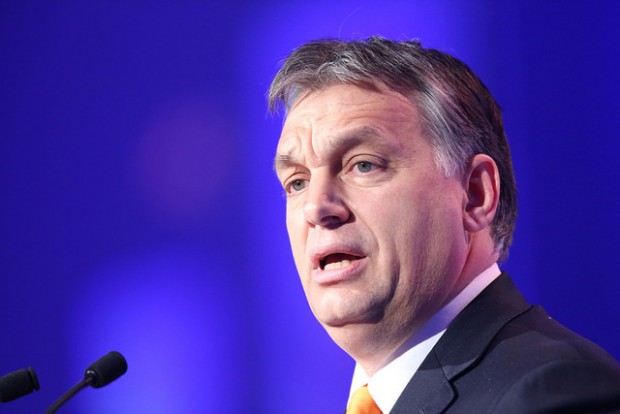
Prime Minister Viktor Orbán (Pic © European People’s Party/CreativeCommons/Flickr)
People “working together with foreign intelligence services” have been labelled “traitors” by Hungarian Deputy Prime Minister Zsolt Semjen. The comment comes after news site index.hu published a series of investigations exposing how Ukrainians and Russians are using fraudulent techniques to get Hungarian citizenship, and then travelling in Europe with Hungarian passports. The incident follows a spate of cases of government censorship and intimidation over the past year, tracked by Index on Censorship‘s media freedom mapping project.
Earlier this month, two Hungarian non-governmental organisations (NGOs) who received money from the Norwegian government under a 20-year-old deal to help strengthen civil society in the poorer parts of Europe, were raided by police officers from the National Bureau of Investigation.
Ökotárs and Demnet are just two NGOs who have recently come under attack in Hungary. A government “blacklist” of the 13 “most wanted” organisations was leaked in May. The total number of groups under investigation is at 58 and growing, and includes human rights and watchdog organisations like the Roma Press Centre, Labrisz Lesbian Association and Hungarian Civil Liberties Union (HCLU).
A campaign has been launched by a group of Hungarian volunteers through the site Blacklisted Hungarians, encouraging the international community to show their support for the case on social media by using the hashtag #ListMeToo to share content and media coverage.
In addition to this, rapper László Pityinger, known as Dopeman, is at the centre of an ongoing criminal investigation, after he kicked the detached head of a statue symbolising the Hungarian Prime Minister Viktor Orbán. The rapper spoke at a demonstration arranged by political group Szolidaritás last October, during which the audience toppled and decapitated the statue.
He will be represented by HCLU. Dalma Dojcsák, the group’s political liberties program officer and freedom of speech expert, told Index they are trying to convince the police that Pityinger has not committed a crime.
“The police officer conducting the investigation implied that they think the same, but the prosecutors may force the case through the system until it gets to trial. We don’t know if it is going to happen,” Dojcsák said.
“In Hungary, prior, direct censorship is rare — it only happens in public service media that is ruled by the government. However, self-censorship is common among journalists, out of fear of legal procedures and losing state financed advertisement,” she added.
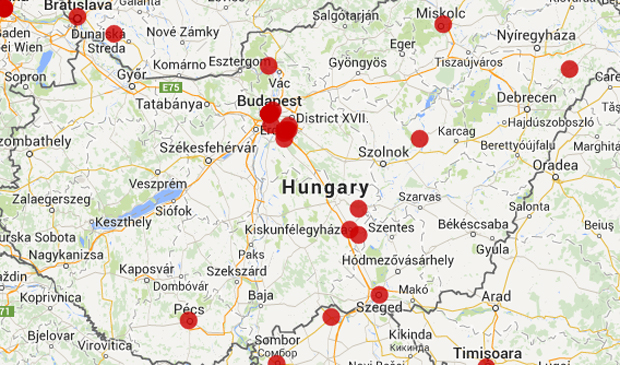
Deputy editor-in-chief fired from Nepszava daily
Two official bulletins appear in Kiskunfelegyhaza
28 journalists laid off by daily newspaper
Parliament speaker attempts to block interview from airing on Polish TV
Song with political reference cut from public broadcast
More reports from Hungary via mediafreedom.ushahidi.com
This article was posted on 26 September 2014 at indexoncensorship.org
