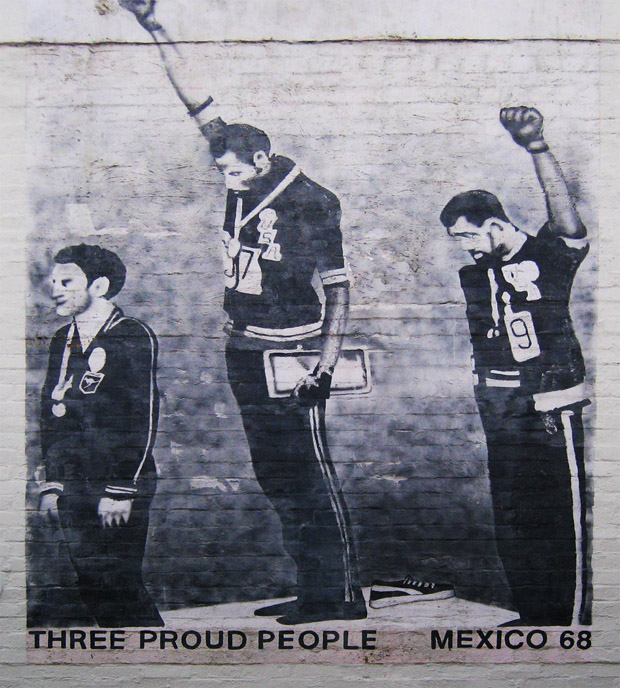
Grafitti of Tommie Smith, John Carlos and Peter Norman showing solidarity for the civil rights movement at the Mexico City Olympics in 1968 (Image: Newtown graffiti/Wikimedia Commons)
”We will give the background of the Rule 50, explaining the interpretation of the Rule 50 to make the athletes aware and to assure them that the athletes will be protected,” said IOC President Thomas Bach in an interview earlier this week. Rule 50 stipulates that ”No kind of demonstration or political, religious or racial propaganda is permitted in any Olympic sites, venues or other areas.” Failure to comply could, at worst, mean expulsion for the athlete in question.
Political expression is certainly a hot topic at Sochi 2014. The games continue to be marred by widespread, international criticism of Russia’s human — and particularly LGBT– rights record. The outrage has especially been directed at the country’s recently implemented, draconian anti-gay law. Put place to “protect children”, it bans “gay propaganda”. This vague terminology could technically include anything from a ten meter rainbow flag to a tiny rainbow pin, and there have already been arrests under the new legislation.
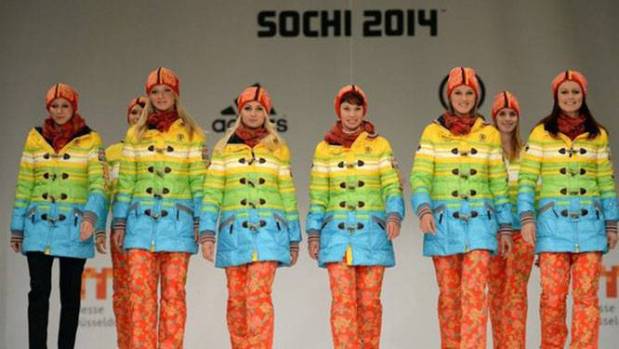
The confusion continued as the world wondered how this might impact LGBT athletes and spectators, or those wishing to show solidarity with them. Russian authorities have for instance warned of possible fines for visitors displaying “gay propaganda”. Could this put the Germans, with their colourful official gear, in the firing line? (Disclaimer: team Germany has denied that the outfits were designed as a protest.)
On top of this, the IOC also recently announced that there will be designated “protest zones” in Sochi, for “people who want to express their opinion or want to demonstrate for or against something,” according to Bach. Where these would be located, or exactly how they would work, was not explained.
But while the legal situation in Russia adds another level of uncertainty and confusion regarding free, political expression for athletes, rule 50 has banned it for years. And for years, athletes have taken a stand anyway.
By far the most famous example came during the 1968 Olympics in Mexico City — American sprinters Tommie Smith and John Carlos, on the podium, black gloved fists raised in solidarity with the ongoing American civil rights movement. The third man on the podium, Australian Peter Norman, showed his support by wearing a badge for the Olympic Project for Human Rights. All three men faced criticism at the time, but the image today stands out as one of the most iconic and powerful pieces of Olympic history.
However, the history of Olympians and political protest goes further back than that. An early example is the refusal of American shotputter Ralph Rose to dip the flag to King Edward VII at the 1908 games in London. It us unknown exactly why he did it, but one theory is that it was an act of solidarity for Irish athletes who had to compete under the British flag, as Rose and others on his team were of Irish descent.
The Cold War years unsurprisingly proved to be a popular time for athletes to put their political views across. When China withdrew from the 1960 Olympics in protest at Taiwan, then recognised by the west as the legitimate China, taking part. The IOC then asked Taiwan not to march under the name ‘Republic of China’. While considering boycotting the games, the Taiwanese delegation instead decided to march into the opening ceremony with a sign reading “under protest”.
But there are also more recent examples. At Athens 2004, Iranian flyweight judo champion Arash Miresmaeili reportedly ate his way out of his weight category the day before he was set to fight Israeli Ehud Vaks. “Although I have trained for months and was in good shape, I refused to fight my Israeli opponent to sympathise with the suffering of the people of Palestine” he said. A member of the South Korean football team which beat Japan to win bronze at the 2012 London Olympics, celebrated with a flag carrying a slogan supporting South Korean sovereignty over territory Japan also claims.
When the debate on political expression comes up, the argument of “where do we draw the line” often follows. If the IOC is to allow messages of solidarity with Russia’s LGBT population, should they allow, say, a Serbian athlete speak out against Kosovan independence? Or any number of similar, controversial political issues? Is it not easier to simply have a blanket band, and leave it at that?
The problem with this is, as much as the IOC and many other would like it, the Olympics, with all their inherent symbolism, simply cannot be divorced from wider society or politics. The examples above show this. With regards to Sochi in particular, the issue is pretty straightforward — gay are human rights. Some have argued we should boycott a Olympics in a country that doesn’t respect the Universal Declaration on Human Rights, or indeed the Olympic Charter. This is not happening, so the very least we can is use the Olympics to shine a light on gay rights in Russia. At its core, the Olympics are about the athletes — they are the most visible and important people there. It remains to be seen whether any of them will take a stand for gay rights, outside cordoned-off protest areas, in the slopes and on the rink, where the spotlight shines the brightest. And if they do, they should have our full support.
The upcoming winter issue of Index on Censorship magazine includes a special report on religion and tolerance, with articles from around the world.
Writers include the Bishop of Bradford, Salil Tripathi, Samira Ahmed and Kaya Genc. There’s an interview with Gurpreet Kaur Bhatti ahead of the opening of her new play, and 10 years after Behzti; while cartoonist Martin Rowson writes and draws about how comedy and religious offence come into conflict. Natasha Joseph writes from South Africa on why some portraits of President Zuma made him see red. Alexander Verkhovsky discusses the new blasphemy law in Russia, and former BBC mobile editor Jason DaPonte discusses why computer games are not all bad.
As part of the special report, writer Brian Pellot goes online with the Mormons to see how they use technology to talk to the unconverted, and asks if online chats will replace missions. Germans have been outraged by the revelations about US and UK surveillance, now they have plans to do something different to put a stop to snooping in the future, Sally Gimson reports. From Brazil, Ronaldo Pelli looks at the reaction to people practising religions of African origin, and investigative writer and author of Fast Food Nation Eric Schlosser talks about the threats to investigative journalism now and in the future.
Also in this issue:
Padraig Reidy on flags, controversy and Northern Ireland
Xiao Shu on the Chinese crackdown on the New Citizens’ Movement
Kaya Genc on the rise of a new type of media in Turkey
Members and partners of the Human Rights House Network condemn in the strongest terms the excessive use of force by Ukrainian authorities to disperse peaceful demonstrations, following the refusal by Ukraine to sign the European Union association agreement.
Tuesday, 03 December 2013, by Human Rights House Foundation (HRHF)
In their joint letter [download on the right], member and partner NGOs of the Human Rights House Network (HRHN) also call upon President Viktor Yanukovych to immediately revoke measures aiming at using force against protestors and release all protestors and journalists detained, and ensure that relatives of injured and arrested protestors and journalists were informed of their situation.
The 29-30 November 2013 demonstration on Maidan Nezalezhnosti, Kyiv’s Independence Square, essentially of students and activists, was peaceful until the police used excessive force to disperse it. The NGOs call upon Ukrainian authorities to undertake an independent and transparent investigation on the unlawful dispersal of the peaceful protest, and bring those responsible to justice, as requested by one of the members of the Human Rights House Kyiv, the Ukrainian Helsinki Human Rights Union.
Another member of the Human Rights House Kyiv, the Information Centre for Human Rights reports that 52 journalists were injured by police forces or by stones and grenades thrown by violent elements. The Centre for Civil Liberties, also a member of the Human Rights House Kyiv, is coordinating the legal aid “EuroMaidanSOS” since Sunday night. The Centre has received around 200 phone calls during the weekend. So far, they have registered 75 complaints related to arrests, beatings and people who were temporarily taken away from the 29-30 November demonstration. This does not include clashes with the police in front of the Presidential Administration Sunday 1 December. The NGOs call upon Ukrainian authorities to immediately and unconditionally drop all charges against peaceful protestors and journalists, release and compensate all of them, and ensure that they can carry out their work.
According to “EuroMaidanSOS”, 14 people (youth activists and students apparently) have disappeared, since the police intervention on 29-30 November 2013 at Maidan Nezalezhnosti. “EuroMaidanSOS” and human rights groups have called hospitals but not found information allowing them to trace back to the disappeared people. The NGOs call upon President Viktor Yanukovych to ensure that law enforcement authorities inform relatives of injured and arrested protestors of their situation. Ukraine has the obligation to protect anybody from being a victim of an enforced disappearance, even more so when injured or arrested by law enforcement authorities at a peaceful protest.
In their joint letter, the NGOs call upon you President Viktor Yanukovych to follow advice from Ukrainian civil society, including by:
Taking concrete measures aiming at stopping the use of force by police to disperse protestors, even if they occupy governmental buildings, and to publicly acknowledge the right of anybody to peacefully protest and the duty of the State security forces to protect peaceful protestors;[1]
Undertaking an independent and transparent investigation on the unlawful dispersal of the peaceful protest of 29-30 November 2013, and ensure that those responsible are brought to justice and do not enjoy impunity; Immediately and unconditionally dropping all charges against peaceful protestors and journalists, release and compensate all of them; Ensuring that law enforcement authorities inform relatives of injured and arrested protestors of their situation, protecting everybody from being a victim of an enforced disappearance, including by immediately investigating the cases of 14 people disappeared following the police intervention on 29-30 November 2013 at Maidan Nezalezhnosti;[2]
Ensuring that human rights NGOs and journalists are able to monitor assemblies and report on police violence without fearing retaliation, and that human rights defenders and activists are not charged for participating in peaceful protests.[3]
Signed by:
Human Rights House Kyiv (on behalf of the following NGOs):
Ukrainian Legal Aid Foundation
Ukrainian Helsinki Human rights Union
Human Rights Information Center
Association of Ukrainian Human Rights Monitors on Law Enforcement (Association UMDPL)
Azerbaijan Human Rights House (on behalf of the following NGOs):
Women’s Association for Rational Development
Institute for Reporters’ Freedom and Safety
Society for Humanitarian Research
Media Rights Institute
Association for the Protection of Women’s Rights in Azerbaijan after D. Aliyeva
Legal Education Society
Azerbaijan Lawyers Association
Barys Zvozskau Belarusian Human Rights House in exile, Vilnius
Human Rights House Belgrade (on behalf of the following NGOs):
Helsinki Committee for Human Rights in Serbia
Lawyers Committee for Human Rights (YUCOM)
Belgrade Centre for Human Rights
Human Rights House Sarajevo (on behalf of the following NGOs):
Association Transitional Justice Accountability and Remembrance in Bosnia and Herzegovina
Helsinki Committee for Human Rights in Bosnia and Herzegovina
Renesansa
Serbian Civic Council
Human Rights House Tbilisi (on behalf of the following NGOs):
Article 42 of the Constitution
Caucasian Centre for Human Rights and Conflict Studies
Georgian Centre for Psychosocial and Medical Rehabilitation of Torture Victims
Human Rights Centre
Union Sapari – Family without Violence
Human Rights House Oslo (on behalf of the following NGOs):
Human Rights House Foundation
Human Rights House Voronezh (on behalf of the following NGOs):
Charitable Foundation
Civic Initiatives Development Center
Confederation of Free Labor
For Ecological and Social Justice
Free University
Golos
Interregional Trade Union of Literary Men
Lawyers for labor rights
Memorial
Ms. Olga Gnezdilova
Soldiers Mothers of Russia
Voronezh Journalist Club
Voronezh-Chernozemie
Youth Human Rights Movement
Human Rights House Yerevan (on behalf of the following NGOs):
Helsinki Citizens’ Assembly – Vanadzor
Socioscope
Jurists against Torture
Human Rights House Zagreb (on behalf of the following NGOs):
Association for Promotion of Equal Opportunities for People with Disabilities
B.a.B.e. – Be active, Be emancipated
Centre for Peace Studies
Documenta – Centre for Dealing with the Past
GOLJP – Civic Committee for Human Rights
Svitanje – Association for Protection and Promotion of Mental Health
Election Monitoring and Education Center, Azerbaijan
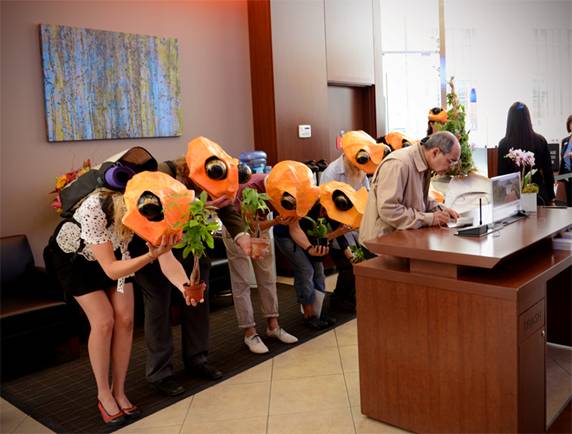
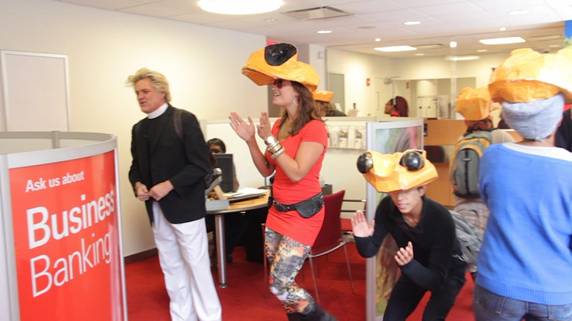
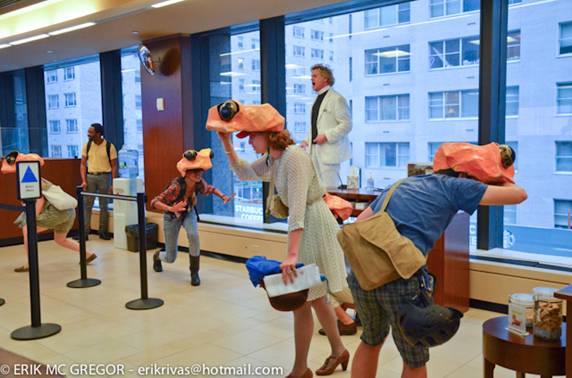
On a Saturday afternoon in June, a group of activists walked into a bank in Manhattan, New York, and staged a peaceful protest performance. The Church of Stop Shopping, led by Reverend Billy, were protesting at JP Chase Morgan and other banks’ investment in fossil fuel projects, which they say is unethical in the face of climate change.
Bill Talen, 63, the man behind Reverend Bill and the Church of Stop Shopping, has been staging this kind of action for a while. I interviewed him for New Humanist magazine in 2004, after a protest at a Starbuck’s in Camden, North London.
But now Bill and his colleague Nehemiah Luckett are facing charges of riot in the second degree and menacing in the third degree, for their JP Chase Morgan protest. The pair could end with one year in jail. For a peaceful protest. They are due to appear in court on 9 December.
It’s hard not to think of the fate of Russia’s Pussy Riot when writing about Reverend Billy. Both Pussy Riot and the Stop Shopping Choir have used similar tactics, staging peaceful performance protests right in what they would see as the belly of the beast. And both have been subjected to very harsh charges. Earlier this year, members of Pussy Riot told me they “had not planned for the extreme reaction from the authorities,” after they staged their “Punk Prayer” in Moscow’s Christ The Saviour Cathedral. Similarly, Reverend Billy, while accepting that arrest is an occupational hazard for a protester, has been surprised by the riot charge and the potential sentence. The difference is, of course, that we don’t expect this kind of thing to happen in the US.
This week I asked Billy about the protest, and his upcoming court case.
Index on Censorship: Can you tell us what happened at JP Morgan Chase?
Reverend Billy: We interrupted the very wealthy of upper Manhattan in their “wealth management” sessions. The sea of white people at walnut desks looked up to confront large flaming frogs leaping on their desks, handing out information about the impact of their fossil fuel investments. An Elvis impersonator narrated the event while the “Golden Toads” – an animal forced into extinction 30 years ago by climate change – harmonised and hopped. Under the toad costumes was the singing group called “The Stop Shopping Choir”.
IoC:What were you protesting about?
RB: Banks and big hedge funds are busy investing in fossil fuel projects around the world, making high profits, at precisely the point that the natural scientists – as in the 5th IPCC report from the United Nations – are telling us that all we can do to save ourselves and the planet as we recognize it today is to immediately stop gas, oil and coal.
IoC: Were you surprised to be arrested? Or is it just something you see as a risk of the job?
RB:Although I’ve been arrested many times, like most activists – you’re always surprised.
IoC: You’re potentially facing a year in jail. Have you ever had charges this harsh before?
RB:No – the most time I’ve served was three days in the Los Angeles County Jail. Usually I have the overnight stay.
IoC: Why do you think this has happened now, after years of activism? Just a quirk of the prosecutor? Something else?
RB: Stopping the business of the very rich is altogether different kettle of fish from our usual “nonviolent dramatic action” – which is often in parks, lobbies, between cars in traffic jams, on the Staten Island Ferry, etc.
IoC: How do you intend to fight the charge?
RB: The “Necessity Defense” – which means that if someone is drawing a gun on us to kill us, we have the right to grab them and disarms them. I have the right to commit a minor crime to prevent a great crime that no other presiding authority can prevent. No presiding authority is dealing with climate change. Governments in the West and China – are committed to their deadly gradualism, controlled by fossil cartels.
IoC: How do you think this charge squares with your first amendment rights?
RB: The First Amendment has been under systematic attack in New York City for 20 years, under the leadership of Rudolf Giuliani and Mike Bloomberg, their police and courts. The right to express in public space is besieged by permits and police, and overwhelmed by corporate expression – advertising in myriad forms, from the glowing gadget in the hand to the 80 foot tall Kate Moss looking at me like we just made love. We must reclaim freedom of expression, and we believe that this resurrection of extinct Golden Toads is the right drama. Earthalujah!

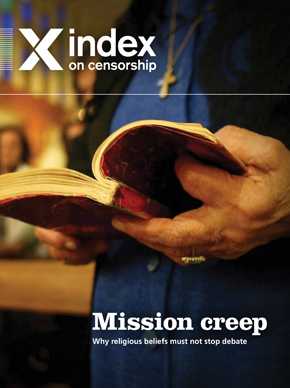 The upcoming winter issue of Index on Censorship magazine includes a special report on religion and tolerance, with articles from around the world.