26 Nov 2025 | Israel, News, Sudan, United Arab Emirates
In what critics see as a major blow to freedom of expression, Israel has banned protests against its ally the United Arab Emirates over the latter’s sponsorship of a militia perpetrating atrocities in Sudan.
“This is a very, very grave step that lessens freedom of protest and freedom of speech,” said Oded Feller, director of the legal department at the Association for Civil Rights (ACRI) in Israel.
The ban is causing consternation among the 6,000-strong Sudanese community in Israel. Many of them lost relatives or friends at the hands of the Rapid Support Forces (RSF) militia in their home country.
In a letter from Maya Vinkler, a police legal adviser in Tel Aviv, to Feller dated 20 November and seen by Index on Censorship, Vinkler refers back to a hearing before the High Court of Justice the previous day during which judges deliberated on an ACRI petition on behalf of Sudanese community activist Anwar Suliman. The petition sought to overturn a police decision based on secret evidence that it would be a “severe threat to state security and public well-being” to hold a protest outside the UAE embassy in the Tel Aviv suburb of Herzliya.
“We wanted the Israeli public to know who is responsible for this slaughter and that it is not just the militia,” Suliman said. The UAE has close ties with Israel, establishing diplomatic relations through the US-brokered Abraham Accords in 2020 – and making its first public purchase of Israeli weaponry a year later.
The country is also a major regional player, but after the RSF’s mass killings of civilians in and around the city of El Fasher in Darfur last month its international reputation is declining. Abu Dhabi insists that it does not back the RSF, but the disclaimer is contradicted by “evidence showing the Gulf state has provided munitions, drones and other equipment to the RSF,” according to a 15 November report in the Washington Post.
The deputy head of Israel’s National Security Council and a representative of the foreign ministry attended the high court session.
“In the open part of the discussion it was stressed that there is a danger of harm to state security and harm to foreign relations,” Feller said.
Then the courtroom was cleared so that the deputy head of the National Security Council and “possibly other officials” could brief the judges in secrecy.
When Feller was allowed back into the courtroom, the judges advised him to withdraw the petition. Feller says that since he did not want a negative ruling that would set a precedent, he agreed.
After this setback, Suliman and Feller applied to the police to hold a protest in a park, with placards and speeches, focusing on candle lighting and tributes to friends and relatives killed by the RSF. “I have a friend I studied with for four years and he was killed,” said Suliman “Everyone in the community has someone who was killed there whether it’s a family member or a friend.”
He told Index the Sudanese community just wants to protest the UAE role in Sudan, just as communities in Western cities including London have done recently.
Many in the Sudanese community in Israel have been in Israel for more than 10 years and fled after earlier massacres. According to Sigal Rozen, public policy coordinator of the Tel Aviv based Hotline for Refugees and Migrants, refugees from the Darfur genocide who had fled to Egypt in 2003 began crossing into Israel because of safety fears after a mass shooting incident by Egyptian security forces outside the offices of the United Nations High Commissioner for Refugees (UNHCR) in December 2005. After people saw it was possible to survive in Israel and that they were wanted by the labour market, relatives and friends joined them, she says. This continued until 2012, when Israel erected a fence on the border. According to government figures, 300 people succeeded in crossing into Israel despite the fence during the following three years. The Tel Aviv area has the largest number of Sudanese in Israel. They work mostly in cleaning streets, gardening, and in restaurants and hotels. They do not have work permits, but as part of a 2011 court case, authorities promised they would not enforce the law against them
In previous years, the Sudanese community has been allowed to protest outside the US, UK, EU, Egyptian and Rwandan embassies in Israel. Suliman stresses they were all peaceful demonstrations.
Zakaria Bongo, an English teacher and construction worker from Darfur who has been in Israel for 14 years, is worried that his missing friend Saif Omer may have been killed by the RSF while trying to escape the militia’s capture of El-Fasher. “When the genocide happened last time, people said never again but right now never again is happening in front of the whole world,” he said. “All the world is silent about the crimes so we have to get our voices out.”
But Israel apparently does not want that to happen. The police not only rejected holding the park protest, on 20 November, they informed Feller that they will not grant permits for any protests about the renewed genocide anywhere in Israel. Vinkler claimed in a letter to Feller that during the hearing the judges “accepted the state’s position not to permit protests in the matter of the genocide in Sudan at this time throughout the country.”
Feller says this is a misrepresentation of what happened in the court and amounts to a power grab by the police. He says its decision makers could now, instead of weighing permit applications on their merits “act as the long arm of the national security council and the foreign ministry.”
Vinkler specified in her letter that it did not matter where a demonstration would be held or its “character” it would still be denied a permit. Referring to the closed-door part of the court hearing, Vinkler wrote that the ban against the protest outside the UAE embassy was based on information showing the demonstration “was liable to harm the foreign relations of the state of Israel and state security.”
Alon Liel, former director general of the Israeli foreign ministry, is sharply critical of the police ban. “When you adopt standards of dictatorships and assist dictatorships in committing crimes it shows you might be on the way to losing your democracy,” he said.
The UAE and Israeli foreign ministries did not respond to queries for this article.
27 Jun 2017 | Campaigns, Campaigns -- Featured, Statements, United Arab Emirates
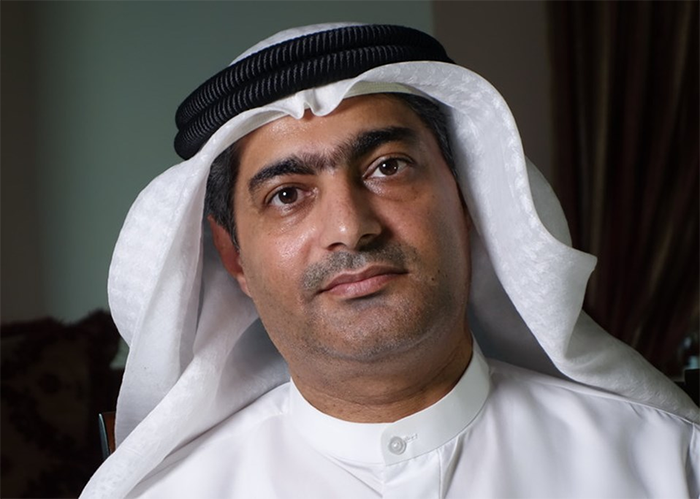
Ahmed Mansoor has been detained for 100 days.
Vice-President and Prime Minister
His Highness Sheikh Mohammed bin Rashid Al-Maktoum
Prime Minister’s Office
PO Box: 212000
Dubai, United Arab Emirates
Fax: +971 4 330 4044
27th June 2017
RE: Urgent Appeal
Your Highness,
On the 100th day since the detention of Mr. Ahmed Mansoor, we, the undersigned, would like to express our deepest concern for his current detainment and appeal to the United Arab Emirates government for Mr. Mansoor’s immediate and unconditional release.
According to our information, Ahmed Mansoor was arrested in his home in Dubai in the early hours of 20 March 2017, as ordered by the Public Prosecution for Cybercrimes. He is being investigated on charges of “promoting false and shaded information through the Internet and serving agendas aimed at spreading hatred and sectarianism”. Mr Mansoor is an internationally respected human rights campaigner, the winner of the Martin Ennals Award for Human Rights Defenders in 2015 and a member of both the advisory committee of Human Rights Watch and the Gulf Centre for Human Rights. These charges relate solely to his peaceful exercise of his right to freedom of expression and therefore we consider him a prisoner of conscience.
The official statement by the UAE Ministry of Foreign Affairs and International Cooperation (MOFAIC) of 29th March 2017 states that “he has the freedom to hire a lawyer and that his family has full access to the place of confinement and is allowed to visit him”. However, we have received news that Mr. Mansoor currently has no lawyer representing him and that his family have only been allowed one visit, on 3 April 2017. We are also concerned to hear allegations that he is being held in solitary confinement. These practices are not only in violation of international human rights law but also contravene the UAE Penal Code, including Federal Law No. 43 of 1992 on Regulating Penal Institutions.
In a joint statement published on 28 March 2017 by the Office of the United Nations High Commissioner for Human Rights, various bodies condemned the arbitrary arrest and detention of Mr. Mansoor. Signatories included the Working Group on Arbitrary Detention, on Enforced Disappearances, and the Special Rapporteurs on the situation of human rights defenders, Mr. Michel Forst; on the promotion and protection of the right to freedom of opinion and expression, Mr. David Kaye; and on freedom of peaceful assembly and association, Mr. Maina Kiai. Furthermore, they called on the government “to respect the right of everyone to freedom of opinion and expression, including on social media and the internet.” The EU Parliament’s Subcommittee on Human Rights followed with a statement by its chair, Pier Antonio Panzeri, who affirmed that “all charges against [Ahmed Mansoor] should be dropped, as they appear to be motivated only by his legitimate and peaceful human rights work. Equally, his and his family’s total security and integrity should be guaranteed by the authorities and all his confiscated possessions be returned.”
We therefore call on the UAE government, as a member of the UN Human Rights Council, to adhere to its obligations to uphold human rights at home, including respecting the right to freedom of opinion and expression, and to freedom of association and peaceful assembly.
We urge the UAE authorities to:
- Immediately and unconditionally release Mr. Ahmed Mansoor;
- Pending his release, ensure that he is granted access to a lawyer and family visits and that he is protected from torture and other ill-treatment;
- End all other forms of arbitrary punishment towards Ahmed Mansoor such as the travel ban against him, which violates his right to liberty of movement;
- Sign and ratify the International Covenant on Civil and Political Rights (ICCPR);
- Comply with the international human rights instruments and protect the right to freedom of expression, association and peaceful assembly.
The continuing detention of such a high-profile and internationally respected human rights campaigner is extremely damaging to the UAE government’s reputation abroad. Therefore, we urge you to address this issue without delay.
Yours Faithfully,
Arab Organization for Human Rights (AOHR)
COJEP International
Detained in Dubai
Index on Censorship
International Campaign for Freedom in the UAE (ICFUAE)
International Center for Justice and Human Rights (ICJHR)
Martin Ennals Awards Foundation
PEN International
Tom Brake, MP for Carshalton and Wallington
Andrew Byles, Garden Court North Chambers
Rt Hon Alistair Carmichael, MP for Orkney and Shetland
Noam Chomsky, Professor
Ron Deibert, Director of the Citizen Lab, Munk School of Global Affairs, University of Toronto
Jonathan Emmett, Author
Andy Fitzpatrick, Barrister, Garden Court North Chambers, Manchester
Councillor David Haigh, Solicitor, UAE torture survivor, Former MD of Leeds United Football Club
Chris Haughton, Author and illustrator
Miles Kenyon, Communications Officer, Citizen Lab, Munk School of Global Affairs, University of Toronto
Caroline Lucas, MP for Brighton Pavilion
Michael Mansfield, QC
Bill Marczak, Senior Researcher, Citizen Lab, Munk School of Global Affairs, University of Toronto
Fadi Al Qadi, Human Rights, Civil Society, Advocacy and Media Expert
Chris Riddell, Author, Illustrator and Political Cartoonist at the Observer
Andy Slaughter, MP for Hammersmith
Dr. David Wearing, School of Oriental and African Studies
Pete Weatherby, QC Garden Court North Chambers, Manchester
26 Jun 2017 | Index in the Press
Political and human rights advocates call for the release of Ahmed Mansoor, who has spent 100 days in UAE detention. Read the full article
17 May 2016 | Campaigns, Campaigns -- Featured, Middle East and North Africa, mobile, Statements, United Arab Emirates
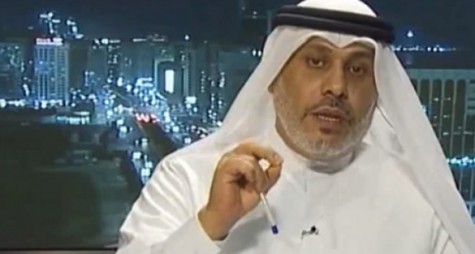
We, the undersigned NGOs, call on the authorities to immediately release human rights defender and professor of economics Dr Nasser Bin Ghaith, who remains in detention in an unknown location in the United Arab Emirates (UAE) for his social media posts and human rights activities. He has been denied proper access to his lawyer or family since his arrest in August 2015, and reportedly subject to torture in custody. The continued detention and charges violate his human rights, including his right to free expression.
On 18 August 2015, security officers in civilian clothes arrested Dr Bin Ghaith in Abu Dhabi and searched his home and confiscated personal items including electronic memory sticks. He was held incommunicado until finally being brought to the State Security Chamber of the Federal Supreme Court in Abu Dhabi on 4 April 2016, when he told the court he had been tortured and beaten in detention and deprived of sleep for up to a week.
On 2 May 2016, a second hearing took place to examine charges against Dr Bin Ghaith relating to his online postings. He stated that he is still being held in secret detention, a fact he had previously brought to the judge’s attention during his hearing on 4 April. The judge refused to listen to his complaints for a second time. Neither his family nor his lawyer knows where he is being detained, and his lawyer’s request to visit him has been denied repeatedly.
Dr Bin Ghaith is one of a group of men known as the “UAE5” who were imprisoned in 2011 and tried for “publicly insulting” UAE officials. That trial also breached international human rights law and was widely criticised by human rights groups, including signatories of this letter.
Charges in the current case against Dr Bin Ghaith include allegedly “committing a hostile act against a foreign state” in reference to statements he made on Twitter about the authorities and judicial system in Egypt. He was also charged with “posting false information in order to harm the reputation and stature of the state and one of its institutions” relating to other statements he made on Twitter claiming that he had not been granted a fair trial as part of the “UAE5” case.
A further charge brought against Dr Bin Ghaith of allegedly “posting false information about UAE leaders and their policies, offensively criticizing the construction of a Hindu temple in Abu Dhabi, and instigating the people of the UAE against their leaders and government” was related to a statement he made on Twitter intending to promote tolerance.
Dr Bin Ghaith was also accused of allegedly “communicating and cooperating with members of the banned Al Islah organization” referring to visits and meetings with members of the “UAE94”, a group of government critics and advocates of reform tried jointly in 2013 and sentenced to long prison terms. He was also accused of allegedly “communicating and cooperating with” the banned Emirates Ummah Party, based on a presentation he was invited to make on the Islamic Economy by a member of the Ummah party, in his capacity as a professor of economics.
At the latest hearing on 2 May, the court ordered the case to be adjourned until 23 May when the defence’s arguments will be heard.
We, the undersigned organisations, view Dr Bin Ghaith’s arrest, detention in an unknown location and without access to his family or a lawyer, and the baseless charges brought against him as a direct result of his human rights activities and non-violent expression. His conduct is protected under Article 19 of the Universal Declaration of Human Rights, which is considered to be reflective of binding customary international law. These charges, taken in the context of other charges against non-violent political groups and human rights defenders, appears to be an attempt by authorities to stifle any criticism, dissent or activities promoting human rights in the UAE.
We call on the UAE authorities to:
Immediately and unconditionally release Dr Bin Ghaith and drop all charges against him;
Pending the above, immediately disclose his current location and ensure proper access to his family, counsel and any medical treatment he may require;
Ensure that if his case proceeds, that it does so in a manner consistent with the UAE’s obligations under international law, in particular internationally recognised standards of due process and fair trial;
Investigate reports of torture and ill-treatment in detention;
and provide justice for those responsible and effective redress to Dr Bin Ghaith;
Sign and ratify the International Covenant on Civil and Political Rights, and bring all national laws into compliance with international freedom of expression standards.
Signed
Arabic Network for Human Rights Information (ANHRI)
ARTICLE 19
CIVICUS
FIDH, within the framework of the Observatory for the Protection of Human Rights Defenders
Front Line Defenders
Gulf Centre for Human Rights (GCHR)
Index on Censorship
International Service for Human Rights (ISHR)
Scholars at Risk Network
World Organisation Against Torture (OMCT), within the framework of the Observatory for the Protection of Human Rights Defenders
